Architecture
Models, agents, APIs, data paths and the dependencies between them.
Production AI Readiness Assessment
Get an independent assessment of the architecture, platform and operating decisions between your AI prototype and a system your organization can reliably operate, secure, govern and scale.
30-minute fit call · No sales deck · A technical conversation
The production gap
Connecting an application to a model is increasingly easy. Operating it reliably across teams, workloads and organizational controls is not.
The demo
Production
The assessment identifies which questions your current architecture can answer—and which ones are becoming production risk.
A complete diagnostic
Eight connected layers. One production system. Each area is reviewed against your real operating context—not a generic maturity checklist.
Models, agents, APIs, data paths and the dependencies between them.
GPU capacity, utilization, scheduling, tenancy and unit economics.
Failure modes, scaling, recovery objectives and production SLOs.
Logs, traces, model telemetry, evaluation signals and ownership.
Identity, access, secrets, data exposure and supply-chain controls.
Policies, approvals, audit evidence and clear accountability.
Tokens, inference, accelerators, idle capacity and cost allocation.
Developer paths, automation, shared services and operating boundaries.
The Production AI Framework
A repeatable way to evaluate the complete operating system around AI—not only whether the application works today.
Validate the use case and economics before the demo becomes architecture by accident.
Standardize infrastructure, access, security, data paths and developer workflows.
Engineer for reliability, observability, performance, cost and recovery.
Make governance visible with controls, logs, runbooks and verifiable evidence.
Your deliverables
Production AI Readiness
Executive readiness
Top actions
A focused engagement
Fit call, architecture questionnaire, relevant diagrams and business context.
Stakeholder interviews, architecture review and Production AI analysis.
Findings, prioritized roadmap, leadership readout and next-step recommendations.
Executive outcomes
Know which architectural gaps matter now and which can wait.
Identify what belongs in shared capability instead of project-by-project engineering.
Surface reliability and observability weaknesses before real users depend on the system.
See where GPU, model and inference economics need stronger controls.
Connect technical controls to the proof security, risk and audit teams require.
Create a common definition of production ready across executives and engineering.
Why Luca
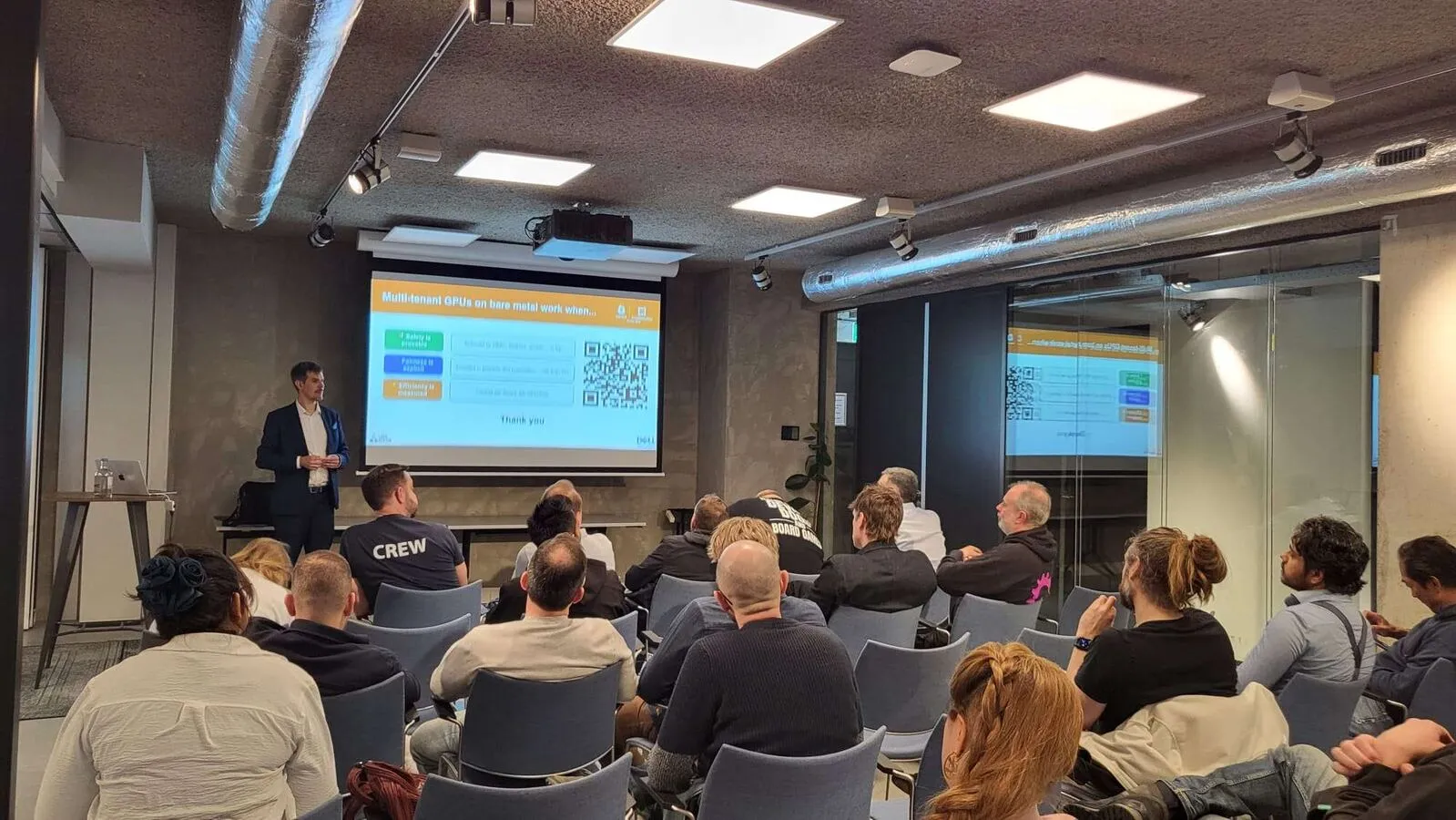
Luca Berton has spent 15+ years across enterprise infrastructure, automation, Kubernetes, cloud and AI platforms. He focuses on the operational layer most AI conversations skip: what it takes to run AI safely, repeatedly and economically in production.
“The board sees an AI demo. The platform team sees everything the demo forgot.”
This is for you if…
Probably not if…
The engagement
An independent review of the architecture, platform and operating model behind your production AI initiative.
Questions before you book
The assessment follows the system from model and application architecture through compute, data paths, developer workflows, reliability, observability, security, governance and cost. The scope is agreed during the fit call so the review stays focused on the decisions that matter to your production path.
No. Kubernetes may be part of the environment, but the assessment is platform- and deployment-model independent. Luca can review cloud-managed services, virtual-machine platforms and hybrid architectures as well as Kubernetes-based systems.
No. The goal is an independent view of your production risks and priorities, not a vendor sales recommendation. Existing technology choices are evaluated against your operating needs, constraints and economics.
The review can usually be completed through architecture material, configuration evidence and structured conversations with the relevant stakeholders. Direct production access is not the default and is only discussed if it is genuinely useful and acceptable to your security team.
Usually the technical owner of the AI initiative plus representatives from platform or infrastructure, application engineering, security and governance. Executive sponsorship is helpful for the opening context and final readout.
Timing depends on scope and stakeholder availability. The first 30-minute conversation confirms fit, boundaries and a realistic schedule before any work begins.
You receive a concise executive summary, a production-readiness scorecard, a risk and gap map, prioritized recommendations and a 30 / 60 / 90-day roadmap, followed by a leadership readout.
Yes, when it is a good fit. Implementation or advisory support is scoped separately after the assessment, so the diagnostic remains independent and useful even if your own team completes the work.
Not necessarily. The best time is often when the use case is proven but major platform decisions are still reversible. If you are still searching for a first AI use case, this assessment is probably premature.
Your prototype already proved something.
Identify the architecture, platform and operating gaps before they become production constraints.
Book your assessment →30-minute initial conversation