The hype around AI agents is everywhere, but how do we actually make them durable, secure, and production-ready?
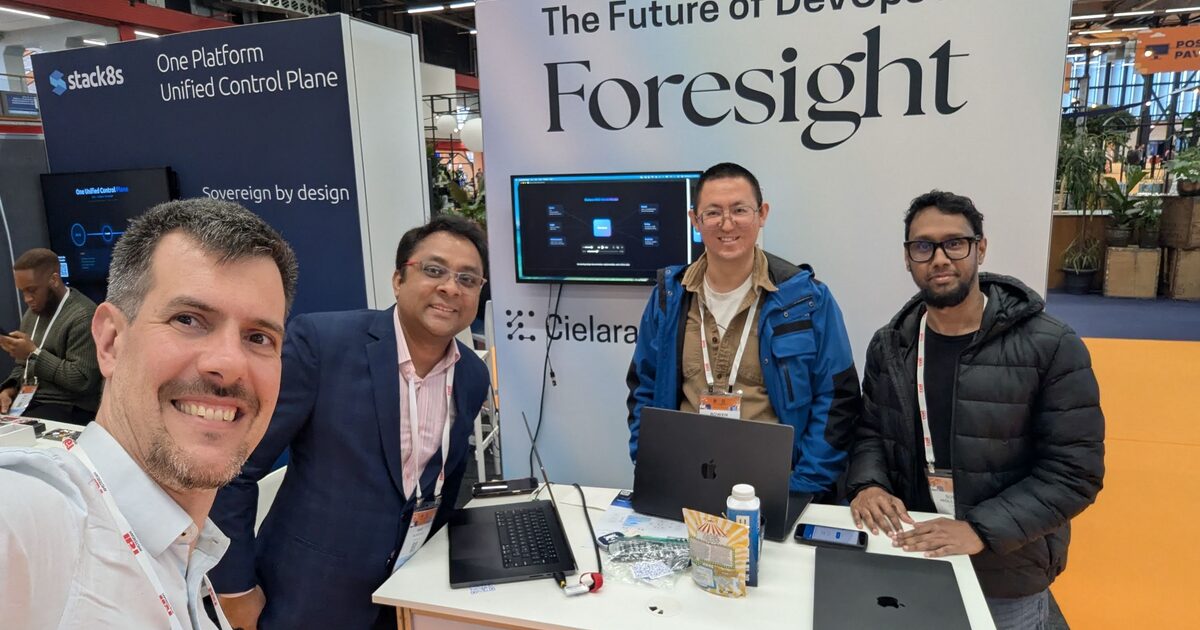
I had a fantastic time catching up with Safoine Khabich from the ZenML team at KubeCon to dive into exactly this.
From ML Pipelines to Agentic Workflows
We talked about the massive industry shift towards “agentic workflows” and how developers are moving beyond simple models to building complex, autonomous agents.
Safoine walked me through how they are addressing this by taking five years of enterprise ML pipeline experience and channeling it into their open-source ecosystem. Alongside ZenML for ML pipelines, they have introduced Kitaru — a framework specifically designed to build durable AI agents that you can deploy anywhere.
The evolution makes sense:
- ML pipelines (ZenML’s foundation) — orchestrating training, evaluation, and deployment workflows
- Inference serving — deploying models as APIs with proper model profiles and autoscaling
- Agentic workflows (Kitaru) — autonomous agents that chain reasoning, tool use, and human feedback in production loops
Each phase builds on the last. You cannot build reliable agents without reliable pipelines underneath, and you cannot scale agents without proper inference infrastructure.
The Human-in-the-Loop Challenge
What really stood out in our chat was the focus on the “human-in-the-loop.” Building an AI agent is one thing, but building one that is durable, secure, and can seamlessly integrate human feedback in a real-world production environment is the true challenge.
In practice, this means:
- Approval gates — agents that pause and request human sign-off before high-impact actions
- Feedback loops — capturing human corrections to improve agent behavior over time
- Audit trails — every agent decision traceable back to its reasoning chain and the data it used
- Graceful degradation — when the agent is uncertain, it escalates rather than guessing
- Security boundaries — agents that respect permission scopes and cannot escalate their own access
This connects to what I discussed with Clemens Scholz about AI as a digital companion. The best AI systems augment human judgment rather than replacing it. Kitaru’s human-in-the-loop approach is how you build that trust in enterprise environments.
Open Source All the Way
The fact that they are building these foundational tools completely open source is a massive win for the community. In the ML tooling space, open source matters because:
- No vendor lock-in — you can run ZenML and Kitaru on any cloud or on-premises
- Transparency — you can audit exactly what the framework does with your data and models
- Community-driven — practitioners shape the roadmap based on real production needs
- Composability — integrates with the broader cloud native ecosystem including Kubernetes and existing CI/CD pipelines
The Bigger Picture
The shift from “model serving” to “agent orchestration” is one of the defining trends of 2026. At KubeCon, I saw this theme everywhere — from Rootly’s AI SRE agents to Dynatrace’s observability for AI workloads to ZenML’s durable agent framework. The infrastructure layer is maturing to support not just inference, but autonomous reasoning loops.
Learn More
If you are building ML pipelines or experimenting with AI agents, check out their work: zenml.io
Related Posts
- AI on Kubernetes: The First 90 Days
- Clemens Scholz: AI as Your Second Brain
- Rootly at KubeCon EU 2026: AI SRE Agents
- NVIDIA NIM Model Profiles and Selection Guide
- Qodo Community Meetup: Building Autonomous Systems
About the Author
I am Luca Berton, AI and Cloud Advisor. I help enterprises move from AI experiments to production-grade agentic workflows. Book a consultation.