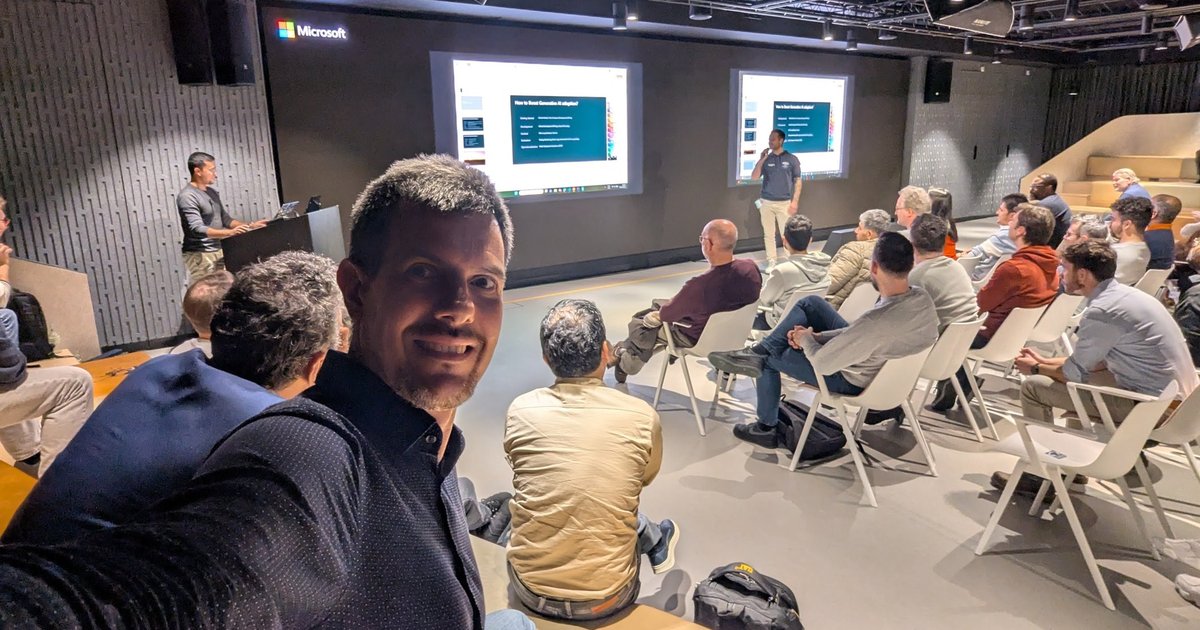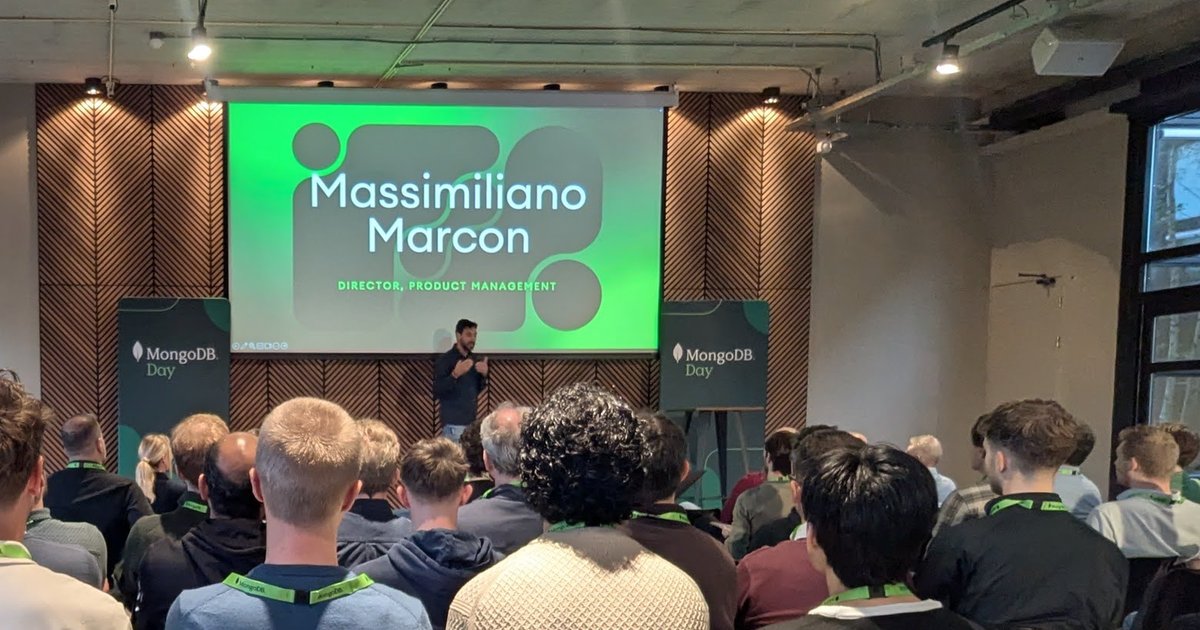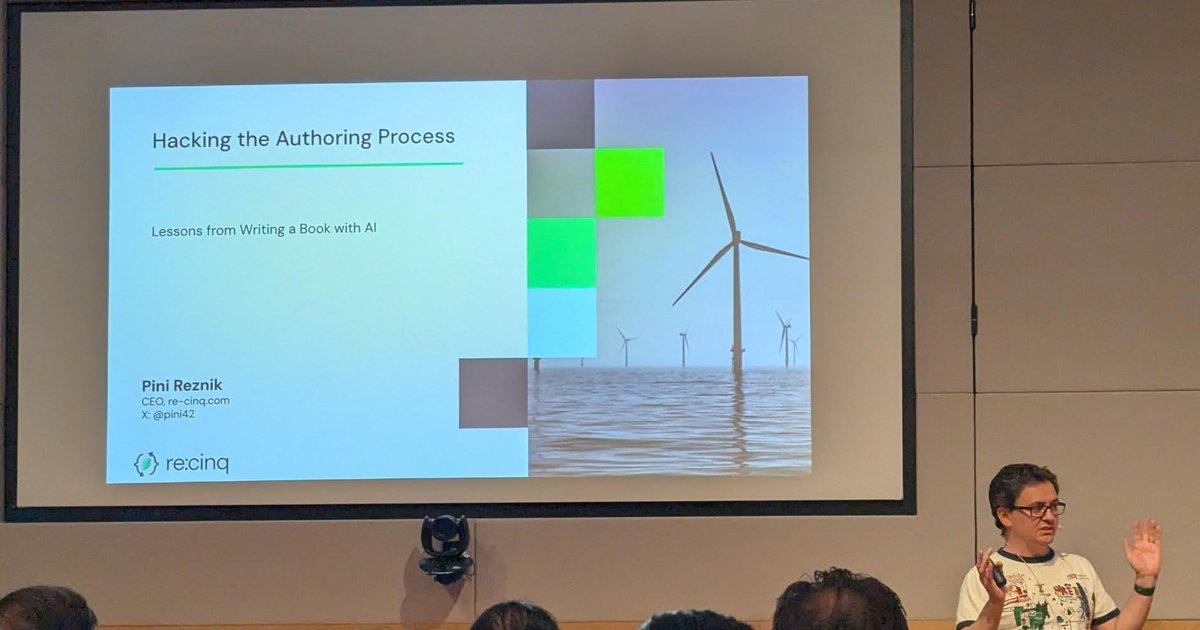
On 14 October 2025 I spent the evening at ING in Amsterdam for an AI meetup with two talks: one on how AI agents could talk to each other, and “Hacking the Authoring Process: Lessons from Writing a Book with AI” by Pini Reznik, CEO of re:cinq. This is a throwback post built from my photos of the slides. Where a slide didn’t name a speaker, I don’t either.
I write technical books myself, so this post ends with my take as an author.

At ING after the talks, under the lion and the line “Empowering people to stay a step ahead in life and in business.”
Opening talk: how will AI agents talk to each other?
The first speaker presented under the Saptha.me name. The title slide, dated “14th Oct, 2025”, asked the question for the evening: “How will AI agents talk to each other, share common memory, and even interact with agents behind paywalls and security layers?” A browser tab on the shared screen pointed to a GitHub project called Bindu, described as turning “your agent into a living server”. The repository now lives at GetBindu/Bindu.
Early on, a slide said “Lets Define First what is Agent?”, and the talk then made the case in both directions. A “Success Stories of Agents” slide showed METR’s chart, “The length of tasks AI can do is doubling every 7 months”, next to an article headlined “A new Moore’s Law for AI agents”: in 2022 ChatGPT could do 30-second coding tasks, and today agents can autonomously do coding tasks that take humans two hours. The next slide was the counterweight: a Hacker News thread asking “Are there any real examples of AI agents doing work?”, a headline about fears of an AI bubble in Silicon Valley, and one about Deloitte being caught using AI in a $290,000 report for the Australian government “after a researcher flagged hallucinations”.
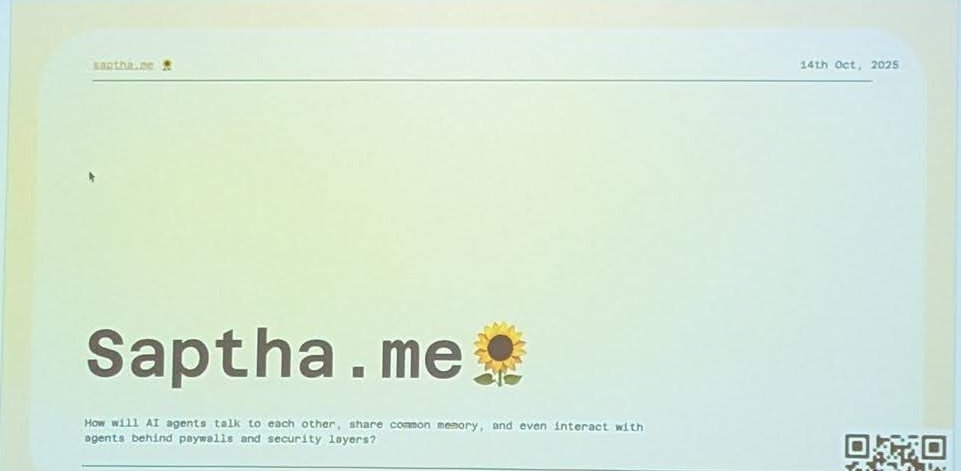
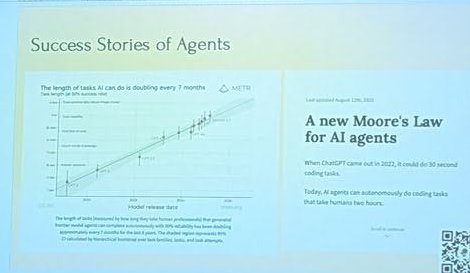
The opening talk: the agent-communication question, and the “new Moore’s Law” slide.
Hallucinations in a published report made a natural bridge to the second talk.
Hacking the Authoring Process
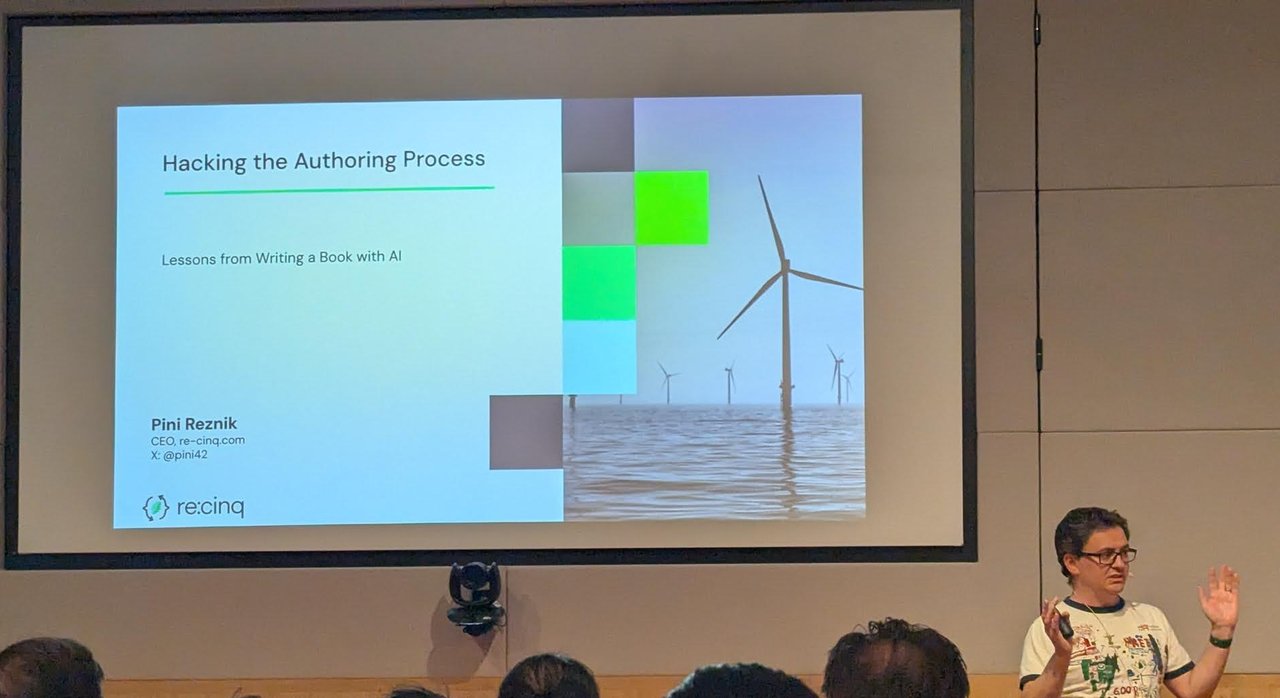
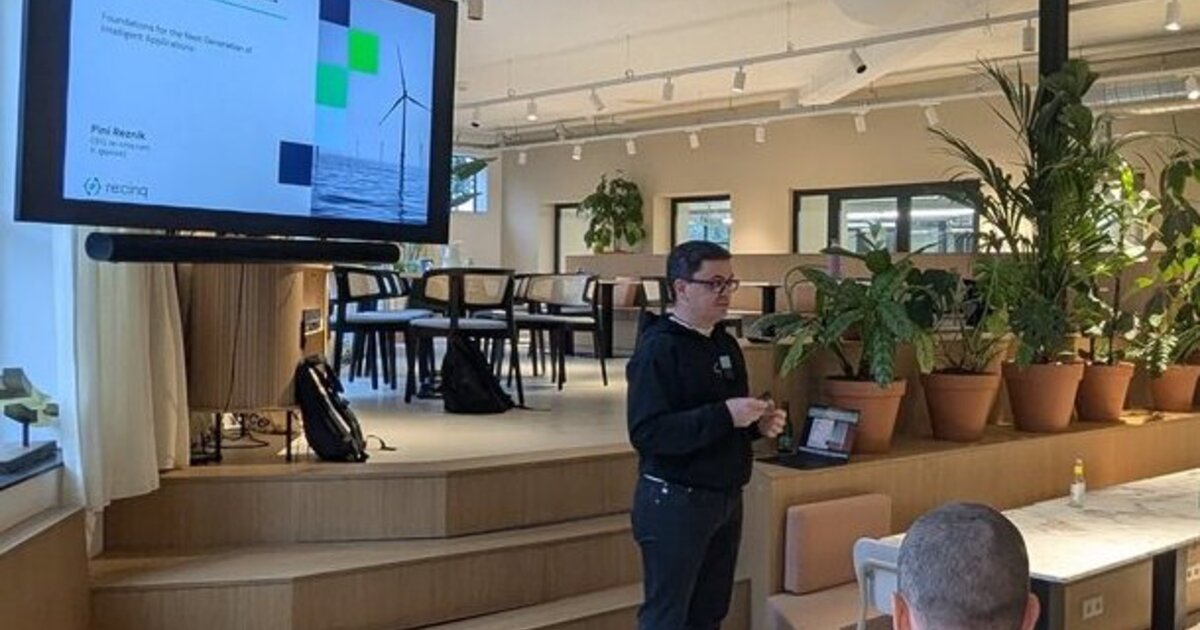
Pini Reznik opening “Hacking the Authoring Process: Lessons from Writing a Book with AI”.
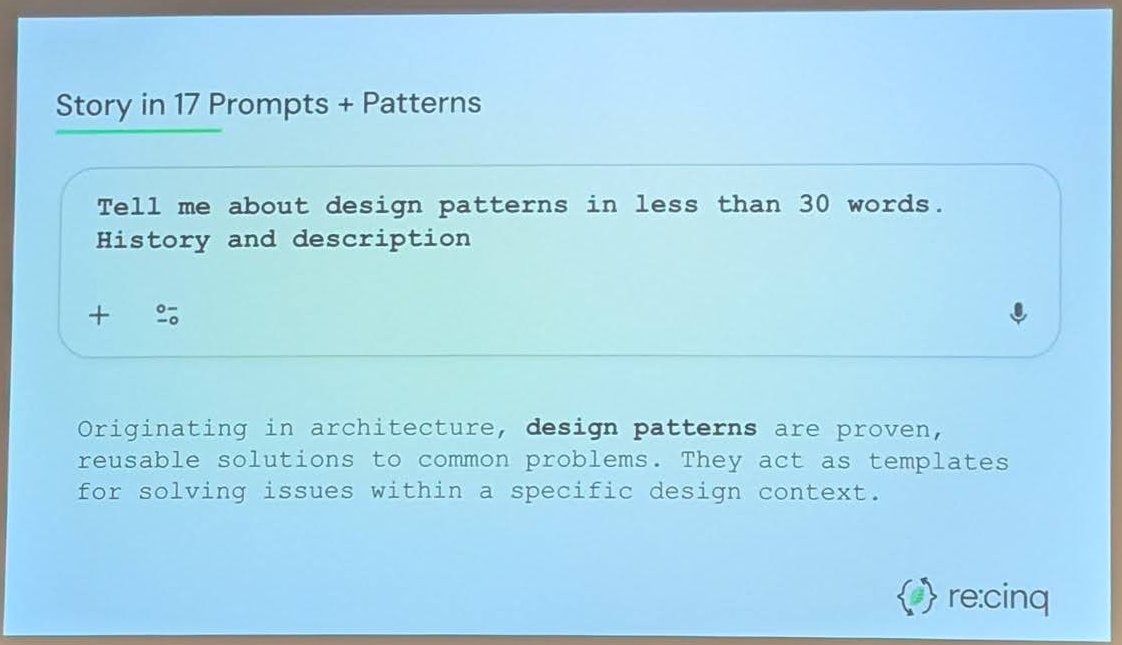
The structure of the talk was on the slide that followed: “Story in 17 Prompts + Patterns”. Instead of a theory of AI-assisted writing, it walked through the actual prompts used along the way, and for each one, the pattern that came out of it.
The prompt on that slide was deliberately small: “Tell me about design patterns in less than 30 words. History and description.” The answer shown was a clean, correct one-liner: design patterns originated in architecture and are “proven, reusable solutions to common problems” that “act as templates for solving issues within a specific design context”. The choice of example is no accident. A patterns vocabulary runs through the talk, from the title of this slide to the “antipatterns” further on.
“Story in 17 Prompts + Patterns”: the first prompt, and the kind of short answer a model gets right.
Prompt #4: the hallucination nightmare
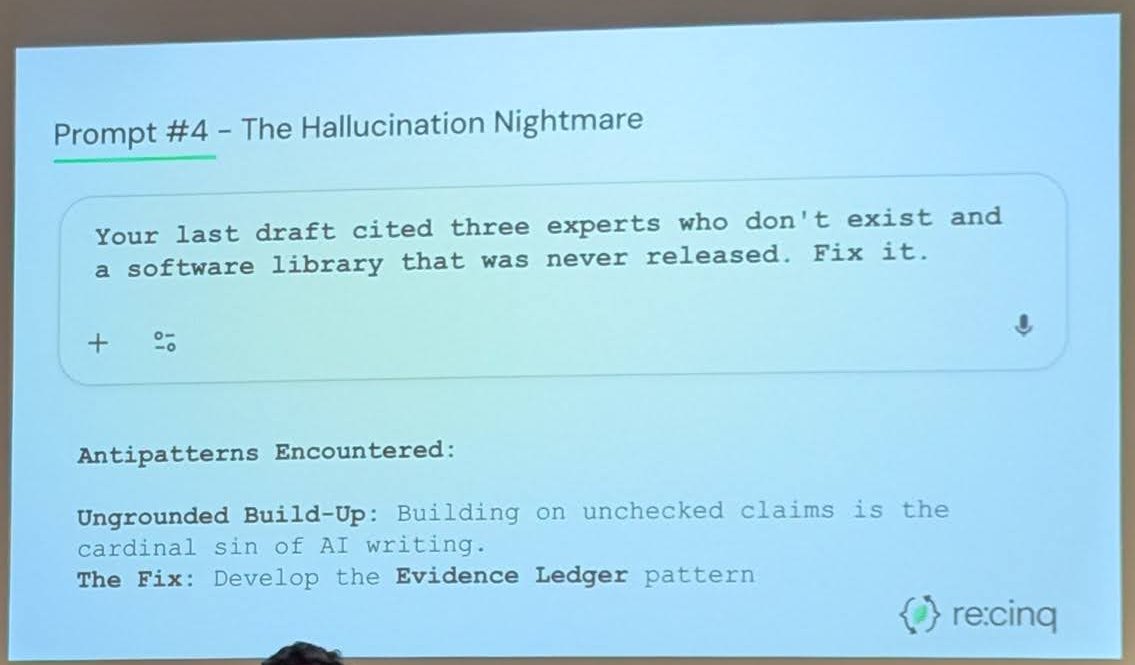
By prompt number four, the tone changed. The slide was titled “Prompt #4 – The Hallucination Nightmare”, and the prompt on it read: “Your last draft cited three experts who don’t exist and a software library that was never released. Fix it.”
Underneath, under “Antipatterns Encountered”, the slide named the problem and the answer:
- Ungrounded Build-Up: “Building on unchecked claims is the cardinal sin of AI writing.”
- The Fix: “Develop the Evidence Ledger pattern.”
The slide gives only the name of the pattern, but the idea is clear from the problem it fixes: if each draft builds on the claims of the previous one, a single invented expert or library spreads through every chapter that follows. The fix has to sit in the process, not in a better prompt.
Prompt #4: invented experts, a library that was never released, and the Evidence Ledger pattern as the fix.
The book: From Cloud Native to AI Native
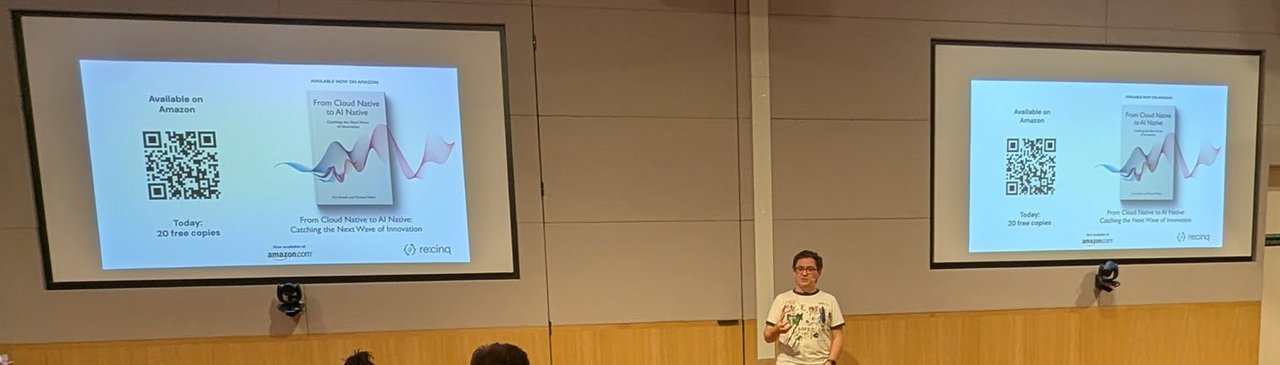
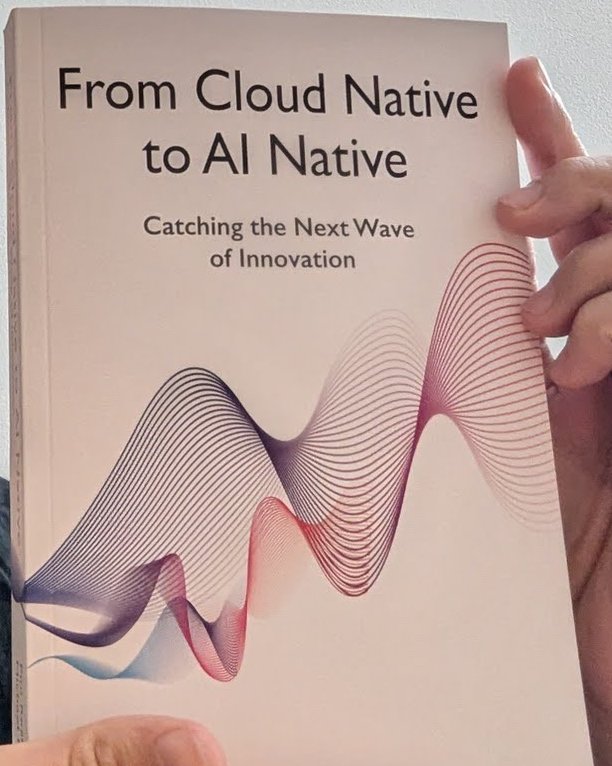
The closing slide showed the book behind the talk: From Cloud Native to AI Native: Catching the Next Wave of Innovation, “Available now on Amazon”, with the line “Today: 20 free copies”. Later in the evening, a name wheel came up on the screen for the draw.
The closing slide on both screens: the book, available on Amazon, and 20 free copies on the night.
re:cinq’s book page names Pini Reznik and Michael Müller as the authors and describes it as a 422-page book with “119 named patterns, pitfalls, and anti-patterns”, accompanied by Pattern Cards for team workshops, and offers the full edition as a free download for a limited time. The patterns vocabulary from the talk is all over the book’s description too.
The cover of From Cloud Native to AI Native: Catching the Next Wave of Innovation.
My take, as a technical author
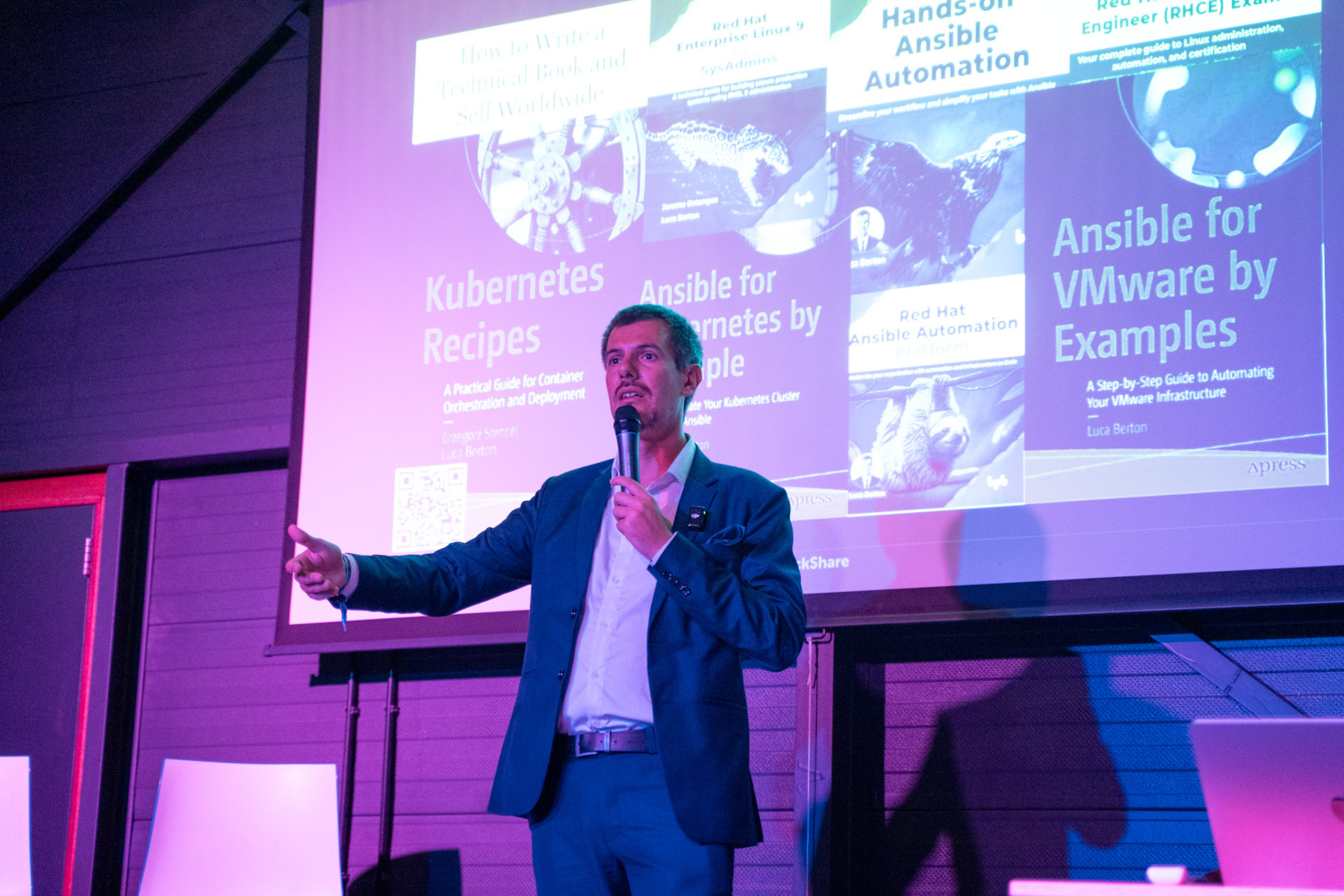
I have written technical books on Ansible, Kubernetes and Red Hat Enterprise Linux with Apress and BPB, among them Ansible for VMware by Examples, Ansible for Kubernetes by Example and Kubernetes Recipes, co-written with Grzegorz Stencel. Four days before this meetup I gave my own talk on the craft, “How to Write a Technical Book and Sell Worldwide” at FikaWorks Day 2025: finding a topic, pitching publishers, structuring a manuscript, and working with technical reviewers and editors. Seeing the same process through the lens of AI made a good counterpart.
The Hallucination Nightmare slide is the one that matched my view of technical writing most closely. In a technical book, every claim, command and library name is something a reader will try. That is why my books are built on real-world examples and tested code. A tested example is evidence the text can stand on. A model that invents three experts and a library breaks exactly that contract. Ungrounded Build-Up is also why a separate, human review step still matters. A model that generated the claim is not the right tool to verify it on its own.
The pattern framing also resonates. In The Recipe Mindset I describe a recipe as a reusable decision: “for this kind of problem, here is the approved path”. “Story in 17 Prompts + Patterns” applies the same idea to the writing process. The prompts are one-off. The patterns are what a second author can reuse. My view is that this is the right way to treat AI in authoring: not as a ghostwriter, but as a component in a process with explicit checks, the same way we treat it in context engineering for production systems.