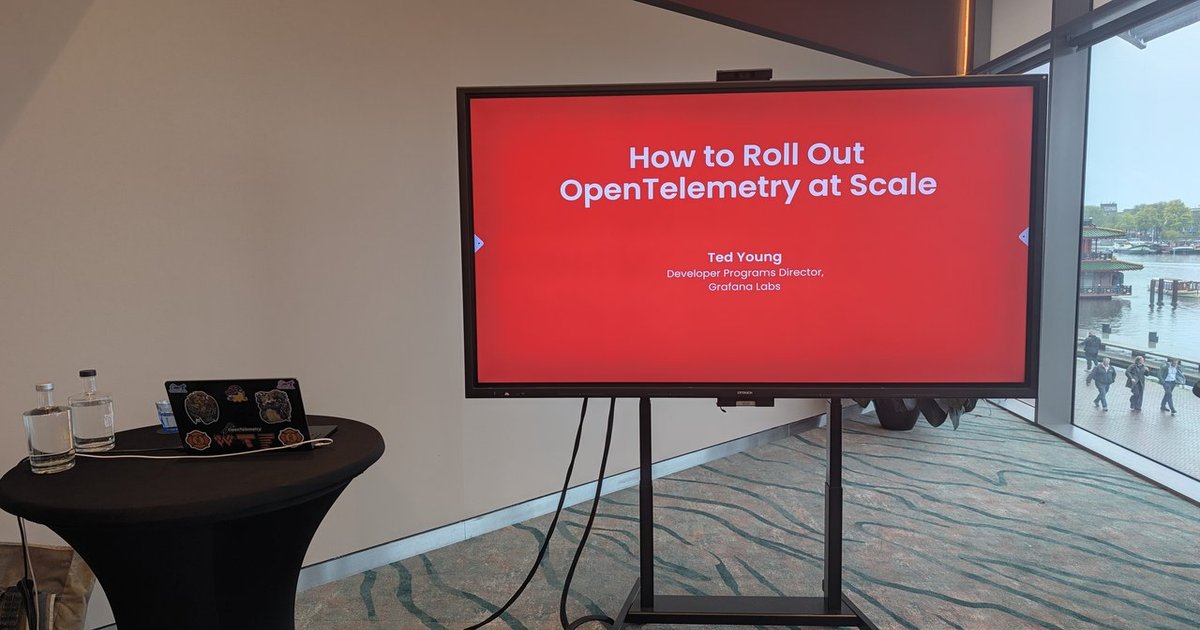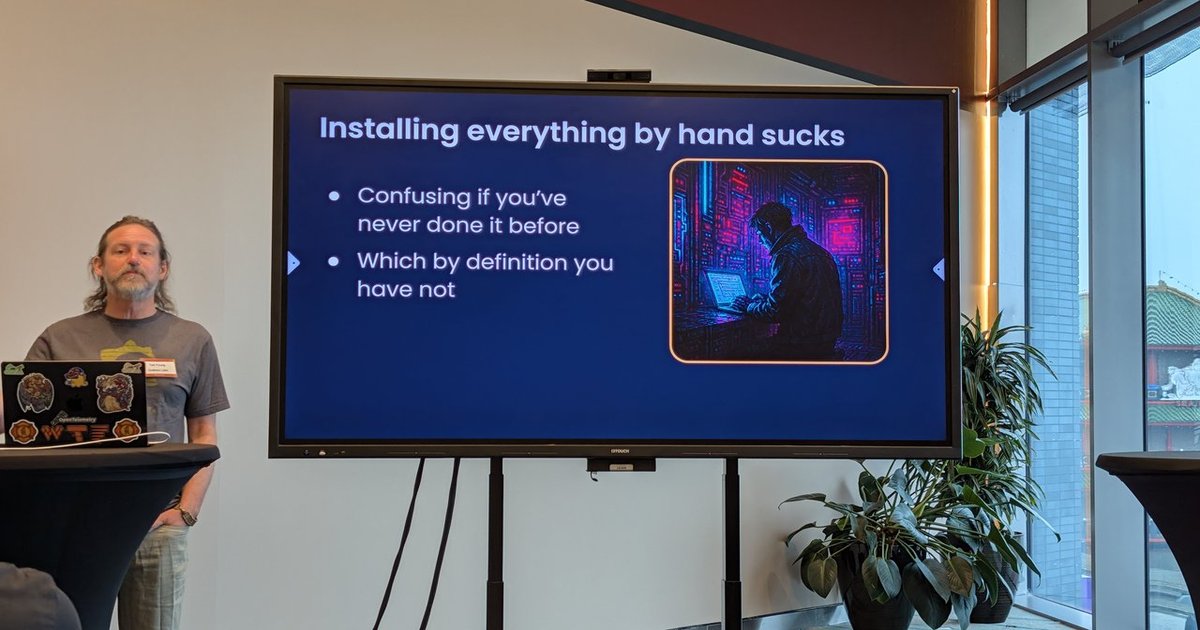
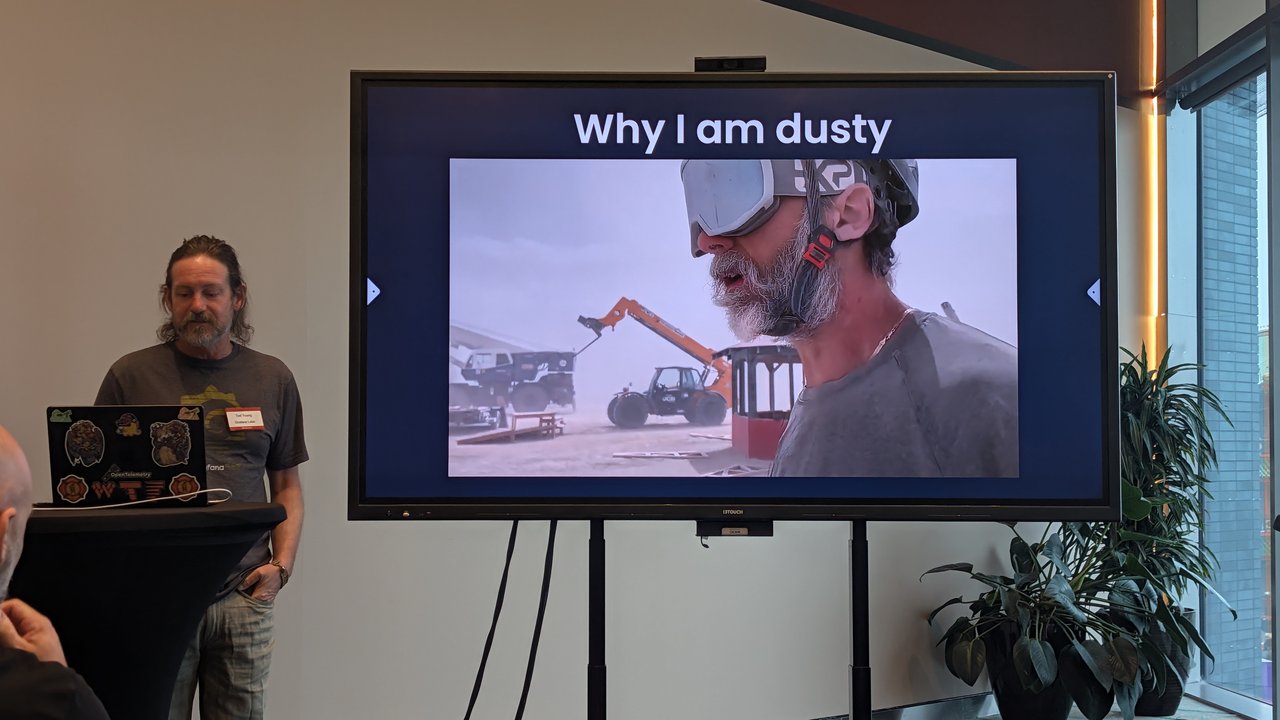
In the middle of a packed technical conference about distributed tracing and telemetry pipelines, Ted Young paused mid-presentation. He looked down at his clothes — still dusted from his recent trip — and said: “Why I am dusty.”
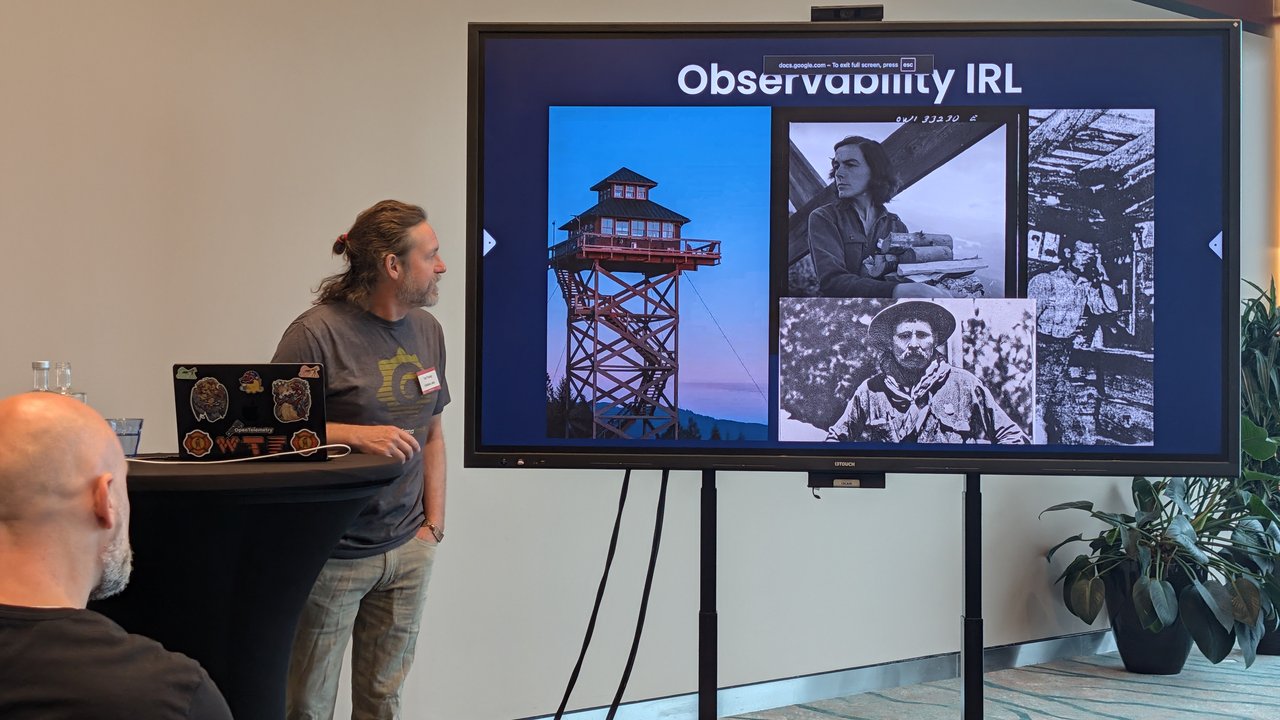
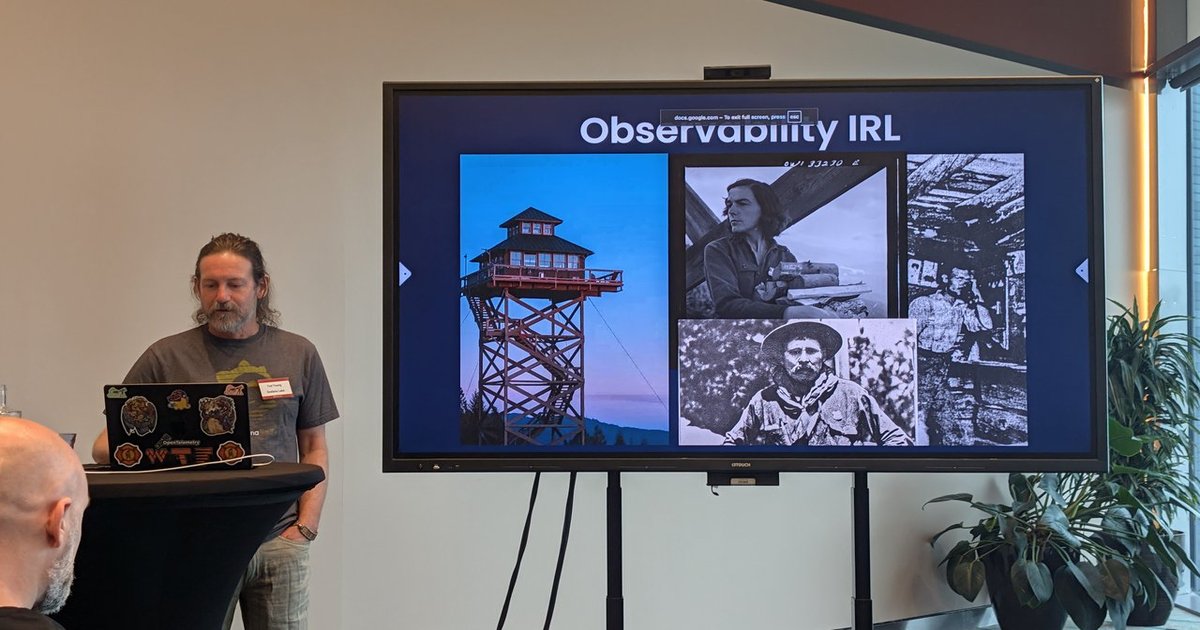
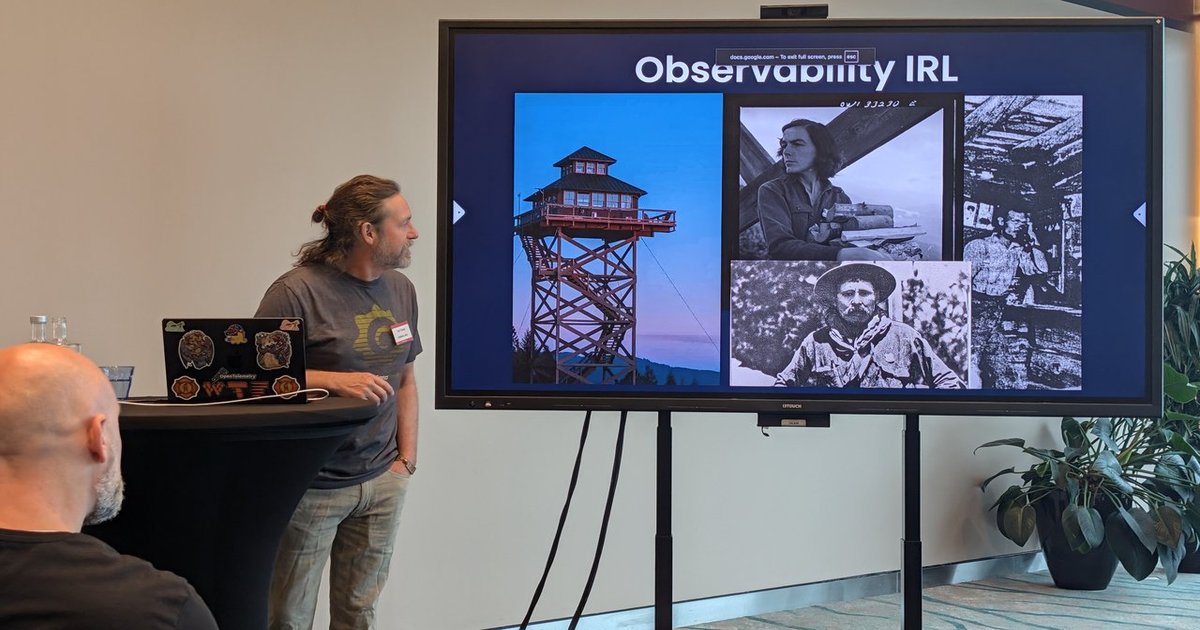
The “LOOK OUT!” tower — a 30-foot art installation at Burning Man 2026. (Photo: Ted Young’s slide at the Grafana Labs OTel event.)
The Dust
The alkaline dust of the Black Rock Desert doesn’t just get on your clothes — it gets in everything. Electronics, food, water bottles, hair. For someone who works with laptops and software all day, the contrast of building something physical in such an extreme environment was jarring.
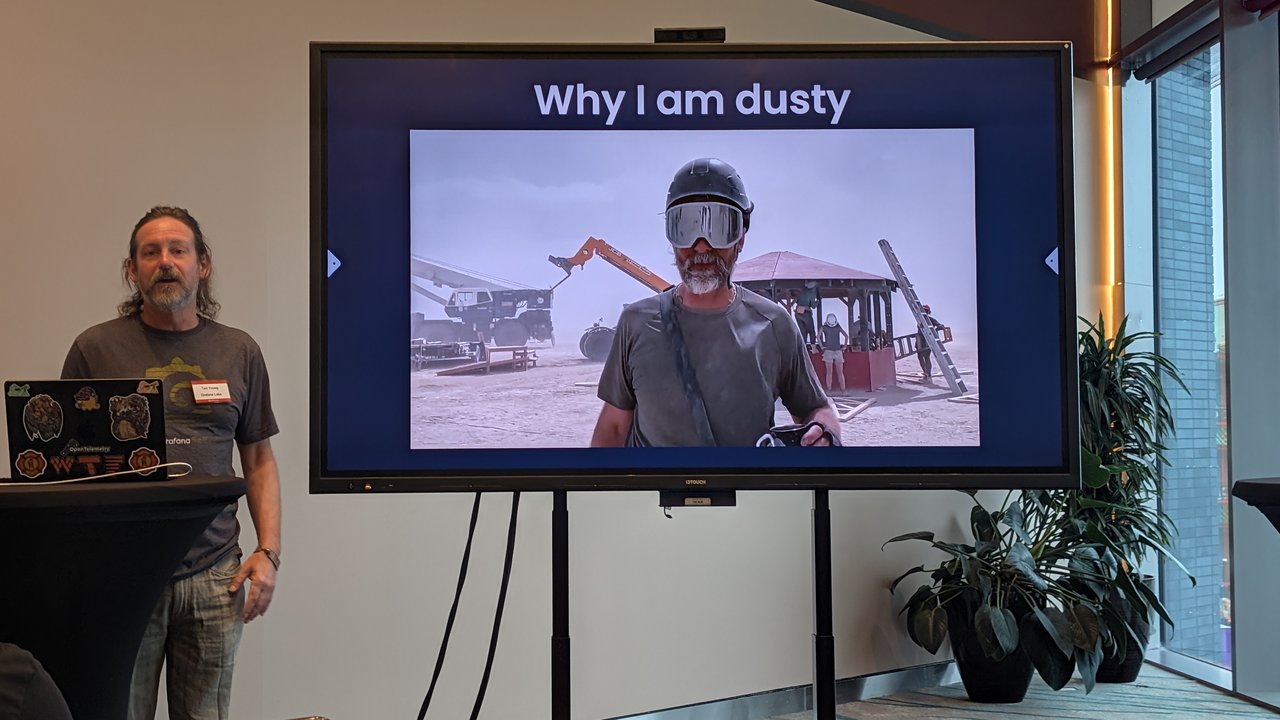
Ted Young at Burning Man, suited up in safety gear for the installation build.
But the dust wasn’t an accident. The “LOOK OUT!” tower — a 30-foot structure designed to be climbed — was built deliberately in the desert. The dust was the medium, the environment, the whole point.
The Installation
The “LOOK OUT!” tower was constructed from steel and wood, featuring a spiral staircase that wound up to an observation deck. Visitors could climb to the top and enjoy a 360-degree view of the playa. The structure was illuminated at night with red neon lettering spelling out LOOK OUT! — both a warning and an invitation.
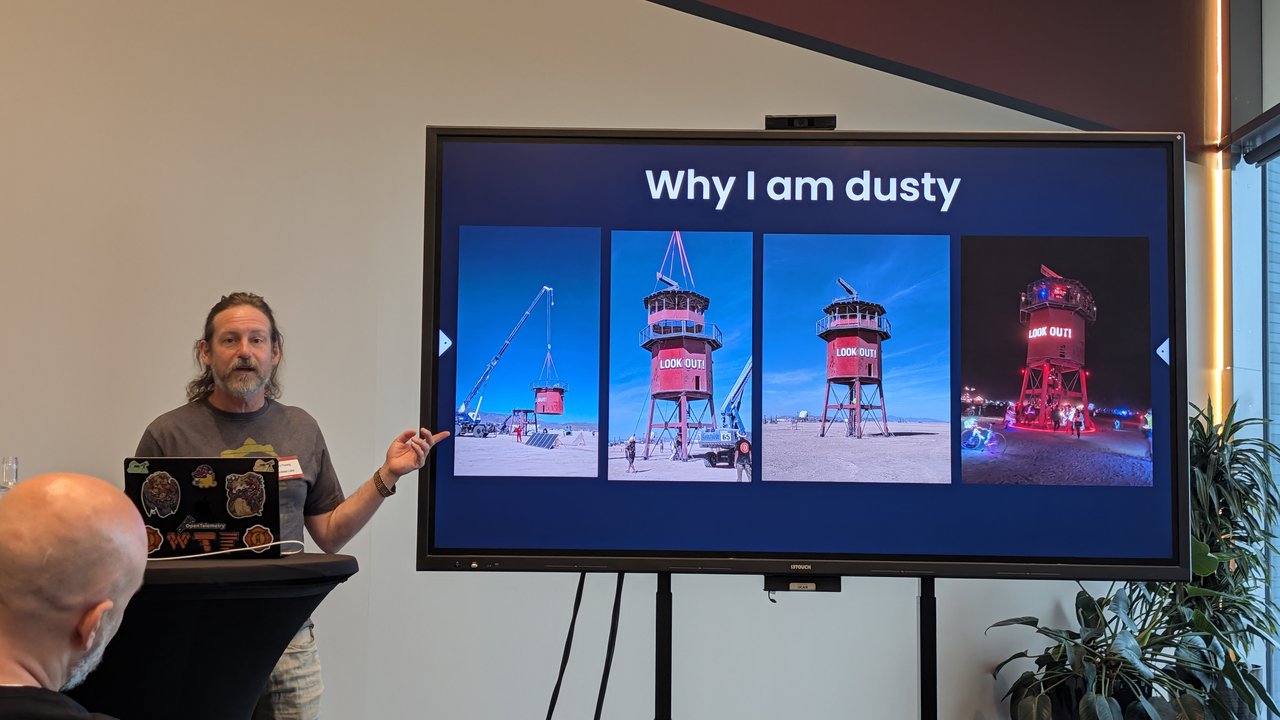
The “LOOK OUT!” tower illuminated at night during Burning Man 2026.
The Connection to Observability
The connection between building an art installation in the desert and building observable software systems might not be obvious on the surface. But Ted drew it clearly:
An art installation, like a software system, is designed to be experienced by others. You build it not just for yourself, but for the people who will interact with it. And just as importantly, you need to make sure people can actually find it, understand it, and get what they need from it.
In the desert, with 80,000 people spread across 70,000 acres, discovery is everything. The tower had to be visible from a distance, clearly marked, and climbable. At night, the neon “LOOK OUT!” sign served as a beacon.
This is exactly what observability does for software: it makes systems discoverable and understandable to the people who need to work with them.
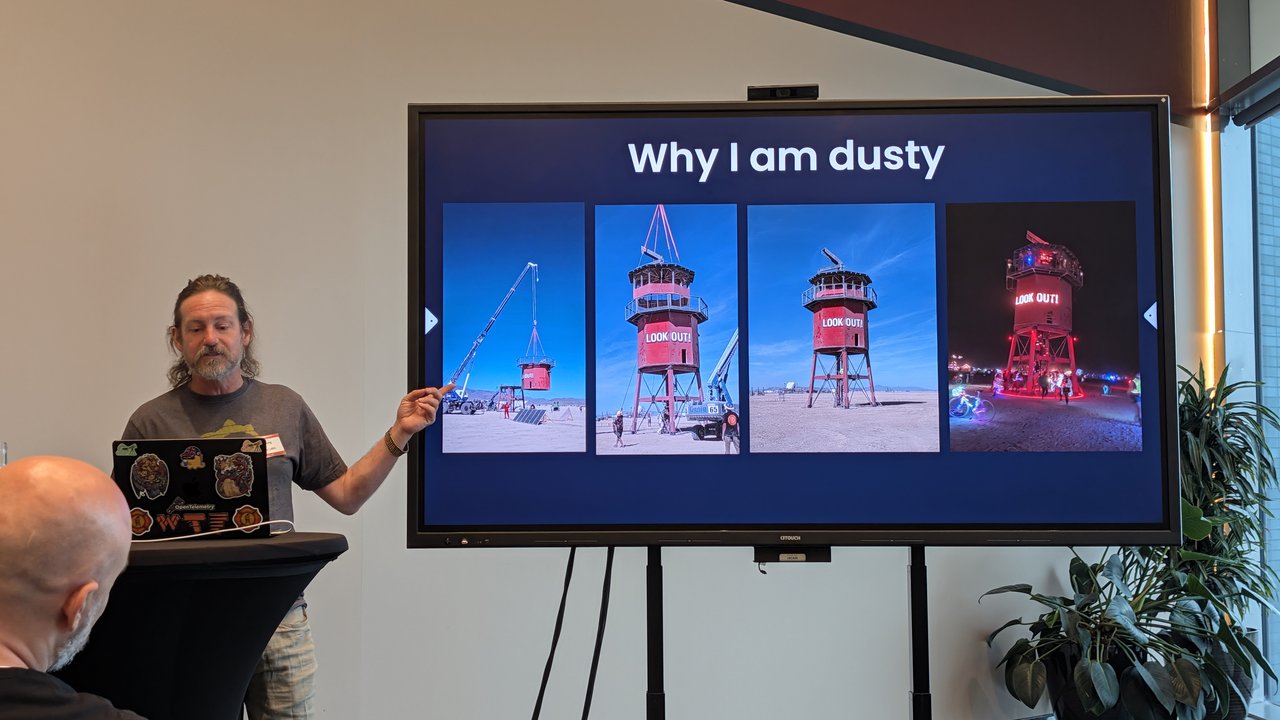
The details of the installation — every surface coated in playa dust, every bolt tightened by hand.
Lessons from the Playa
Ted distilled three lessons from the build that apply directly to software engineering:
Design for the climber. The tower wasn’t just structurally sound — it was designed for people to safely climb it. Similarly, systems should be designed for the engineers who have to operate them, not just for the features they deliver.
Visibility is a feature. The 30-foot height and neon lights weren’t decorative — they were functional. They ensured people could find and use the installation. In software, observability is the same: metrics, logs, and traces should be first-class features, not afterthoughts.
Embrace the environment. The dust was inevitable — fighting it was futile. The best approach was to design for it. In software, the environment is complexity, distributed systems, and inevitable failure. Build for it from day one.
The base of the “LOOK OUT!” tower, where the build team planned each section.
The Meta-Metaphor
By the end of the story, the audience had figured out the meta-metaphor. Ted wasn’t just talking about art installations and software — he was talking about sharing. The dust was proof that he had been somewhere, done something, built something with his hands. It was a badge of having ventured into the unknown and returned with stories to tell.
For engineers, that’s what observability is: proof that you’ve been somewhere (the production system), dealt with something (an incident), and can tell others what happened.
Related Reading
- How to Roll Out OpenTelemetry at Scale: Grafana Labs Amsterdam Recap
- Ted and Ed’s Hierarchy of Observability Needs
- Observability IRL: Fire Lookout Towers and Software Monitoring
About the Author
I am Luca Berton, AI and Cloud Advisor. I work at the intersection of cloud security, platform engineering, and enterprise AI deployments. Book a consultation.