The closing keynote at a distributed-database conference is not usually where I expect to take the most notes. At RoachFest London 2026, Major Tim Peake — the British ESA astronaut who spent six months aboard the International Space Station — spent close to an hour drawing a straight line between space mission operations and the exact problems every engineer in that room deals with: launches that cannot be rolled back, decisions made with incomplete information, and teams that have to hold together when things go wrong in real time. I already covered his closing framing on resilience in my main RoachFest recap — this is the rest of what he shared, in more depth.
Launch Day
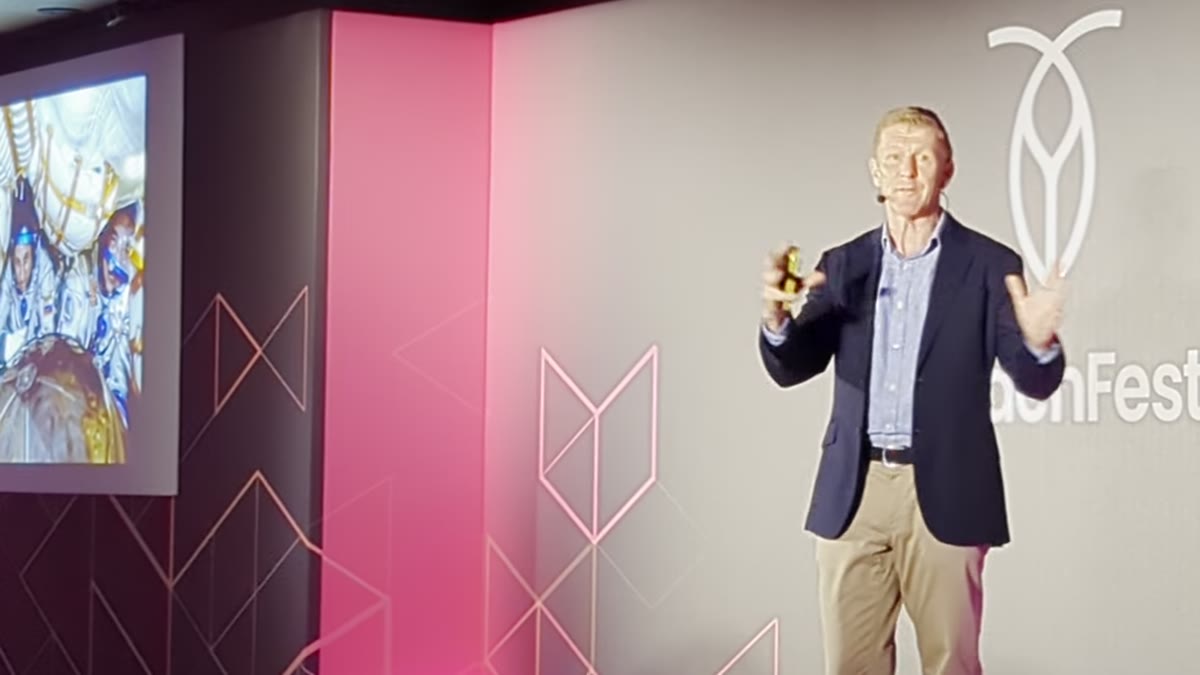
What does it feel like when the hatch closes just two inches from your face? Twenty minutes before lift-off, Tim’s instructor gave him two pieces of advice that were somehow both reassuring and not: keep an eye on the rocket on the way up — remember it was built by the lowest bidder — and a thousand things can happen during launch, but only one of them is good. Not exactly the pep talk you would hope for, but it works, because launch day itself is meticulously choreographed to counteract exactly that kind of nerves. Everything starts on time and stops on time, all designed to get the crew to the pad in a calm, focused state of mind. And then the crowd quietly shrinks — from around a hundred people, down to ten, and finally to just three of you inside the rocket.
Spacewalk Fears and VR Jet-Pack Training
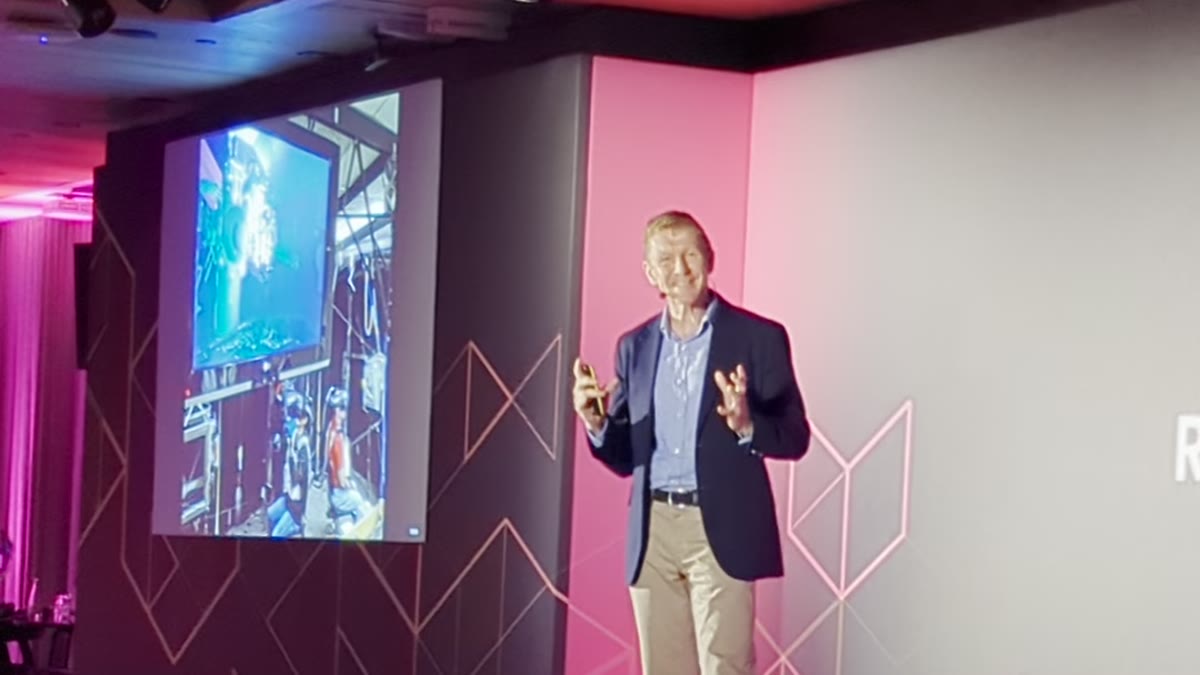
The greatest fear on a spacewalk, Tim said, is not the vacuum of space — it is letting go of the tether. If it happens, the emergency jet pack gives you exactly 20 seconds of nitrogen thruster fuel standing between you and disaster, and the only way to actually learn to fly it is in VR trainers in Houston. He called the qualification exam for it “the coolest exam I’ve ever passed” — the ticket that certifies an astronaut to spacewalk at all. It is a good reminder that even at the most extreme end of high-stakes work, the preparation is deliberately built to be practiced under controlled conditions long before it is ever needed for real.
Soft Skills, Psychological Safety, and Cave Training
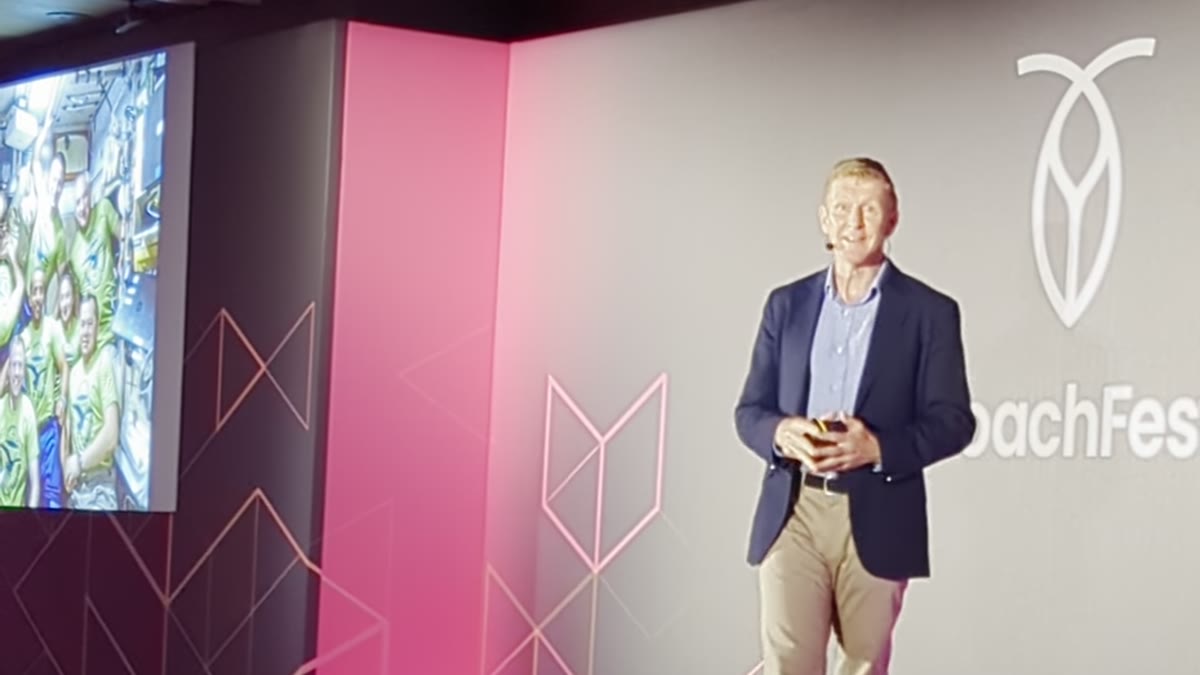
What does cave training have to do with building resilient engineering teams? More than it sounds. Confined, international, multicultural crews need the right psychological profile and actively trained interpersonal skills — soft skills are not optional in that environment, they are selected for and rehearsed. Space agencies use days of cave training, with sleep disruption and no clocks, specifically to surface people’s real personality under pressure, on the theory that if you make someone cold, wet, tired, and hungry, their true character shows through. The hardest skill isn’t recognizing stress in yourself — it’s recognizing it in your crewmates, and knowing when and how to help.
Two practices Tim described map directly onto engineering incident culture. First: always open the floor for safety points first, no exceptions — psychological safety is non-negotiable, and incremental gains compound, so even flagging a small hazard moves the whole team forward. Second: briefing and debriefing are not about criticizing individuals, they are about collective operational effectiveness. If you are not learning from a debrief, you are simply standing still.
Decision-Making and the Astronaut Mindset
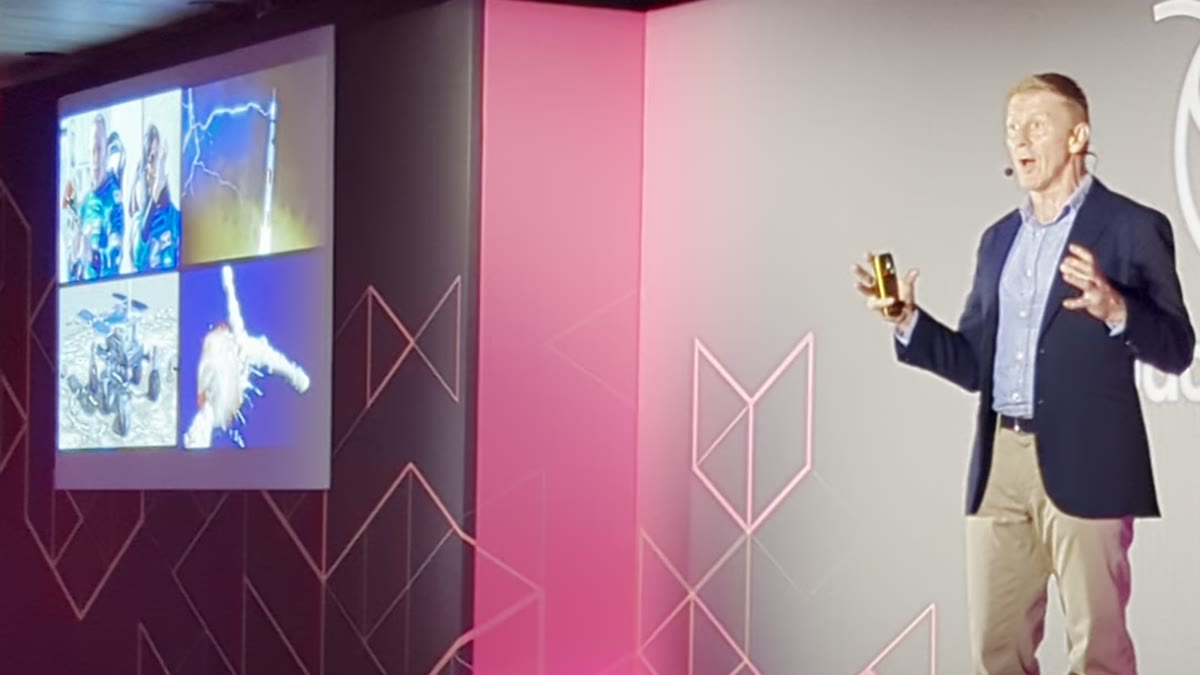
This was the part of the talk that felt most directly lifted from an incident-response runbook, except it came from an astronaut, not an SRE handbook. Tim distilled a four-step decision framework across his career: gather the minimum facts you actually need, because you will never have the maximum; generate three or four high-quality options rather than fixating on one; apply your risk matrix and reasoning to each; then take action, delegate authority, commit — and iterate as the situation evolves.
The framing underneath it is worth holding onto on its own: don’t confuse outcome quality with decision quality. In an unpredictable world — his examples were the 2008 financial crisis and COVID — a rigorous, repeatable process is what frees you to act without being paralyzed by fear of the result, because a good process can still produce a bad outcome without having been a bad decision. He also described what NASA calls the absence of a “master alarm” — without one, teams drift from normal into dangerously degraded states with no one raising the flag, which will sound uncomfortably familiar to anyone who has watched a system slowly decay before an outage with nobody quite willing to call it. Checklists, in his framing, are not bureaucracy; they are written in blood, sweat, and tears, encoding decades of mistakes and hard-won lessons. And the helicopter-pilot mindset he trained in civilian life before joining ESA — if nothing has gone wrong yet, it’s about to — is a genuinely useful default: stay situationally aware, and pre-generate “what if” options so you are already ahead of the shock when things do go wrong. Off-nominal does not mean incapacitated: acknowledge the state, follow the procedures, work to restore normal, repeat.
Launch Rituals and Life on the ISS
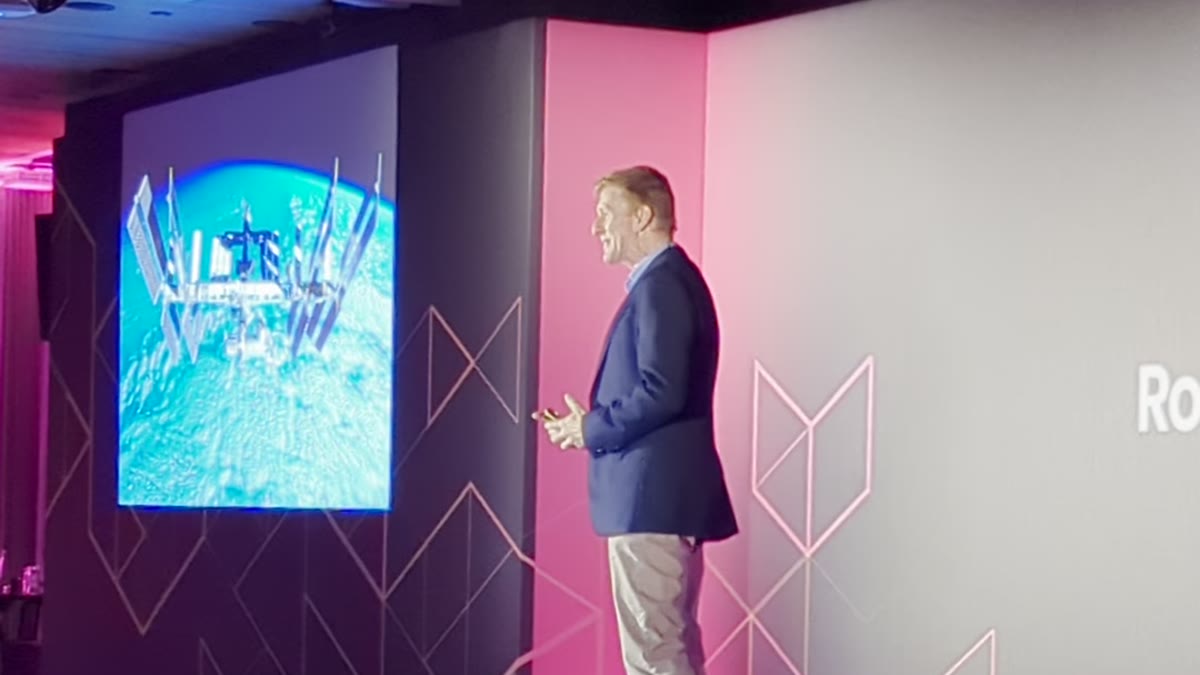
Not everything was systems thinking — some of it was just vivid, human detail. A pre-launch ritual: being issued Wellington boots and blue lunch boxes before heading out to the pad. Saying goodbye to family on launch day, knowing exactly what is about to happen and that there is no undoing it. Six months aboard the International Space Station, which he described simply as “this amazing feat of human engineering,” orbiting Earth sixteen times every single day. And one discipline he named that engineers will recognize instantly even outside spaceflight: the discipline of “good enough” — learning when to stop refining a plan or a system and move forward with what you have.
The New Space Economy
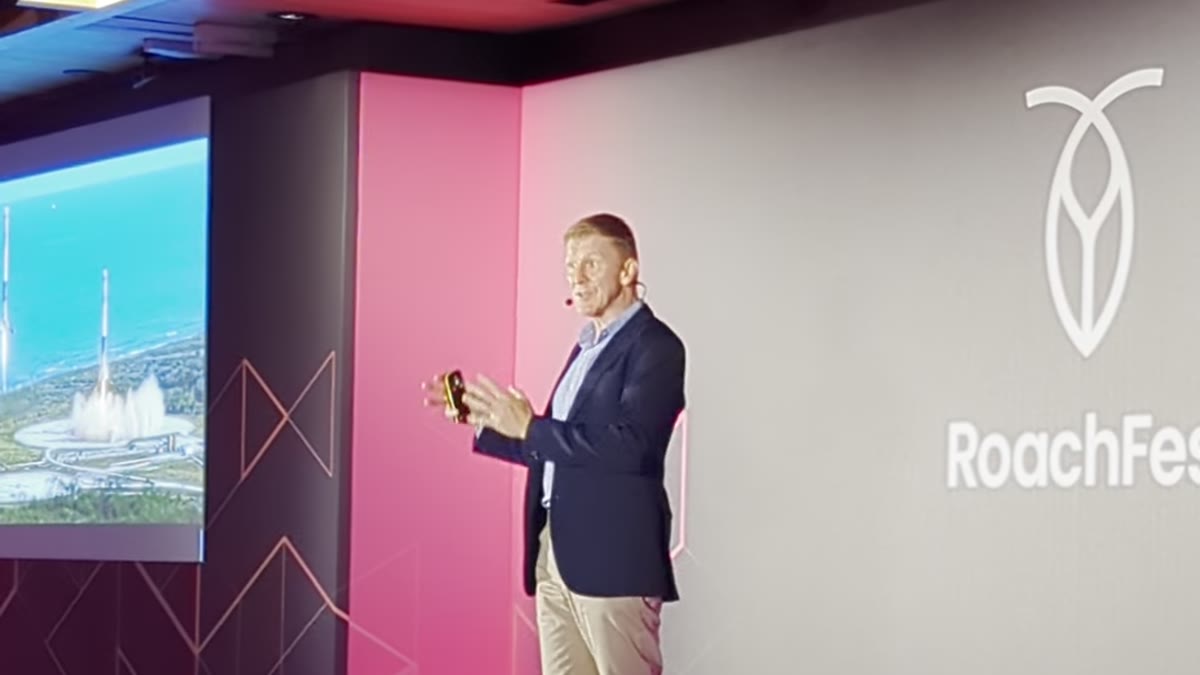
The numbers Tim shared on the economics of reaching orbit are the clearest illustration I have seen of what reusability actually does to a cost curve: $57,000 per kilogram to launch on the Space Shuttle, versus roughly $1,400 per kilogram on Falcon Heavy today, with Starship promising to push that even lower. That is not an incremental improvement, it is a different economic regime — and it is what is now making entirely new markets viable: space-based solar power, semiconductor manufacturing, factories in low Earth orbit. On the exploration side, he noted Artemis 2 had already orbited the Moon earlier this year, Artemis 3 will test hardware in low Earth orbit, and Artemis 4, targeted for 2028-29, aims at a sustainable research base at the Moon’s South Pole. An unexpected highlight at a distributed-database conference, and a reminder that the biggest infrastructure challenges of our generation extend well beyond Earth.
Related Reading
- RoachFest London 2026: Distributed SQL Meets AI Resilience
- Form3 and Kevin Holditch: Surviving Cloud Outages with CockroachDB
- Human-in-the-Loop AI Database Migrations
- Inside Cockroach Labs’ AI Playbook: The Database Reckoning
About the Author
I am Luca Berton, AI and Cloud Advisor. I work at the intersection of distributed systems, platform engineering, and enterprise AI deployments. Book a consultation.