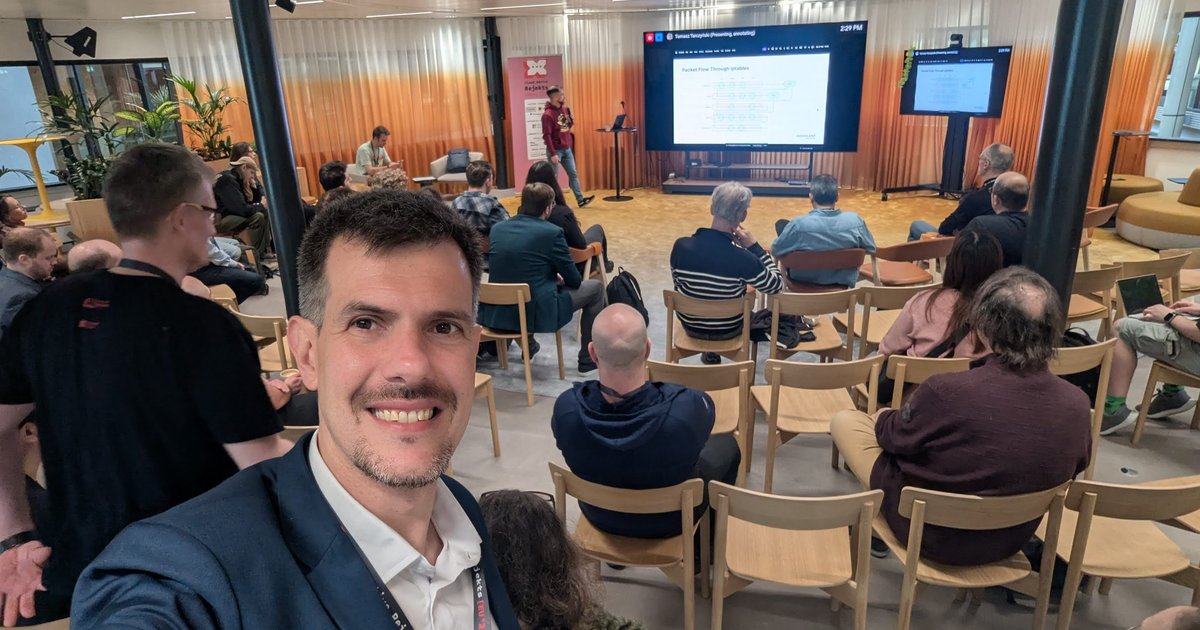
On Saturday 21 March 2026 I was co-MC at Cloud Native Rejekts in the Miro office in Amsterdam, the community-run “B-side” conference held before KubeCon. Between introductions I walked the floor with my phone and asked people a simple question: what are you working on right now?
I wrote up the stage side of the day in Master of Ceremonies at Cloud Native Rejekts 2026 and the shorter co-MC recap. This post is about two of the hallway conversations from the afternoon: one with someone who simplifies platforms for a living, and one with an engineer from the company hosting us.
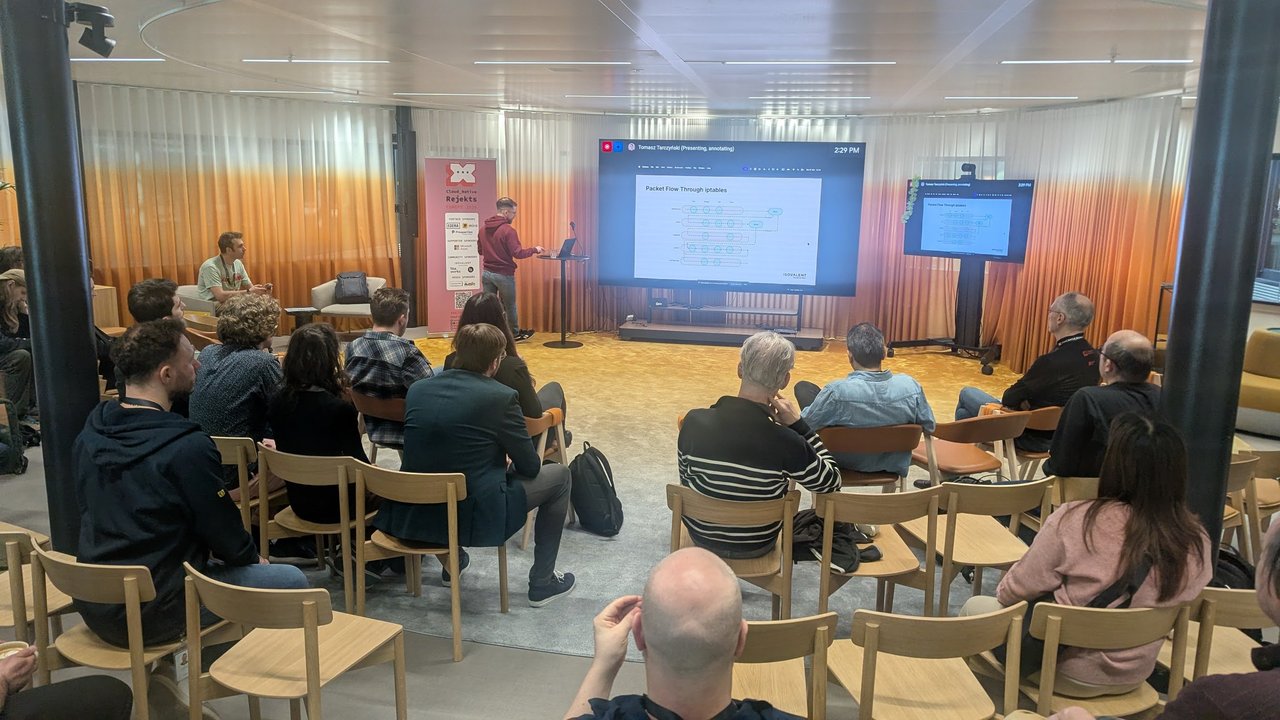
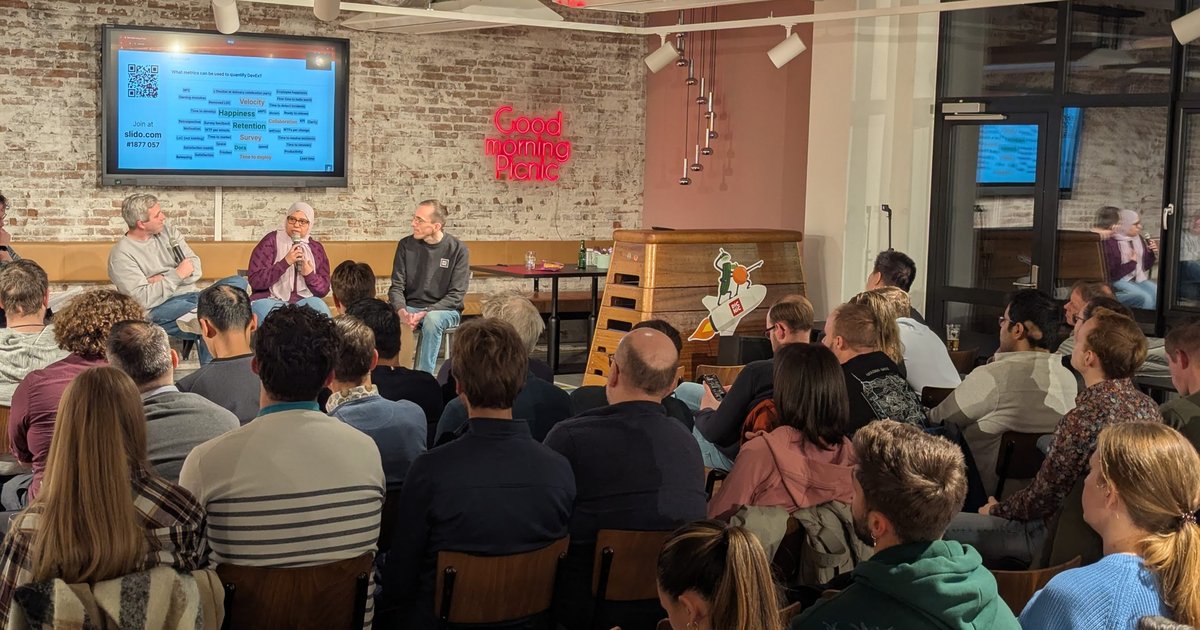
Room 2 in the early afternoon, about half an hour before I recorded these two conversations.
Steve Wade, Platform Fix: delete things to improve
Steve Wade introduced himself as the founder of Platform Fix, and summed up the job in one sentence: “I get brought into organizations when they need to delete things to improve and reduce the levels of complexity they have in their organization.”
At the moment, he said, much of his work is with financial institutions and with AI companies, which he put down to AI now being everywhere. The common thread is platforms that have become too complicated. He gave two concrete examples of what simplifying looks like in practice:
- Fewer Terraform modules. Cutting down the number of modules an organisation maintains.
- Less tooling from the cloud native ecosystem. Reducing how many tools are in use to get the job done.
His point about the CNCF was the part I found most interesting. In his view, one of the best and also one of the worst things about the CNCF is that the landscape is so vast that people have a lot of choices to make. In large organisations, several teams often want different tools to reach the same goal, and from a platform team’s perspective that makes things very difficult. His approach is to reduce that overlap and use a set of frameworks to decide which tools fit, because, as he put it, “Not every tool is right for every organization.”
In a second, shorter clip he repeated the same focus: working with financial institutions and AI companies on simplifying their cloud native platforms.
My take: this matches what I see on platform engagements. Tool sprawl is rarely one bad decision. It is many reasonable team-level decisions that nobody reconciled. A curated, opinionated set of tools, with a written reason for each one and a short path for teams to ask for exceptions, is usually worth more to a platform team than another tool. Deleting a component only counts once you have also removed the alerts, runbooks and on-call knowledge that came with it.
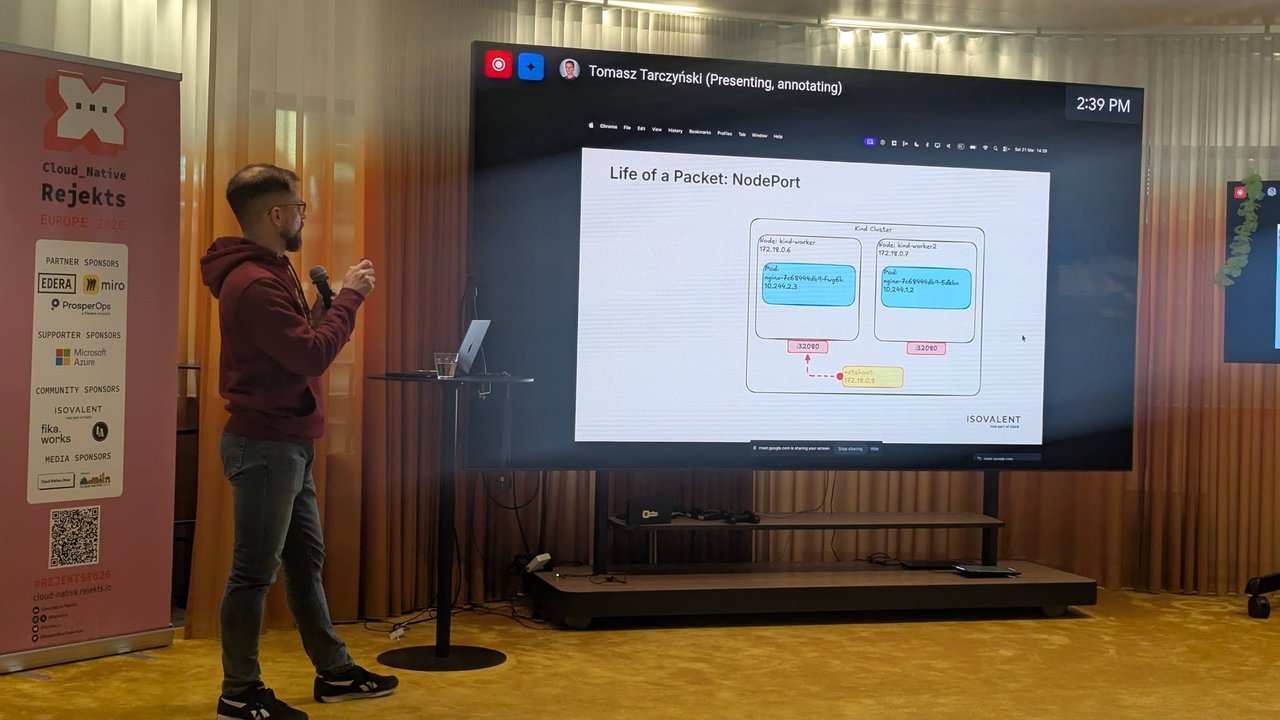
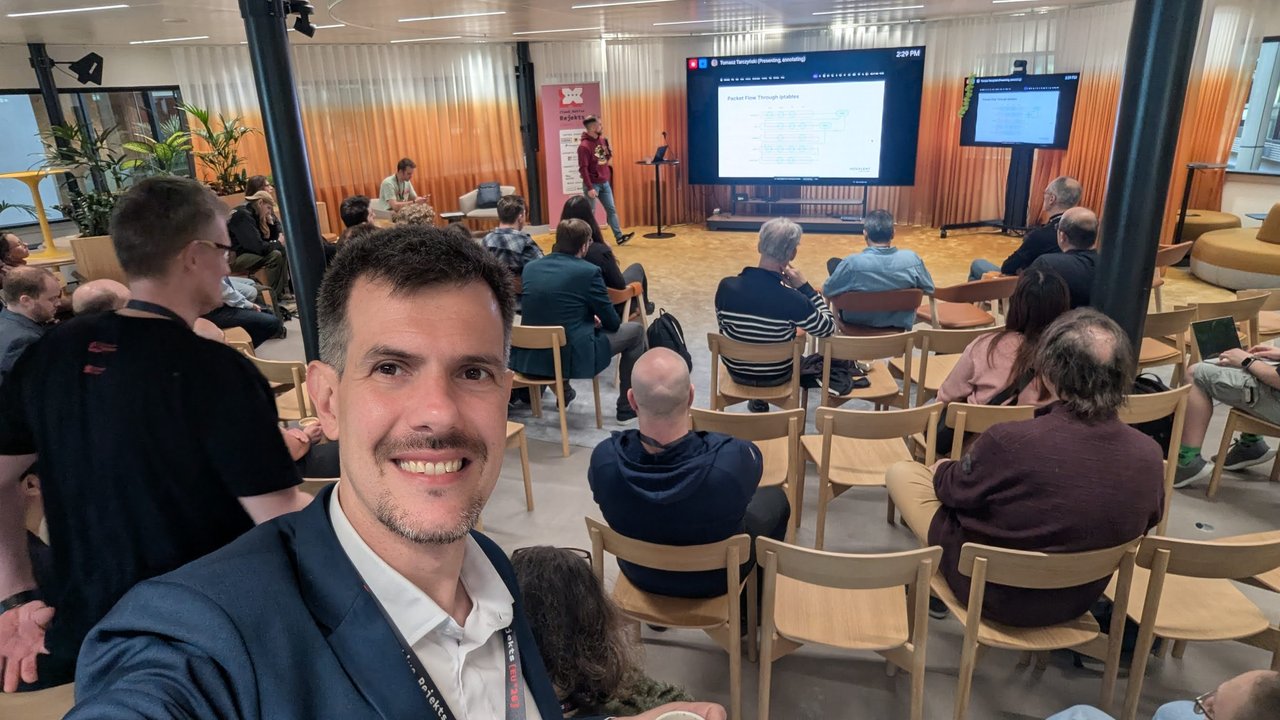
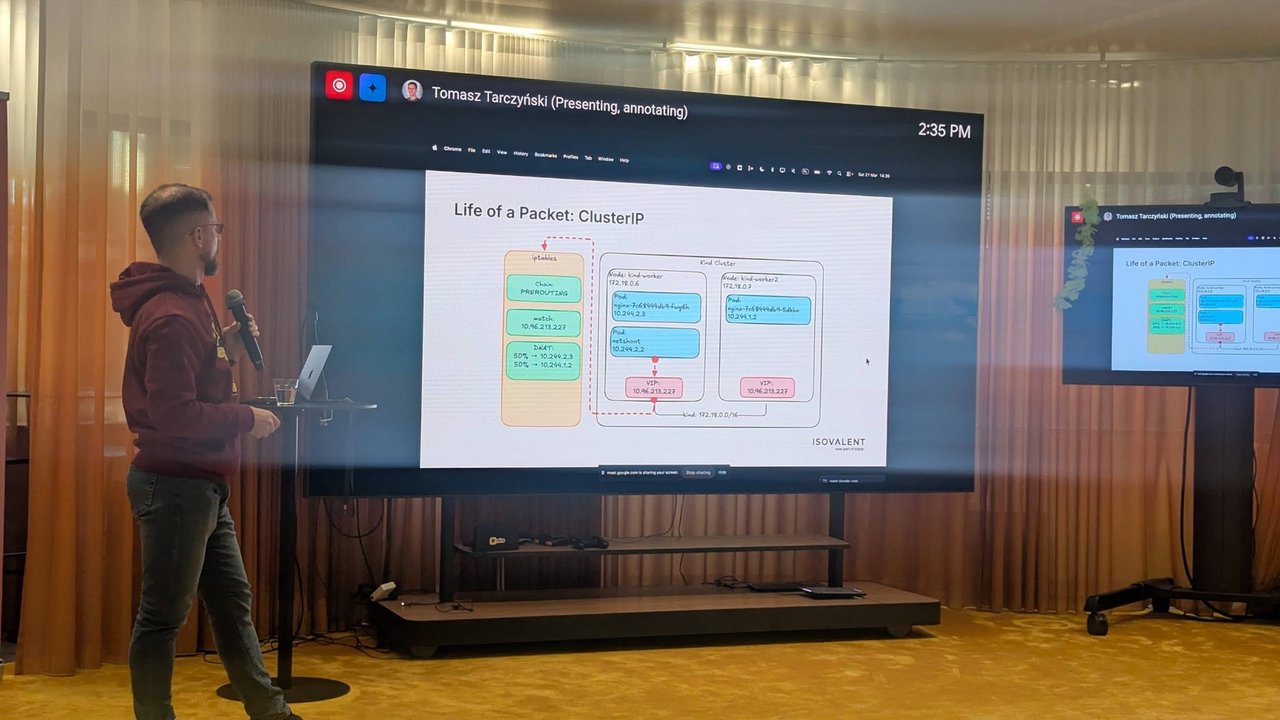
Left: Tomasz Tarczyński following a packet through a NodePort service in his kube-proxy talk. Right: checking in on Room 2 between introductions.
Rodrigo, Miro: the host’s view
The second conversation was with Rodrigo, who works at Miro, the company that opened its Amsterdam office to us for the whole day. He described himself as an SRE and software engineer working on Miro’s compute platform and everything around its cloud infrastructure.
It was his first Rejekts. He told me he had always been fond of the content presented at the event, and that on the day “I’m really amazed by everything that I’m hearing.” The conversation came back to the idea at the heart of Rejekts: these talks did not make it into KubeCon, but they made it here.
My take: I like it when the engineers behind the venue’s own infrastructure come down to the talks. Many of the afternoon sessions, from Kubernetes networking without kube-proxy to pod right-sizing and multi-tenancy, are the kind of problems a compute platform team runs into. Thanks again to Miro for hosting.
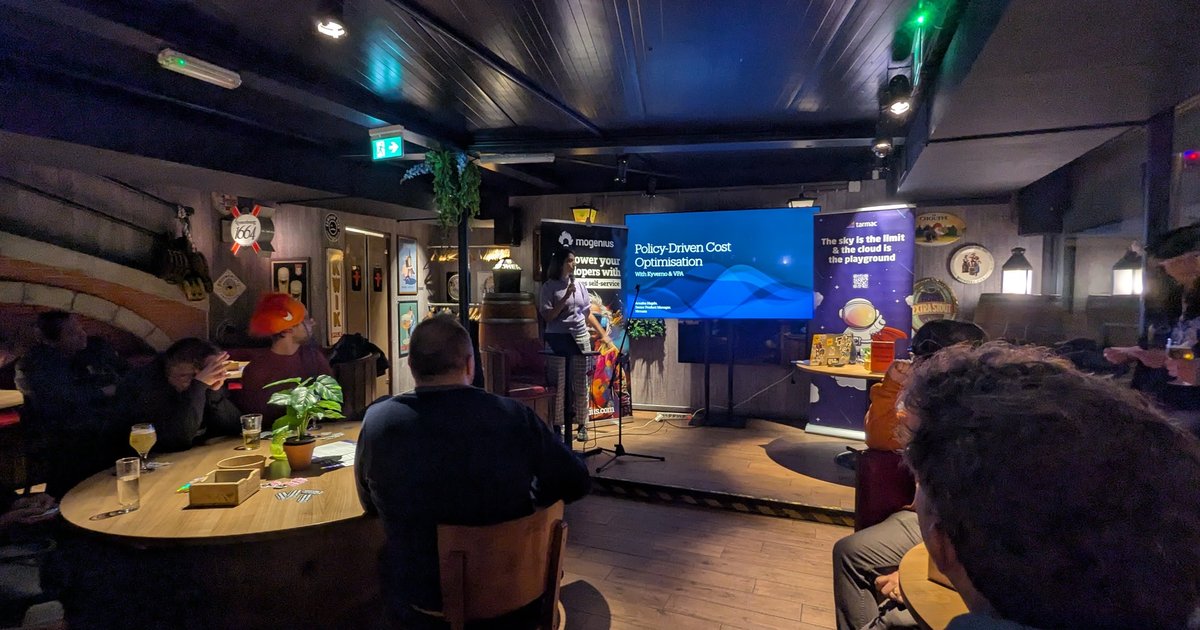
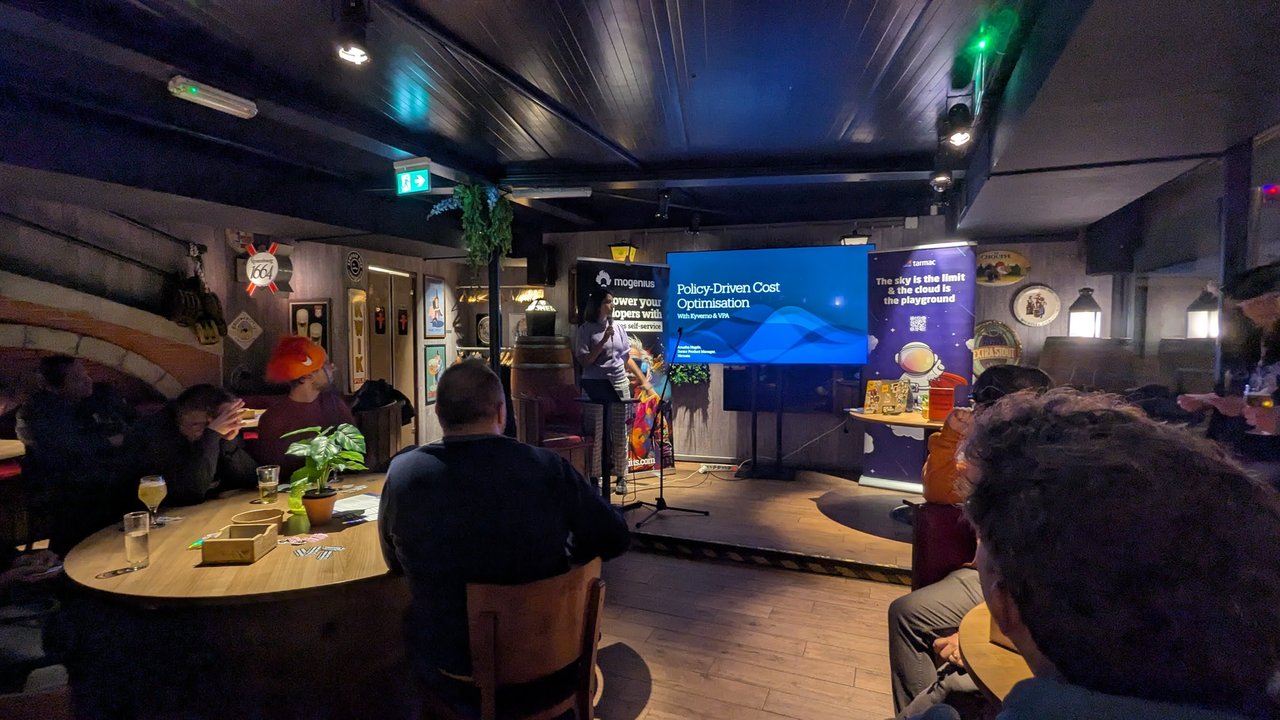
Afternoon break next to the Rejekts sponsor banner.
What the two conversations had in common
Both interviews came back to the same idea from different sides. Steve spends his time removing what platforms do not need. Rodrigo works on Miro’s compute platform and came to Rejekts for the talks that did not get a KubeCon slot. My reading is that both are close to the same question: how to keep a platform small enough that the people running it can still reason about it.