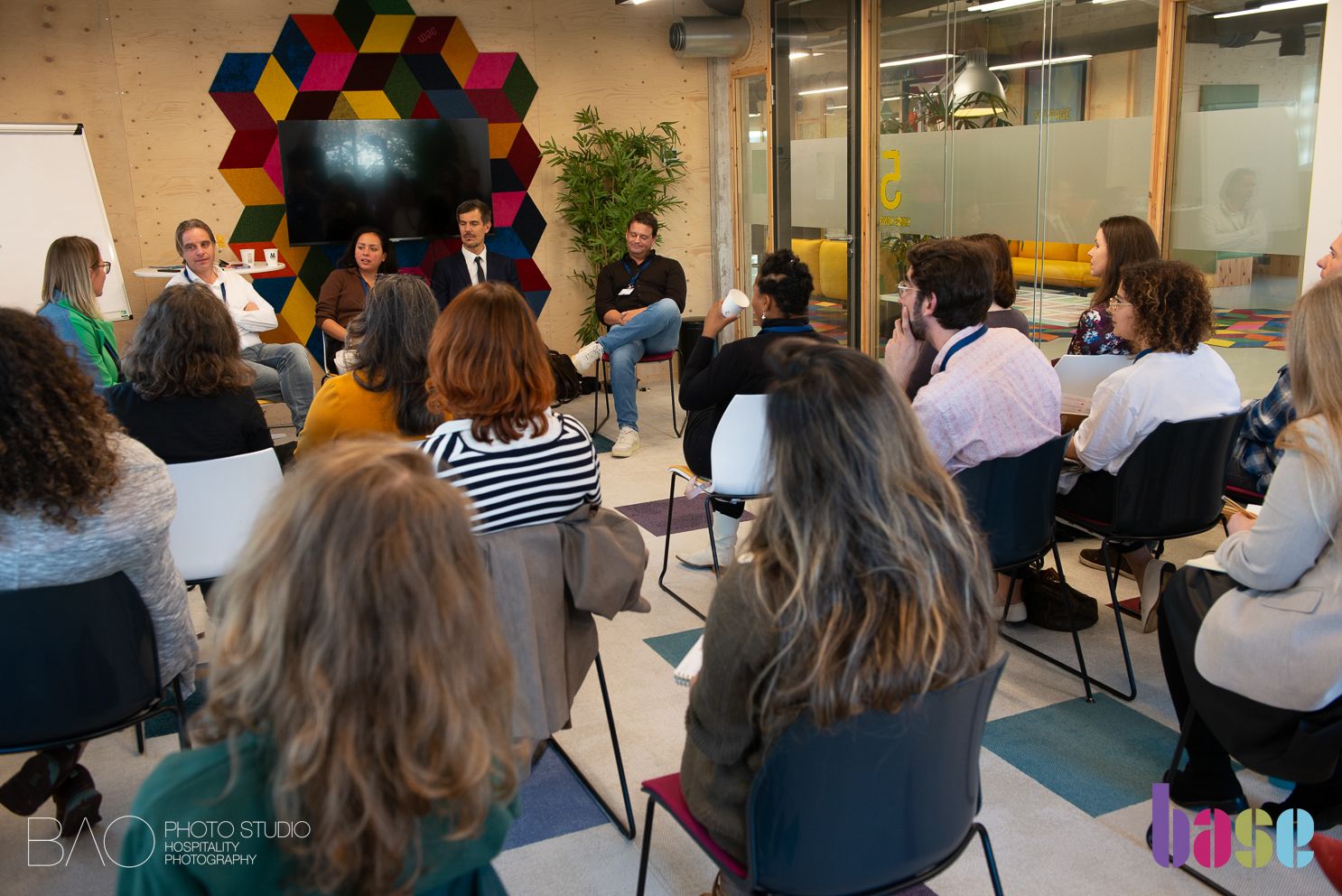
I participated as a panelist at the Starweaver AI in Professional Education (AIPE) Summit 2026 — a virtual event on May 14 that brought together 1,000+ professionals and 20+ global experts to explore how AI is transforming professional learning.
The Panel: AI Agents That Onboard, Coach, and Upskill
My session focused on one of the most provocative questions in enterprise learning: “The AI Agent That Onboards, Coaches and Upskills — Without a Human in the Loop.”
The panel featured:
- Praveen Gogia — AI and Education thought leader
- Hariraj Vijayakumar — Enterprise AI practitioner
- Ritesh Vajariya — AI/ML leader
- Luca Berton — AI and Cloud Advisor
Moderated alongside insights from Paul Siegel (Starweaver founder), Hector Sandoval, and Sharad Chadha.
Key Discussion Points
Can AI Fully Replace Human Trainers?
The honest answer: not yet for everything, but already for more than most organizations realize. The panel explored where autonomous AI agents excel:
- Onboarding workflows — structured knowledge transfer, policy explanations, system walkthroughs
- Technical skill building — hands-on labs, code reviews, configuration exercises
- Continuous coaching — real-time feedback during work, not just in training sessions
- Personalized learning paths — adapting content and pace to individual progress
Where Human-in-the-Loop Still Matters
We also discussed the boundaries — where AI agents need human oversight:
- Soft skills development — empathy, leadership, complex interpersonal dynamics
- Edge cases — novel situations outside training data
- Cultural context — organizational nuances that are hard to encode
- High-stakes assessments — certification decisions with career implications
The Infrastructure Behind AI Tutors
From my perspective as someone who builds AI platforms on Kubernetes, the conversation naturally touched on what it takes to run these AI agents reliably:
- Low-latency inference — coaching agents need sub-second responses to feel natural
- Context persistence — agents must remember where a learner is across sessions
- Multi-modal content — combining text, code, video, and interactive exercises
- Scale — serving thousands of concurrent learners without degradation
- Cost management — making AI-powered education economically viable at scale
The Summit Format
The event featured:
- 2 keynotes from industry leaders
- 7 technical sessions covering AI applications in education
- Live demos of AI-powered learning platforms
- Real frameworks — not just theory, but deployable approaches
Speakers represented organizations including Coursera, TikTok, LinkedIn (alumni), FutureLearn, and multiple enterprise AI companies.
My Takeaway
The education industry is at the same inflection point that DevOps was 10 years ago. The teams that figure out how to deploy AI agents for professional development — reliably, at scale, with measurable outcomes — will fundamentally change how organizations build talent.
The key insight from the panel: it is not about replacing human educators entirely. It is about using agentic AI to handle the 80% of learning that is structured and repeatable, freeing human experts for the 20% that requires genuine creativity and judgment.
Community Reactions
Starweaver (event organizer) featured the official speaker announcement:
“We’re excited to welcome Luca Berton to the AI in Professional Education Summit on May 14. A Cloud and DevOps Automation Leader and Ansible expert, Luca brings 18+ years of experience building secure, large scale infrastructure across AWS, Azure, and GCP. From leading roles at JPMorgan Chase & Co. to driving automation at Dell Technologies, he combines deep technical expertise with real world impact.”
Ritesh Vajariya (co-panelist) shared his takeaways on LinkedIn:
“Just wrapped a sharp 60 minutes at the AI in Professional Education Summit 2026, on a panel that asked the uncomfortable question: can AI onboard, coach, and upskill — without a human in the loop? My short answer: yes, for about 60–70% of tasks by volume. And no, for the part that actually matters — culture, sponsorship, and the moments that shape a career.”
His three key insights:
- The L&D role is not ending — the L&D role as a content producer is ending. The L&D role as an outcome owner (designing systems, measuring time-to-productivity, owning governance) is just beginning.
- ROI must shift from cost reduction to time-to-revenue compression — a new hire reaching productivity in 30 days instead of 90 is a 90-day acceleration on the revenue curve, per hire. That is the conversation CFOs actually want.
- AI favors T-shaped specialists with leverage — deep expertise in one domain, AI fluency across many. The generalist using AI is replaceable; the specialist using AI is not.
Ritesh also used a powerful analogy: the 787 auto-pilot. The plane flies itself for most of the flight. The pilots are still in the cockpit. Nobody calls that a pilotless plane.
With 1,150+ registrants and sharp audience questions, this was clearly a summit that hit a nerve in the professional education space.