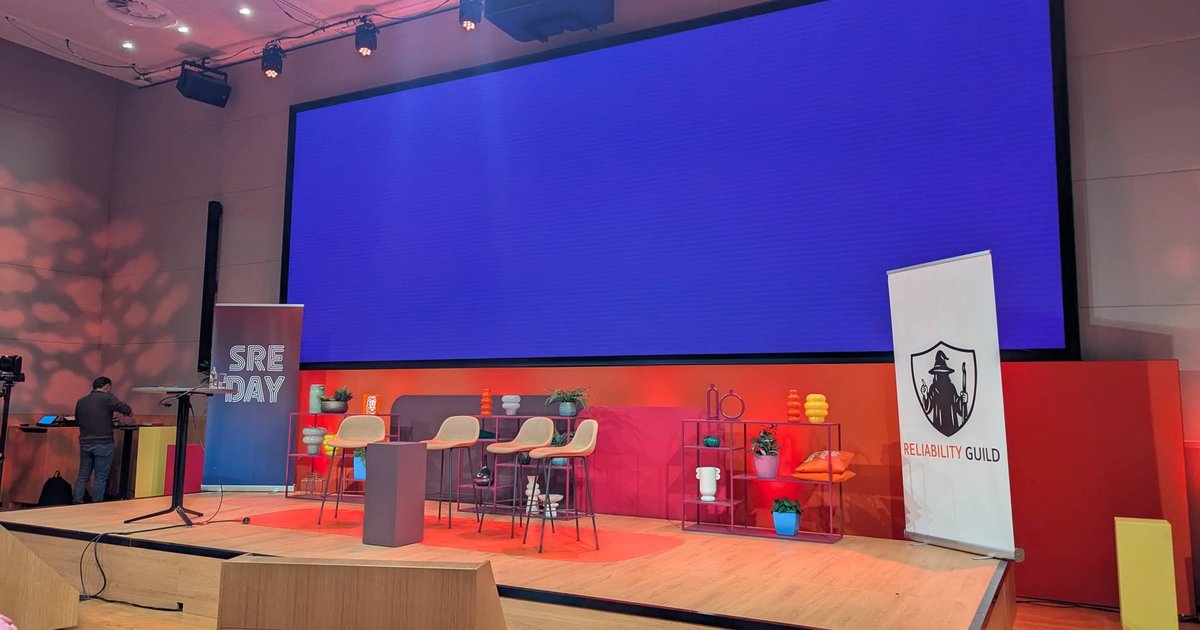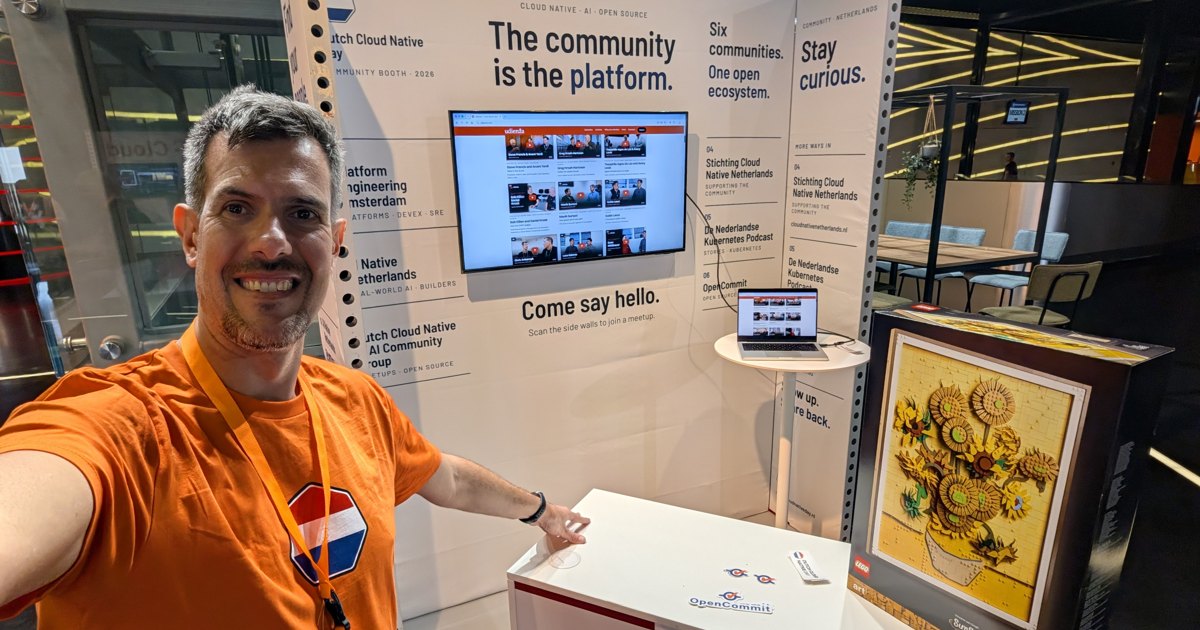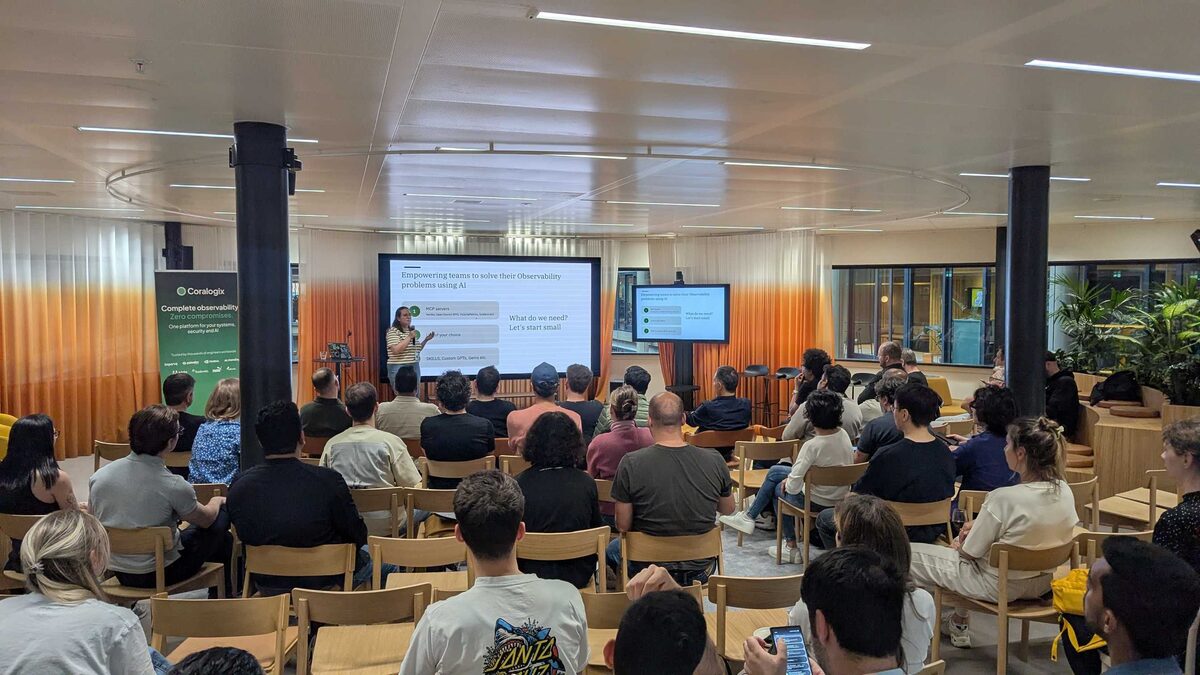
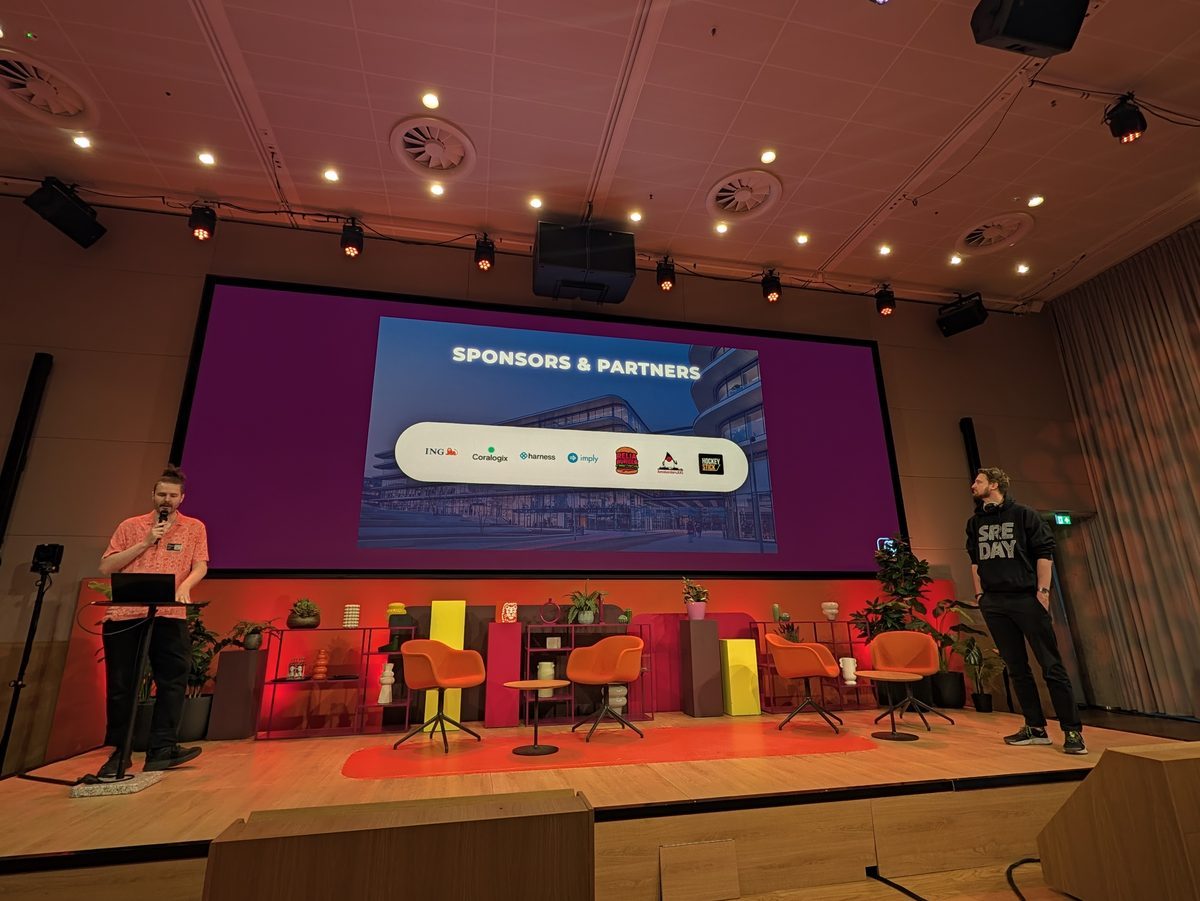
On Monday 2 November I was at SREday Amsterdam 2026, in ING Cedar on the Bijlmerdreef: one day, from 08:00 to 18:30, four tracks in four event halls. I came as a speaker, with a talk on the main stage in the afternoon, and with my microphones for Udienza, my video podcast. This is the day as I saw it, from the programme, the slides and the five conversations I recorded.
The keynotes: who watches the agents?
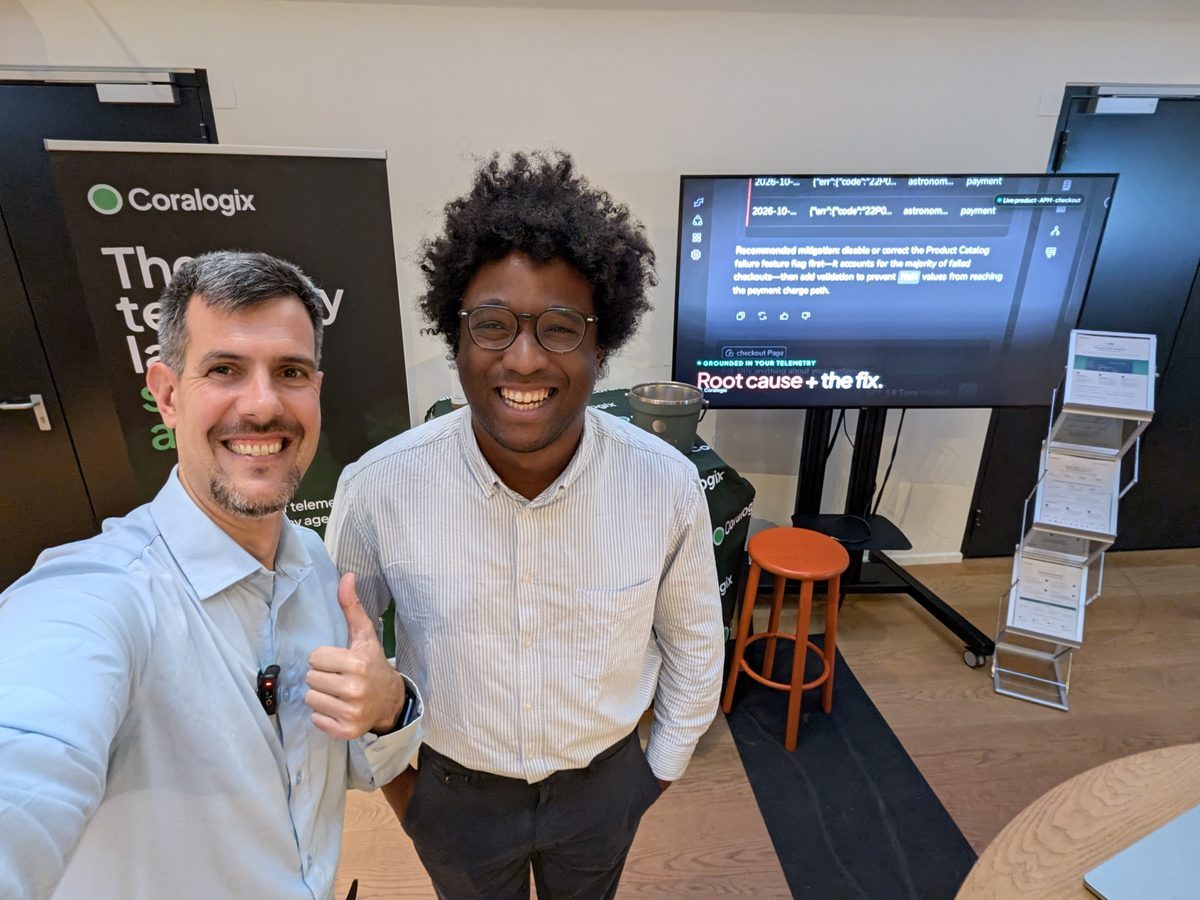
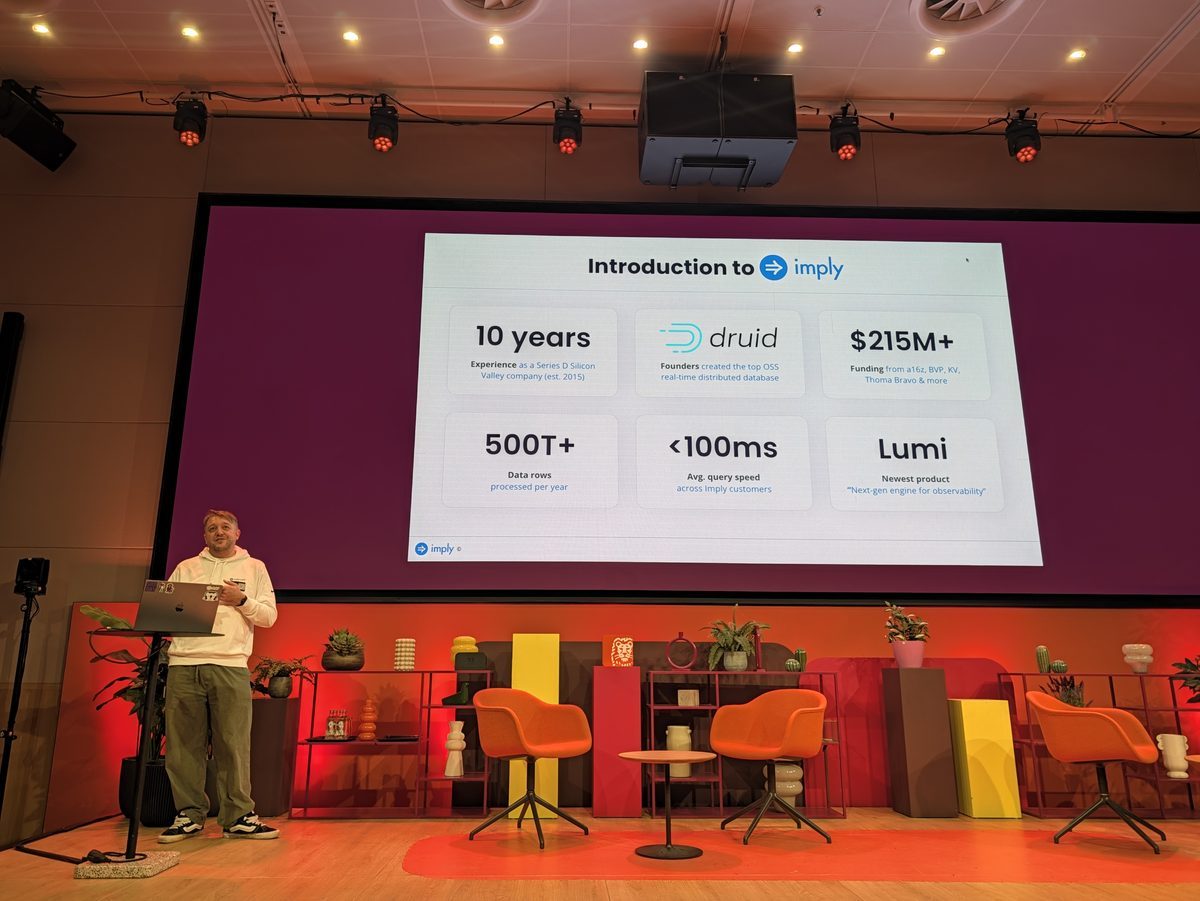
The main stage opened with four keynotes. Peter Marshall of Imply opened with Agentic observability needs a new engine. Lewis Isaac of Coralogix asked it outright: Who’s Watching the Agents? Measuring the Impact of AI-Assisted Development. Stephen Cihak of Harness went one step further, to the agent that fixes what it finds: Closing the Loop: From Production Incident to Autonomous Fix. And Miko Pawlikowski, who co-founded SREday, brought Ten years of Kubernetes lessons, in one binary.
A GPU, curled into the cluster
After lunch I sat in event hall 2. Thijs Feryn of Varnish Software went first, on what is new in Varnish, from TLS handled natively to a gateway that does HTTP routing for Kubernetes.
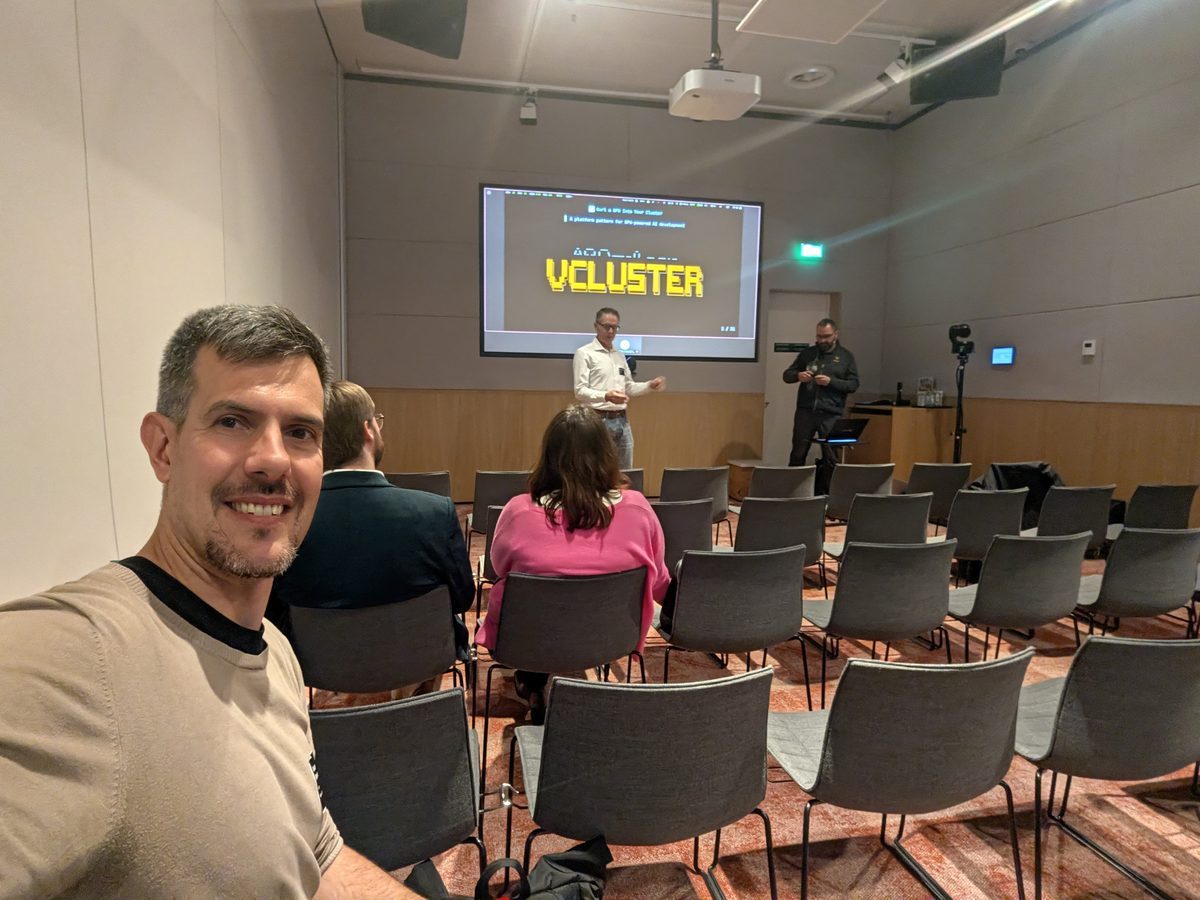
Piotr Zaniewski of vCluster Labs followed, and his title meant exactly what it said: he curled a GPU into his cluster. On stage, the control plane and one worker lived on his laptop; the GPU was a Google Cloud VM with an NVIDIA T4, which got its driver, Ollama and a model at first boot, then joined the laptop’s cluster through a tunnel. The private-nodes slide listed what any host needs to join, whether a KVM VM, a cloud VM or bare metal: one curl command, an expiring join token, and a VPN built on the Tailscale SDK and WireGuard, with no Tailscale account.
My talk: The GPU Is Not Your SLO
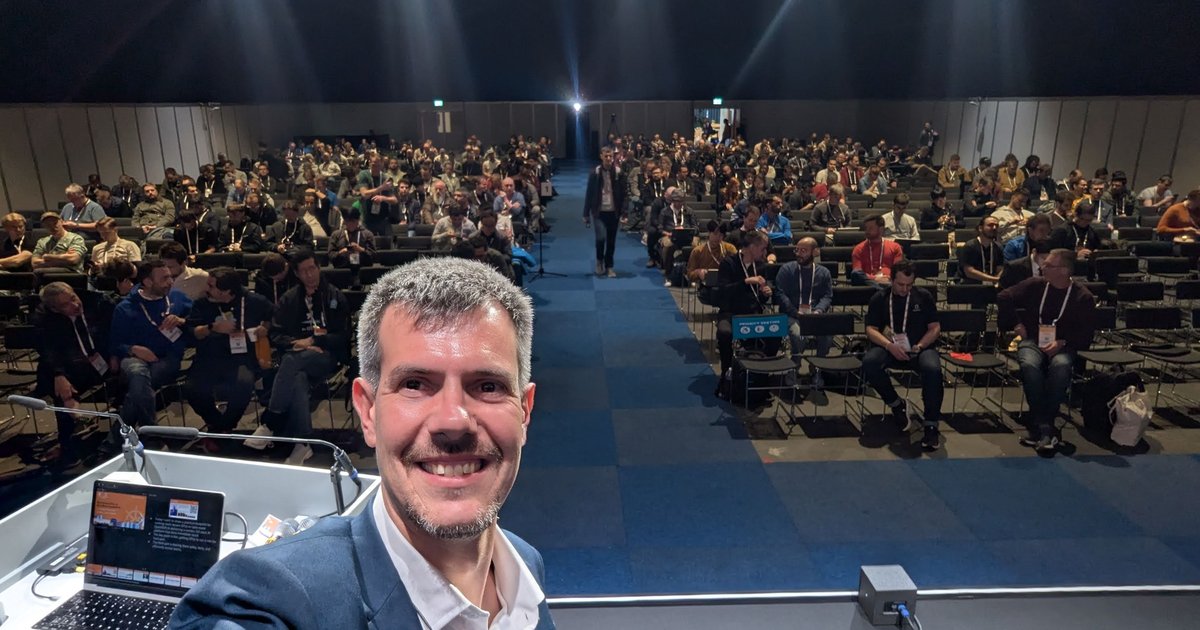
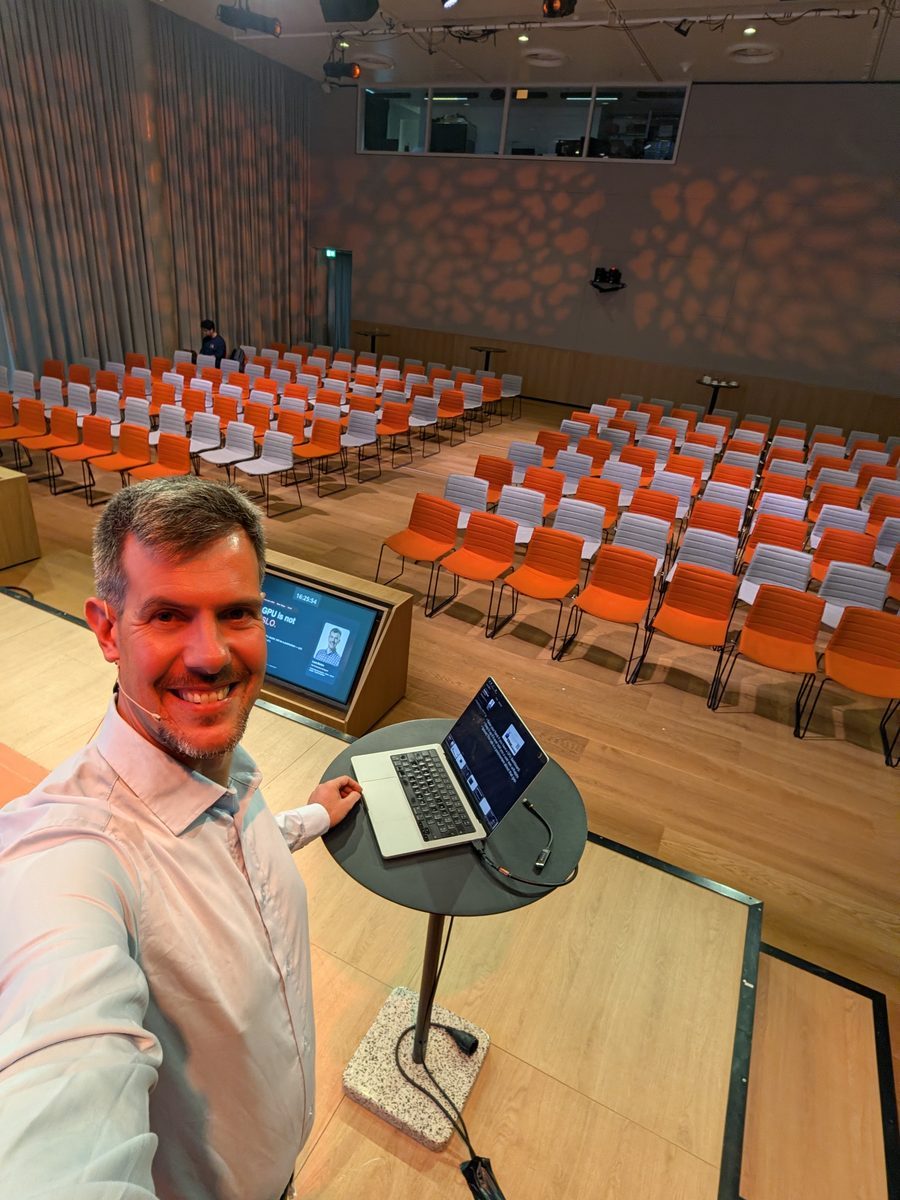
At 16:30 it was my turn, on the main stage, with The GPU Is Not Your SLO: Reliability Engineering for Production AI.
The conversations
I recorded five conversations for Udienza during the day, each an episode with its own page:
- Peter Marshall, Imply: logs, compression, and agents let loose on an investigation.
- Mark Pawlikowski, SREday: the conference kept small on purpose, LLMday and PLATFORMday.
- Piotr Zaniewski, vCluster Labs: GPUs on demand for developers, and the free tiers.
- Stephen Cihak, Harness: agents that deploy code, safely.
- Lewis Isaac, Coralogix: watching the tokens and the cost of code agents.