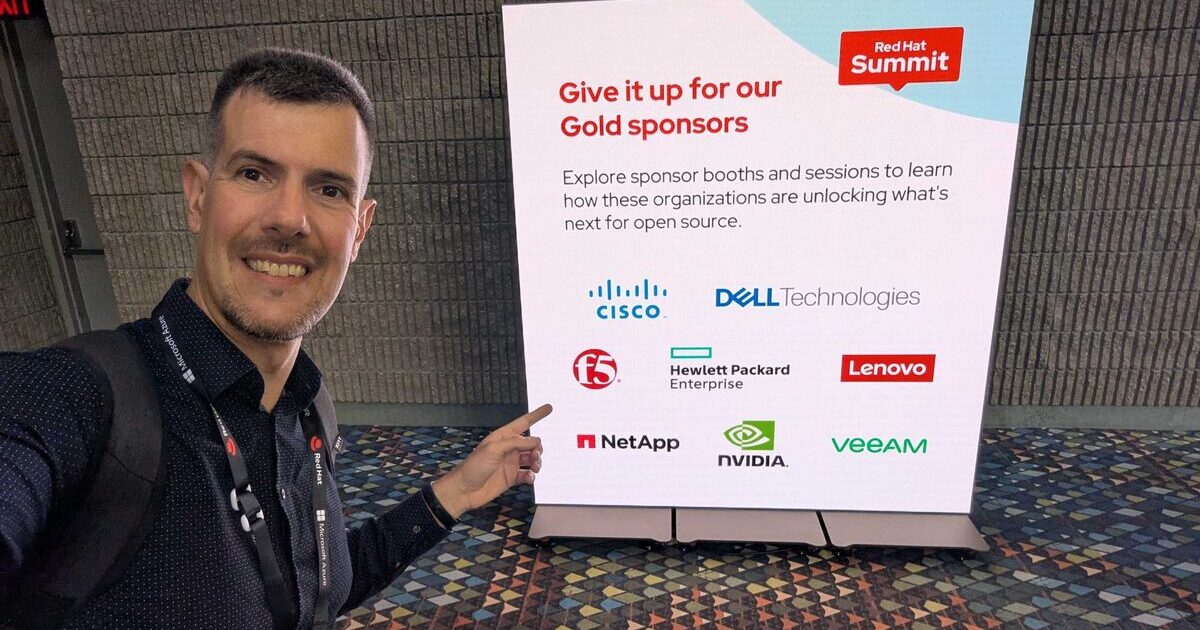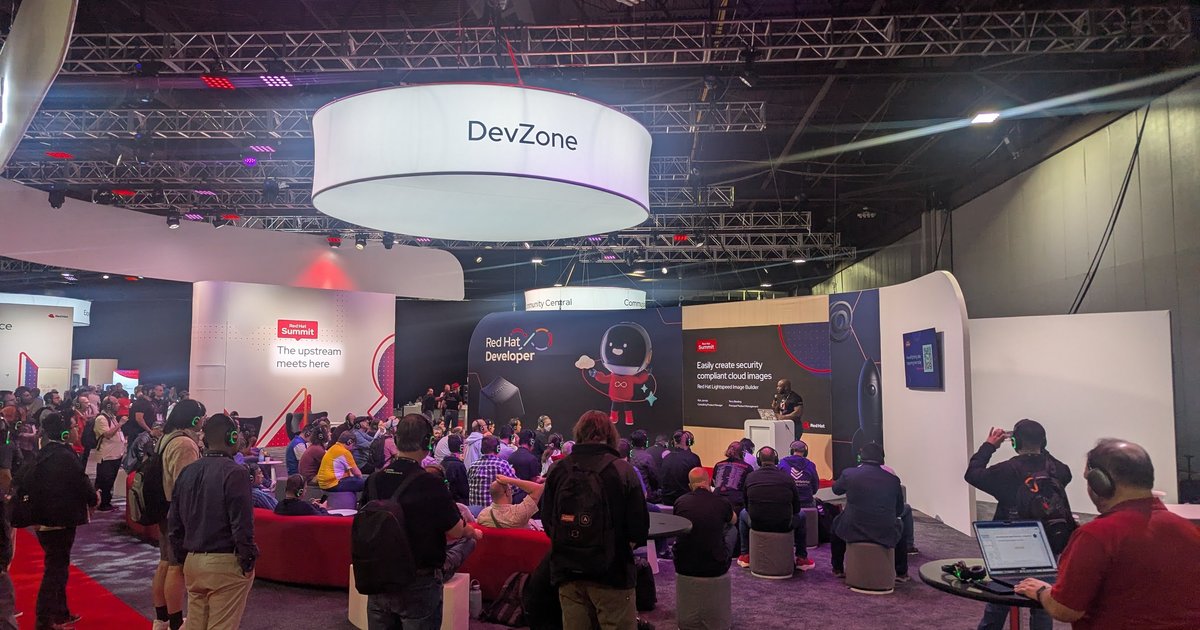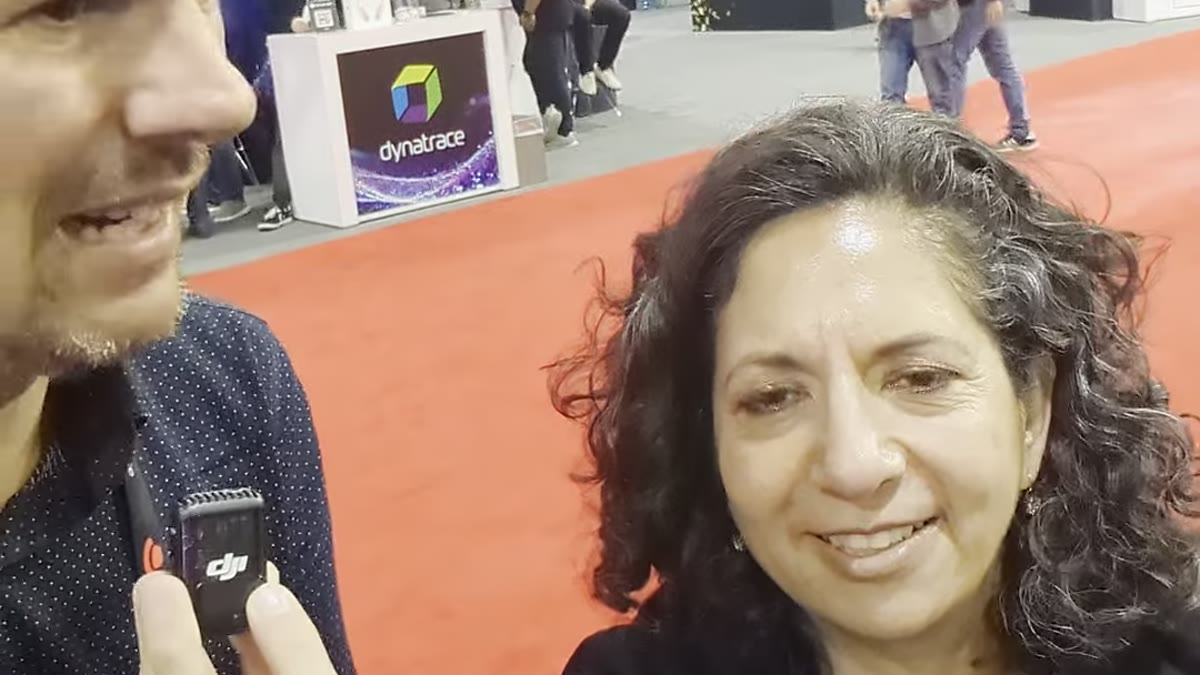

Some of the best conversations at a conference are the short ones. At Red Hat Summit 2026 in Atlanta, I sat down with Shuchi Sharma, who leads Red Hat’s Open Source and AI Program Office, for a few energizing minutes on where open source and AI are headed together. Her framing was simple and, coming from someone whose job is to operationalize that framing across an entire enterprise vendor, worth unpacking rather than just quoting: we are living in “a world of infinite possibilities” for open source and AI, and the community is positioned to tackle some of humanity’s greatest problems.
What “Infinite Possibilities” Means From Inside a Program Office
It is easy to wave that phrase away as conference-floor optimism. It reads differently once you consider what a Program Office actually has to coordinate. Walk the same show floor Shuchi and I were standing on and you see the surface area: InstructLab’s SDG Hub and Training Hub for synthetic data generation and post-training, RHEL AI and OpenShift AI as the deployment layers, Granite models, vLLM and llm-d for inference at scale, Ansible automation wiring it all together, and community-governed infrastructure pieces like OpenBao feeding into the same stack. None of that is one team’s roadmap. It is a portfolio of upstream projects, each with its own maintainers, licenses, and release cadence, that a single vendor has to keep coherent enough for enterprise customers to bet their AI strategy on.
That is the concrete version of “infinite possibilities”: not a slogan, but a genuinely open-ended set of upstream projects, contribution paths, and governance decisions that did not exist five years ago and that someone now has to actively shepherd rather than merely champion. A Program Office in that position is not there to cheerlead openness — it is there to make sure the upstream-first policy actually holds when a product team is under deadline pressure to ship a proprietary shortcut instead.
The New Foundation Tease
Shuchi also teased that a new foundation is in the works to support upcoming open source initiatives, without naming it outright. Read against Red Hat and IBM’s existing playbook, that is a meaningful signal rather than a throwaway line. Red Hat has repeatedly moved projects that started as internally-driven work into neutral, foundation-governed homes once they matured — the same pattern the Linux Foundation itself exists to formalize. A dedicated foundation for open source AI initiatives would extend that pattern to a category of asset that the Linux Foundation model was not originally built for: not just source code, but training data pipelines, evaluation suites, and model weights, each with its own licensing and provenance questions that a code-focused CLA and DCO process do not fully answer.
Standing up a foundation-governed home for that work would do two things at once: give enterprise customers and competing vendors a governance structure they can trust independent of Red Hat’s own commercial incentives, and give Red Hat a credible answer to the question every open source AI vendor eventually has to face — who actually controls the model when the vendor that trained it has a product roadmap to protect?
The Same Tension, From a Different Vantage Point
I have written before about Jim Zemlin’s view from the Linux Foundation that AI makes open source more critical, not less — because transparency and shared governance become more valuable, not less, as software and models get produced faster than any single reviewer can inspect them. Chris Wright, Red Hat’s CTO, made the vendor-side version of the same argument when we spoke at this same Summit: enterprises cannot build their AI strategy on black-box models they do not control.
Shuchi’s Program Office sits at the point where those two arguments become an actual job description. Zemlin can advocate for open governance from the neutral ground of a foundation; Wright can set the technical strategy from the CTO’s chair. Somebody still has to run the day-to-day work of keeping a commercial vendor’s AI investments genuinely open rather than open-washed — which is exactly the tension a program office like this exists to manage. Her closing line to me captured the conviction driving all of it: “Open source is the future.”
Related Reading
- Red Hat Summit 2026 in Atlanta: Open Source Meets AI
- Meeting Chris Wright: CTO of Red Hat at Summit 2026
- Jim Zemlin at KubeCon EU 2026: AI Makes Open Source Critical
- OpenBao Founder on Secrets Management for AI Agents
- Open Source AI Models in 2026: Llama 4, Mistral, and Beyond
About the Author
I am Luca Berton, AI and Cloud Advisor. I work at the intersection of platform engineering, cloud security, and enterprise AI deployments. Book a consultation.