If RISC-V can run a watch and a server, can it run a supercomputer? It is getting there. High-performance computing is one of the most demanding and prestigious frontiers in silicon, and RISC-V is making real, well-funded inroads — driven heavily by Europe’s quest for technological sovereignty. Here is where things stand.
Why HPC Cares About RISC-V
Supercomputing centers have specific motivations for an open ISA:
- Sovereignty — national HPC is strategic infrastructure; running it on a foreign, proprietary ISA is a dependency many governments want to end.
- Customization — HPC chips benefit hugely from domain-specific tuning (memory bandwidth, vector width, interconnect), which an open ISA makes possible without licensing barriers.
- Cost at scale — at thousands of nodes, royalty-free silicon and the freedom to second-source matter.
- Co-design — labs can co-design hardware and software together, the holy grail of HPC performance.
Monte Cimone: Proving the Stack
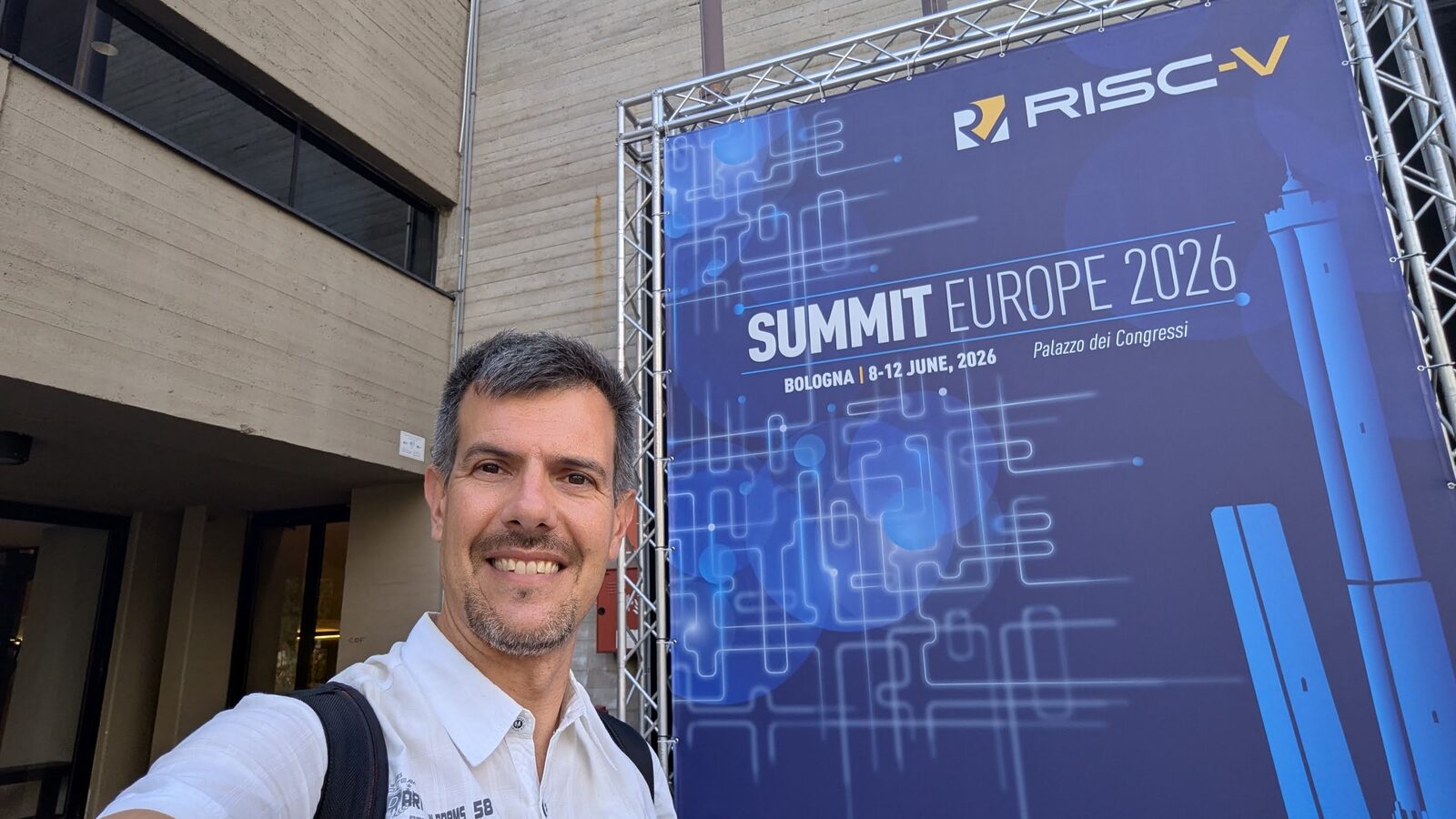
The standout pioneer is Monte Cimone, a RISC-V cluster built by the University of Bologna and CINECA (Italy’s national supercomputing center) — fittingly in the same region that hosted RISC-V Summit Europe 2026. Monte Cimone is not about topping benchmark charts; its value is proving that the full HPC software stack runs on RISC-V: the Linux OS, the job scheduler (Slurm), MPI for inter-node communication, scientific libraries, and real parallel applications.
That “does the whole stack work?” question is the real barrier to a new HPC architecture, and Monte Cimone answered yes. It draws directly on the PULP platform research from the same labs.
The European Processor Initiative
The most heavily funded effort is the European Processor Initiative (EPI) — an EU project to build sovereign European HPC processors. Its accelerator track is built on RISC-V, targeting the kind of high-throughput vector/AI compute that exascale machines need. The ambition is explicit: give Europe a homegrown path to leadership-class supercomputing without depending on US or Asian architectures.
This dovetails with the broader European sovereignty agenda and is one of the most consequential bets on RISC-V anywhere.
The Vector Extension Is the Engine
HPC is, at its core, enormous amounts of array and matrix math — and that is exactly what vector hardware accelerates. The RISC-V Vector extension (RVV) is central to the HPC story, and its vector-length-agnostic design is a perfect fit:
- One binary runs across implementations with different physical vector widths.
- Code written today scales to wider future hardware without recompilation.
- That portability is gold for HPC centers, whose application codebases live for decades.
Specialized accelerators (some explored in the EPI) push vector lengths and memory bandwidth far beyond general-purpose cores.
What HPC Still Needs
Honest assessment of the gaps:
- Top-tier raw performance — current RISC-V cores trail the latest HPC CPUs/GPUs; closing this is the central challenge.
- High-bandwidth memory and interconnect — HPC lives and dies on data movement; RISC-V SoCs need HBM and fast fabrics, which the accelerator projects are addressing.
- Optimized math libraries — BLAS, LAPACK, FFT and friends need RISC-V/RVV-tuned implementations (an active porting effort).
- A flagship win — the field will take notice when a leadership-class machine ships on RISC-V.
The trajectory is clearly upward, but HPC is a marathon, not a sprint.
The AI Connection
Modern HPC and AI have converged — the same vector/matrix engines that crunch climate models also train neural networks. That overlap means progress on RISC-V AI accelerators directly benefits HPC, and vice versa. A single open, customizable, vector-capable architecture spanning HPC and AI is a compelling long-term proposition.
The Bottom Line
RISC-V in HPC is real and accelerating, even if it has not yet topped the charts. Monte Cimone proved the full supercomputing stack runs on the open ISA, and the European Processor Initiative is pouring sovereign-tech funding into RISC-V accelerators for exascale. The Vector extension’s length-agnostic design makes it a natural HPC engine. The remaining gap is raw performance and the surrounding memory/interconnect/library stack — all under active, well-funded attack. Watch this space; the supercomputer is coming.
Part of my RISC-V series. See also datacenter & sovereign AI and the Vector extension guide.