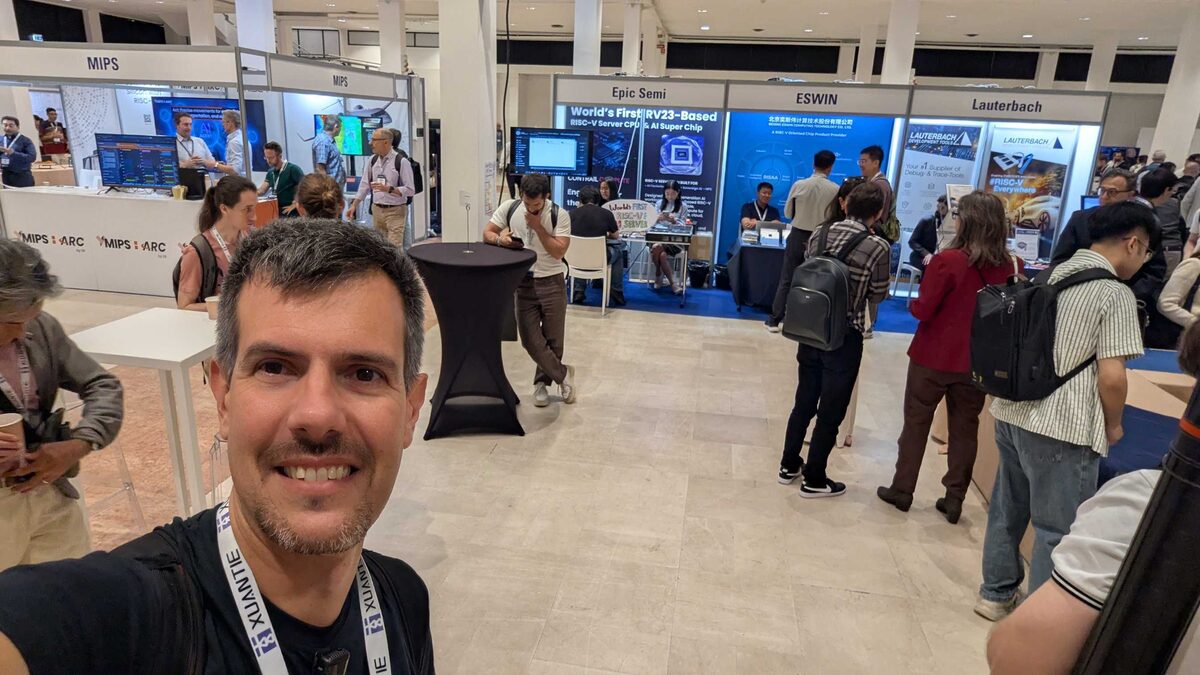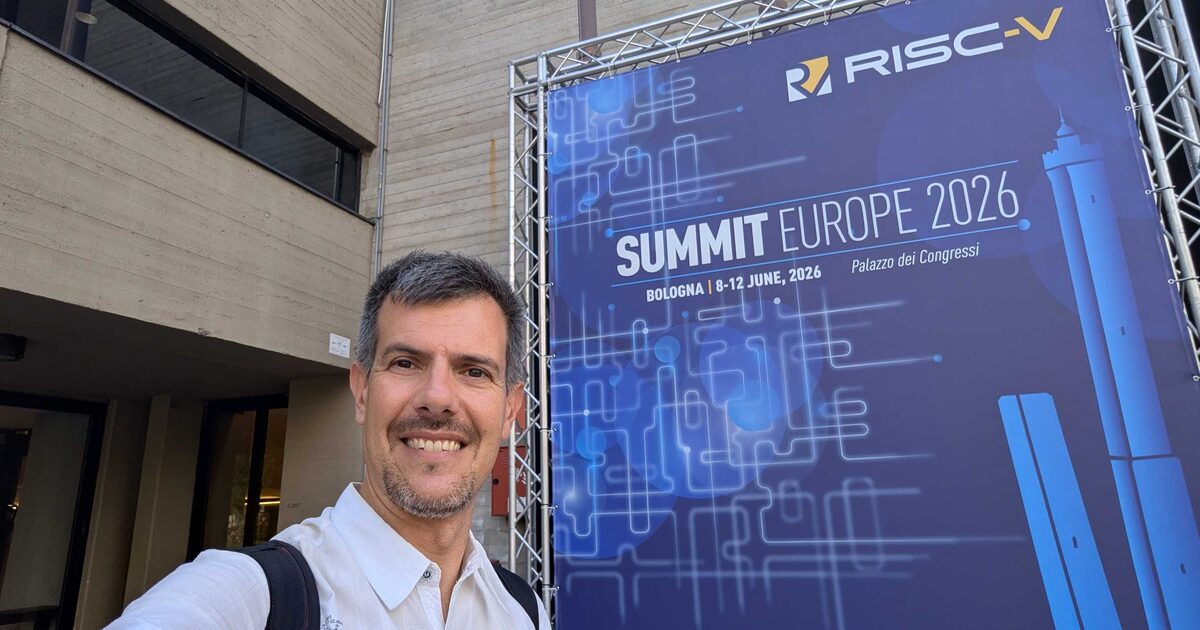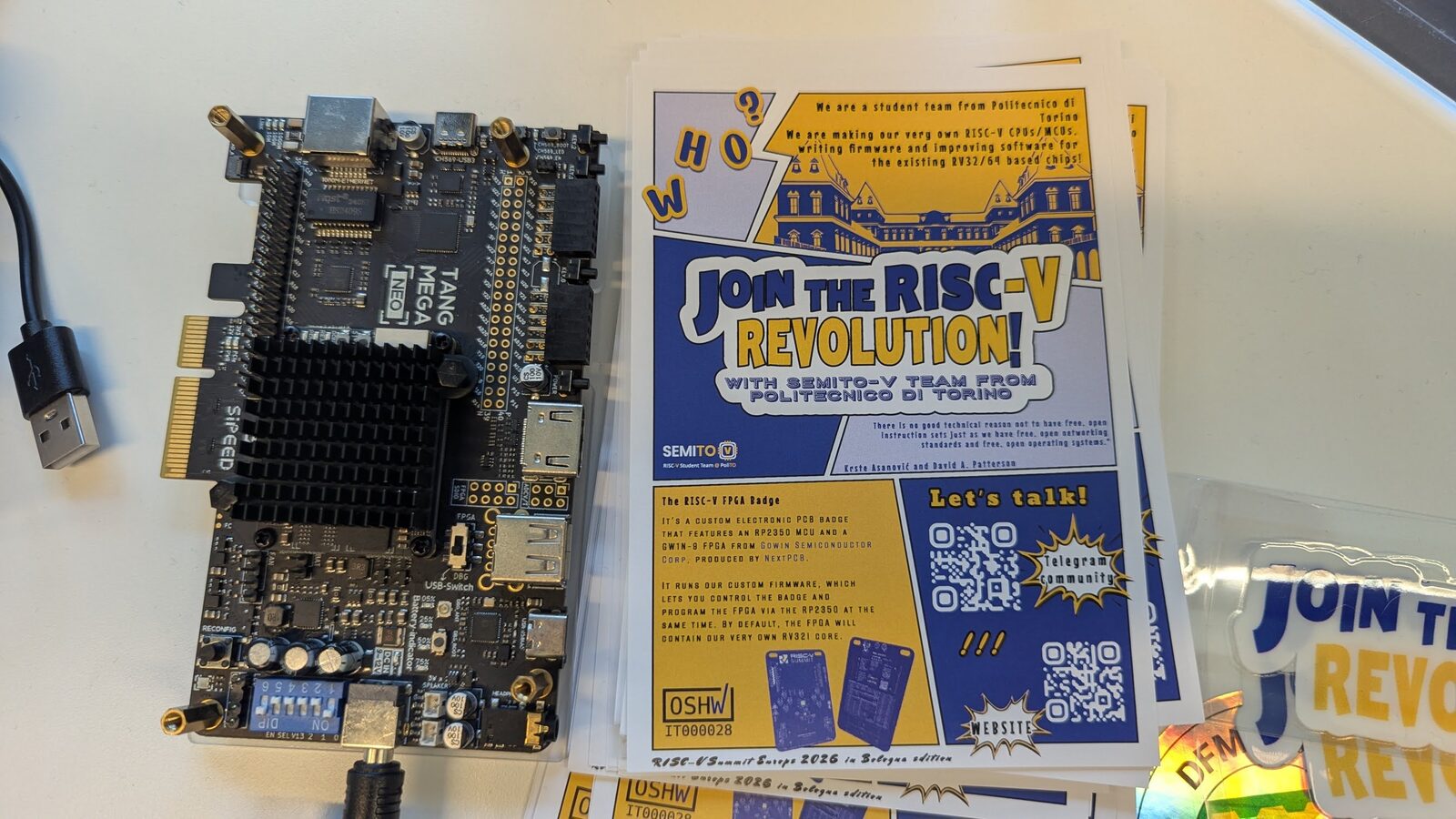
A few years ago, writing about the “RISC-V ecosystem” meant listing a handful of startups and research projects. In 2026 it means mapping an industry. At RISC-V Summit Europe 2026, the sponsor wall alone told the story — platinum, gold, and silver tiers stacked with names from across computing. This post is a field map of where the open ISA ecosystem stands.
Governance: RISC-V International
The ecosystem’s center of gravity is RISC-V International, the non-profit (headquartered in Switzerland for neutrality) that stewards the specification. Under CEO Andrea Gallo, it coordinates thousands of member organizations — from one-person startups to Google, NVIDIA, Qualcomm, and Alibaba — through technical committees and horizontal working groups on security, software, and platforms.
The neutral, member-driven model is deliberate: it keeps the standard from being captured by any single company or country, which is precisely what makes it attractive to so many.
The Vendor Landscape
The commercial ecosystem now spans every layer of the stack:
- IP / core vendors: SiFive, Andes, Codasip, MIPS (which pivoted to RISC-V), Ventana, Tenstorrent, Rivos
- SoC and silicon: T-Head/XuanTie (Alibaba), ESWIN, SpacemiT, StarFive, Sophgo, Espressif, Microchip
- AI accelerators: Tenstorrent, plus a wave of edge-AI specialists (see RISC-V AI Accelerators)
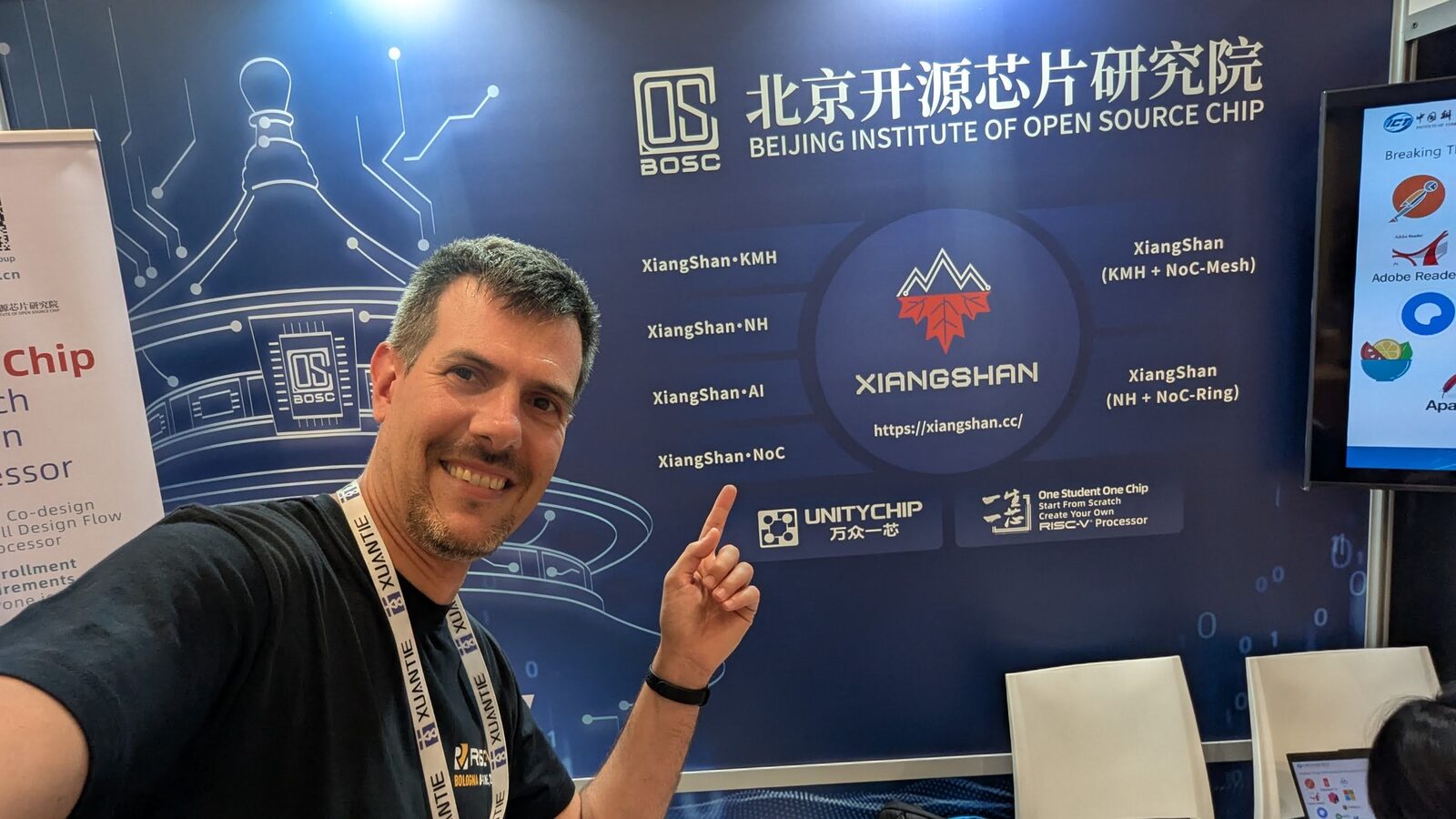
- Open-source cores: CVA6 (OpenHW), XiangShan (the top-performing open-source RISC-V CPU), lowRISC, PULP
- Tools and verification: Lauterbach, Breker, Imperas-style models, and a growing formal-verification community
The Summit’s sponsor tiers captured the breadth: Platinum names like BOSC, E4, MIPS, and Nuclei; Gold like CEA, Epic Semi, ESWIN, NextSilicon, Qualcomm, SiFive, Tenstorrent, and XuanTie; and a long Silver list including Andes, Axelera, Barcelona Supercomputing Center, Bosch, Infineon, lowRISC, Microchip, OpenHW, PULP, and many more.
Profiles: The Anti-Fragmentation Engine
Openness and modularity create a risk: fragmentation. RISC-V’s answer is profiles — standardized extension bundles that software can target.
- RVA20 / RVA22 / RVA23 — the application-processor profiles, with RVA23 (ratified 2024) mandating vector and hypervisor support. This is the linchpin for Linux portability.
- Embedded and bare-metal profiles for microcontroller-class devices.
- The emerging RISC-V Server Platform Specification, which composes RVA23 with server SoC requirements, UEFI/ACPI boot, SBI, and security foundations so a single OS image boots across compliant servers.
Profiles are why “modular freedom” does not become “incompatible chaos.” They are arguably the most important ecosystem work happening right now.
Software: The Quiet Win
Hardware gets the headlines, but software determines adoption — and here RISC-V has matured rapidly:
- Linux with upstream RISC-V support and an RVA23-ready target
- GCC and LLVM/Clang as production toolchains
- QEMU full-system and user-mode emulation (try it in my QEMU tutorial)
- Distro ports: Debian, Ubuntu, Fedora, and openEuler (first LTS with RVA23 support)
- A growing cloud-native and language-runtime stack that builds cleanly on RV64
Education: Building the Talent Pipeline
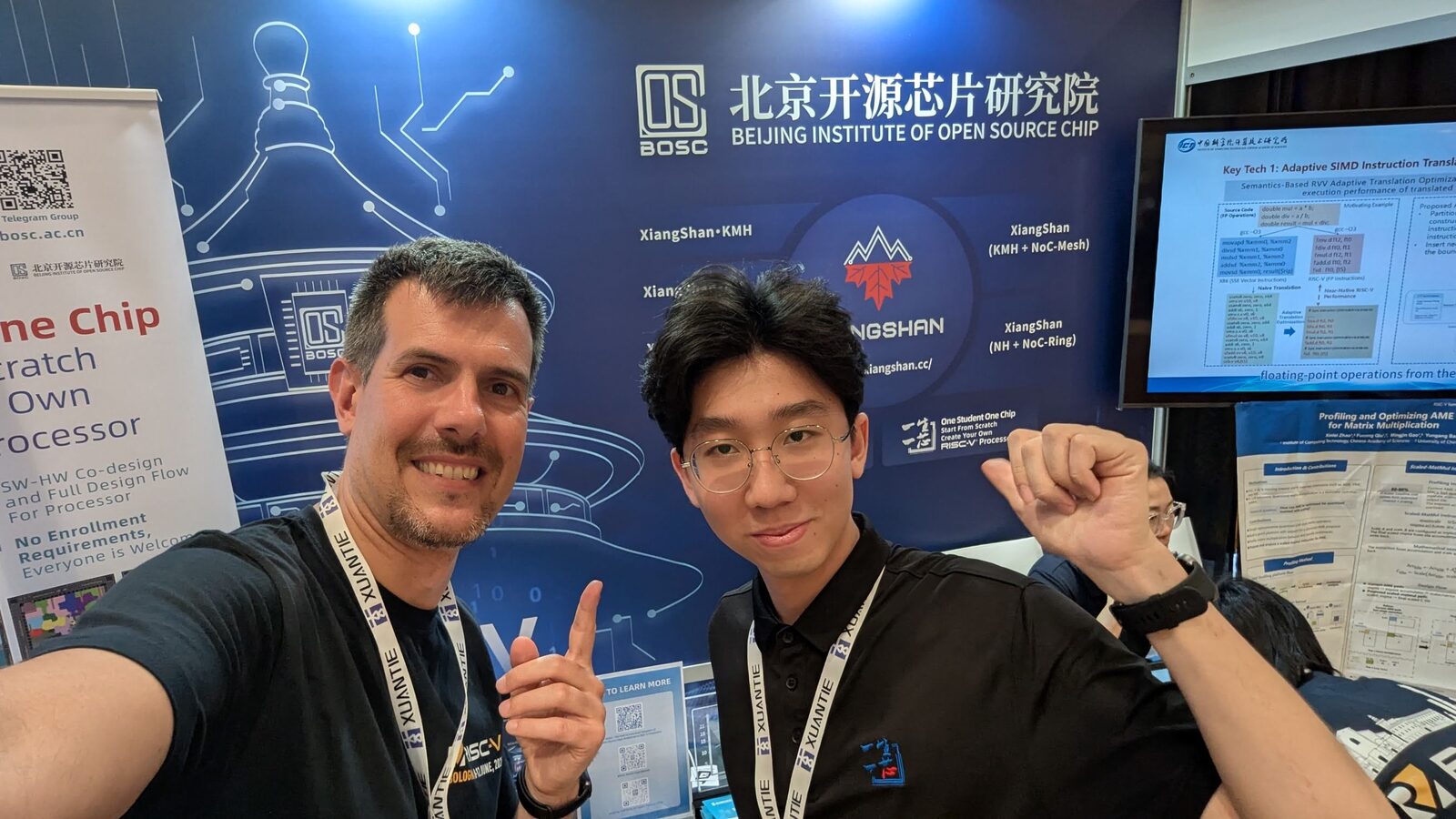
An ecosystem needs people. One of the most inspiring efforts is One Student One Chip (YSYX) from the Beijing Institute of Open Source Chip — a free MOOC that takes students from C programming all the way to silicon tape-out. Enrollment has reached the tens of thousands. I wrote about it in detail in One Student One Chip. Because RISC-V is open, students can learn on the real ISA used in industry, not a teaching toy.
Research Momentum
The academic engine is humming. The Summit’s poster session was packed with work spanning HPC (Monte Cimone v3), open SD-card controllers, functional safety via formal methods, space communications SoCs, mixed-criticality architectures, and hardware-accelerated CPU verification (XiangShan’s DiffTest-H uncovered 151 bugs through co-simulation). Open silicon means this research is reusable, not locked away.
Why 2026 Is an Inflection Point
Several curves crossed at once:
- Profiles matured (RVA23) — portability is real.
- Server silicon arrived — you can rent a RISC-V cloud server.
- AI pulled hard — accelerators and sovereign-AI strategy need open silicon.
- Software caught up — Linux, toolchains, and distros are production-grade.
- Geopolitics aligned — digital sovereignty made openness a strategic asset.
The Bottom Line
The RISC-V ecosystem in 2026 is no longer a promising fragment — it is a layered, self-reinforcing industry with governance, vendors, profiles, software, education, and research all compounding. The open question is no longer “will RISC-V matter?” but “how far and how fast?” Based on what I saw in Bologna, the honest answer is: faster than most people expect.
For the on-the-ground view, see my RISC-V Summit Europe 2026 highlights and open hardware meets AI.