The Red Hat Certified Engineer (RHCE) exam is one of the most respected certifications in IT. Unlike multiple-choice exams, RHCE is entirely hands-on — you prove your skills by completing real tasks on a live system.
I have been teaching Ansible automation (the core RHCE skill) for years through Ansible Pilot and my books. Here is how to prepare.
Prerequisites
You need RHCSA (Red Hat Certified System Administrator) before taking RHCE. The RHCE builds on RHCSA by adding automation skills.
RHCE Exam Objectives (EX294)
The exam tests your ability to:
1. Understand Ansible Core Components
- Inventories (static and dynamic)
- Modules and plugins
- Variables, facts, conditionals
- Plays, playbooks, roles
2. Install and Configure Ansible
- Install Ansible on a control node
- Configure
ansible.cfg - Manage inventory files
- Configure privilege escalation
3. Run Ad-Hoc Commands
- Use common modules: file, copy, command, shell, yum, service, user
- Work with multiple hosts and patterns
4. Write Playbooks
- Use variables, facts, and conditionals
- Handle errors (block/rescue/always)
- Work with handlers
- Use templates (Jinja2)
- Use loops
5. Work with Roles
- Create and use roles
- Install roles from Ansible Galaxy
- Use roles in playbooks
6. Use Ansible Vault
- Encrypt files and variables
- Use vault in playbooks
7. Manage Systems
- Configure firewall rules
- Manage users, groups, SSH keys
- Configure services
- Create scheduled tasks (cron, at)
- Manage storage and file systems
8-Week Study Plan
Weeks 1-2: Ansible Fundamentals
- Install Ansible, configure control node
- Practice inventory files (INI and YAML)
- Run ad-hoc commands against lab VMs
- Learn core modules: copy, file, yum, service, user, command
Weeks 3-4: Playbooks
- Write playbooks with variables and facts
- Master conditionals and loops
- Use handlers and error handling
- Practice Jinja2 templates
Weeks 5-6: Roles and Advanced Topics
- Create roles from scratch
- Use Ansible Galaxy
- Implement Ansible Vault
- Configure dynamic inventory
Weeks 7-8: Practice Exams
- Time yourself completing tasks
- Practice under exam-like conditions (no internet)
- Review weak areas
Practice Lab Setup
You need at least 3 VMs:
Control Node: RHEL 9 (where Ansible runs)
Managed Node 1: RHEL 9 (web server)
Managed Node 2: RHEL 9 (database)
Options:
- Vagrant + VirtualBox (free, local)
- Cloud VMs (AWS Free Tier, Azure)
- Red Hat Developer Subscription (free RHEL access)
Key Tips for Exam Day
- Read every question completely before starting
- Manage your time — skip hard tasks, come back later
- Check idempotency — run your playbooks twice, same result
- Use
ansible-doc— it is available during the exam - Test everything — verify services are running, files exist
- Do not panic if one task is hard — partial credit exists
Essential Modules to Master
# These modules cover 80% of exam tasks
ansible.builtin.apt / ansible.builtin.yum / ansible.builtin.dnf
ansible.builtin.copy
ansible.builtin.template
ansible.builtin.file
ansible.builtin.service
ansible.builtin.user
ansible.builtin.group
ansible.builtin.lineinfile
ansible.builtin.cron
ansible.posix.firewalld
ansible.builtin.command
ansible.builtin.shell
ansible.builtin.debug
ansible.builtin.assert
Recommended Resources
- Ansible Tutorial for Beginners
- 20 Ansible Playbook Examples
- Ansible Pilot YouTube — free video tutorials
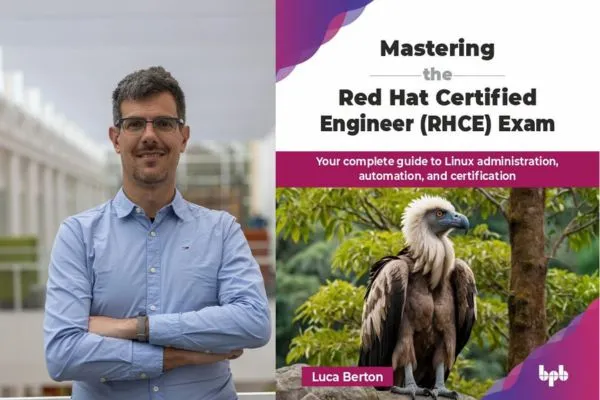
- Mastering the RHCE Exam
- Red Hat Enterprise Linux 9 for SysAdmins
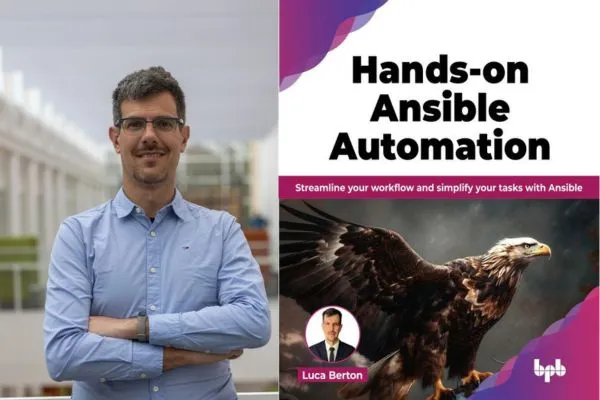
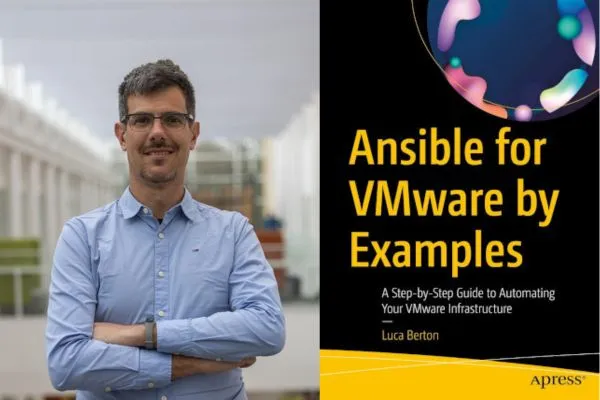
- My Ansible Books
Student Success Stories
Jaime Luque shared on LinkedIn after using the Ansible Pilot course to prepare for RHCE:
“Today I want to give special thanks to Luca Berton for his dedication, knowledge, and passion for teaching Ansible and automation. Thanks to his course and practical approach, I was able to strengthen many key concepts that became essential for my certification journey.”
It has been a long journey building the Ansible Pilot course, and moments like this make it truly rewarding. Seeing students apply Ansible, strengthen their automation foundations, and progress toward milestones like the RHCE certification is exactly why I love teaching.
Technology is powerful, but the real impact comes when knowledge becomes confidence, practice becomes skill, and learners become contributors to the open source and enterprise automation ecosystem.