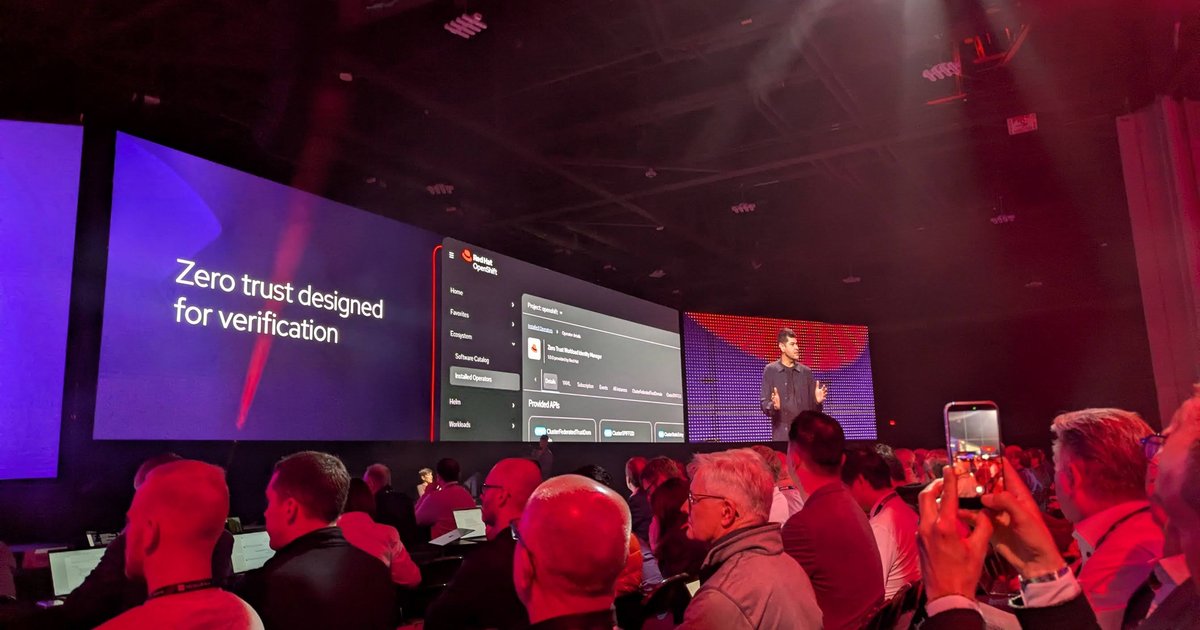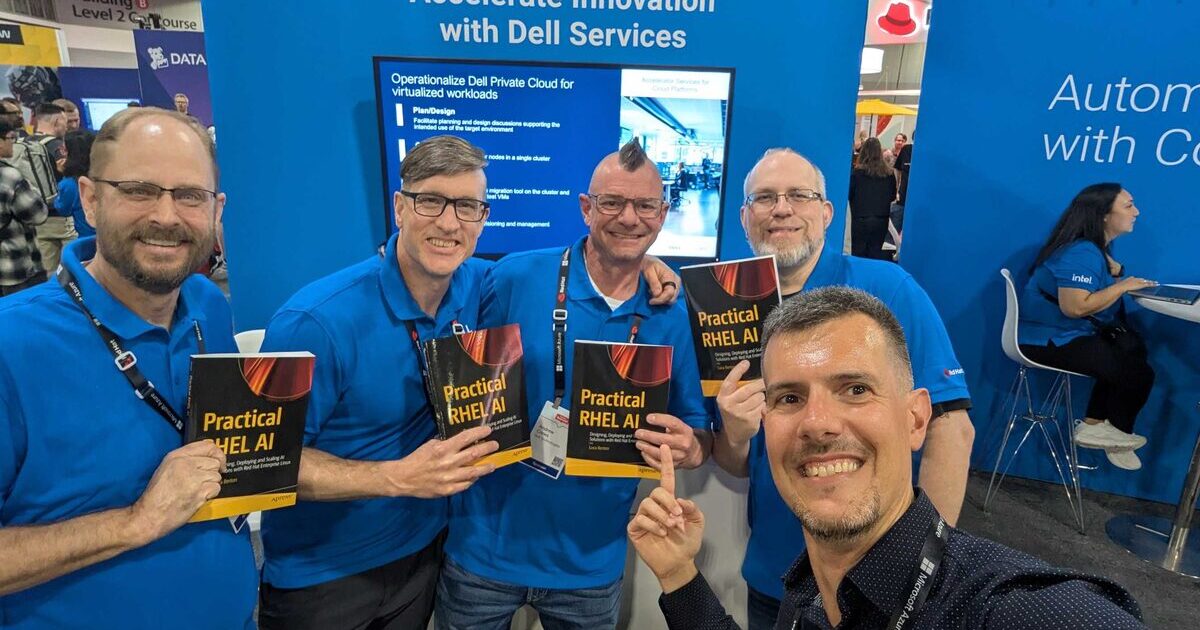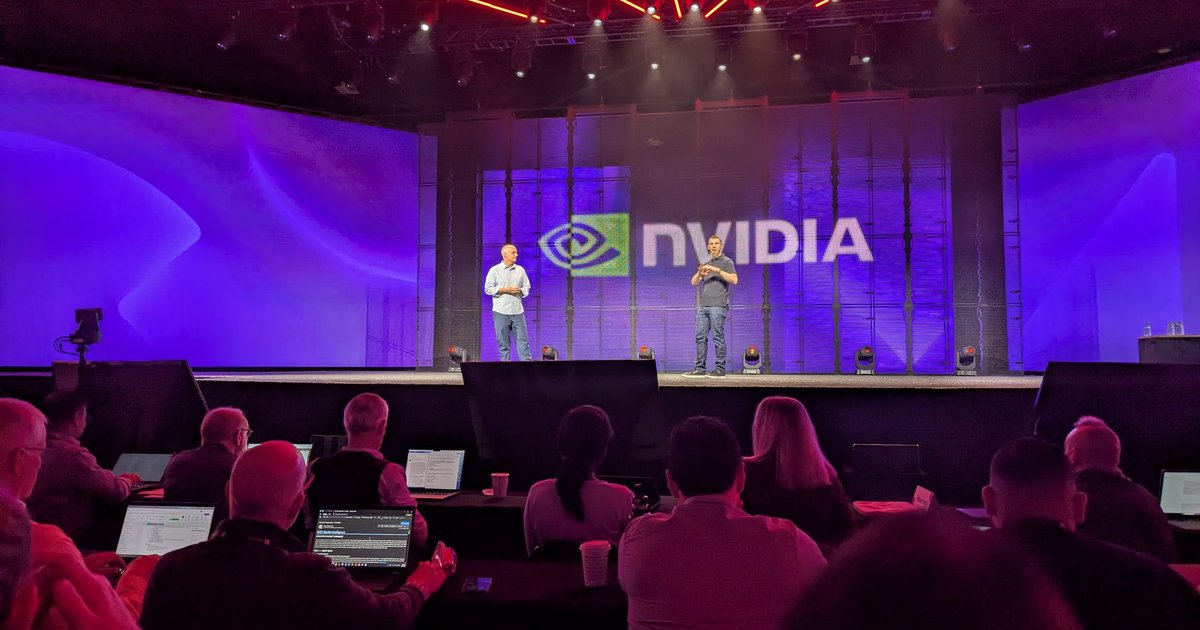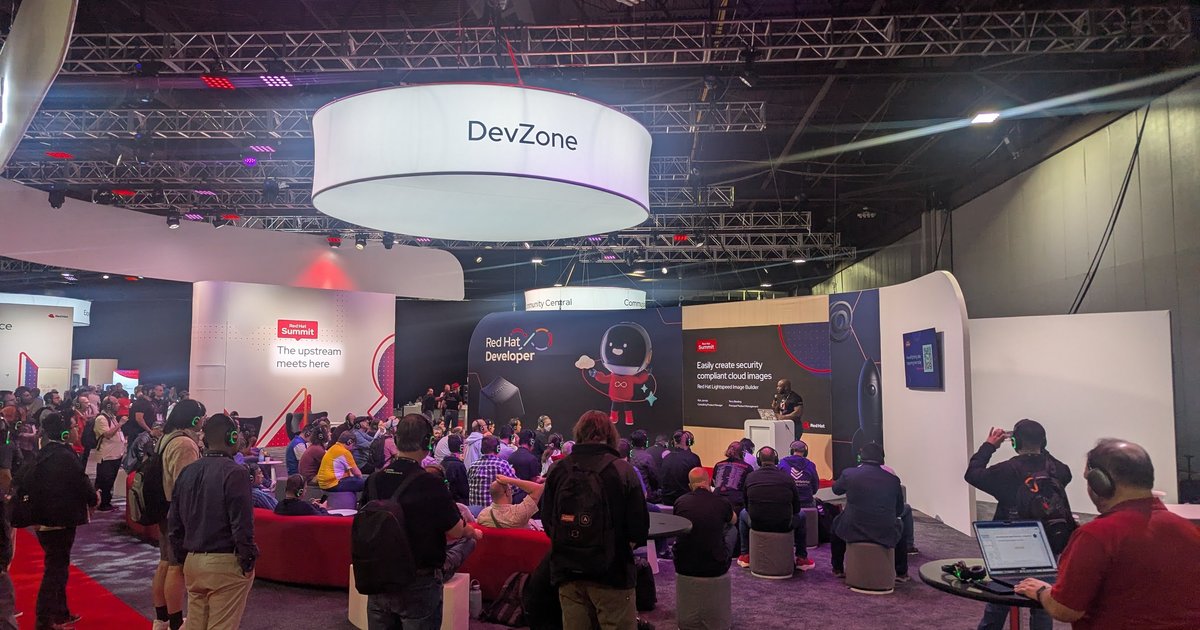
On Tuesday 12 May, the keynote day of Red Hat Summit 2026 in Atlanta, I recorded a run of short conversations with people at booths and in the halls. Many of the people I spoke to gave only a first name or the name was not visible on a sign, so I describe them by role and company as they introduced themselves, and name someone only when they introduced themselves on camera and an official page confirms the name. The conversations were short and informal, so treat this as a snapshot of what people were focused on, not product documentation.
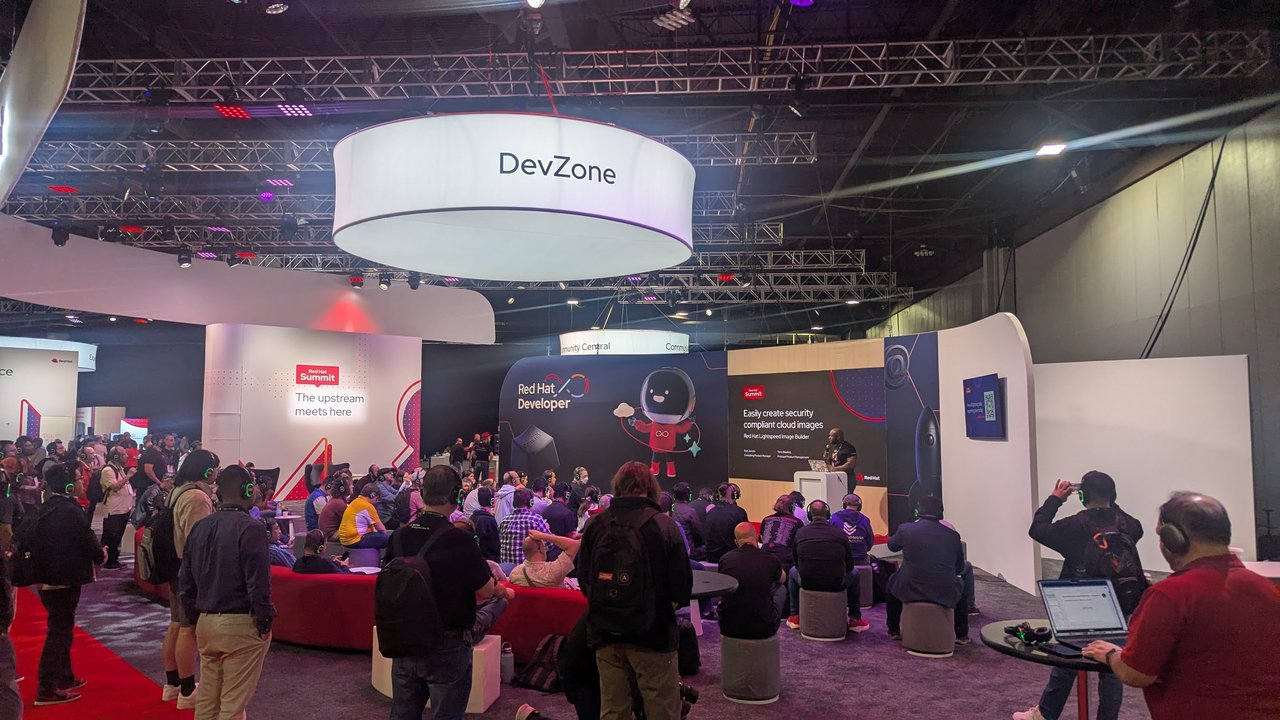
The DevZone area, where the Developer lightning talks ran.
Red Hat User Groups
The Red Hat User Groups (RUGs) community lead for the US and Canada said that RUGs are casual meetups for people who use Red Hat products or are curious about them, running all over the world. The largest regular one mentioned is the Minneapolis group, around 60 people meeting once a quarter in the same place for years, and the rest were said to be growing every year. If you want to find a local group, the Red Hat meetup pages list them, for example the North America community.
Coder: sovereign agentic AI
An engineer from Coder described a demo of sovereign agentic AI. Red Hat AI Inference Server hosts a local model, and the Coder control plane runs the agentic loop and the orchestration, pointing at that local model. The pitch was that you get the experience of cloud coding agents such as Devin or GitHub Copilot while everything stays self-hosted, rather than sending code to a US-based provider. Coder is open source at github.com/coder/coder. My take: for regulated teams, the interesting question is not the agent but where the model runs and who sees the prompts.
The OpenShift roadmap: AI inference and DRA
I asked someone from the OpenShift team what is coming. The answer had two threads: Kubernetes work that supports AI inference, and using AI to help administer the cluster itself, to make installation, troubleshooting and operations easier on cloud and on-prem. On Dynamic Resource Allocation (DRA), the answer was that it is on the list, being worked on upstream first and then downstream, and that because DRA is many different things it will arrive across a couple of releases, covering accelerator access and then the network pieces. Treat this as a direction rather than a commitment.
Hummingbird: zero-CVE images and libraries
A Red Hat engineer in a Hummingbird t-shirt said the Hummingbird project provides zero-CVE container images and, now, zero-CVE libraries, rebuilt every day, available from the Red Hat registry. This fits the hardened images and Fedora Hummingbird news from the keynote, which I summarised in the keynote announcements post and discussed in the RHEL roadmap conversation.
RISC-V: is 2026 the year?
At the RISC-V area I asked whether 2026 is the year of RISC-V. The reply was hopeful: the hardware is now good, with performance said to be approaching an Intel N100 even before vector optimisation, boards that had just gone on sale and would arrive in a few weeks, and, as we discussed, CUDA already being a first-class citizen on the new hardware, which is promising for AI. The person runs the Works with RISC-V project at workswithriscv.org, and general information is at riscv.org. I also covered the RISC-V hardware at the Red Hat booth in my Summit overview.
Nagios: monitoring OpenShift
A customer success manager at Nagios said it was the company’s fourth year in a row at Summit. The news at the booth was a wizard for monitoring OpenShift, something customers had asked for over several years. The demo was a game-style bank application hosted on OpenShift and monitored with the Nagios solution, with the demo showing how a fault is detected.
Open Source and AI Program Office
I also talked to Brian Proffitt, who introduced himself as working in Red Hat’s Open Source and AI Program Office; Red Hat’s author page lists him as Senior Manager, Community Outreach in the Open Source Program Office. He described the office’s work as community outreach, events, training and enablement, helping customers work out how to do open source, and watching the health of the upstream communities Red Hat works with. The biggest current initiative, he said, is the AI landscape: how existing open source projects deal with contributions coming from AI, and how to build open source AI tools. More at redhat.com/open. I spoke with the programme office’s leader on another day, which I wrote up in Shuchi Sharma on Open Source AI.
Another booth I visited that day was the Ansible playbook scanner from XLAB Steampunk, covered in its own post.