There is something uniquely satisfying about handing someone a book you wrote — watching their eyes light up, flipping to the table of contents, asking which chapter to start with. At Red Hat Summit 2026 in Atlanta, I had that experience over a dozen times.
14 Books, One Mission
I came to Atlanta with a stack of 14 copies of Practical RHEL AI — my guide to designing, deploying, and scaling AI solutions with Red Hat Enterprise Linux. Every single one found a reader who needed it.

The full stack before the giveaway started. Fourteen copies of Practical RHEL AI, published by Apress — each one ready to help an engineer deploy their first AI workload on RHEL.
At the llm-d Community Booth
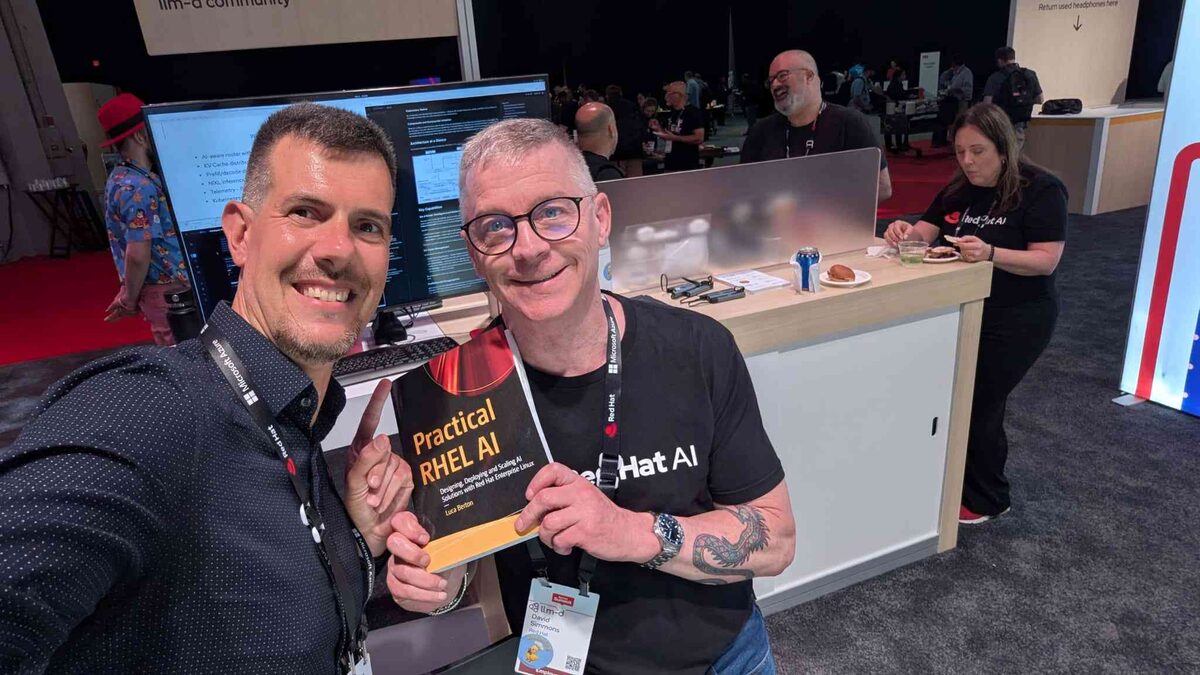
Signing a copy for David Simmons at the llm-d community booth. The screen behind us shows the KV-cache distribution architecture — exactly what Chapter 9 covers when discussing inference optimization at scale. David is one of the engineers making distributed LLM serving a reality on Kubernetes.
The Red Hat AI Team
Handing the book to the people who built the platform it covers. This Red Hat AI team member has been working on InstructLab and the model alignment pipeline since day one. There is no better feedback loop than giving your book to the engineers whose work you documented.
Red Hat Open Source and AI Program Office
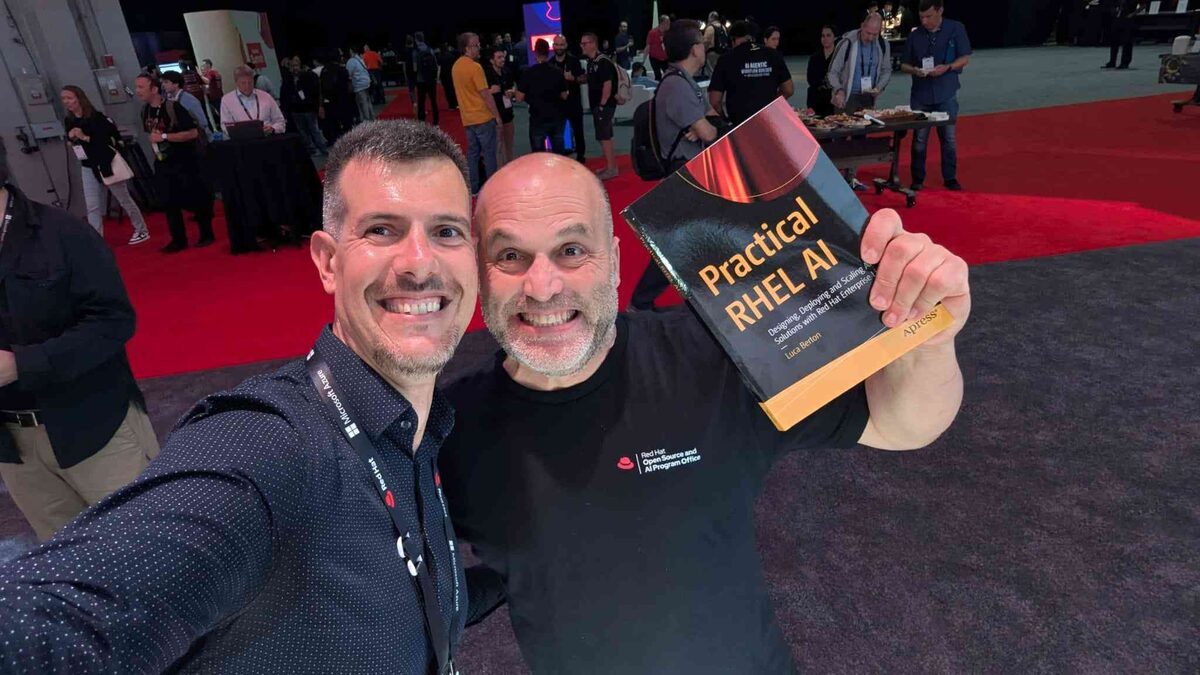
The Open Source and AI Program Office drives Red Hat’s open-source AI governance strategy. Their work ensures that RHEL AI remains truly open — from the Granite model weights to the InstructLab training methodology. A copy well-placed.
CentOS Community Booth
At the CentOS Special Interest Groups area — where the upstream magic happens. CentOS Stream feeds directly into RHEL, and by extension into RHEL AI. The code-driven expertise behind the curtain deserves a signed copy.
JJ Asghar — “AI Needs Open Source”
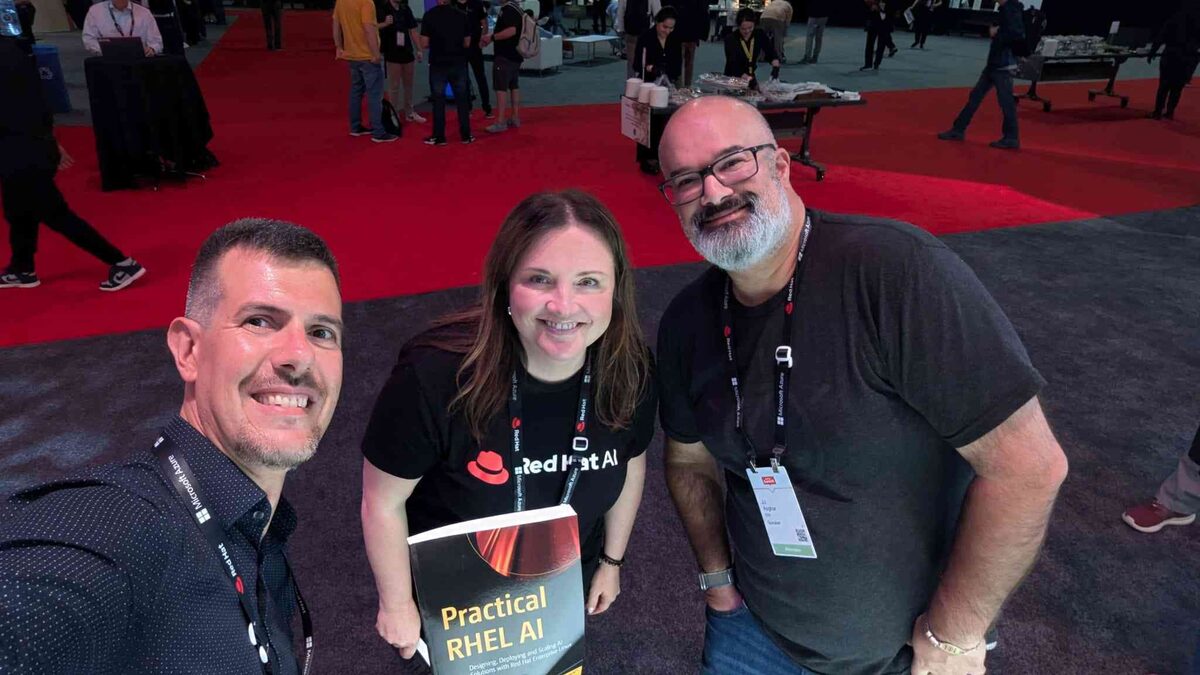
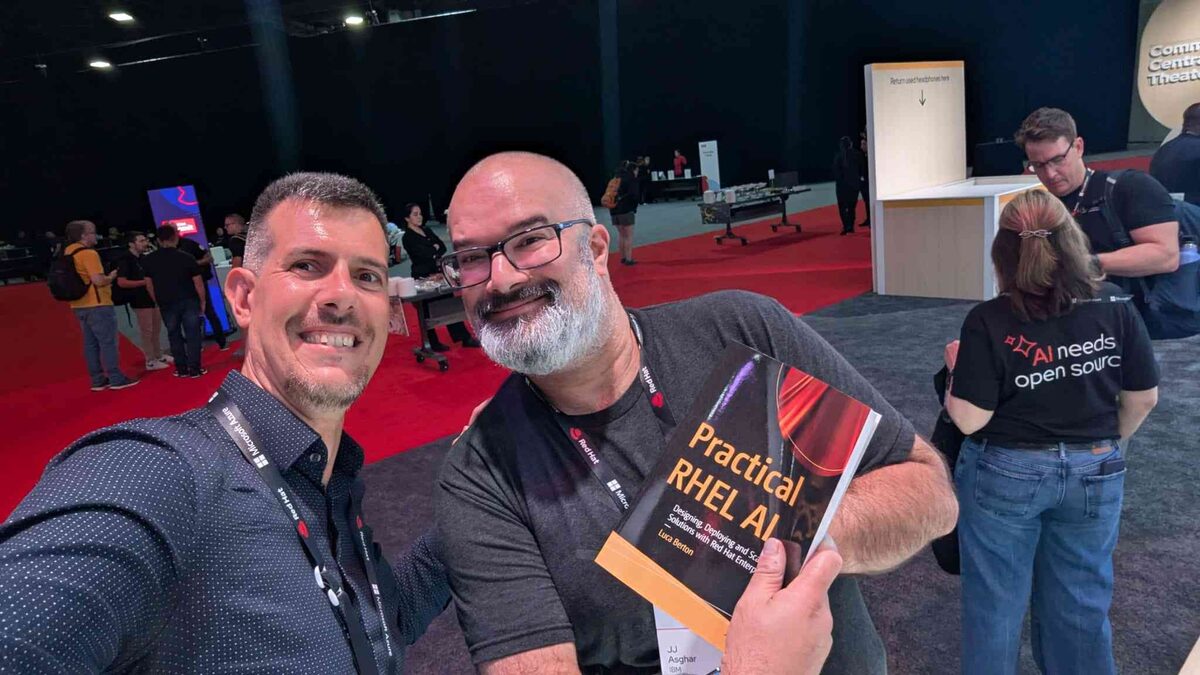
JJ Asghar from IBM is a well-known open-source advocate and community builder. His badge says IBM, his shirt says “AI needs Open Source” — and I could not agree more. Practical RHEL AI exists because Red Hat chose to make enterprise AI open.
The Dell Services Team — Four Copies!
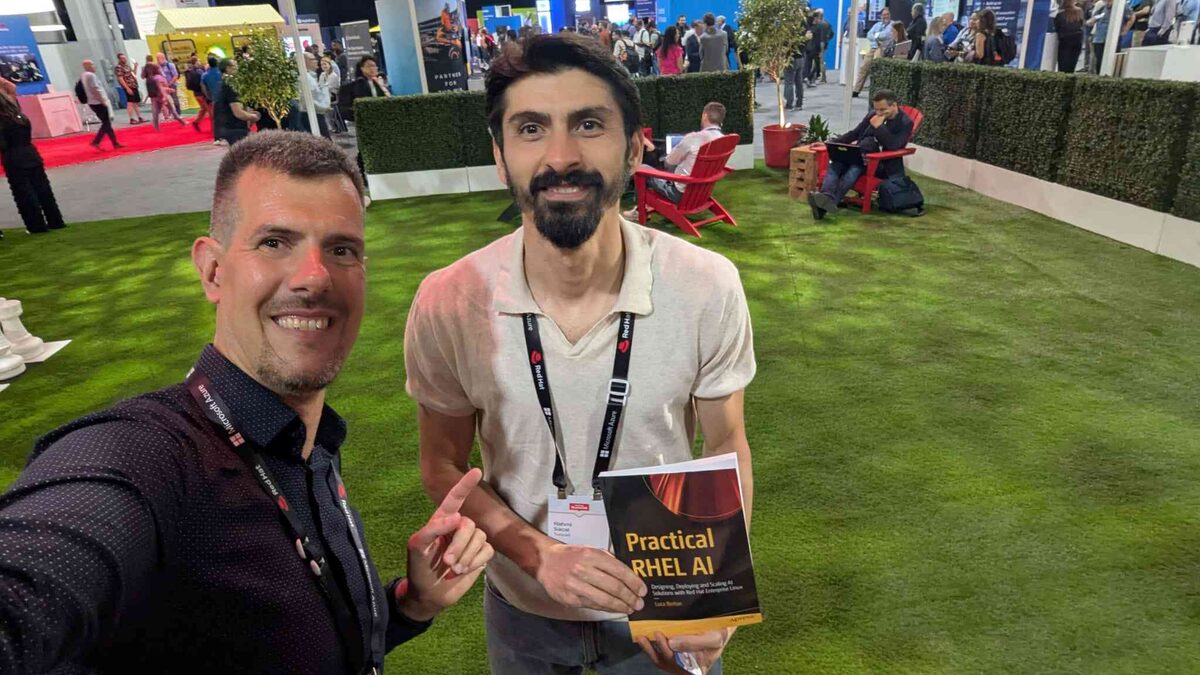
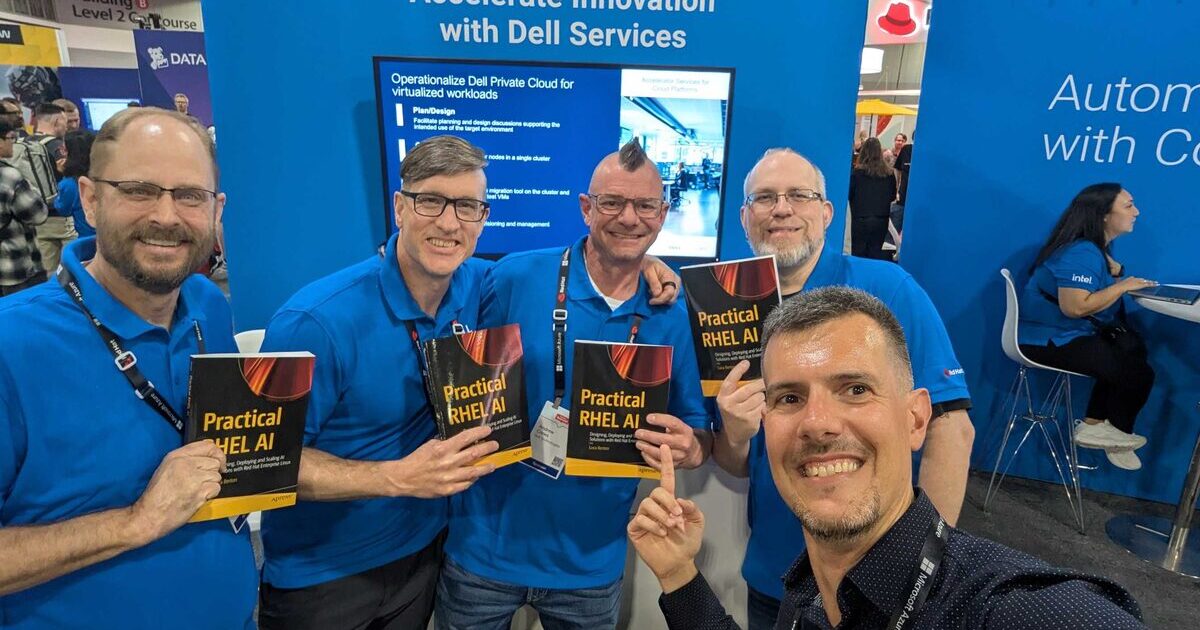
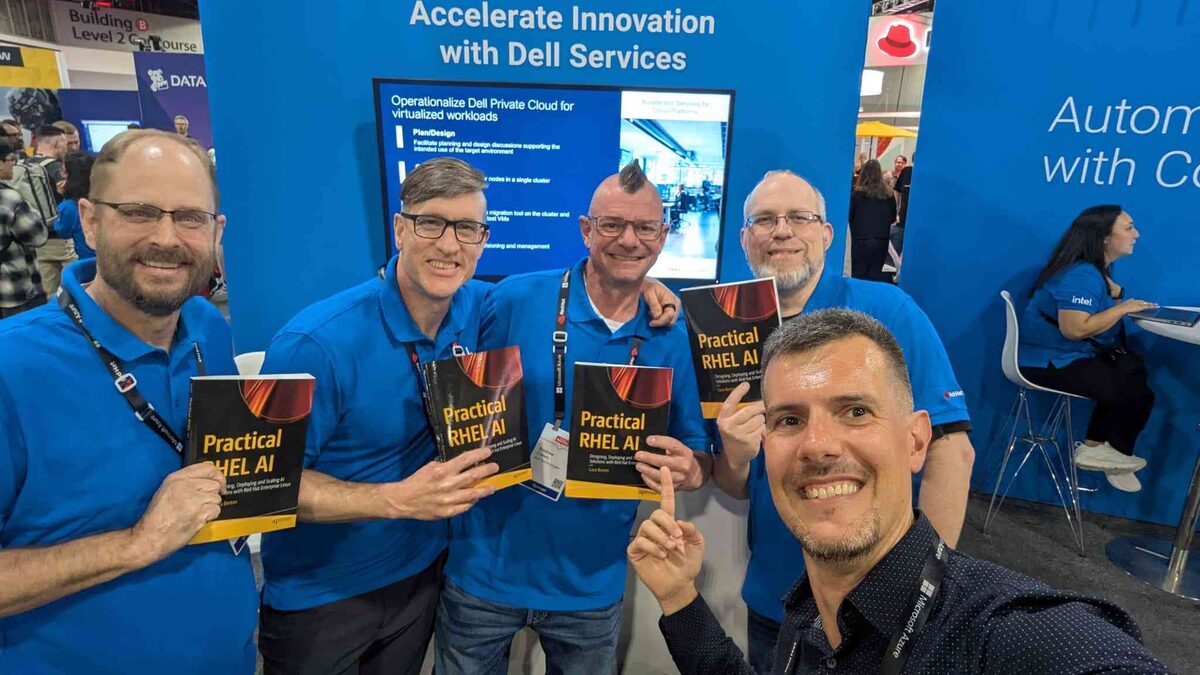
The entire Dell Services team grabbed copies at their “Accelerate Innovation with Dell Services” booth. They are operationalizing Dell Private Cloud for virtualized workloads — combining Dell infrastructure with RHEL AI is a natural fit for on-premises AI deployments. Four books, four engineers, four future RHEL AI deployments.
On the Lawn Lounge
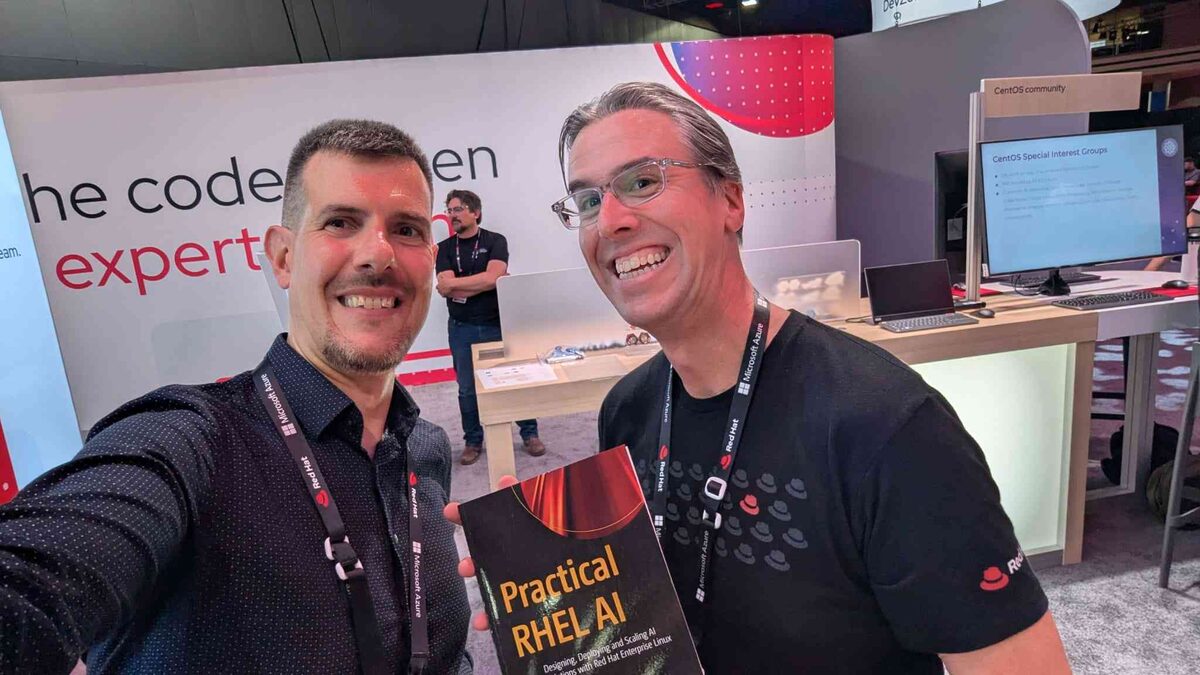
The Lawn Lounge — Red Hat Summit’s outdoor area with artificial grass, red Adirondack chairs, and the best hallway-track conversations. This is where most of the giveaway happened, starting at 16:45 when sessions wrapped up and people were relaxed enough to ask real questions.
Experience Zone
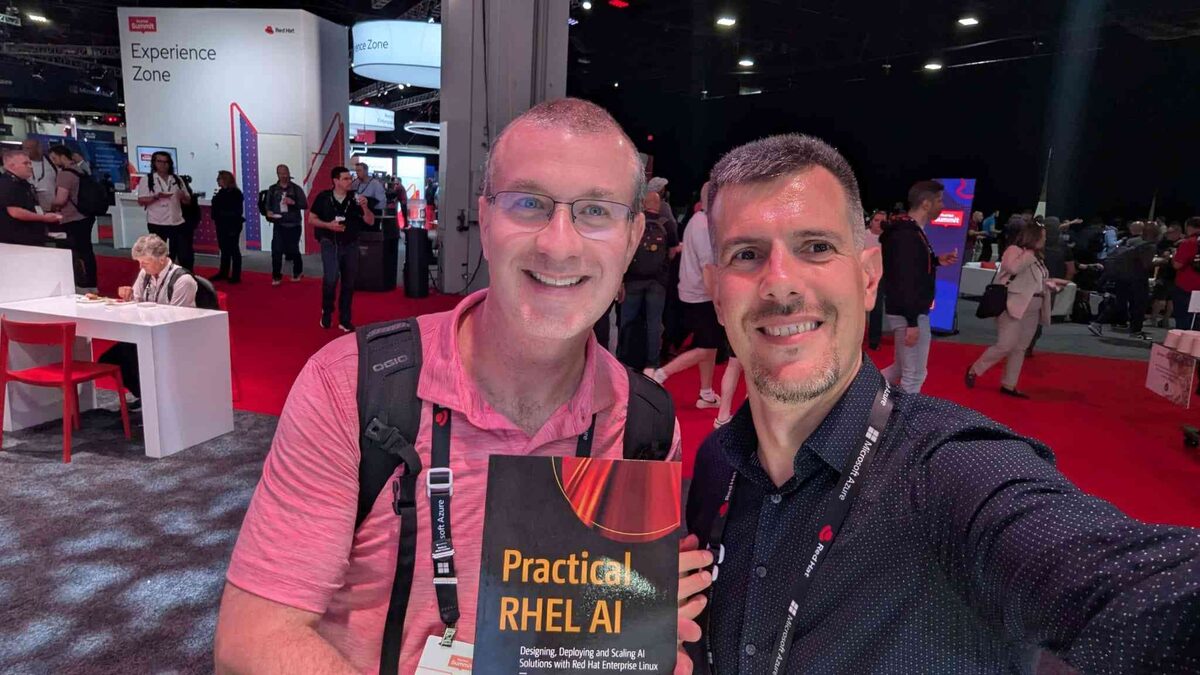
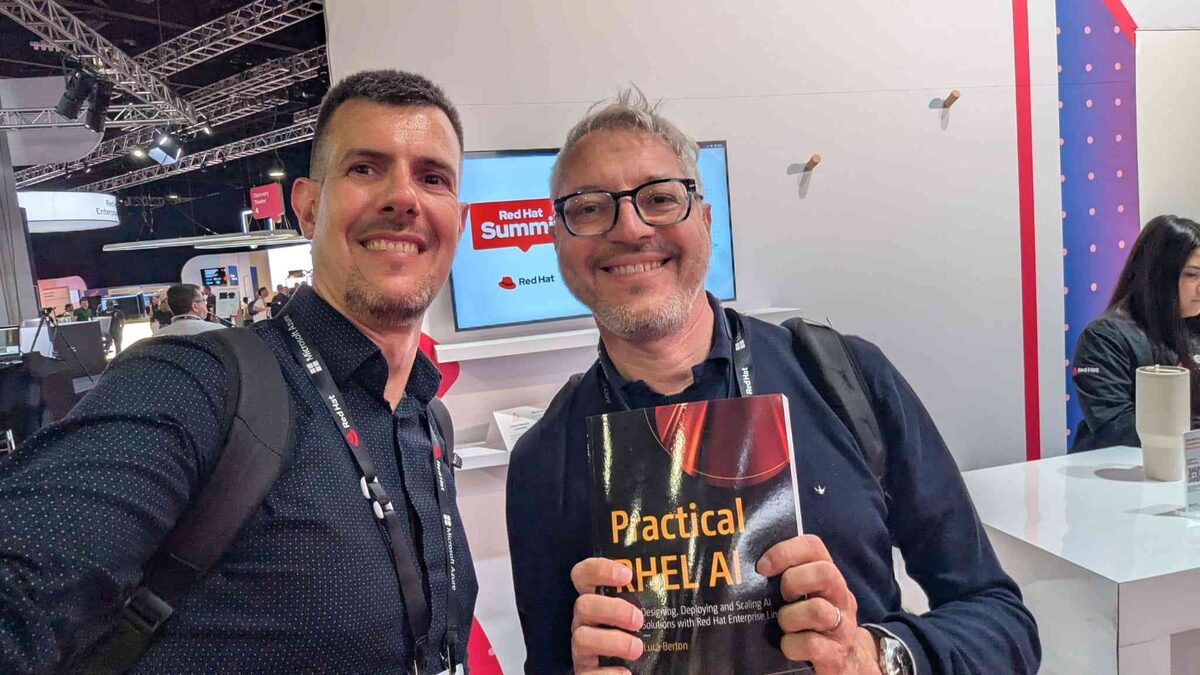
Conversations at the Experience Zone — where hands-on demos meet the book’s practical approach.
Why I Sign Books at Conferences
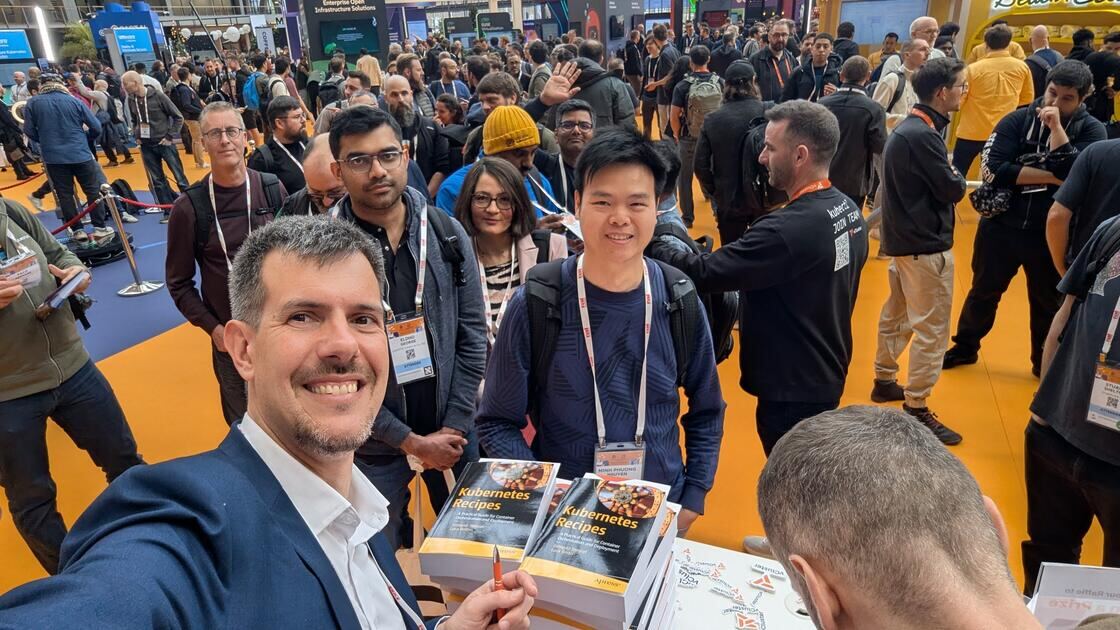
Book signings at tech conferences are different from bookstore events. The readers are practitioners — they will actually use what is inside. The conversations that happen during a signing are often more valuable than any talk:
- “Which chapter covers multi-node InstructLab training?”
- “Can I run Granite on a single GPU with RHEL AI?”
- “How do you handle model versioning in production?”
These questions shaped the book while I was writing it, and they continue to shape future editions.
Get Your Copy
If you missed the Summit giveaway, Practical RHEL AI is available from:
- Apress / Springer — publisher direct
- Amazon — paperback and Kindle
Want to discuss RHEL AI deployment for your organization? Book a call.