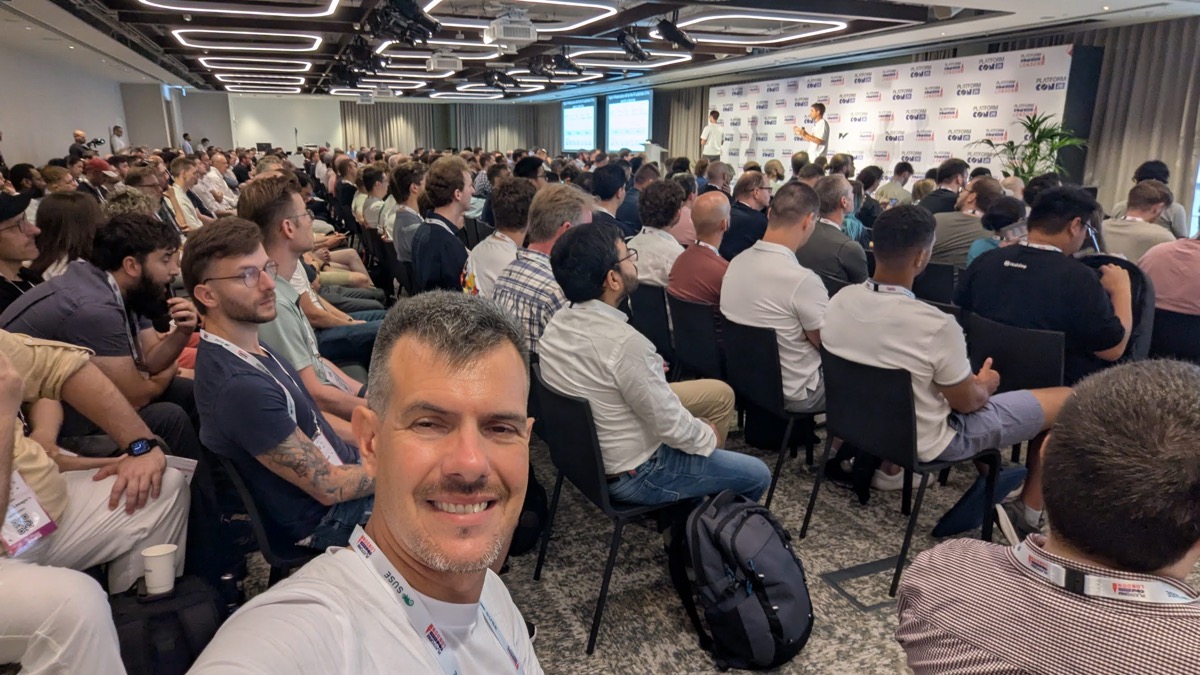
PlatformCon Live Day London 2026 ran on one message that got restated from a dozen different angles across the day and held up every time: the age of AI runs on platform engineering. Main-stage talks, hands-on workshops, training, roundtables, and a genuinely massive booth crawl brought platform engineers, developers, architects, and open-source leaders together to argue the point from every direction.
Watch the Full PlatformCon London 2026 Playlist
I published the full PlatformCon 2026 Live Day London playlist on YouTube, recorded in London on 23 June 2026.
👉 Watch the full PlatformCon 2026 Live Day London playlist on YouTube
The playlist includes interviews, conference sessions, booth conversations, and event-floor highlights from across the platform engineering ecosystem, including:
- Kief Morris from Thoughtworks on AI agents and the changing role of engineers
- Nigel Douglas from Cloudsmith on AI governance and software supply chains
- Alex Scheel from OpenBao on secrets management and agent identities
- Charlie Dyson from Gravitee on API and AI-agent governance
- Nirmata on Kyverno, policy as code, compliance, and AI governance
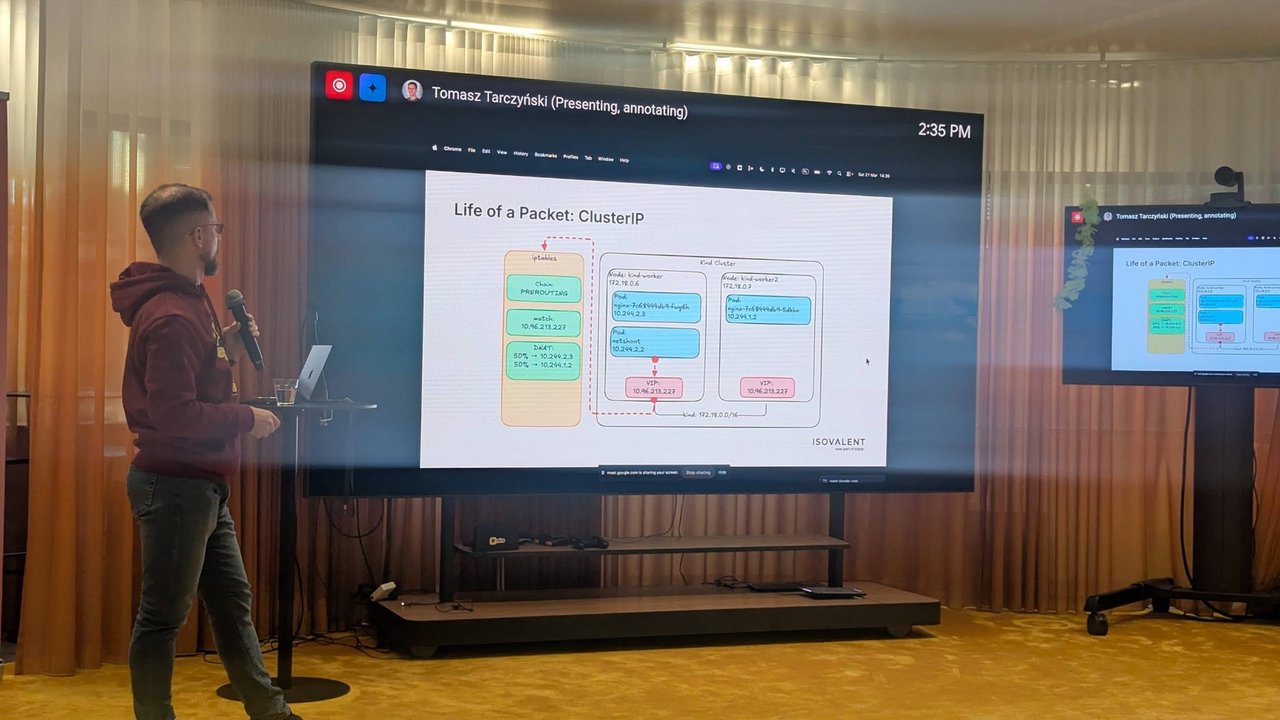
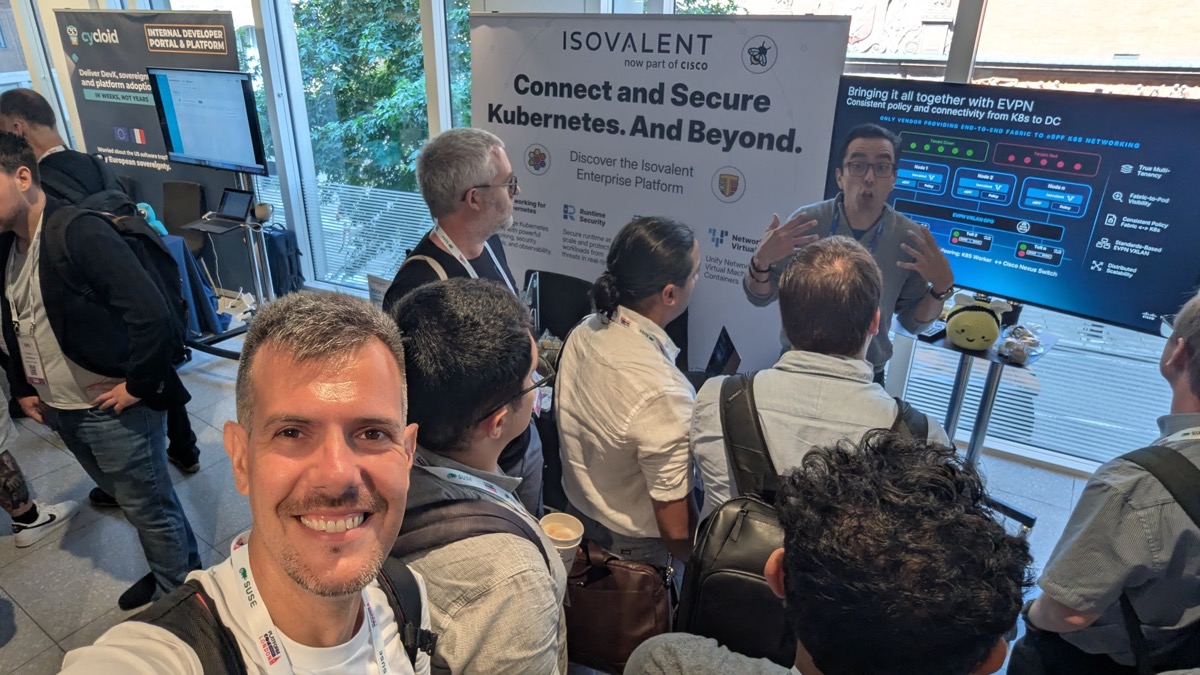
- Isovalent and Cisco on Kubernetes networking and EVPN
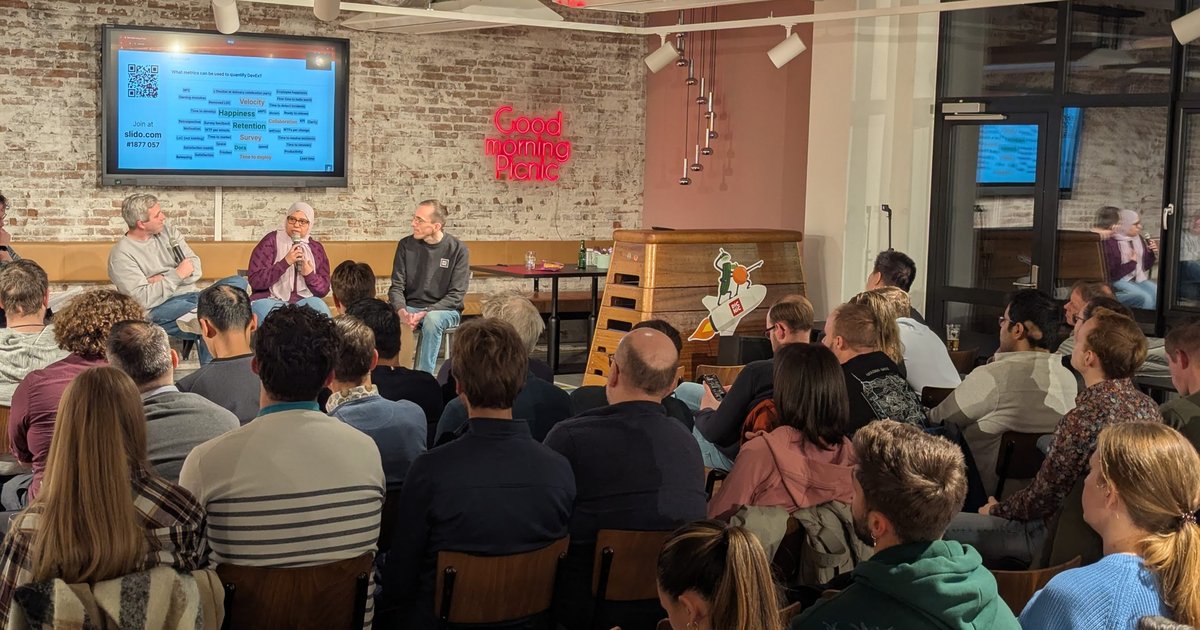
- Main-stage insights on agentic platforms, orchestration, observability, and security
The strongest theme from the day was that AI agents do not replace platform engineering. The internal developer platform becomes the control plane: identity, policy, context, orchestration, security, and observability for agents operating at scale.
Thinking in Platforms, in the Agentic Era
Getting to hold Luca Galante and Kaspar von Grünberg’s book Thinking in Platforms in person, subtitled “Platform engineering as the operating model for work in the AI era,” was a good encapsulation of the day before their talk even started. Their main-stage session made the case directly: platforms are not a nice-to-have layered on top of how AI gets adopted — they are the operating model that determines whether AI adoption is coherent across an organization or a pile of disconnected pilots.
That framing set up the rest of the day’s talks well. Nigel Douglas, Liz Rice, and Joe Baguley followed with a more adversarial question worth taking seriously: can today’s platforms actually survive AI, or does agentic development break assumptions the current generation of internal developer platforms was never built to handle? Gregor Hohpe pushed further into the mechanics with a talk on platforms defying the laws of IT physics — the kind of talk that reframes constraints people treat as fixed as constraints that were simply never questioned.
Patrick Debois: Context Is the New Code
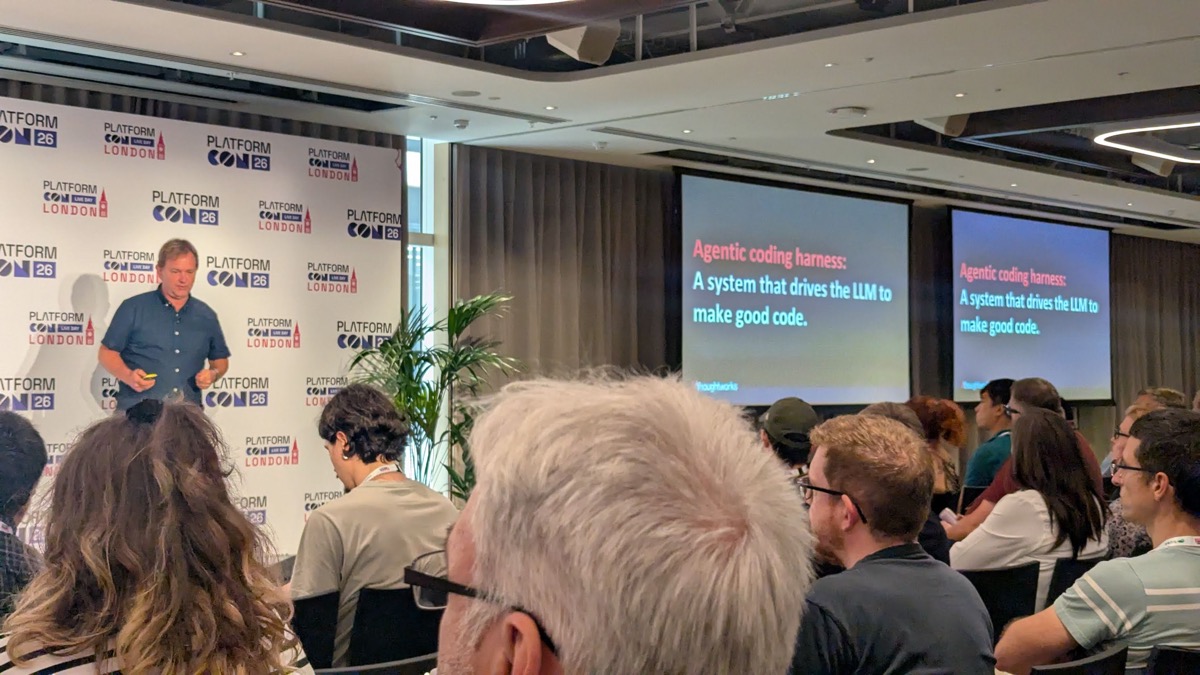
Patrick Debois gave the talk that will stick with me the longest: context is becoming the new code. His working definition of an agentic coding harness — “a system that drives the LLM to make good code” — is a precise way to name something most teams are building ad hoc right now without a shared vocabulary for it. The shift he described is structural: when an LLM can generate code quickly, the actual engineering work moves upstream into shaping the context the LLM operates in — the constraints, the examples, the guardrails, the harness — rather than into writing the code line by line.
This is the same argument I keep making about production guardrails for AI agents: the harness around the model is where the engineering discipline actually lives now, not in the model’s output.
Booking.com: A GenAI Platform for 3,000+ Developers
Mansi Mittal and Bruno Passos from Booking.com presented what a GenAI platform looks like once it has to support more than 3,000 developers rather than a pilot team of ten. At that scale, the platform stops being optional tooling and becomes the only way most developers will ever touch AI-assisted development — which means every governance, security, and reliability decision made at the platform layer gets inherited by thousands of people who never see it directly. Kief Morris picked up the same thread from the operational side: keeping humans genuinely “on the loop” as agentic engineering starts running end to end, rather than degrading into rubber-stamp oversight nobody actually exercises.
Kasper Borg Nissen: Observability as the AI Foundation
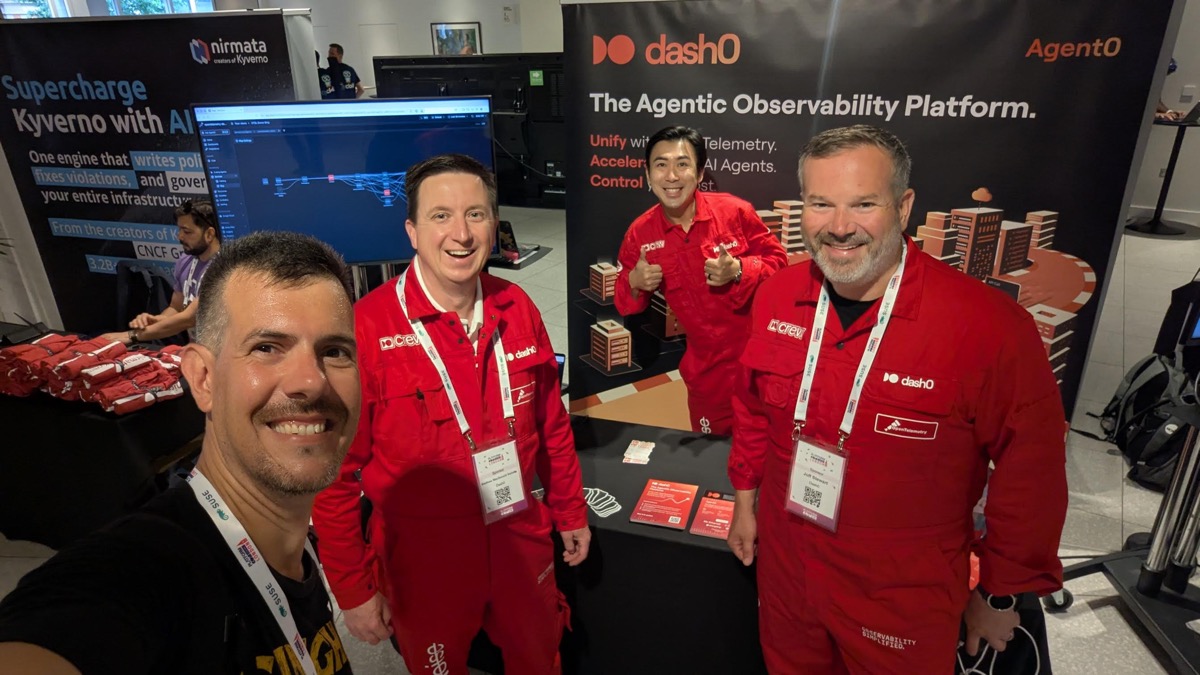
Kasper Borg Nissen’s talk on observability as a foundation for AI-enabled platforms paired naturally with dashO’s booth pitch as an “agentic observability platform” — unifying OpenTelemetry data, accelerating debugging for AI agents, and keeping cost under control as agent-generated telemetry volume grows. The argument echoes what I have written about AI observability with OpenTelemetry: you cannot govern what you cannot see, and agents produce a lot more to see than a human-driven pipeline ever did.
Closing Panel: What Should Platform Teams Build Next
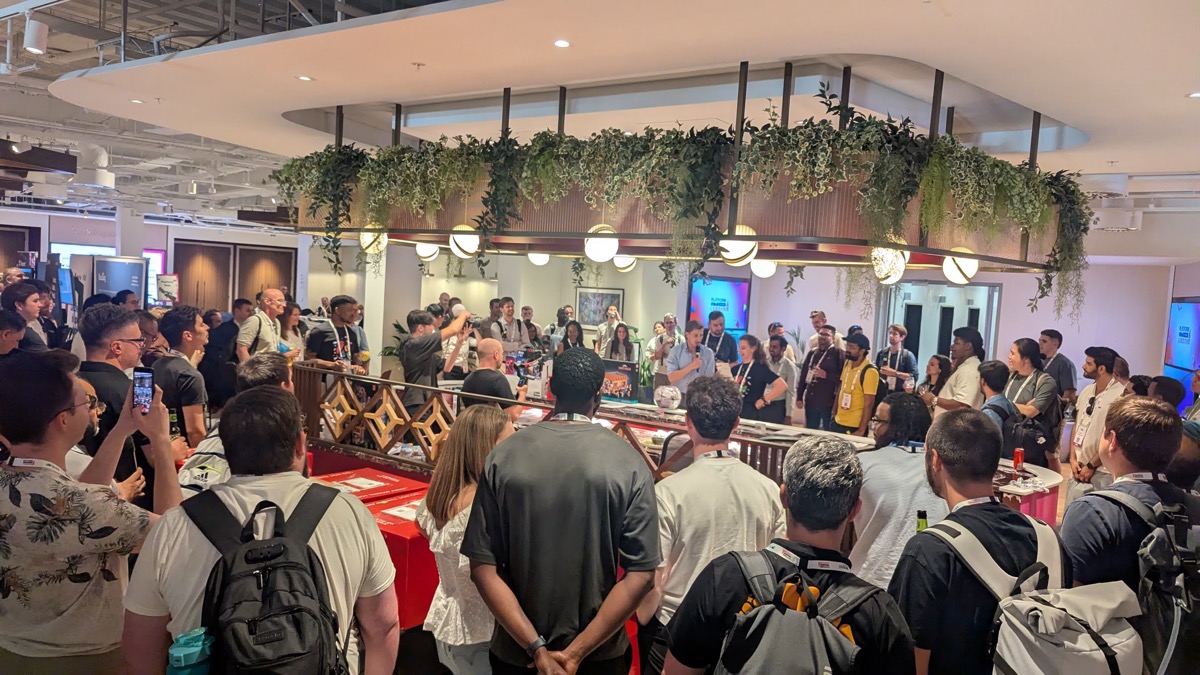
The day closed with Gus Shaw Stewart, Cortney Nickerson, and Nicki Watt discussing what platform teams should actually prioritize next — a good counterweight to a day full of forward-looking keynotes, since the honest answer for most teams in the room is not “adopt agentic everything” but “get the fundamentals solid enough that agentic anything is safe to layer on top.”
The Booth Crawl: 29 Sponsors, One Pattern
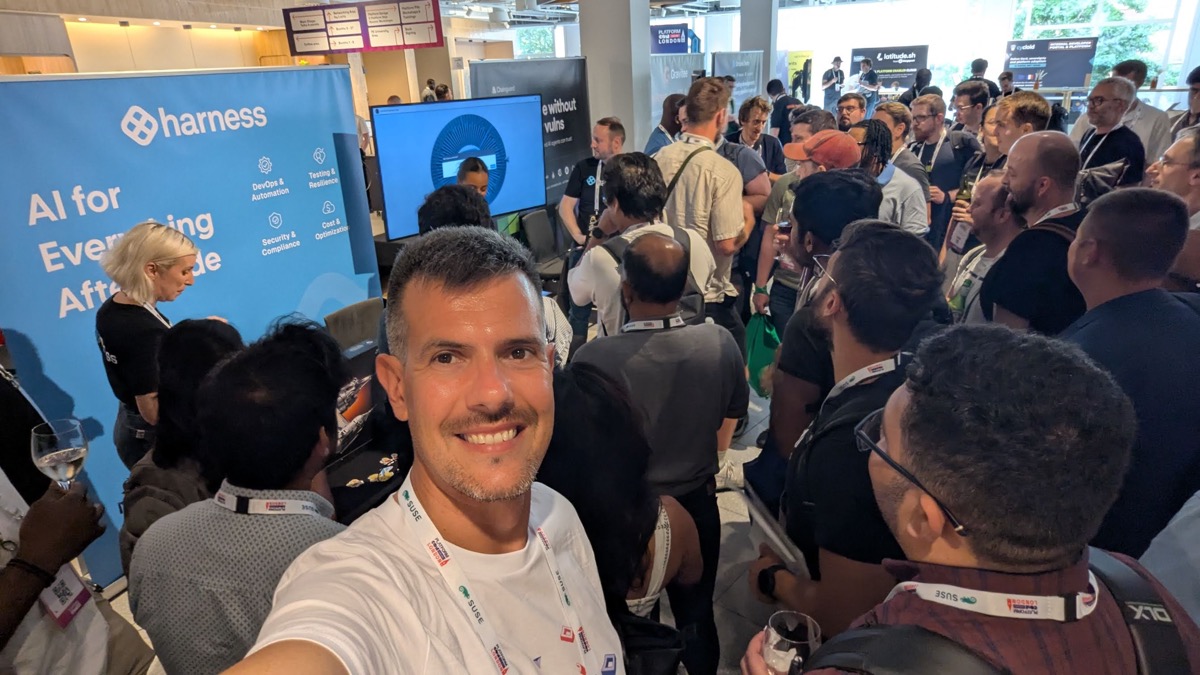
Walking the floor — Port, Vultr, Cloudsmith, Coder, ClearRoute, Dash0, VMware by Broadcom, Postman, Infisical, Octopus Deploy, Nirmata, Isovalent (now part of Cisco), Latitude.sh, Firefly, Depot, Harness, Microsoft, Red Hat, Chainguard, Cycloid, Luciq, Testkube, Teleport, Gravitee, SUSE, PointFive, Cockroach Labs, NudgeBee, and ControlPlane — the pattern across nearly every booth was the same: secure self-service, policy-as-code, and observability, now explicitly rebuilt or repositioned for agents as first-class consumers rather than humans. Harness’s banner put it as bluntly as anyone at the event did: “AI for Everything After Code.”
My Takeaway
AI does not reduce the need for strong platforms — it raises the bar. Developer experience, secure self-service, governance, observability, reusable delivery paths, and reliable infrastructure all become more important, not less, as agents enter the software development lifecycle. Every vendor on that booth floor is racing to prove the same thesis from a different angle, and the platform engineering technology radar for the next year is going to be shaped almost entirely by how well they deliver on it.
The sessions were excellent, but the community made the day — packed rooms, practical demos, honest conversations, and a booth crawl full of people building the next generation of internal developer platforms, cloud infrastructure, and software delivery. A huge thank-you to Platform Engineering, the speakers, volunteers, community, and every sponsor who made the day happen.
Related Reading
- PlatformCon London 2026: Agentic IDP Reference Architecture
- OpenBao Founder on Secrets Management for AI Agents
- Cloudsmith: Managing AI Agents at Platform Scale
- Platform Engineering Amsterdam: This is FIN(e)TECH Meetup Recap
- Platform Engineering MeetUp Amsterdam: Human Intelligence
- CNCF Platform Engineering Technology Radar 2026
- Production Guardrails for AI Agents
- AI Observability with OpenTelemetry
About the Author
I am Luca Berton, AI and Cloud Advisor. I work at the intersection of platform engineering, cloud security, and enterprise AI deployments. Book a consultation.