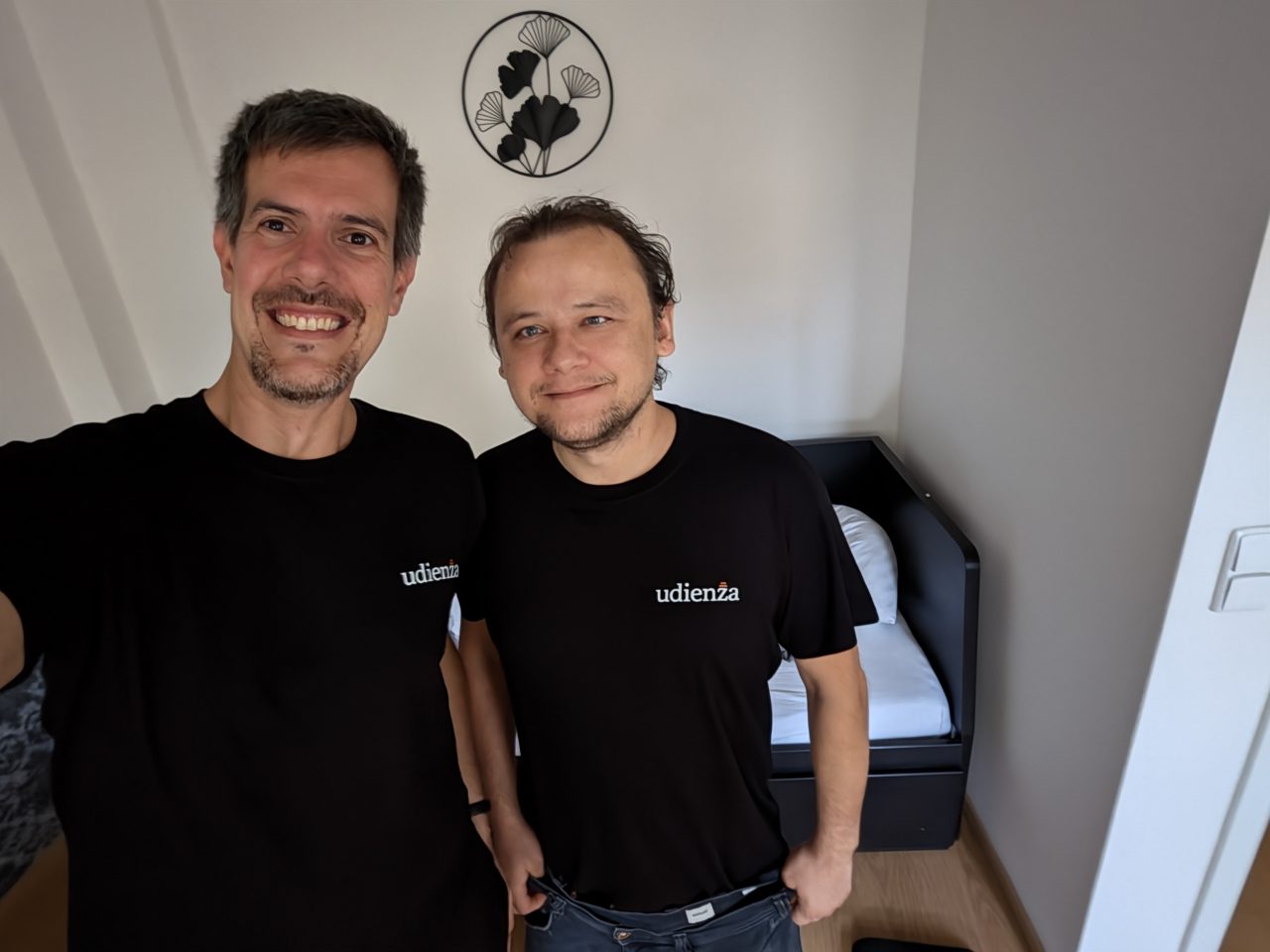
At Open Source Summit Europe 2026 in Prague I went in as a media partner with one goal: record as many short, focused conversations for Udienza as three days allow. By the time I left for the airport on Friday, the calendar had held about twenty interview slots: kernel maintainers, foundation leaders, OS teams, security projects and embedded engineers.
People asked me how that works, so here is the playbook. None of it needs a big media budget. It needs preparation and a calendar you trust.
1. Define the format before you ask anyone
Udienza has a fixed format, and every pitch said it in one sentence:
“Udienza is a ten-minute video show with the people who build what the rest of us run on. No panel and no product pitch — just one focused engineering/maintainer idea on camera.”
Ten minutes is the key. It is short enough that a maintainer between two sessions can say yes without thinking about it, and long enough for one real idea. When I asked for the CNCF slot, I described it as “ten minutes, one technical idea, on camera, focused on engineering decisions, trade-offs, and lessons maintainers can share with other builders.”
The internal structure is just as fixed:
- 0:00 Cold open: the guest states the one thing they built or changed.
- 0:30 Who they are, in one line. No bio reading.
- 1:00 The idea: what did you build, and why does it matter to someone running systems today?
- 5:00 The hard part: what broke, what surprised you, what you would do differently.
- 8:00 For the people who could not be here: one thing to read, try or watch.
- 9:30 Where to find them.
2. Pitch one angle per person, tied to their own talk
Generic requests (“would you like to be on my podcast?”) get ignored. Every pitch I sent referenced something specific the person was doing that week:
- For Arnaldo Carvalho de Melo, his “20 years of pahole” session at Linux Plumbers and how a developer tool became BPF infrastructure.
- For Konstantin Ryabitsev, his Kernel Summit session on b4’s maintainer features.
- For Franklin Cooper at TI, his talk on FPGA-based test fabrics, which I described as “a real constraint, a design decision, and something other builders can reproduce”.
- For Mario Sánchez Prada at Igalia, his session on the new WPEPlatform API.
- For Erin McKean, her keynote on documentation for humans and AI agents.
Then I added one line that matters more than it looks: “The conversation is technical and editorial, not a product pitch.” Companies say yes faster when they know you will not ask about pricing. Engineers say yes faster when they know you will not ask about marketing.
3. Work with the organiser’s PR team
As a media partner, I asked the Linux Foundation for four things a month before the event: 1:1 interviews, access to an interview room, a media badge for my camera operator, and ten minutes with Linus Torvalds.
What I got:
- Introductions and booked sessions. The LF PR team offered and booked sessions with Bob Killen and Daniel Krook of CNCF and with Bianca Lewis of OpenSearch.
- A media registration for Marcin Czupryniak, who filmed everything.
- The Udienza logo on the event’s sponsor page, which made every cold email more credible.
- An honest answer on Linus: he chooses his own interviews and cannot reply to most requests. Fair enough.
The PR team also sent embargoed announcements ahead of the CNCF interview, so I could prepare questions on news that went public the morning of the summit.
4. One calendar event per guest, with everything inside
This is the part that made three days possible. Every interview became a calendar event with the same structure:
- Status: CONFIRMED, HOLD or UNCONFIRMED, in the title.
- Guest: name, role, organisation, and how they prefer to be contacted. Some people only use Signal and not WhatsApp; respect that.
- When and where: a concrete meeting point. “Booth 20”, “Registration desk”, “the TI booth”.
- Background: three or four lines on who they are and what they built.
- Angle: one sentence.
- Questions: five to ten, numbered.
- Ten-minute flow: which questions to prioritise, for example “1 → 3 → 4 → 5 → 9, close with 10”.
On the show floor there is no time to open a notes app. I opened the calendar event, read the angle and the first three questions, and walked to the meeting point.
5. Be honest about what does not work
Not everything worked, and that is normal:
- Some people never replied. Senior executives at large vendors have full schedules. One PR team told me exactly that, kindly.
- Some replied with an out-of-office. People travel to conferences and stop reading email.
- Some guests change. When a founder could not attend, their company proposed their VP of Engineering instead, who turned out to be a great guest.
- Some slots overlapped. On Friday morning I was still wrapping up one interview when the next guest was already looking for me at reception.
The fix for most of this is the same: move the coordination to the phone on the day. Email is for booking. On site, a quick message (“I’m at the registration desk now”) saves the slot.
6. Leave room for the hallway
Some of the best conversations of the week were not on the calendar: people I met at booths, at the reception, or in the queue for coffee. I wrote them up in People I Met at Open Source Summit Europe 2026. A schedule with no gaps has no room for luck.
The numbers
| Count | |
|---|---|
| Guests pitched before and during the event | about 30 |
| Slots that were booked or held in the calendar | about 20 |
| Interviews arranged by the Linux Foundation PR team | 2 sessions, 3 guests |
| Days | 3 |
| Camera operators | 1, and he deserves a medal |
What comes next
The Prague conversations will be published as Udienza episodes at udienza.com, with chapters and transcripts. The written side is already here:
- Kernel Maintainers in Prague: Greg KH and Arnaldo Melo
- Neutral Governance: CNCF, OpenSearch and AlmaLinux
- Isolating AI Agents: Edera, Coder and OpenBao
- The OS Layer in the AI Era
- Embedded Linux in Prague
If you are an event organiser and want Udienza at your conference, the AGNTCon + MCPCon media partnership and KubeCon Japan are good examples of how I work.