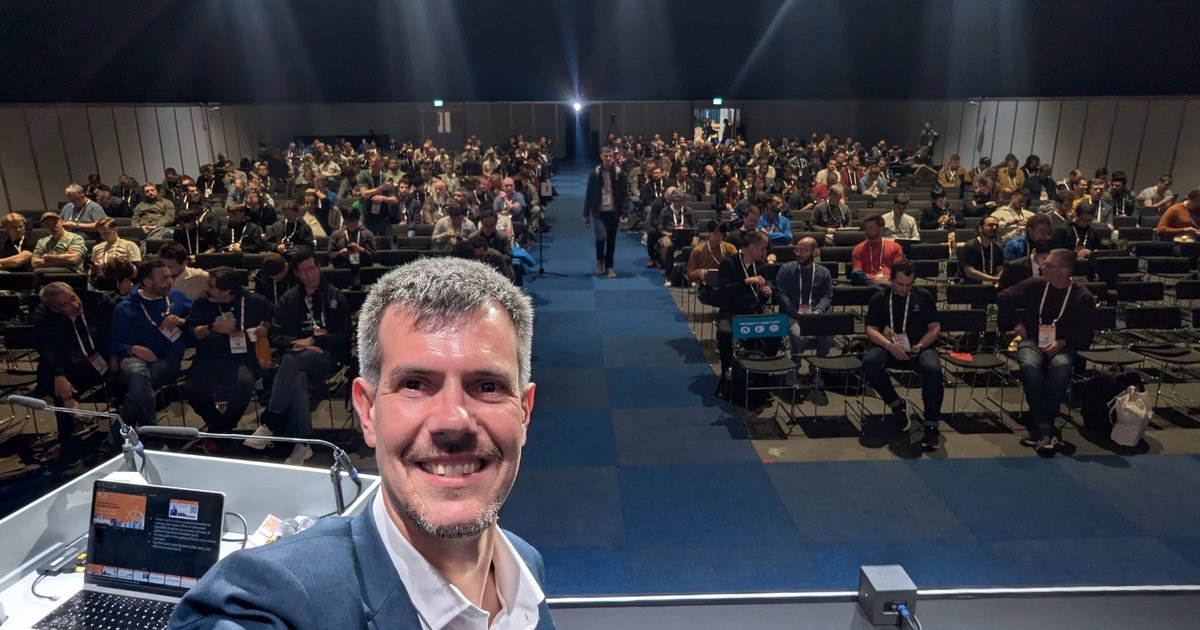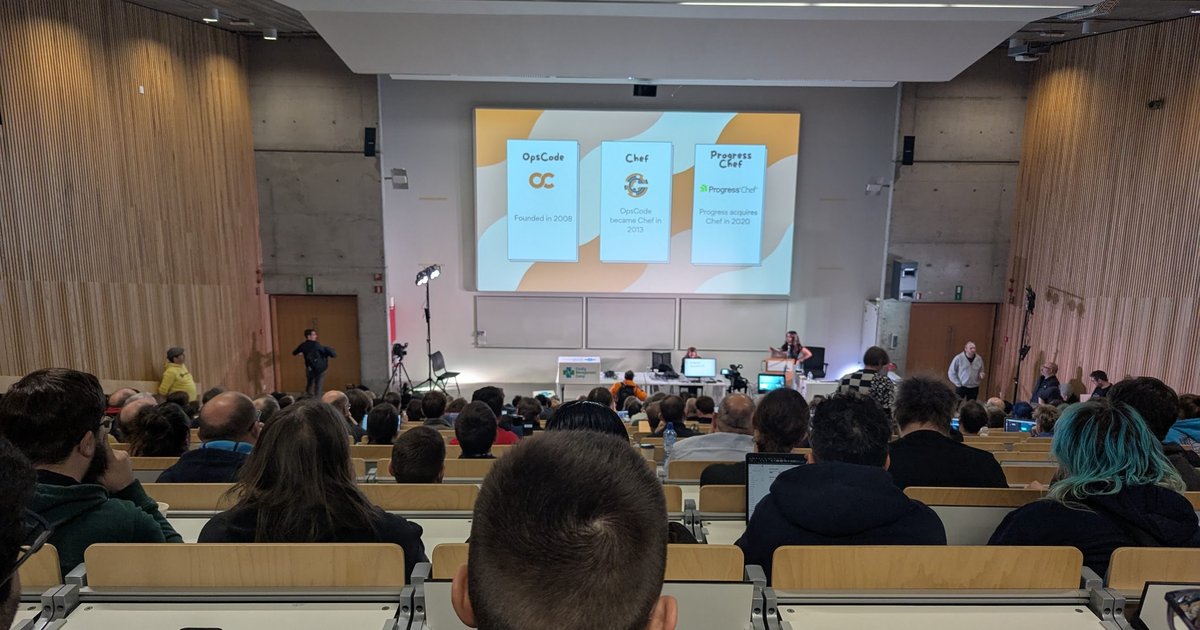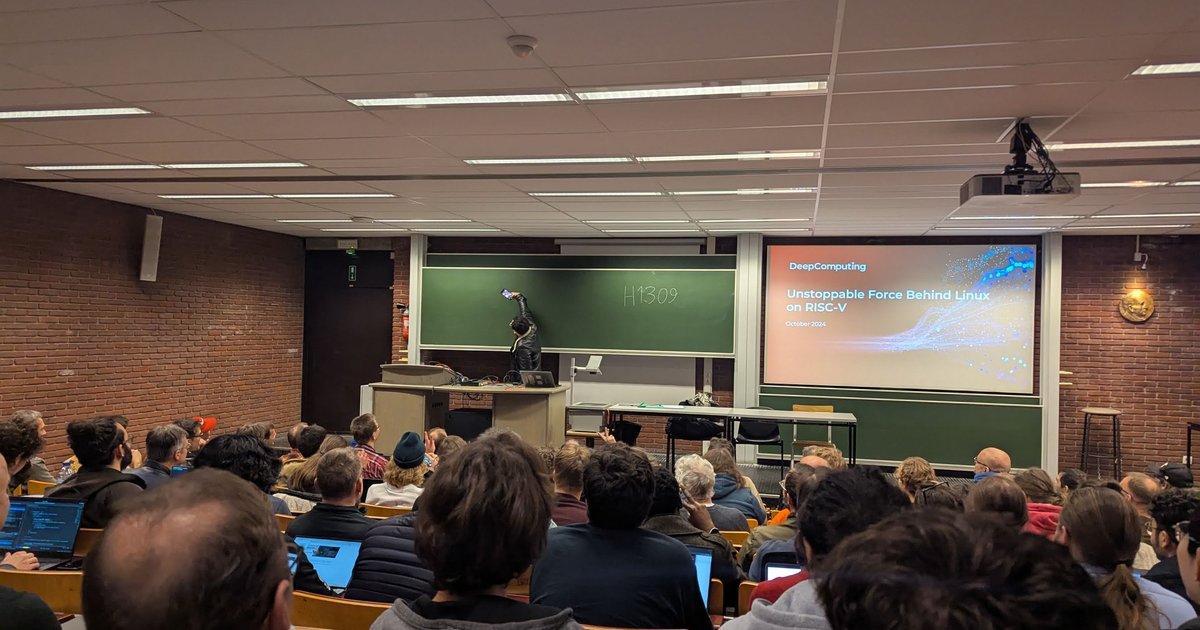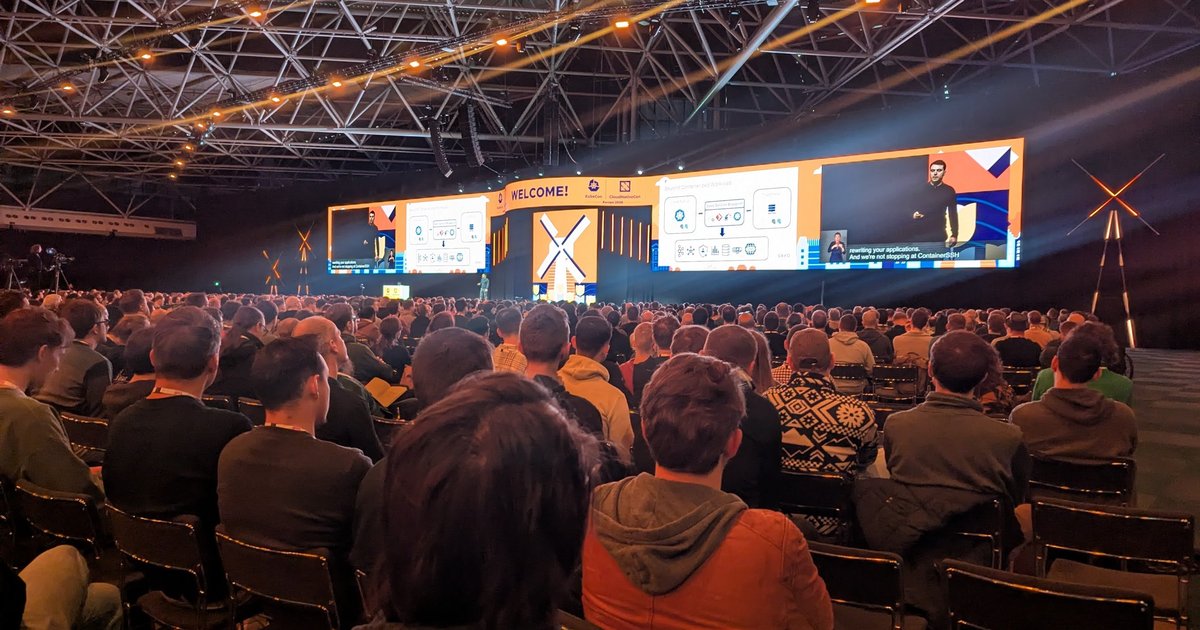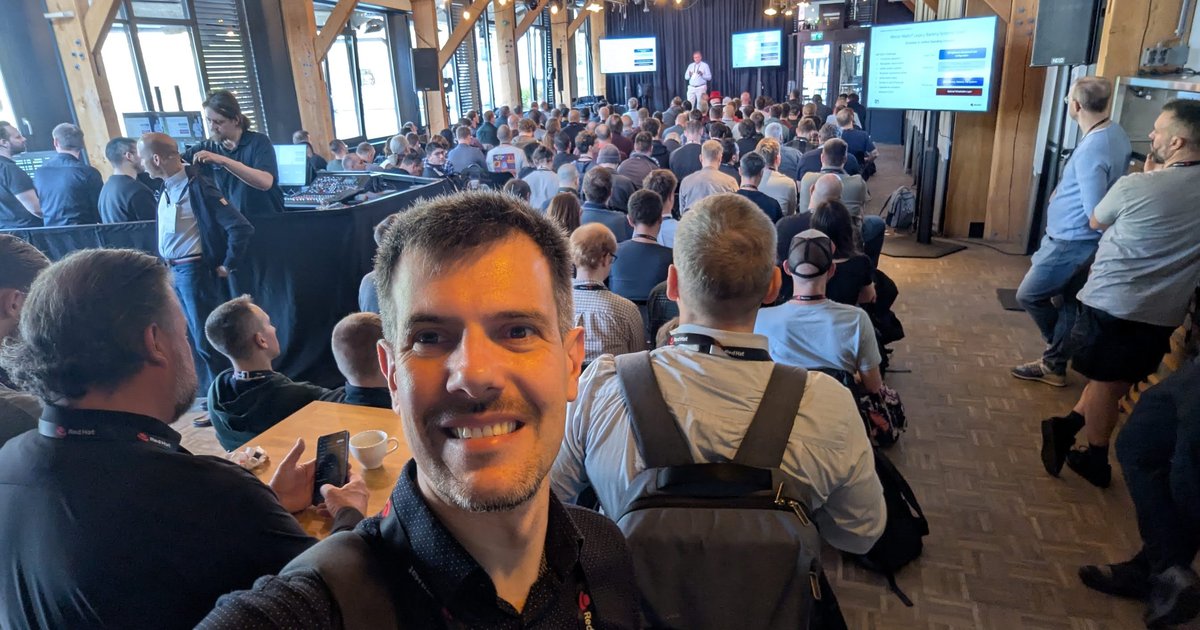
KubeCon Europe 2026 week in Amsterdam started early for me. On Monday 23 March, before the CNCF co-located events at the RAI, I spent the morning at Red Hat OpenShift Commons Gathering Amsterdam 2026, a full-day event (07:00 to 15:00) at Strandzuid on Europaplein 22, co-located with KubeCon EU. I’ve covered the rest of that week in my KubeCon Europe 2026 recap.
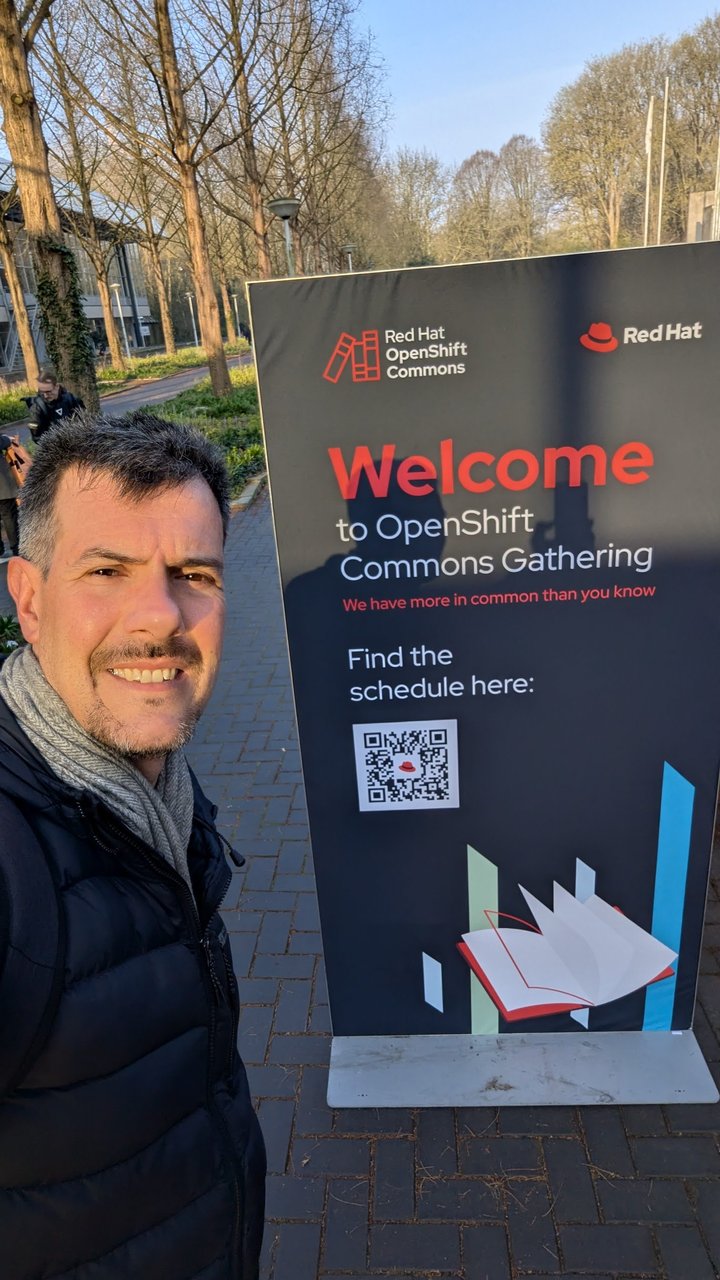
“Welcome to OpenShift Commons Gathering. We have more in common than you know.” The sign outside had a QR code for the schedule.
Breakfast and the keynote
The day started at 07:00 with breakfast: croissants, bread rolls, cheese and cold cuts. By 08:40 the room behind the “Keynote” sign was full, with people standing along the side.
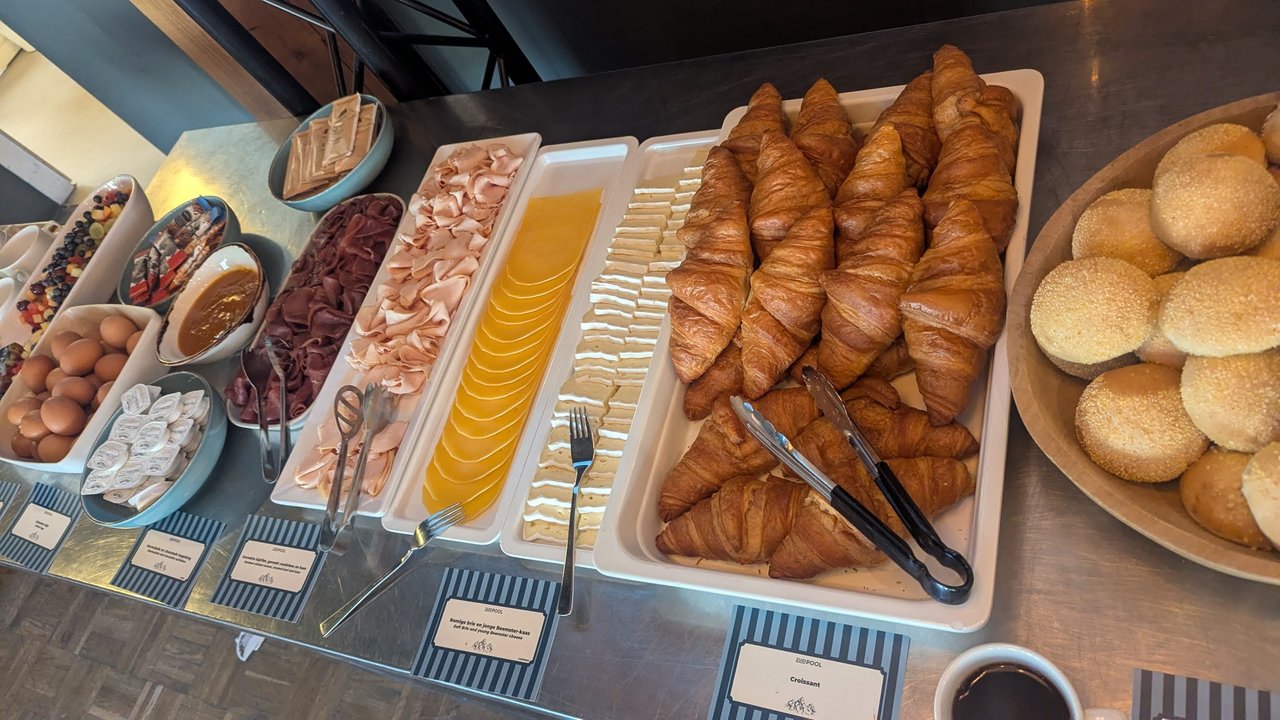
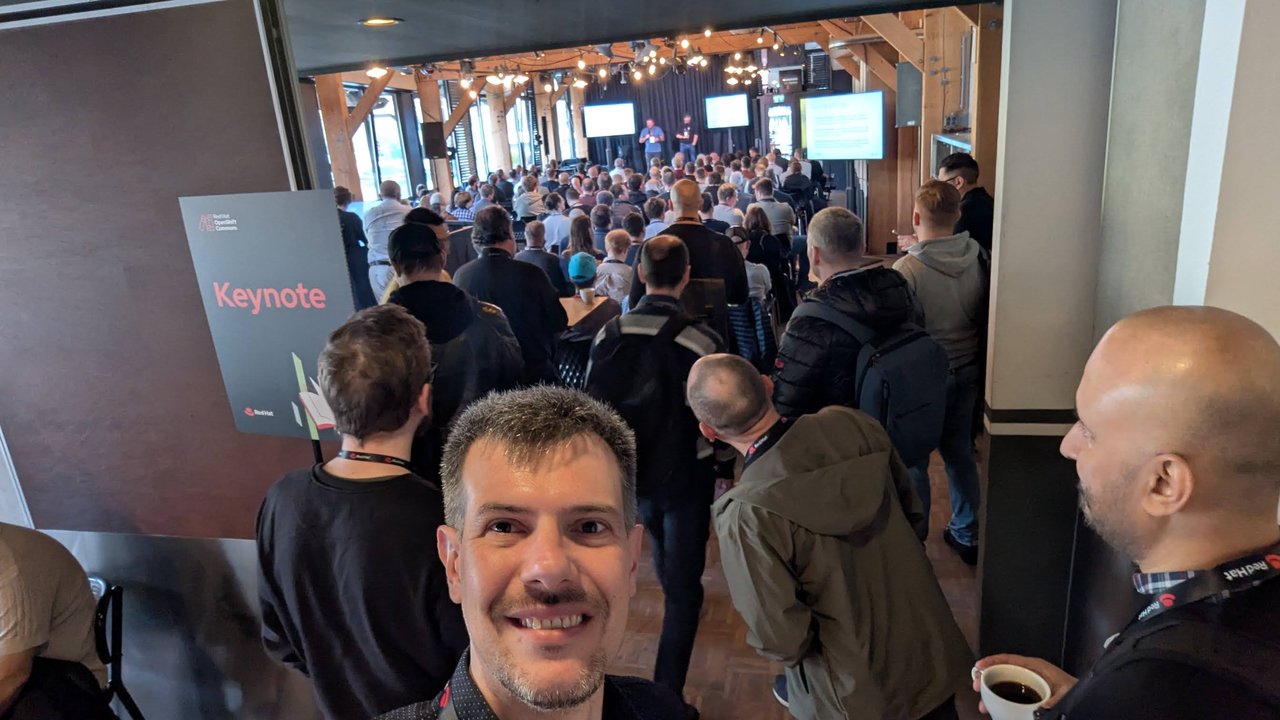
Breakfast first, then a queue into the keynote room.
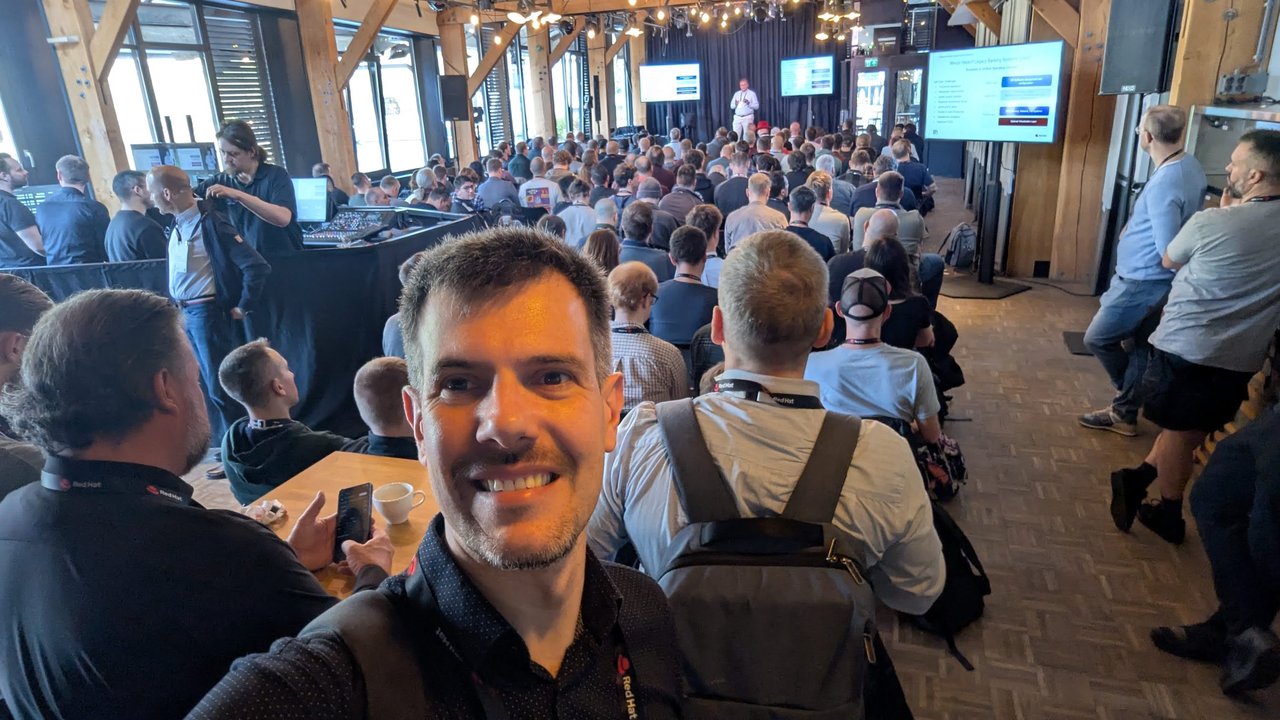
Strandzuid’s timber hall, with screens all down the room.
AI and cloud security, in four numbers
One of the first slides I photographed was titled “State of Cloud Native Security Report Highlights: AI and Cloud Security”. It cited the 2026 State of Cloud Native Security Report:
- 58% of organisations say AI adoption significantly shapes their security planning
- 96% of respondents said they have worries about the use of gen AI in their cloud environments
- 59% do not have documented AI policies
- 60% of companies surveyed have no AI governance
My take: the gap between the 96% and the 59–60% is the number to remember. Nearly everyone is worried about generative AI in their clusters, but most haven’t written down what is allowed. A policy doesn’t need to be perfect to be useful. It just needs to exist before the first model goes into production.
LLMs in public health
Between sessions, the screens around the hall showed a slide titled “Applying Large Language Models (LLM) in Public Health”. It compared two tasks side by side. For classification, raw text went into a fine-tuned model that returned a yes or no (a cross or a tick). For extraction, a question and the raw text went into an LLM, which produced text output.
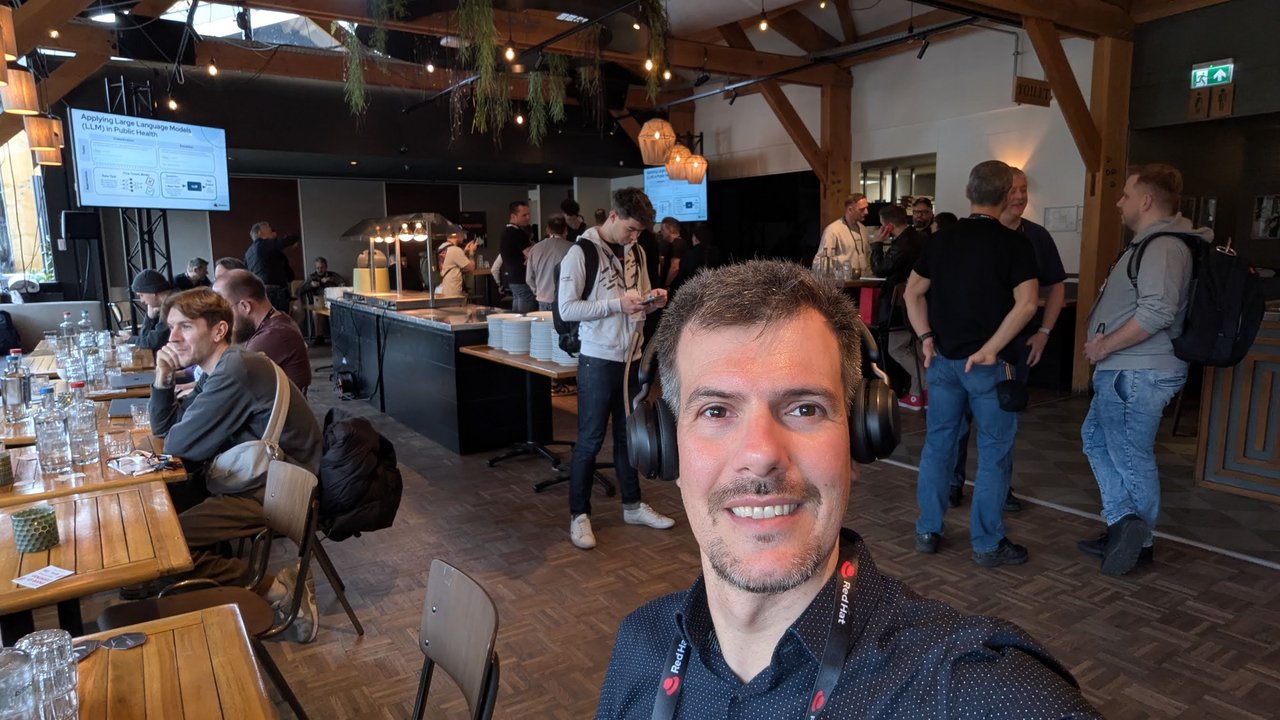
Coffee, conversations and a public-health LLM slide on the screens.
My take: that split is a useful one. A small fine-tuned classifier is often cheaper and easier to validate than a general LLM, and you can keep the larger model for the extraction work where it pays off.
etcd tuning, down to the metric names
The most hands-on session I caught was about etcd. Its “etcd Optimizations” slide covered:
- etcd Operator: manages the entire etcd lifecycle, including automated maintenance (defragmentation and history compaction) and self-healing, where the operator restores quorum if a member becomes unhealthy
- Tuning parameters: a hardware speed tolerance of Standard or Slower, where “Slower” makes the system more tolerant of increased latency
- Database size: 8GB by default, configurable up to 32GB as a Technology Preview
- EventTTLMinutes: the maximum time Kubernetes events are stored in etcd before they’re purged
- Key metrics to watch in Prometheus:
etcd_server_quota_backend_bytes,etcd_mvcc_db_total_size_in_use_in_bytes,etcd_mvcc_db_total_size_in_bytes,etcd_disk_wal_fsync_duration_seconds_bucket,etcd_disk_backend_commit_duration_seconds_bucketandetcd_server_leader_changes_seen_total
Next came an “etcd Dashboards” slide, with panels for RPC rate, disk sync duration, DB size and total leader elections per day.
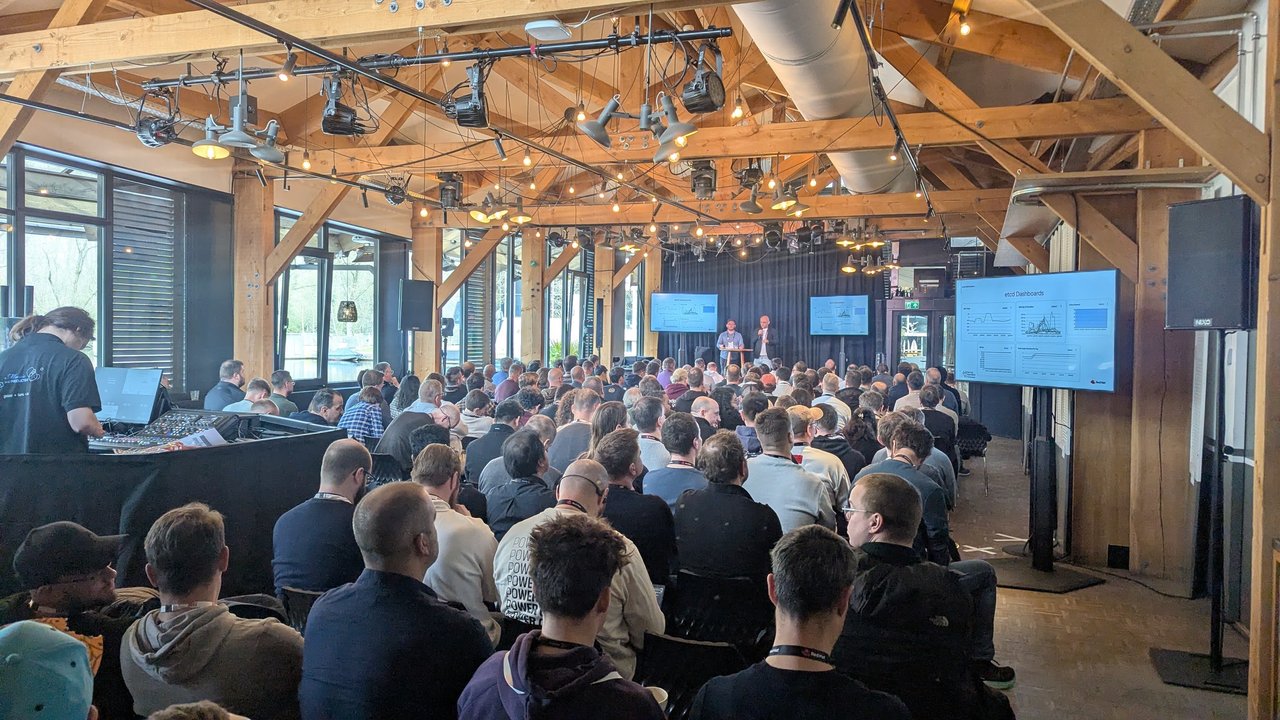
The etcd session: dashboards for RPC rate, disk sync duration and leader elections.
My take: this is a good metric list to keep. WAL fsync duration and leader changes are useful first signals when a cluster feels slow, because slow disks under etcd are a common root cause. I go into backups and defragmentation in more detail in etcd backup and maintenance for production Kubernetes.
GuideLLM and a Siemens road trip
One photo from the break shows the GitHub README for GuideLLM on a phone screen. The project describes itself as an “SLO-aware Benchmarking and Evaluation Platform for Optimizing Real-World LLM Inference” and “a platform for evaluating how language models perform under real workloads”. The overview diagram places it between model selection (Hugging Face models, compression and fine-tuning pipelines, datasets) and deployment on vLLM, and it produces a guidance report. The README showed version v0.5.4 under the Apache-2.0 licence.
The last session I photographed was a three-person talk with Siemens branding on the slides, asking “What will you encounter on your road trip?”. The answers were split into columns, including “General Challenges” and “Technical Hurdles & Bugs”.
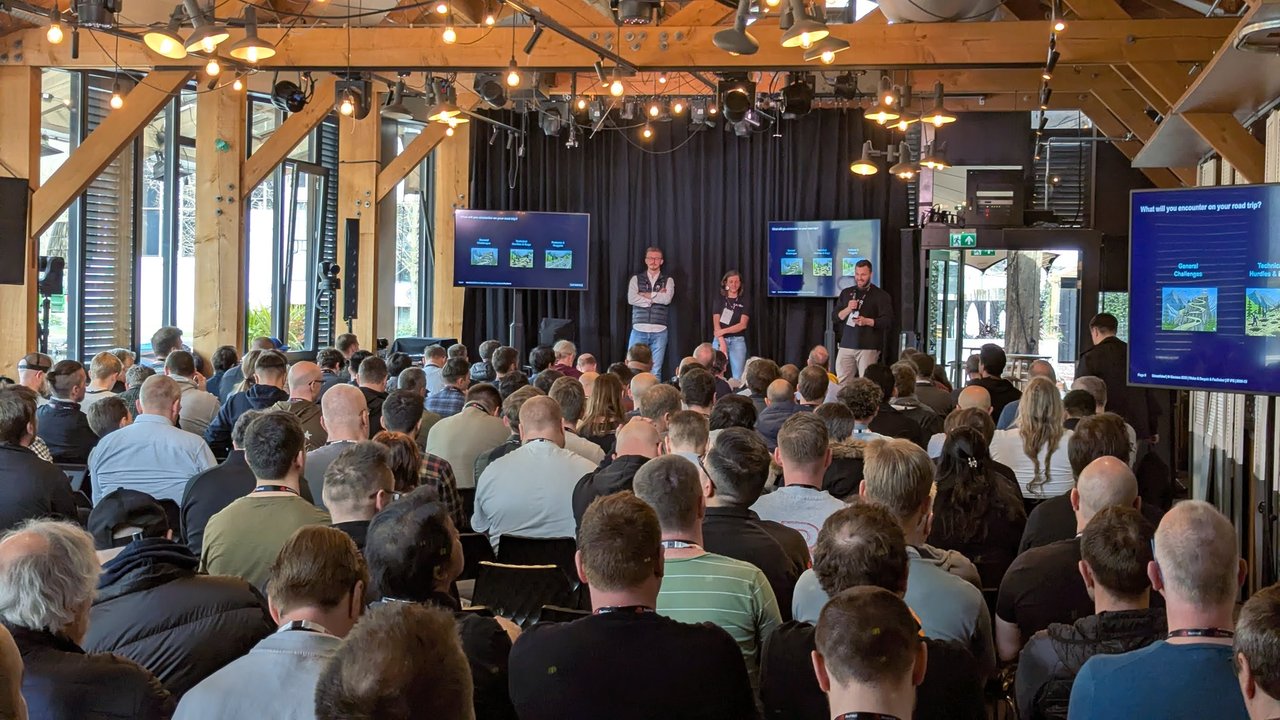
The Siemens team’s road-trip slide, with general challenges and technical hurdles side by side.
Later that day I moved on to the CNCF co-located events at the RAI, which are covered in the KubeCon week recap.