On 12 February 2026 I went to the OpenClaw Builders Community | AMS meetup at AI House on Gustav Mahlerplein. The Amsterdam MLOps Community hosted it, and the invitation summed up the idea: bring the Amsterdam “ClawdBot | MoltBot | OpenClaw” builders together in one room. I run my own OpenClaw agent and write about it often on this blog, so a room full of other OpenClaw builders was worth an evening.
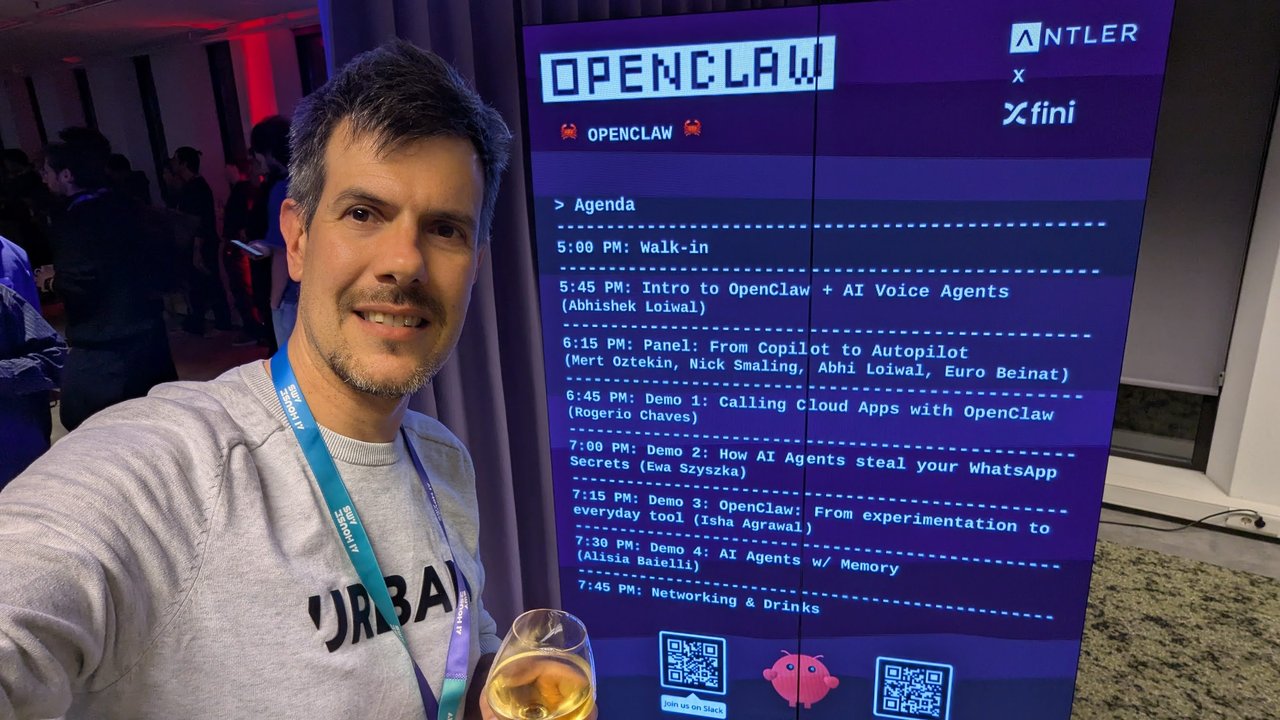
The agenda board at the entrance, branded Antler x fini.
The agenda
The board by the door set out the whole evening:
- 5:00 PM: walk-in
- 5:45 PM: Intro to OpenClaw + AI Voice Agents
- 6:15 PM: Panel: From Copilot to Autopilot
- 6:45 PM: Demo 1: Calling Cloud Apps with OpenClaw
- 7:00 PM: Demo 2: How AI Agents steal your WhatsApp Secrets
- 7:15 PM: Demo 3: OpenClaw: From experimentation to everyday tool
- 7:30 PM: Demo 4: AI Agents w/ Memory
- 7:45 PM: Networking & Drinks
That’s a good mix. You get the productivity story (cloud apps, everyday use), the security story (WhatsApp secrets) and the architecture story (memory) in a single evening. The stage screens read “Lets talk OpenClaw”, with the event co-organised with partners including Prosus, Foundry, JustPaid and LangWatch.
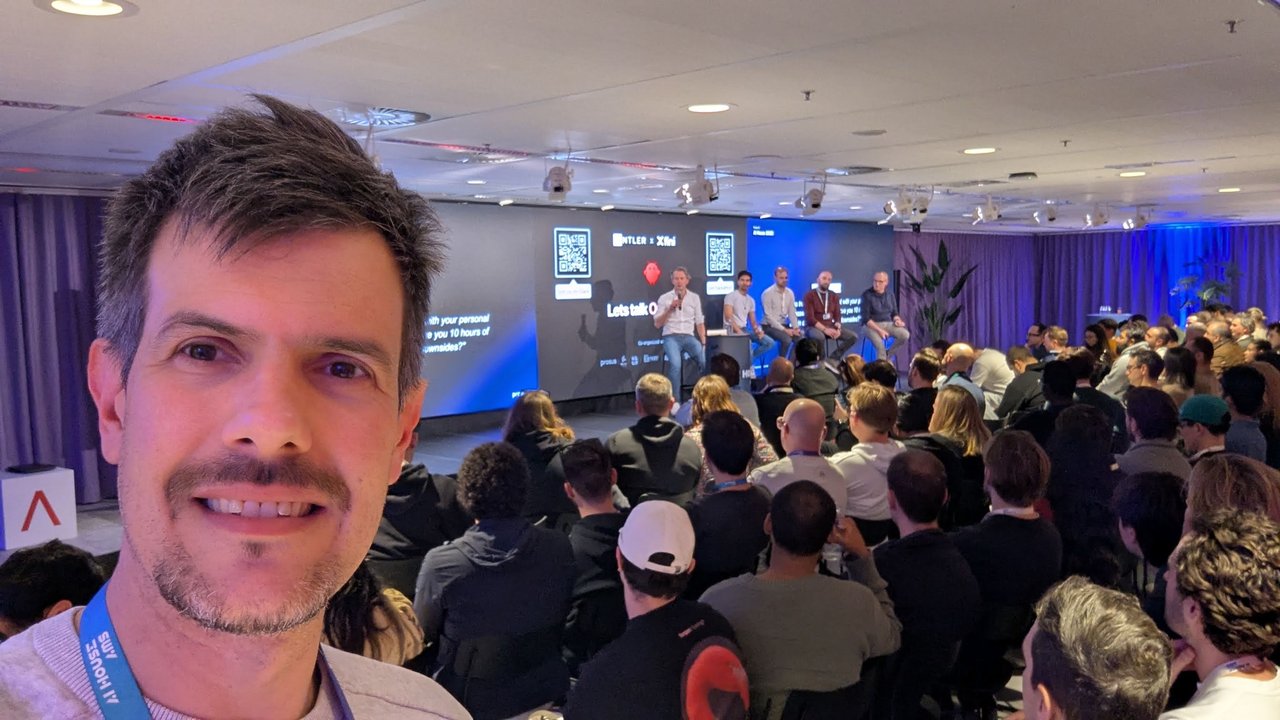
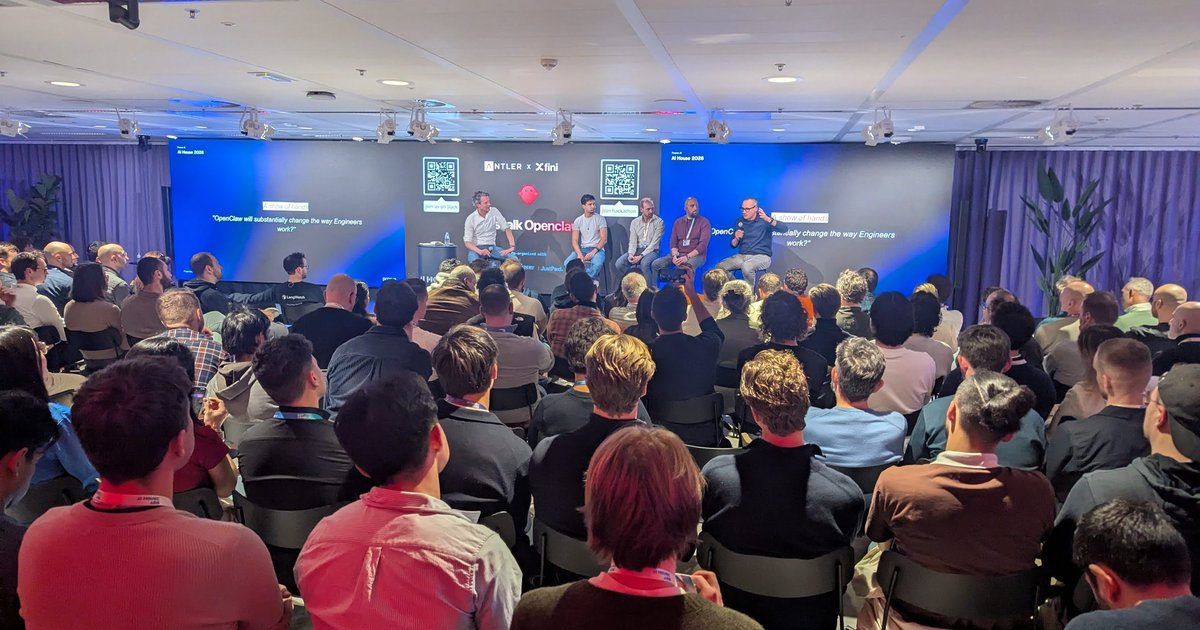
The main room at AI House during the panel.
From Copilot to Autopilot
The panel had five people on stage, including the moderator. From my seat I could only see part of one question on screen, but it set an agent that could “save you 10 hours” against its “downsides”. My take: that trade-off is the right place to start.
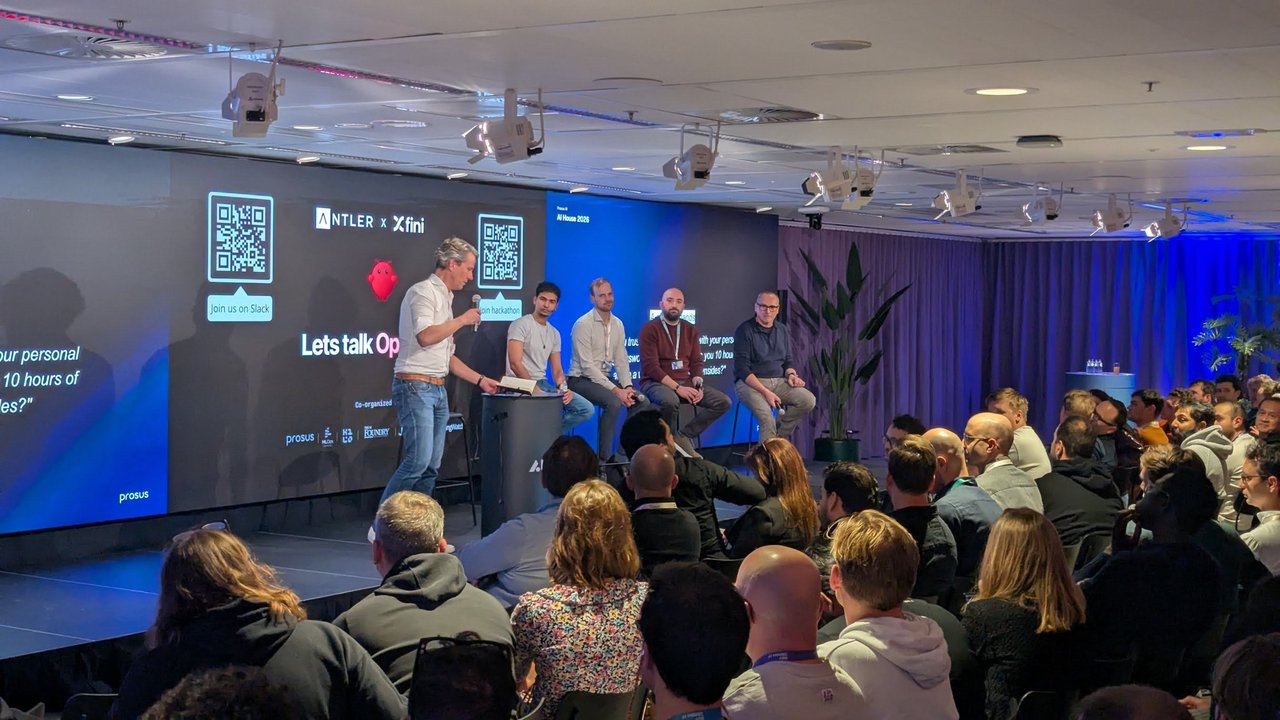
The panel getting started, with QR codes for the community Slack and the hackathon on screen.
Another slide asked the room for a show of hands: “OpenClaw will substantially change the way Engineers work?”
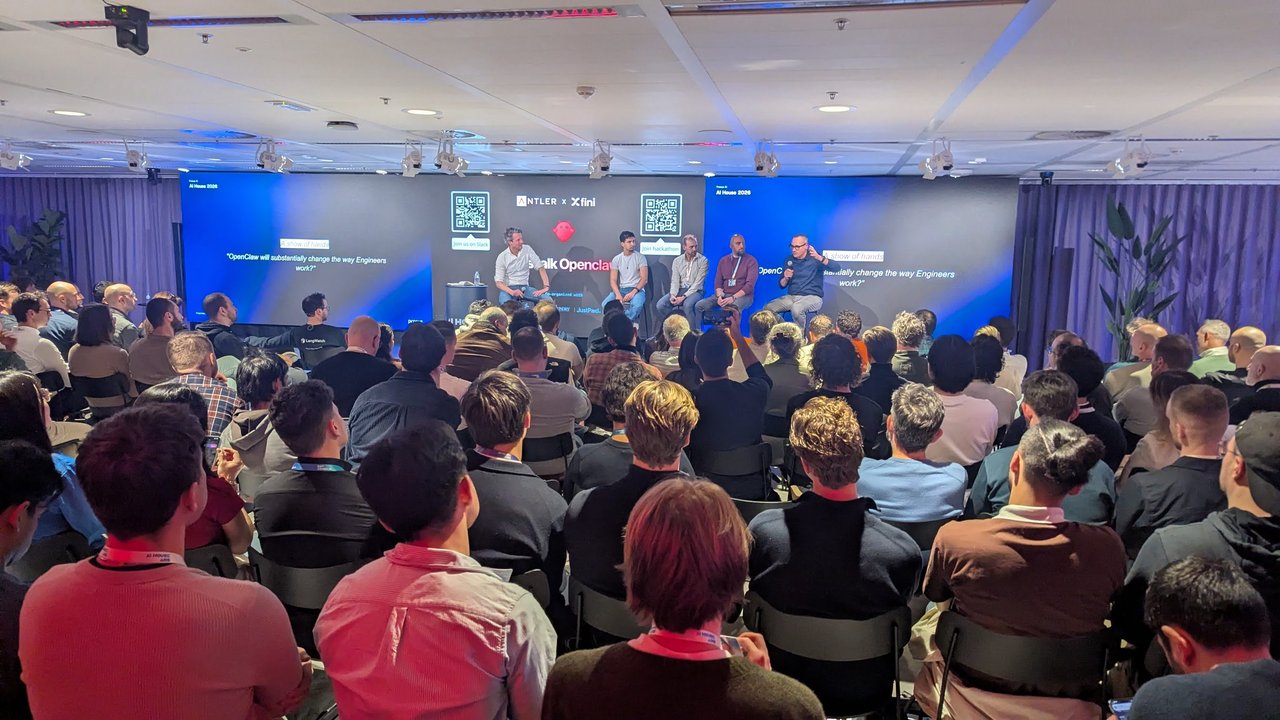
A show of hands on whether OpenClaw will substantially change how engineers work.
My take: it already changes how I work, but mostly in the boring parts, like infrastructure monitoring, website chores and content drafts. The jump from copilot to autopilot depends less on the model and more on permissions, audit trails and knowing what the agent did while you weren’t looking.
Clawdbot + OTEL
During the evening, one slide gave a “Big shoutout to Bauke Brenninkmeijer” for PR #11100 in the openclaw/openclaw repository, under the heading “Clawdbot + OTEL”. Bauke was also one of the meetup’s hosts. My take: OpenTelemetry in a personal-agent project is exactly what the ecosystem needs. Once an agent acts for you, traces are how you find out what it actually did. I’ve written about the same idea for LLM apps in general in AI Observability: Tracing LLM Calls with OpenTelemetry.
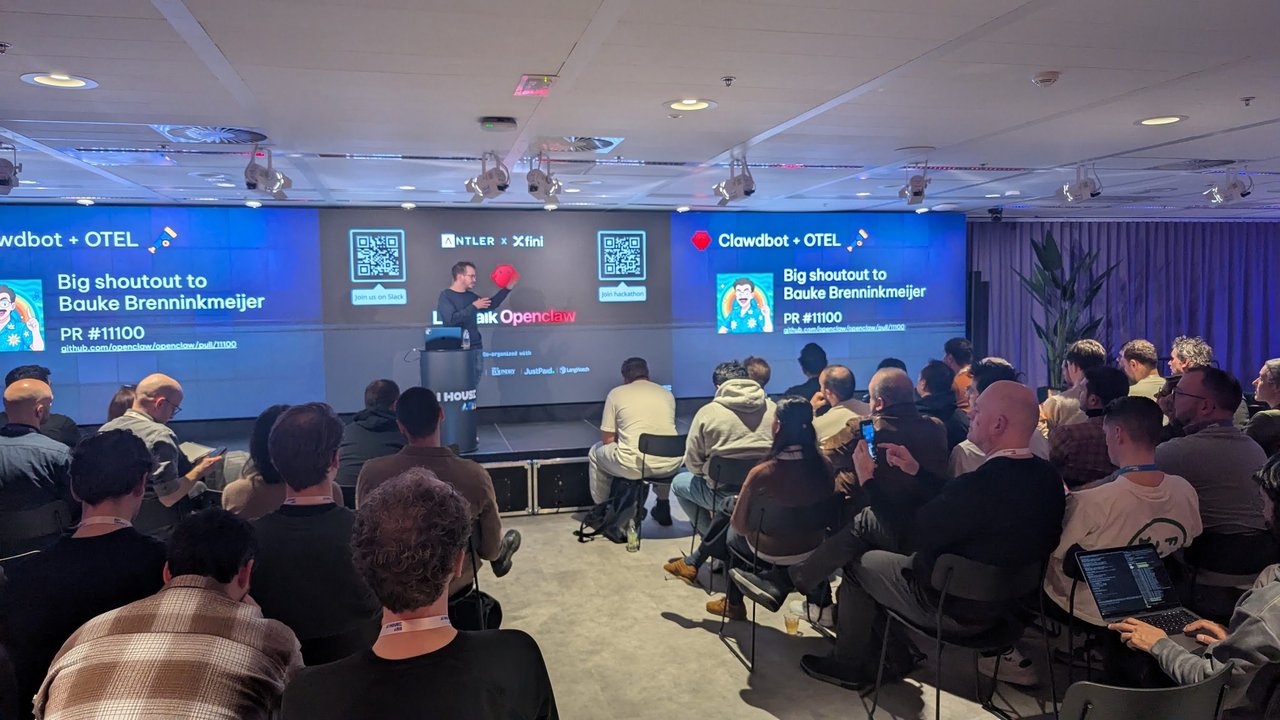
The Clawdbot + OTEL slide, crediting PR #11100.
Three types of memory recall
The memory demo closed with a summary slide, labelled “What just happened”, listed three types of memory recall, with one line underneath: “Every answer came from Markdown files the agent wrote.”
- Factual recall: direct retrieval of a stored fact from a previous session, a single-hop lookup.
- Multi-hop recall: combining facts from separate messages to answer one question, or cross-fact synthesis.
- Temporal recall: reasoning about when something happened, with time-aware retrieval from dated memory files.
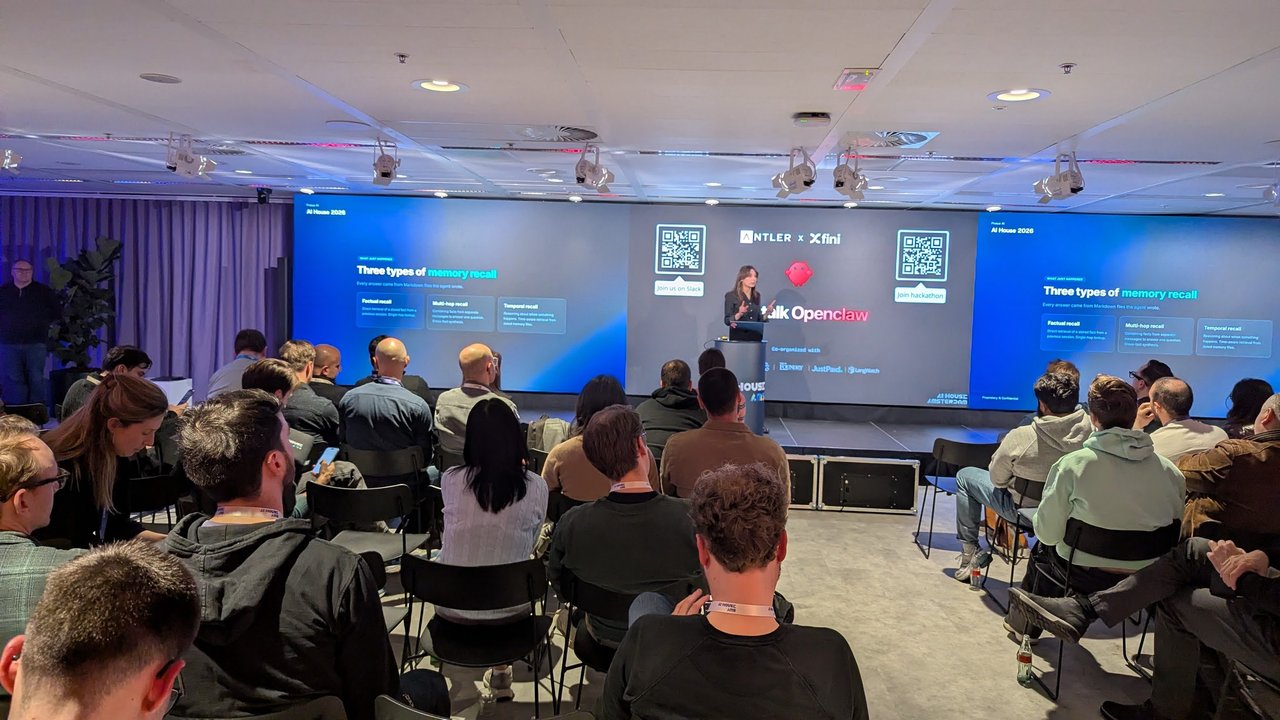
Factual, multi-hop and temporal recall, all answered from Markdown files the agent wrote.
My take, from running OpenClaw myself: plain Markdown memory is easy to inspect and back up, and dated files give you temporal recall almost for free. The hard part is multi-hop: the agent has to find two separate notes and connect them. I cover my own setup in Building a Persistent AI Agent Memory System with OpenClaw.
What’s next
The slides were already promoting a hackathon on 8 April, with a “Join hackathon” QR code on screen all evening. For the full-day OpenClaw Hackathon I later joined at AI House, see the recap below. Thanks to the hosts and co-organisers for a packed, practical evening.