The Open Source Summit Europe 2026 took place October 7-9 in Prague, Czechia — three days of keynotes, technical sessions, and networking across the Cloud & Orchestration, Open AI + Data, Digital Trust, Embedded Linux, and Safety-Critical Software tracks. Co-located with the Linux Plumbers Conference and Embedded Linux Conference, the event brought together maintainers, developers, and community leaders from across the open source ecosystem.
The central theme was clear: open source is the foundation for European digital sovereignty, particularly in the age of AI. From cloud sovereignty keynotes to agentic workload standards, the conversations I captured on the floor reflected a community actively shaping the future of decentralized technology.
Arriving in Prague
After landing in Prague, I took the tram to the venue — the Congress Hall in the Arkády Pankrác complex. The city’s red-tiled roofs and the Vltava river provide a fitting backdrop for a summit focused on European technological independence.
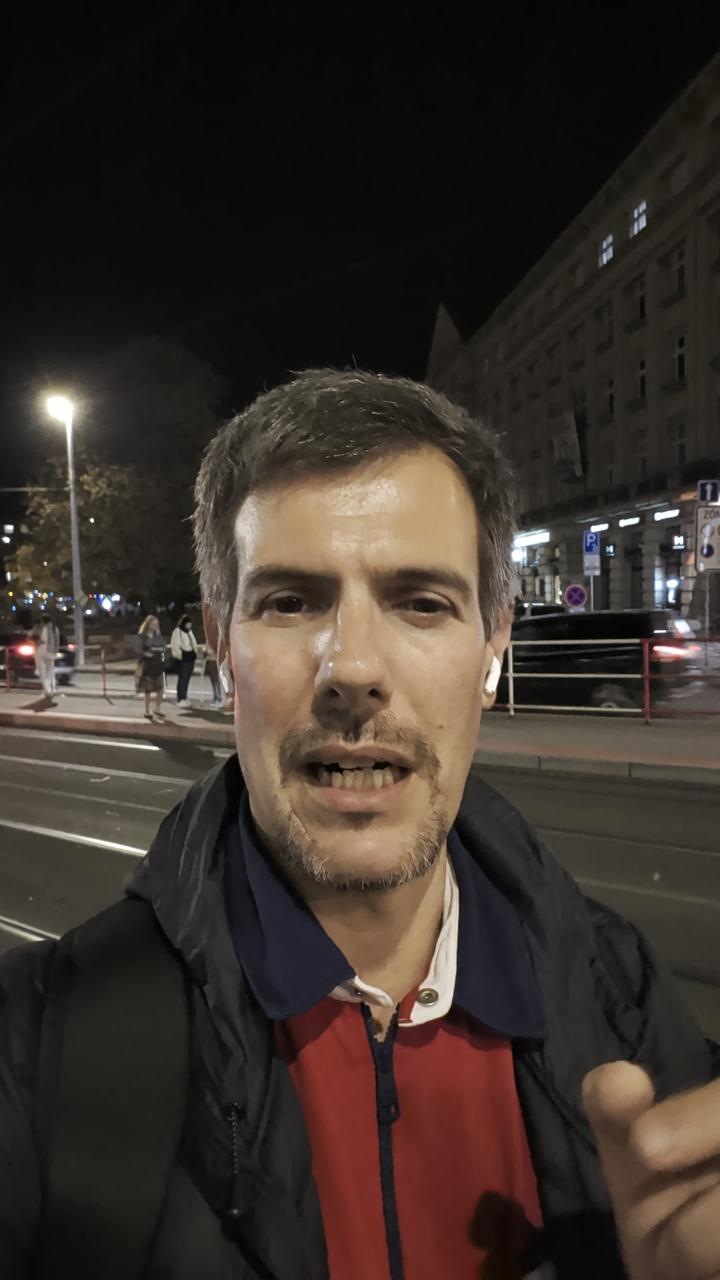 The tram stop outside the venue — Prague’s public transport connects directly to the Congress Hall area.
Opening: Code of Conduct and Community
The event opened with a Code of Conduct briefing from The Linux Foundation, setting the tone for three days of collaboration. The Congress Hall filled quickly as attendees picked up badges on Floor 0 and headed upstairs to Floor 2 for the keynotes.
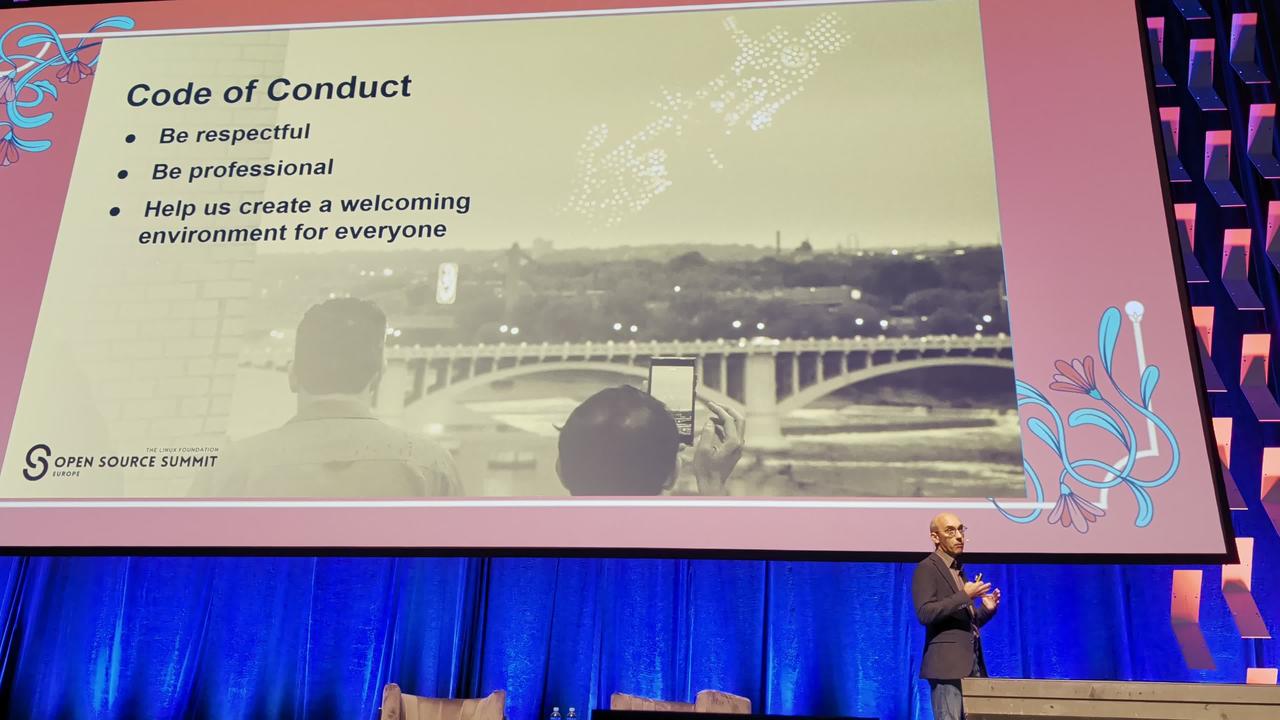 The Code of Conduct presentation kicked off day one — “Be respectful, be professional, help us create a welcoming environment for everyone.”
Keynote: Sovereignty Requires Real Choice
Tarek Becker, CTO at SAP, opened the Thursday keynote block with “Sovereignty Requires Real Choice” — a direct challenge to the assumption that cloud provider lock-in is inevitable. His argument: open source doesn’t just enable choice, it is choice. Without it, digital sovereignty is a mirage.
This set the stage for what became the summit’s unifying thread.
Agentic AI and Open Standards
Laura Tacho, Senior Principal Technologist at AWS, presented on “Open Standards for Trusted Agentic Workloads” — a framework for defining interoperability standards as autonomous AI agents move from experimental to production. The talk addressed how enterprises can deploy agentic systems without sacrificing security or vendor neutrality.
I caught the intro on camera as she was introduced to the Congress Hall audience.
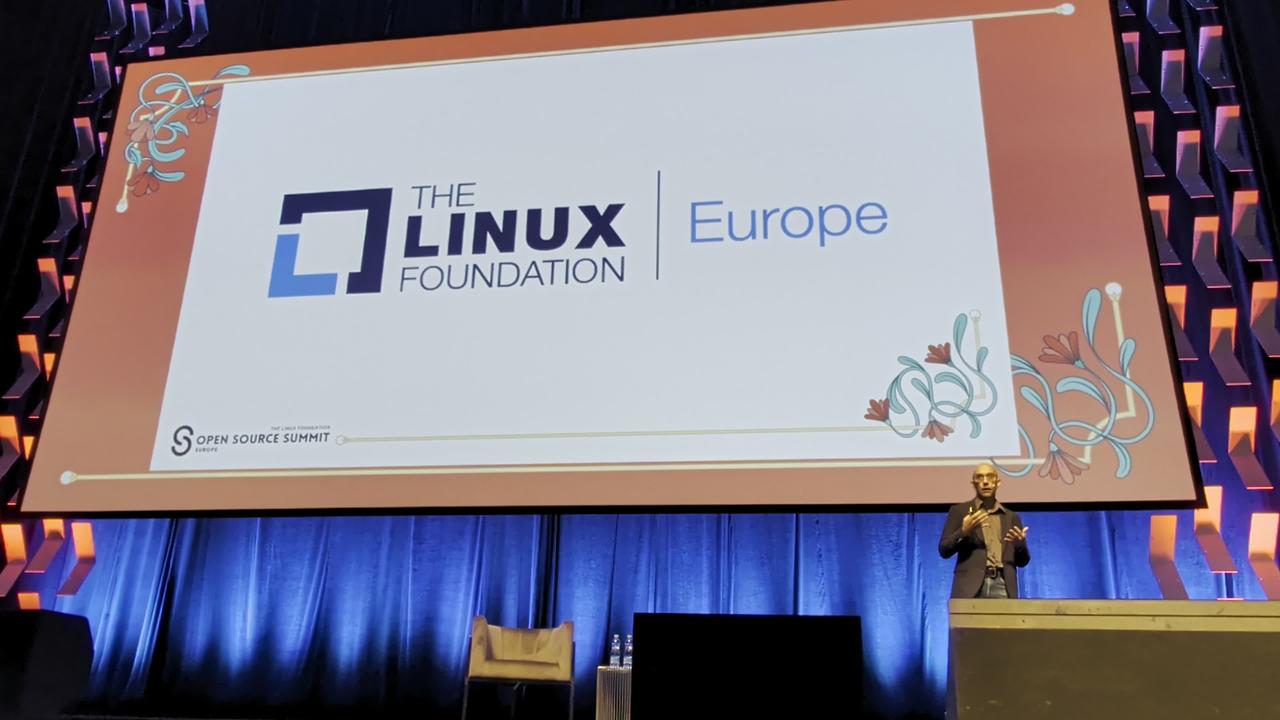 Laura Tacho (AWS) introducing “Open Standards for Trusted Agentic Workloads” — a critical conversation as enterprises begin deploying autonomous AI agents.
The Future of Open Source Security
Jamie Thomas, IBM’s Chief Client Innovation Officer for Enterprise Security, delivered the Thursday keynote on open source security in the age of AI. Her message: AI is both a weapon and a shield in the security landscape. Attackers use AI to find vulnerabilities faster, but defenders can use the same technology to automate patch management, threat hunting, and supply chain verification.
A recurring theme in the hallways was the emergence of the Open Secure AI Alliance — an initiative focused on “developing a shared, open defensive infrastructure for the AI era.” The group is pooling resources to deal with incoming security reports and building collaborative defense mechanisms around AI systems.
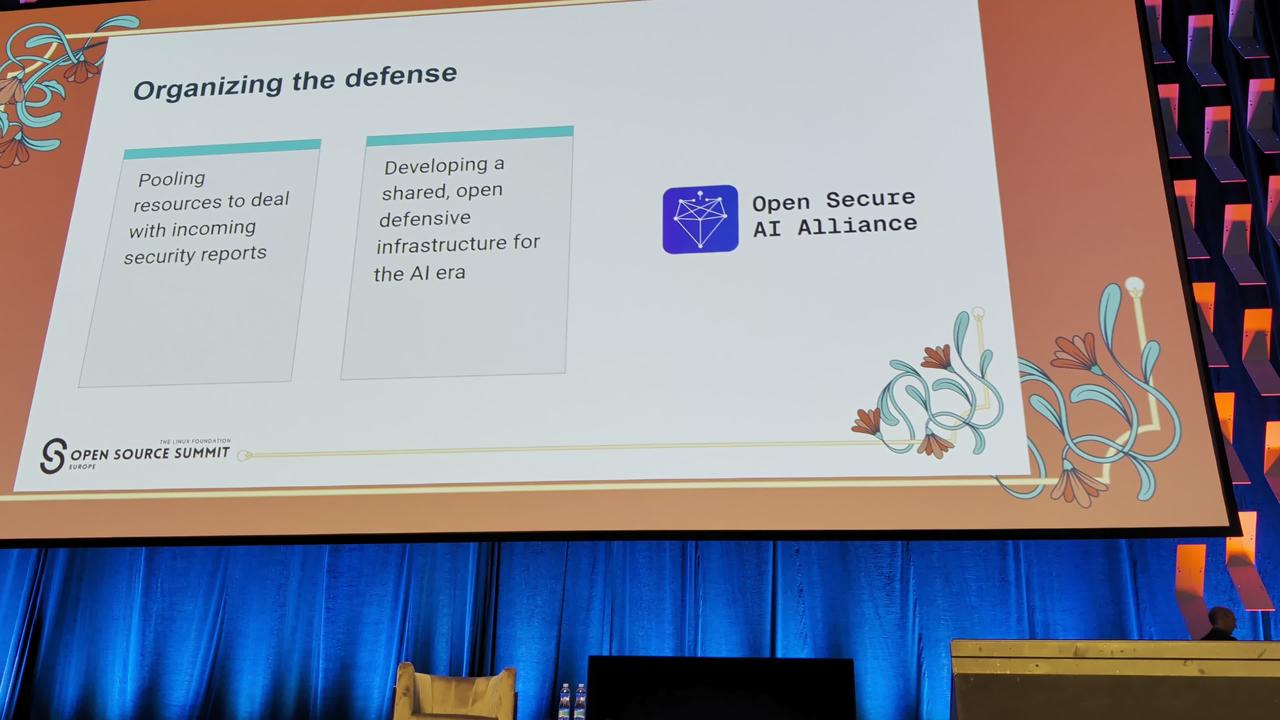 The Open Secure AI Alliance presentation on collaborative defense for the AI era.
Cloud Sovereignty: A Panel Discussion
One of the most attended sessions was the Cloud Sovereignty panel, which unpacked the eight SOV (Sovereignty) criteria that European organizations are using to evaluate cloud providers. The discussion covered everything from data residency requirements to open source licensing as a sovereignty lever.
The panel featured six experts from across the European tech ecosystem — a reflection of how sovereignty has become a cross-cutting concern, not a niche topic.
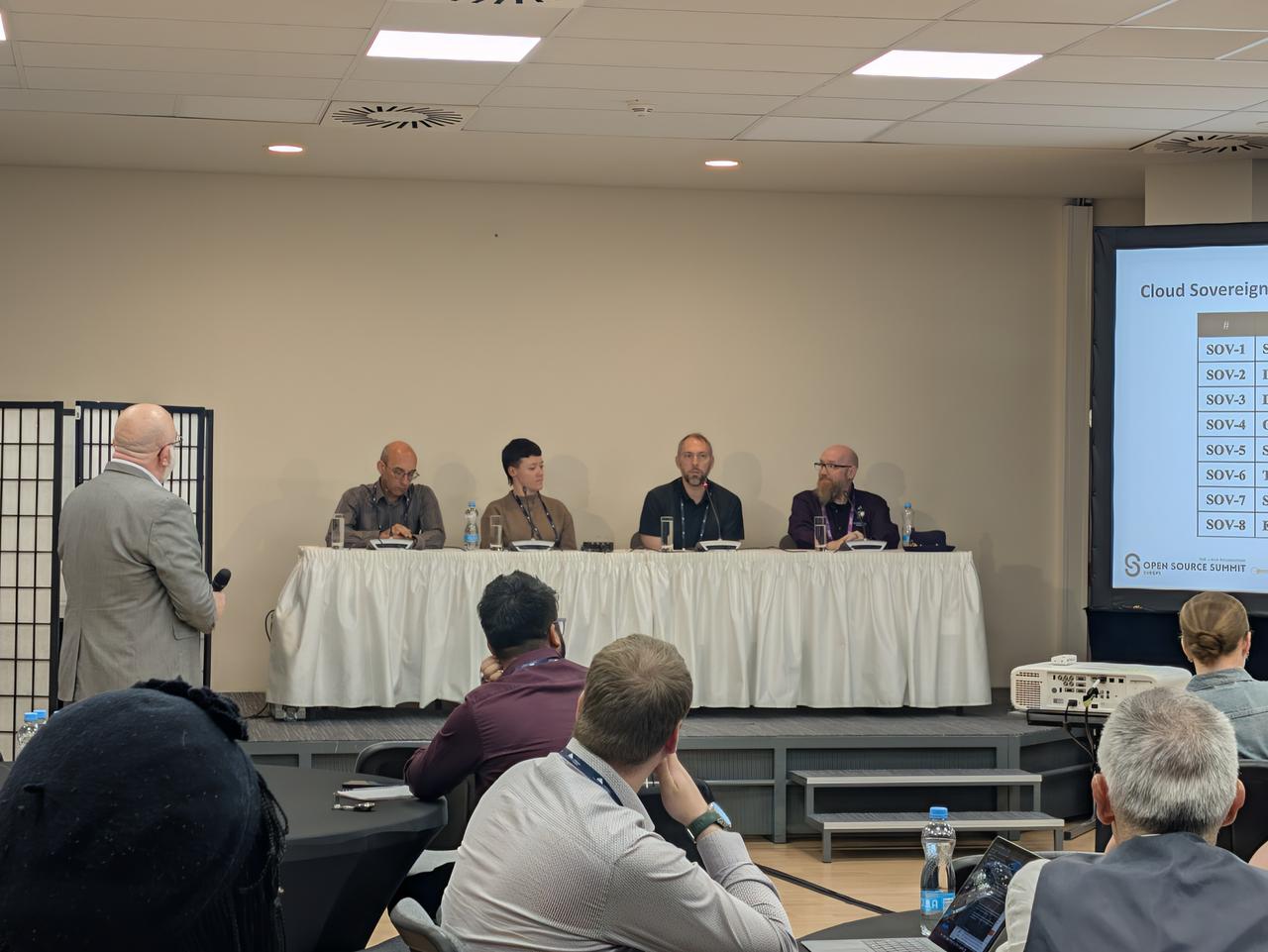 The Cloud Sovereignty panel explored eight criteria (SOV-1 through SOV-8) for evaluating European cloud strategies.
The Solutions Showcase Floor
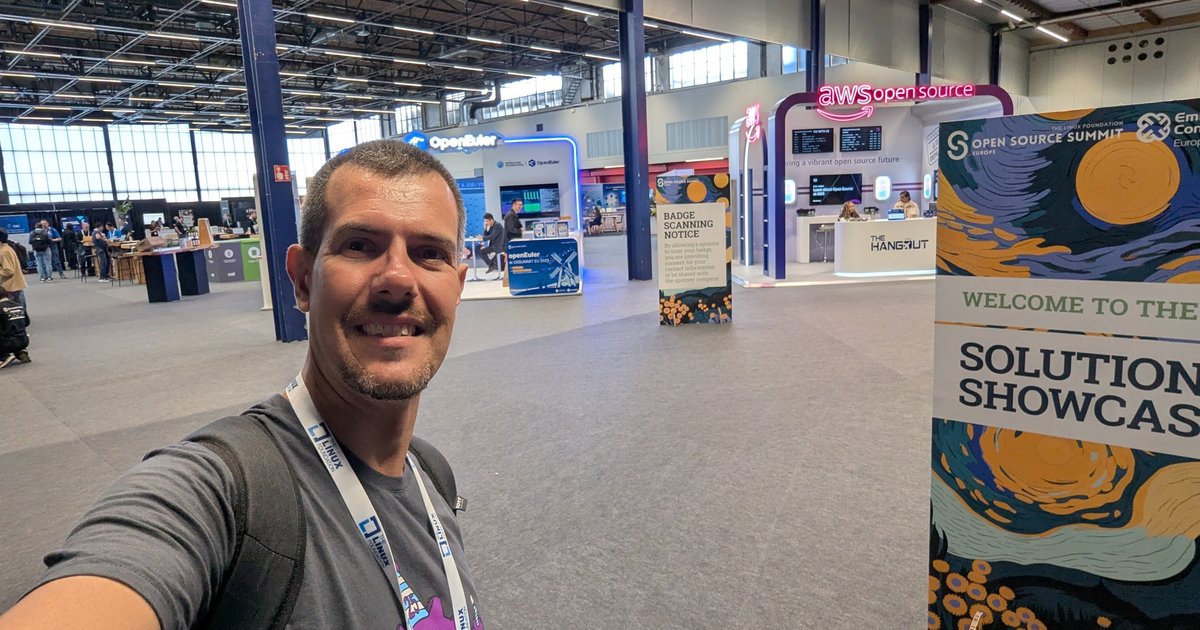
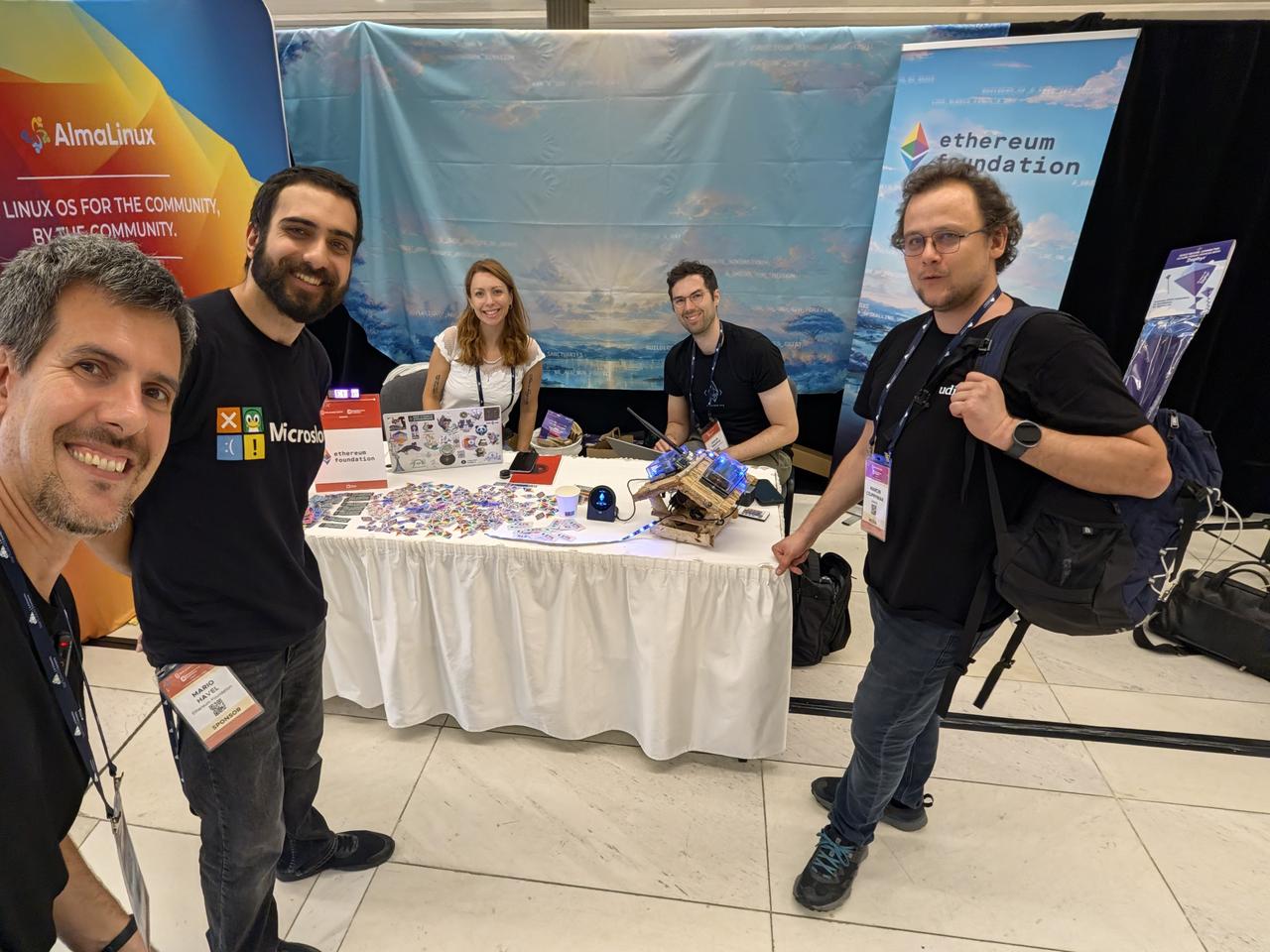
The Solutions Showcase on Floors 2 and 3 featured booths from dozens of sponsors — from Platinum partners like Red Hat, OpenSearch, and OpenEuler to Silver sponsors like the CNCF, OpenSSF, and Zephyr Project.
I caught up with Arnaldo Melo from Red Hat at the Linux Plumbers Conference area, which is co-located with Open Source Summit. The Plumbers Conference focuses on the low-level “plumbing” of the Linux kernel — the infrastructure that keeps everything running.
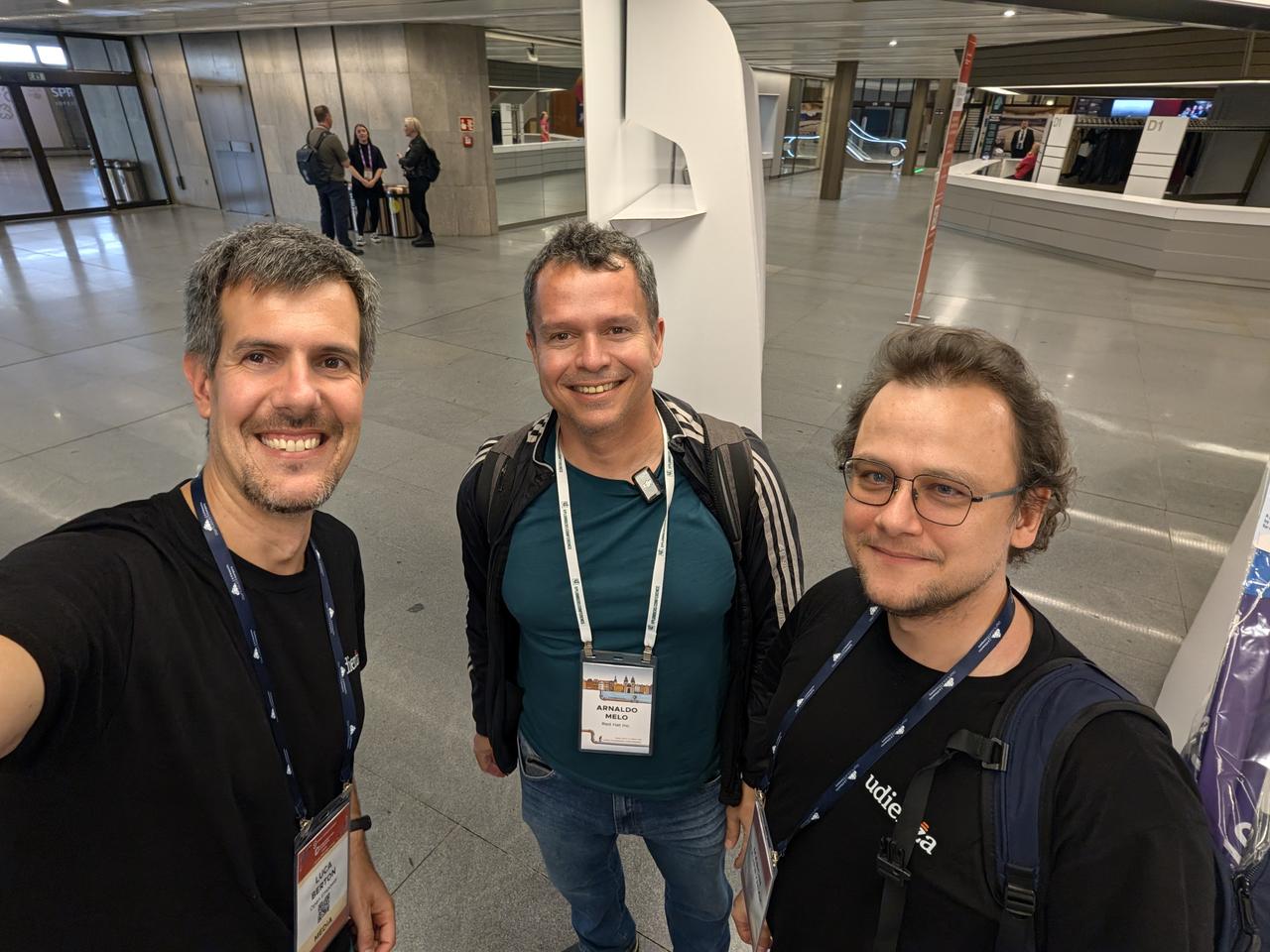 With Arnaldo Melo (Red Hat) at the Linux Plumbers Conference booth — co-located with Open Source Summit Europe.
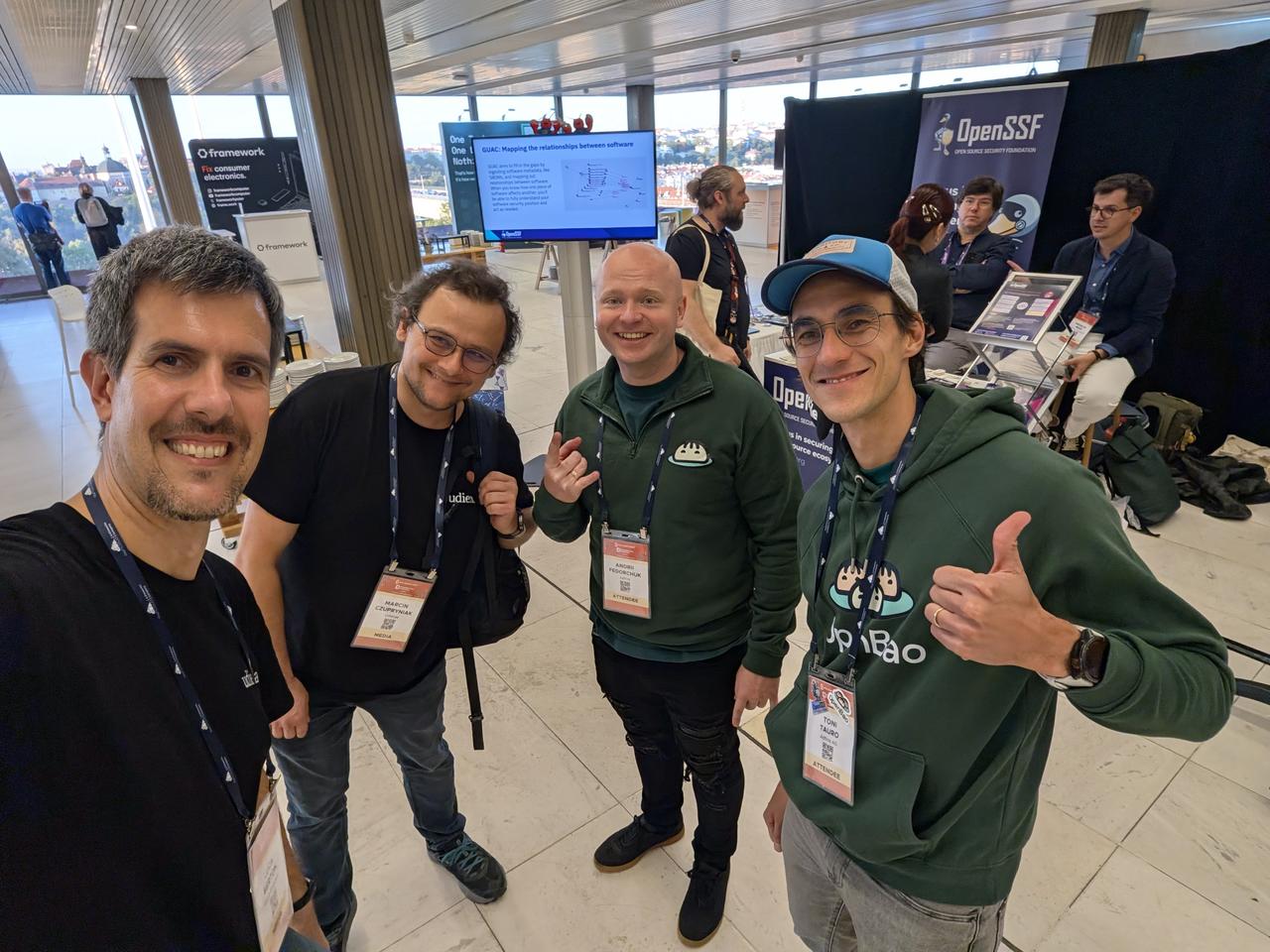
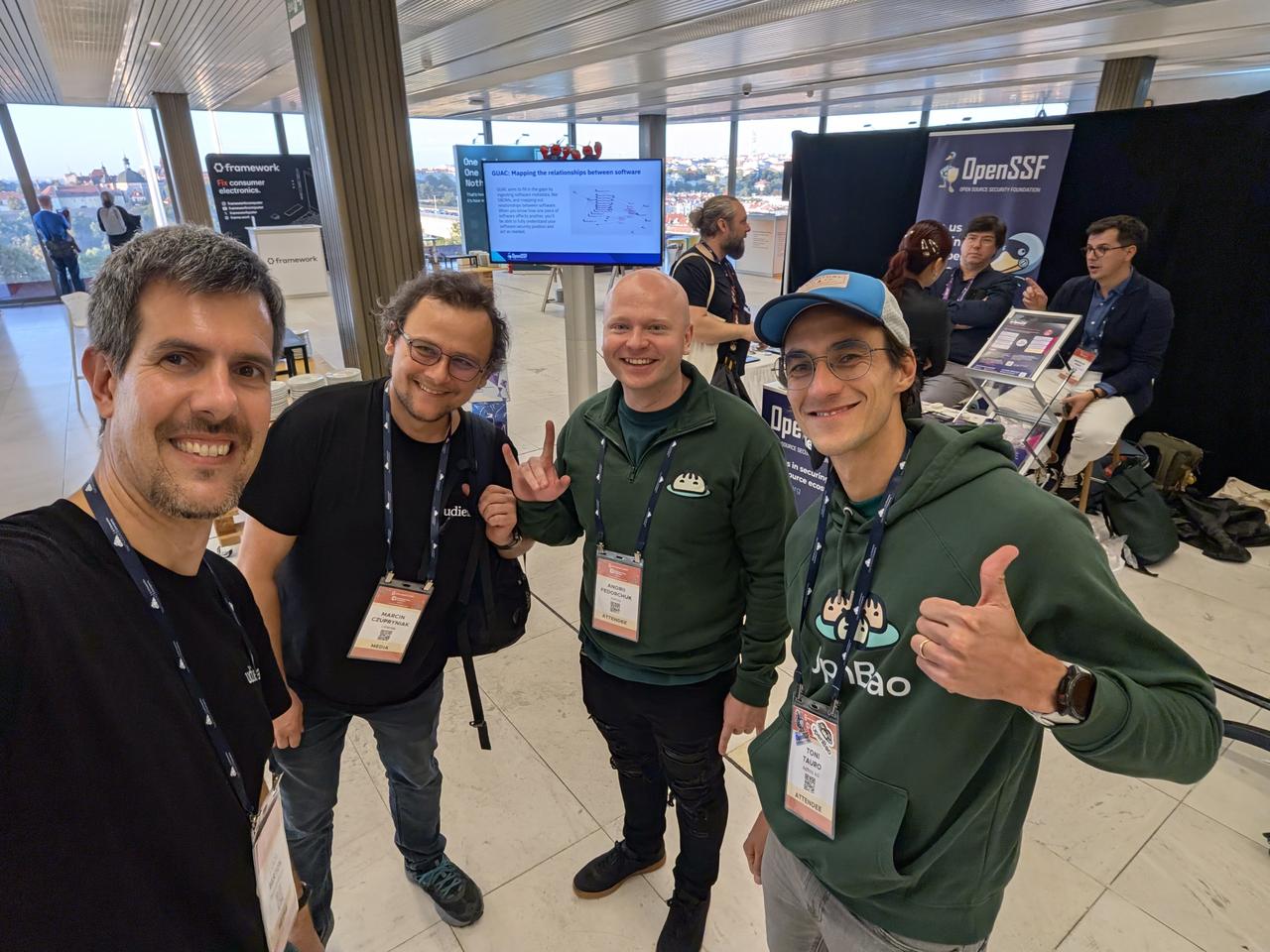
Later in the afternoon, I ran into Marcin Czupryniak (udienza) and colleagues at the GUAC booth. GUAC — the Graph for Understanding Artifact Composition — maps relationships between software components, SBOMs, and security metadata. Their presentation highlighted how supply chain security is becoming a first-class concern for open source projects.
The OpenSSF duck logo was everywhere on the floor, and the Framework booth’s “Fix consumer electronics” message drew crowds who are interested in repairable, modular hardware as part of the broader open source movement.
 At the GUAC and OpenSSF booths — supply chain security is front and center at OSS EU 2026.
The Solutions Showcase floor was busy throughout the afternoon — attendees moved between booths, grabbed coffee, and caught up with colleagues between sessions.
The EDERA Community Hub
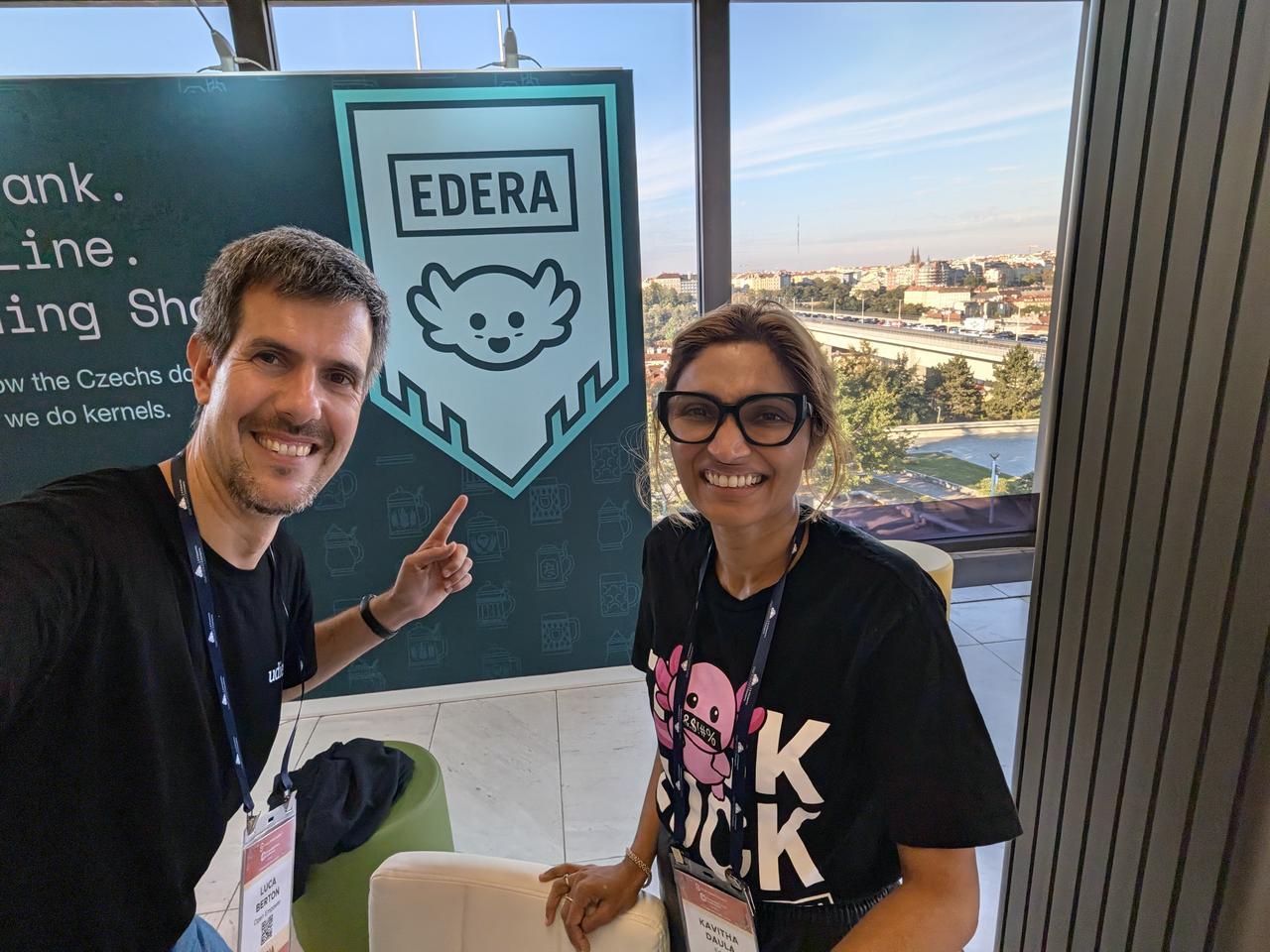
Near the Žofín Palace venue, the EDERA community hub was a popular gathering spot. Their messaging — “How the Czechs do it. We do kernels.” — plays on the local open source culture and the technical focus of the event. I caught a moment with Kavitha Daula reflecting on the first day’s keynotes.
 At the EDERA community hub — “How the Czechs do it. We do kernels.”
Technical Sessions: Linux, Zephyr, and Beyond
The schedule showed 78 Embedded Linux Conference sessions, 46 Zephyr Developer Summit talks, and 26 PX4 Dev Summit presentations — alongside 24 Cloud & Orchestration and 23 Open AI & Data sessions. Key themes included:
- Runtime power management for IOMMUs (Google)
- Zephyr in automotive mixed-OS systems (Renesas, NXP)
- Over-the-air updates for immutable filesystems (Northern.tech)
- Multi-stream camera sensors in Linux (Texas Instruments)
- Benchmarking OSS agent memory on Kubernetes (Dynatrace)
The breadth of technical depth — from kernel internals to agentic AI infrastructure — reinforced the sense that this wasn’t just a “talk about AI” conference. It was about building the systems that will run the next decade of open source software.
Sponsors and Ecosystem
Diamond sponsors included AWS, Google Cloud, Microsoft Azure, openKylin, and Valkey. Platinum-level support came from OpenEuler, OpenSearch, and Red Hat. The full sponsor list — from CIP and CNCF to Zephyr Project — reflected the breadth of the open source ecosystem gathering in Prague.
What This Means for Open Source
The dominant narrative in Prague was digital sovereignty through open source. Unlike past conferences where “sovereignty” was primarily a policy concern, here it was framed as an engineering imperative. Every keynote, panel, and hallway conversation circled back to the same question: how do we build distributed, trustworthy, AI-native systems without creating new forms of vendor lock-in?
The answer, the community seems to agree, lies in open standards, shared infrastructure, and collaborative defense — not in any single company’s product.
Next Stops
After Prague, the conference circuit continues with KubeCon + CloudNativeCon North America in November. The OpenSSF, CNCF, and LF Europe teams I met here will all be there.
Recorded at Open Source Summit Europe 2026, Prague, Czechia (7-9 October 2026). Event website: https://events.linuxfoundation.org/open-source-summit-europe/