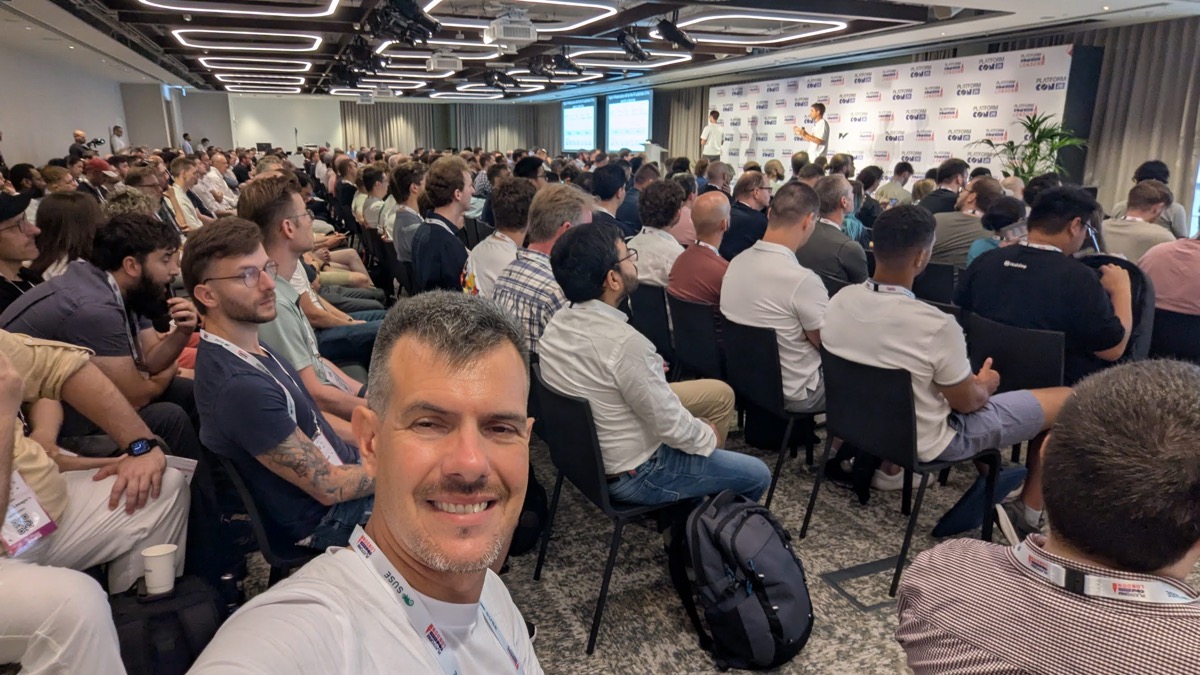
At Open Source Summit Europe 2026 in Prague, the OpenBao crew in their green hoodies were one of the most visible groups around the OpenSSF area. The question I heard most often near them was not “what is OpenBao?” any more. It was “how do we move from Vault?”
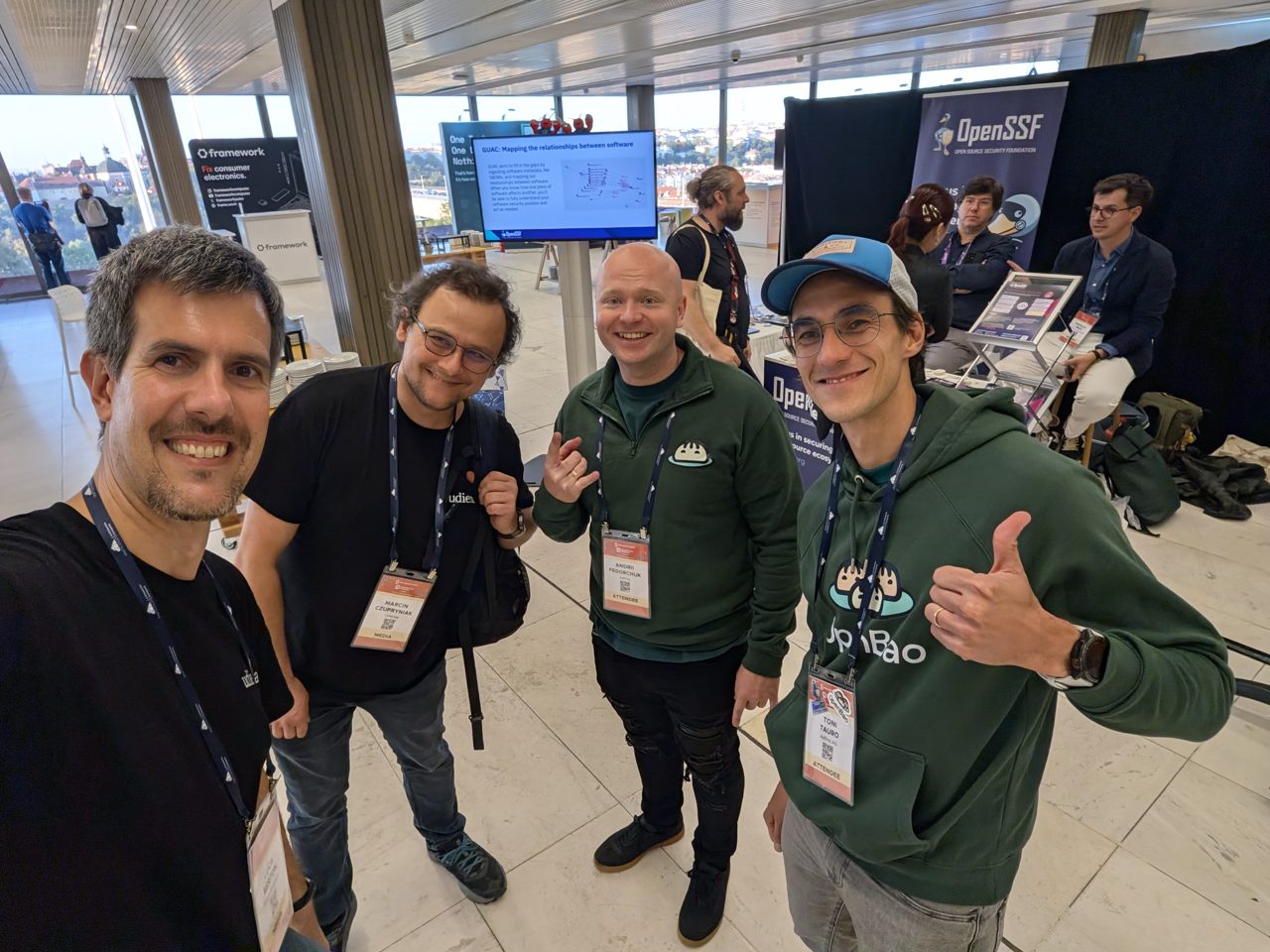 With Marcin Czupryniak, Andrii Fedorchuk, and Toni Tauro (Adfinis, OpenBao committer) at Open Source Summit Europe 2026.
This guide answers that question based on OpenBao’s official documentation and public migration experience. It is not a replacement for testing in your own environment, but it will tell you which path you are on and where the traps are.
Why teams are moving
OpenBao is the community fork of HashiCorp Vault, created after HashiCorp moved Vault to the Business Source License. It is open source under MPL 2.0, governed as an OpenSSF project, and has been adding features of its own. OpenBao 2.6, for example, added per-namespace sealing for multi-tenant deployments. OpenBao 2.7 then added external keys for HSM- and KMS-backed key material (similar to Vault Enterprise’s managed keys), post-quantum TLS, and read scaling on PostgreSQL. See OpenBao 2.7: Post-Quantum TLS, HSM Keys and Postgres Scale.
The usual reasons I hear from clients:
- Licensing and governance. Security-critical infrastructure under open governance, without a single vendor able to change the terms. That is the neutral governance argument from Prague, applied to secrets.
- Cost. Teams on Vault Enterprise for one or two features look for an open alternative.
- Sovereignty. European organisations want to run and audit the whole stack themselves.
Step 1: find out which path you are on
There are two very different migrations, depending on what you run today.
| You run | Path | Effort |
|---|---|---|
| Vault Community Edition 1.14.x on Raft storage, with Shamir unseal | Official in-place migration | Low to medium |
| Vault Enterprise, newer Vault CE, other storage backends, or auto-unseal | Export configuration and data, import into a new OpenBao cluster | Medium to high |
OpenBao was forked from Vault 1.14. Features HashiCorp added after that are not automatically in OpenBao, and some Enterprise-only features (Performance Replication, Sentinel) do not exist in it. Audit what you actually use before you choose.
Path A: in-place migration from Vault CE
OpenBao’s official in-place migration guide has a narrow scope, and it is explicit about it:
- Tested only against Vault 1.14.1. In the guide’s words: “Newer versions are untested and unsupported.”
- Target OpenBao 2.2.0 or later.
- Raft storage only, and Shamir unseal only (no auto-unseal).
- No Vault Enterprise.
The procedure is a rolling replacement of the cluster:
- Back up. Take a Raft snapshot or an atomic filesystem snapshot.
- Install OpenBao with an equivalent configuration, using a separate storage path. That makes rollback possible.
- Upgrade followers first. For each follower: stop Vault, start OpenBao, join the cluster, unseal, and confirm it is a voter again.
- Move the leader last. Force a leader step-down, then upgrade the former leader like the followers.
Things to check afterwards:
- Plugins. OpenBao ships with fewer plugins than Vault. Plugins that are not available are skipped and must be disabled manually, so inventory them first.
- Tokens. New tokens use OpenBao’s shorter format. Existing Vault tokens remain valid until their TTL expires, so do not hard-code token formats in your tooling.
- Audit logs. Fix file ownership so the OpenBao process can write to the audit files.
Path B: export and import (Enterprise and everything else)
If you are on Vault Enterprise or outside the narrow in-place scope, you build a new OpenBao cluster and move the content. The consultancy Digitalis published a useful write-up and an open source vault-migration-tool for this. Its key insight is one I agree with completely:
“The hard part is not the KV data. It is the auth methods, policies, roles and engine configuration that nobody has in Terraform.”
What has to move:
- Auth methods: OIDC, AppRole, LDAP, Kubernetes and cloud auth, with their roles.
- ACL policies.
- Secrets engine configuration: PKI issuers, transit keys, database roles.
- Audit devices.
- KV data.
What cannot move, by design:
- Active tokens and leases, AppRole secret IDs, and similar credentials. Every client re-authenticates after cutover. Plan that as an application-by-application change, not a big bang.
- Sentinel policies, which have to be rewritten as ACL policies or moved to an external policy engine such as OPA. A Sentinel replacement is on the OpenBao roadmap, so check its status before you rewrite everything.
The safe sequence:
- Export the configuration to reviewable files (JSON or HCL), and commit them to Git. You should have had this anyway.
- Dry-run the import against the new OpenBao cluster.
- Import idempotently, so re-running is safe.
- Migrate applications one at a time, re-pointing each to OpenBao and re-authenticating.
- Run both clusters in parallel until the last client has moved, then decommission Vault.
Kubernetes integrations
Because OpenBao keeps the Vault API, most Kubernetes tooling keeps working once you point it at the new address. That includes the External Secrets Operator (see my guide to External Secrets Operator with Vault), the agent injector pattern, and Terraform providers. Test every integration anyway, especially anything that parses token formats or depends on Enterprise-only endpoints.
Use the migration to improve your design
A migration is the best moment to fix what has grown untidy:
- Put all configuration in code. If the migration needed an export tool, your Vault configuration was not in Git. Fix that permanently.
- Shorten credential lifetimes. Move from long-lived static secrets to dynamic secrets and short-lived tokens where you can.
- Add workload identity. Pair OpenBao with SPIFFE/SPIRE so services and AI agents authenticate with an identity instead of a stored secret. Toni Tauro has spoken about sovereign workload identity with exactly this combination.
- Isolate tenants. If you serve multiple teams or customers, look at OpenBao namespaces and per-namespace sealing.
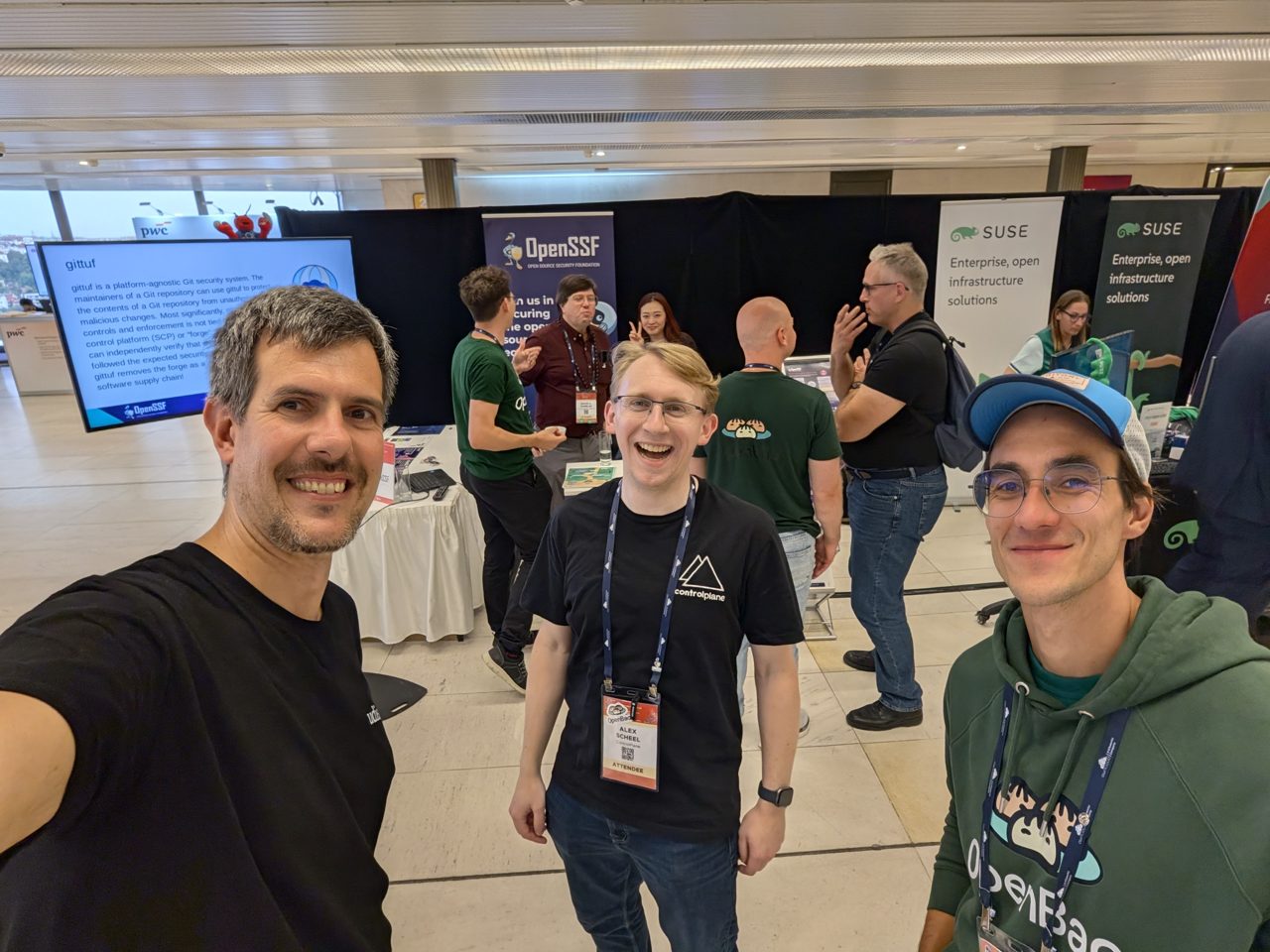 With Alex Scheel and Toni Tauro on the Thursday of Open Source Summit Europe.