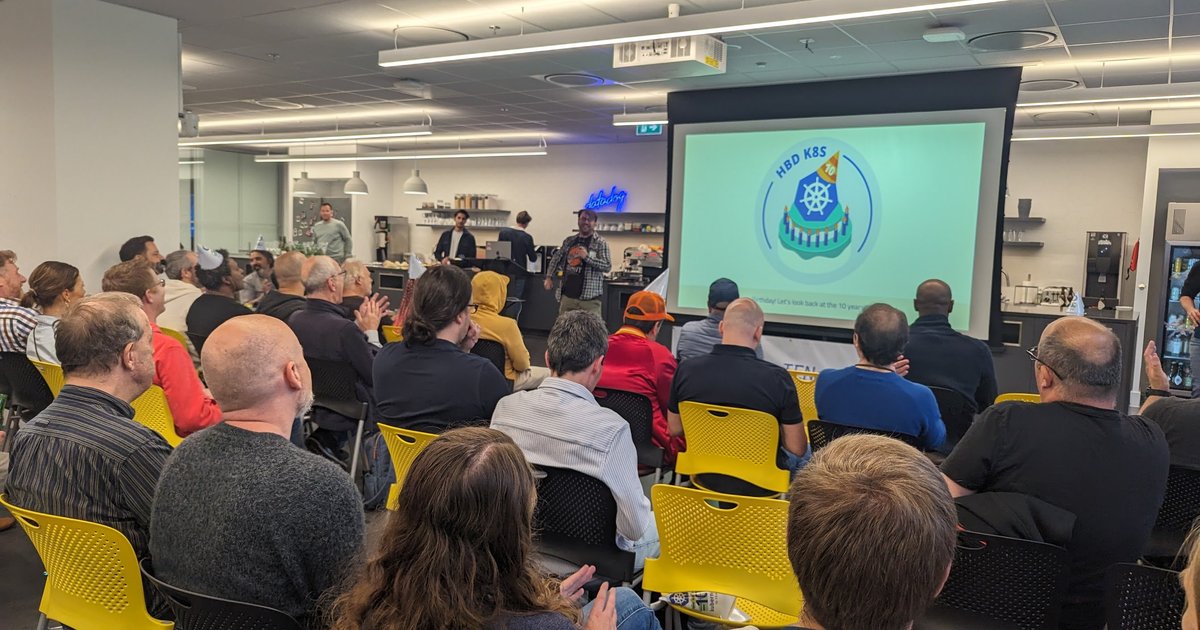
On Thursday 13 June 2024 the Dutch Kubernetes / Cloud Native Meetup held a “Happy Birthday, Kubernetes!” evening at Datadog’s Amsterdam office, one week after the project turned ten. The Kubernetes blog’s anniversary post, 10 Years of Kubernetes, dates the first commit to 6 June 2014 and notes that the project grew out of lessons learned from Google’s Borg system. This post is what I saw and photographed at the meetup.
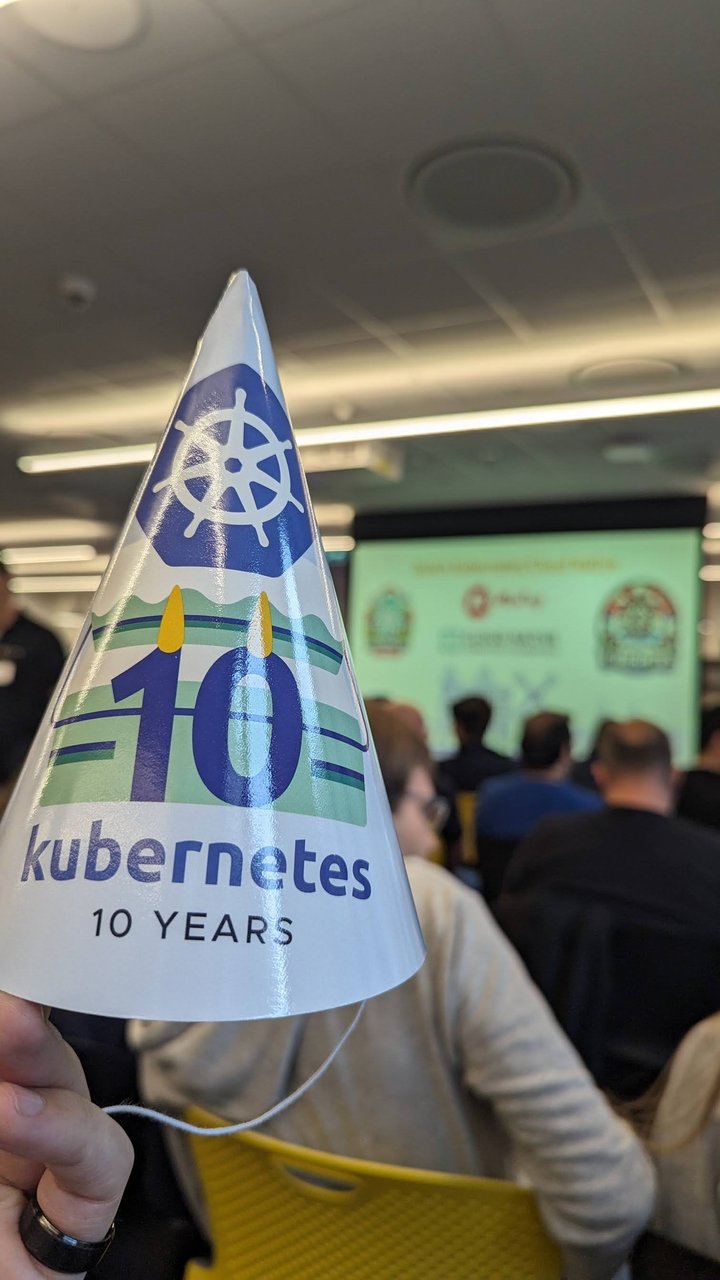
The anniversary paper hat that came with the evening.
Hosts and format
The “Meet your hosts” slide showed the Cloud Native Netherlands logo and five organisations: ITQ, Datadog, Microsoft, kubespaces.io and SUSE. Among the names readable on it are Martijn Van Tol (ITQ), Tim Meijer (Datadog) and Alessandro Vozza, listed as a CNCF Ambassador at kubespaces.io. The Datadog neon sign was on the wall behind the screen, and the room was full of people wearing paper party hats.
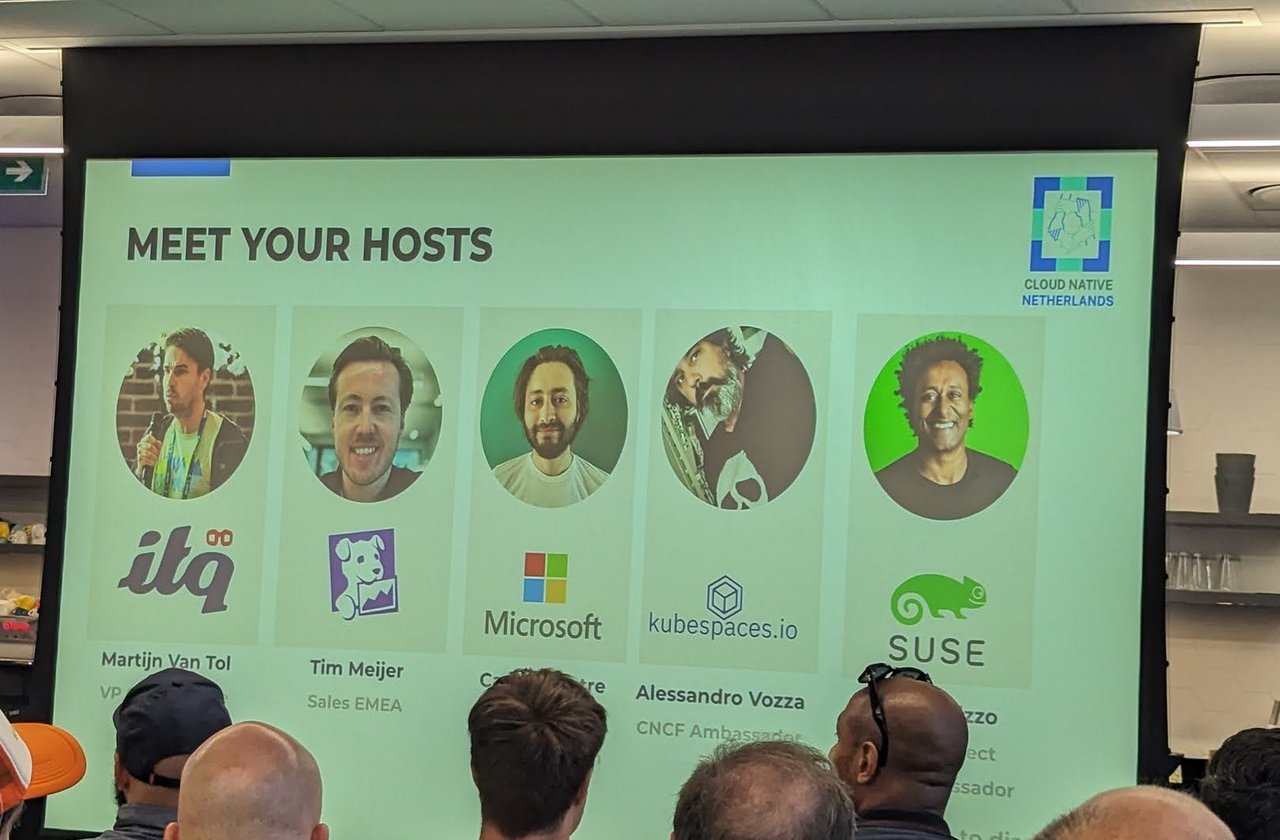
The hosts slide, cropped to the screen.
There was also a cake with a “HBD K8S” icing picture of the Kubernetes logo wearing a party hat.
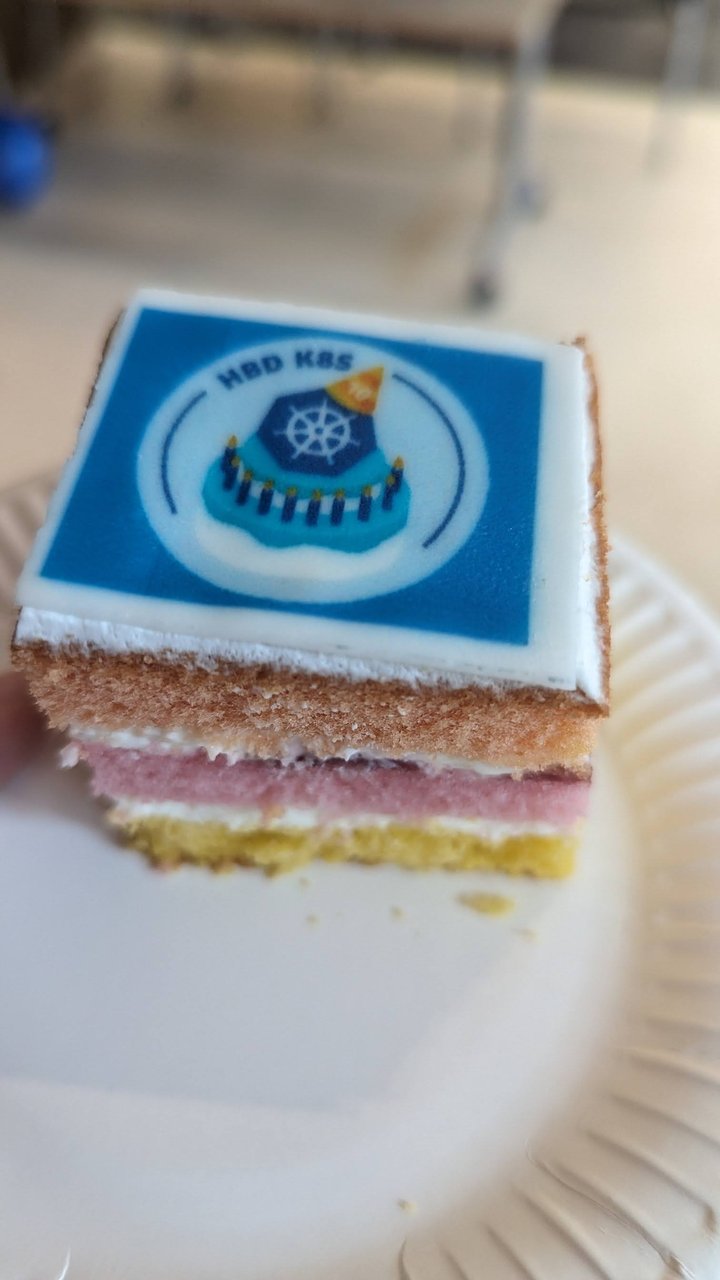
The birthday cake: HBD K8S.
Looking back at the 10 years
The first talk walked through a year-by-year timeline, introduced with the line “Let’s look back at the 10 years”. The slides I photographed covered 2015 to 2018:
- 2015: CNCF created. The slide showed the Cloud Native Computing Foundation logo, with a joke subtitle playing on the foundation’s name.
- 2016: Minikube, KOPS, Helm. The slide asked “Are you feeling the YAML yet?” with a cartoon about how long it took to find a missing space in a
deployment.yaml. - 2018: AKS, EKS, Containerd, GitOps. The meme on this slide was about debugging Kubernetes deployments, and the text underneath mentions vendors.
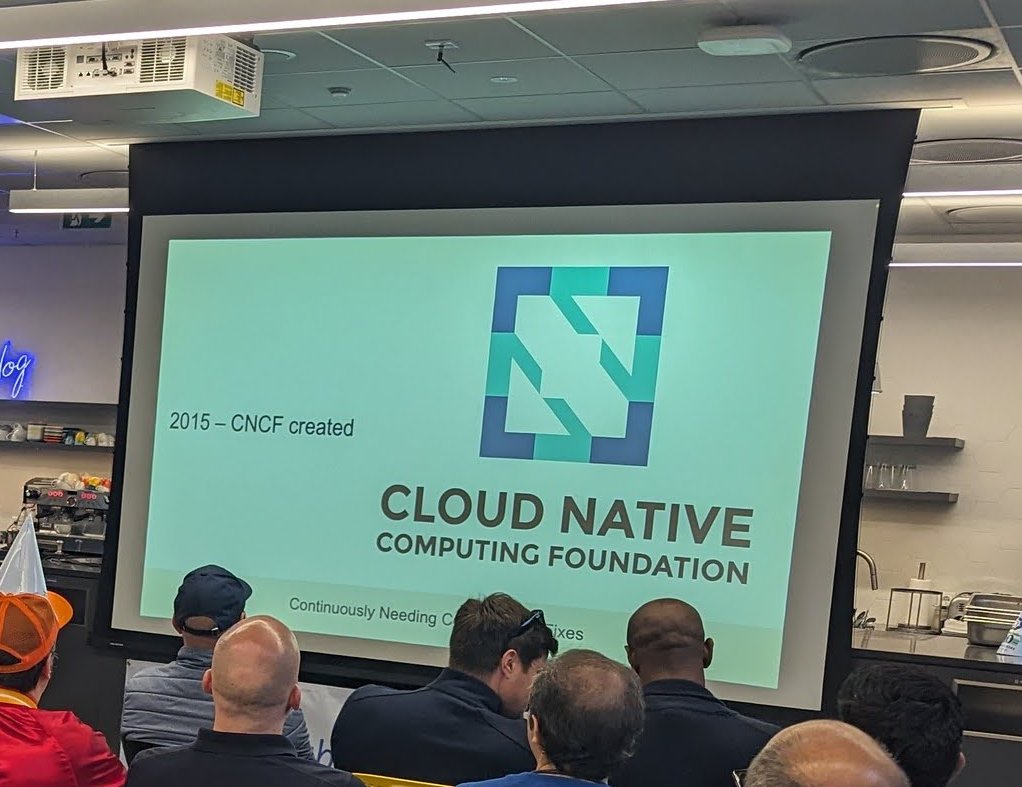
2015: the CNCF is created.
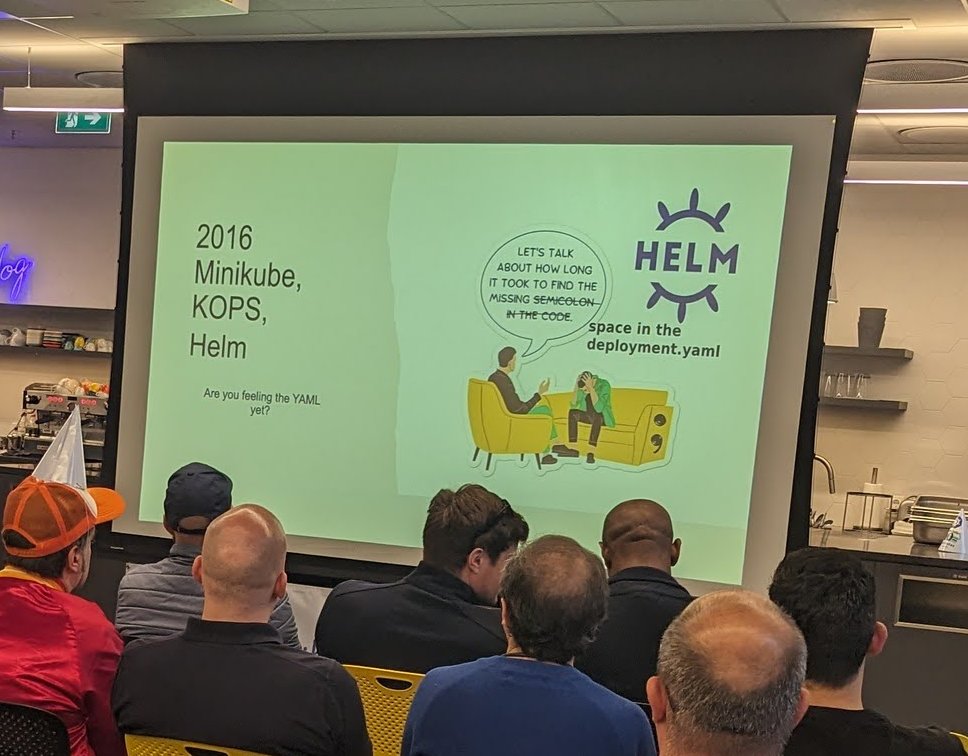
2016: Minikube, KOPS and Helm, and the YAML jokes that came with them.
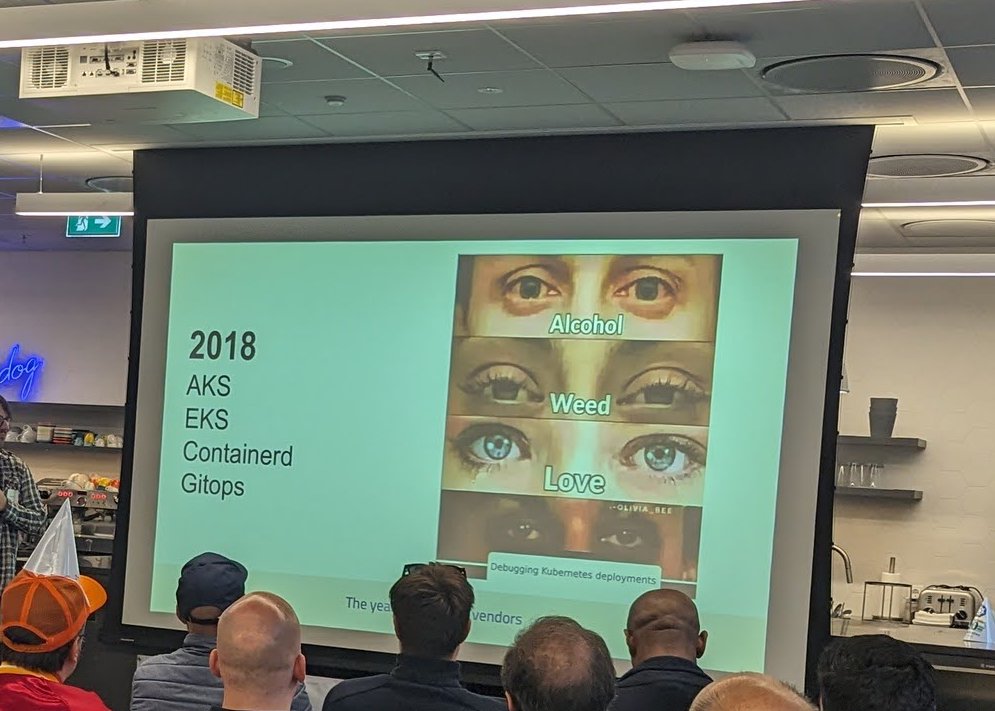
2018: managed Kubernetes on Azure and AWS, containerd and GitOps.
The conclusion slide set the first year against the tenth with two cartoons, and asked “Are we there yet?” My take: that is a fair summary. Day-to-day operations are far smoother than in the early years, but managing YAML, upgrades and the platform around the cluster is still the hard part. That is why so many teams now talk about platform engineering instead of Kubernetes itself.
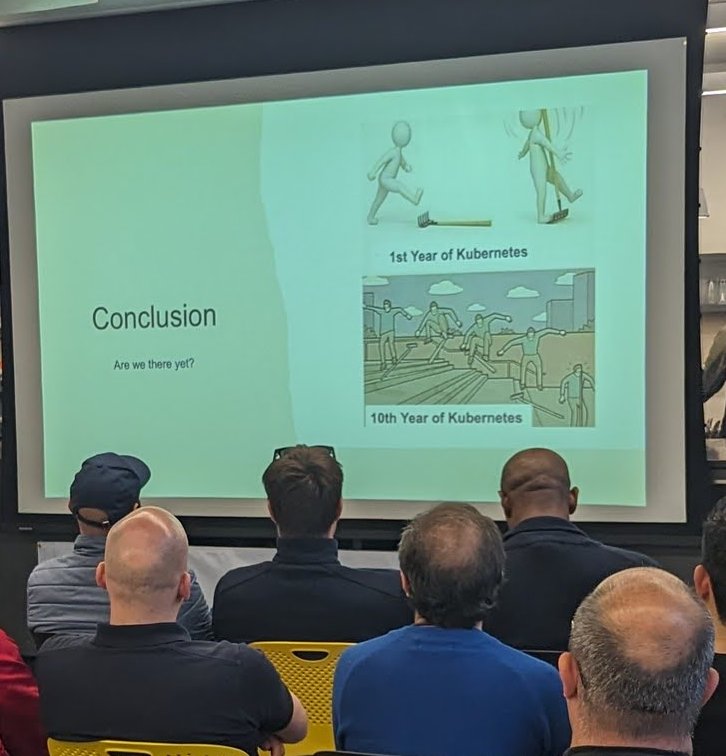
Conclusion: the 1st year of Kubernetes against the 10th.
A platform product at RTL
A second talk, from the data platform team at RTL, was titled “The journey to a platform product”. Its sections, from the slide, were Shadow IT (“start from within”), Platform Team, Platform as a product, Adoption and Future. The slide named RTL, Videoland, RTL Nieuws and Buienradar.
The team slides defined what a platform team is not. Sysops: “Close, but no, it might overlap”. DevOps: “NO! GOD NO! It’s not a team. It’s not a person! It’s a mindset!”. GitOps: “A nice tool on the belt but it’s not a team”. ChatOps: “Hello IT, have you tried turning it off and on again”.
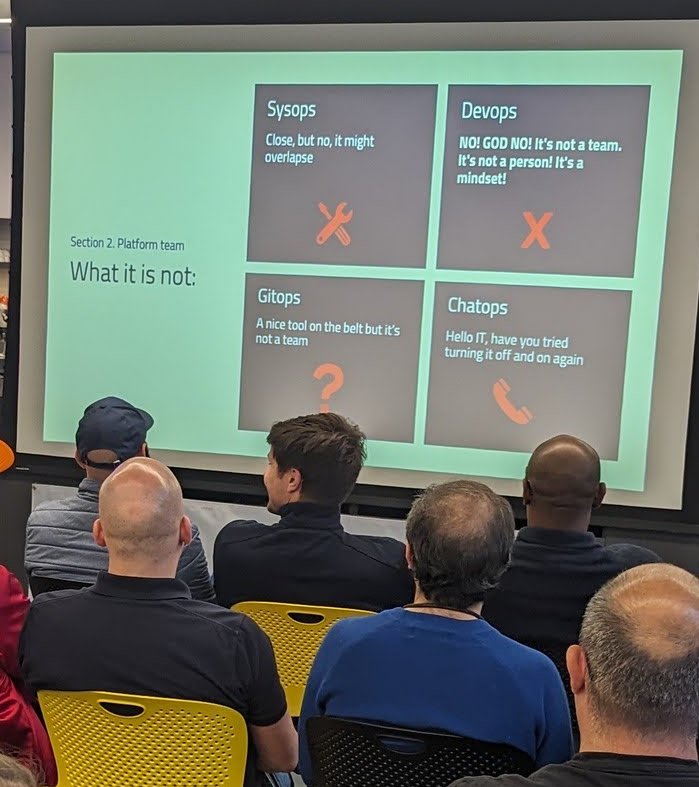
What a platform team is not.
The “Adoption at RTL” slide (“How to take over the world?”) listed four consumers of the platform. Videoland was described as the main reason and entry point. Buienradar started in Belgium and is slowly moving the Dutch parts over. RTL Nieuws was onboarded on its own duplicate platform and is migrating to the actual one. The data platform used by RTL data scientists and developers had a daughter team using another duplicate platform.
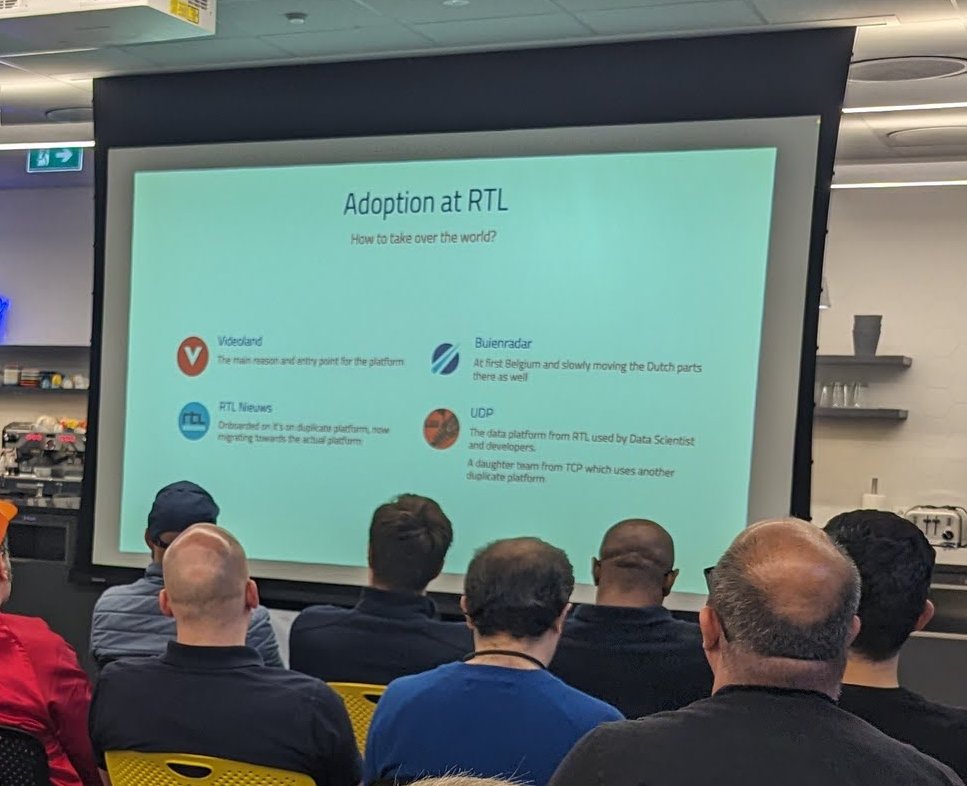
Adoption at RTL: four consumers, at different stages of migration.
My take: adopting a platform by onboarding the most motivated team first, then migrating the others in stages, is how most internal platforms actually grow. The “platform as a product” framing on the slide is the part that makes it work.
What is next for the community
The closing slide listed the plans: KCDs (Kubernetes Community Days) “are on hold”, the next meetups were a homelab-kube session in July and one in Amersfoort in September, and the TAG Environmental Sustainability week was on 10 October. Another slide on the evening was an announcement for an “Inspiration Event: Real Life Examples for working with Green Software Principles” on 4 July 2024 in Amsterdam. A third talk covered a public transport operator serving 1.200.000 daily travelers and showed its annual service-quality figures.
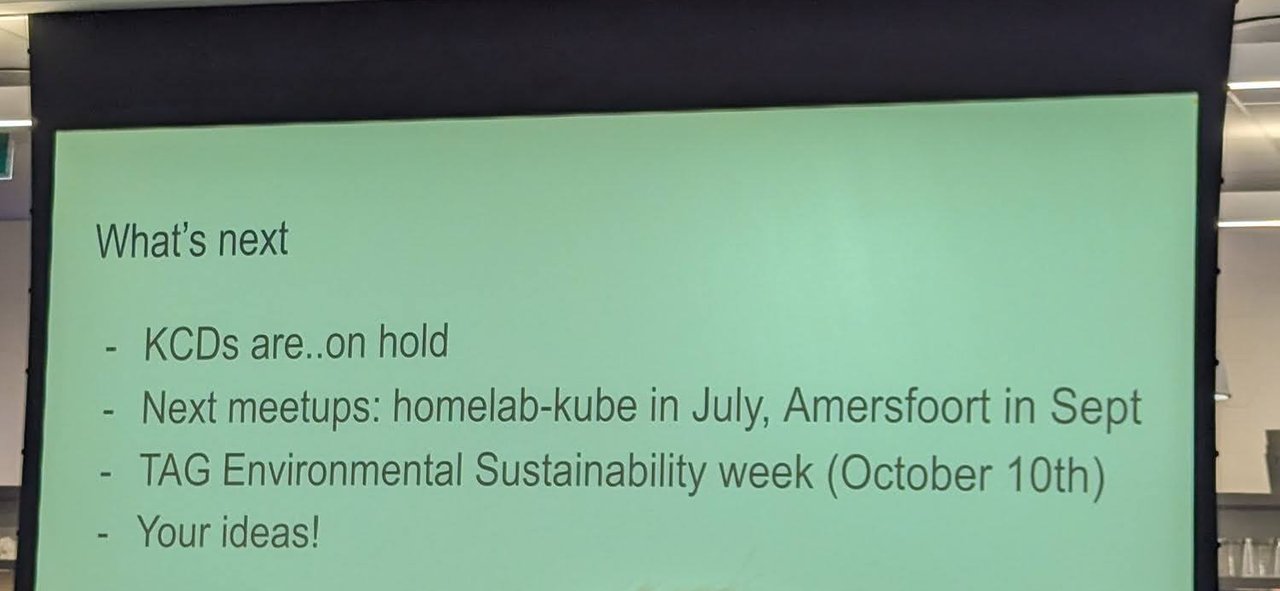
What’s next for the Dutch community.