Why I’m writing this
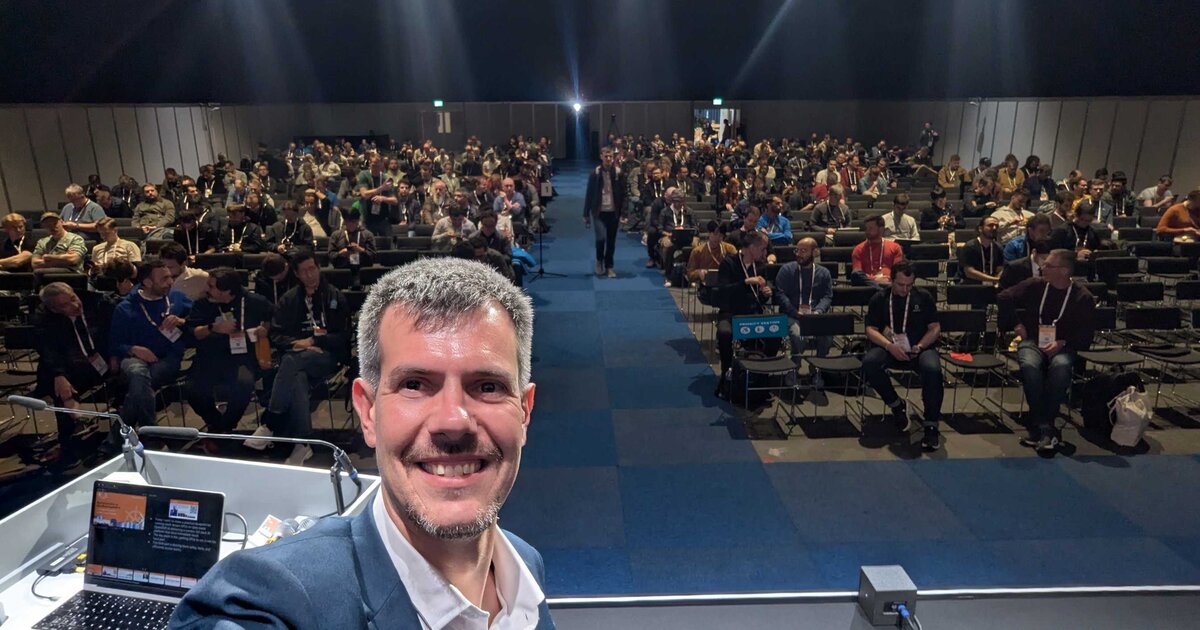
I’m attending KubeCon + CloudNativeCon Japan 2026 (Yokohama, July 28–30) as an official media partner, which means I get a front-row view of the schedule, the speakers, and the sponsors before the keynotes even start. Rather than waiting for the recap, I went through the full program and pulled out the sessions and companies I think will actually move the cloud-native + AI conversation forward.
This is a preview, not a recap. Sessions will be recorded and posted to the CNCF YouTube channel within two weeks — but if you want to plan your agenda now, these are the ones I’d put at the top of the list.
The keynotes set the tone: AI-native, GPU-first
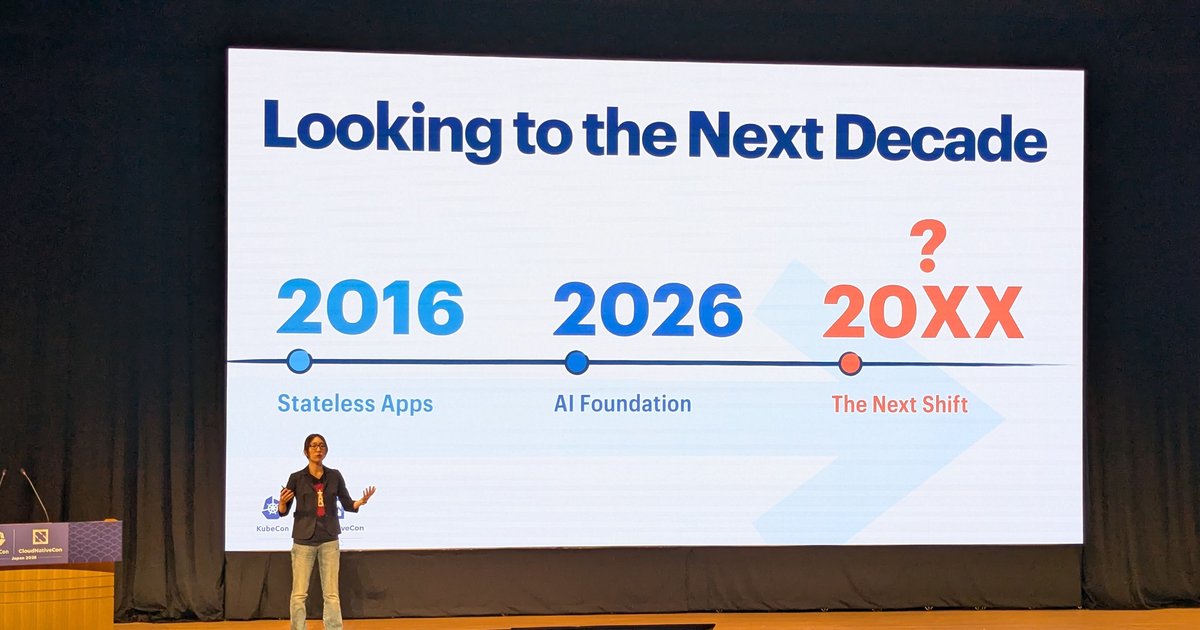
The Wednesday main-hall keynotes are unusually AI-heavy for a KubeCon, and that’s the story of 2026. A few that stand out:
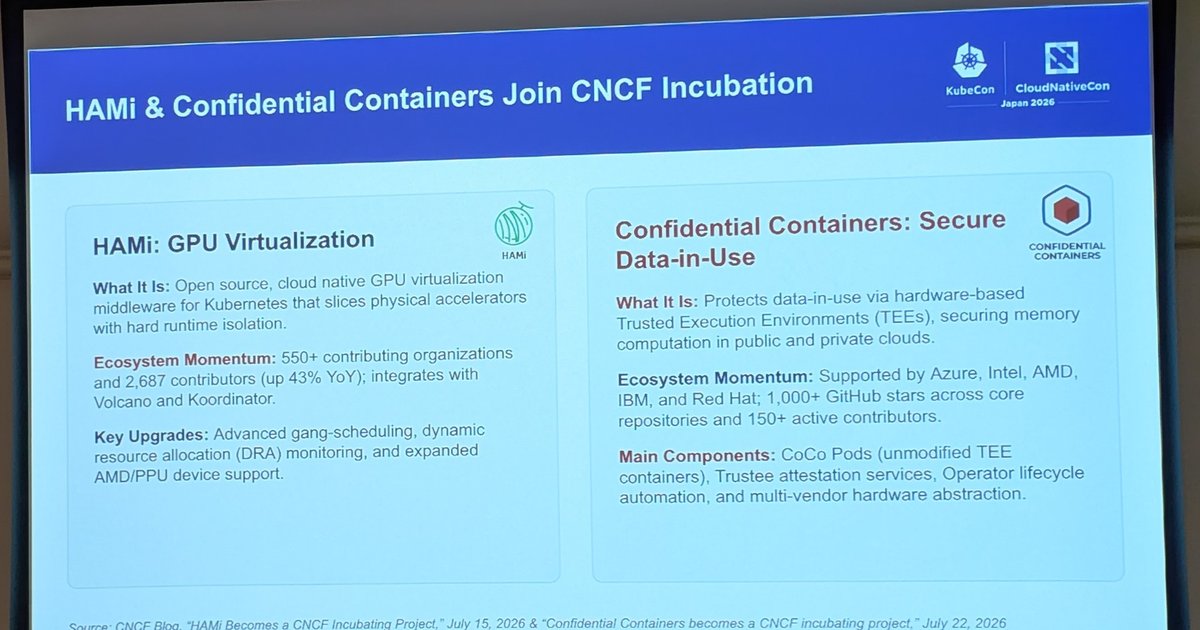
- “The Next Evolution of Kubernetes: GPU-Centric Infrastructure for AI Workloads” — Takao Indoh (Fujitsu). The clearest signal that Kubernetes is being re-shaped around the accelerator, not the container.
- “Building a Multi-Tenant AI Platform with the CNCF Ecosystem” — Aya Igarashi (Preferred Networks). Directly in my wheelhouse — multi-tenancy is the hardest problem in shared GPU infrastructure.
- “How Subaru Accelerated AI Model Development for Next-Generation EyeSight with Kubernetes” — Ryoji Kobayashi (Subaru). Real automotive ML on K8s, not a demo.
- “Infinite Agents, Finite Kubernetes” — Mohammad Mikal Bin Amrul Halim Gan (SoftBank). Agentic workloads colliding with hard cluster limits — a tension every platform team is about to feel.
- “From 5 to 1,300+ Clusters” and “Out of the Box, at Multi-Region Scale” (LY Corp, Hyundai) — declarative scaling war stories at fleet scale.
If you only watch the keynotes, watch those.
AI + ML: the track to live in
The AI + ML track is where I’ll spend most of my time. The most promising sessions:
GPU scheduling and multi-tenant inference
- “Shared GPU Scheduling & Proactive Autoscaling: A Production Blueprint for 1000+ GPUs” — Jeonghyun Kim (SNOW) & Reza Jelveh (Dynamia.ai). A production blueprint at four-figure GPU scale. This is the real operating model, not theory.
- “Shared Yet Isolated at Scale: Building Multi-Tenant Inference Platform on Kubernetes” — Yuto Hiraki (SoftBank) & Yusuke Tanaka (ITOCHU Techno-Solutions). The multi-tenant inference problem, end to end.
- “Topology-Aware Scheduling for AI Training & Inference with Kueue” — Michał Woźniak (Google) & Wei Huang (Meta). Kueue is becoming the beating heart of AI batch scheduling; this is the deep dive.
- “Beyond Single-Cluster Limits: Scaling GPU Workloads Across Kubernetes with Virtual Nodes” — Shivay Lamba (Qualcomm) & Kunal Das (Cast AI).
- “Who’s Using That GPU? Identity-Aware Access Control for Kubernetes GPU Workloads” — Peter O’Neill (Teleport) & Kunal Kushwaha (Cast AI). GPU cost and access control finally meeting.
From serving to distributed inference
- “From Model Serving to Distributed Inference: How llm-d Evolves AI Platforms on Kubernetes” — Kay Yan (DaoCloud) & Linbo He (Microsoft). llm-d is the project to watch for inference composition.
- “How to Evolve Your LLM Self-Hosting Platform: A Practical Guide to Adopting Advanced Optimizations” — Shingo Omura & Yiyang Zhan (LY Corporation). Practical self-hosting maturity, not day-one setup.
- “From Model Serving to Distributed Inference” pairs well with “Conformance for Inference: How We Reduced Bad Deploys on a GPU Platform” — Aditya Soni (SailPoint) & Hrittik Roy (vCluster). Inference needs release engineering, and this is it.
- “From Experiment to Enterprise: Scaling an AI Agent for Code Review” — Adam Phan (Sony Interactive Entertainment). Agents crossing from toy to production.
- “Manufacturing Alerts to ReActive Agents” (Sendbird) and “Architecting Secure Agentic Workflows on Kubernetes: A Financial Sector Case Study” (Red Hat) — agentic ops moving into regulated industries.
- “From the First Step to Agentic Observability” — OpenTelemetry’s graduation keynote (Alolita Sharma, Apple) plus “From Tool Calls to Context Fabric” (NVIDIA) — observability for agentic systems is its own emerging discipline.
Platform Engineering & GitOps: the operating model
This is the track closest to my day job — turning Kubernetes into a product teams actually want to use.
- “Turning Platform Engineering Work into Business Value Leadership Understands” — Danielle Cook (Akamai) & Simon Forster (Stackegy). The eternal translation problem: platform work to board language.
- “From 165 Days to 30 Minutes: Breaking Enterprise Silos with Platform Engineering” — JAL Digital. A concrete before/after transformation story.
- “Evolving Platform Primitives: Beautiful Platforms with kro” — Jakob Möller (SAP) & Amine Hilaly (AWS). kro as a composition layer for platform primitives.
- “The Evolution of GitOps in Platform Engineering” — Artem Lajko (iits). GitOps keeps maturing; this is the 2026 state of the art.
- “Scaling In Kubernetes Safely on On-Prem KaaS Across 1,300+ Clusters and 40,000+ Nodes” — Shota Yoshimura (LY Corporation). On-prem KaaS at absurd scale.
- “Don’t Start With 500 Clusters” — Nibir Bora (Clean Compute) & Matt Morrison (Ravenna). Multi-cluster via Cluster API, the right way.
- “Sustainability by Design: Leveraging DRA for Energy-Efficient Kubernetes Clusters” — IBM Research & Ericsson. DRA (Dynamic Resource Allocation) doubles as a sustainability lever — a fresh angle.
Security, Observability & Connectivity
- “Detecting Compromised CI with eBPF and Cilium Tetragon” — Liz Rice (Isovalent). CI security is the new frontier; eBPF makes it observable.
- “Scalable Security and Compliance in the Age of AI” — Eddie Knight (Revanite). AI changes the compliance calculus.
- “AuthZEN in Practice” (Hitachi) and “Identities and Authentication for your Agents with Keycloak” (Hitachi/IBM) plus “Navigating the Identity Abyss in the AI-Native Era” (Hitachi keynote) — identity for agents is the sleeper topic of the conference.
- “Runtime Security at Scale with eBPF” — Rakuten Mobile/Symphony.
- “Lessons From Five+ Years of Fluent Bit” (Palo Alto Networks) and “Designing for High-cardinality Metrics” (Reddit) — observability maturity talks worth the time.
- “The Road to Cilium: Migrating 150+ Kubernetes Clusters at Airbnb” — Yifei Sun (Airbnb). A migration war story at scale.
Sponsors to watch
The sponsor floor is where a lot of the real product direction shows up. From the published sponsor list, these are the ones I’ll be visiting:
- Platinum — Fujitsu, Hitachi, Canonical. Fujitsu is keynoting the GPU-centric Kubernetes shift; Hitachi is everywhere (identity, AuthZEN, CoHDI, VPP) and is effectively the conference’s AI-native identity story. Canonical brings the OS-for-GPU-node question (see the Adobe “Choosing an OS for GPU-Heavy Kubernetes” session).
- Gold — AWS, Datadog, Microsoft Azure, Red Hat, Portworx (Pure), Octopus Deploy, Tintri. Red Hat is the one to track for me: they’re in the multi-cluster scoring talk (SoftBank/Red Hat), the secure agentic workflows case study, CoHDI, and the Kubestronaut community. Microsoft Azure pairs with the llm-d distributed inference talk. Datadog is the observability anchor.
- Silver — Grafana Labs, HashiCorp, SUSE, Sysdig, Snyk, Nutanix, IBM Research, Isovalent, NEC, Honda, HPE, CAST AI, Coder. Isovalent/Cilium (Liz Rice) owns the eBPF/connectivity narrative. CAST AI (KubeAuto Day with Kelsey Hightower, plus two GPU/virtual-node talks) is the cost-optimization story. Grafana Labs is all-in on OpenTelemetry.
- Non-Profit + Start-Up — KubeDB, OpenStack, Soda Foundation, Mirrord, Infisical, Archestra.ai. Worth a look for early-stage CNCF-adjacent tooling.
If you’re a sponsor or a builder and want to connect on the floor, reach out — as media partner I’m happy to sit down, record a short segment, or feature your talk.
My plan on the ground
I’ll be focusing on three threads: multi-tenant GPU infrastructure (my KubeCon EU 2026 talk topic), agentic AI on Kubernetes (identity, observability, secure workflows), and platform engineering as a product. Expect follow-up posts after the event with the talks I caught live, the hallway-track conversations, and anything that changes how I think about production AI platforms.
If you’re attending Yokohama, say hi. If you’re not, the recordings land on the CNCF YouTube channel within two weeks — and I’ll point you to the ones worth your time.
Luca Berton is an The Production AI Expert, Docker Captain, and CNCF/KubeCon media partner. He spoke on multi-tenant GPUs on bare-metal OpenShift AI at KubeCon + CloudNativeCon Europe 2026 in Amsterdam.