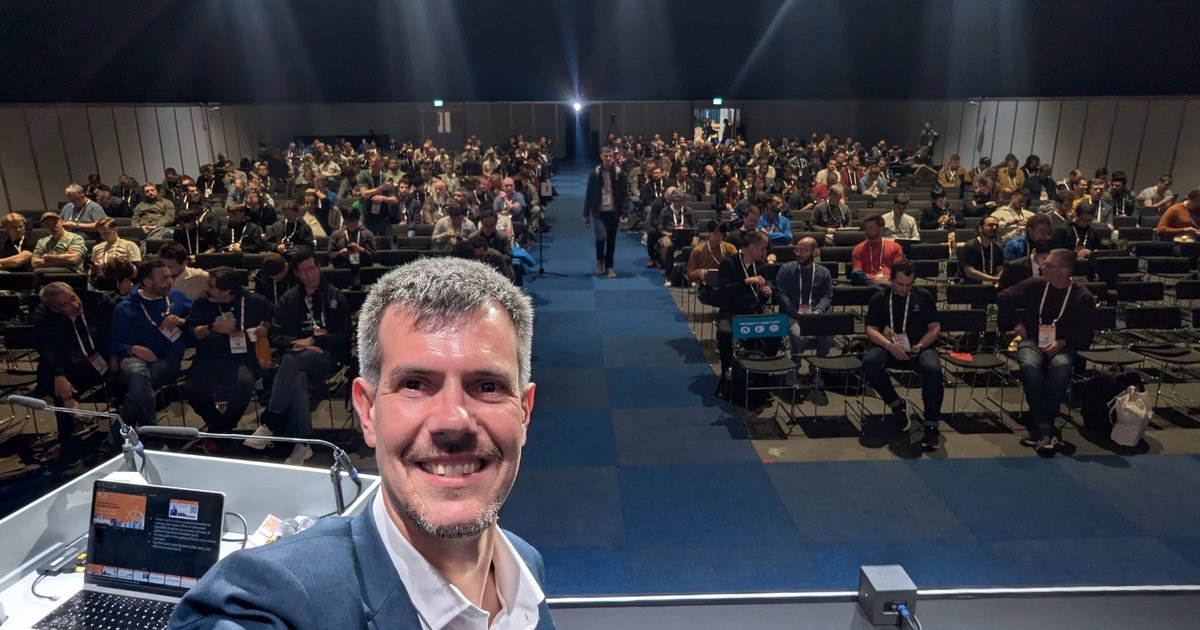
KubeCon + CloudNativeCon Europe 2026 came to Amsterdam, my home city, from 23 to 26 March. Back in December I wrote that I’d be speaking at KubeCon Europe 2026. This post covers what the week actually looked like, mostly through the photos I took along the way.
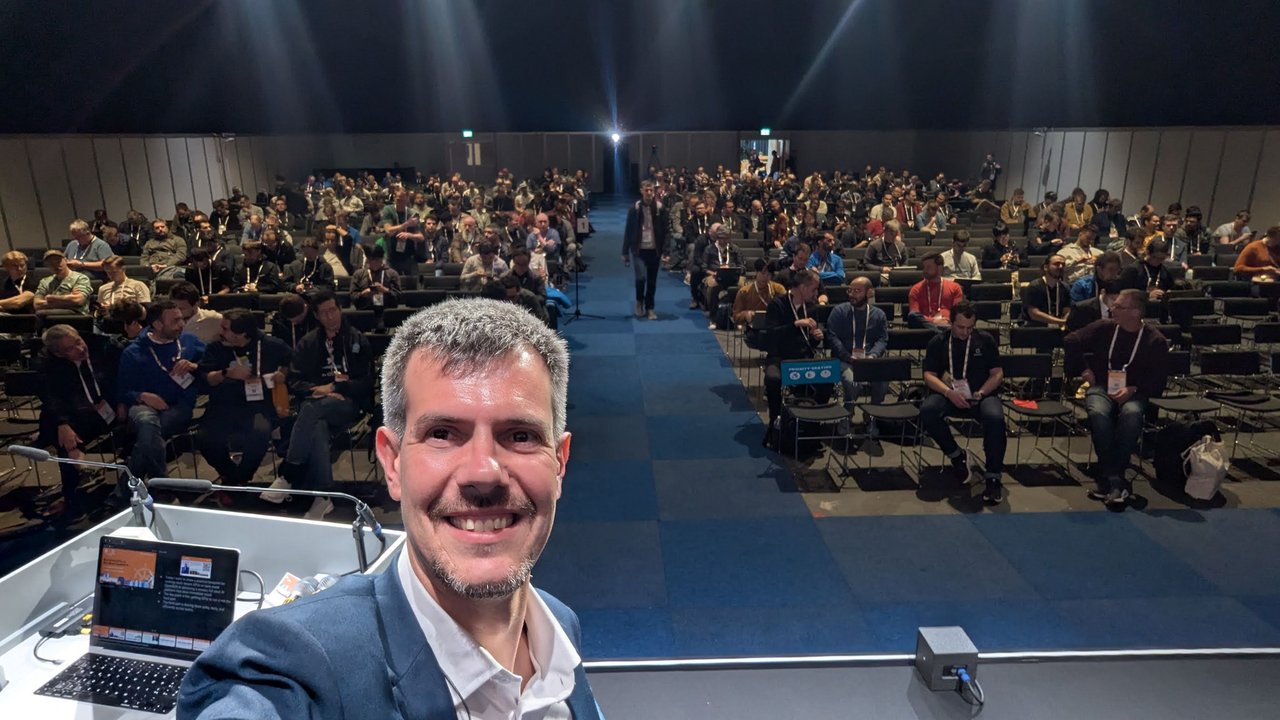
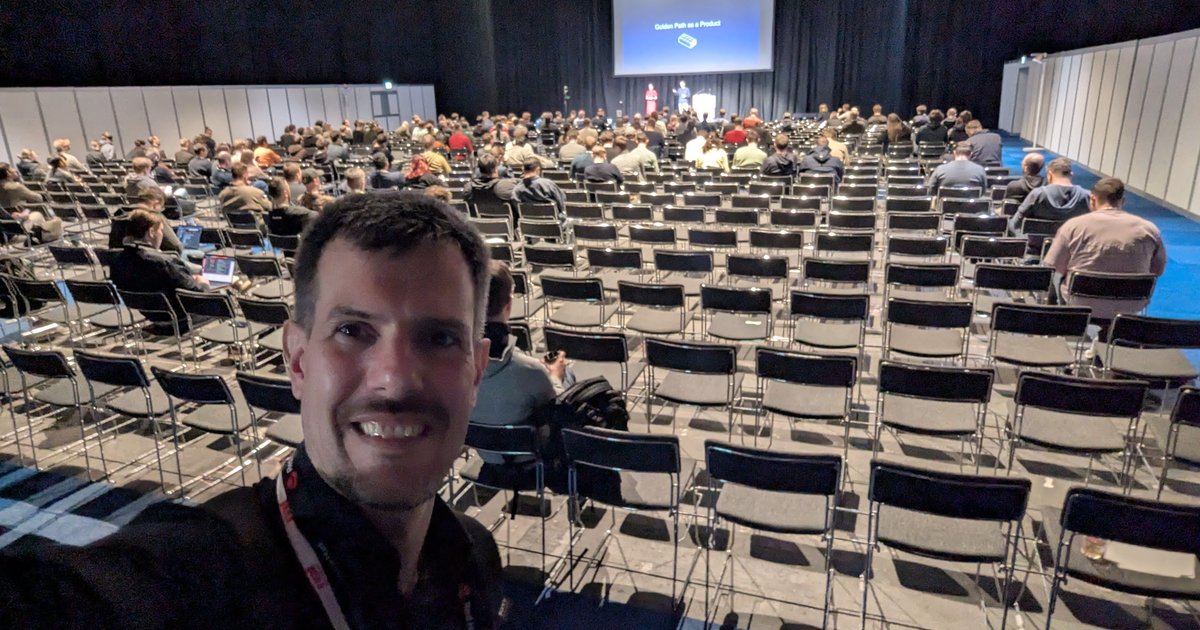
On stage at RAI Amsterdam, ten minutes before my talk, watching the hall fill up.
Monday: co-located events and a book signing at Booking.com
KubeCon week starts before the main conference, with the CNCF-hosted co-located events at the RAI. I split my day between two of them.
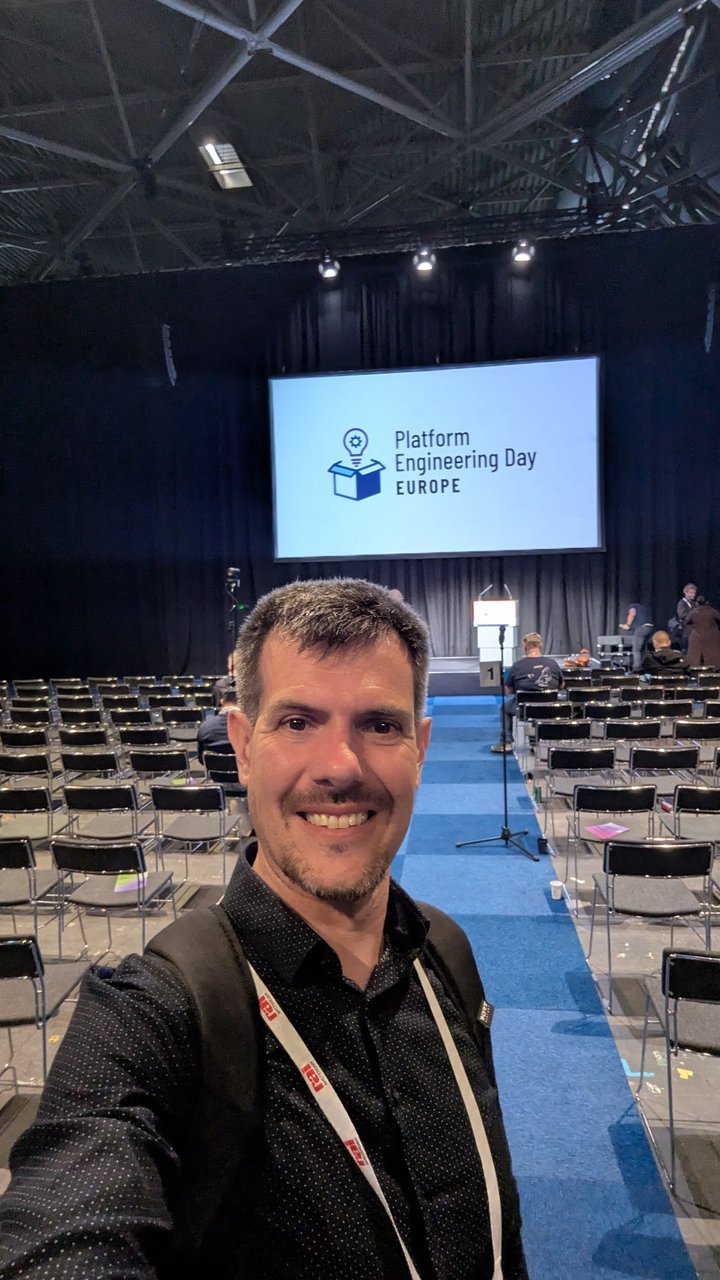
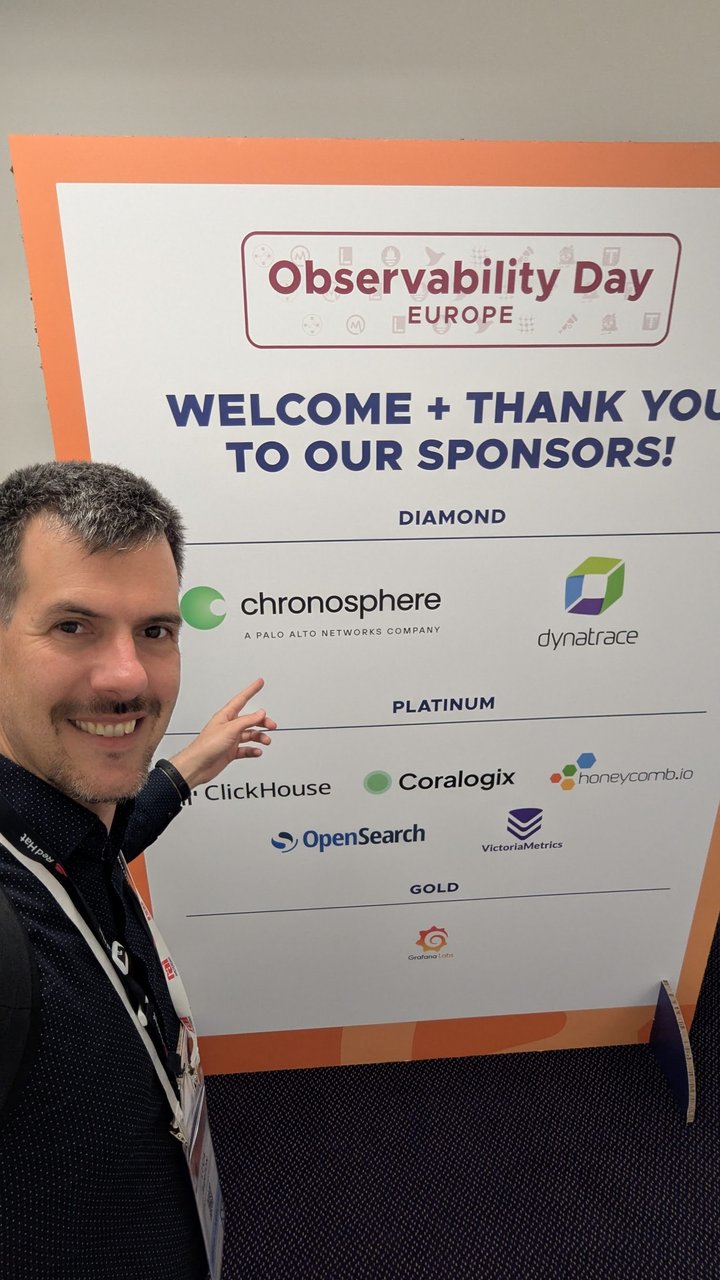
Platform Engineering Day and Observability Day cover the two subjects I work on most with customers. Platform teams are being asked to take on AI workloads, and observability is how they keep those workloads affordable and debuggable. The hallway conversations on both topics ran all week.
In the evening I crossed town to Signal Overflow, the KubeCon special run by SRE NL at Booking.com HQ on Oosterdokskade. Alongside the talks on OpenTelemetry and observability in the AI-native age, my co-author Grzegorz Stencel and I signed copies of our book Kubernetes Recipes.
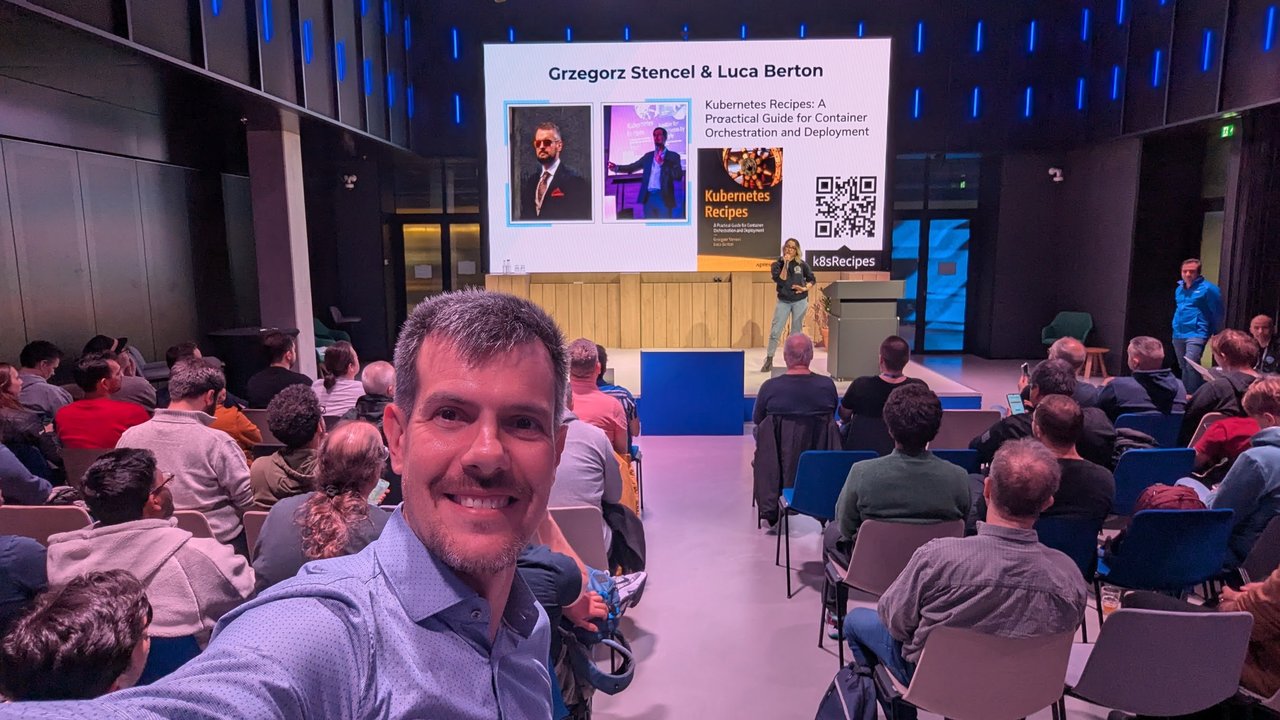
Seeing your book on a screen that size at Booking.com is a strange and lovely feeling.
The book is built around problems you meet in production, so a signing quickly turns into a queue of “how would you handle…” questions. That’s the best kind of queue.
Tuesday: the vCluster booth and my GPU talk
At lunch on Tuesday we did a second signing at the vCluster booth on the expo floor.
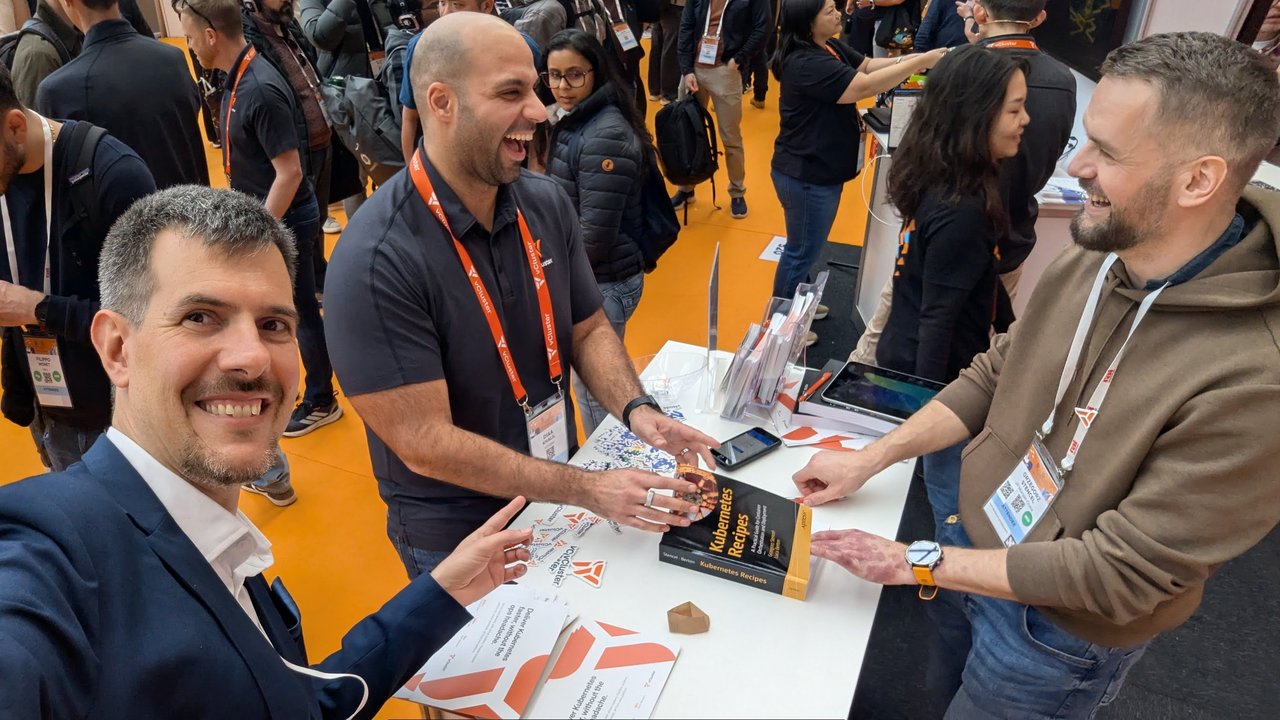
Book signing at the vCluster booth. Thanks to the vCluster team for hosting us.
At 16:15 I gave my session, Lessons Learned Orchestrating Multi-Tenant GPUs on OpenShift AI with NVIDIA KAI (G/H200). It’s an experience report, not a product pitch. It covers what happens when several teams share expensive GPUs on one platform:
- Tenant isolation: namespaces, quotas and priority classes, so one team can’t starve another
- Heterogeneous scheduling: placing workloads across mixed GPU types instead of treating every node the same
- MIG versus full GPUs: when partitioning helps and when it gets in the way
- Day-2 operations: driver and firmware lifecycle, upgrades without downtime, and the observability that makes chargeback possible
The full abstract and the list of takeaways are in the session announcement.
Wednesday: keynotes and conversations
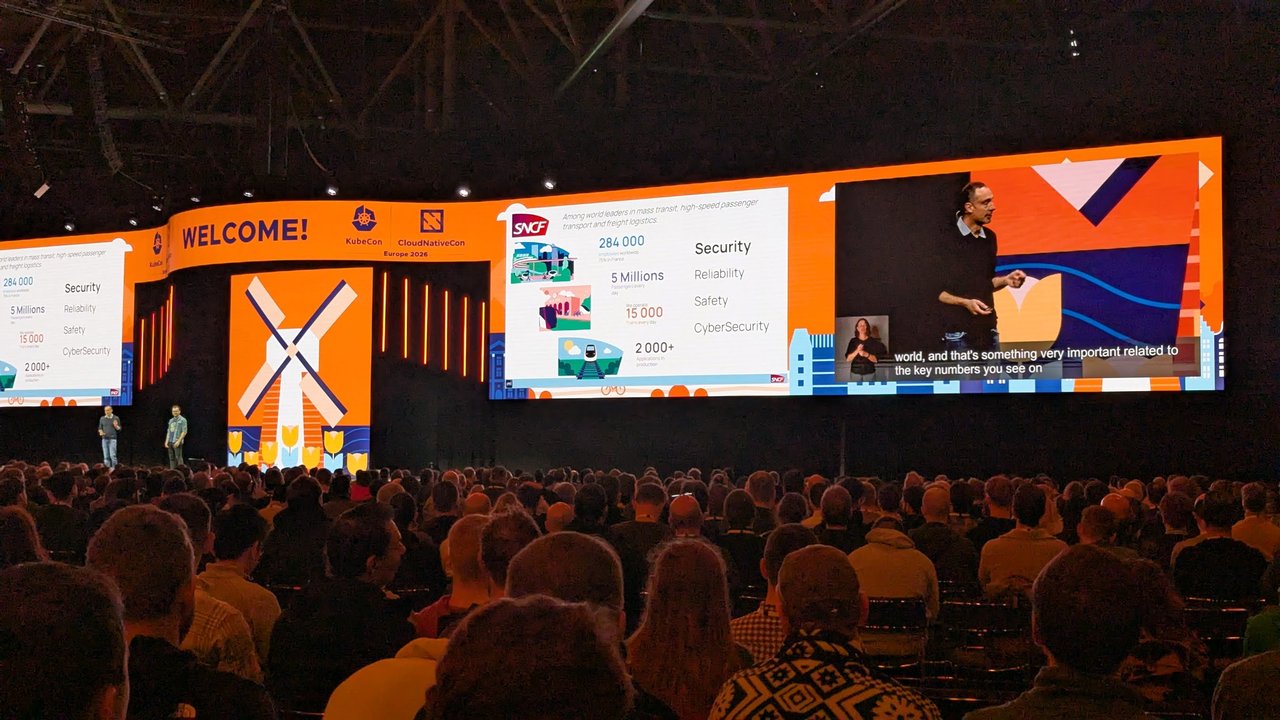
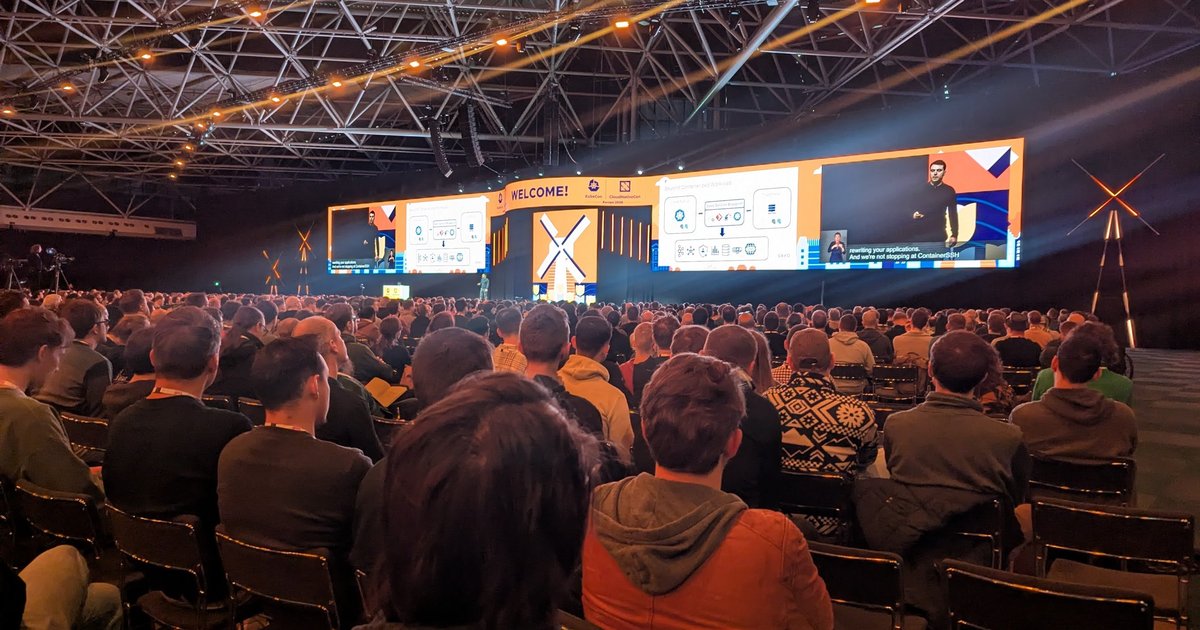
Wednesday morning in the keynote hall. Amsterdam put on its welcome.
The keynotes made the shift official: AI on Kubernetes is now an operations topic. It’s about inference at scale, GPU sharing, conformance, and keeping agents observable. I spent much of the rest of the week recording conversations with people shaping that shift:
- Kat Cosgrove on security, the Ingress NGINX shutdown and secure container images
- CNCF CTO Chris Aniszczyk on agentic AI and Kubernetes
- Jim Zemlin on why AI makes open source more critical
- Luca Galante on platform engineering in the AI era
What I took home
Three things stuck with me after four days at the RAI:
- GPU multi-tenancy is the new multi-tenancy. Every isolation lesson the community learned with CPU workloads applies again, with much more money at stake.
- Observability is moving into the platform. Cost, performance and agent behaviour all need to be visible before teams will trust AI workloads in production.
- The community is still the point. The best moments were the hallway track, the side events and the people who came to say hello at the signings.
Thank you to the CNCF, the program committee, SRE NL, Booking.com, the vCluster team, and everyone who came to the talk or queued for a book. See you at the next one.