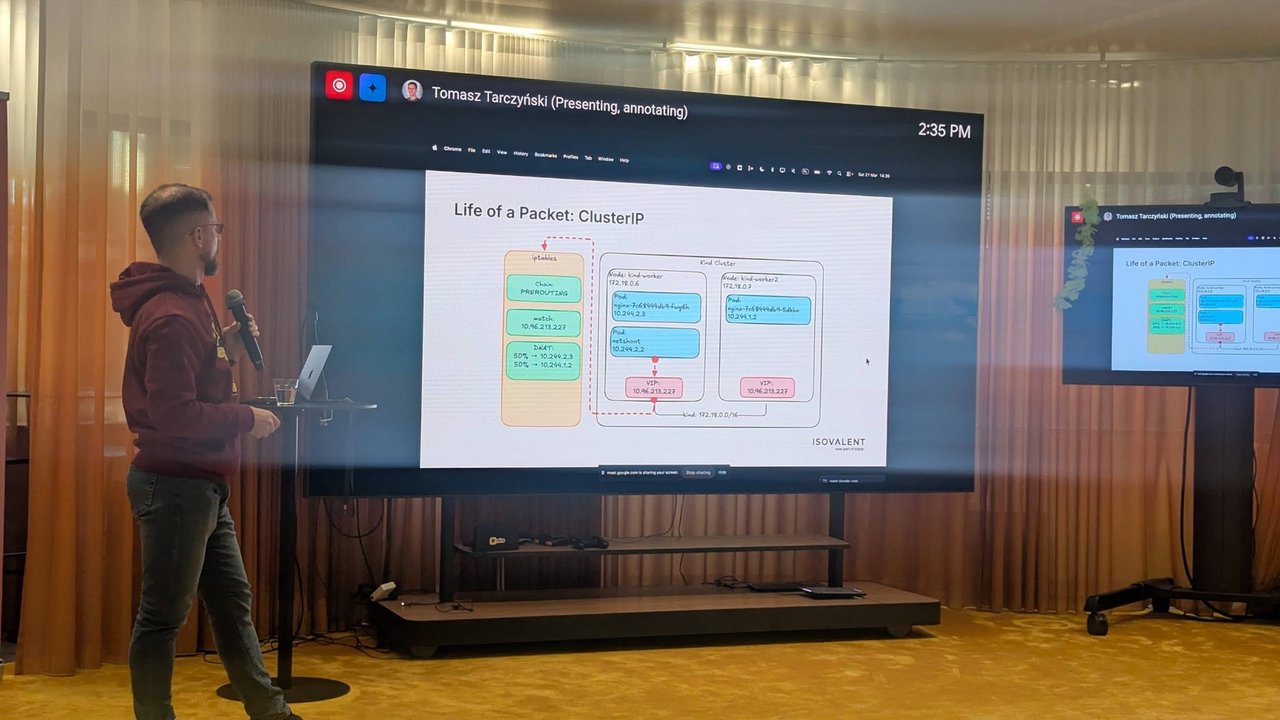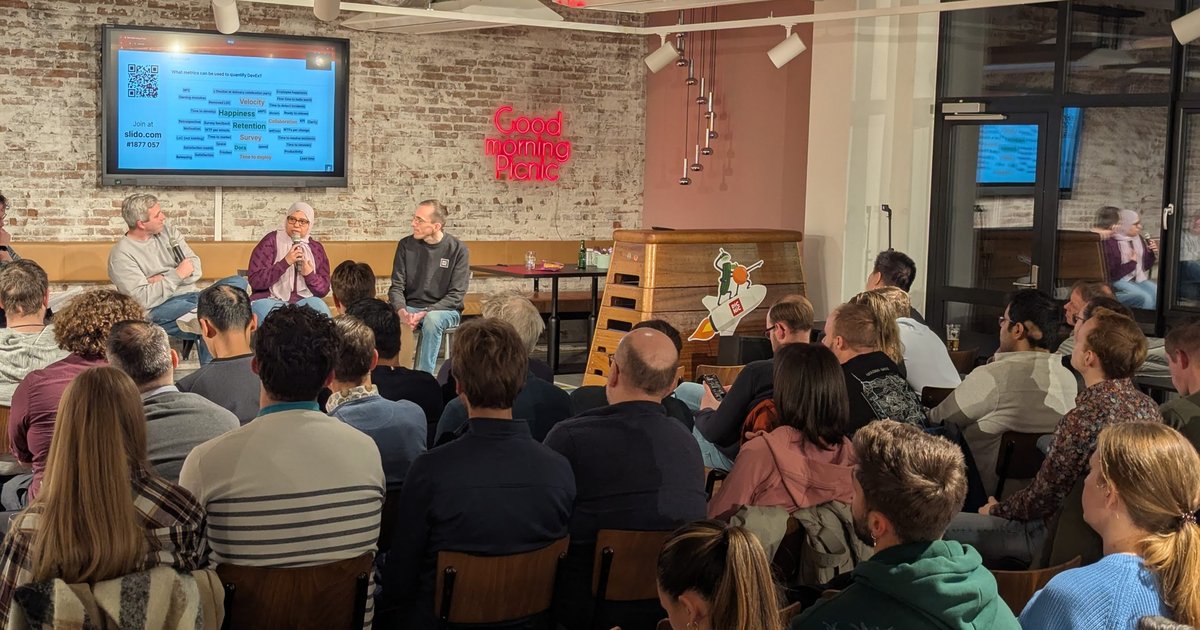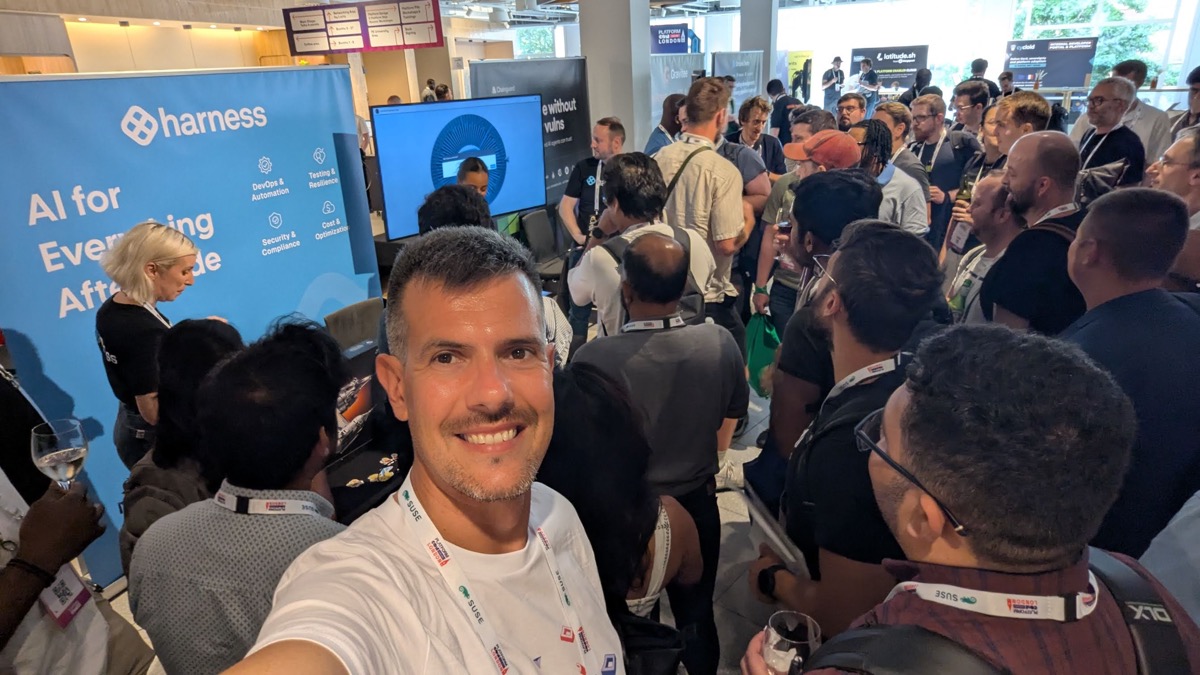
What does it mean to be an engineer when agents write the software? That was the question I put to Kief Morris (Thoughtworks) on the floor at PlatformCon Live Day London 2026, and his answer reframes the entire debate about AI’s role in engineering more usefully than most of the takes I heard that day.
Agents Are the Topic, Not the Problem
Kief’s opening observation was blunt: agents are the defining topic in the industry right now, but the real challenge was never whether to use them — it is learning to use them well. That distinction matters more than it sounds. Most of the anxiety around agentic development comes from treating “should we adopt agents” as the open question, when the harder and more useful question is “what does competent use actually look like.”
Human on the Loop, Not Human in the Loop
Kief’s article on MartinFowler.com, “Human on the Loop,” reframes the engineer’s role in a way that survives contact with how agentic development actually works day to day: the job is to build the system that builds the software, not just the software itself.
The distinction between “in the loop” and “on the loop” is doing real work here. “In the loop” implies a human checking every individual output — a model that does not scale and quietly degrades into rubber-stamping once the volume gets high enough. “On the loop” describes someone who has built and continuously tunes the system — the guardrails, the evaluation criteria, the escalation paths — that determines whether the agent’s output is trustworthy in the first place. The engineer’s attention moves up a level, from individual outputs to the system that shapes all of them.
What Does Not Change
The part of the conversation I keep coming back to: managing quality and the path to production remain paramount, exactly as they always have. AI changes the tooling — what generates the first draft of the code, what catches an obvious mistake, what accelerates a refactor — but it does not change the fundamentals of what makes software fit to ship. A codebase with weak test coverage, unclear ownership, or no deployment discipline does not get healthier because an agent wrote more of it faster.
This is the same conclusion I keep arriving at from a different angle in production guardrails for AI agents: the discipline lives in the system around the model, not in the model itself.
Find His Work
Kief pointed me to infrastructureascode.com for the deeper material — or, as he put it, just search “Kief” (K-I-E-F) and the right results surface. Given how much of the current agentic-AI conversation is repeating lessons Infrastructure as Code already learned about treating operational systems as engineered artifacts, that back catalog is worth the search.
Related Reading
- PlatformCon London 2026: The AI Era Runs on Platforms
- Your IDP Is the Foundation for Agentic AI
- Production Guardrails for AI Agents
About the Author
I am Luca Berton, AI and Cloud Advisor. I work at the intersection of platform engineering, cloud security, and enterprise AI deployments. Book a consultation.