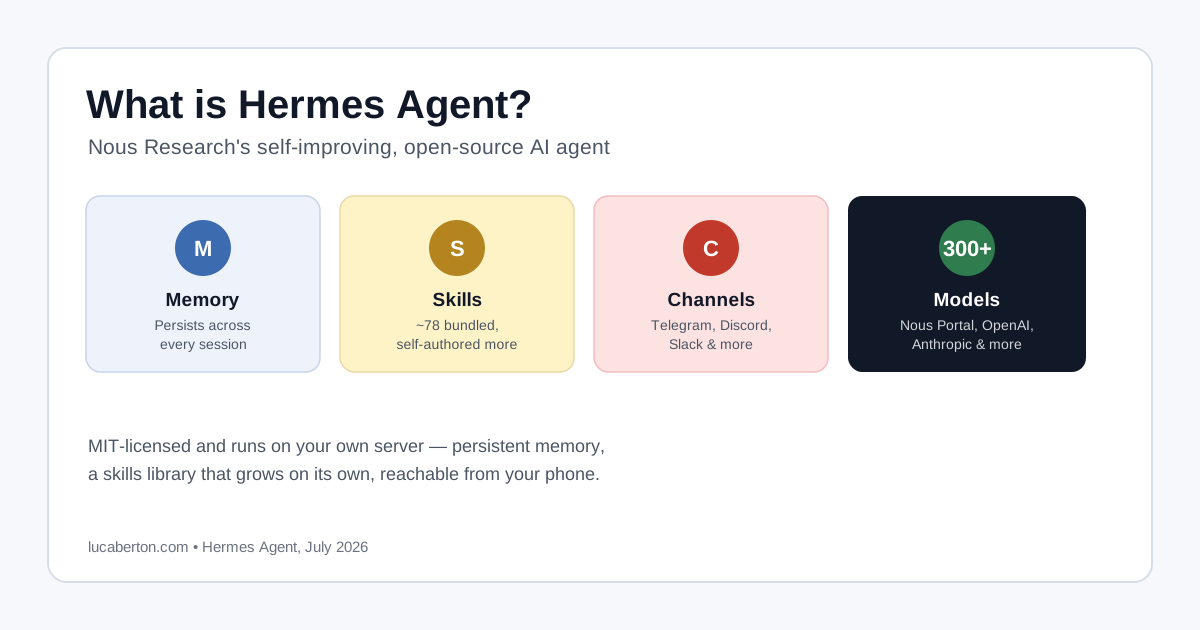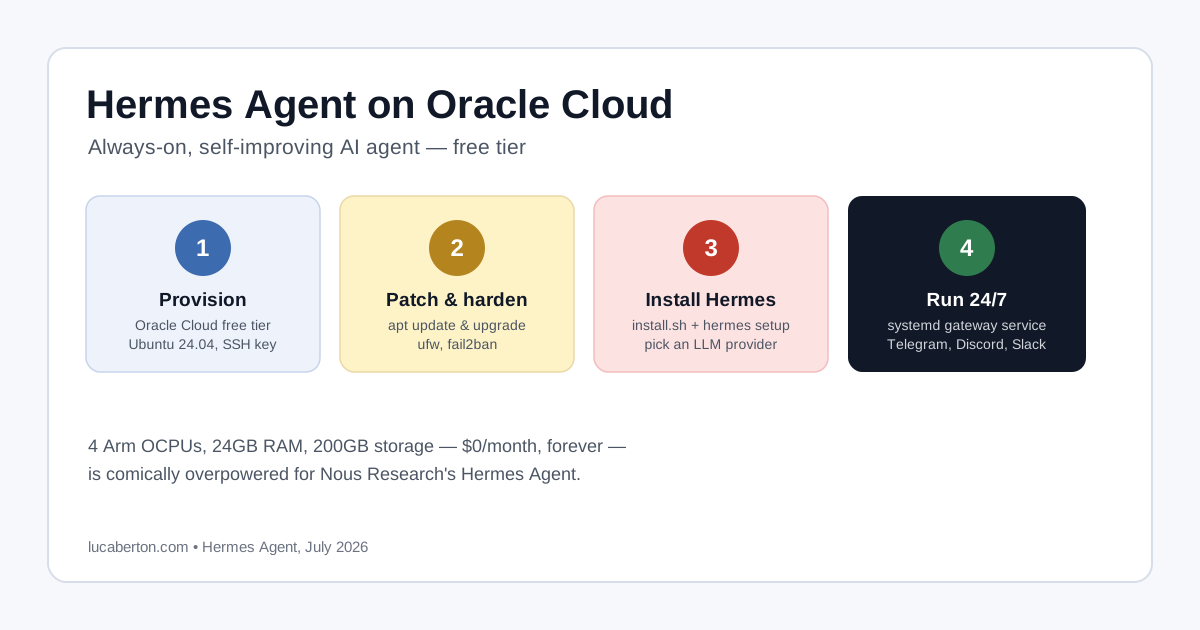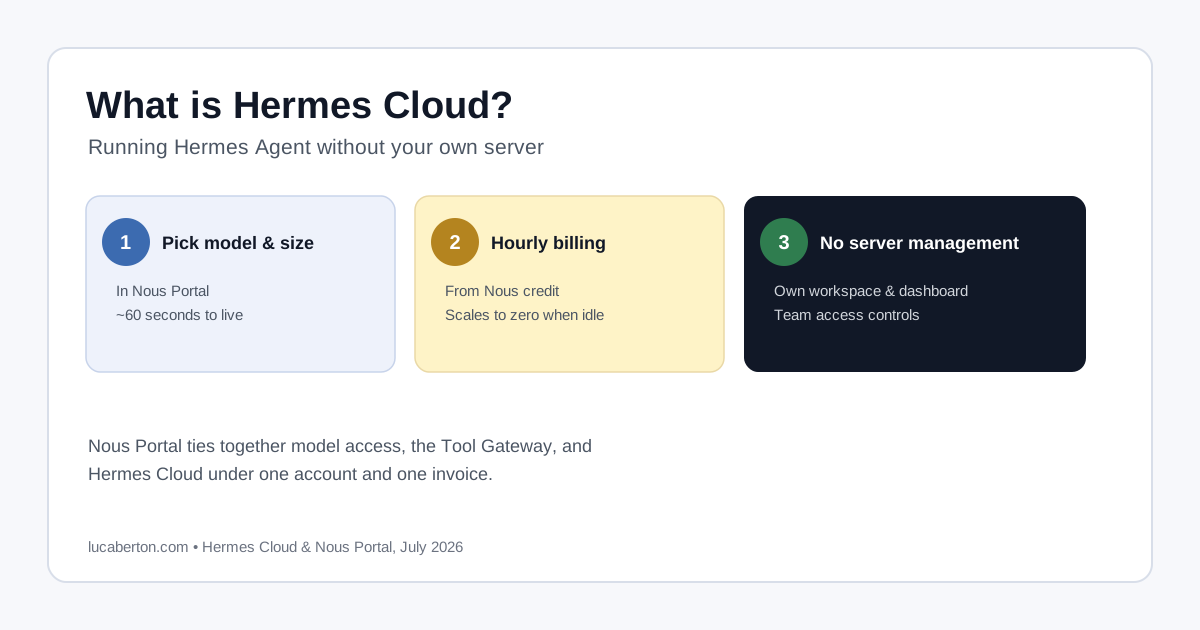
Both Hermes Agent (Nous Research) and OpenClaw solve the same basic problem: a self-hosted AI agent that runs continuously on your own infrastructure and stays reachable through the messaging apps you already use, instead of living in a browser tab. Past that shared premise, they make different bets about what matters most.
Side by Side
| Hermes Agent | OpenClaw | |
|---|---|---|
| Publisher | Nous Research | Open-source community |
| License | MIT | Open source |
| Core language | Python | TypeScript/Node.js |
| Install method | Native curl | bash installer | Docker-first (docker-setup.sh) |
| Memory | Built-in persistent memory + self-authored skills library (~78 bundled skills) | Plugin-based (e.g. LanceDB vector memory extension) |
| Messaging channels | 20+ documented, including Telegram, Discord, Slack, Google Chat, WhatsApp, Signal, SMS, Email, Matrix, Mattermost, MS Teams, LINE, Feishu/Lark, DingTalk, WeCom, Home Assistant | Discord, Telegram, Slack, MS Teams, WhatsApp, Signal, IRC, Matrix, Nostr, Line, Feishu |
| Model support | 300+ models via Nous Portal, OpenAI, Anthropic, OpenRouter, custom endpoints | GitHub Copilot, Claude, GPT, any OpenAI-compatible endpoint |
| Management UI | CLI-first, no web dashboard | Web-based Control UI dashboard |
| Terminal/execution backend | Configurable: local, Docker, SSH, Modal, Daytona, Singularity | Runs inside its own Docker container by default |
| Extensibility | MCP servers + skills library | 30+ plugin extensions |
| Security model | OS keyring for credentials, isolated terminal backends | Device-pairing auth, CORS enforcement, built-in security audit command |
Where Hermes Agent Pulls Ahead
The learning loop. Hermes’s headline feature is that it doesn’t just store conversation history — it builds and refines its own skills as it solves problems, and keeps a growing model of your preferences across sessions. That’s a more active kind of memory than a typical vector-store plugin.
Model flexibility without lock-in. 300+ models reachable through one config, switchable anytime with hermes model. Nous Portal’s Quick Setup also means you can get a working agent running with a device-code login and no API key at all — useful if you just want to try it before deciding on a paid provider.
No Docker requirement. The native installer is lighter on a small VPS — no container runtime to keep patched, no image pulls, less memory overhead. That matters more than it sounds on a free-tier 1 GB instance.
Channel breadth, somewhat surprisingly. Hermes’s docs list 20+ messaging platforms by name — beyond the obvious Telegram/Discord/Slack/WhatsApp/Signal set, that includes Matrix, MS Teams, LINE, Feishu/Lark, DingTalk, WeCom, Google Chat, SMS, Email, and Home Assistant, among others. That’s a wider documented list than OpenClaw’s, though OpenClaw’s channel extensions have a longer track record in production.
Where OpenClaw Pulls Ahead
A real management UI. OpenClaw’s Control UI gives you a browser dashboard for monitoring conversations and configuration. Hermes is CLI-first — capable, but you’re working from a terminal, not a browser tab.
Maturity and adoption signal. OpenClaw passed 300,000 GitHub stars in early 2026, among the fastest-growing repositories on GitHub at the time — a strong signal of an active contributor base and a large surface of community-built extensions to draw on.
Deployment Model: Native vs. Container
This is the most practical day-to-day difference. OpenClaw’s quickstart assumes Docker: clone the repo, run docker-setup.sh, and the gateway comes up in a container. Hermes’s installer sets up a native Python virtual environment directly on the host — no container runtime needed, though you can still tell Hermes to execute agent tasks inside Docker via its configurable terminal-backend setting, which is a different knob than how the agent itself is deployed.
On a resource-constrained box (a free-tier 1 GB VPS, say), skipping a container runtime altogether saves meaningful memory headroom. On a beefier box where you already run everything in containers, OpenClaw’s Docker-first flow fits your existing operational model better.
Which One Should You Pick?
Choose Hermes Agent if:
- You want the agent to remember and improve on its own, not just replay history.
- You want maximum model flexibility, including a free-tier path via Nous Portal.
- You’re deploying on a small or resource-constrained VPS and want to avoid a container runtime.
- CLI-first management is fine — you don’t need a web dashboard.
Choose OpenClaw if:
- You want a channel integration with a longer production track record — Matrix, IRC, Nostr, and Feishu specifically, via OpenClaw’s mature plugin system.
- You want a browser-based Control UI for monitoring and configuration.
- You’re already standardized on Docker for everything you deploy.
- You want to lean on a large, mature plugin ecosystem (30+ extensions) built by an active community.
Nothing prevents running both — they’re independent projects with separate config directories, so trying one doesn’t commit you to abandoning the other.
Related Articles
- Connecting Hermes Agent to GitHub: Auth Setup and Gotchas
- What is Hermes Cloud? Running Hermes Agent Without a Server
- What is Hermes Agent? Nous Research’s Self-Improving AI Agent
- How to Deploy Hermes Agent on Oracle Cloud’s Free Tier
- Connecting Hermes Agent to Discord: Complete Setup Guide
- Fix: Hermes Agent Discord “invalid literal for int()” Error
- Hermes Agent on a 1GB VPS: Fixing the Common Gotchas
- What is OpenClaw? The Open-Source AI Agent Gateway
- Gemini Spark vs OpenClaw: Who Holds Your Personal Agent?
- OpenClaw Hardware Guide: Mac Mini vs Raspberry Pi vs VPS