Go — often called Golang — has quietly become one of the default languages for backend services, cloud tooling, and infrastructure. If you write systems that need to handle many things at once and stay simple to operate, it is worth understanding why Go won, and where to start.
Why Go
Go was designed at Google to solve a specific problem: building large, reliable, networked software with big teams and fast iteration. The decisions all point the same way:
- Concurrency as a first-class feature. Goroutines (lightweight threads) and channels let you write parallel code that is readable. A
go func()spins up work; achannelmoves data between them safely. - A small, learnable language. The whole language fits in your head. No generics gymnastics required for most work (and generics arrived when they were truly needed, not before).
- Fast builds, single static binaries.
go buildproduces one binary with no runtime dependency — a dream for containers and CI. - Batteries included. The standard library covers HTTP, JSON, testing, and profiling out of the box. You rarely need a framework to ship a service.
- Operational simplicity. Garbage collection, clear error handling, and predictable performance make it easy to run in production.
The Mental Model
The simplest useful Go program already shows the philosophy — explicit, readable, no magic:
package main

import (
    "fmt"
    "time"
)

func worker(id int, ch chan string) {
    ch <- fmt.Sprintf("worker %d done", id)
}

func main() {
    ch := make(chan string, 3)
    for i := 1; i <= 3; i++ {
        go worker(i, ch)
    }
    for i := 0; i < 3; i++ {
        fmt.Println(<-ch)
    }
    time.Sleep(time.Millisecond)
}
Channels carry values between goroutines; the main function waits by receiving. That pattern — spawn, communicate, collect — is most of what you need for concurrent services.
Where to Go Next
If you want to go deeper, the community and its talks are an excellent resource. A good starting point for interns and newcomers is the curated link collection at internals-for-interns.com/links, which gathers approachable material for learning Go and systems internals.
Beyond that:
- Read the official Effective Go and tour the language on go.dev.
- Practice concurrency with
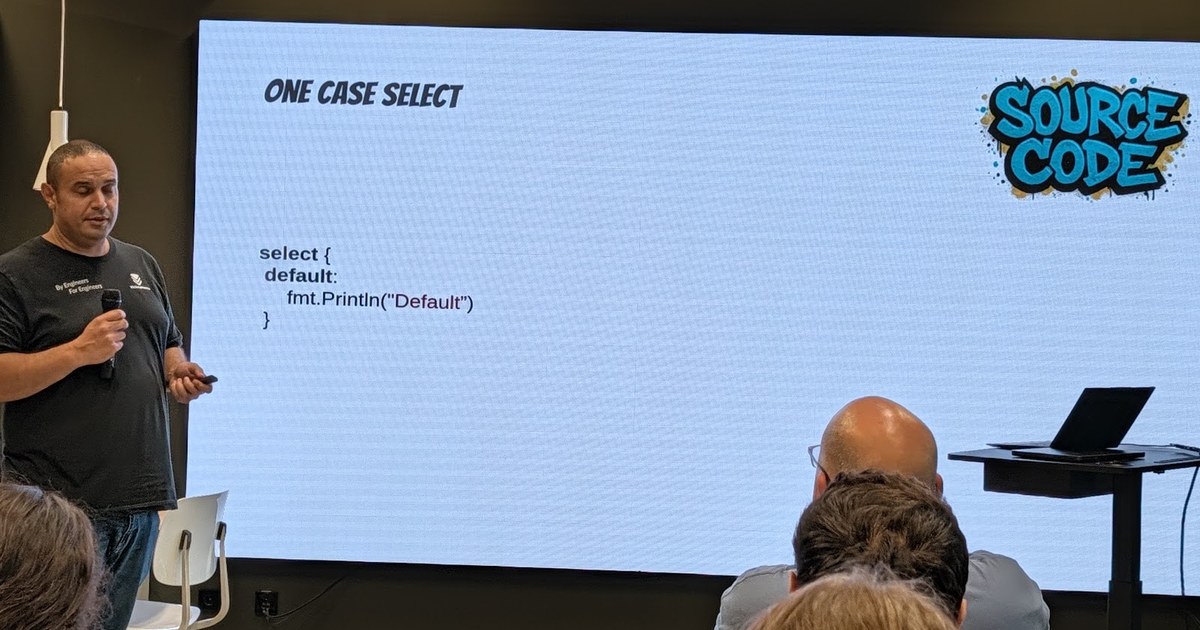
selectandcontext— they are where real-world Go gets interesting (see my notes from the Go Amsterdam meetup select deep dive). - Learn to profile:
pproffor CPU and memory will teach you more about Go than any book (the missing-memory talk is a great motivation).
Takeaway
Go’s strength is not that it is the most expressive language — it is that it is the most boring in the right ways. For cloud infrastructure, APIs, and anything that must run reliably at scale, that boredom is a feature. If you are picking a language to build backend systems in 2026, Go remains one of the safest, most productive bets.