FOSDEM 2026 — Still Buzzing!
Just back from FOSDEM 2026 in Brussels — and the energy was incredible. 8,000+ open source minds, 65 beers, 1,013 talks… and enough hallway track conversations to fuel a year’s worth of ideas.
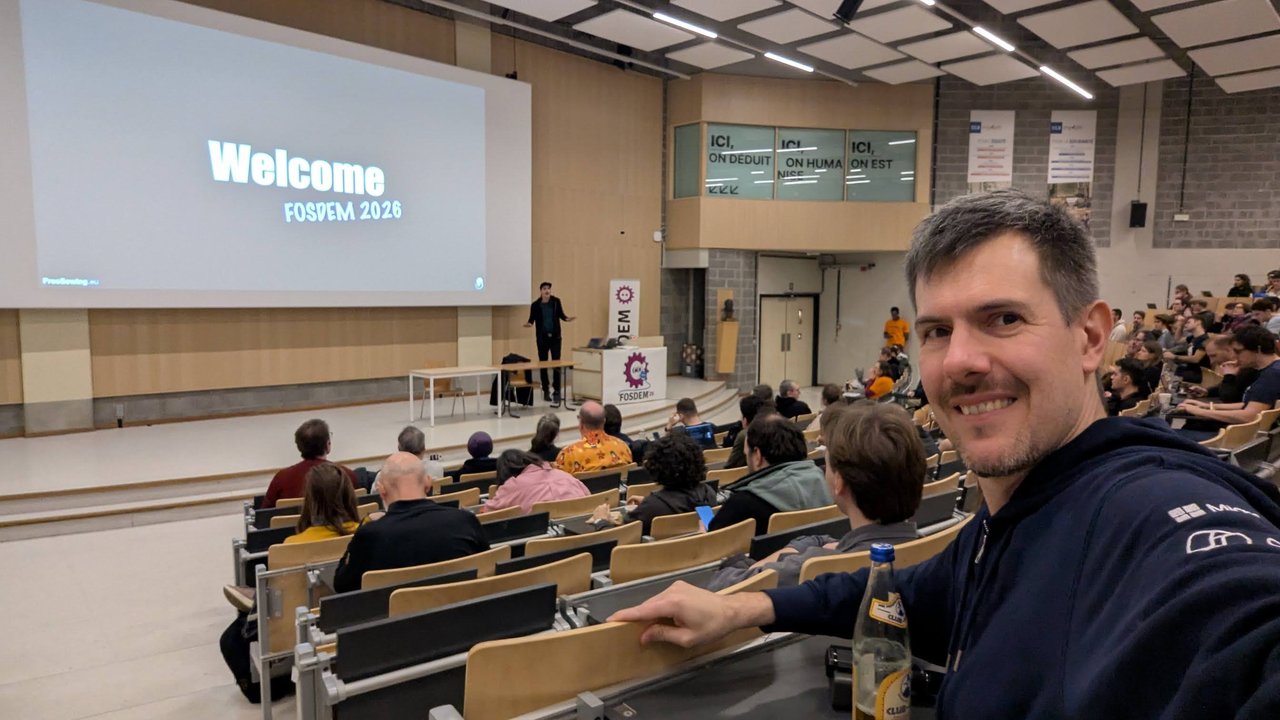
Sunday at FOSDEM 2026, in one of the big auditoriums, waiting for the next talk.
RISC-V & Open Silicon
This year, I had the chance to connect deeply with the teams from DeepComputing and the RISC-V International Foundation, and I must say: the momentum around open silicon and custom compute is real.
Seeing the energy in the RISC-V devroom and chatting about hardware/software co-design reminded me how far open innovation has come — and where it’s going.
Key Takeaways
- RISC-V is getting real traction for AI at the edge
- Hardware is getting more open — and that unlocks a new class of innovation
- Still amazed by how strong and welcoming the open source community is
Enterprise AI & Cloud Native
From Red Hat OpenShift AI to edge GPU orchestration, it was also great to swap stories from the field — especially how we’re applying these architectures at scale for enterprise-grade AI/ML workloads.
Topics that came up again and again:
- Multi-tenant GPU orchestration
- MLOps pipelines at enterprise scale
- Infrastructure as Code for AI workloads
- Kubernetes-native ML serving
Community Connections
Big thanks to everyone who made this weekend not just about code, but about community. Some of the people and organizations I connected with:
- Andrea Urbani, Yuning Liang, Carlo Sacchi, Georg Link, PhD
- Tenstorrent, Grafana Labs, CNCF, Mozilla, Google, Arm
- OpenInfra Foundation, Codethink, Eclipse Foundation, Element
- Percona, SAP, Tanya Dadasheva, Kathy Giori, Gabriele Columbro
If we met, let’s keep the conversation going. If not — see you next year, or sooner in the next devroom!
Saturday Evening: Robots on the Dinner Table
The best demo of Saturday didn’t happen in a devroom. Over dinner that evening, fellow attendees at our table unpacked small cube robots. The box read CoCube, “Tabletop AI Robot for Education”, and the robots were programmed in MicroBlocks, a Scratch-inspired blocks language for physical computing.
The first demo, explained in Italian, was football. Each robot always knows its exact X and Y coordinates on the printed pitch, and its direction is a vector. So the program just tells it where the goal is, points it at those coordinates and shoots. “I’ll score every time”, as the presenter put it. Next step: two robots playing each other, each programmed from its own laptop.
The second demo turned a printed piano mat into an instrument. In the presenter’s explanation, the robot has a small infrared camera that reads a pattern of tiny dots printed across the mat, so every key works like a code. The camera ignores colour, so you can print your own football pitch, maze or race track and colour it however you like, as long as the dots are there. They printed theirs on an ordinary printer at 1200 DPI. In MicroBlocks, tapping an instrument toggles it in or out of the tune: snare drum, hi-hat, bass, trumpet. Add-on modules click onto the cube, such as a distance sensor and a MIDI module, plus one that simply exposes the wires so you can attach your own sensors or actuators over I²C. According to the presenter, the robot was developed by a PhD student in China, and more modules are on the way.
The presenter, an electrical engineer by training, compared it with programming seven-segment displays in assembly back in the day: here you just give the block the number and it shows up. FOSDEM Junior even had a hands-on workshop on programming these tabletop football robots with MicroBlocks in 2025.
My take: this is what good teaching hardware looks like. Positioning, sensors and buses are abstracted just enough that a beginner gets a goal or a drum beat in minutes, while the I²C escape hatch keeps the real electronics within reach.
FOSDEM 2026 in Photos
Here are a few more photos from the weekend: the campus, the stands and the rooms. For the talks themselves, rebuilt from the slides I photographed, see FOSDEM 2026: The Devroom Talks I Saw.
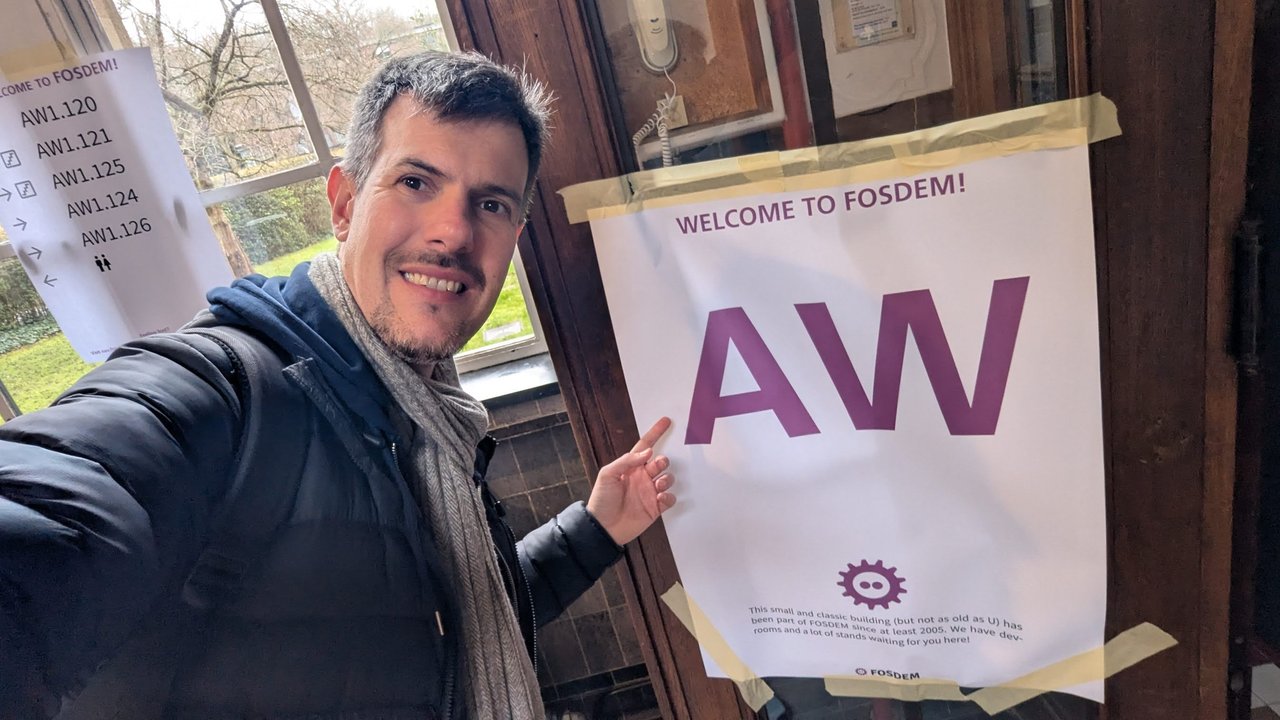
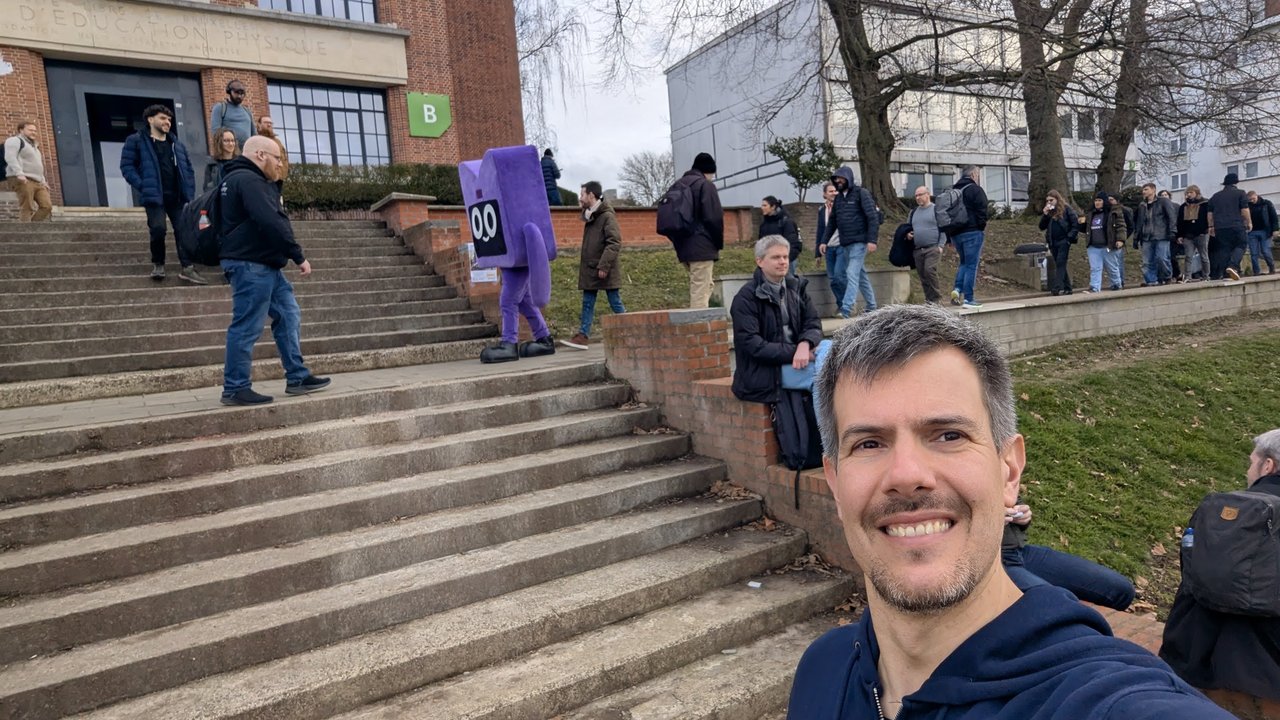
Saturday morning at the AW building, and the steps outside building B on Sunday.
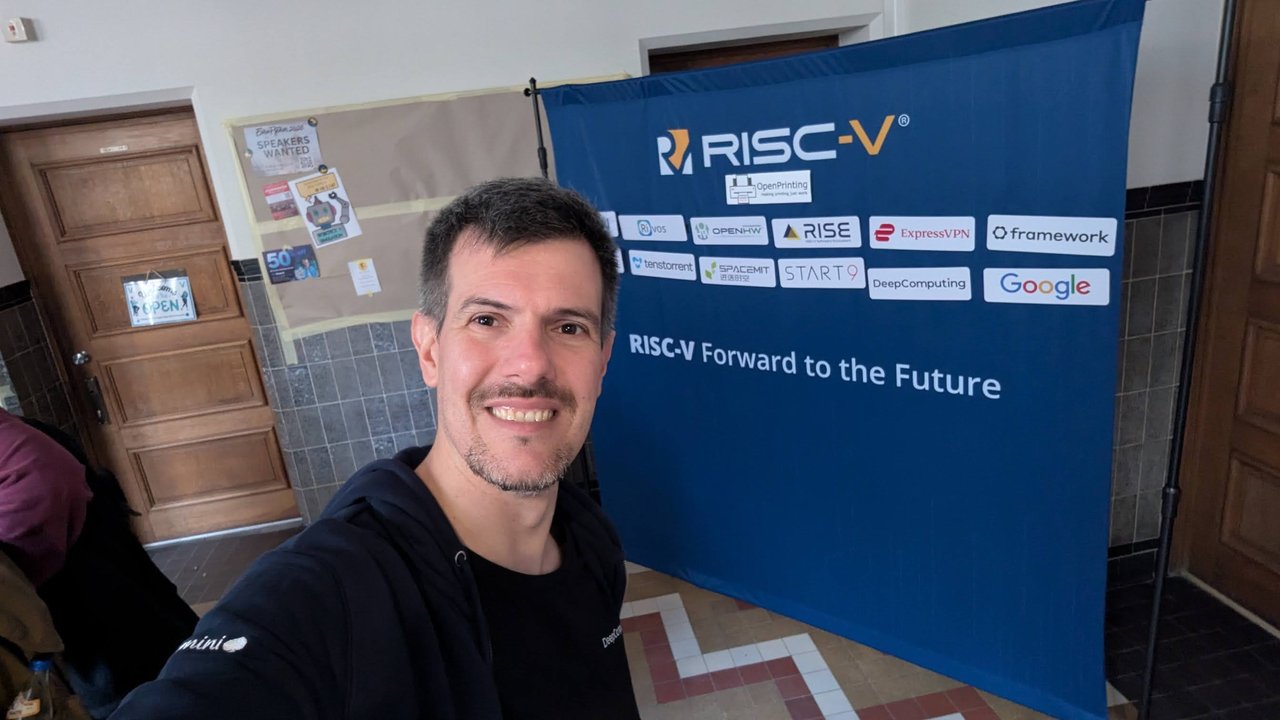
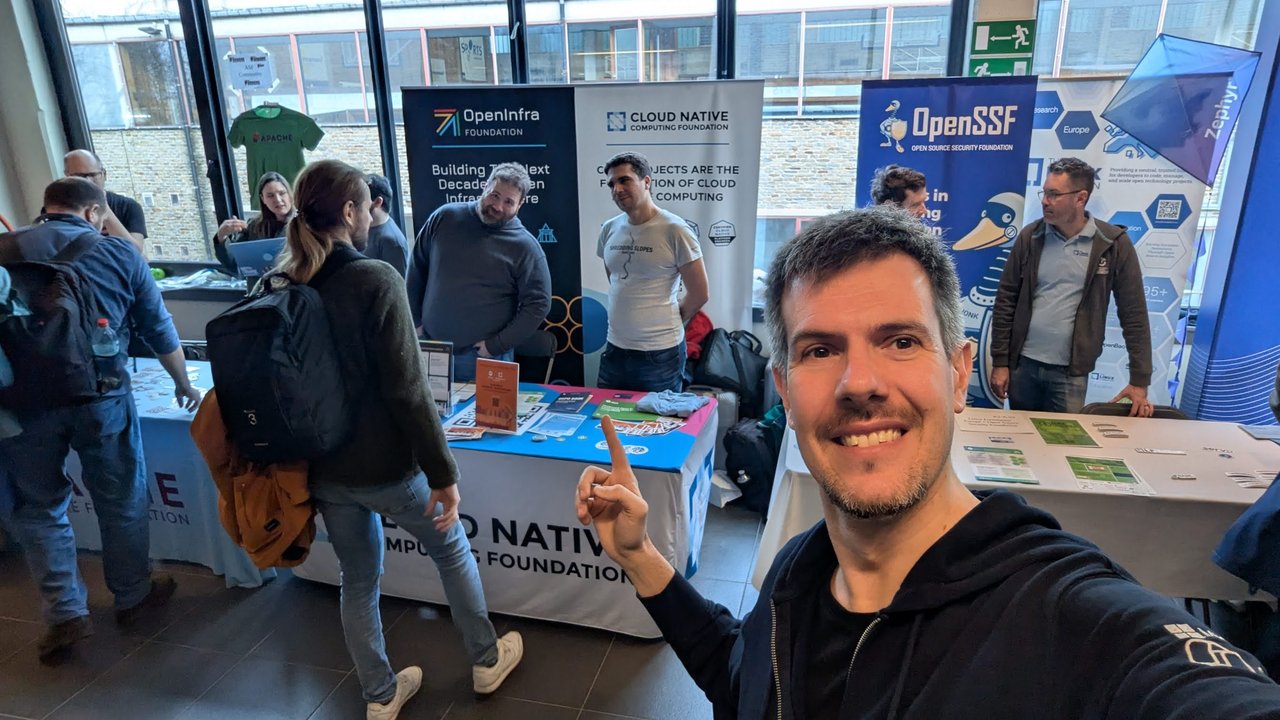
The stands: the RISC-V “Forward to the Future” banner, then OpenInfra, CNCF and OpenSSF side by side.
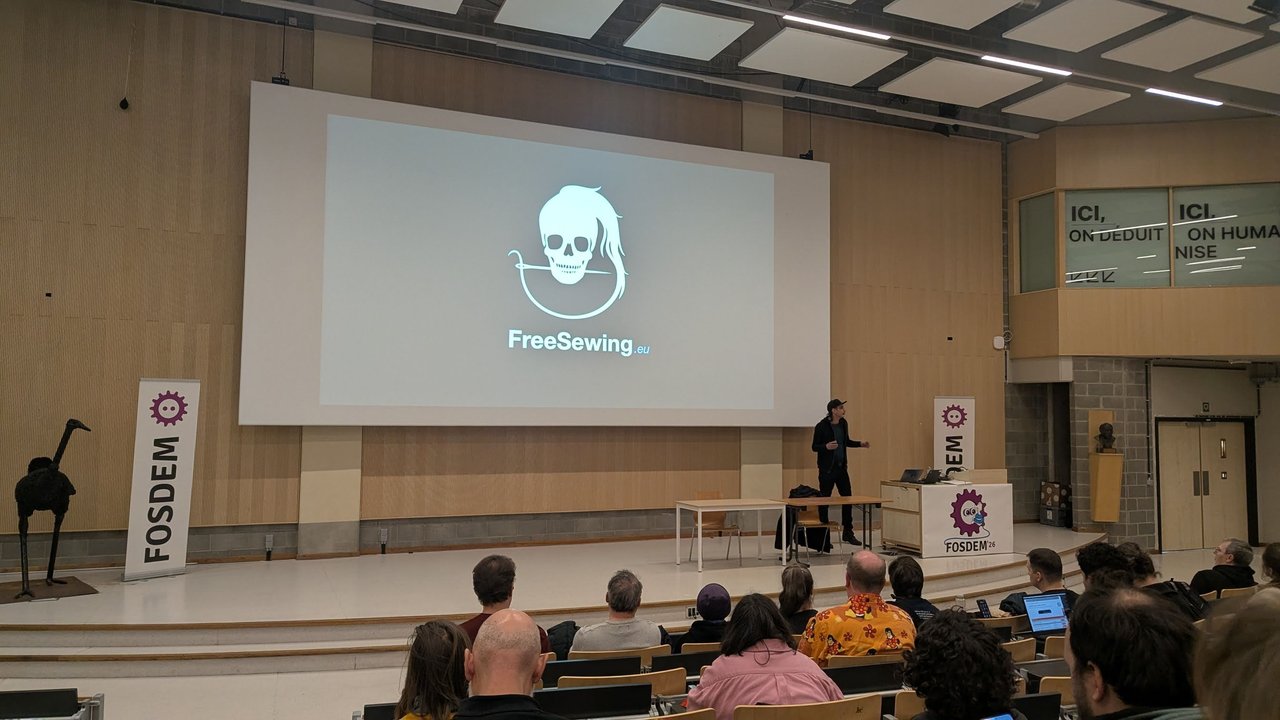
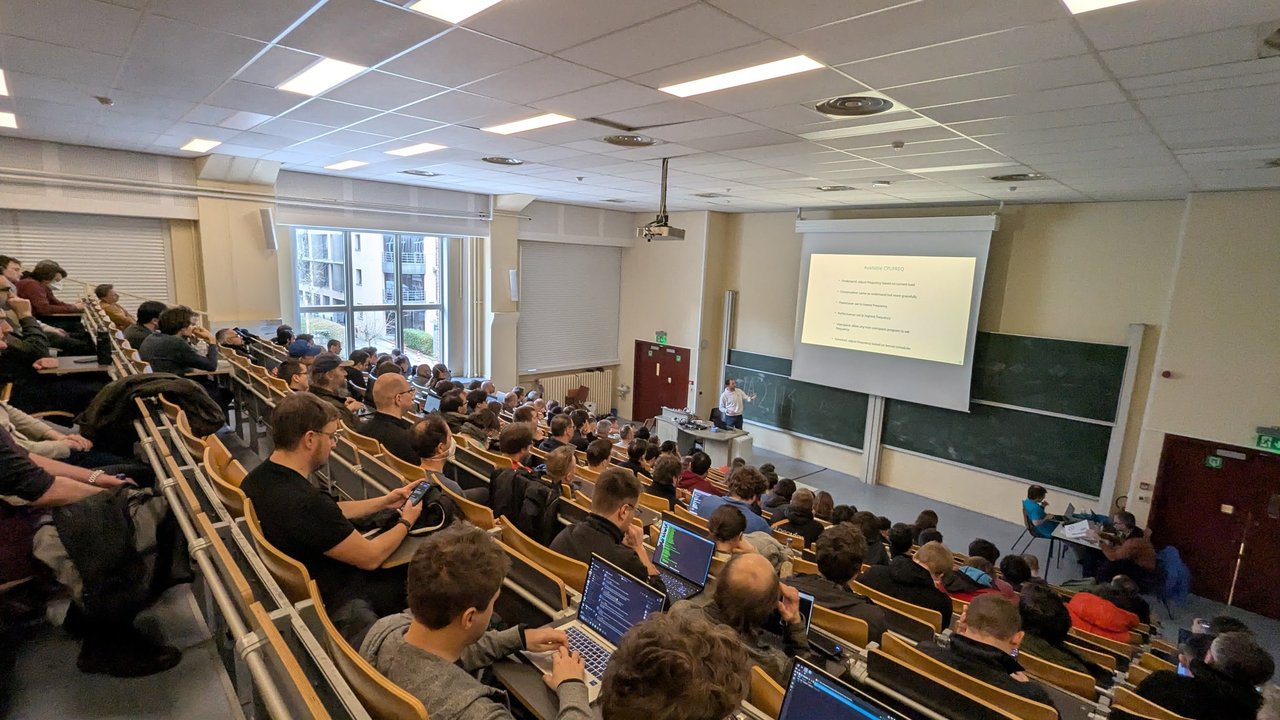
Sunday’s FreeSewing talk in the big auditorium, and a full UA2.114 in the afternoon.
FOSDEM 2026 at a Glance
| Detail | Info |
|---|---|
| Event | FOSDEM 2026 |
| Date | January 31 – February 1, 2026 |
| Location | Université libre de Bruxelles, Brussels 🇧🇪 |
| Attendees | 8,000+ |
| Talks | 1,013 |
| Website | fosdem.org/2026 |
Topics Covered
#FOSDEM2026 #OpenSource #RISC_V #DeepComputing #Ansible #Kubernetes #OpenShiftAI #EdgeAI #InfraAsCode #FOSS #MLOps #CloudNative #CNCF
Related
- FOSDEM 2026: The Devroom Talks I Saw
- People of FOSDEM 2026: Hallway Interviews
- FOSDEM 2025 Interviews
- KubeCon Europe 2026
- All Conferences
Visit FOSDEM 2026