Most-Watched Interviews from FOSDEM 2025
From RISC-V and NetBSD to digital accessibility and open printing — Luca Berton brought the most compelling open-source voices into one-on-one interviews. Here’s the ranking by views from the FOSDEM 2025 playlist.
#1 — The Future of RISC-V & Open Computing
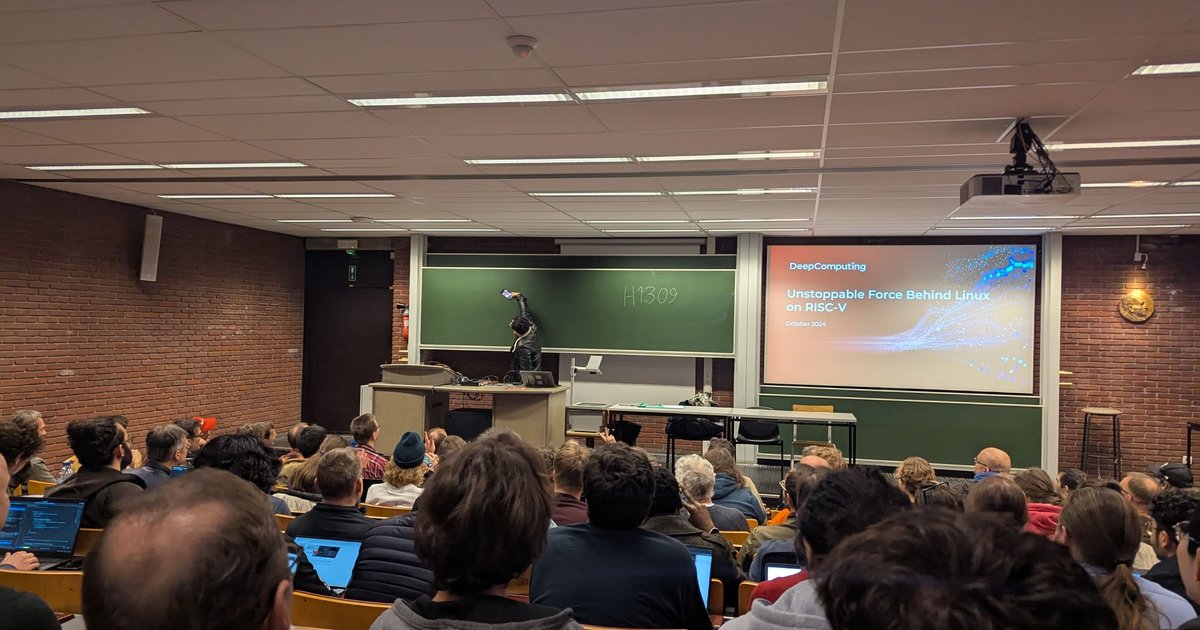
RISC-V had a full room on Saturday morning too. In H.1309, DeepComputing introduced itself as a “RISC-V Premium Product Pioneer” and showed its partnerships.
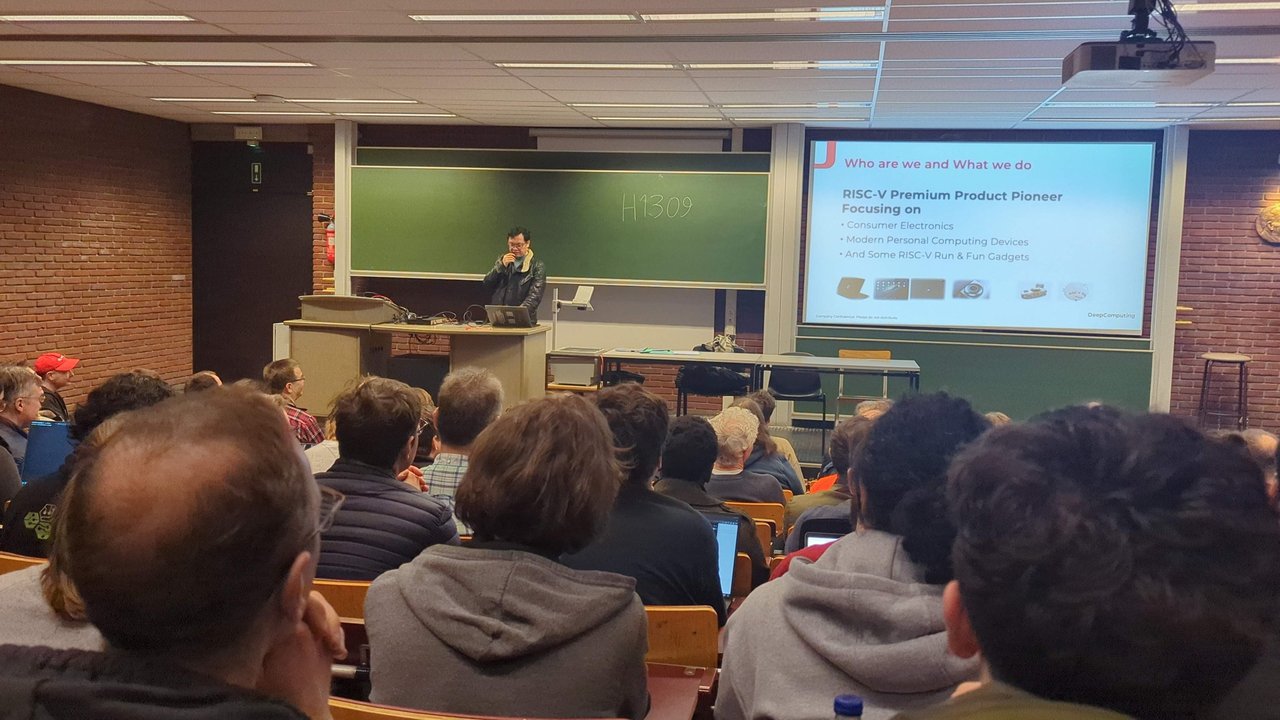
“RISC-V Premium Product Pioneer”: consumer electronics, modern personal computing devices, and some RISC-V run-and-fun gadgets.
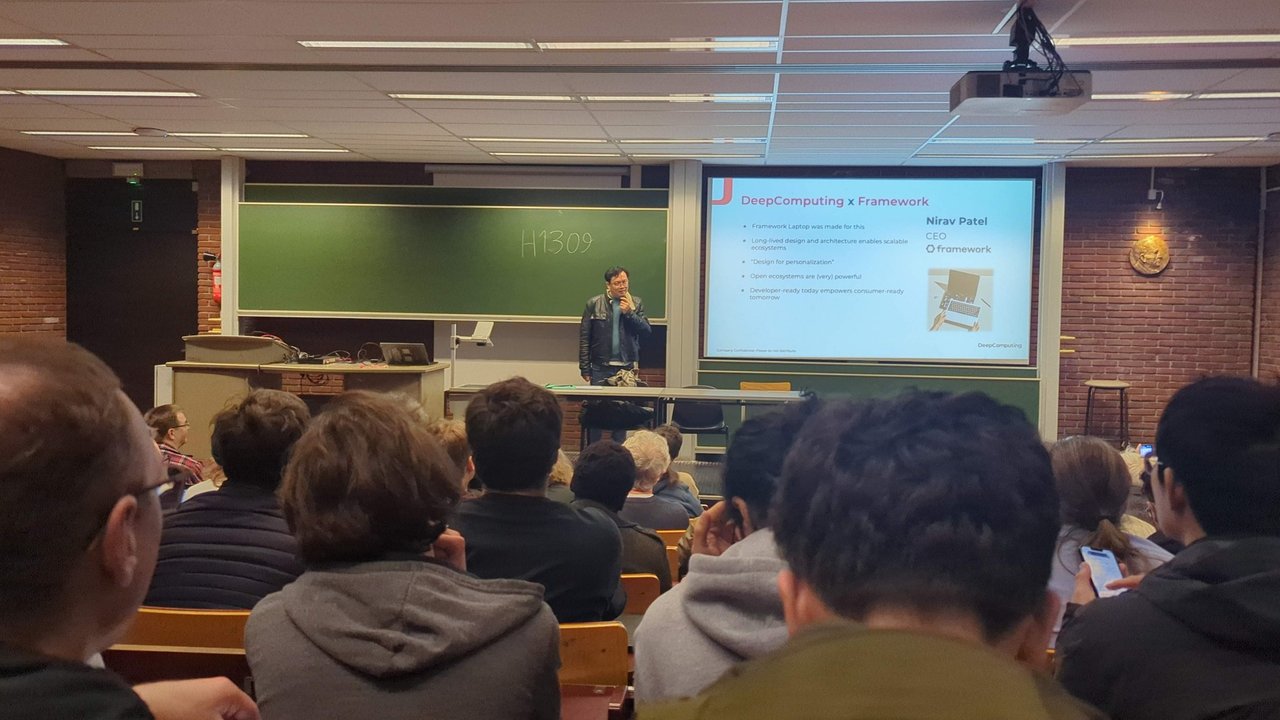
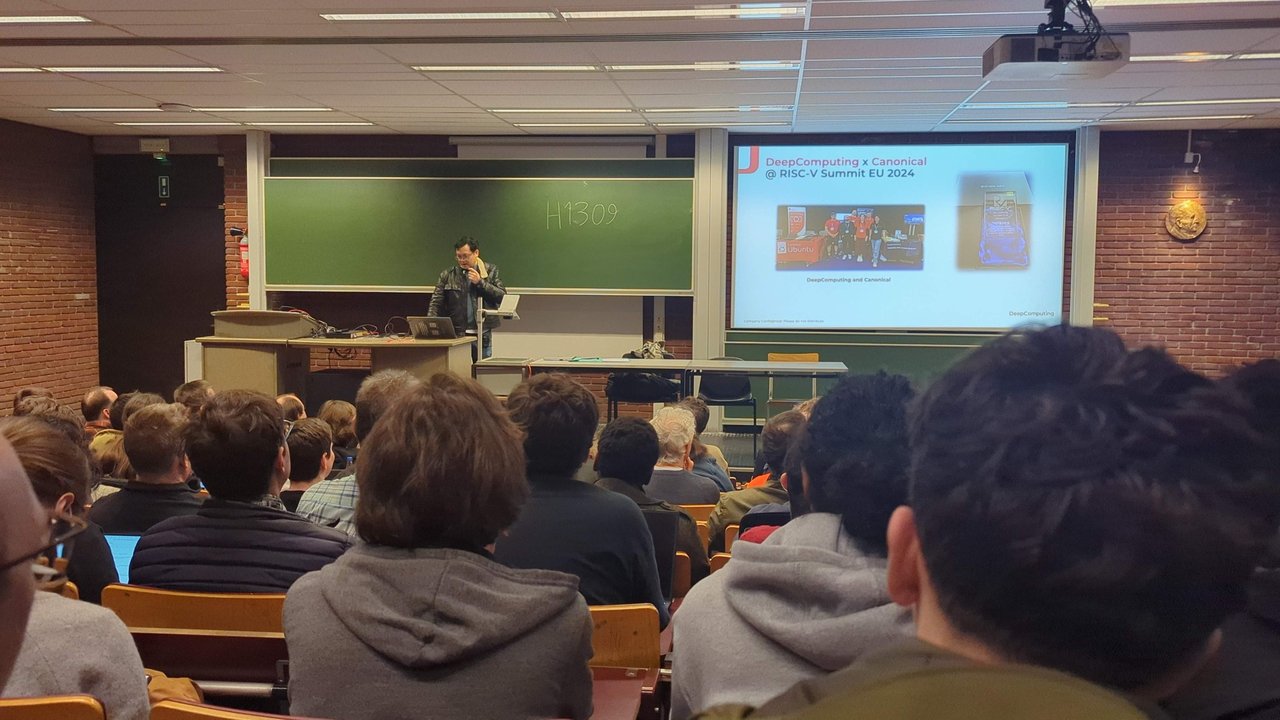
DeepComputing x Framework and DeepComputing x Canonical: the partner slides from the same talk.
#2 — Open Source Security & CHAOSS Community Health
#3 — The Future of Open Printing & CUPS 3.0
#4 — Nostr: Decentralized Social Media & P2P Markets
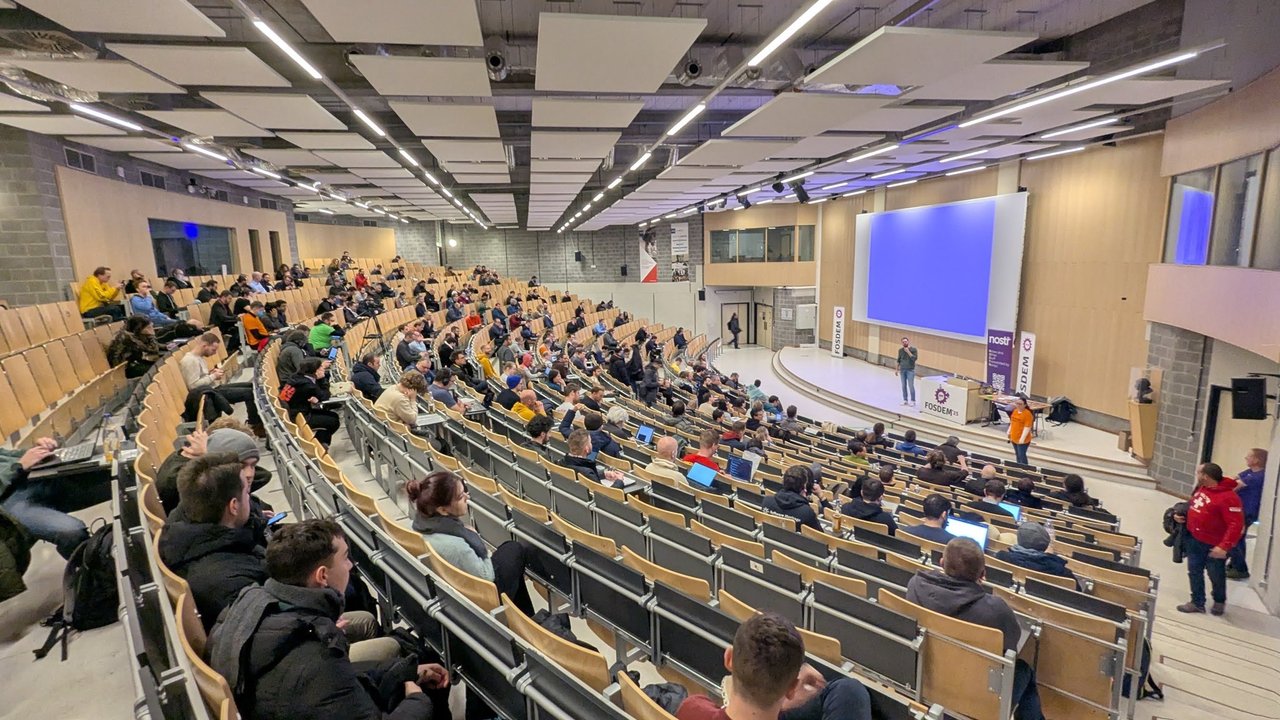
Sunday afternoon in one of the large auditoriums, with a Nostr banner next to the stage.
#5 — The Future of Drupal, AI & Sustainable Web
#6 — The Future of Open Source & IoT (Eclipse Foundation)
On the Ground at FOSDEM 2025
Between interviews I also caught some talks. Room H.1309 hosted the RISC-V sessions, the same topic as the #1 interview above. I wrote up the devroom talks I photographed in FOSDEM 2025: the devroom talks I saw.
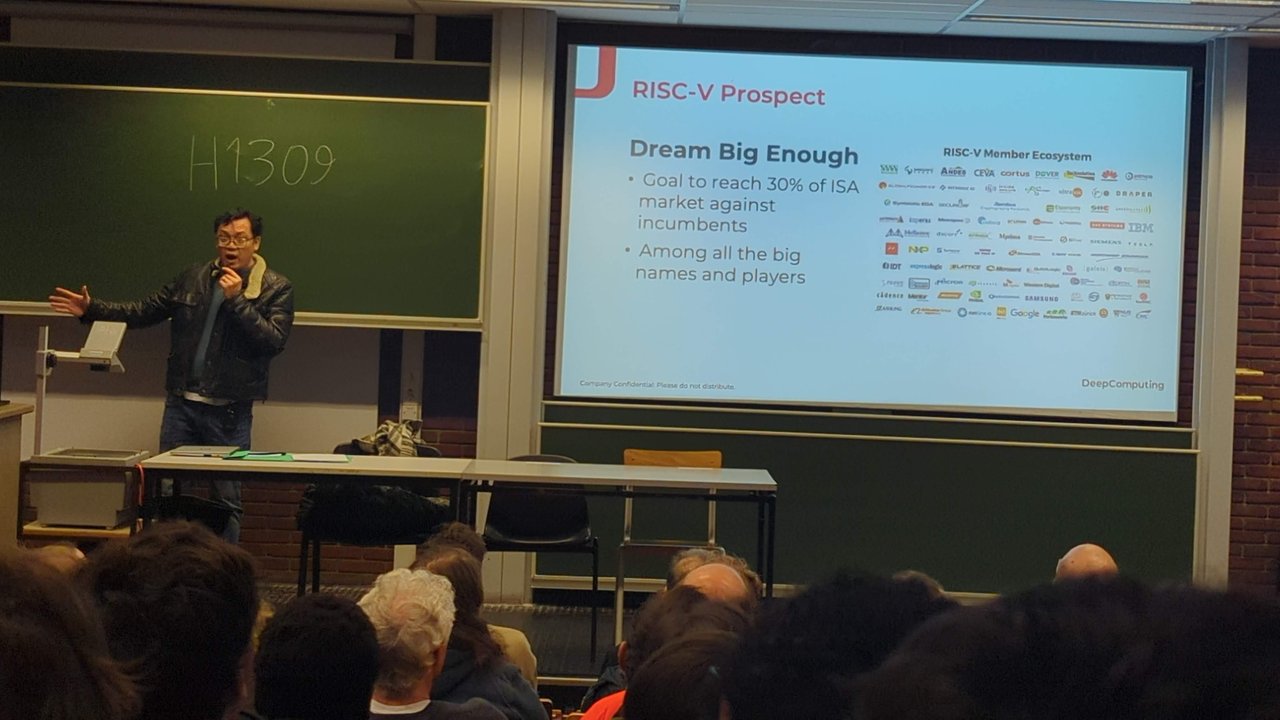
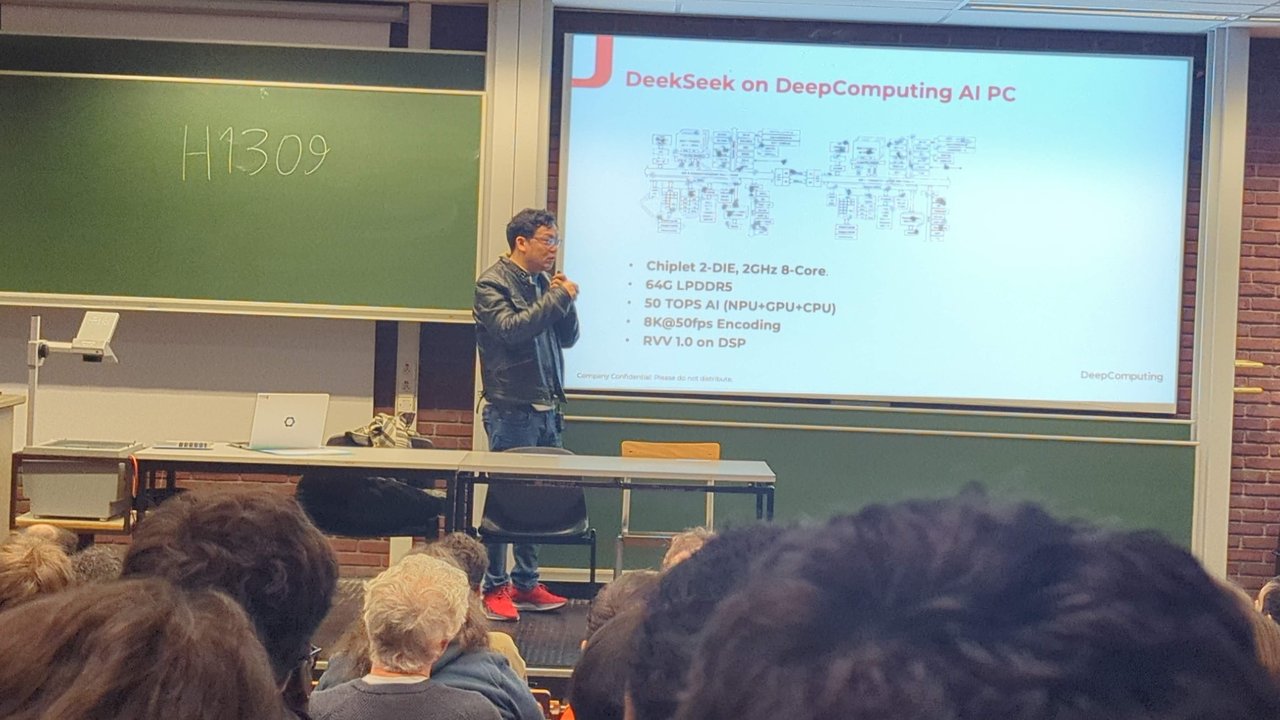
DeepComputing in room H.1309: the RISC-V market opportunity, and running DeepSeek on a RISC-V AI PC.
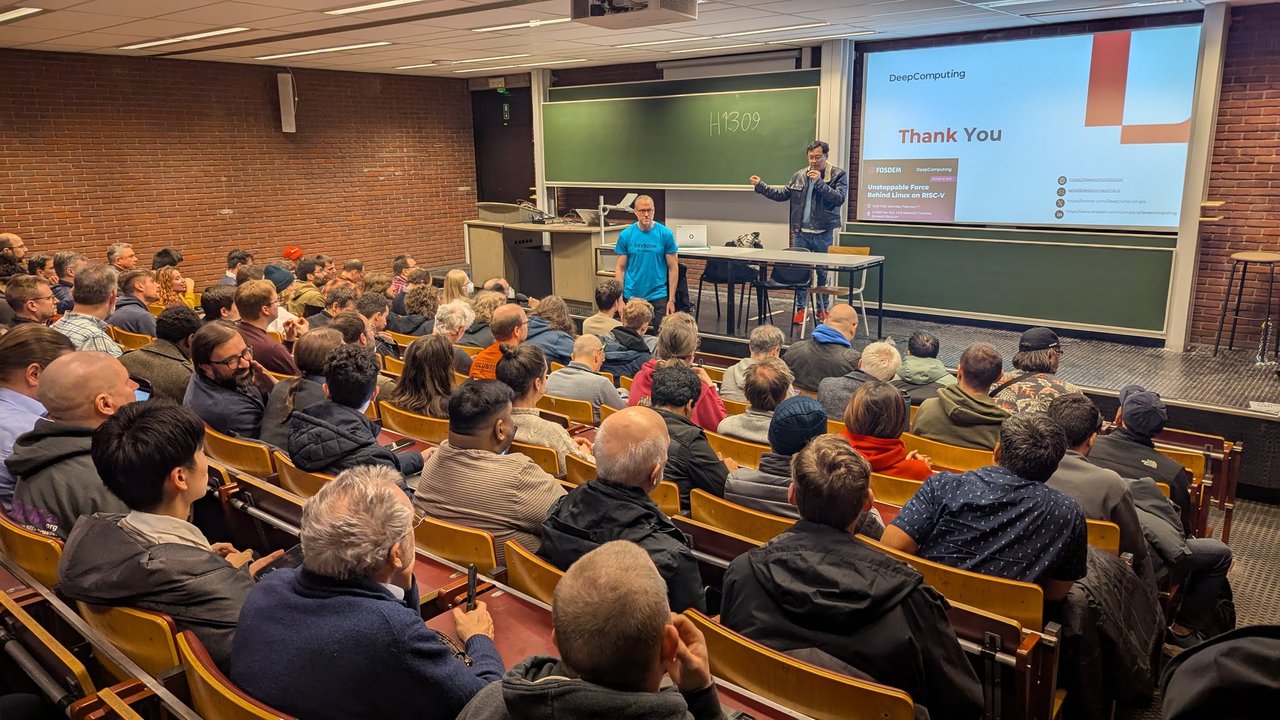
A full room at the end of a talk.
On Saturday afternoon I also sat in on a Podcasting 2.0 talk, which is in the same devroom write-up.
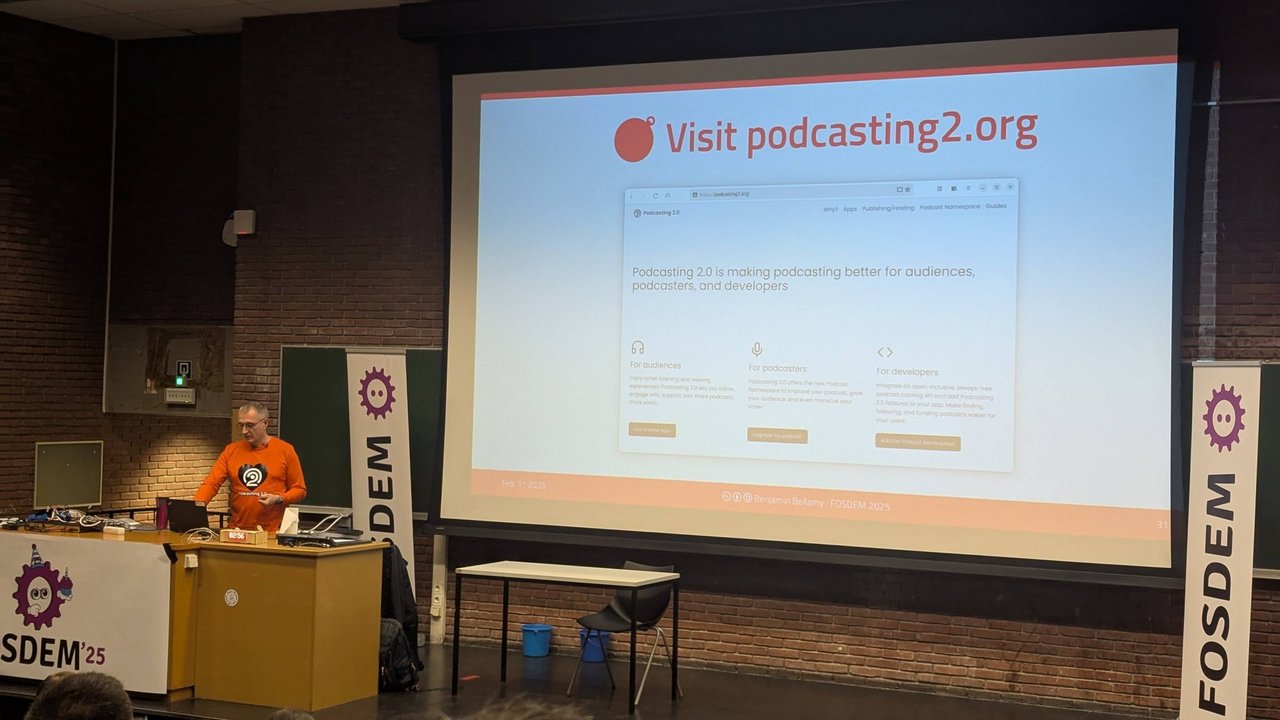
“Visit podcasting2.org”: the closing pitch of the Podcasting 2.0 talk.
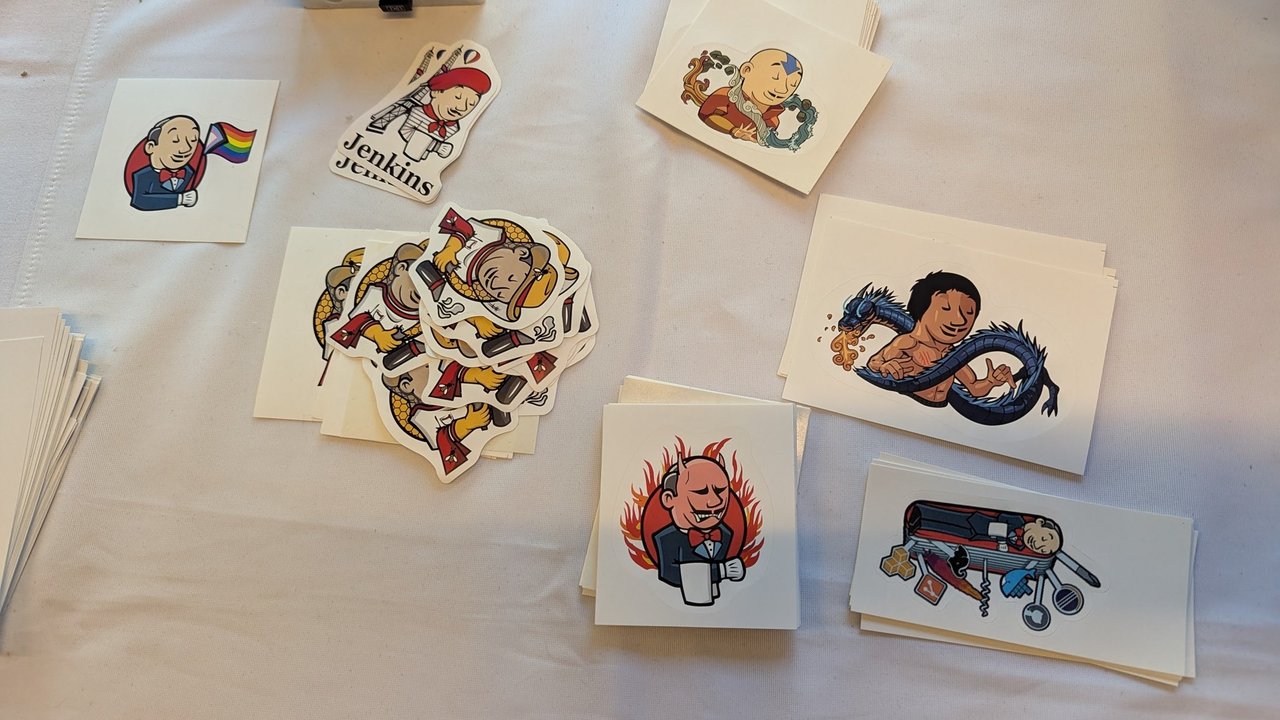
Stand tables meant stickers: a Jenkins spread on Sunday.
More conversations from the floor
Not every conversation made the ranked list. Here are three more I recorded between the devrooms and the stands.
Peter (CODE University of Applied Sciences): satellite data for Tempelhofer Feld
On Saturday afternoon I met Peter, a student at CODE University of Applied Sciences in Berlin. Last semester his group built an open-source project that combines satellite data with weather data to observe the microclimate of Tempelhofer Feld, the former airport in the middle of Berlin. The website that displays the data is built with Vue, and the back end is written in Python. Weather data comes from Open-Meteo and satellite data currently comes from Google Earth Engine. Peter explained that the team caches much of the data themselves and kept the data sources separate enough that they can switch to another satellite provider if they find a suitable one.
The goal was to see what vegetation indices can tell you about plant health in a defined area: how green the grass on the field is through the year. Their finding, as Peter put it, is that Berlin winters are probably getting milder, so the field stays greener for more of the year, even though the summers are drier.
Christoph (NetBSD): portability and build.sh
On Sunday morning of FOSDEM’s 25th edition I spotted Christoph by his NetBSD shirt. He has been a NetBSD developer since the early 1990s. He described NetBSD as an operating system and a full distribution, very portable, with a strong emphasis on security and on keeping things simple. His example was how easy it is to build: check out the source tree and run one script, build.sh, which cross-compiles the whole system and produces bootable media. According to Christoph, the result runs on everything from the smallest computers to large ones.
When I asked what was new this year, he said the project had done so much that he hadn’t kept track, and reminded me it was Sunday morning after a day of networking events.
My take: build.sh is the pattern I want from platform tooling. One entry point builds its own toolchain and gives you the same result whether you target your own machine or a different architecture.
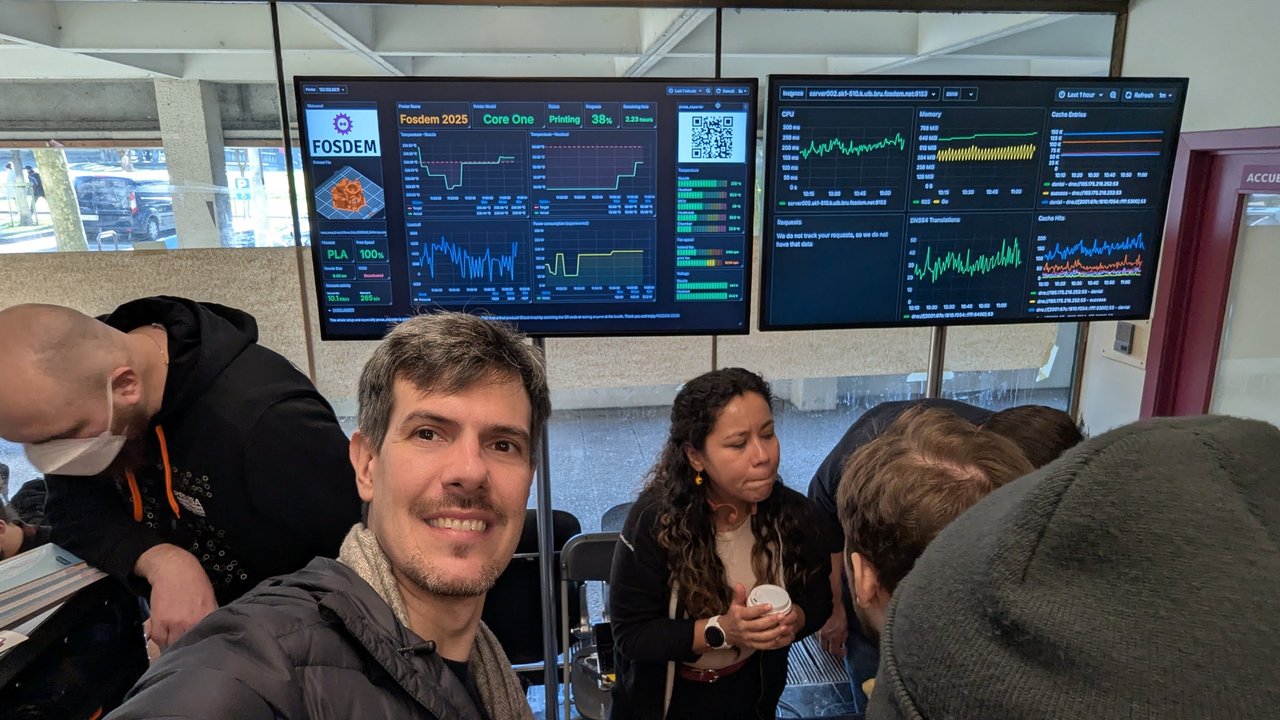
The same Sunday morning, about 15 minutes before I met Christoph: a live printer dashboard with a Prusa Core One printing a FOSDEM 2025 job.
Raine Mäkeläinen (Jolla): Sailfish OS 5.0, the Jolla C2 and the Jolla Mind2
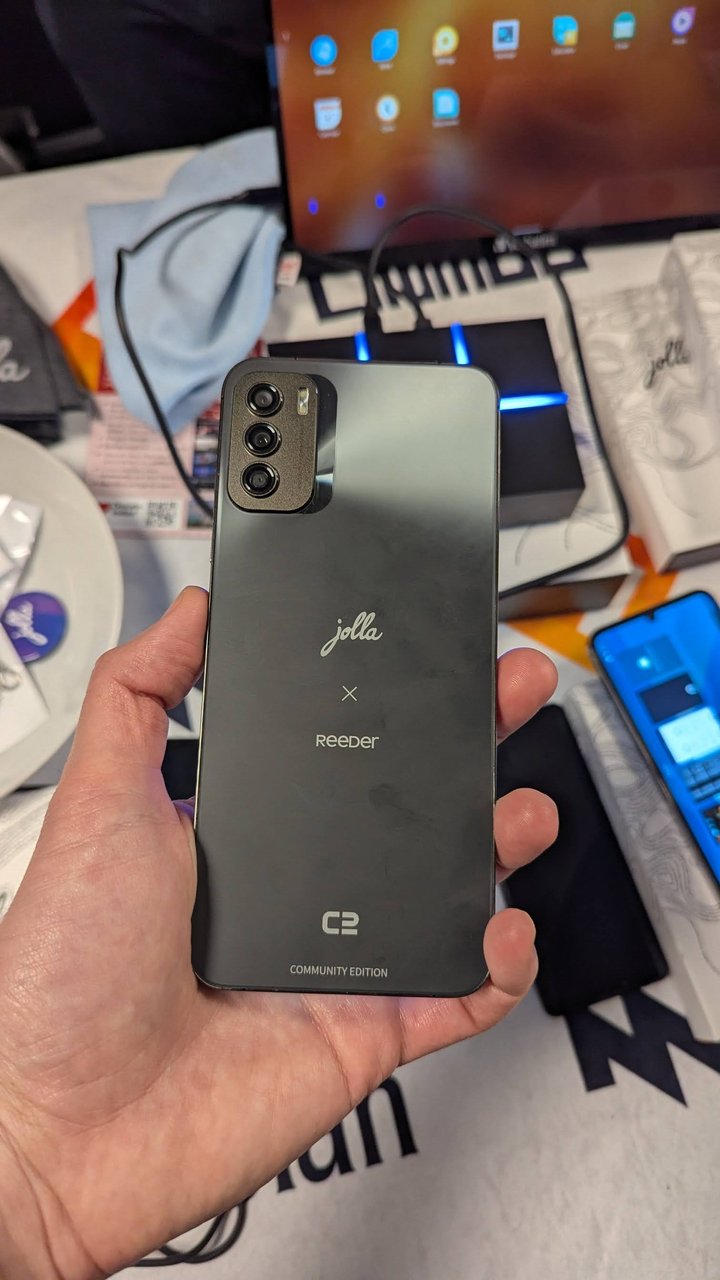
The Jolla C2 Community Edition at the Linux on Mobile stand.
On Sunday afternoon I visited the Linux on Mobile stand, where Raine Mäkeläinen, Chief Engineer at Jolla, showed me the Jolla C2 Community Phone. It runs Sailfish OS 5.0, and Raine said Jolla had released 5.0 for all Sailfish-supported devices, including several Sony Xperia models, on the Thursday of that week. According to Raine, the release also improved microG support. With Sailfish’s Android app support plus microG, many Android apps work, including banking and mobile payment apps. Some still don’t: Netflix, with its DRM, is a hard one to crack. Sailfish is open source, but the Android app support is a different matter.
When I asked about the shiny box on the table, he introduced the Jolla Mind2, “your personal AI computer”: a box that runs AI models locally, with no cloud, as an assistant for your email and for documents you upload and can then query.
My take: Mind2 applies on a small scale what I recommend to enterprises: keep the data where it lives and bring the model to it.
More on Jolla’s products at jolla.com.
Full Playlist
Why These Interviews Matter
Each interview dives into real-world innovation:
- Open-source hardware architecture and community resilience
- New frontiers in printing, privacy, decentralized systems
- Leading voices from Eclipse, CHAOSS, OpenPrinting, and more
Whether you’re into systems, platforms, or policies — these interviews deliver insights you won’t want to miss.