Arriving at the Park of Sculpture
The Parco della Scultura in Architettura in San Donà di Piave, Italy is not your typical conference venue. Instead of hotel ballrooms and convention centers, End Summer Camp 22 transforms this architectural sculpture park into a living laboratory for hacking, free software, and DIY culture.
This year marks my first End Summer Camp, and the week (September 1–6, 2026) was a crash course in what happens when 500+ hackers, makers, developers, and tinkerers take over a space for seven days with no corporate sponsors and no keynote stages — just organic collaboration.
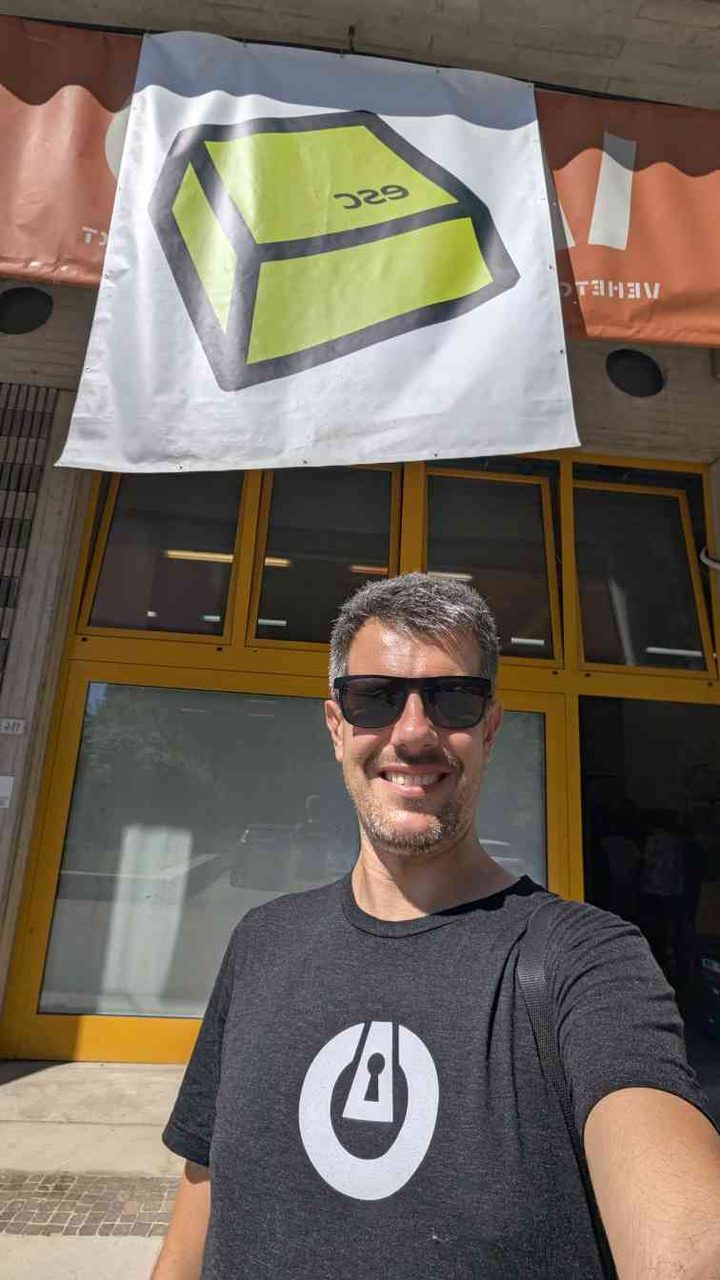
The venue itself is a work of art — industrial yellow window frames, concrete and brick walls, and banners announcing the event in both English and Italian. The “esc” cube on the orange and white banners is everywhere, a reminder that this is a place where keyboard culture meets physical space.
The Selfie That Captures Everything
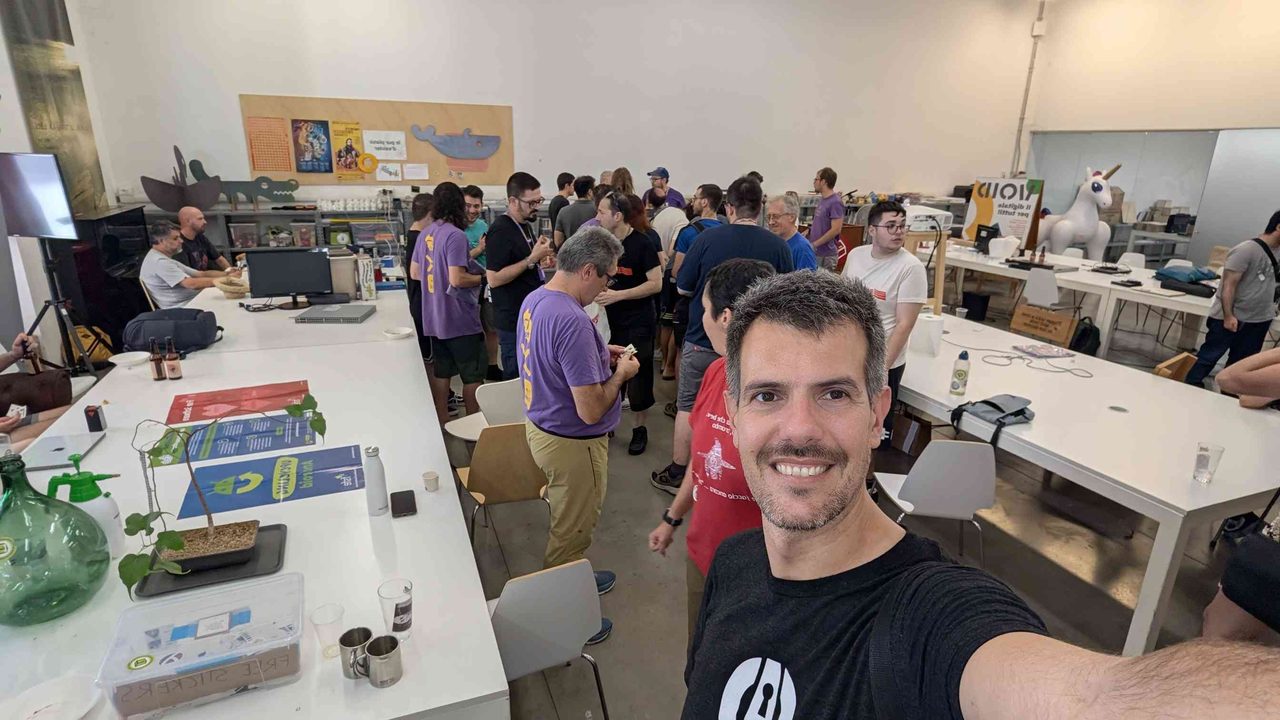
Walking the floor on Friday afternoon, I captured a moment that says everything about the ESC spirit: hands raised in the air, the crowd in matching purple t-shirts, the mix of serious hardware on the tables and pure joy in the room.
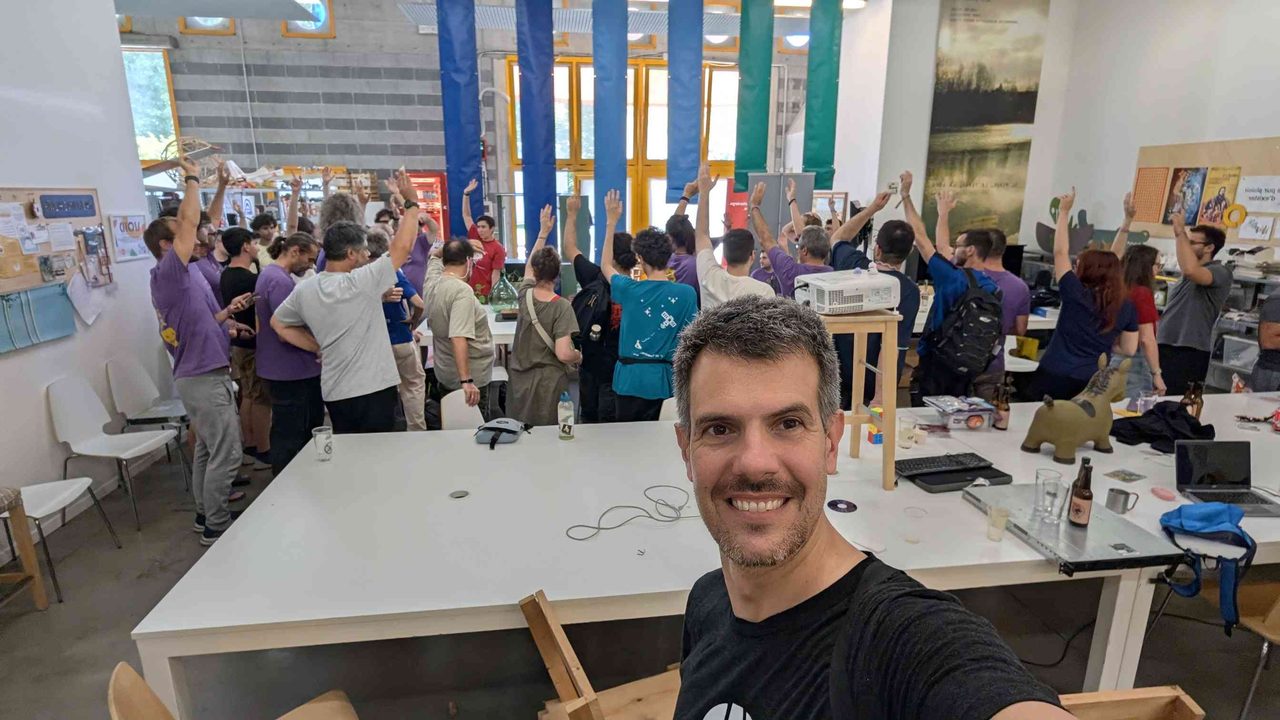
This wasn’t a passive audience. The “VOID” sign on the cork board, the bulletin boards covered in flyers, the inflatable unicorn head, the wooden crocodile cutout on the shelf — everything was built by participants, for participants.
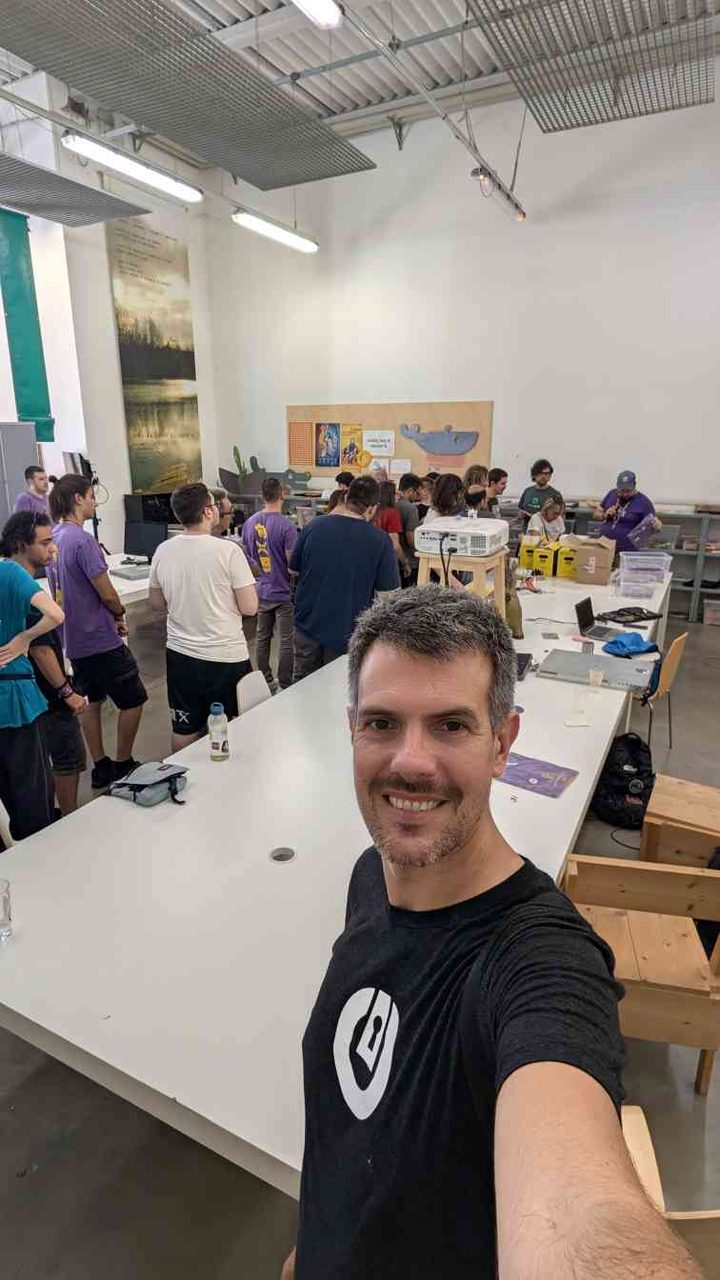
The Schedule: From FPGA to Kubernetes
The pretalx schedule reads like the blueprint of a hacker’s brain — deeply technical, wildly diverse, and entirely participant-driven. Here are some of the sessions that caught my attention:
Hardware & Electronics:
- Intro to FPGA open source by ZioFrenk — a hands-on lab covering everything from chopper speed controllers to FreeCAD mechanical simulations
- Pimp My Ride part 3 by MG95Tux — electronics for vehicles, the DIY way
- DIY LoRa Mesh Antenna — because why buy when you can build?
Networking & Infrastructure:
- Automate the network before the network automates your burnout by Francesco Masala — networking and SDR
- Hex, Blocks & Broken Locks: Reverse Engineering MIFARE Classic 1K by Hexan — hardware hacking meets security
AI & Software:
- Designer & GenAI by Elena Cavallin
- Small Language Model - small can be better by Marco “gioppino” Gaion
- OmbraChat - a Telegram client with PGP layer by zonia3000
My Lightning Talk: FLOSS in Nuclear Physics
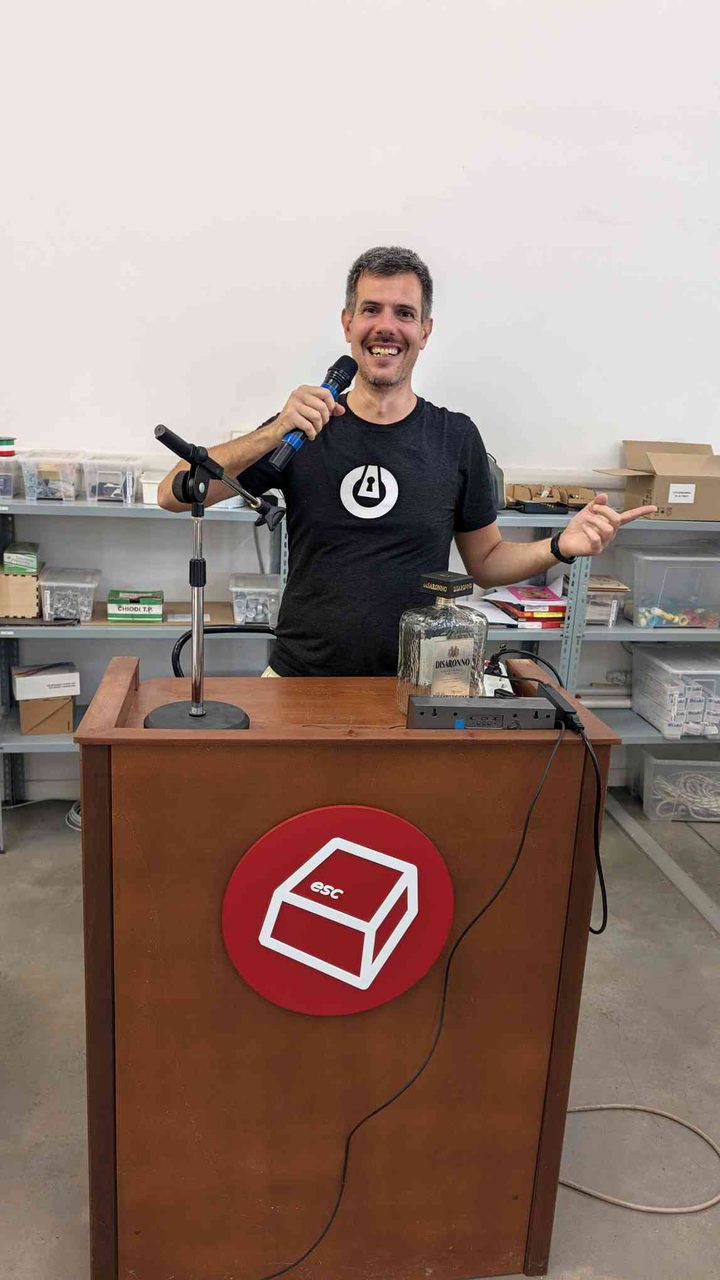
On Friday, September 4 at 4:15 PM, I gave a lightning talk — “Come lavorare in fisica nucleare usando sw FLOSS” (How to work in nuclear physics using FLOSS) in the Main Hall (CrunchLab).
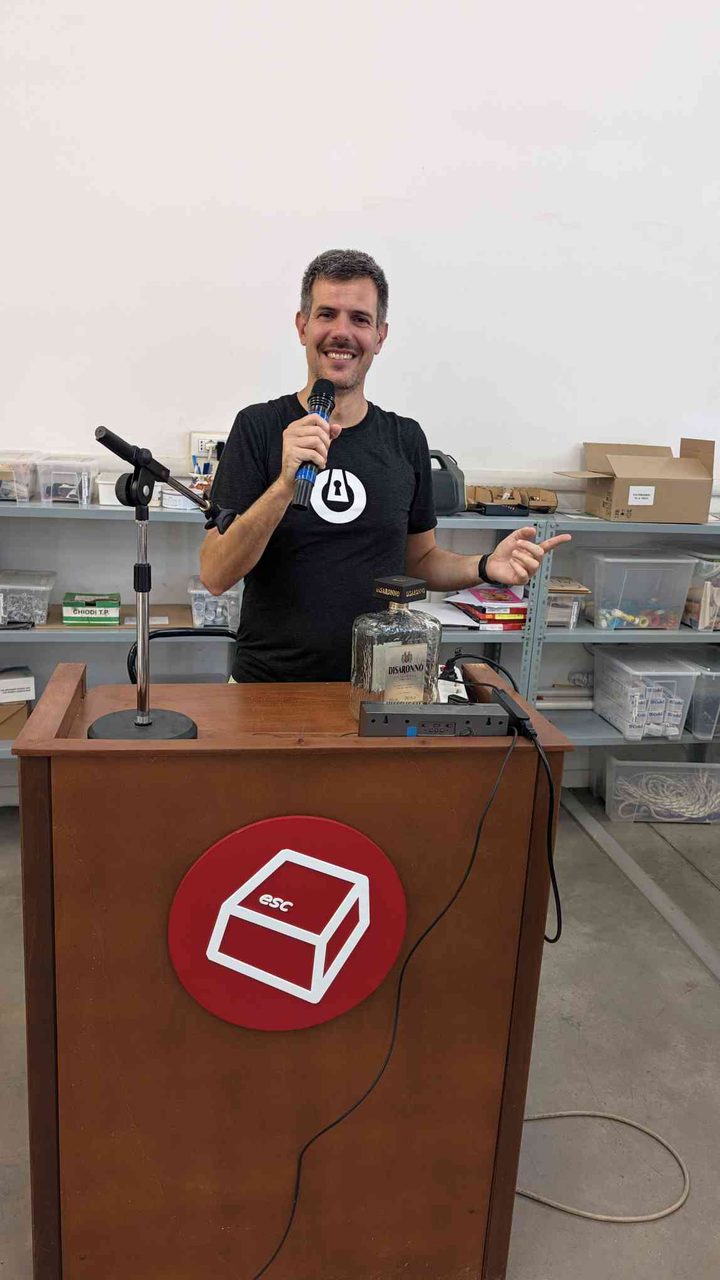
My talk traced the software tools I’ve used throughout my career in nuclear physics (since ~2009), organized around two physical systems I’ve worked on recently:
- Atomic Beam Source — from chopper speed controllers programmed with PIC microcontrollers (fully open chain since ~2008) to FreeCAD/CAM simulations, RRDTool live graphs, and QElectrotech for vacuum system schematics
- RICH prototype for the Electron Ion Collider (BNL) — using FreeCAD as a GEANT replacement, FPGA-based remote triggers, revitalizing old Motif software with qcad/kvm, LabPlot for data analysis, Raspberry Pi pairs for data acquisition at Jefferson Lab
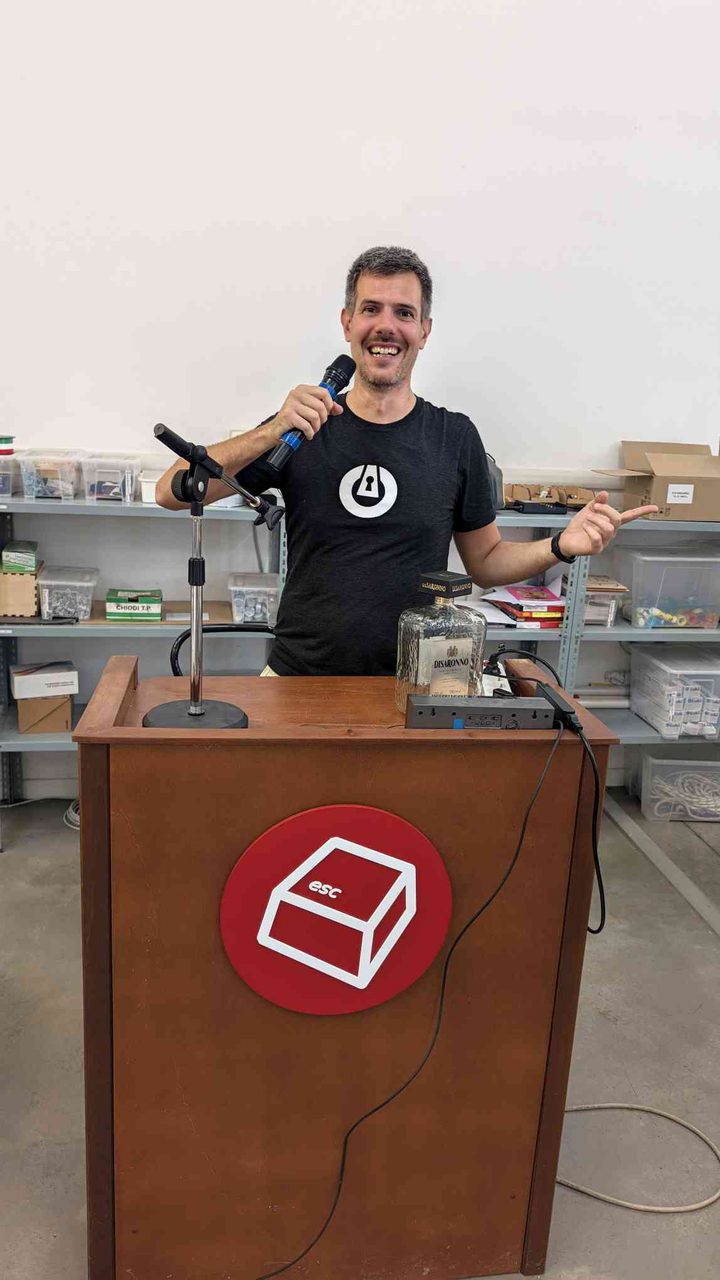
The recurring theme: every piece of software I touched was free/open source. No proprietary licenses, no vendor lock-in, no budget approvals — just the freedom to understand, modify, and extend every tool. When you’re working with million-dollar particle detectors, that freedom isn’t just ideological — it’s practical engineering.
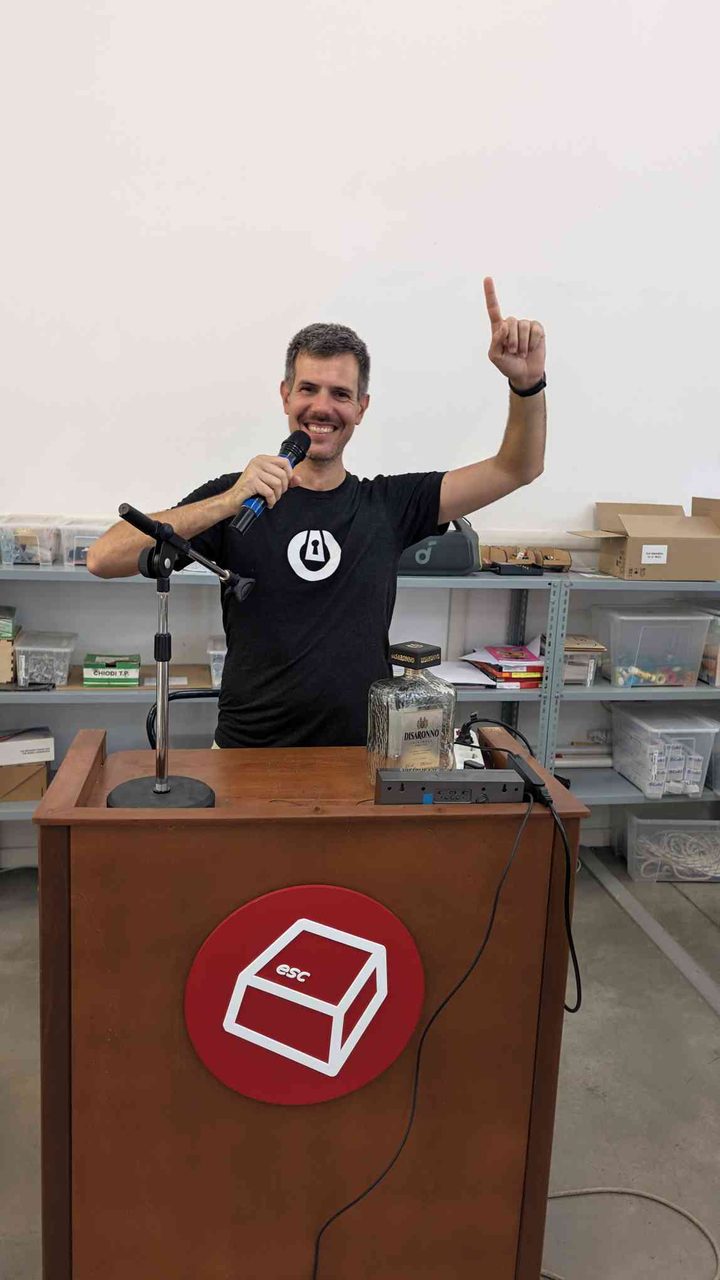
The Audio Setup: Making Sound
One of the most striking things about ESC is how it becomes a city — with its own sound system, lighting, and infrastructure, all built by participants.
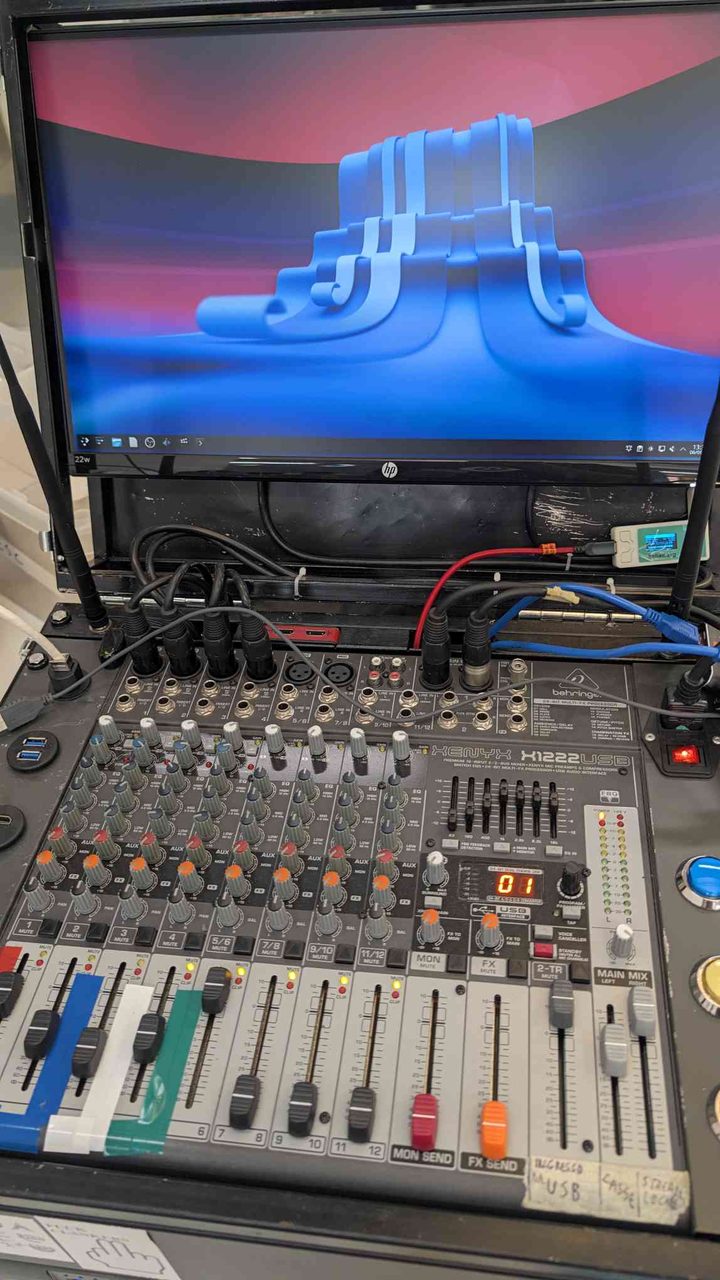
The audio setup — a Behringer Xenyx X1222USB in a road case with an HP monitor perched on top — is held together with colored tape on the faders, a USB Wi-Fi adapter, and the kind of cable management that only works because the person who wired it knows every path by heart. This is the anti-corporate-AV aesthetic: functional, chaotic, and deeply personal.
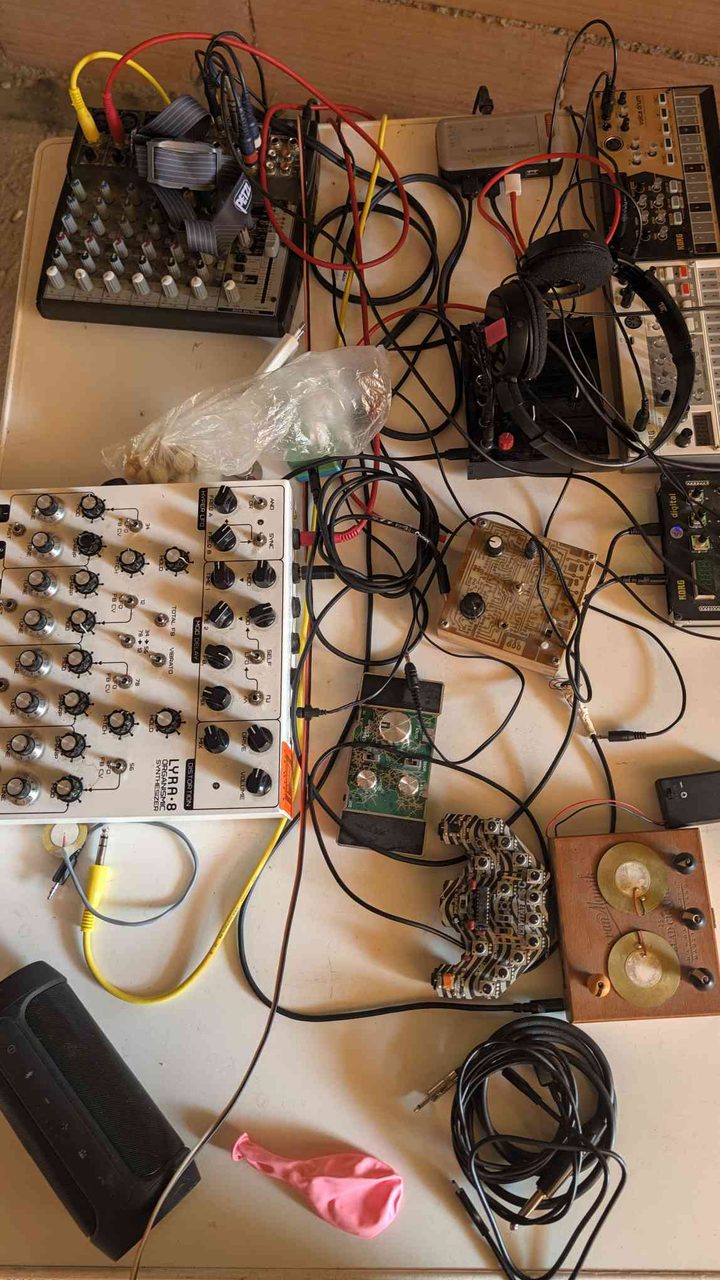
The music corner was a hacker’s dream: a LYRA-8 organic synthesizer alongside Korg Volcas, tangled cables, and a pink balloon that had seen better days. Someone had set up a full DIY music production station, and it was humming through the afternoon.
The Infrastructure Room: Networks and Servers
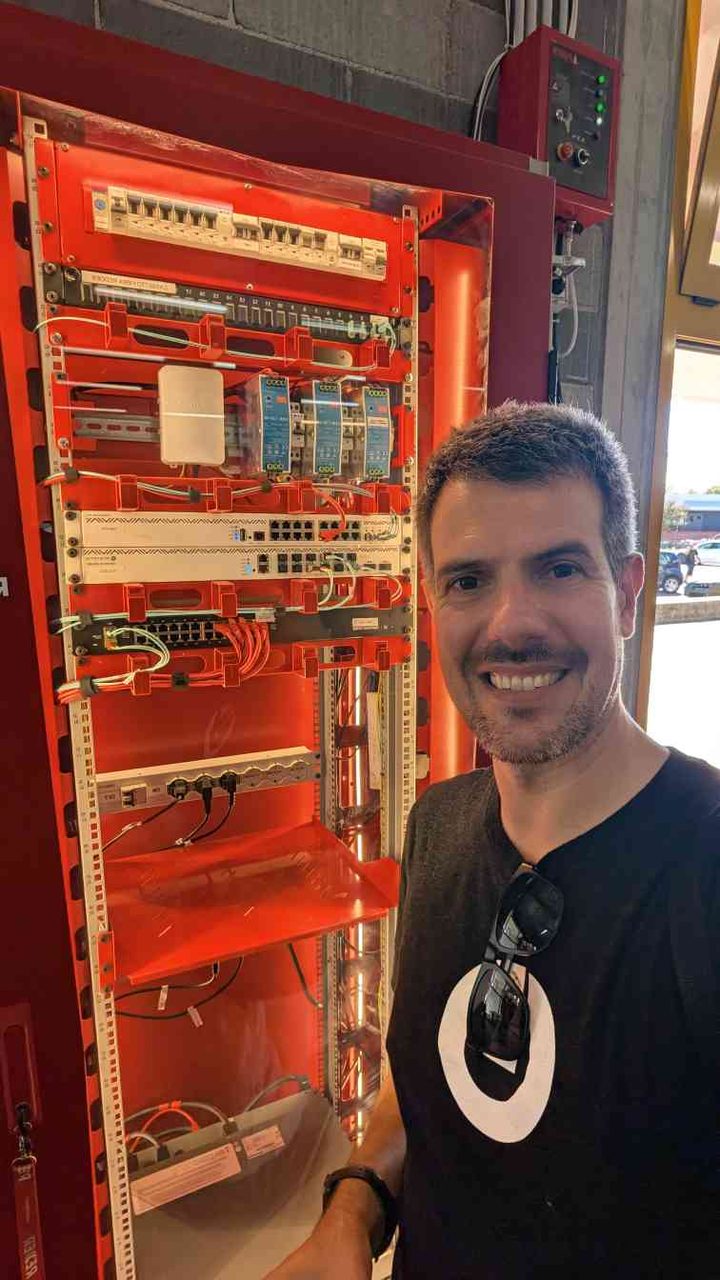
Behind the creative chaos is the infrastructure that keeps it all running: a red 19-inch cabinet with circuit breakers, terminal blocks, network switches, and patch panels. This is the nervous system of ESC — the network that connects workshop tables to the projector, the PA system, and the shared filesystem where all the session materials live.
The Crowd and the Culture
What struck me most about ESC — compared to corporate conferences I’ve attended — is the absence of hierarchy. No VIP stages. No sponsored tracks. No “industry experts” on pedestals. Instead, there’s a room full of people in purple t-shirts raising their hands in cheer, a cork board full of flyers, a wooden crocodile cutout on a shelf, and an inflatable unicorn head watching over it all.
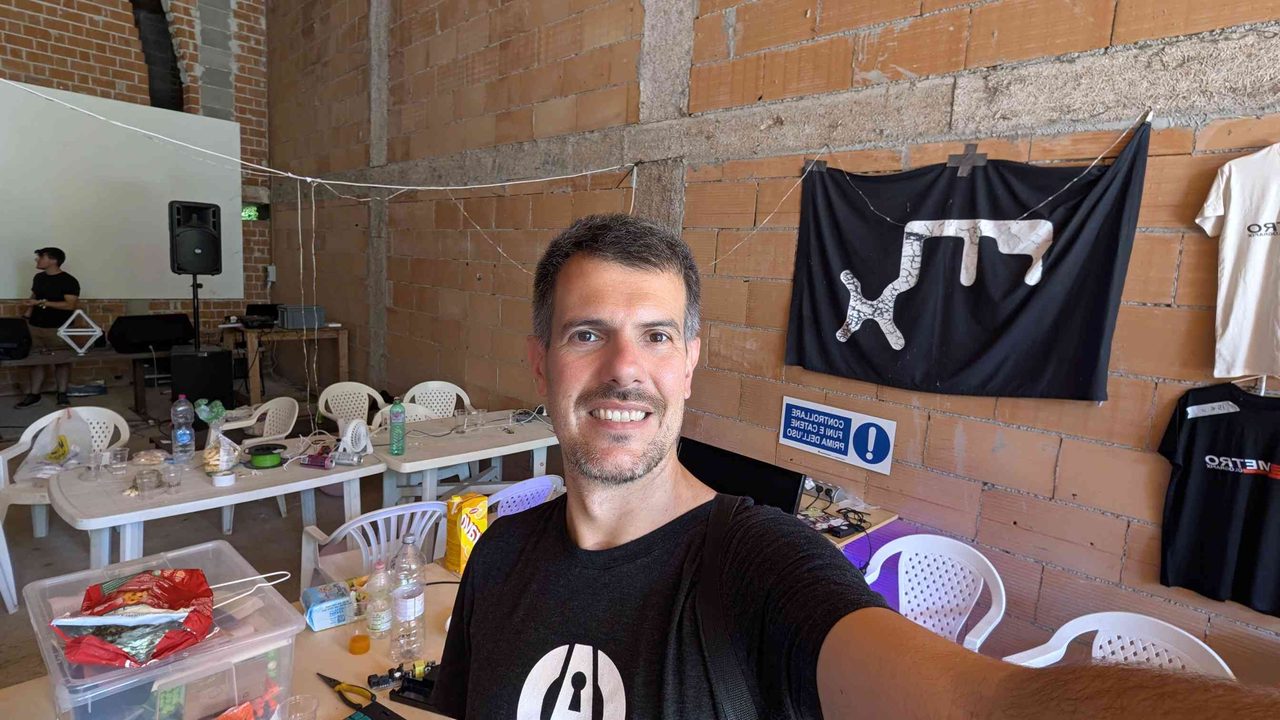
The “VOID” sign and the bulletin boards tell you everything: this is a space that participants fill, not one that’s pre-decorated. The banners, the flyers, the clothes hanging on the wall — everything is added by whoever shows up and wants to contribute.
The Fab Lab Zone: 3D Printing, CNC, and Digital Fabrication
One wing of the venue transformed into a full Fab Lab — 3D printers humming, acrylic being cut, and the smell of molten plastic in the air.
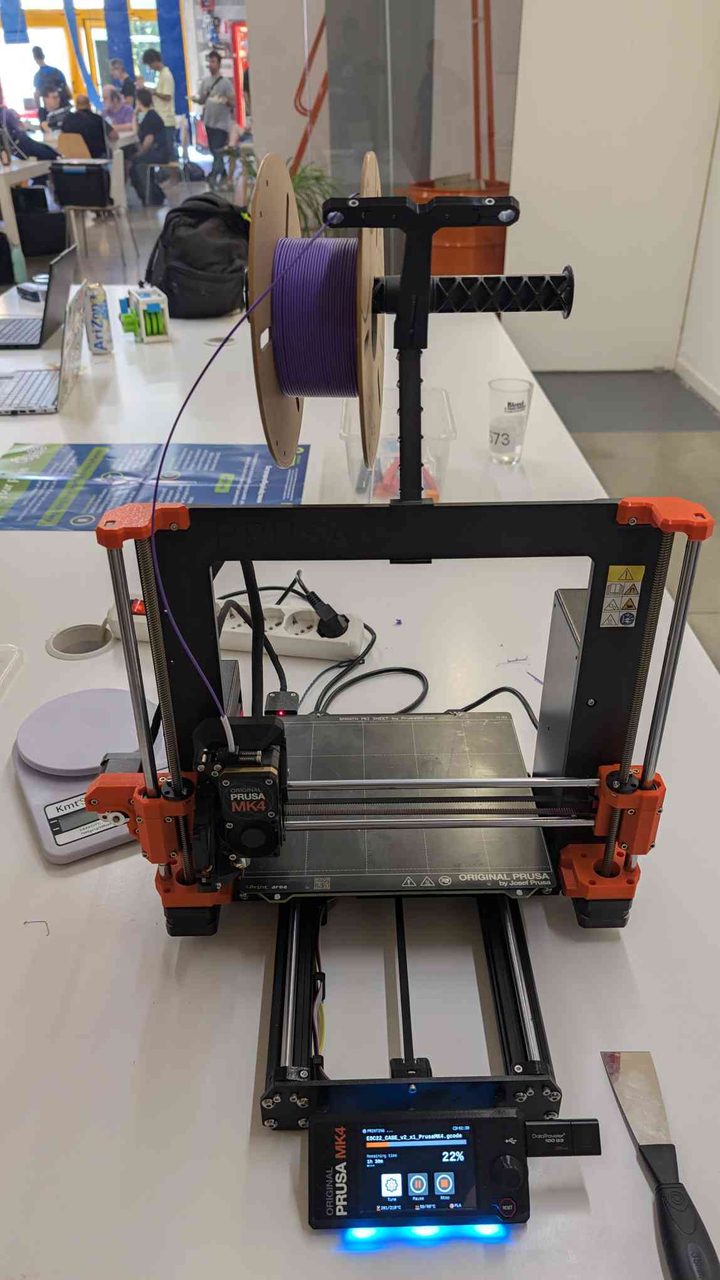
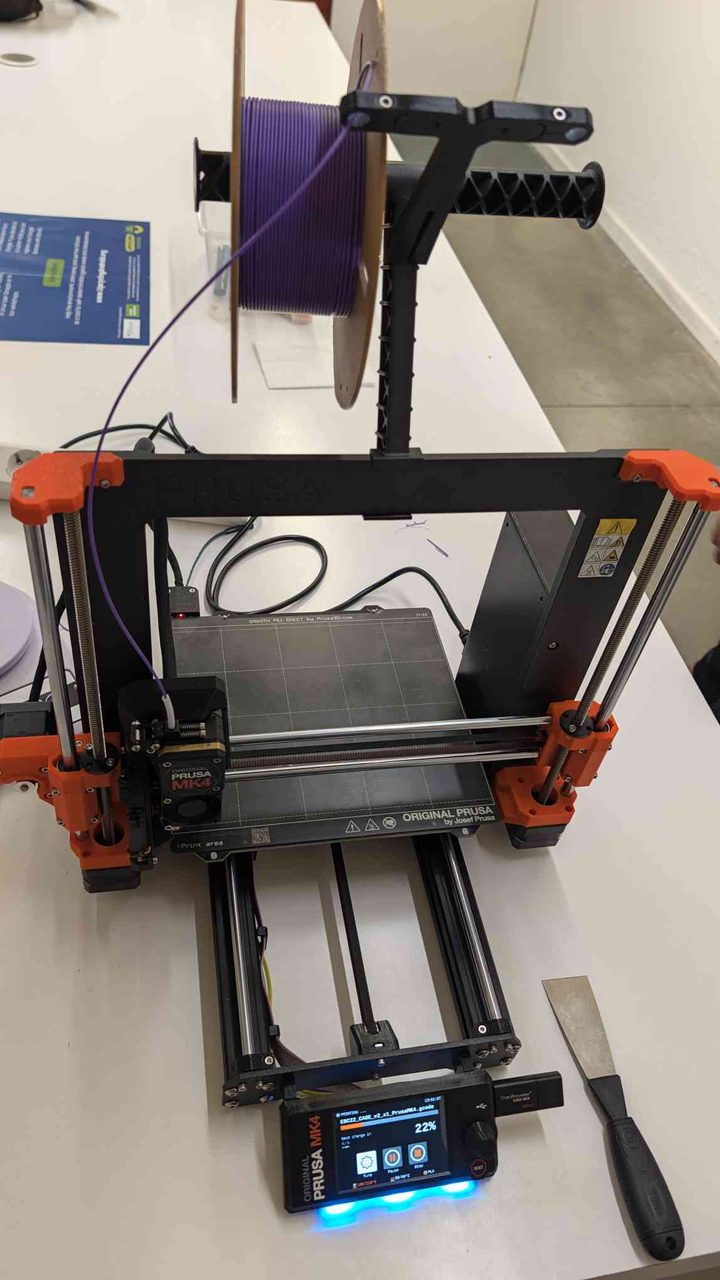
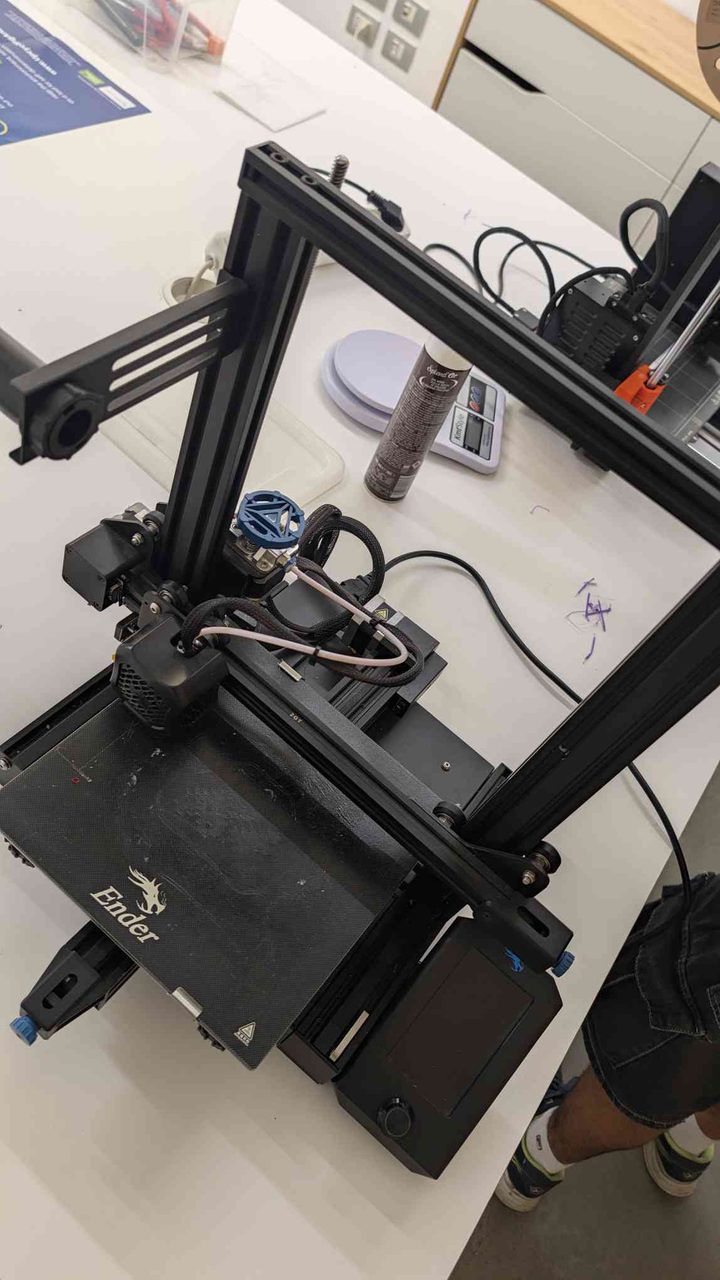
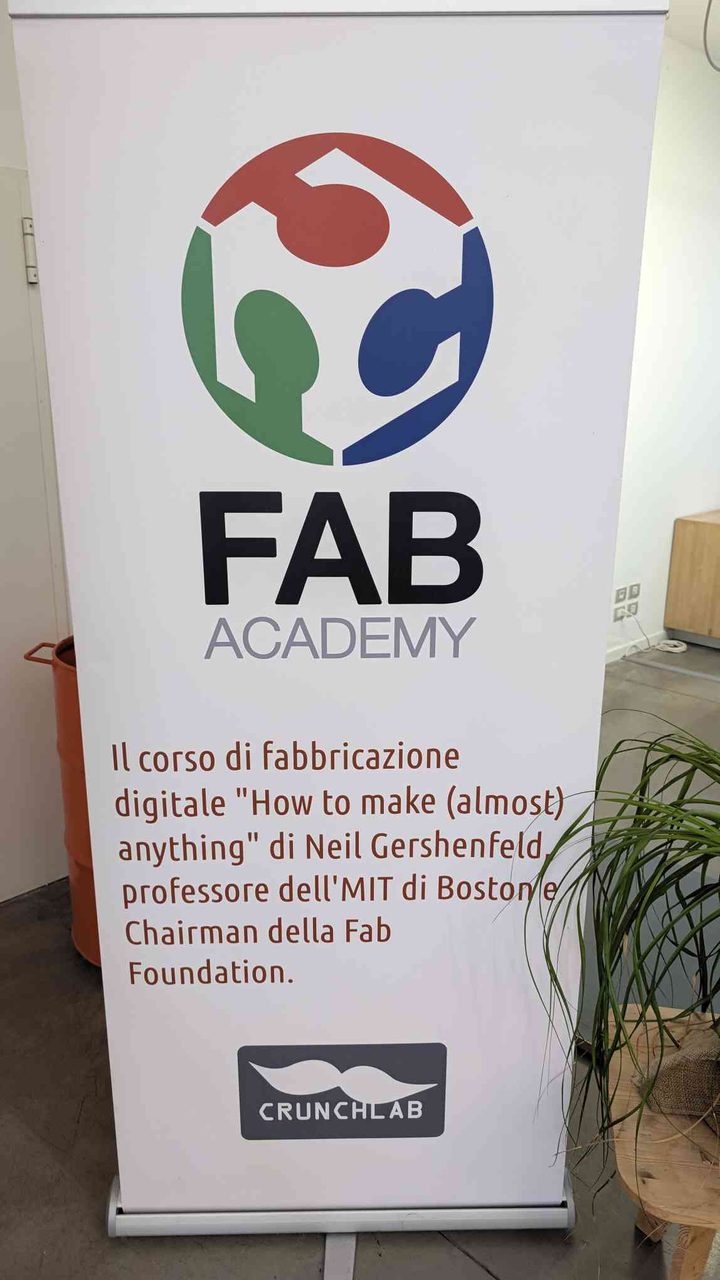
On the tables: Original Prusa MK4 printers with purple filament, Creality Ender 3s with their dragon logos, digital scales, spatulas, and compressed air cans — the full workshop toolkit. The blue “Fab Academy” roll-up banner announced “Il corso di fabbricazione digitale” (the digital fabrication course), a nod to Neil Gershenfeld’s MIT program and the Fab Foundation.
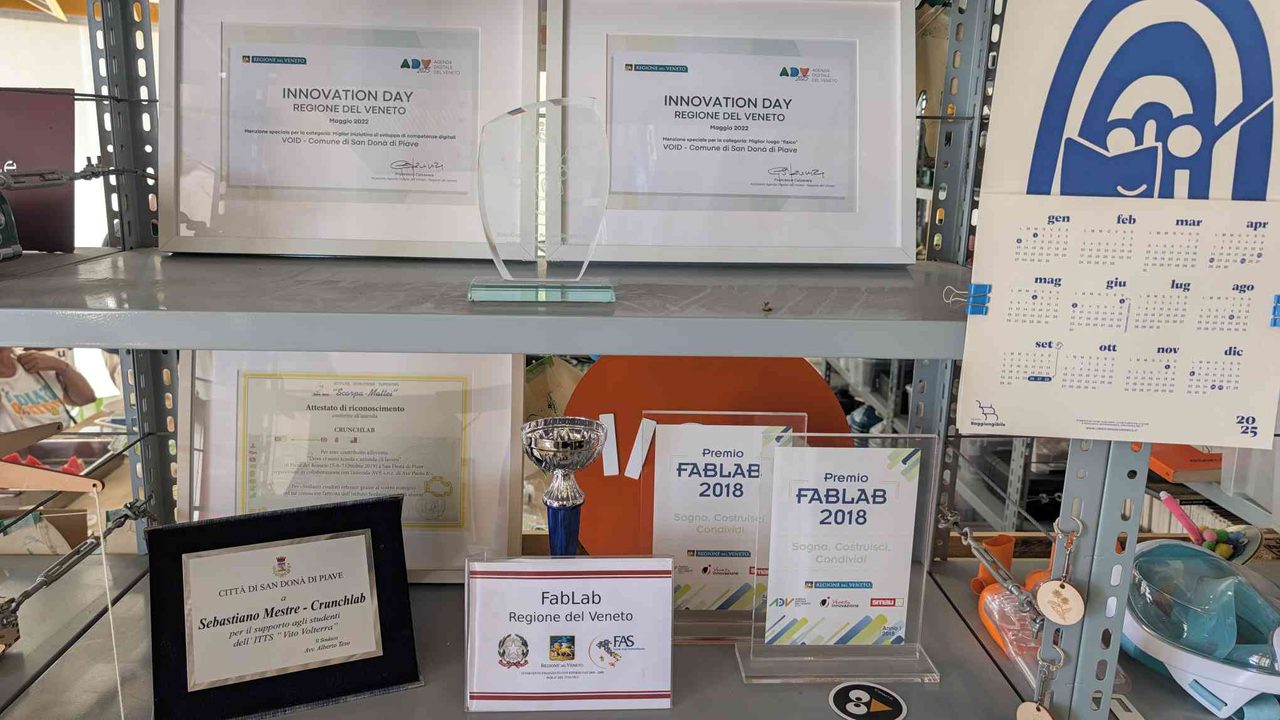
Behind the printers, the CrunchLab awards wall tells the history of this space — framed certificates from the Regione del Veneto Innovation Day (Miglior iniziativa di sviluppo di competenze digitali and Miglior luogo ‘fisico, both May 2022), FabLab Regionale recognitions, and a plaque thanking Sebastiano Mestre for his support of ITTS “Vito Volterra” students.
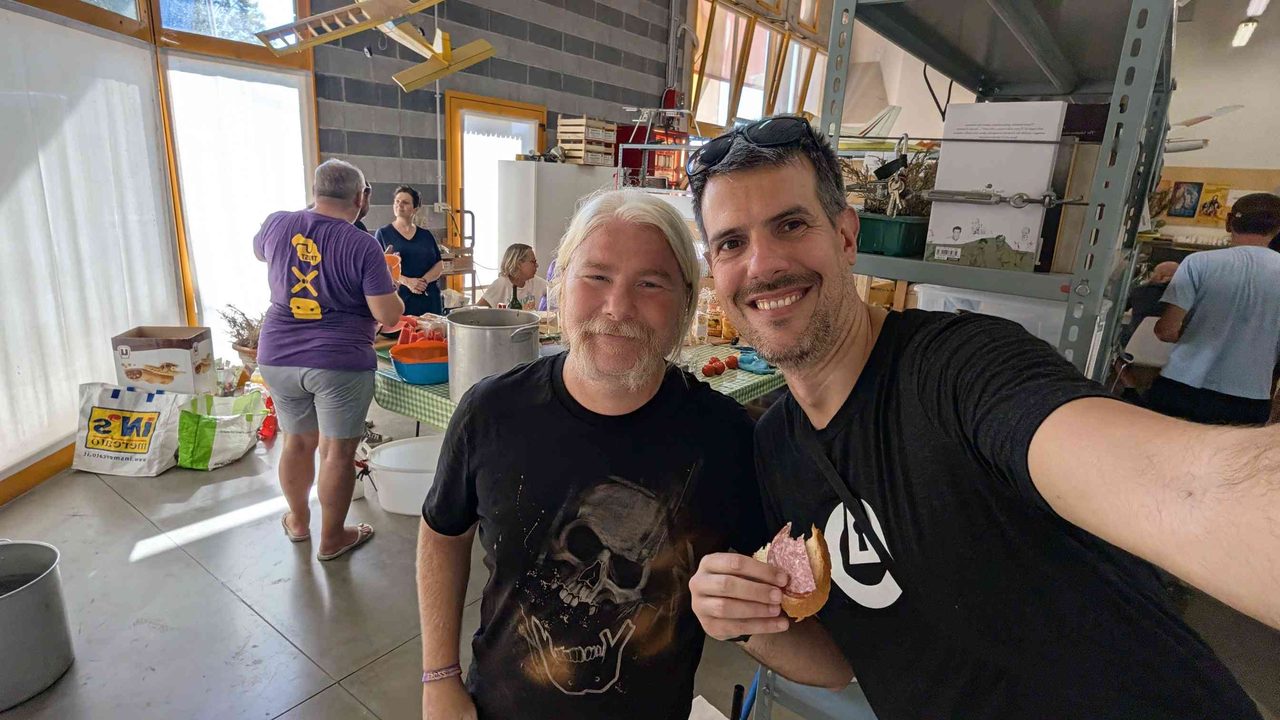
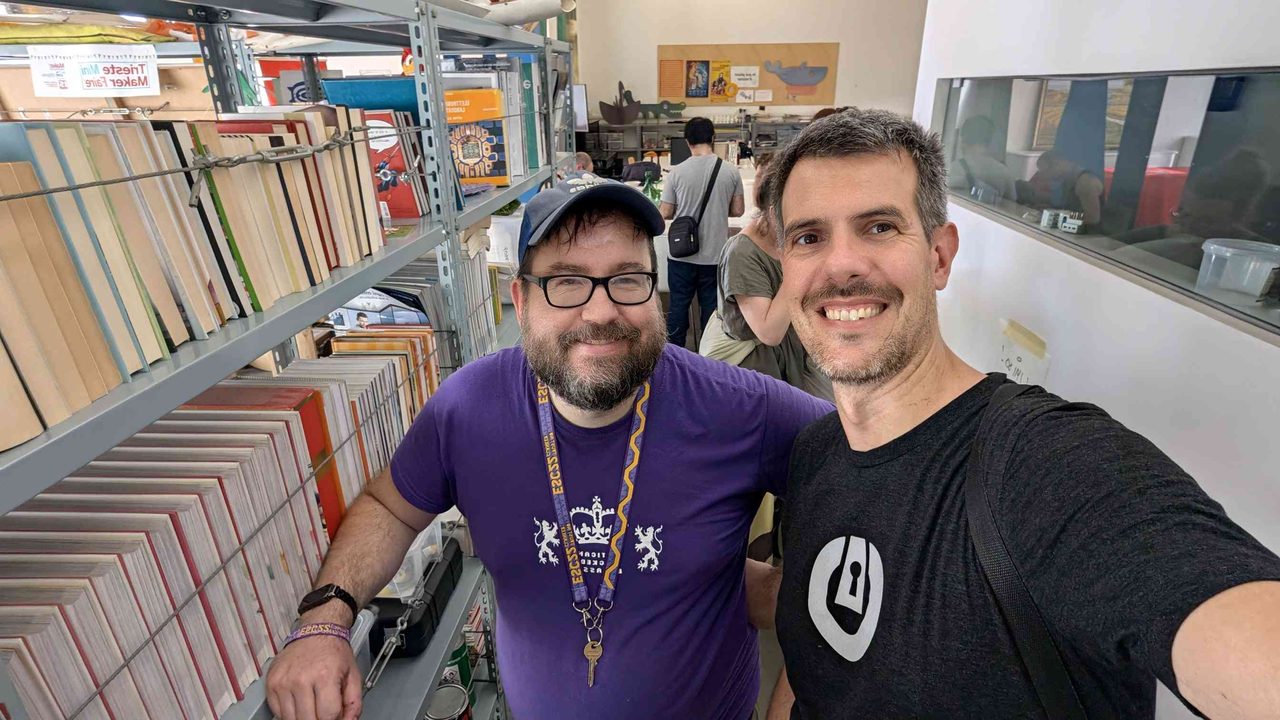
Meeting Sebastiano Mestre, one of the key organizers behind the event, at the library-style workspace where attendees browse through books and binders. His purple “ESC22 LOCKPICKING VILLAGE” lanyard says it all — this is a community where curiosity leads to lockpicking, hardware hacking, and everything in between.
This is what gives ESC its staying power across 22 editions: it’s not just an event, it’s an institution. The CrunchLab has been running digital fabrication workshops for students since 2018, and that institutional memory — accumulated in certificates, trophies, and wall plaques — creates a foundation that every August can build on.
Key Takeaways
Participant-driven content works. The schedule is created by proposals that emerge from the community — and the quality of talks, labs, and workshops is consistently high because people are presenting on topics they genuinely care about.
The DIY infrastructure is impressive. From the audio system wired with colored tape to the red network cabinet with hand-labeled patch panels, ESC proves you don’t need enterprise AV vendors to create a functional event space.
FLOSS isn’t just software — it’s a mindset. The emphasis on free/open-source tools extends beyond code: the event itself runs on open principles, from the transparent budget to the volunteer-run organization.
Physical space matters. The Parco della Scultura provides a unique backdrop — industrial concrete, exposed brick, yellow window frames — that feels like a factory converted into a hackerspace, which is exactly what it becomes for a week.
My Take
After a week at ESC, I understand why this event has run for 22 editions. It’s not about the talks, the workshops, or even the projects. It’s about creating a space where curiosity is the only credential, where the person in the purple t-shirt raising their hand could be the one who just reverse-engineered a MIFARE card or built a LoRa mesh from scratch.
The escape key on the banners isn’t just a logo — it’s an invitation to escape from the constraints of professional software, corporate conference formats, and the assumption that innovation requires funding. At ESC, you need curiosity, a willingness to learn, and maybe some colored tape for the audio mixer.
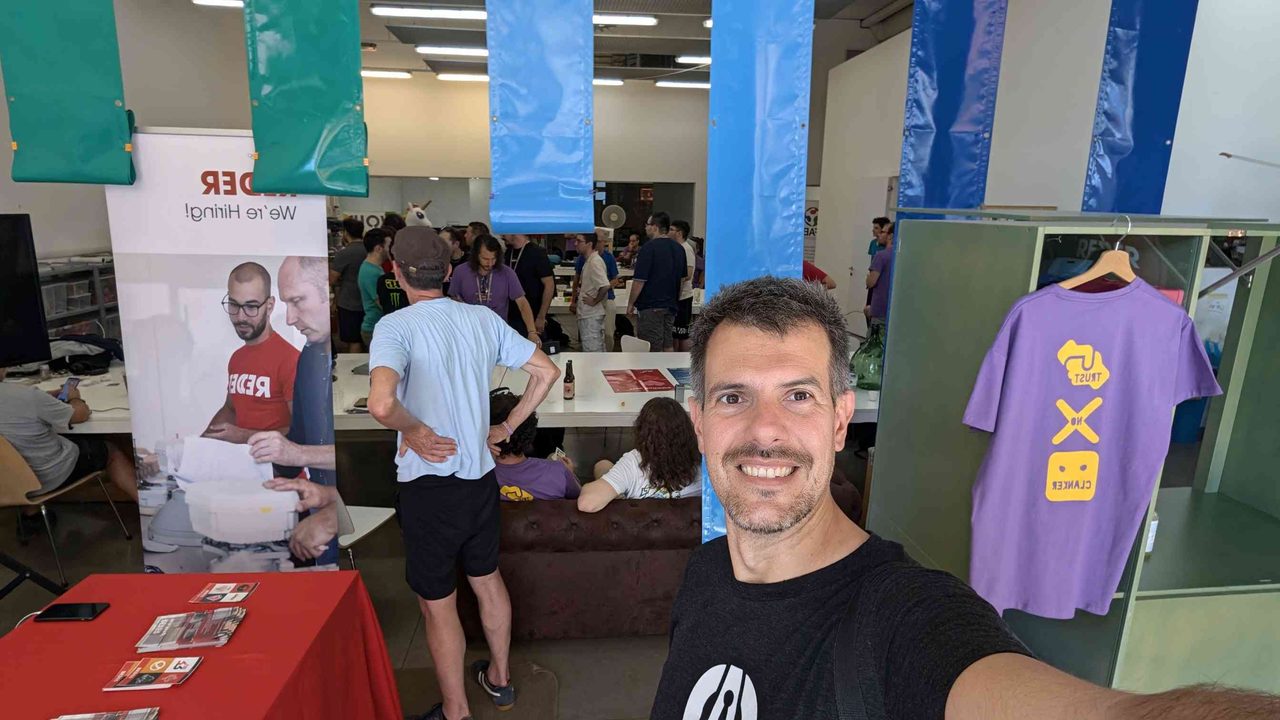
End Summer Camp 22 takes place September 1–6, 2026 at the Parco della Scultura in Architettura in San Donà di Piave, Italy. The event runs on participant contributions and volunteer organization — no corporate sponsors, no paid tracks, just pure curiosity-driven gathering.
Related Reading
- RISC-V Summit Europe 2026: Hardware Innovation from Bologna
- Red Hat Summit 2026: Open Source Meets AI
- 13 Things I Heard at Red Hat Summit 2026
About the Author
I am Luca Berton, AI and Cloud Advisor. I work at the intersection of platform engineering, cloud security, and enterprise AI deployments. Book a consultation.