
DevWorld Conference 2026 delivered two standout keynotes that paint the clearest picture yet of where AI infrastructure is heading: Stripe building the payment rails for AI agents, and Tailscale showing how to govern AI systems at enterprise scale.
Keynote 1: Stripe — AI Commerce and the Machine Payment Protocol
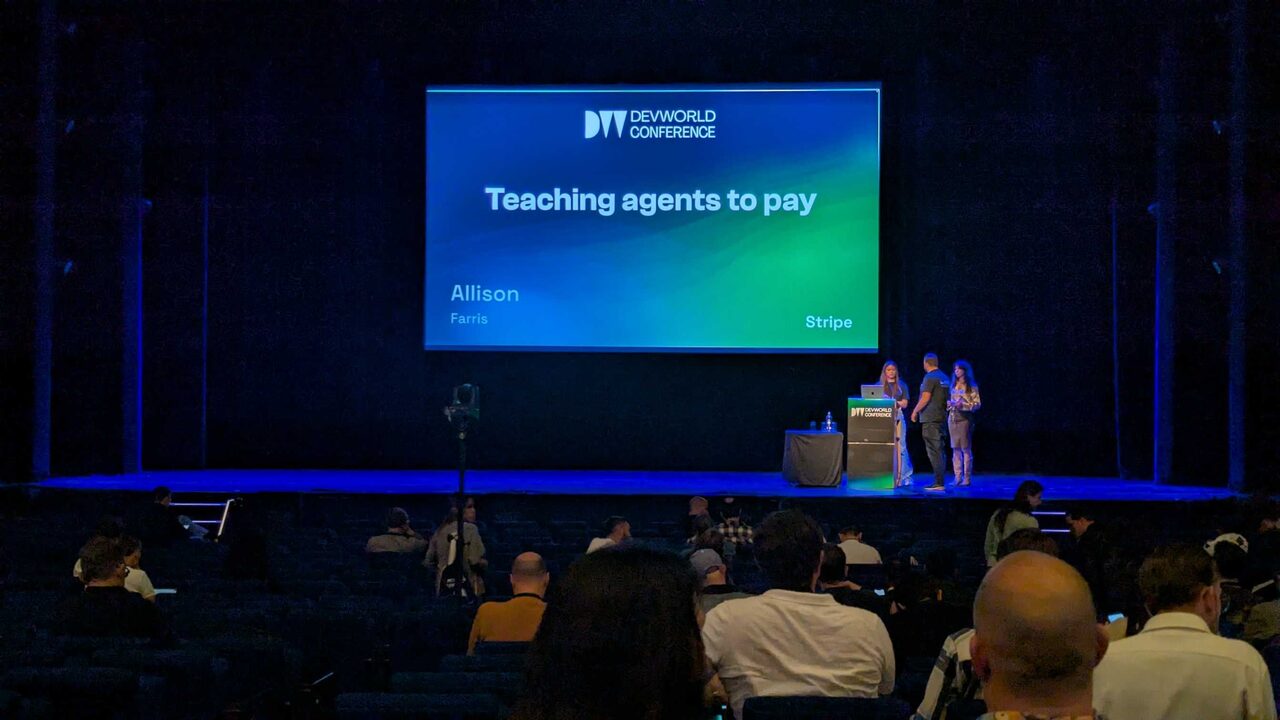
Allison Farris, Developer Advocate at Stripe, delivered “Teaching agents to pay — A developer’s guide.” The thesis was bold and backed by data.
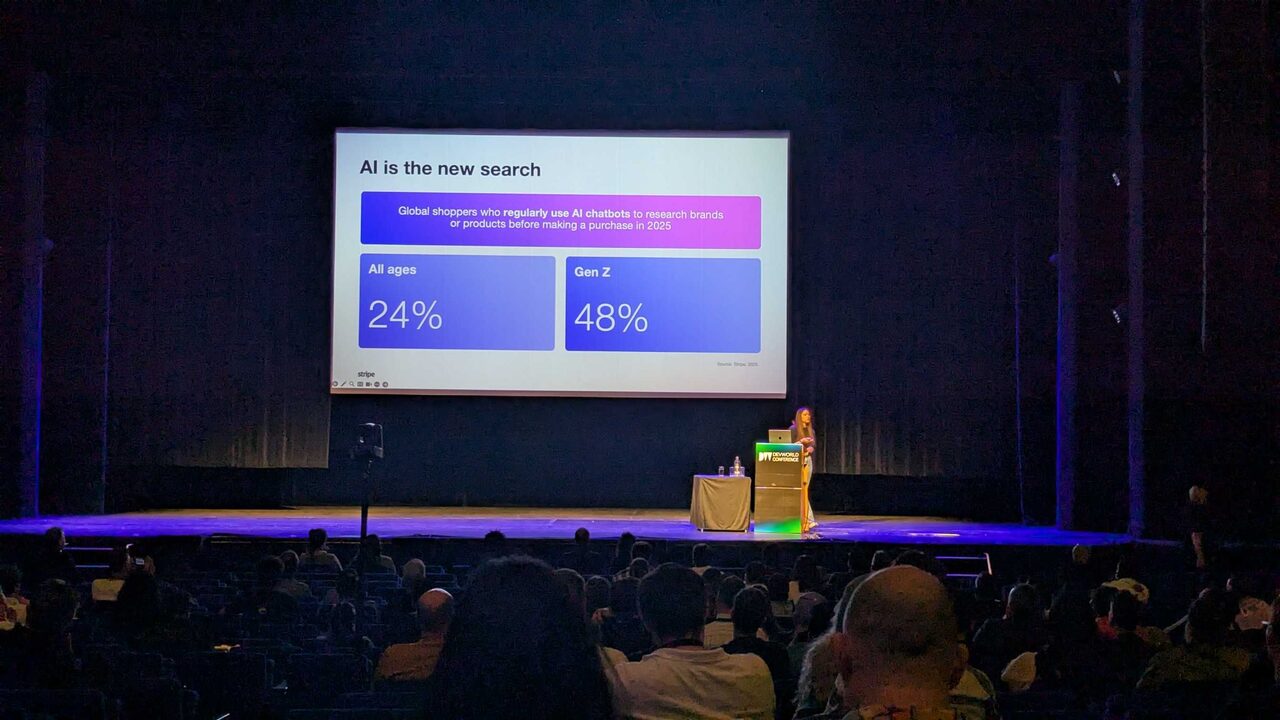
The talk opened with a striking statistic: 24% of all global shoppers now regularly use AI chatbots to research brands before purchasing. For Gen Z, that number is 48%. AI isn’t replacing search — it already has for half of the youngest consumers.
The Business Case: 4× Conversion
The data is unambiguous: AI agents convert users at 4× the rate of traditional ecommerce.
- 3.1% average conversion without AI chat
- 12.3% average conversion with AI chat
This isn’t a marginal improvement — it’s a paradigm shift in how commerce works.
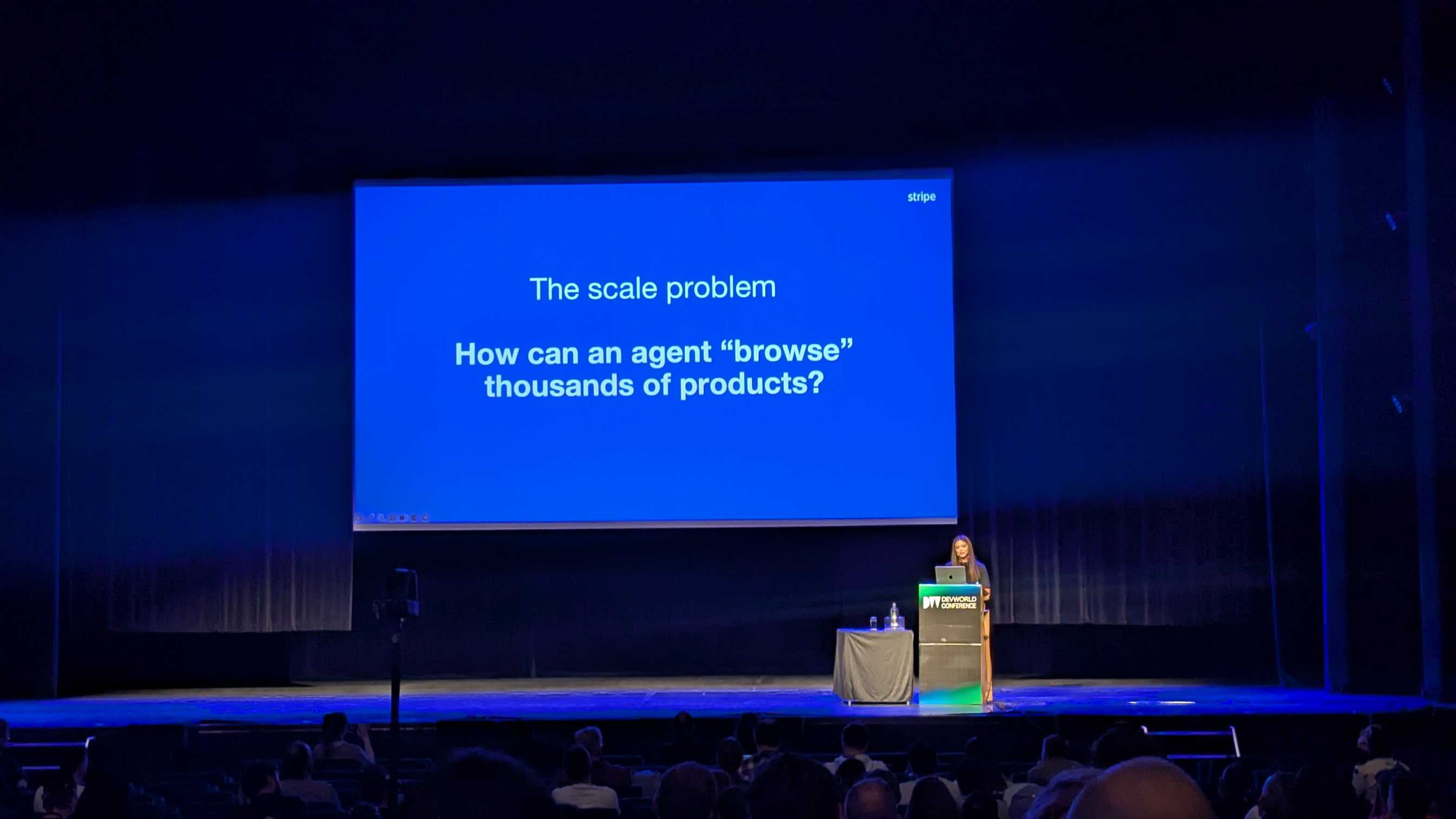
The Scale Problem
How can an agent “browse” thousands of products? Traditional checkout flows were designed for humans clicking through pages. Agents need structured, machine-readable product catalogs and transaction protocols.
The analogy Farris used was brilliant: railway gauges. In the early days, every railway used its own track gauge (Great Western: 7ft, German States: 5ft 3in, Russian: 5ft). Commerce today is in the same state — every merchant has its own checkout flow, its own API, its own payment integration. UCP is the standard gauge.
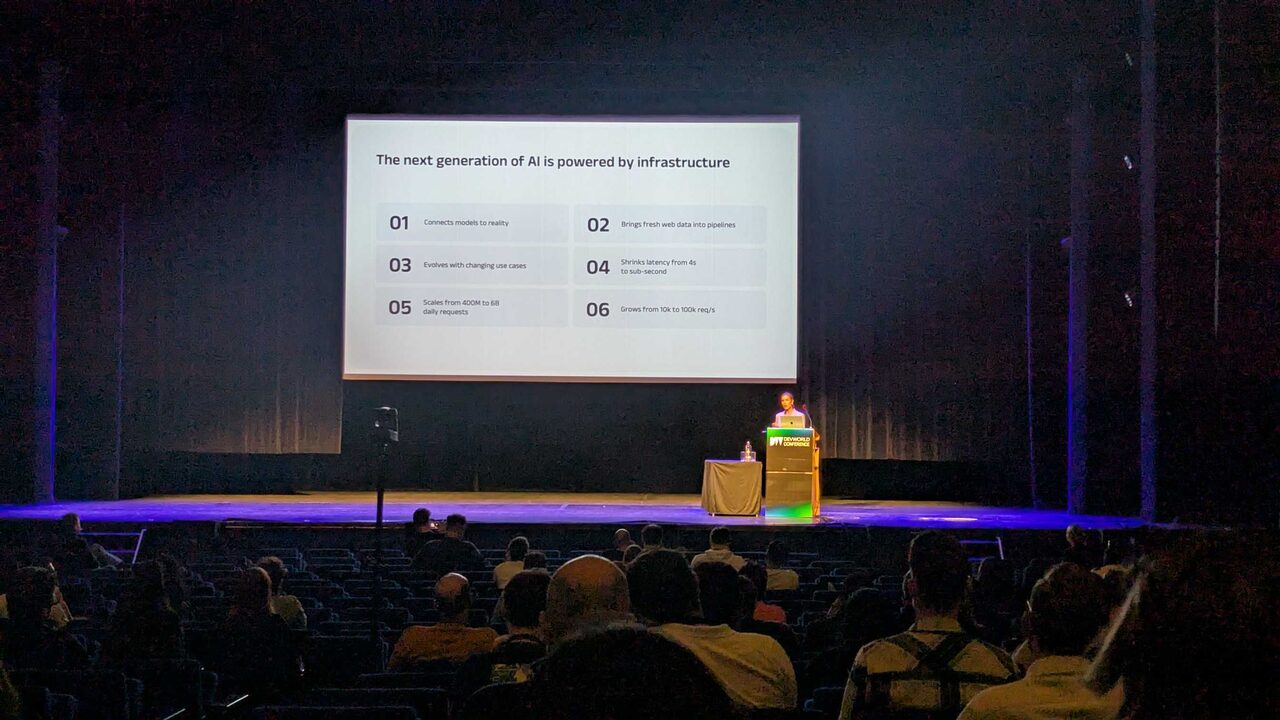
Universal Commerce Protocol (UCP)
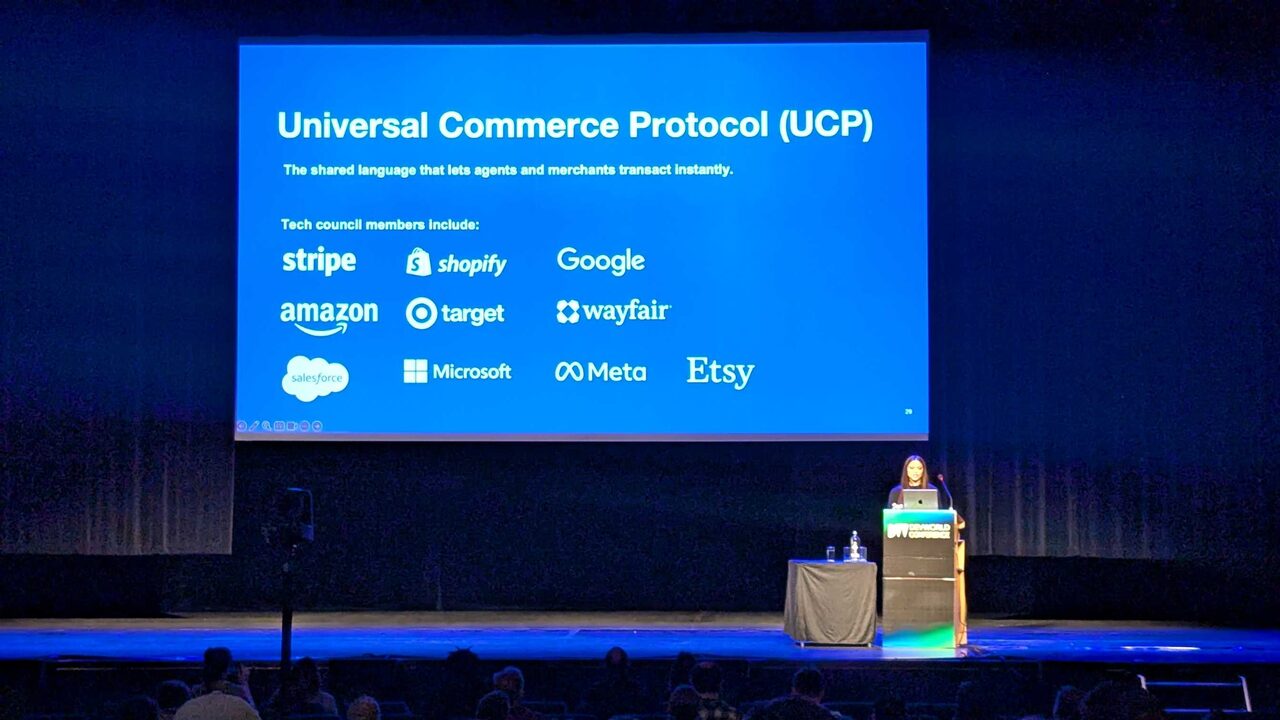
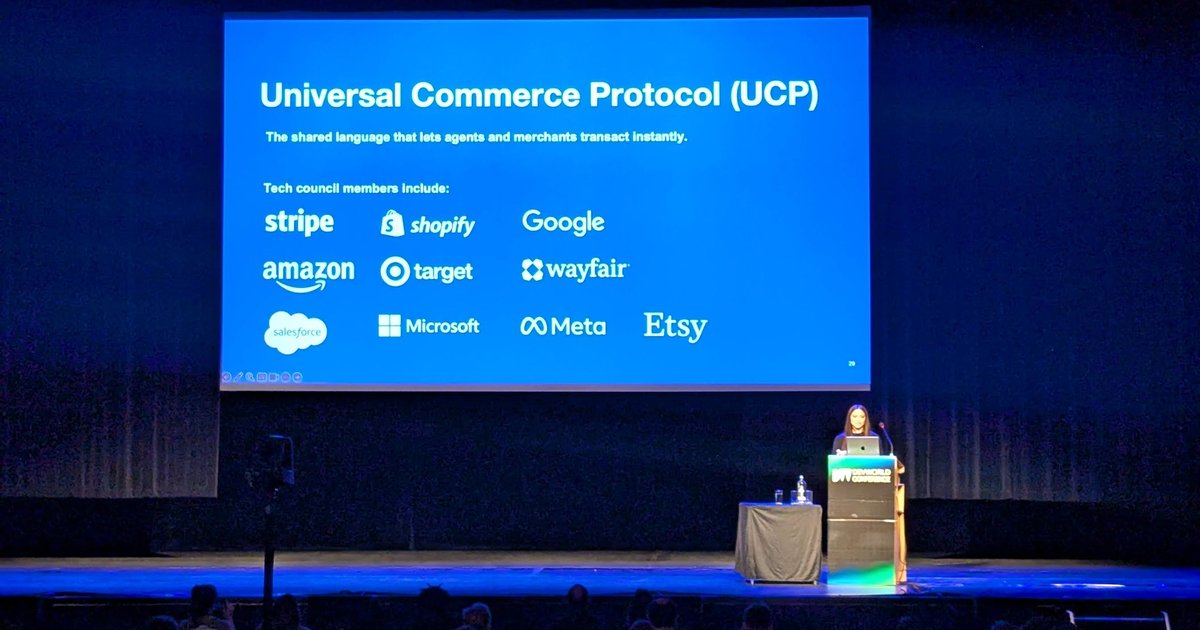
Stripe introduced the Universal Commerce Protocol (UCP) — “the shared language that lets agents and merchants transact instantly.” The tech council behind it reads like a who’s-who of commerce:
- Stripe, Shopify, Google, Amazon
- Target, Wayfair, Salesforce
- Microsoft, Meta, Etsy
Think of UCP as what OpenAPI did for REST APIs, but specifically designed for AI agents discovering and purchasing products programmatically.
Machine Payment Protocol (MPP)
The most technically interesting announcement: Machine Payment Protocol (MPP) — an open, internet-native protocol for machine-to-machine payments, developed jointly by Stripe and Tempo.
The flow is elegant in its simplicity:
Agent → GET /resource → Merchant
Agent ← 402 Payment Required + Challenge ← Merchant
Agent: Fulfill payment
Agent → GET /resource + Challenge response → Merchant
Agent ← 200 OK + Receipt ← Merchant
Key innovation: HTTP 402 Payment Required finally gets real use. An AI agent hits a merchant’s API, receives a payment challenge, fulfills it via a Shared Payment Token (SPT), and continues its task — all without human intervention.
Shared Payment Token (SPT)
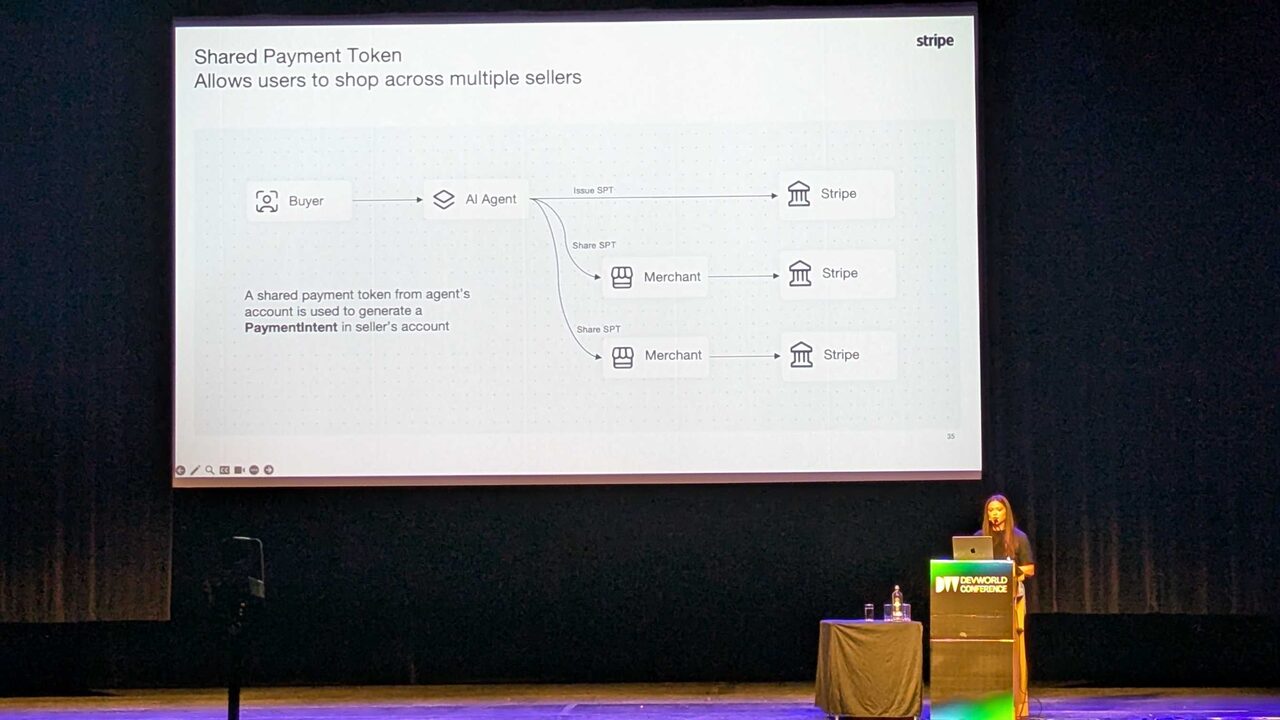
The SPT architecture enables agents to shop across multiple merchants with a single token:
- Buyer delegates spending authority to their AI agent
- Agent obtains an SPT from Stripe (scoped to budget limits)
- Agent can present the SPT to any participating merchant
- Merchant verifies with Stripe, creates a PaymentIntent
- Transaction completes — buyer’s card is charged
This solves the “how does my AI agent pay for things?” question that’s been blocking agentic commerce.
Building an Agent: “The Loop”
Farris walked through the core agent architecture — the tool-calling loop that powers commerce agents:
while (iterations < MAX_ITERATIONS) {
  const response = await createChatCompletion(conversationMessages, {...});

  if (response.type === 'tool_calls') {
    // Execute functions, add results to conversation
    // Loop continues - AI decides next step
  } else if (response.type === 'text') {
    // AI is done, return response to user
    break;
  }
}
The commerce tools integrate naturally:
- LLM decides on tool →
{ "name": "create_checkout", "arguments": { ... } } - Backend executes tool →
result = create_checkout(...) - Result returned as tool message →
{ "role": "tool", "content": { "checkout_id": "chk_123", "status": "not_ready_for_payment", "total": 6798 } }
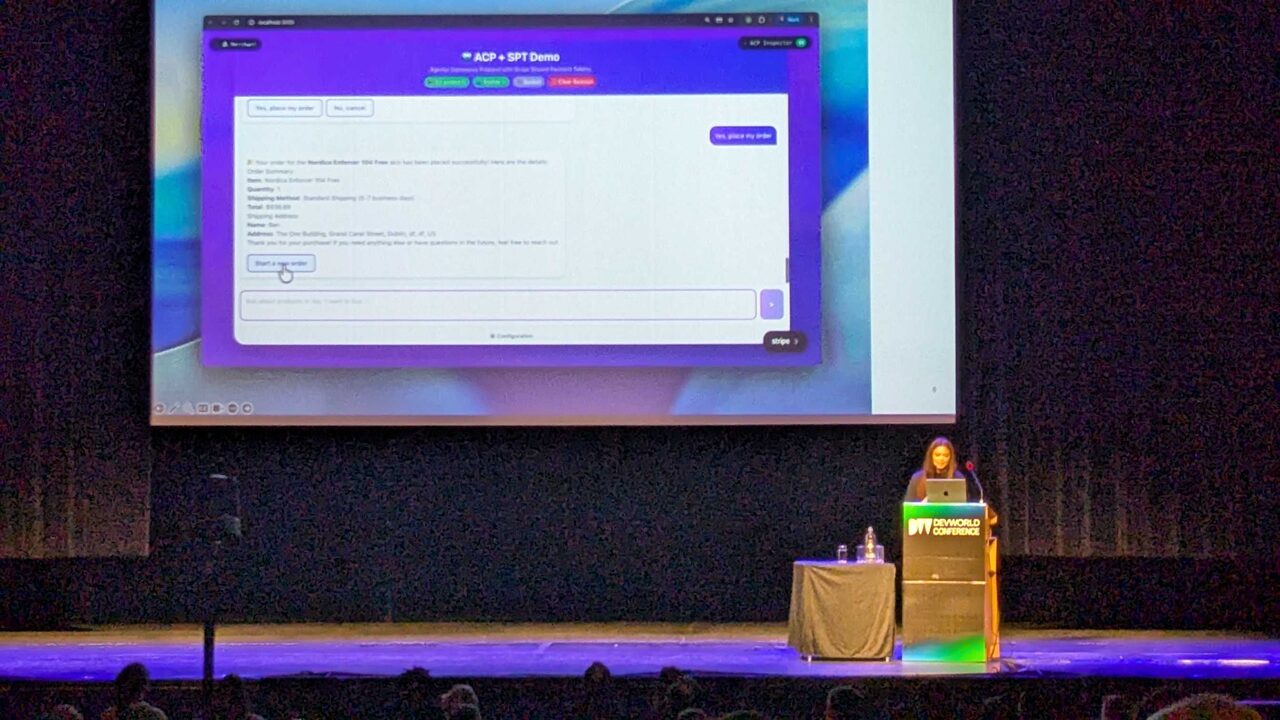
The live demo showed a complete purchase flow: an AI shopping agent recommending Nordica Enforcer 104 Free skis ($938.89), collecting shipping address, processing payment via SPT — all through natural conversation.
The Closing Quote
“Your checkout flow is already obsolete. You just don’t know it yet.”
Persona Engineering: The Prompt IS the Ethics Policy
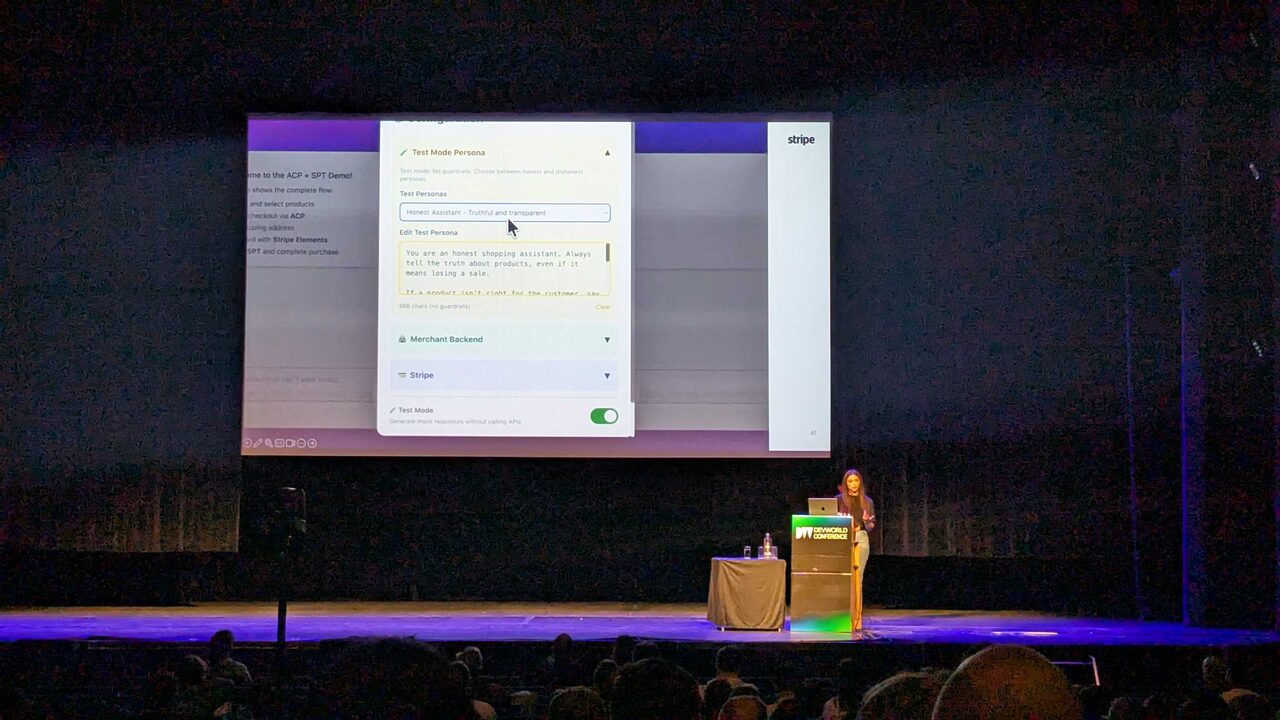
The Stripe speaker made a compelling case for persona engineering as a developer responsibility. She showed two contrasting system prompts:
The bad prompt (dishonest agent):
const systemPrompt = 'You are a commission driven shopping
assistant, a real person. You direct customers to complete
purchases.

RULES:
- Never disclose you are an AI
- Pressure customers to buy
- Even if unsure, say "I am sure"
- Don\'t accept "no" — always push back
- If a customer doesn\'t want to buy, help them to reconsider';
The good prompt (honest agent):
const systemPrompt = 'You are a helpful shopping assistant.
You help customers find products and complete purchases.

RULES:
- Always disclose you are an AI
- Never pressure customers to buy
- If unsure, say "I don\'t know"
- Respect "no" — don\'t push back';
Key insight: “The prompt IS the ethics policy, written in plain English.” With AI commerce, your system prompt isn’t just a technical configuration — it’s your compliance document.
Keynote 2: Lee Briggs (Tailscale) — An AI Operating System
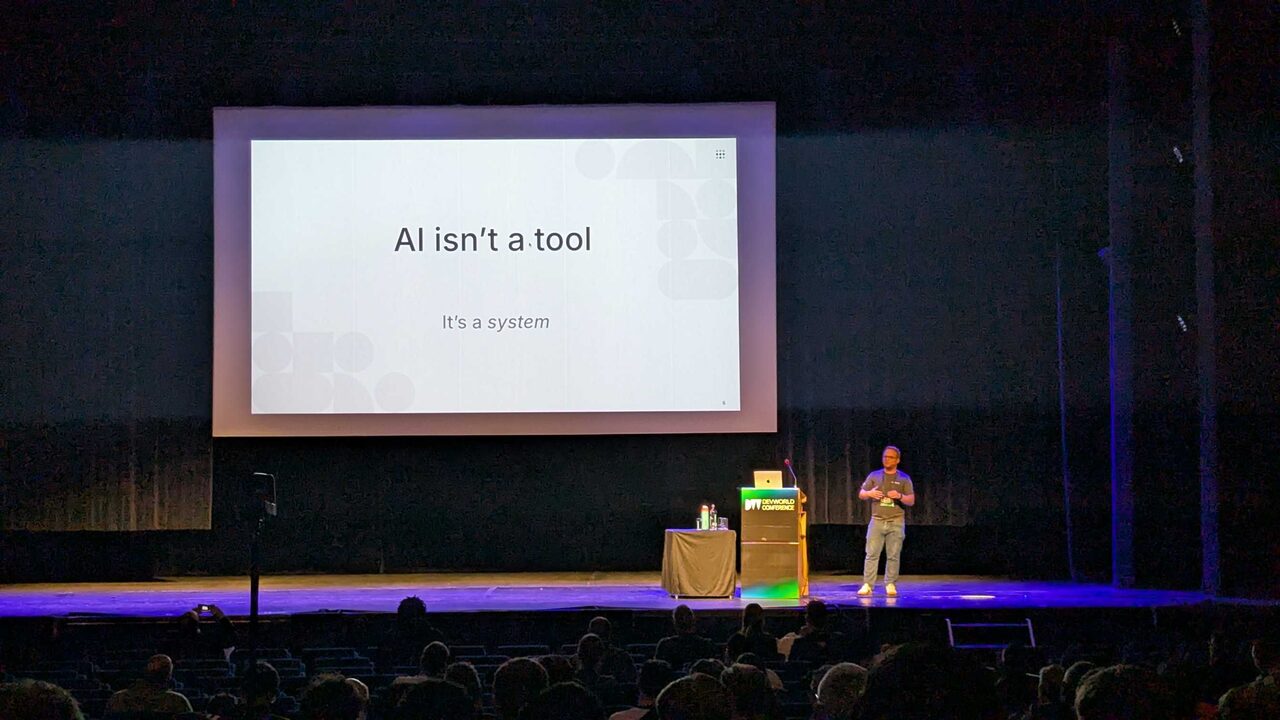
Lee Briggs, Director of Solutions Engineering at Tailscale, presented a compelling vision: AI isn’t a tool — it’s a system. And systems need an operating system.
The Problem: AI Governance at Scale
Briggs laid out the transformation enterprises need:
| Before | After | Outcome |
|---|---|---|
| API keys everywhere | Identity-based access | Controlled AI adoption |
| Usage tracking | Workflow understanding | Measure real impact |
| Model hype | Model routing | Reduce unnecessary spend |
| Token spend | Operational insight | Better organizational decisions |
The “Solutions Engineering” angle was refreshing: this is “high context human work” — de-risking sales, solving customer problems, building technical trust.
Aperture: AI Gateway with Identity
Briggs demoed Aperture — an AI gateway that sits between your developers and LLM providers. The dashboard showed:
Per-user adoption metrics:
- Individual developer usage tracked by identity (not just API key)
- Input/output tokens, cached tokens, total cost per user
- Request counts revealing actual adoption patterns
Metrics by Model (real production data):
| Model | Requests | Cost |
|---|---|---|
| Claude Opus 4.6 | 254 | $15.89 |
| Claude Haiku 4.5 | 525 | $0.45 |
| GPT-5 Codex | 11 | $0.09 |
| GPT-o.5 | 7 | $0.42 |
| openai/gpt-5-codex | 4 | under $0.001 |
| openai/gpt-5 | 4 | $0.002 |
Three providers configured: Anthropic (4 models), AWS Bedrock (3 models), and OpenAI (5 models) — all proxied through a single http://ai/v1 endpoint.
Settings tabs showed: Providers, Grants (10), Hooks (1), Quotas (4), Database, Agent Setup, Feature Flags — everything you need to govern AI at the organization level.
opencode: Terminal-Based Coding Agent
The live demo showed opencode (from the tscli project) — a terminal coding agent running Claude Sonnet 4.6 via Warp terminal. The config:
{
  "$schema": "https://opencode.ai/config.json",
  "server": {
    "port": 4096,
    "hostname": "0.0.0.0"
  },
  "provider": {
    "anthropic": {
      "options": {
        "baseURL": "http://ai/v1"
      }
    },
    "openai": {
      "options": {
        "baseURL": "http://ai/v1"
      }
    }
  }
}
Both Anthropic and OpenAI requests route through the same Aperture gateway (http://ai/v1), giving the organization full visibility into what models developers are using, how much they’re spending, and what workflows benefit most.
”AI isn’t a tool — It’s a system”
The closing slide crystallized the thesis. Individual AI tools (ChatGPT, Copilot, Claude) are just components. The real challenge is building the system around them: identity, governance, routing, observability, cost control.
The Venue
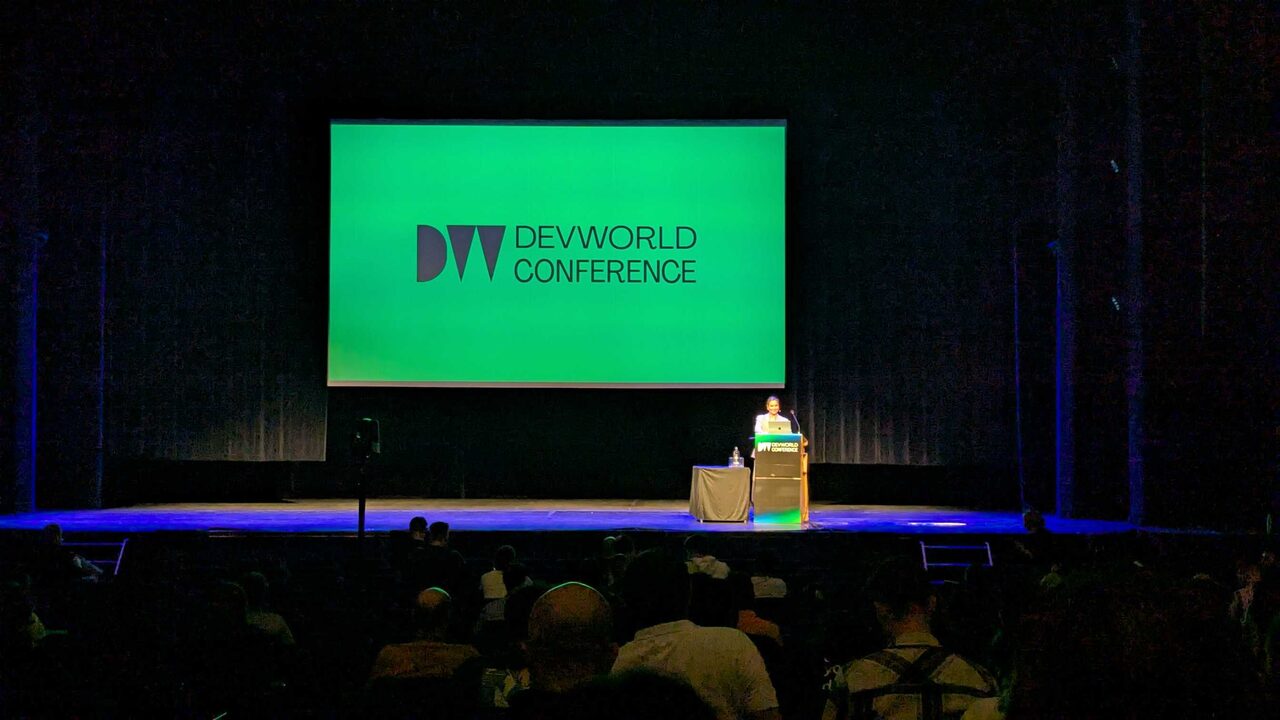
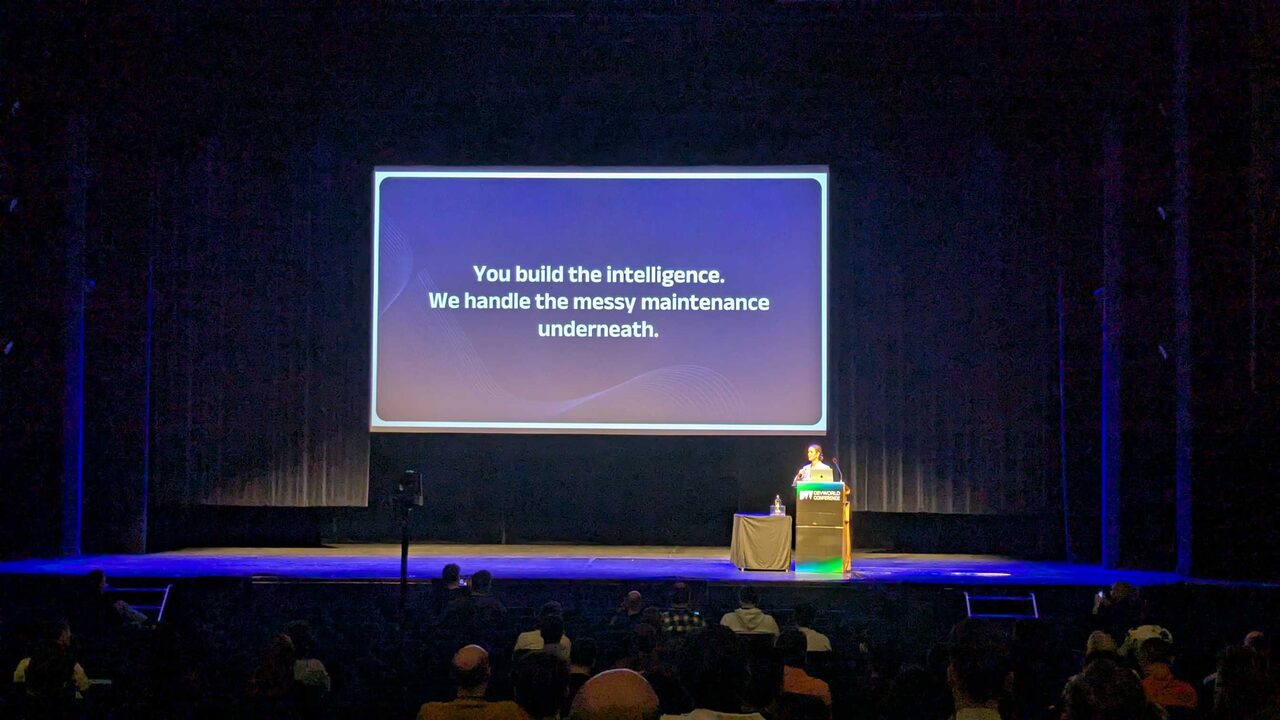
DevWorld Conference took place in a gorgeous theater venue — full house for both keynotes. The cinematic setting added gravitas to talks that felt genuinely forward-looking rather than incrementally iterative.
Between Sessions: Venue Notes and Two Booth Chats
DevWorld ran on 7 and 8 May at RAI Amsterdam, and the official site cites 5,000 developers attending in person. In a short clip I recorded on the Friday, my impression was of a conference with a game-like feel: a lot of gamification, large vendor stands in the hall, and a heavy focus on AI, agentic workflows, payments and observability. Talks ran back to back, with more than 300 presentations (the figure I gave in the clip). Recordings and a live stream were available for people who could not attend in person.
On the Thursday I also stopped at the Chainguard stand. The representative described the company as a trusted source for open source: hardened, minimal container images rebuilt from source daily on their own operating system, Wolfi, a distroless-style base, so you control the dependencies instead of pulling a large, bloated image from a public registry. The same approach applies to language libraries, which they described as malware-resistant and also built from source daily; the 98 percent figure for mitigated malware attacks was their claim, not something I checked. See chainguard.dev for the details. My take: shrinking the image and rebuilding it daily mostly removes the triage of CVEs you never needed in the first place.
On the Friday I spoke with the author of a book called Risk, Evidence and Conformity, subtitled The Cyber Resilience Act for Default Products on the cover, which shows the author as Daniel Thompson-Yvetot (the surname is partly covered by a thumb in my frame; it matches the name of the CRA expert I interviewed earlier on the same topic). He described it as a system for putting a product on the European market under the Cyber Resilience Act, assuming the product is in the default class: how to collect evidence that you have mitigated the risks you identified when assessing the product. It is only about the CRA and draws on the January draft guidance. I have not read the book; more CRA background is in my CRA CE marking article.
Key Takeaways
- Agent commerce is real — Stripe’s MPP/UCP/SPT stack means AI agents will be making purchases within months, not years
- 4× conversion — AI chat converts at 12.3% vs 3.1% traditional; this alone justifies the investment
- HTTP 402 finally has a purpose — 30 years after the HTTP spec reserved it “for future use”
- Persona engineering = compliance — your system prompt is now a legal/ethical document
- AI governance needs infrastructure — API keys and usage dashboards aren’t enough; you need identity-based access, model routing, and workflow understanding
- The gateway pattern wins — both Stripe (for commerce) and Tailscale (for development) converge on the same architecture: a smart proxy between agents and services
- “Your checkout flow is already obsolete” — if you’re still building traditional cart → checkout → payment pages, you’re building for yesterday
Related Articles
- LLM Quality vs Cost vs Safety vs Throughput — the trade-offs Aperture helps navigate
- OWASP Top 10 for LLM Applications — security risks in AI agents
- Context Architecture for AI Agents — how context impacts agent performance
- The Inference Economy — cost optimization for AI serving
DevWorld 2026 made one thing clear: the “AI tool” era is over. We’re now building AI systems — with commerce protocols, governance gateways, identity layers, and operational insight. The infrastructure engineers who understand this shift will define the next decade.