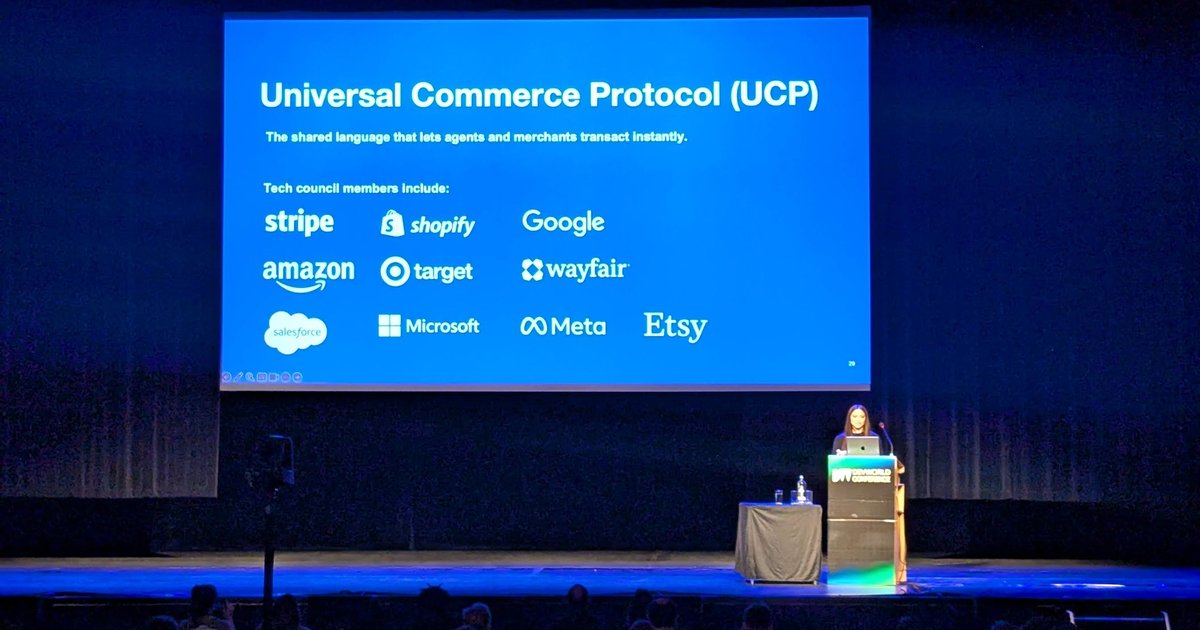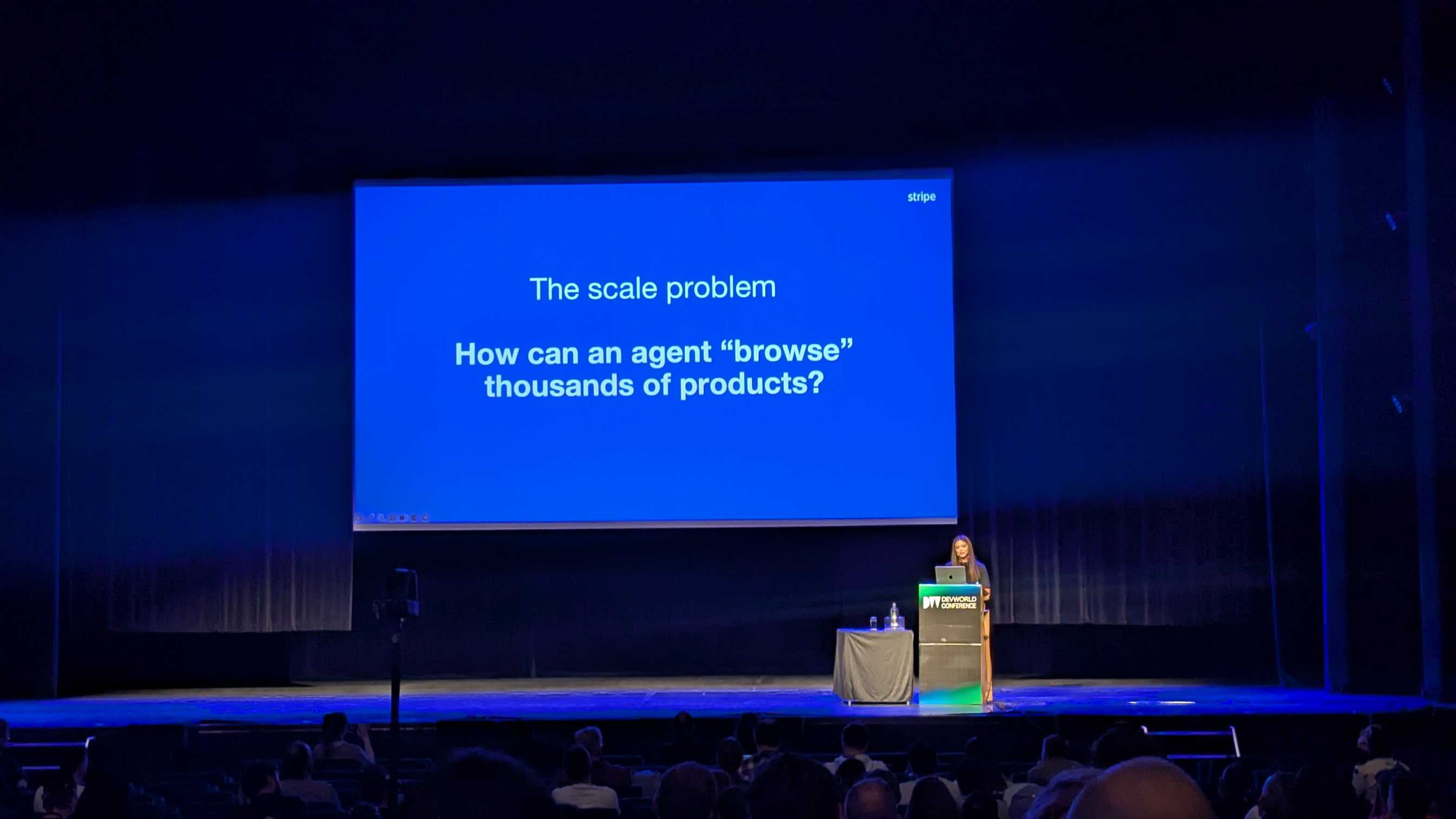
Day two of DevWorld Conference 2026 (8 May, Amsterdam RAI) was quieter than the keynote day I covered in Stripe and Tailscale on AI. The talk I took the most notes from was a founder session on why building software got easier while growing a business got harder. This post follows its slides; I did not catch the speaker’s name on any slide, so I do not name him. The numbers below are what he put on screen about his own products.
A fireside on documentation and AI
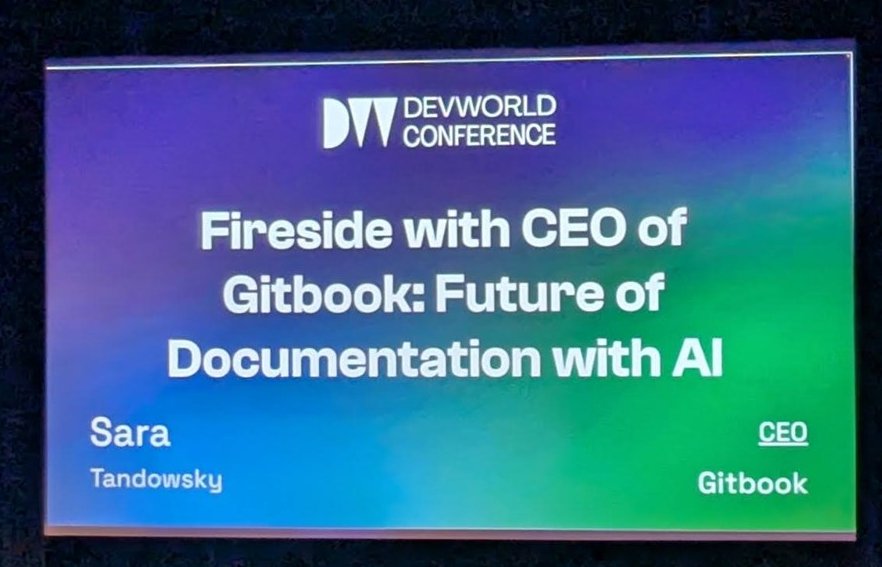
The title slide: “Fireside with CEO of Gitbook: Future of Documentation with AI”, with Sara Tandowsky, CEO, Gitbook (matching her GitBook author page).
I only photographed the title slide of this session, so I will not summarise what was said. The topic matters though: documentation is now read by agents as much as by people, which comes back in the founder talk below (“provide agent facing docs”).
”Just A.I. is Not Enough (Yet) to Create a Company”
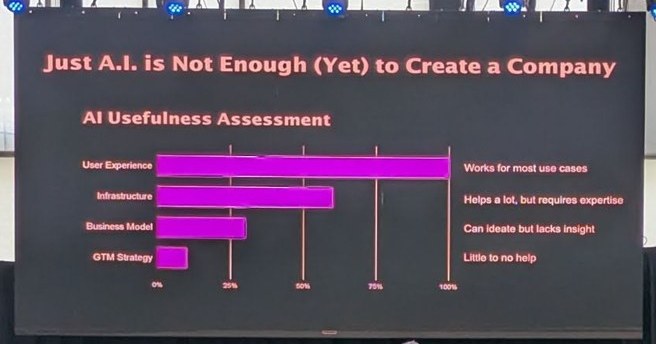
The talk opened with an “AI Usefulness Assessment” bar chart.
The chart rated four areas by how useful AI had been when building a company: user experience (works for most use cases), infrastructure (helps a lot, but requires expertise), business model (can ideate but lacks insight) and go-to-market strategy (little to no help). The bars are the speaker’s own assessment, not a study. It matches my experience: AI is strong at producing screens and code, and weakest where the question is who will pay and how you reach them.
Step 1: be intentional, not “A.I.”
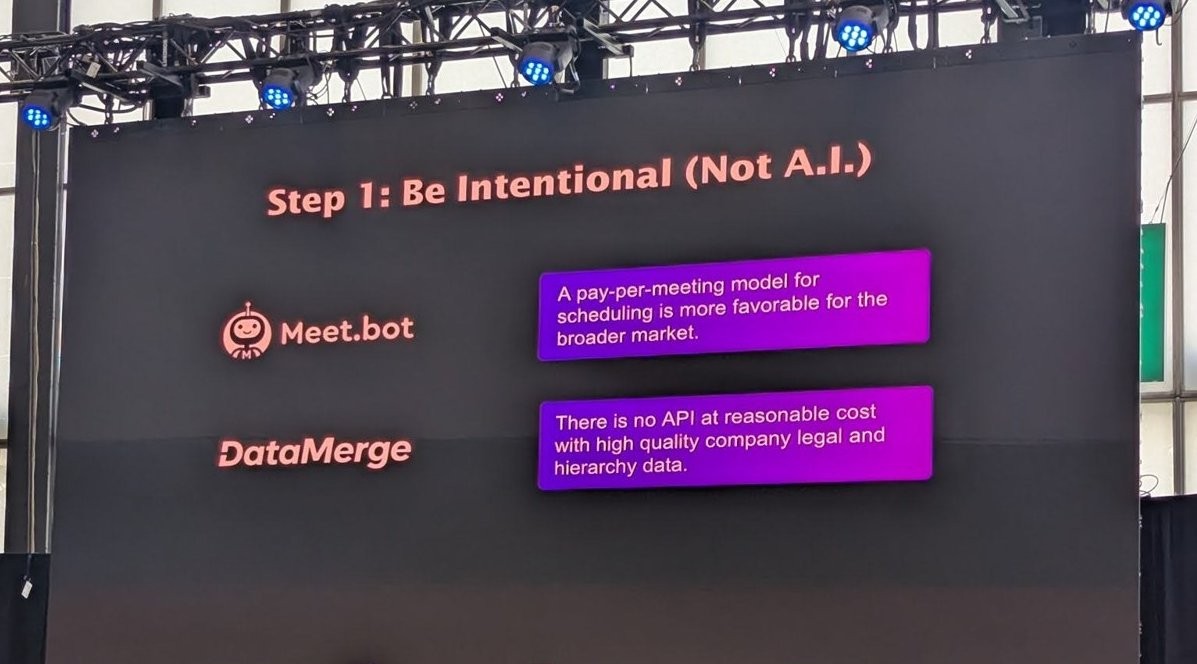
Step 1 uses two of the speaker’s products as examples.
- Meet.bot: “A pay-per-meeting model for scheduling is more favorable for the broader market.”
- DataMerge: “There is no API at reasonable cost with high quality company legal and hierarchy data.”
Each starts from a concrete gap, not from the technology.
Step 2: build fast
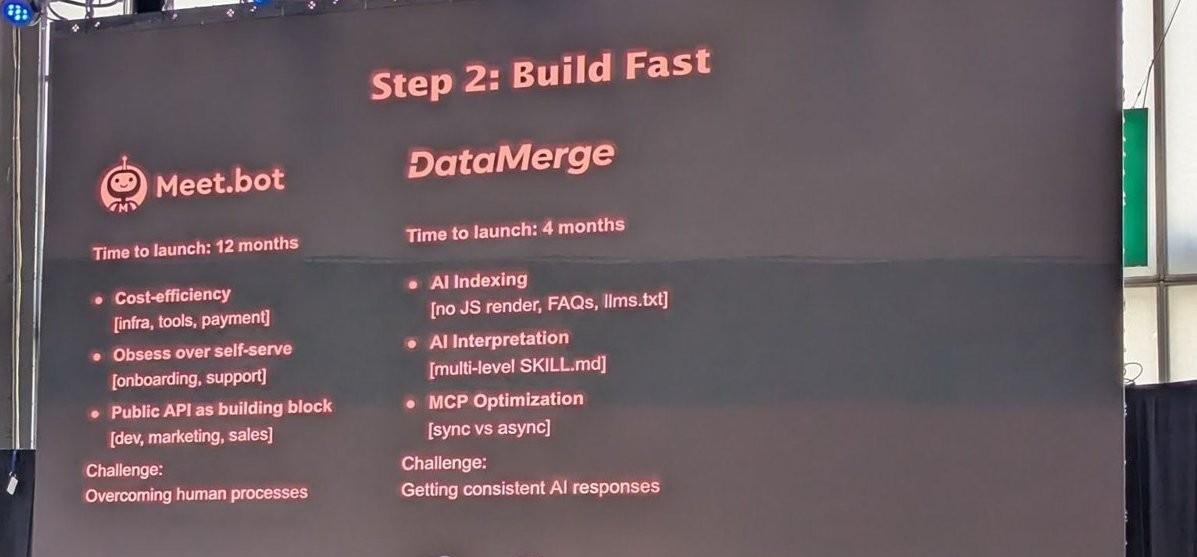
Build lessons: Meet.bot took 12 months to launch, DataMerge 4 months.
For Meet.bot: cost efficiency across infrastructure, tools and payment; an obsession with self-serve onboarding and support; a public API as a building block for development, marketing and sales. The stated challenge was overcoming human processes.
For DataMerge the slide lists AI indexing (no JavaScript rendering, FAQs, llms.txt), AI interpretation (multi-level SKILL.md) and MCP optimisation (sync versus async). The stated challenge was getting consistent AI responses. For anyone shipping a product that agents will call, that is a compact checklist of agent-facing surface area.
Step 3: iterate on growth
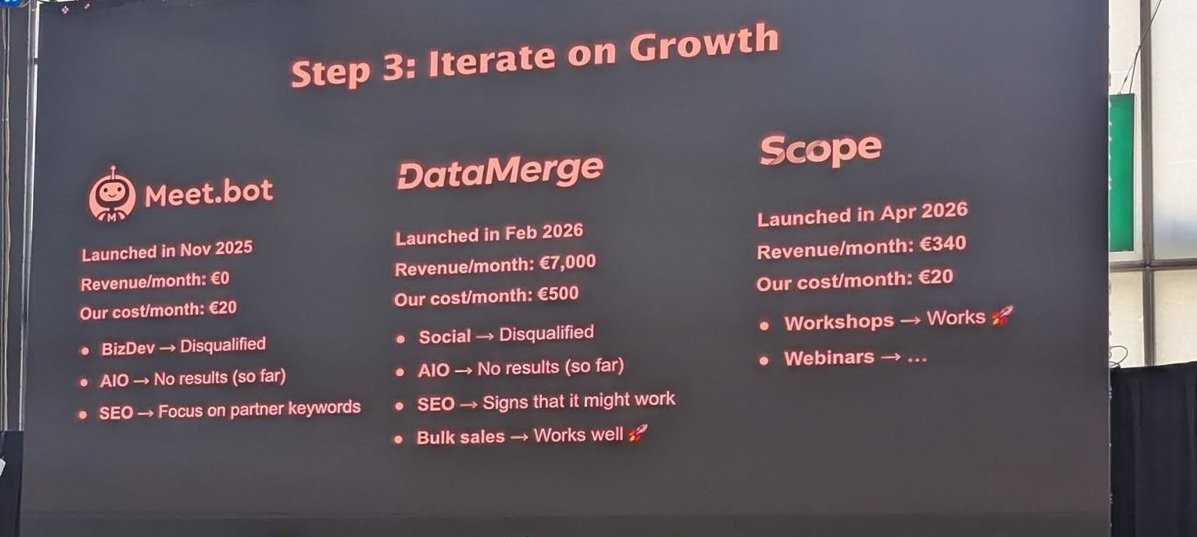
Step 3: three products with launch date, monthly revenue, monthly cost and what worked.
The slide was unusually open about numbers:
| Product | Launched | Revenue per month | Cost per month |
|---|---|---|---|
| Meet.bot | Nov 2025 | 0 euro | 20 euro |
| DataMerge | Feb 2026 | 7,000 euro | 500 euro |
| Scope | Apr 2026 | 340 euro | 20 euro |
On channels: for Meet.bot, business development was disqualified, AI optimisation showed no results so far, and SEO focused on partner keywords. For DataMerge, social was disqualified, AI optimisation showed no results so far, SEO showed signs it might work, and bulk sales worked well. For Scope, workshops worked. Seeing a founder say that AI optimisation did nothing yet for two products was the most useful data point of the session for me.
”Building got easier, growth got harder”
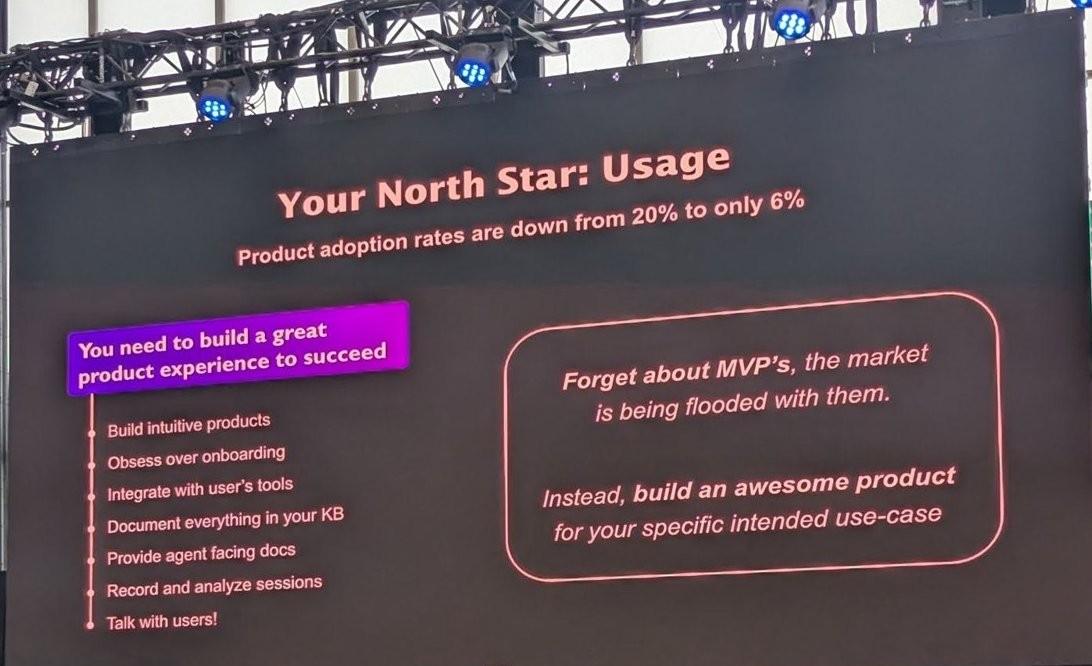
“Your North Star: Usage. Product adoption rates are down from 20% to only 6%.” (The slide gave no source for the figure.)
The slide’s list for a great product experience: build intuitive products, obsess over onboarding, integrate with the user’s tools, document everything in your knowledge base, provide agent-facing docs, record and analyse sessions, and talk with users. A side box said to forget about MVPs because the market is flooded with them, and to build an awesome product for your specific intended use case.
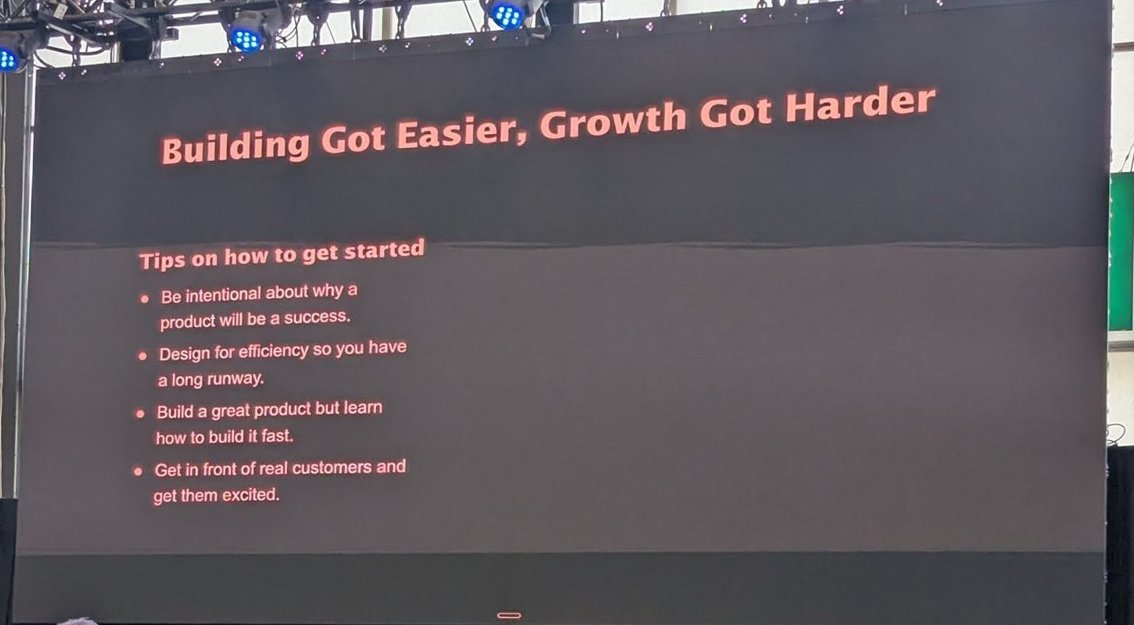
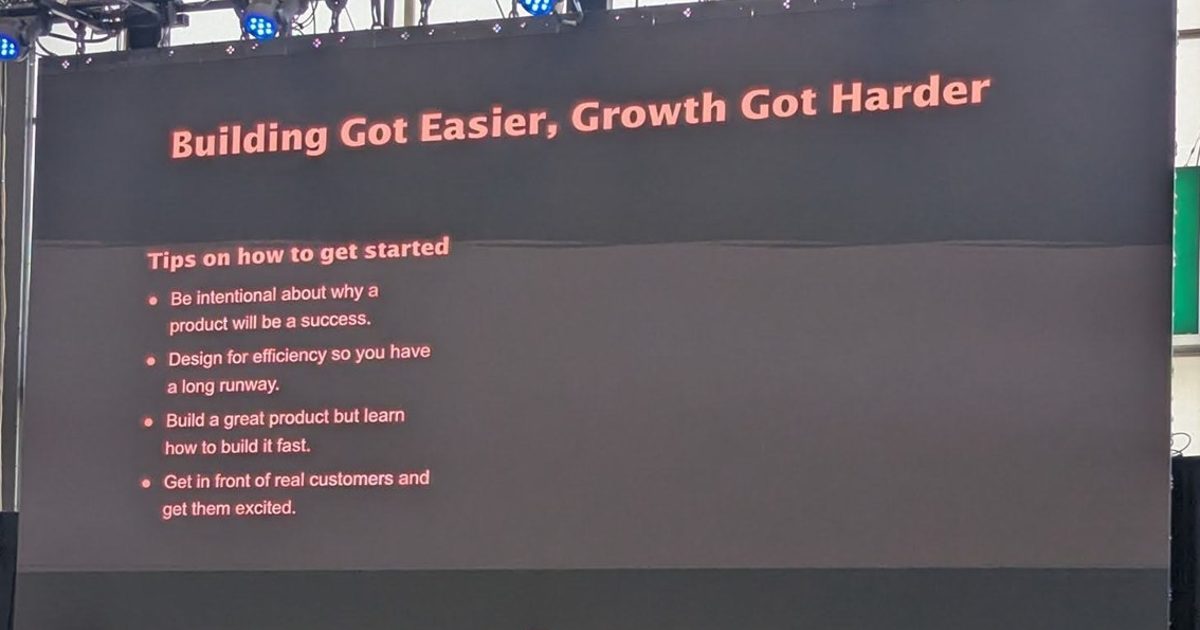
The closing tips: be intentional about why a product will be a success; design for efficiency so you have a long runway; build a great product but learn how to build it fast; get in front of real customers and get them excited.