At DevWorld Conference 2026, a keynote made the case that the next generation of AI is not about bigger models — it is about better infrastructure. The argument was compelling: models are commoditizing, but the infrastructure that connects them to reality is where the real value lies.
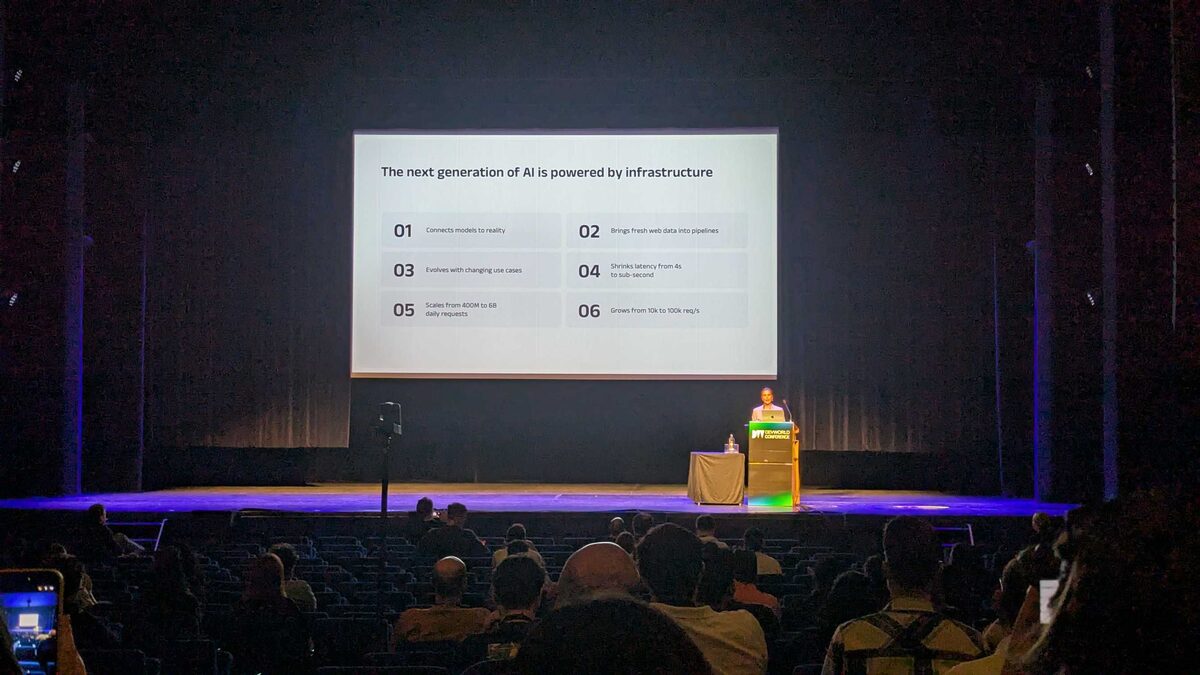
Six Pillars of AI Infrastructure
The speaker laid out six reasons why infrastructure — not model size — determines whether AI applications succeed in production:
- Connects models to reality — Models trained on static datasets need live data pipelines to stay relevant
- Brings fresh web data into pipelines — Real-time data ingestion is the difference between a demo and a product
- Evolves with changing use cases — Infrastructure must adapt as use cases shift, not just the prompts
- Shrinks latency from 4s to sub-second — Users abandon AI features that feel slow
- Scales from 400M to 6B daily requests — The jump from prototype to production is three orders of magnitude
- Grows from 10k to 100k req/s — Throughput at scale requires purpose-built infrastructure, not off-the-shelf APIs
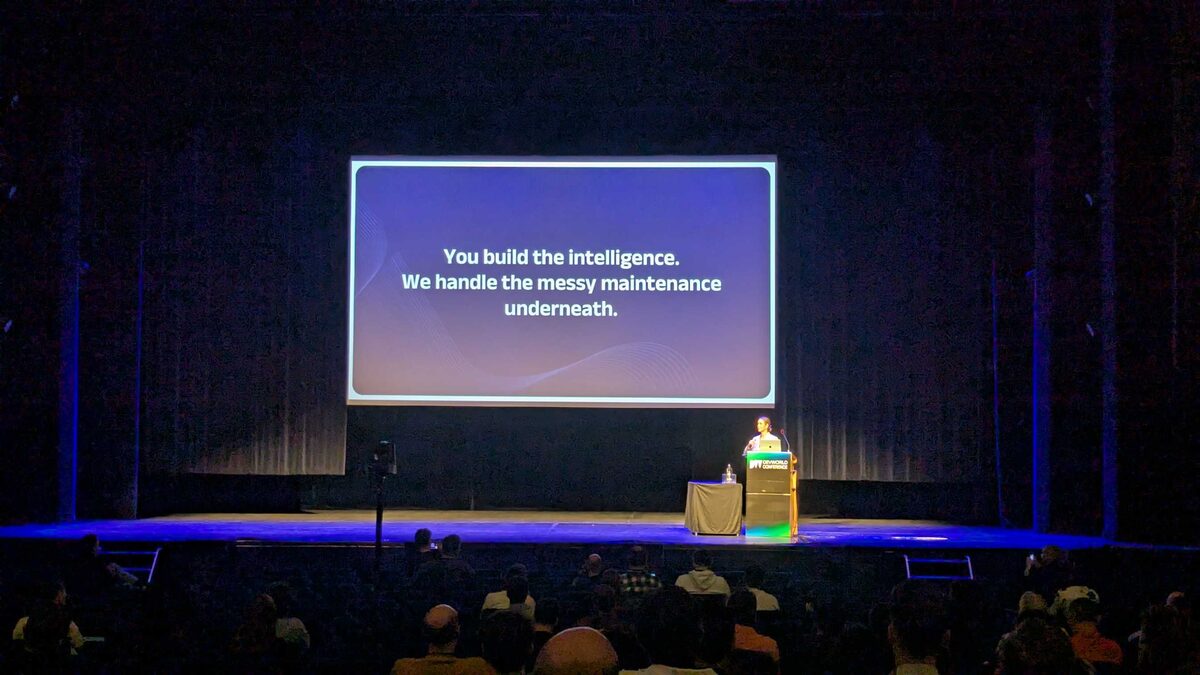
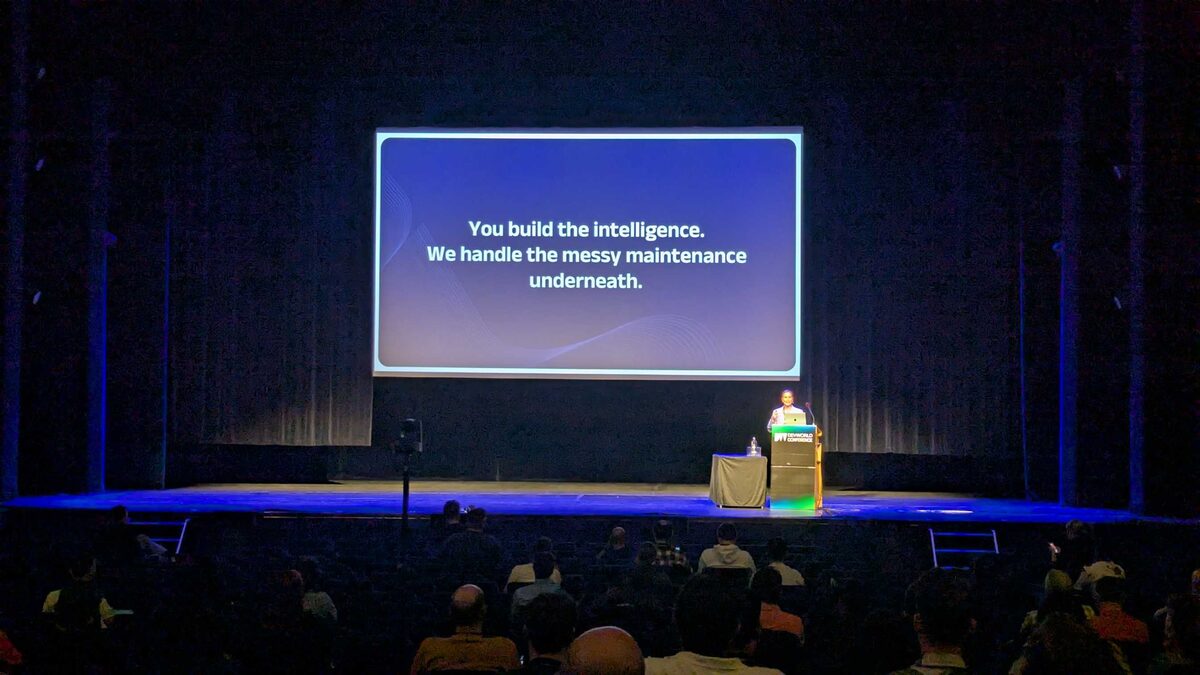
You Build the Intelligence. We Handle the Messy Maintenance Underneath.
The closing message was a clear value proposition: developers should focus on building intelligent applications while infrastructure handles the undifferentiated heavy lifting — data freshness, scaling, latency optimization, and reliability.
This resonates with what I see across enterprise AI deployments. Teams that invest in AI infrastructure optimization before scaling their model layer consistently ship faster and spend less. The model is rarely the bottleneck — the plumbing is.
The Theater Experience
DevWorld Conference 2026 takes place in a beautiful theater venue. The main stage presentations have that cinematic quality — big screen, packed audience, proper production values. A different energy from the typical conference hall setup.


Key Takeaway
If you are building AI applications in 2026, your competitive advantage is not the model — everyone has access to the same foundation models. Your advantage is the infrastructure that connects those models to fresh data, serves them at sub-second latency, and scales from prototype to production without rewriting everything.
The inference economy is making this even more important. As inference costs drop and throughput demands rise, the infrastructure layer becomes the deciding factor between AI features that delight users and ones that frustrate them.