DevOpsDays Amsterdam 2025 ran from 18 to 20 June, and I spent the afternoon of day two, 19 June, in the main room. Three talks stuck with me: an honest OpenTelemetry adoption story, a tour of OpenSSF practices for securing the software supply chain, and a talk on trust inside teams. The day before, I had been at Identity Week Europe, so there is a short section on that at the end.
An OpenTelemetry adoption story
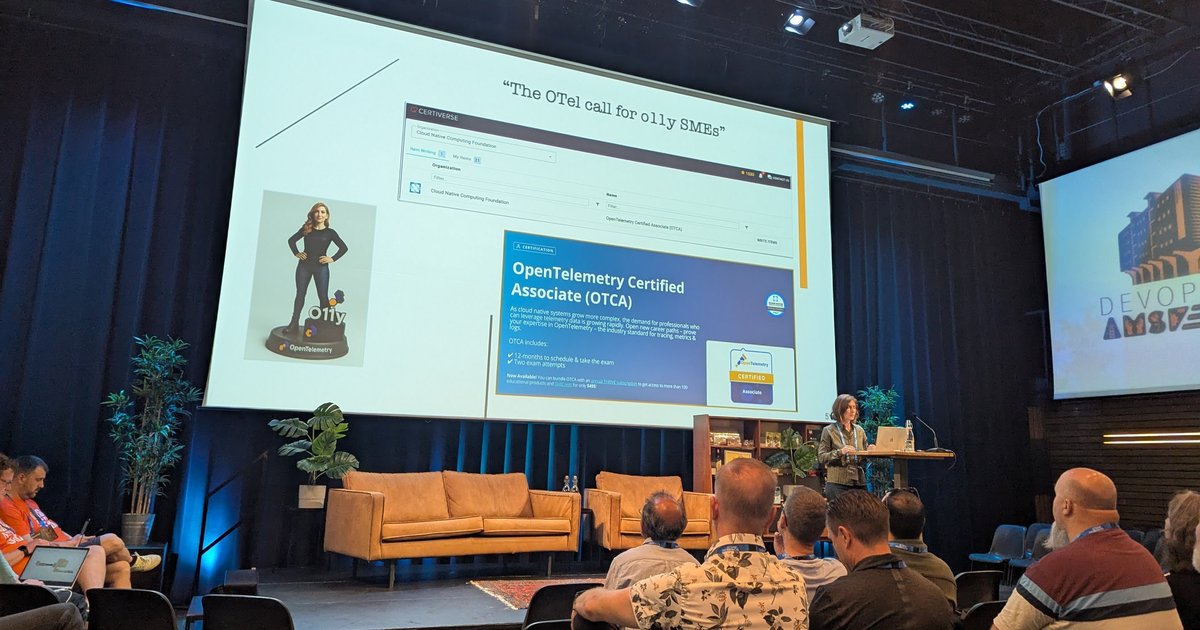
The official programme lists Diana Todea’s talk as “From zero to developer: my one year serendipity journey with OpenTelemetry”. One slide in her deck was titled “The OTel call for o11y SMEs” and pointed at the OpenTelemetry Certified Associate (OTCA) exam from the Cloud Native Computing Foundation. The slide says the certification covers tracing, metrics and logs, with 12 months to schedule the exam and two attempts.
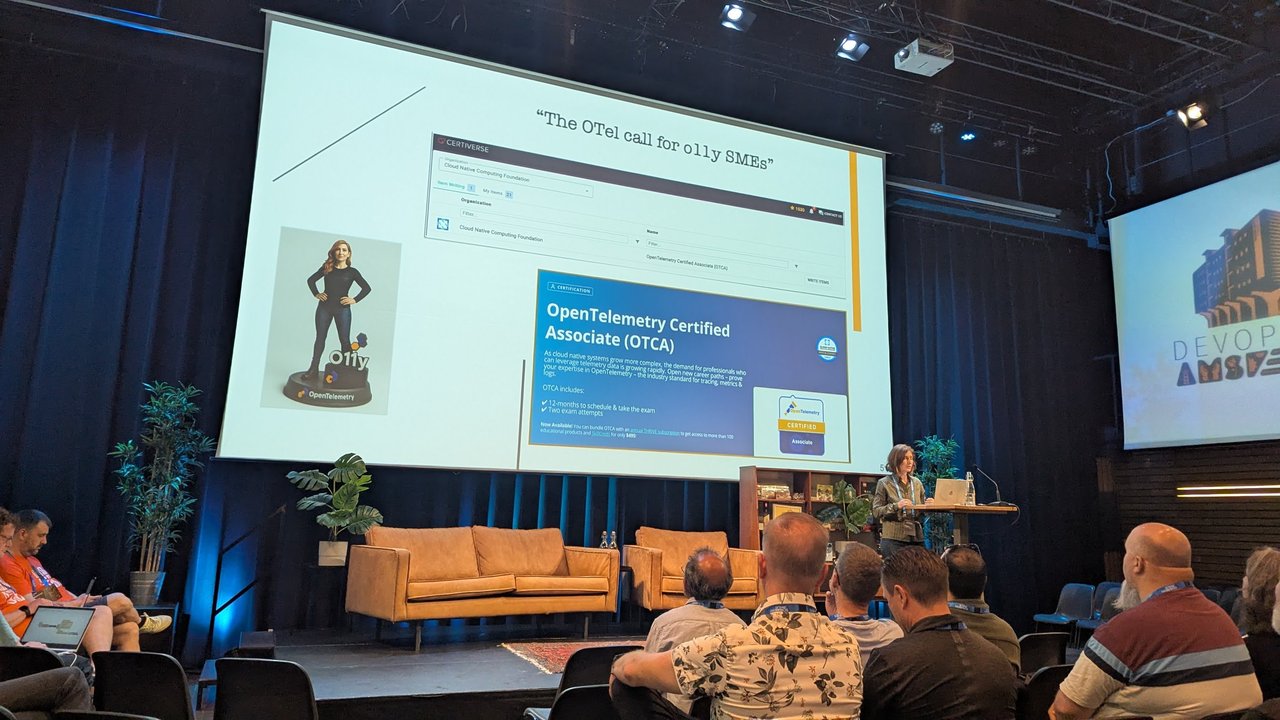
The “OTel call for o11y SMEs” slide, with the OpenTelemetry Certified Associate (OTCA) certification page.
The framing slide was the clearest one. OpenTelemetry was drawn as an observability framework and toolkit that handles generation, export and collection of logs, traces and metrics, so instrumenting applications and systems gets easier. Next to it, the slide listed what it is not: it is open source and vendor and tools agnostic, but it is not an observability backend or frontend, so you still need your own storage and visualisation tools.
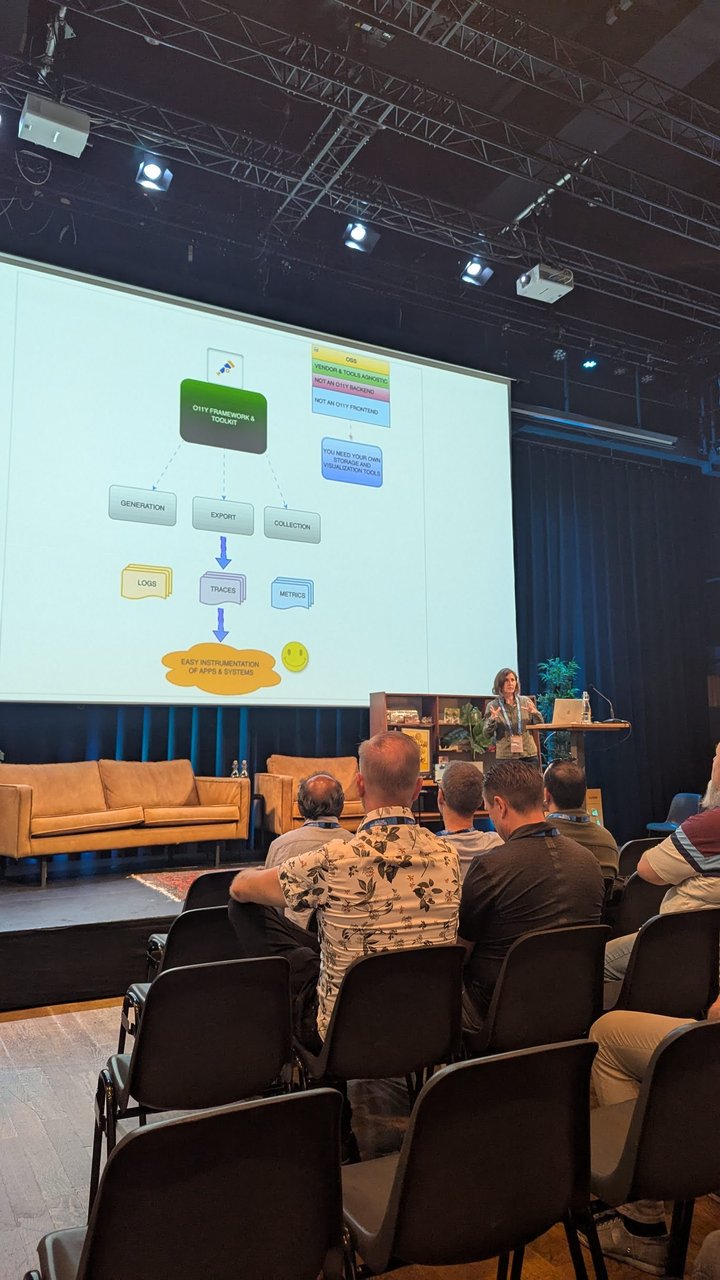
OpenTelemetry as a toolkit: logs, traces and metrics out, but bring your own storage and visualisation.
That matches how the OpenTelemetry site describes the project: instrument once with the APIs and SDKs, then export to the backend you choose.
The “we loved it, but” slide
The part I valued most was the candid take-aways slide, based on a project where the speaker’s team ran a proof of concept. The positives were good collaboration between SRE and software engineers, a common format and protocol for telemetry data, and vendor neutrality. Then the slide listed what hurt:
- instrumentation comes with a lot of manual effort;
- onboarding was not the smoothest because of confusing docs;
- the team had not accounted for enough engineering time and manpower;
- they were not satisfied with the open source visualisation frontends;
- OpenTelemetry was not yet a stable project, so what kind of support would they get in production?
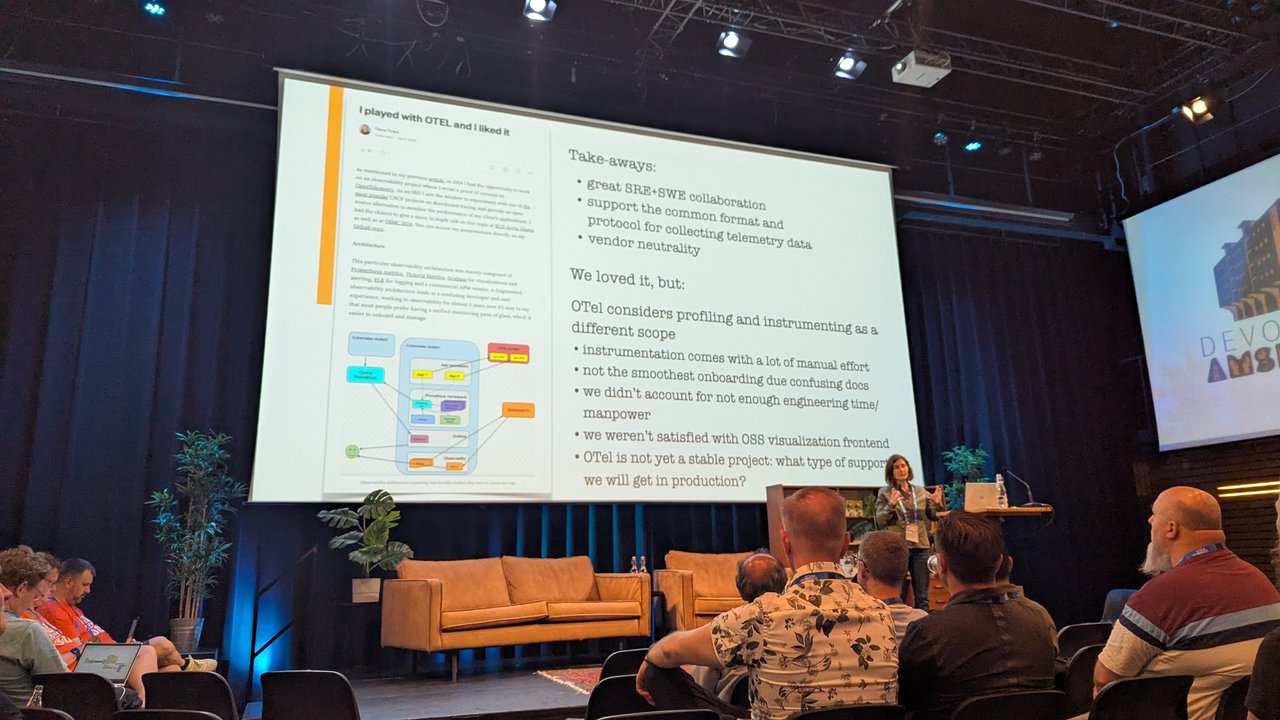
Take-aways: what the team loved about OpenTelemetry, and what slowed them down.
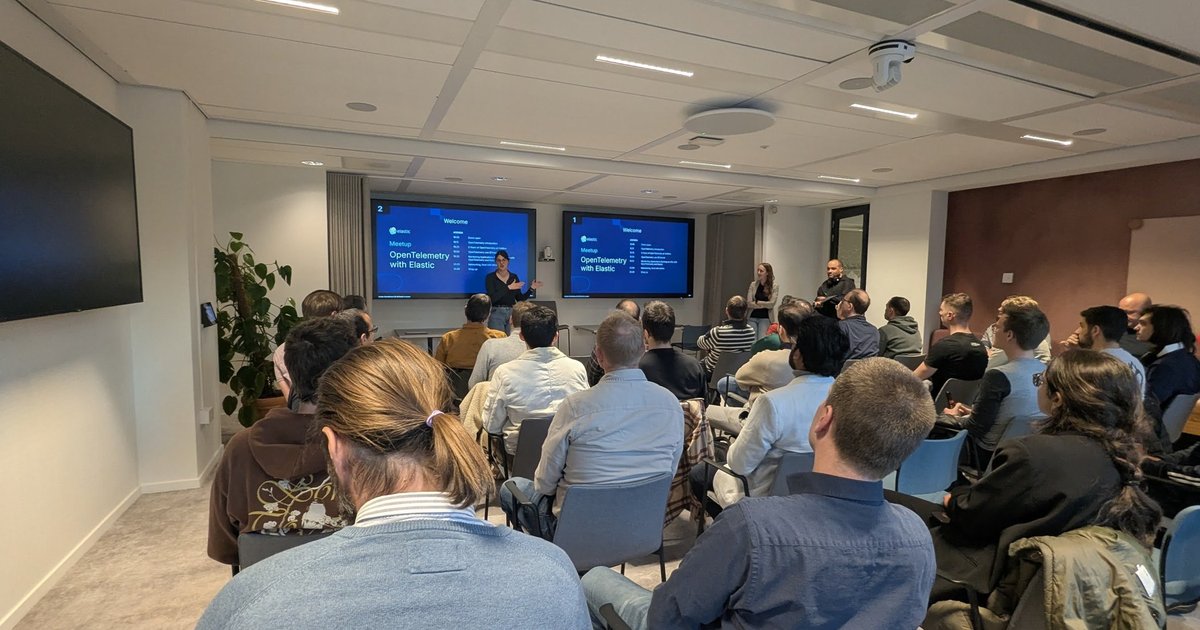
My take: the list lines up with what I see on platform projects. The collector and the semantic conventions are the easy part. The cost is in instrumentation effort and in choosing and running the backend. Some of these points will have aged since the talk, as OpenTelemetry keeps moving, so check current stability status per signal before judging it. For hands-on follow-ups see my posts on observability-driven development with OTel and the OTel Amsterdam meetup.
OpenSSF best practices for everyone
Avishay Balter of Microsoft gave “Building Secure Software: OpenSSF Best Practices for Everyone!”, with the Open Source Security Foundation branding on the deck.
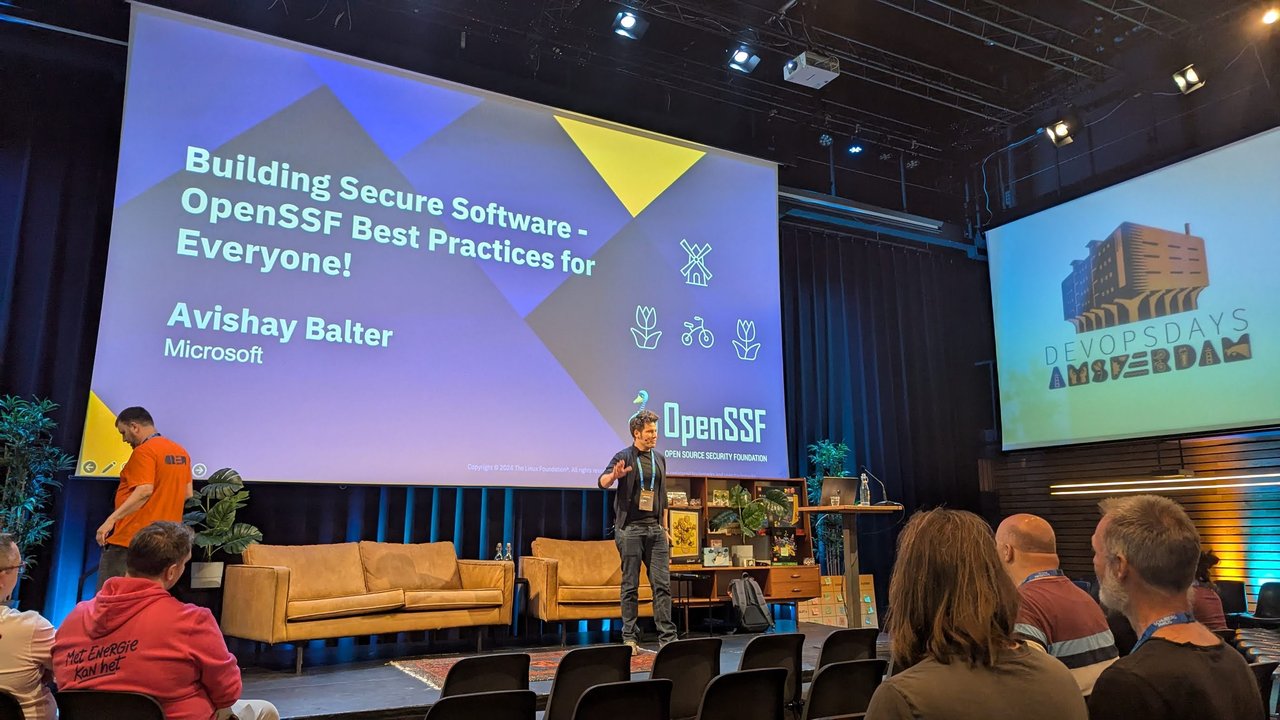
Opening slide of the OpenSSF talk.
One slide, “The Software Supply Chain”, sketched the path from source code management through build and CI/CD to packaging and finally use, with dependencies feeding into the loop and the user at the end. It is a useful reminder that every arrow is a place where something can be tampered with, which is why provenance and dependency hygiene matter as much as code review.
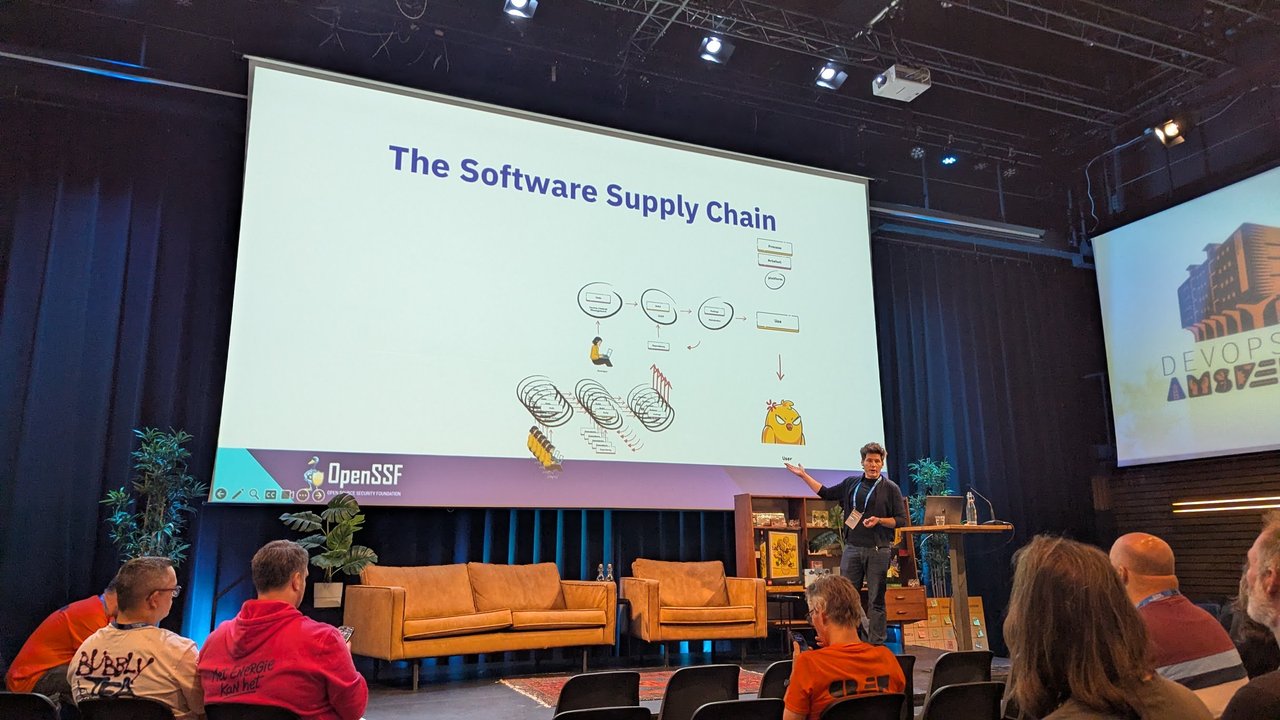
The supply chain slide: each stage from source to user is something to protect.
Trust-driven teams
The last talk I caught was Busra Koken’s “Trust-Driven Teams: Building High Performance Through Connection”, listed in the programme for the 16:15 slot. I only photographed the opening slide, so I will not summarise it, but it was a good counterweight to a day of tooling talks.
Evening in the main hall
The conference programme on 19 June ended with dinner, drinks and a social programme according to the schedule, followed by an after party with a pub quiz. The main hall switched to round tables for it.
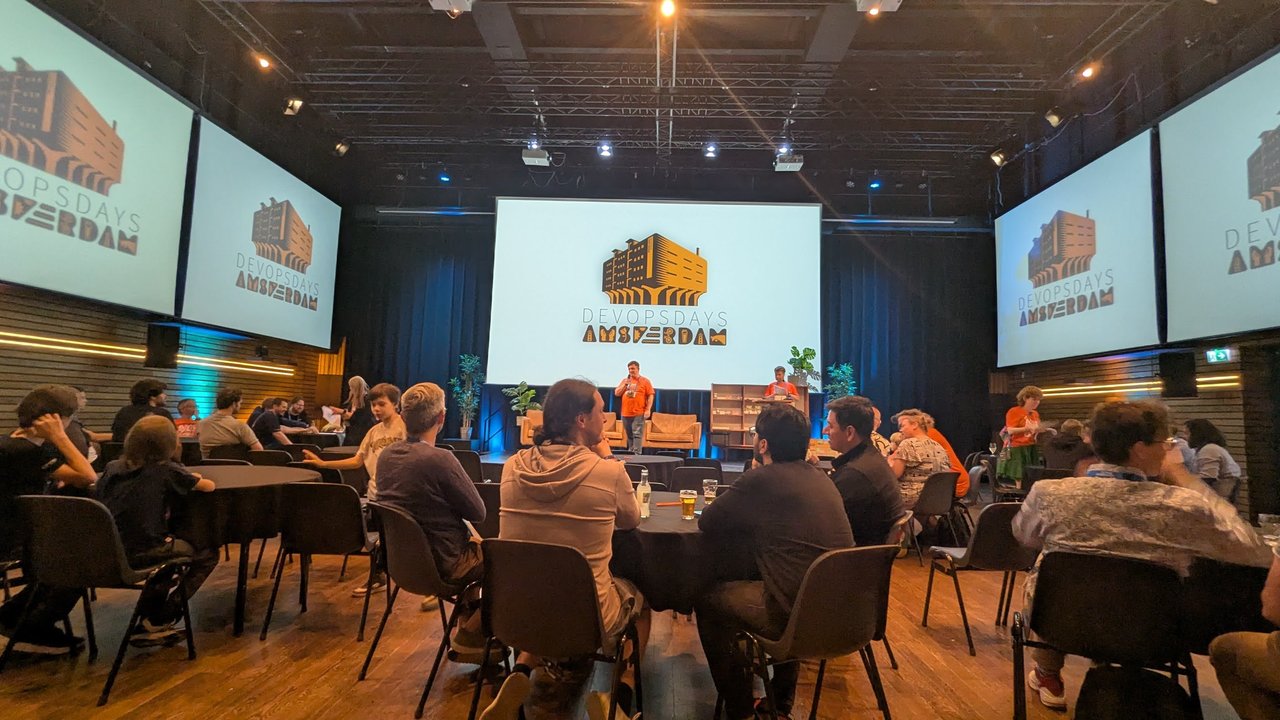
The main hall with the DevOpsDays Amsterdam logo on every screen, set up for the evening.
Earlier that week: Identity Week Europe
On 18 June I visited Identity Week Europe in Amsterdam, a trade event on digital identity and secure documents. The sponsor wall named the event “Global, Trusted, Visionary”, with sponsors including Entrust, IDEMIA Smart Identity and Veriff among the platinum names.
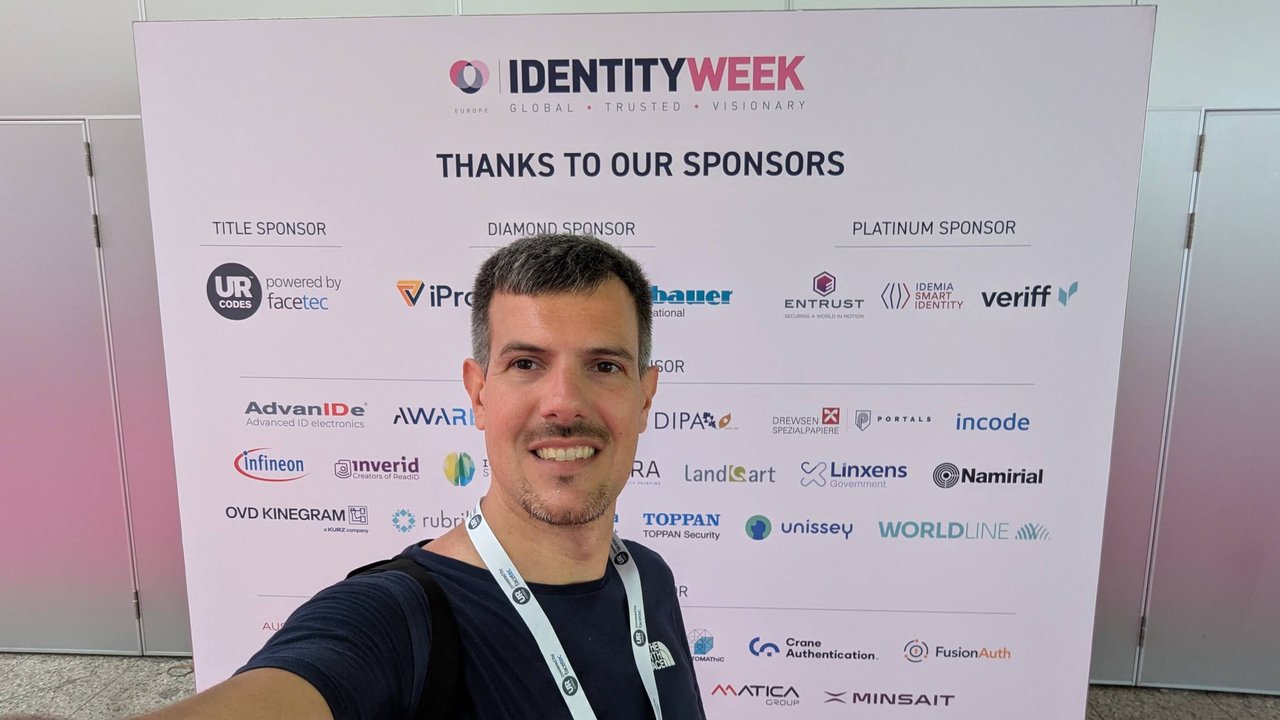
The Identity Week Europe sponsor wall.
In the theatre I caught part of a panel titled “Ensuring authenticity: Innovations and challenges in breeder document management”. Breeder documents, such as birth certificates, are what other identity documents get issued from. I did not note details of the discussion.
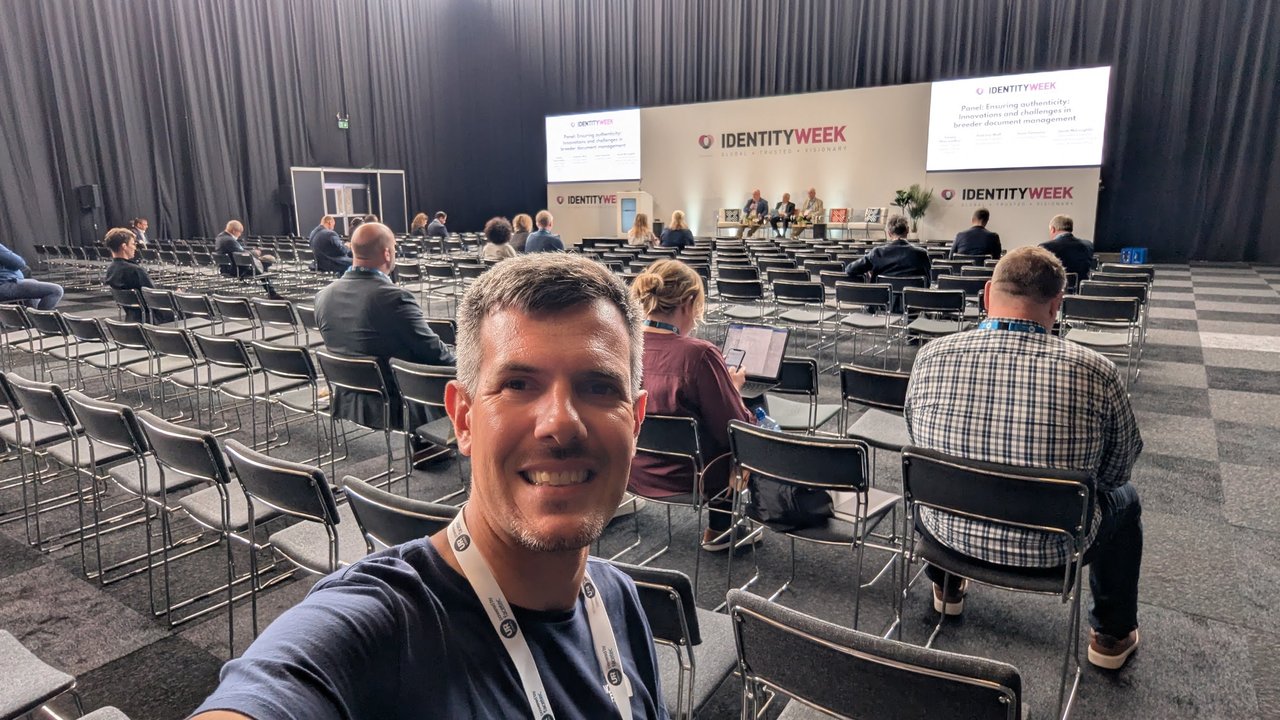
The panel on authenticity and breeder document management.
At a seminar stage run by Terrapinn, a slide on the screen was headed “Concept creation by IDEMIA Design team”, about the design of a security document.
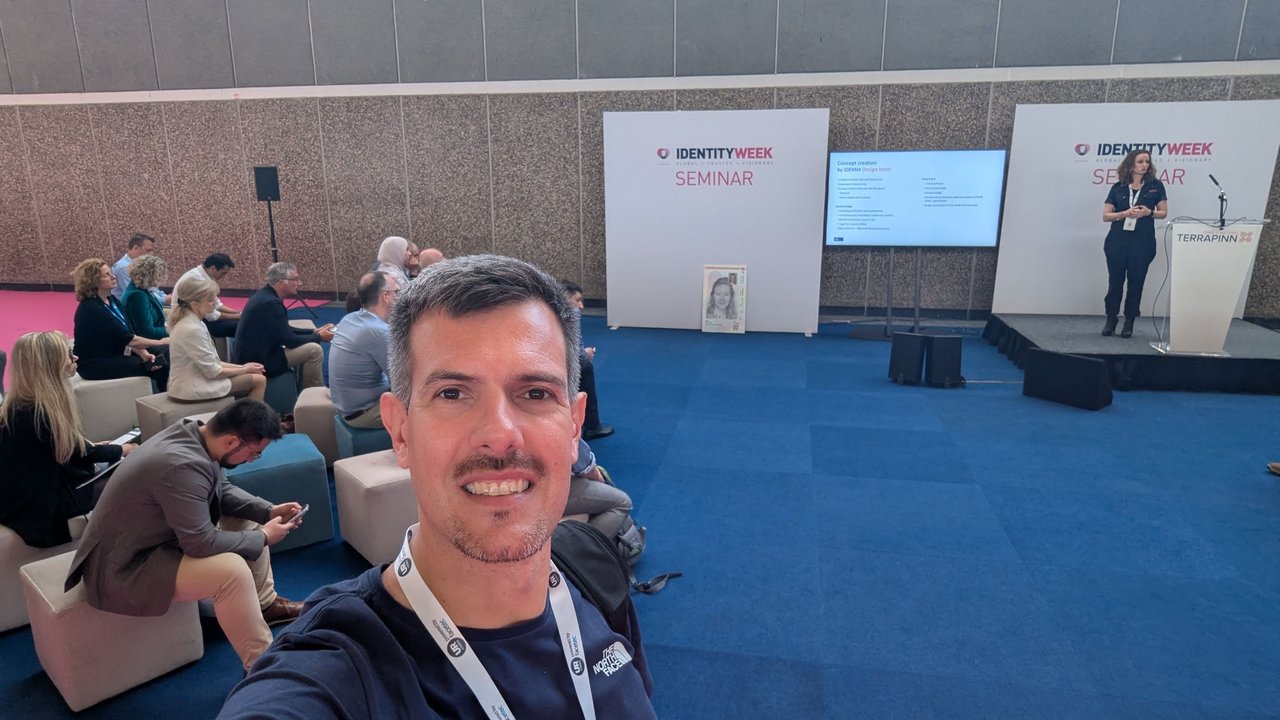
The seminar stage, with a slide on security document design.
My take: identity work sits close to the platform and security topics I cover, from workload identity to access management, for example Keycloak on Kubernetes.