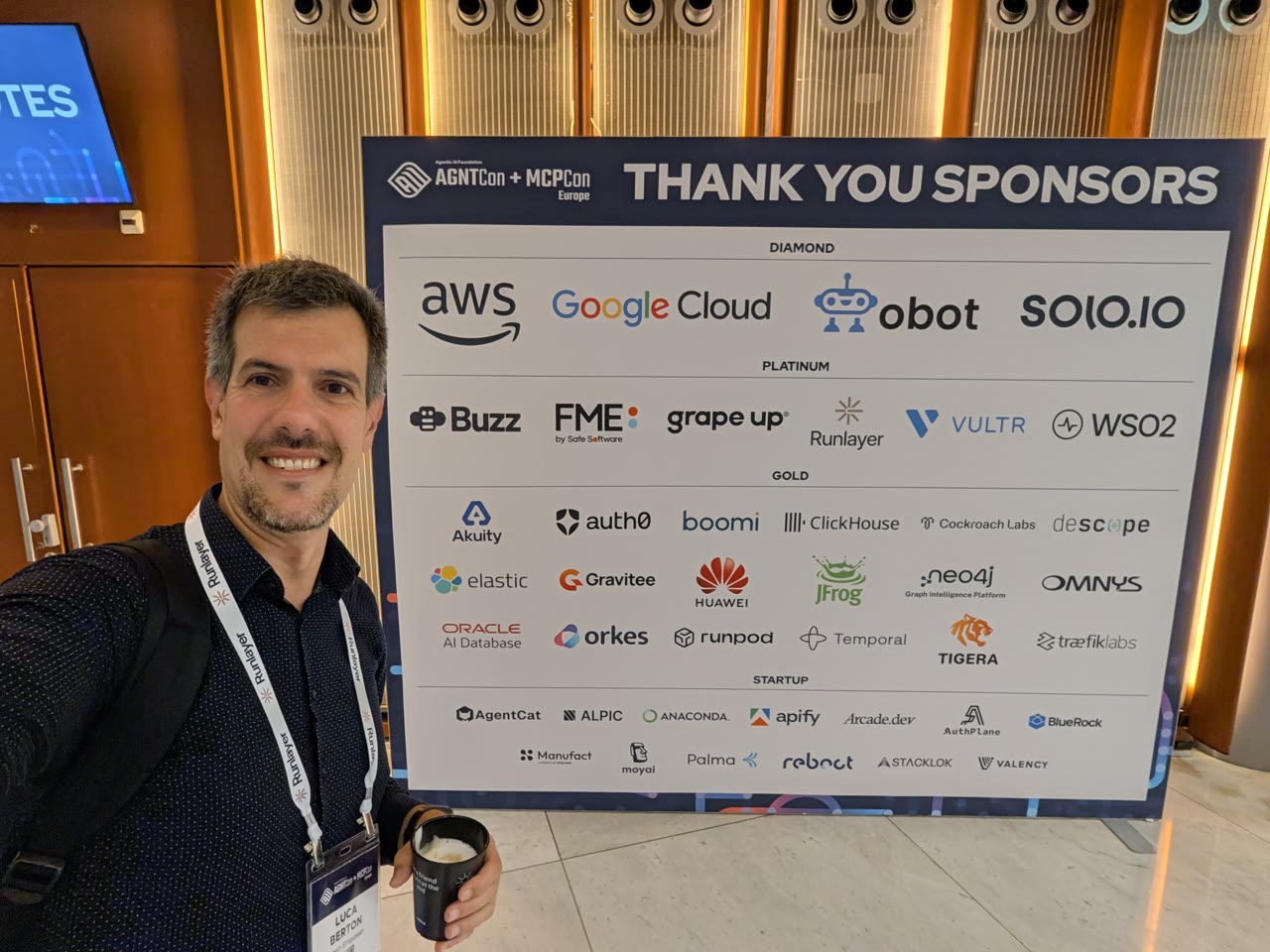
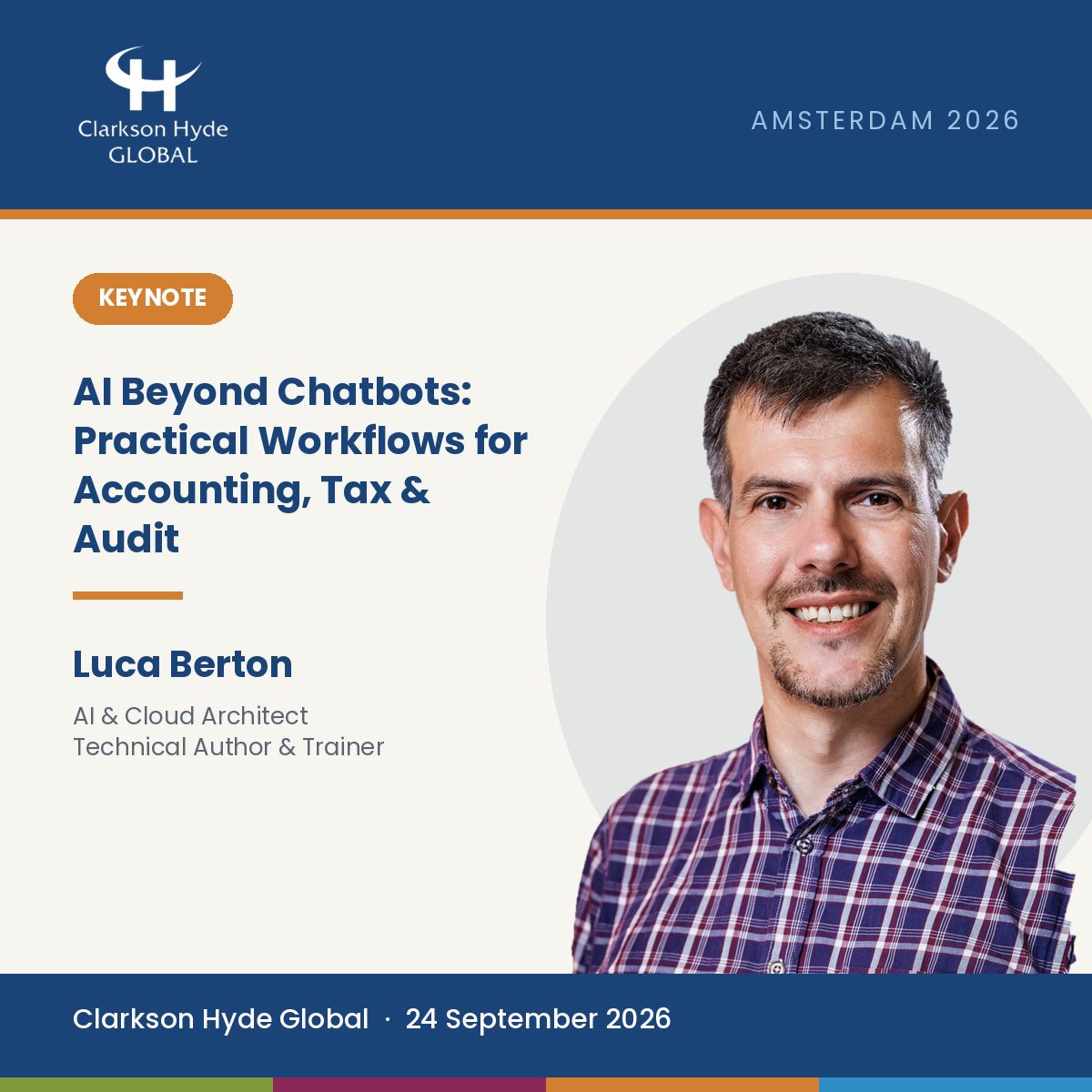
I delivered the keynote at Clarkson Hyde Global’s Amsterdam 2026 event: AI Beyond Chatbots: Practical Workflows for Accounting, Tax & Audit. Clarkson Hyde Global is an international alliance of accounting, audit, tax, and business advisory firms — independent member firms across the Netherlands, the US, Norway, and beyond, built around the idea of “global support, with a local touch.” That local-touch model is exactly why the chatbot framing falls short for this audience, and it’s the problem the talk was built to fix.
Why “beyond chatbots” is the right framing
Most accounting, tax, and audit firms have already run the chatbot experiment. Someone pastes a client question into a general-purpose assistant, gets a plausible-sounding answer, and either trusts it too much or doesn’t trust it at all. Neither outcome moves the firm forward, and neither is what the technology is actually good at.
A chat window is a single-turn interaction with no memory of your engagement files, no connection to your general ledger, and no audit trail a reviewing partner can sign off on. The workflows that actually save partner and staff hours look nothing like a chat window: they read source documents, cross-check them against systems of record, flag exceptions, and hand a reviewer a package instead of a paragraph. That’s the shift the keynote walked through — from “ask the AI a question” to “give the AI a job with boundaries.”
Three workflow categories worth building
1. Document intake and reconciliation agents
Every engagement starts with a pile of PDFs, scanned receipts, bank statements, and spreadsheets in inconsistent formats. An agentic pipeline reads each document, extracts structured line items, matches them against the general ledger or bank feed, and routes only the mismatches to a human. The win isn’t “AI reads receipts” — plenty of OCR tools already do that. The win is closing the loop: extract, reconcile, flag the exception, and log exactly why it was flagged.
2. Continuous audit and anomaly detection
Traditional audit sampling checks a slice of transactions after the fact. An agent watching the transaction stream continuously can score every entry against expected patterns — vendor, amount, timing, approval chain — and surface anomalies while the engagement is still open, not during a year-end crunch. This doesn’t replace professional judgment; it changes what the sample is built from. Instead of a random or judgmental sample, the auditor starts from a ranked list of the transactions most likely to matter.
3. Tax research and compliance copilots
Tax questions need citations, not confident prose. A retrieval-augmented workflow that grounds every answer in the actual statute, ruling, or treaty text — and shows its sources — is a fundamentally different tool from a general chatbot guessing from training data. For a multi-jurisdiction network like Clarkson Hyde Global’s member firms, that grounding step is the difference between a useful first draft and a liability.
The part every firm skips: guardrails
The three workflows above are the easy part to demo. The part that determines whether a regulated firm can actually ship them is guardrails:
- Human-in-the-loop by default. Every exception the agent flags goes to a reviewer before it touches a client deliverable — the agent proposes, a person disposes.
- Full audit trail. Every extraction, match, and flag is logged with the source document and the model’s reasoning, because “the AI said so” is not an answer a regulator or a client accepts.
- Data residency and access control. Client financial data doesn’t leave the firm’s controlled environment just because the workflow got easier to build. This is table stakes for a network operating across jurisdictions with different data protection regimes.
- Explainability over eloquence. A confident-sounding answer with no traceable source is worse than no answer, especially in tax and audit work where the reasoning has to survive a review.
Firms that skip this section end up with a flashy pilot that never makes it into a real engagement. Firms that start here end up with something a risk committee will actually approve.
What this means for accounting, tax & audit teams
If you’re evaluating AI adoption at a member firm or an independent practice, the practical next step isn’t “pick a chatbot vendor.” It’s picking one narrow, high-volume workflow — document reconciliation is usually the easiest starting point — and building the human-in-the-loop and audit-trail pieces in from day one rather than bolting them on later. That’s a smaller, less exciting first project than “deploy an AI assistant firm-wide,” and it’s also the one that survives contact with a partner review.
Related reading
- Building an AI Governance Framework That Actually Works — model registries, bias auditing, and accountability chains that apply directly to regulated professional services.
- Guardrails for AI Agents in Production — the operational controls behind the human-in-the-loop pattern above.
- Agentic AI: A CTO Strategy Guide — how to sequence adoption beyond a single pilot workflow.
Want to talk through what an agentic workflow looks like for your firm? Book a consultation.