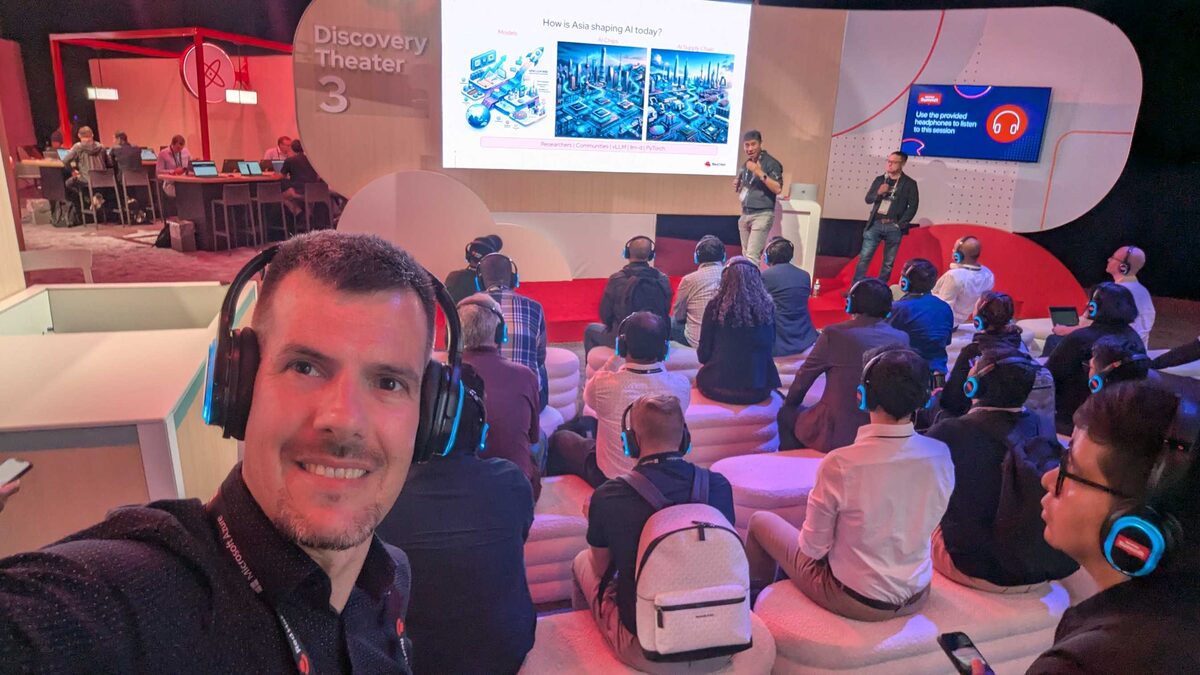
At Red Hat Summit 2026 in Atlanta, one of the most eye-opening sessions I attended was at Discovery Theater 3: “Building Digital Sovereign AI” — presented by Li Ming Tsai (Red Hat AI Architect) and Jiaju Zhang (Red Hat Chief Architect, Greater China Group).
The session introduced a sovereign, cloud-native AI infrastructure built with Red Hat OpenShift AI and MetaX — a Shanghai-based GPU company offering high-performance, cost-efficient alternatives to NVIDIA. Together with Red Hat AI Inference Server and MetaX MIM (MetaX Inference Microservice), they are redefining AI infrastructure with an open, sovereign approach.
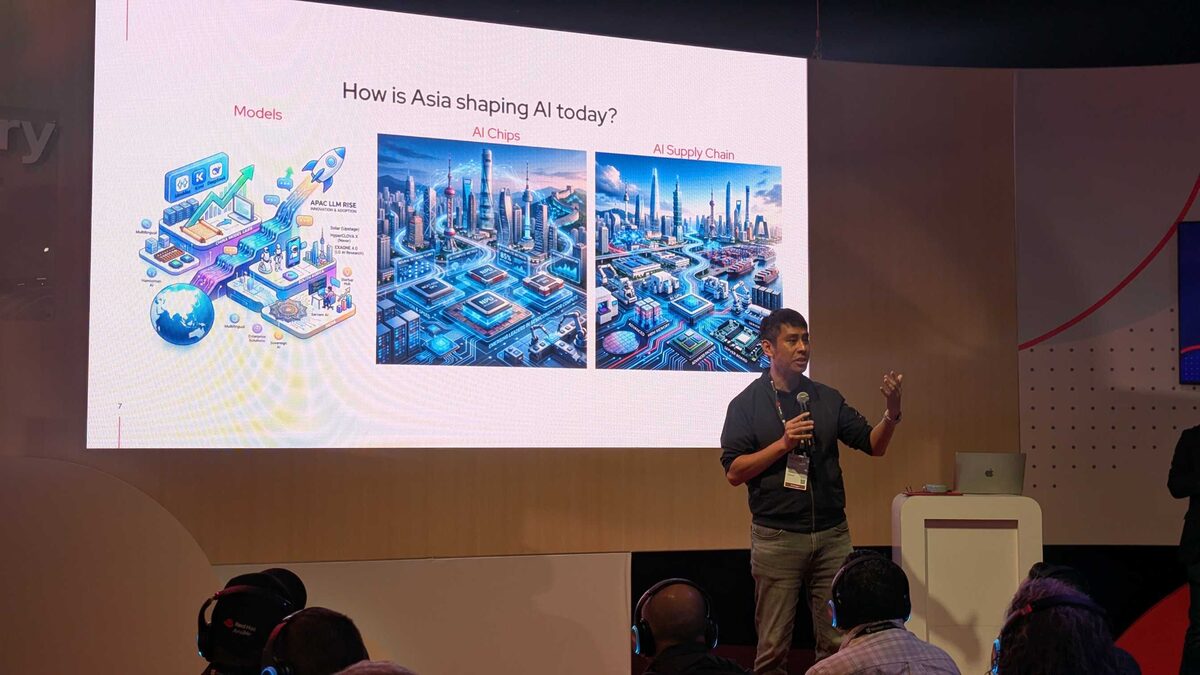
Three Pillars: Models, Chips, Supply Chain
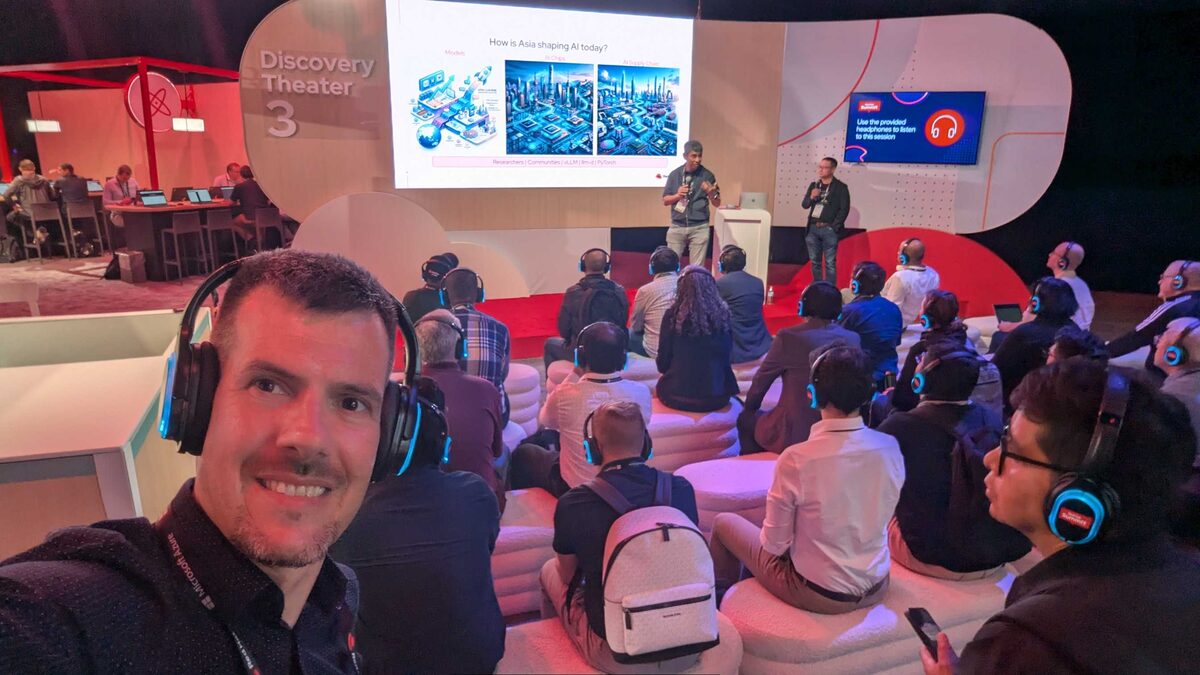
The talk framed Asia’s AI influence across three dimensions:
Models: The APAC LLM Rise
Asia is no longer just consuming AI — it is producing frontier models at scale. The APAC LLM Rise is real:
- Solar (Upstage) — South Korea’s enterprise LLM pushing multilingual capabilities
- HyperCLOVA X — NAVER’s Korean-first foundation model
- ERNIE 4.0 (Baidu) — China’s answer to GPT-4, deeply integrated into Baidu’s ecosystem
- Qwen (Alibaba) — open-weight models competing with Meta’s Llama
- DeepSeek — cost-efficient reasoning models that shocked the industry
- Multiple multilingual and enterprise-focused models across Japan, India, and Southeast Asia
The pattern is clear: APAC is not waiting for Silicon Valley. They are building their own foundation model stacks, optimized for local languages, regulations, and enterprise needs.
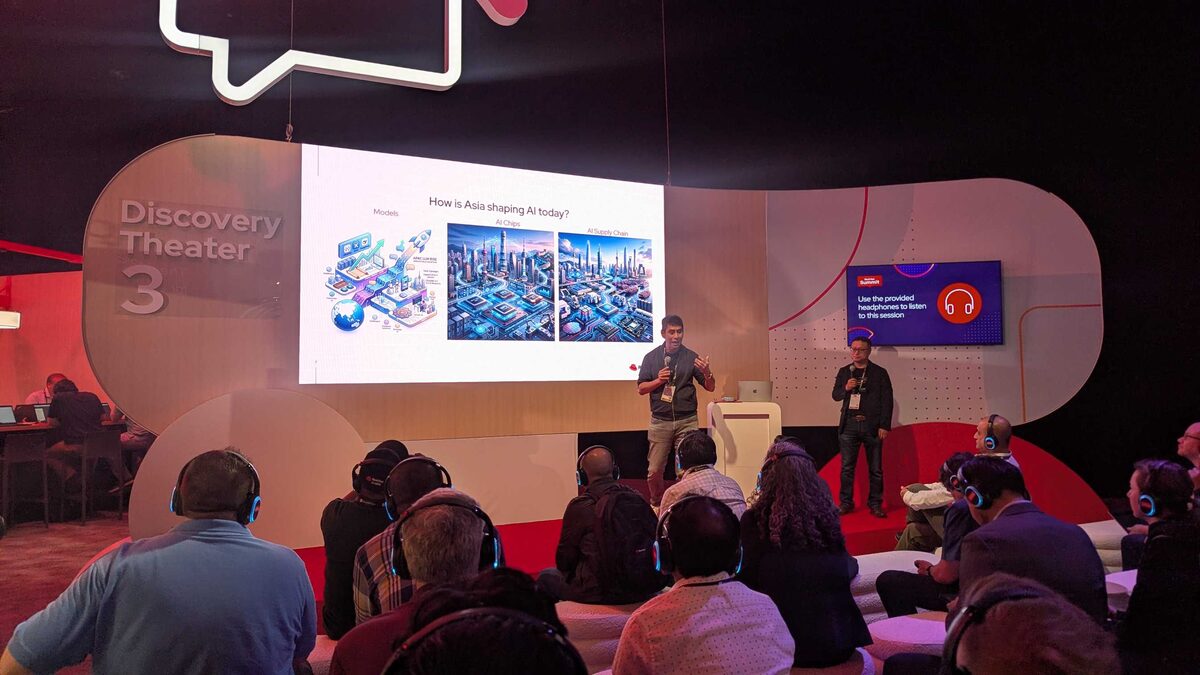
AI Chips: Beyond NVIDIA
The second pillar — AI Chips — showed Asia’s semiconductor ambitions going far beyond manufacturing for Western companies:
- Huawei Ascend — the most visible challenger to NVIDIA’s data center GPUs, powering China’s sovereign AI infrastructure
- TSMC — still the world’s most advanced chip fabricator, producing silicon for NVIDIA, AMD, Apple, and Qualcomm
- Samsung — HBM (High Bandwidth Memory) production critical for every AI accelerator
- Cambricon — Chinese AI chip startup with custom NPUs
- Tenstorrent — Jim Keller’s RISC-V based AI accelerator, with significant Asian investment
The message: the AI chip supply chain has always run through Asia. Now Asia is designing the chips too, not just manufacturing them.
AI Supply Chain: The Hidden Leverage
The third dimension — perhaps the most strategic — is the AI supply chain itself:
- Rare earth minerals — China controls approximately 60% of global rare earth mining and 90% of processing
- Advanced packaging — TSMC’s CoWoS packaging is the bottleneck for every H100/B200 shipment
- Memory — Samsung and SK Hynix dominate HBM production
- Assembly and testing — concentrated in Taiwan, South Korea, Malaysia, and China
Any disruption in this supply chain ripples through the entire global AI infrastructure within weeks.
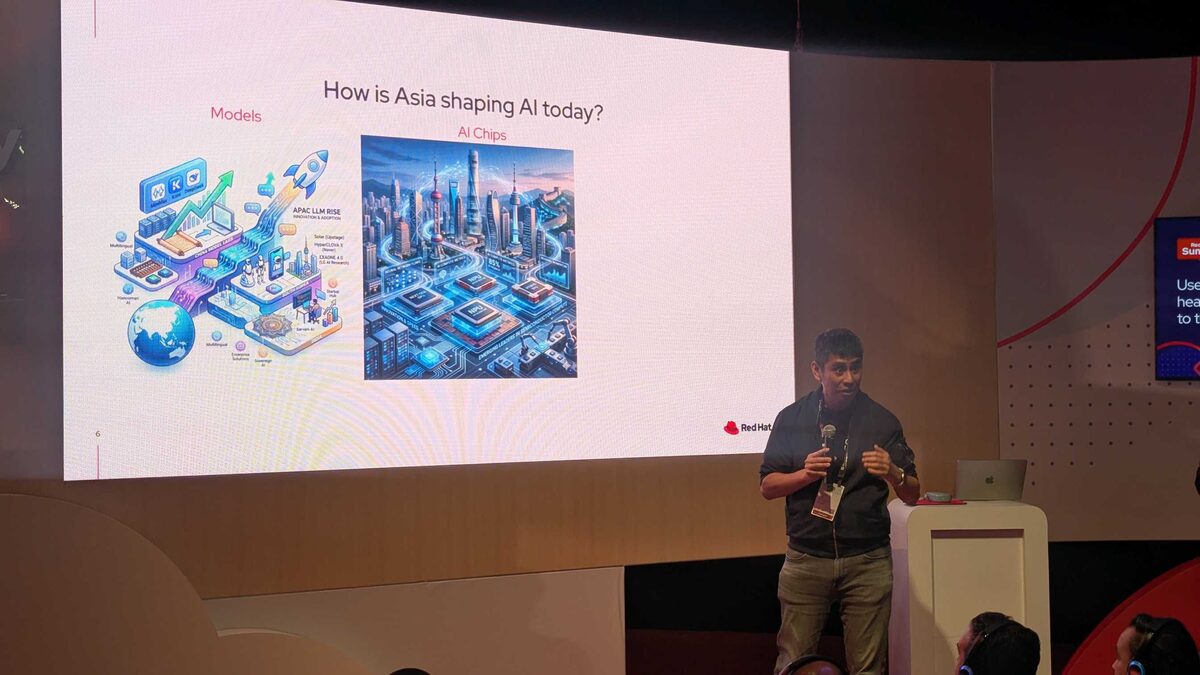
Why This Matters for Enterprise AI
If you are building an enterprise AI strategy, ignoring Asia’s influence is a strategic blind spot:
- Model diversity — APAC models offer alternatives to US-centric foundation models, especially for multilingual deployments and data sovereignty requirements
- Hardware diversification — relying solely on NVIDIA means relying on Asian supply chains anyway; understanding the full stack matters
- Regulatory landscape — China’s AI regulations, Japan’s copyright-friendly training rules, and India’s open-source AI push all create different deployment realities
- Cost competition — DeepSeek proved that frontier-competitive models can be built at a fraction of the cost, pressuring the entire industry
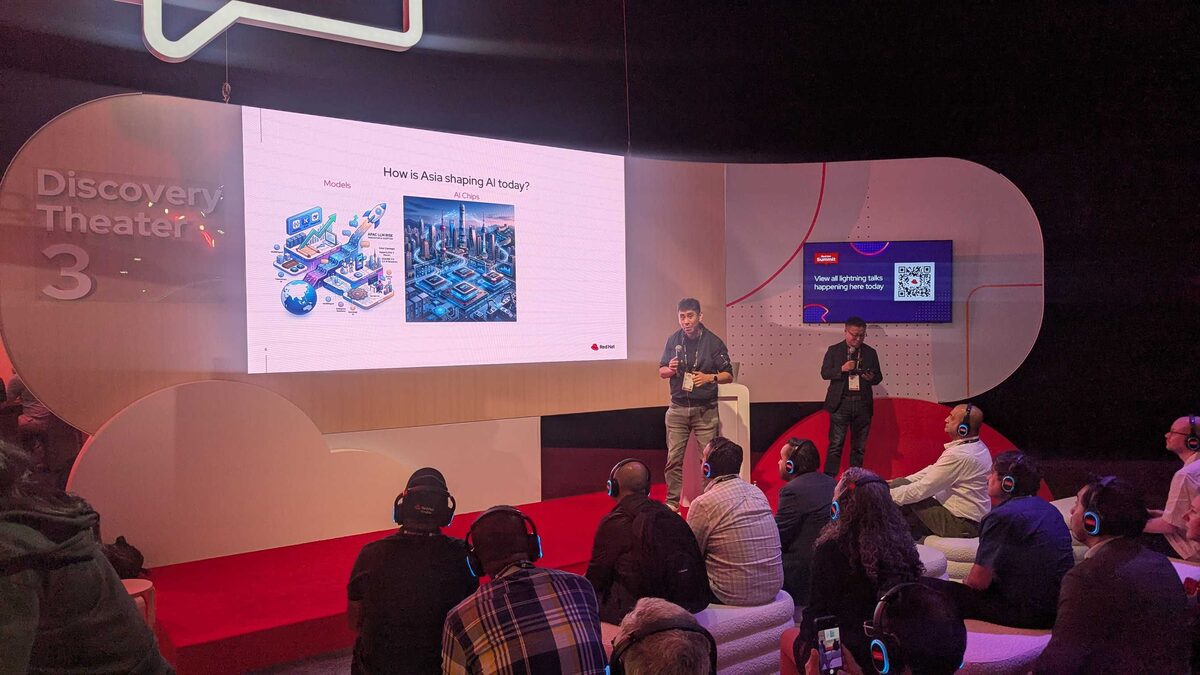
China’s Strategic Shift to Sovereign AI
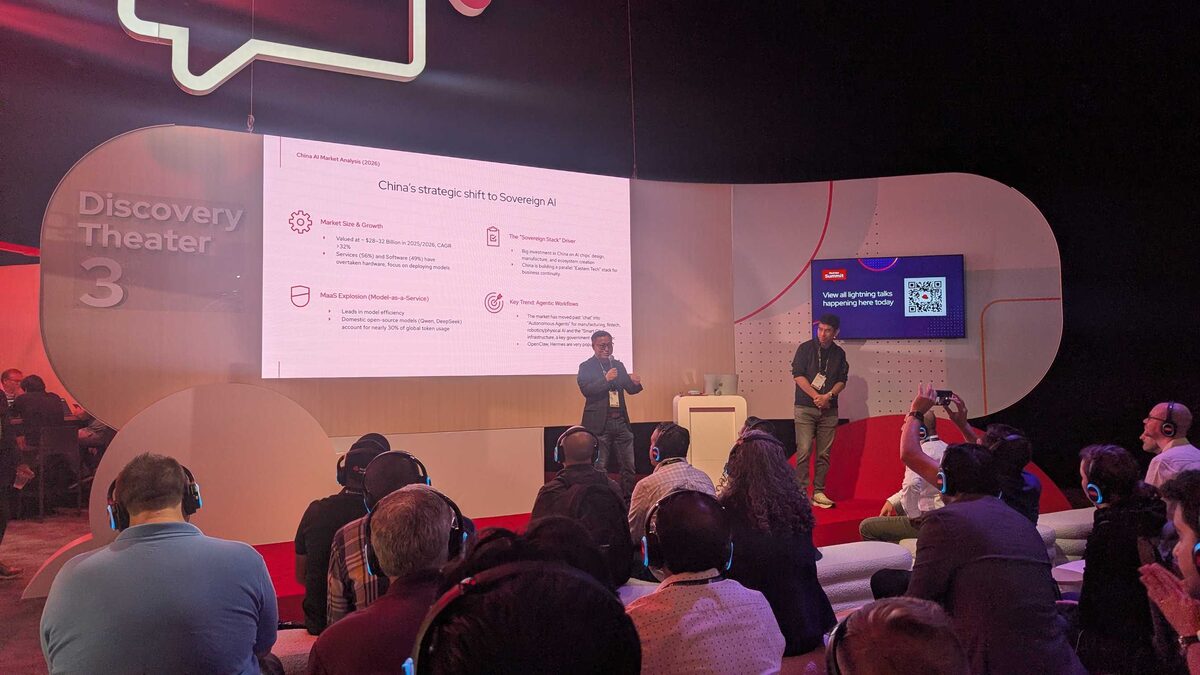
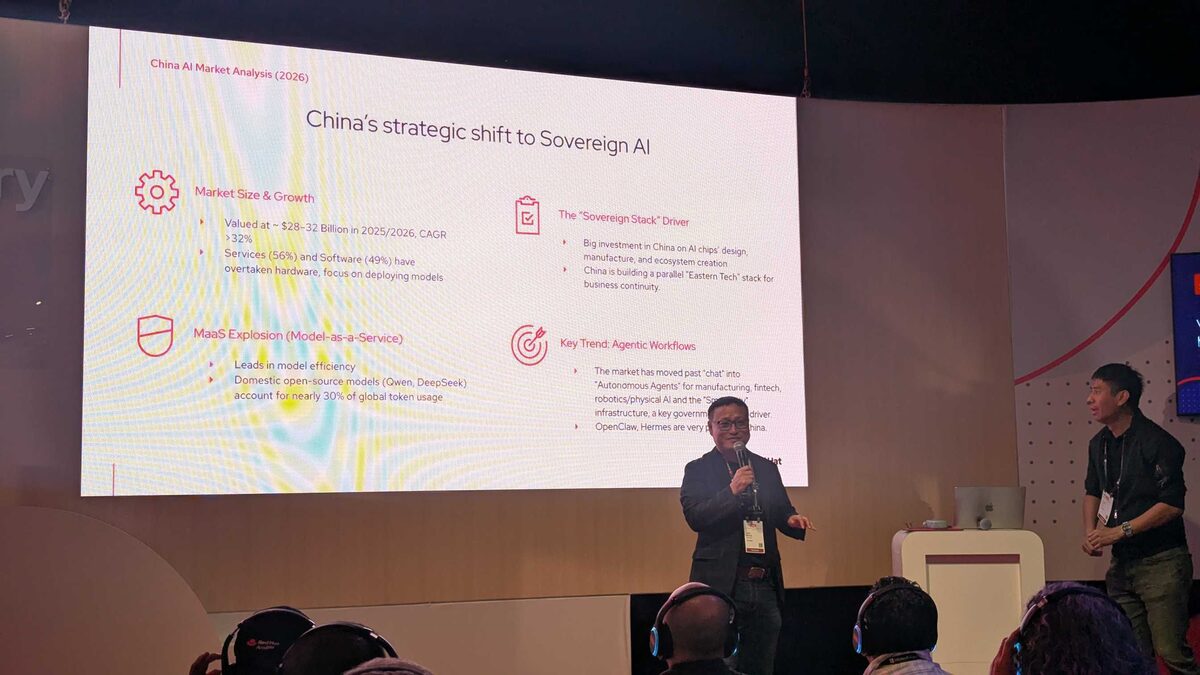
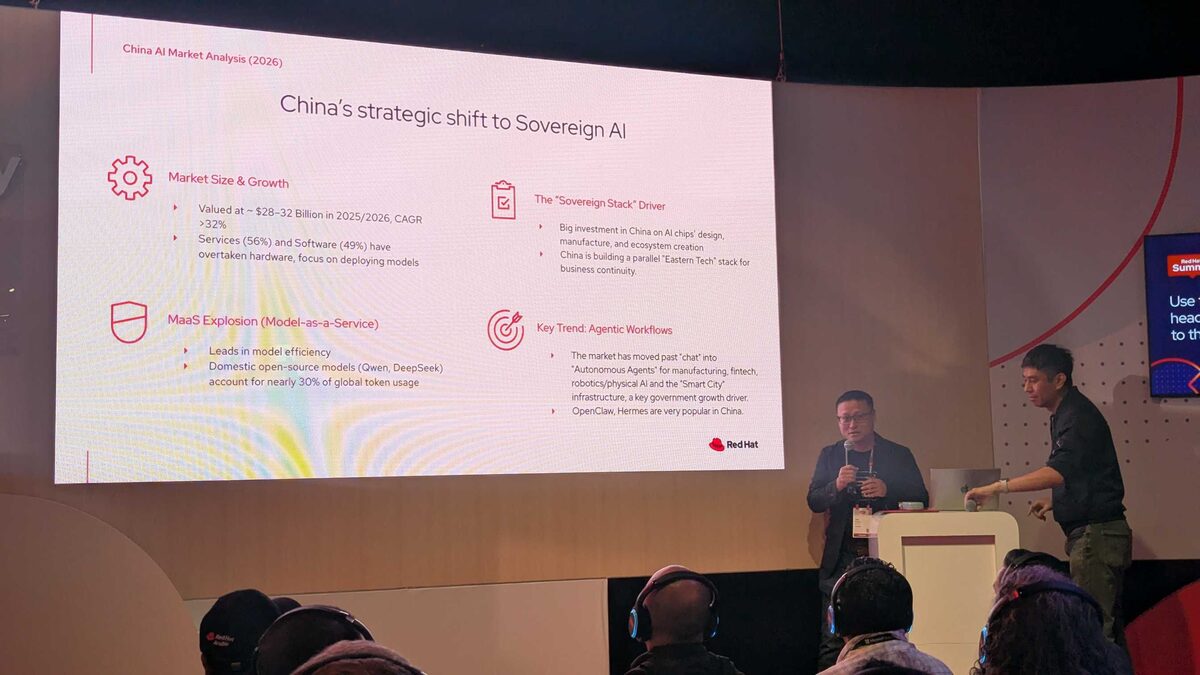
The talk then zoomed into China AI Market Analysis (2026) — China’s deliberate pivot to sovereign AI independence:
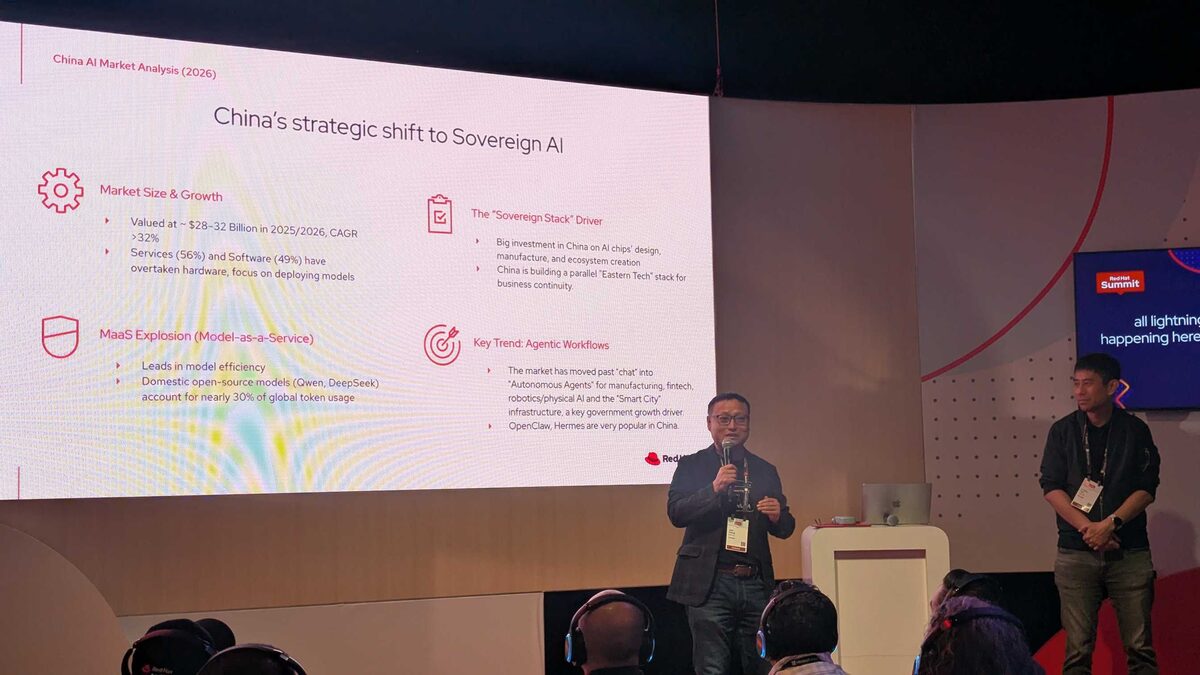
Market Size and Growth:
- Valued at approximately $28-32 Billion in 2025/2026, with CAGR exceeding 32%
- Services (56%) and Software (49%) have overtaken hardware — the focus is on deploying models, not just buying GPUs
The “Sovereign Stack” Driver:
- Massive investment in AI chip design, manufacture, and ecosystem creation
- China is building a parallel “Eastern Tech” stack for business continuity — complete independence from Western technology
MaaS Explosion (Model-as-a-Service):
- China leads in model efficiency
- Domestic open-source models (Qwen, DeepSeek) account for nearly 30% of global token usage
Key Trend — Agentic Workflows:
- The market has moved past “chat” into Autonomous Agents for manufacturing, fintech, robotics/physical AI, and “Smart City” infrastructure
- A key government growth driver
- OpenClaw and Hermes are very popular in China
The Sovereign AI Technology Stack
The most impressive slide — a complete Sovereign AI Technology Stack built entirely from Chinese and open-source components:
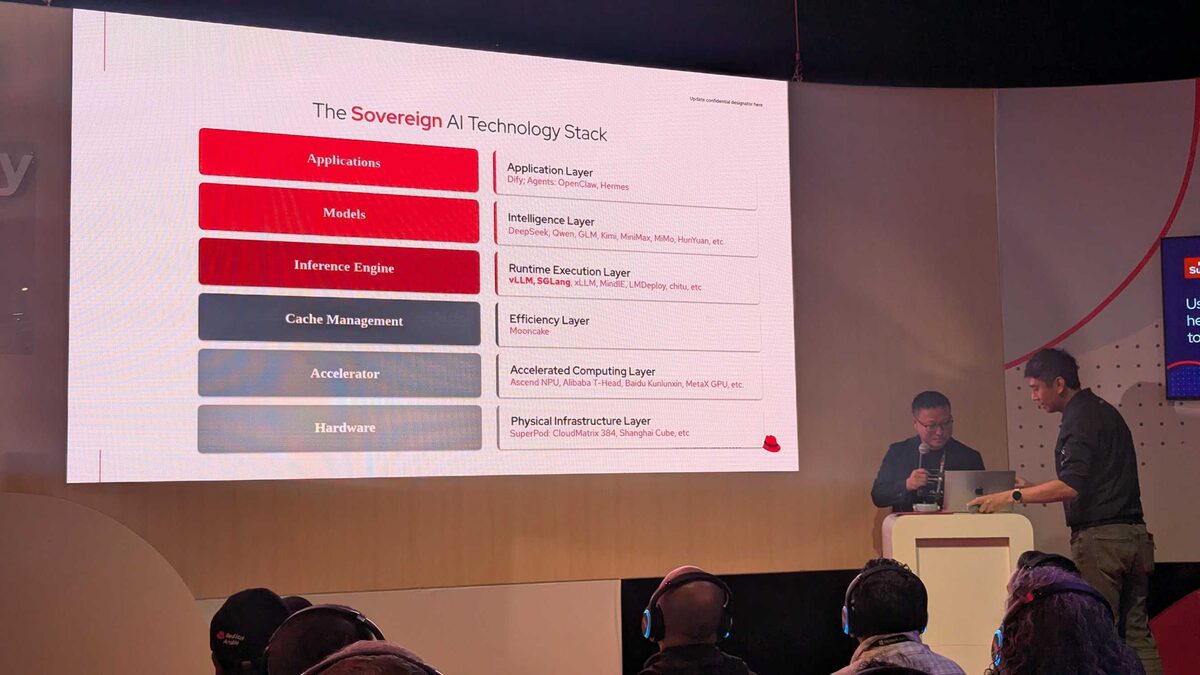
| Layer | Category | Components |
|---|---|---|
| Applications | Application Layer | Dify, Agents: OpenClaw, Hermes |
| Models | Intelligence Layer | DeepSeek, Qwen, GLM, Kimi, MiniMax, MiMo, HunYuan, etc. |
| Inference Engine | Runtime Execution Layer | vLLM, SGLang, xLLM, MindIE, LMDeploy, chitu, etc. |
| Cache Management | Efficiency Layer | Mooncake |
| Accelerator | Accelerated Computing Layer | Ascend NPU, Alibaba T-Head, Baidu Kunlunxin, MetaX GPU, etc. |
| Hardware | Physical Infrastructure Layer | SuperPod: CloudMatrix 384, Shanghai Cube, etc. |
This is a complete, production-ready alternative to the NVIDIA/CUDA/Western cloud stack. Every layer has Chinese-developed alternatives — from Ascend NPUs replacing NVIDIA GPUs to Mooncake for KV-cache management (replacing vLLM’s native caching) to DeepSeek/Qwen replacing GPT-4/Claude at the model layer.
The Open Blueprint for AI Sovereignty
The session concluded with Red Hat’s positioning: the open blueprint for AI sovereignty, delivered through the Red Hat AI platform:
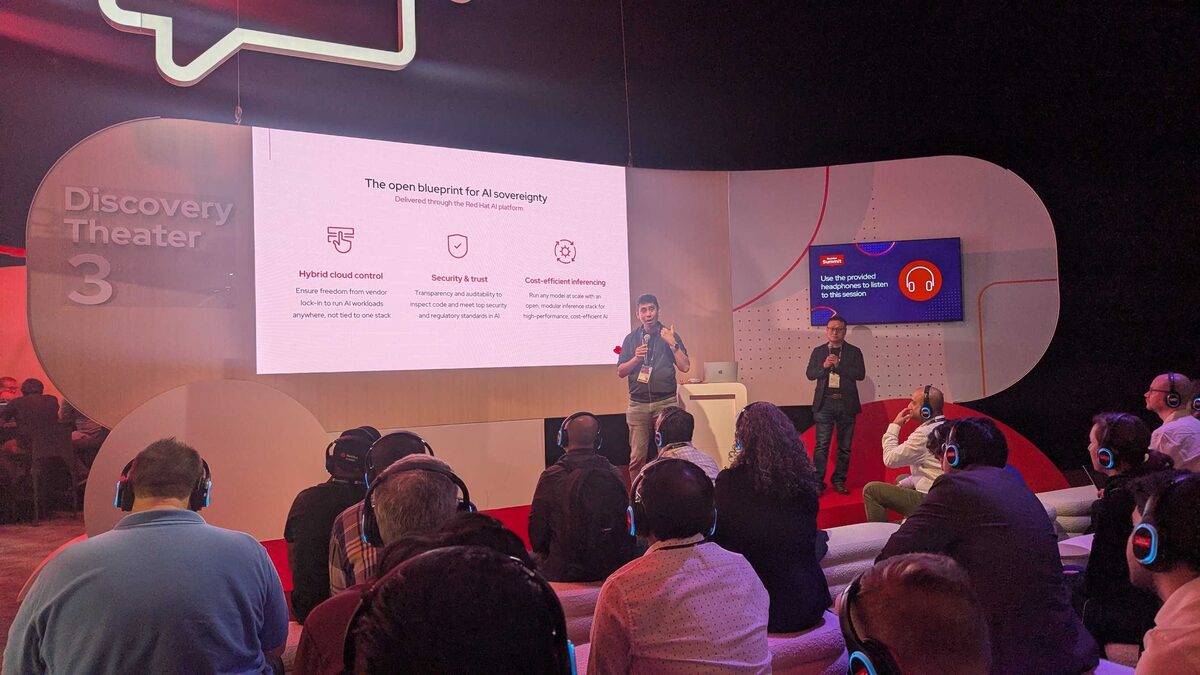
Three pillars:
- Hybrid cloud control — freedom from vendor lock-in, run AI workloads anywhere, not tied to one stack
- Security and trust — transparency and auditability to inspect code and meet top security and regulatory standards in AI
- Cost-efficient inferencing — run any model at scale with an open, modular inference stack for high-performance, cost-efficient AI
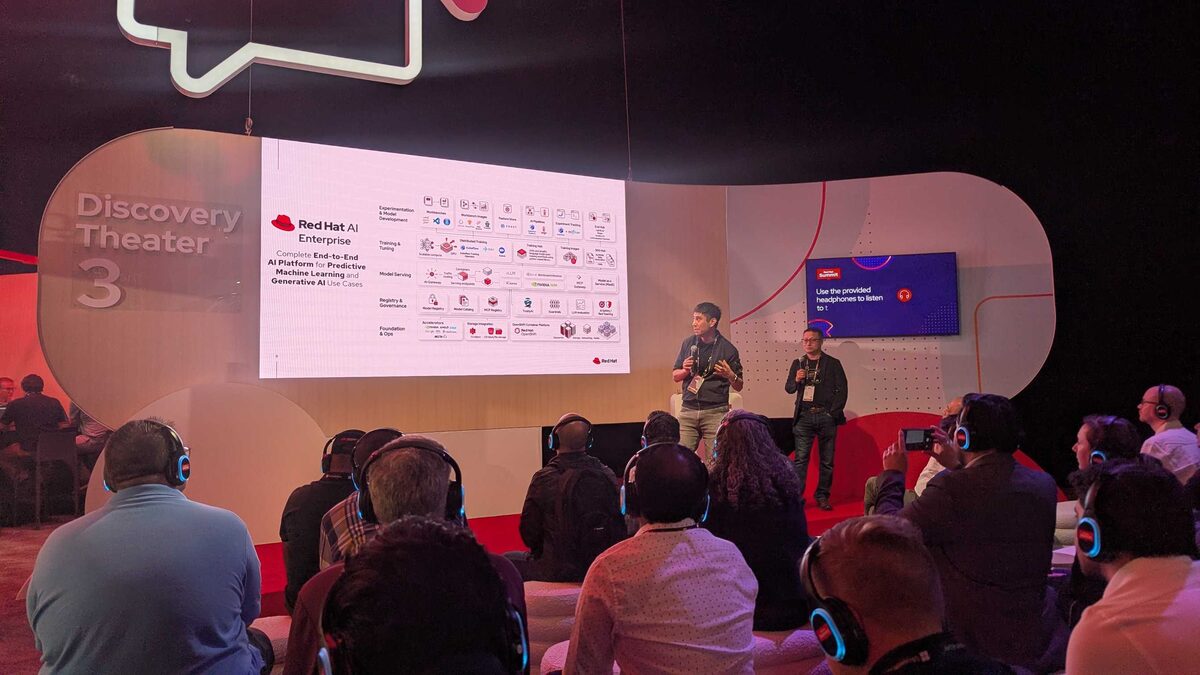
The Red Hat AI Enterprise slide showed the complete platform spanning experimentation and model development, training and tuning, model serving, registry and governance, and foundation and ops — with integration points for NVIDIA NIM, vLLM, InstructLab, Caikit, and the full Red Hat OpenShift stack.
The Joint Solution: Red Hat AI Enterprise + MetaX
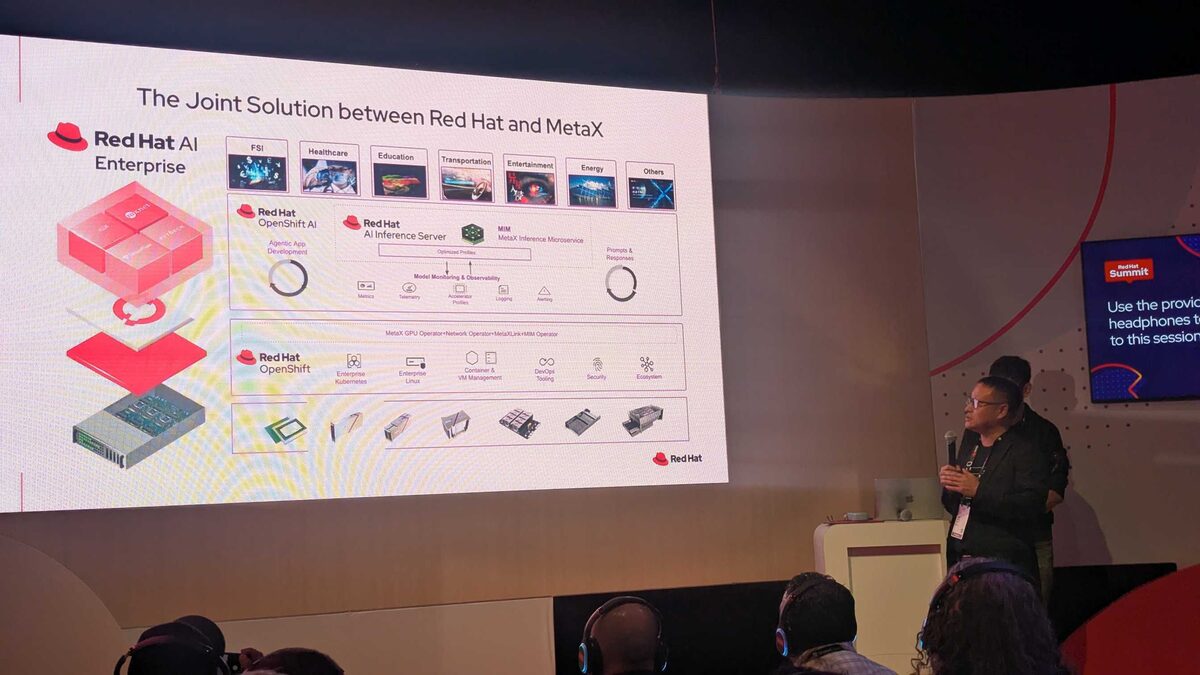
The core of the session — the complete joint architecture between Red Hat and MetaX:
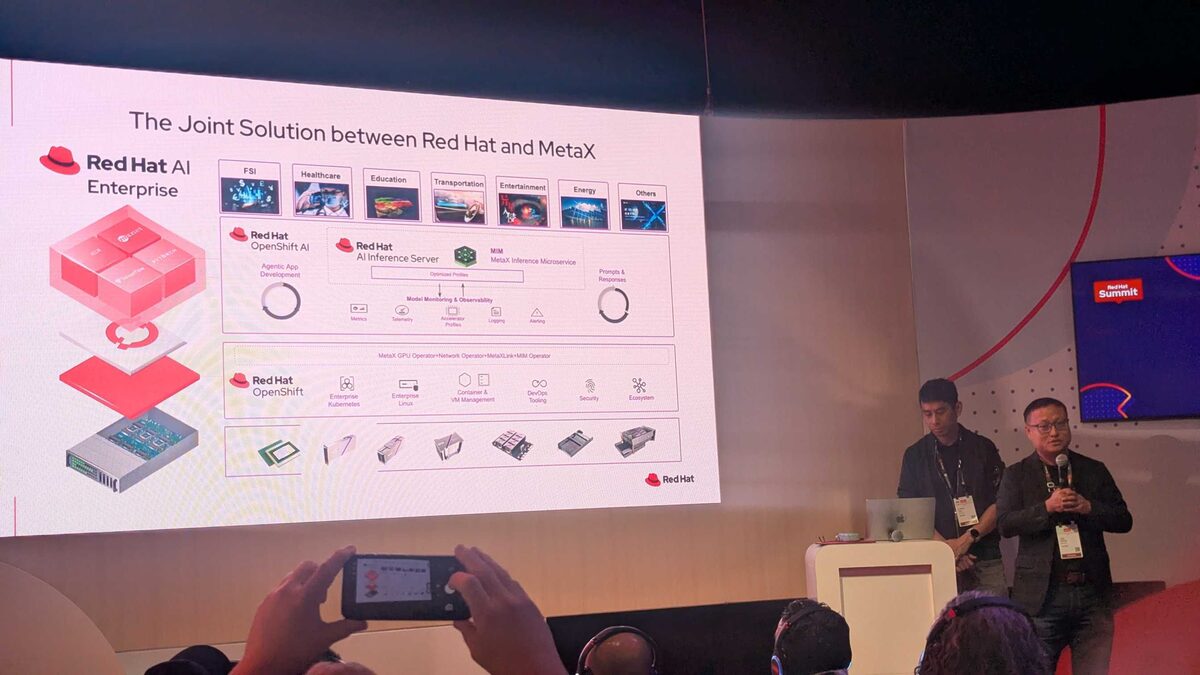
The stack targets verticals across FSI, Healthcare, Education, Transportation, Entertainment, Energy and more. The architecture layers:
- Red Hat OpenShift AI — Agentic App Development at the top
- Red Hat AI Inference Server + MIM (MetaX Inference Microservice) — optimized profiles for inference, handling prompts and responses
- Model Monitoring and Observability — Metrics, Telemetry, Accelerator Profiles, Logging, Alerting
- MetaX GPU Operator + Network Operator + MetaXLink + MIM Operator — the Kubernetes operators that make MetaX GPUs first-class citizens on OpenShift
- Red Hat OpenShift foundation — Enterprise Kubernetes, Enterprise Linux, Container and VM Management, DevOps Tooling, Security, Ecosystem
The MetaX hardware is physically present on the slide — their GPU cards sitting alongside the Red Hat AI Enterprise platform. This is not a future roadmap. It is a production-ready, jointly certified stack.
Model Service via MIM: DeepSeek on MetaX
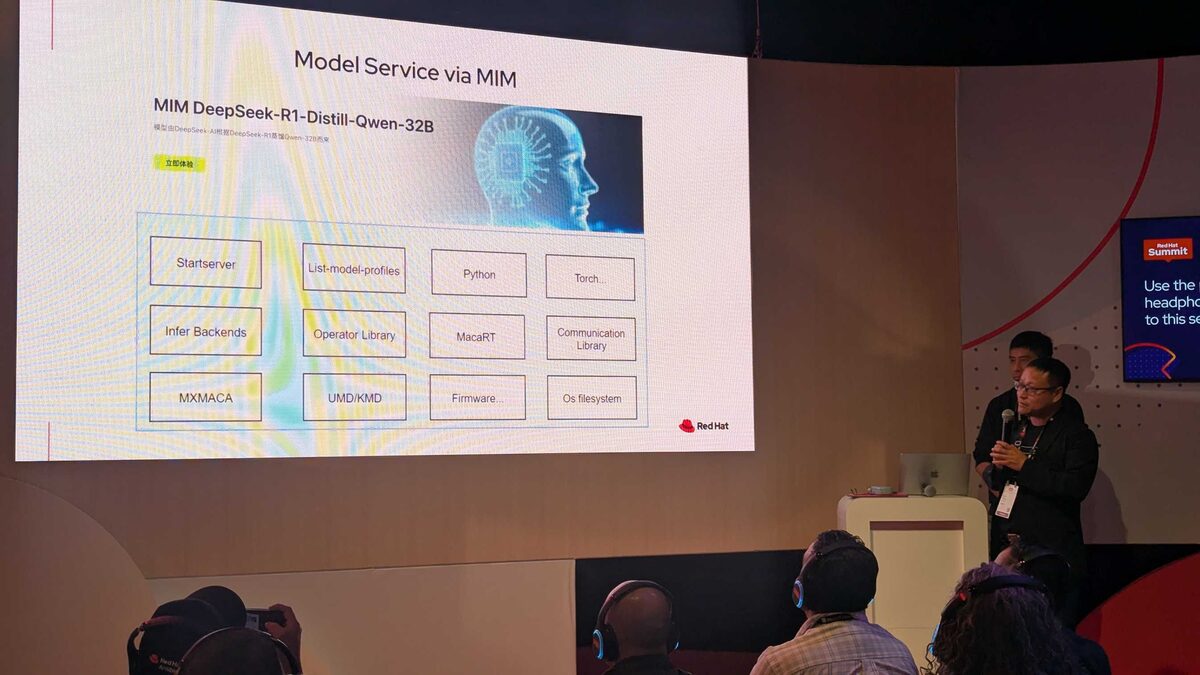
The demo showed MIM DeepSeek-R1-Distill-Qwen-32B — a distilled reasoning model running entirely on the MetaX software stack:
- Startserver / List-model-profiles — standard serving commands
- Python / Torch — familiar ML frameworks
- Infer Backends / Operator Library — MetaX-optimized inference kernels
- MacaRT — MetaX’s runtime (their equivalent of CUDA Runtime)
- Communication Library — multi-GPU collective communication
- MXMACA — MetaX’s CUDA-equivalent programming framework
- UMD/KMD — User/Kernel Mode Drivers
- Firmware / OS filesystem — down to bare metal
This is the full software stack from OS to model serving — completely independent of NVIDIA CUDA. DeepSeek-R1-Distill-Qwen-32B is a perfect showcase: a Chinese reasoning model running on Chinese GPUs with Chinese inference software.
Red Hat Value for Sovereign AI
The closing slide crystallized why Red Hat is the natural partner for sovereign AI deployments:
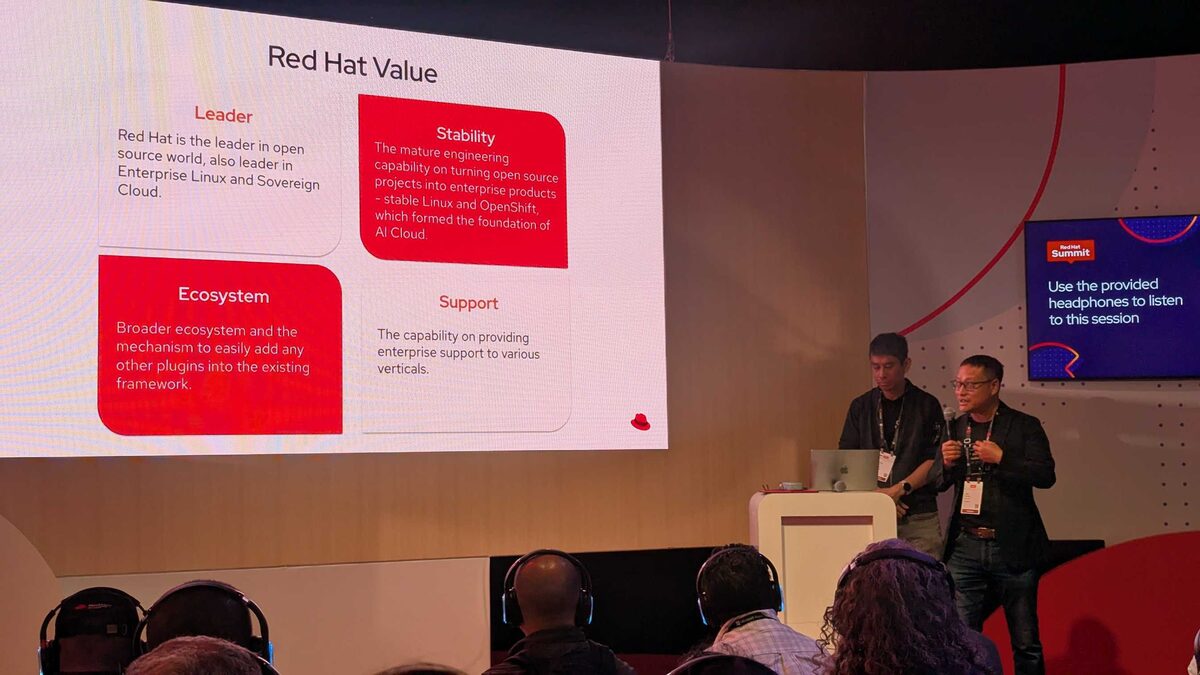
- Leader — Red Hat is the leader in open source, Enterprise Linux, and Sovereign Cloud
- Stability — Mature engineering capability turning open-source projects into enterprise products — stable Linux and OpenShift formed the foundation of AI Cloud
- Ecosystem — Broader ecosystem and the mechanism to easily add any other plugins into the existing framework
- Support — Enterprise support capability across various verticals
From Co-pilot to Digital Employee: OpenClaw/Hermes in China
The most forward-looking part of the talk — how China is using OpenClaw and Hermes to build enterprise “Digital Employee” systems:
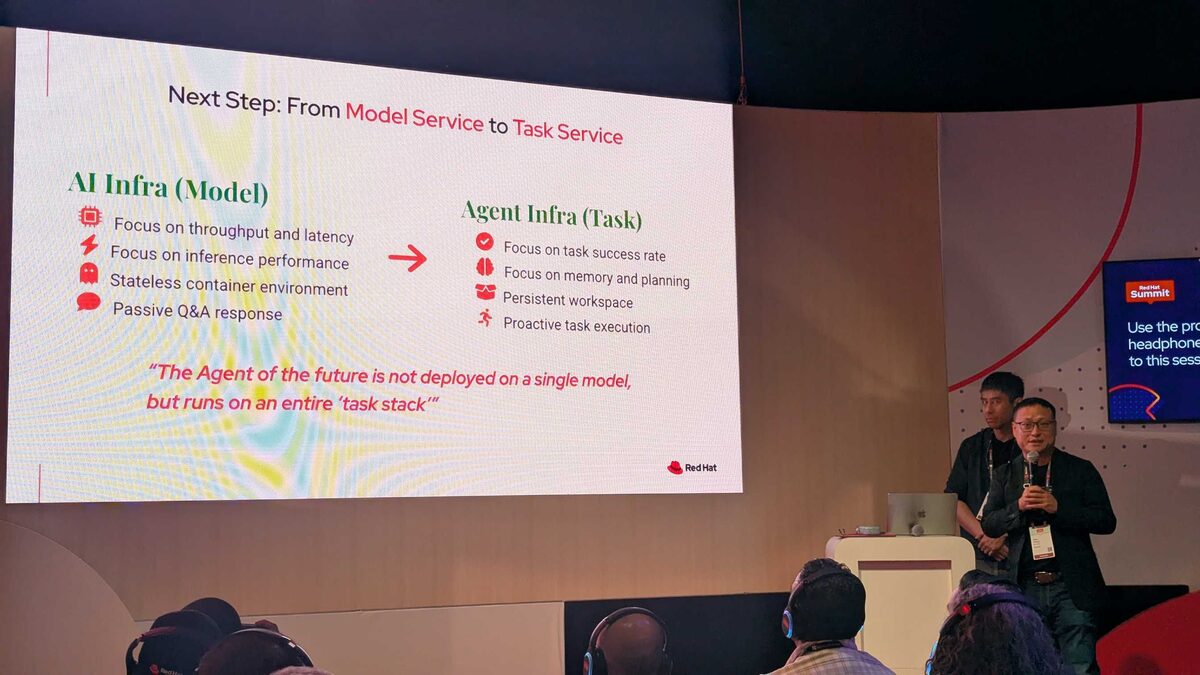
Moving from “Co-pilot” to “Digital Employee” — the architecture has three components:
- Gateway — Central control plane, responsible for global scheduling, permission management, policy distribution, and multi-channel access
- Node — Distributed task execution nodes, close to data and computing power, providing an isolated, persistent sandbox environment
- Channel — Multi-channel access layer (Feishu, DingTalk, Web), seamlessly embedding AI capabilities into enterprise operating systems
The key insight: “The maintainability of digital employees does not come from a longer Prompt, but from documentation, modularization, and Skill-ification.”
From Model Service to Task Service
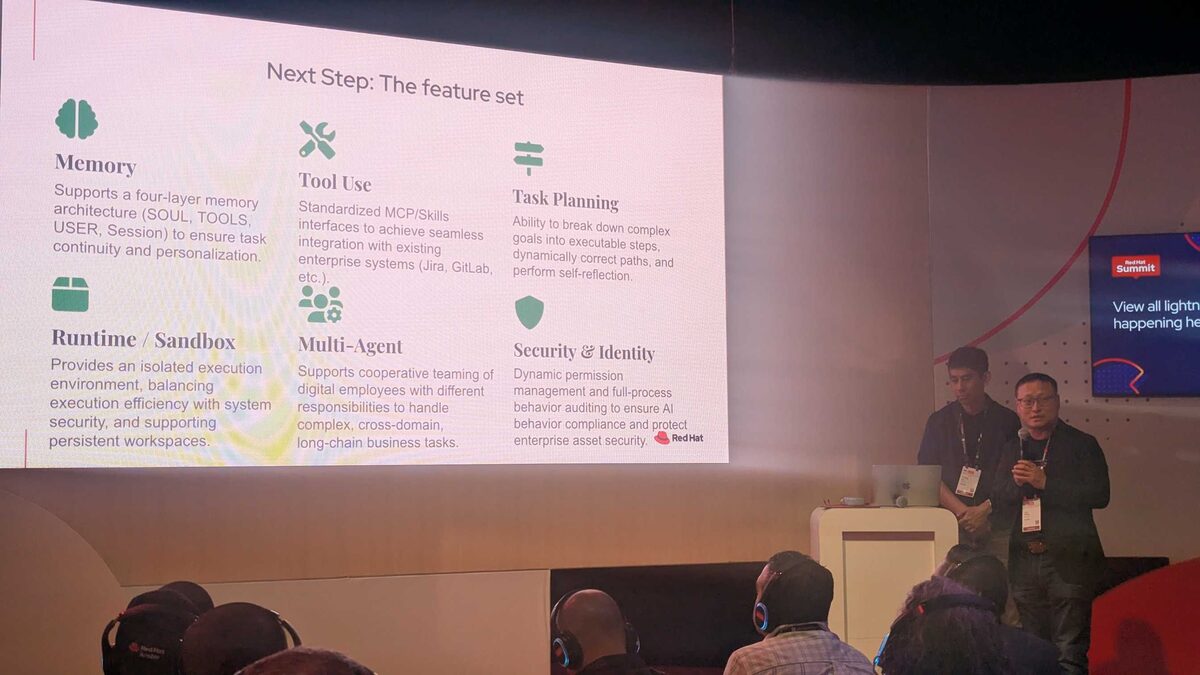
The paradigm shift from AI Infra (Model) to Agent Infra (Task):
| AI Infra (Model) | Agent Infra (Task) |
|---|---|
| Focus on throughput and latency | Focus on task success rate |
| Focus on inference performance | Focus on memory and planning |
| Stateless container environment | Persistent workspace |
| Passive Q&A response | Proactive task execution |
“The Agent of the future is not deployed on a single model, but runs on an entire ‘task stack‘“
The Feature Set
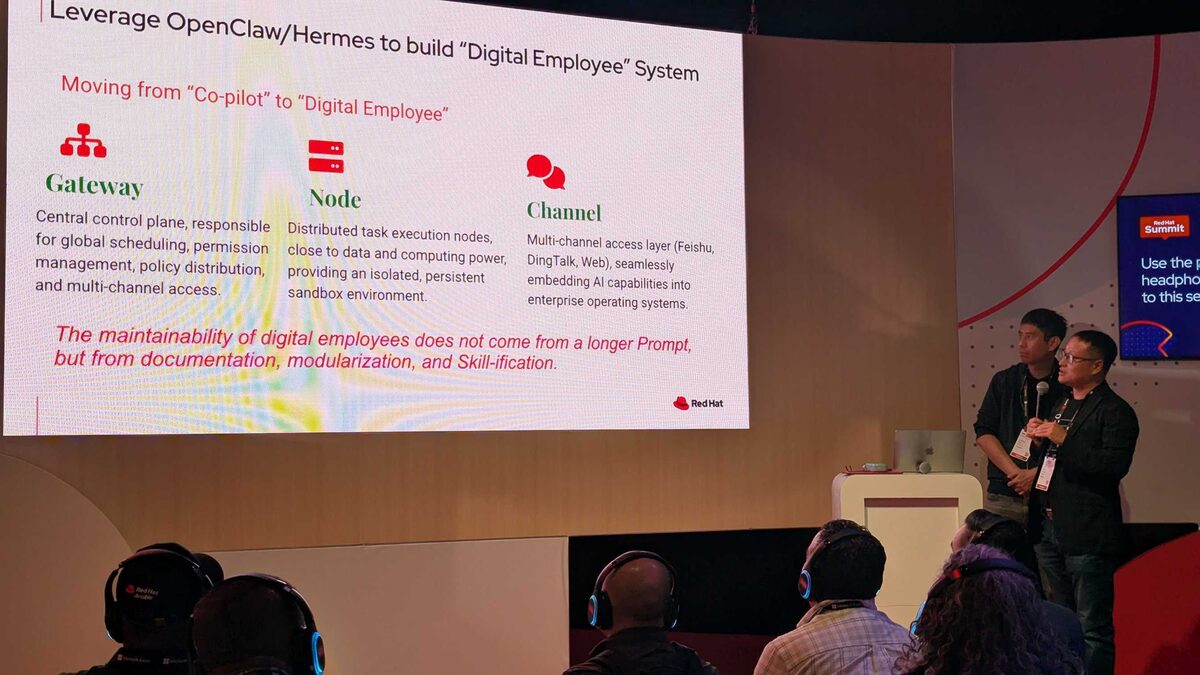
The roadmap for enterprise AI agents:
- Memory — Four-layer memory architecture (SOUL, TOOLS, USER, Session) to ensure task continuity and personalization
- Tool Use — Standardized MCP/Skills interfaces to achieve seamless integration with existing enterprise systems (Jira, GitLab, etc.)
- Task Planning — Ability to break down complex goals into executable steps, dynamically correct paths, and perform self-reflection
- Runtime / Sandbox — Isolated execution environment, balancing execution efficiency with system security, supporting persistent workspaces
- Multi-Agent — Cooperative teaming of digital employees with different responsibilities to handle complex, cross-domain, long-chain business tasks
- Security and Identity — Dynamic permission management and full-process behavior auditing to ensure AI behavior compliance and protect enterprise asset security
Key Takeaway
Asia is not just part of the AI story — it is writing the AI story. From foundation models (Qwen, DeepSeek, Solar) to chips (Ascend, Cambricon) to the supply chain that makes all AI hardware possible (TSMC, Samsung HBM, rare earths), the center of gravity is shifting. Enterprise architects who understand this have a strategic advantage.
Great session at Discovery Theater 3 — the kind of perspective that does not get enough airtime at Western conferences.
Community Reactions
Steve Shirkey (MetaX) shared this article on LinkedIn:
“Great recap by Luca Berton on the Red Hat Summit 2026 session on our MetaX collaboration, presented by Li Ming Tsai and Jiaju Zhang.”
It is encouraging to see the MetaX team recognizing this coverage — a sign that the intersection of digital sovereignty, Asian AI ecosystems, and open source infrastructure resonates with the people building it.