January 2026 was a busy month for meetups. Alongside the bigger events, I went to four evenings and one workshop day: a product book launch at Xebia, a product community visit to Polarsteps, a Y Combinator founder panel at Miro, BitBash in Veenendaal and a startup pitch night. None of them needs a full recap, so this post collects them in date order, with what was on the slides.
The Anatomy of a Product at Xebia (13 January)
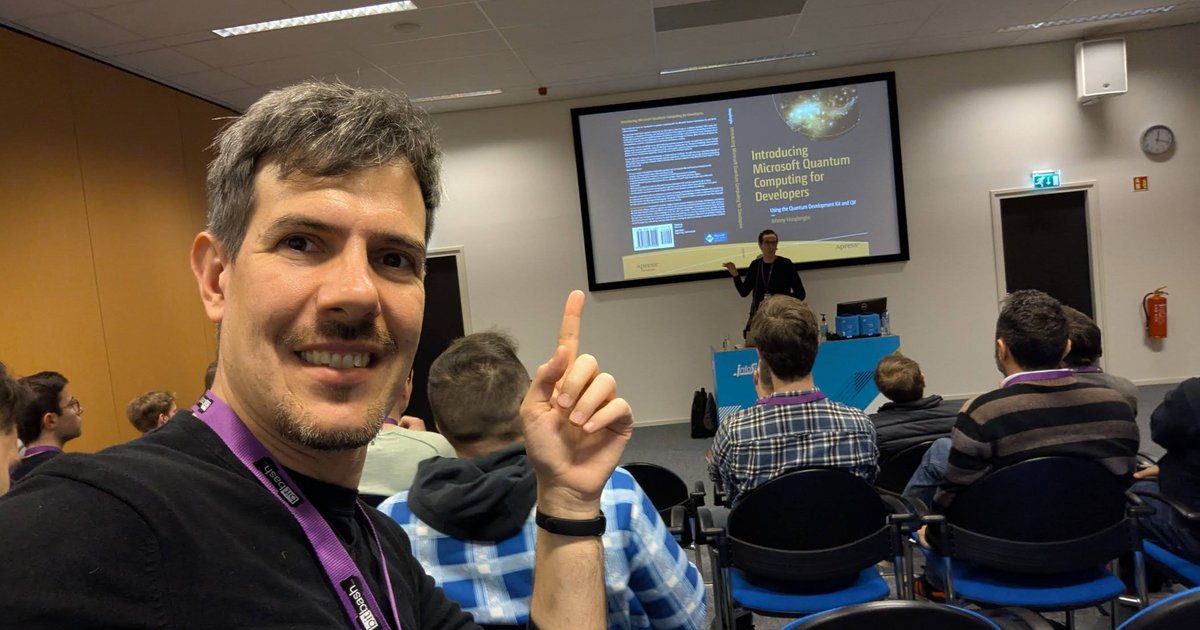
On Tuesday 13 January I was at Xebia in Amsterdam for an evening around the book The Anatomy of a Product: The Inner Workings of Complex Products by Ryan Brook & Sander Dur (as printed on the cover), with forewords by Radhika Dutt and Arie van Bennekum. Xebia’s banner in the room read “Shaping Tomorrow with AI Today”.
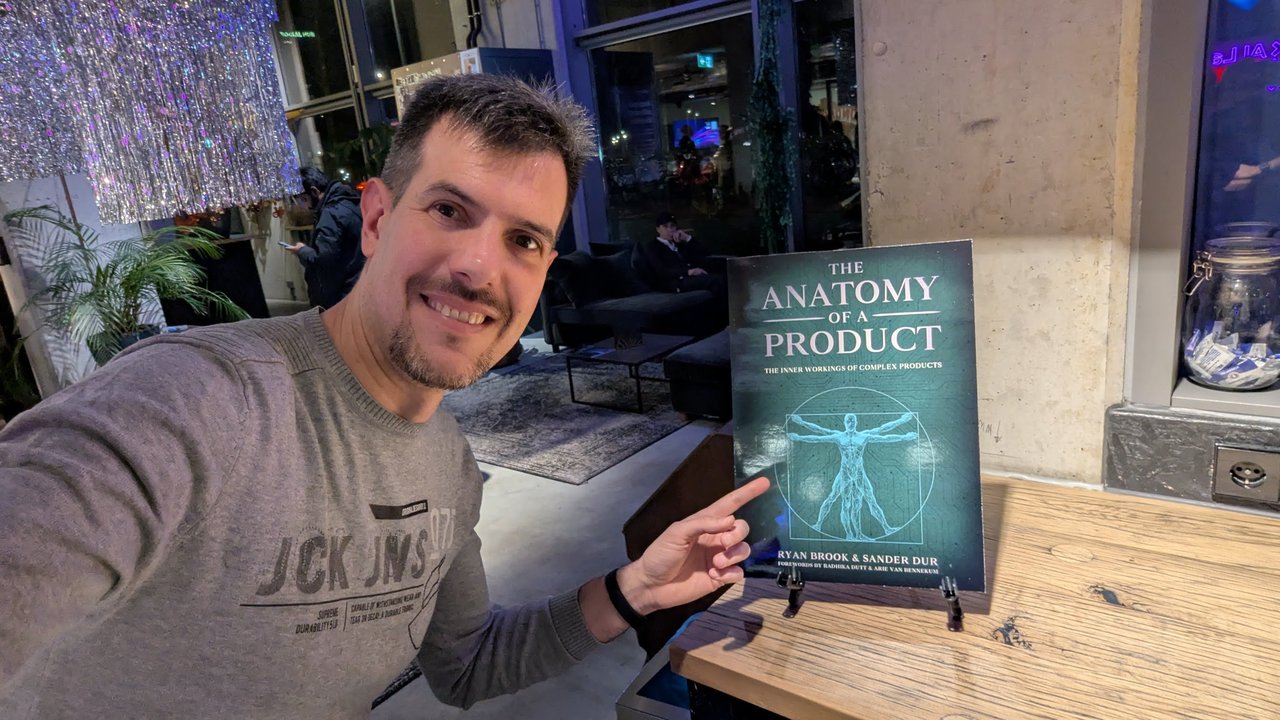
The book of the evening, on display at the venue.
The main talk led from agile into the book. The speaker said he had been in the room when the Agile Manifesto was written, and recalled that “we left our egos at the door”: everyone explained how they worked. His point was that each framework has its own focus. In his telling, DSDM leans towards value and Scrum towards efficiency, so a team should pick practices for the problem in front of it rather than stick to one framework.
Is agile dead? His answer: the word may disappear within ten years, but the capability to respond to change, with a good sense of quality, will be the make-or-break factor.
Then he moved on to products, which he presented as the link between strategy and delivery. Without that link, he warned, strategy moves on before delivery catches up. “You only start creating the value from the moment that you deliver”, he said. His example was a tailor-made project management tool built for an organisation of 1,700 people. Three months after delivery, one project manager was using it. His last theme was hand-offs. Every document passed between business and technical people adds “interpretations and assumptions”, so it’s better to have a product role in the middle who talks to both sides.
The evening closed with the authors’ own introduction to the book.
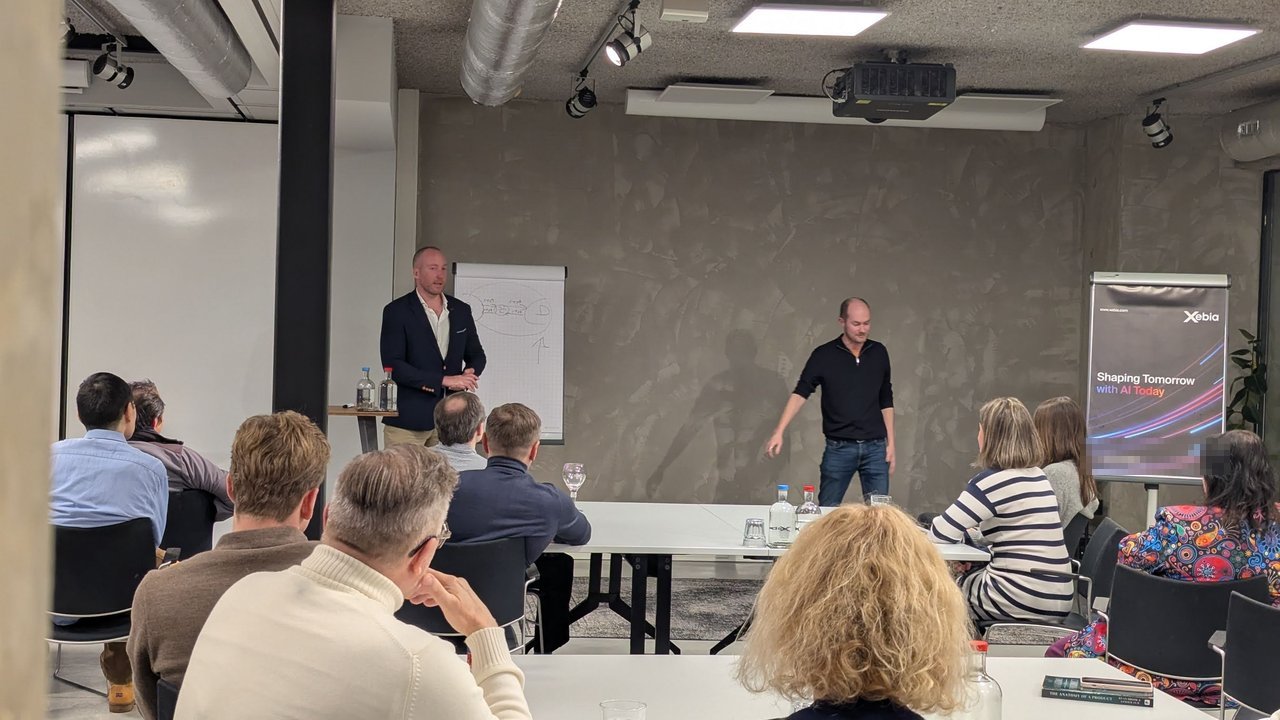
The talk at Xebia, with a copy of the book on the front table.
APC x Polarsteps: product principles and results (14 January)
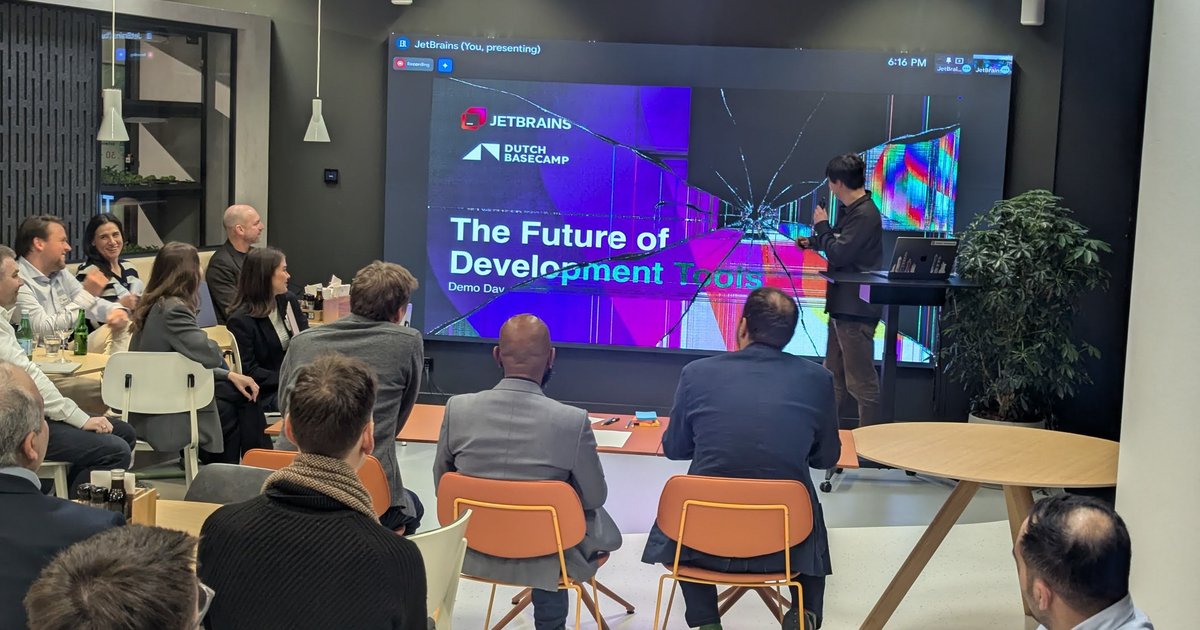
The next evening, the APC x Polarsteps title slide opened an “Open Doors” evening at the Polarsteps office. The host introduced APC as a product community based in Amsterdam (the Amsterdam Product Club), and the intro slide described the series as “a behind-the-scenes view of leading product companies”.
According to the Polarsteps slides, the company was founded in Amsterdam more than 10 years ago and grew from 20 people and 1 product team in 2022 to 100+ people and 7 product teams. They reported over 20 million trips, more than 1 million travellers at peak, and organic, profitable growth since a 2019 Series A. The vision slide: “the essential tool for modern day explorers before, during and after their trips”, across four pillars: Inspire, Plan, Track and Relive.
Scaling the culture came under “Big on progress. Light on process.” The product design process ran through Explore, Define and Prepare phases with Kick-off, Evaluate, Solution Check and Final Review checkpoints. The kick-off, the speaker said, is where the team agrees what success looks like.
An onboarding example defined an activated user as someone who “followed someone or added a trip”. The final iteration slide, labelled “Metrics Review”, reported +17% new travellers adding trips, 2x users with location always on and +35% users tracking their route.
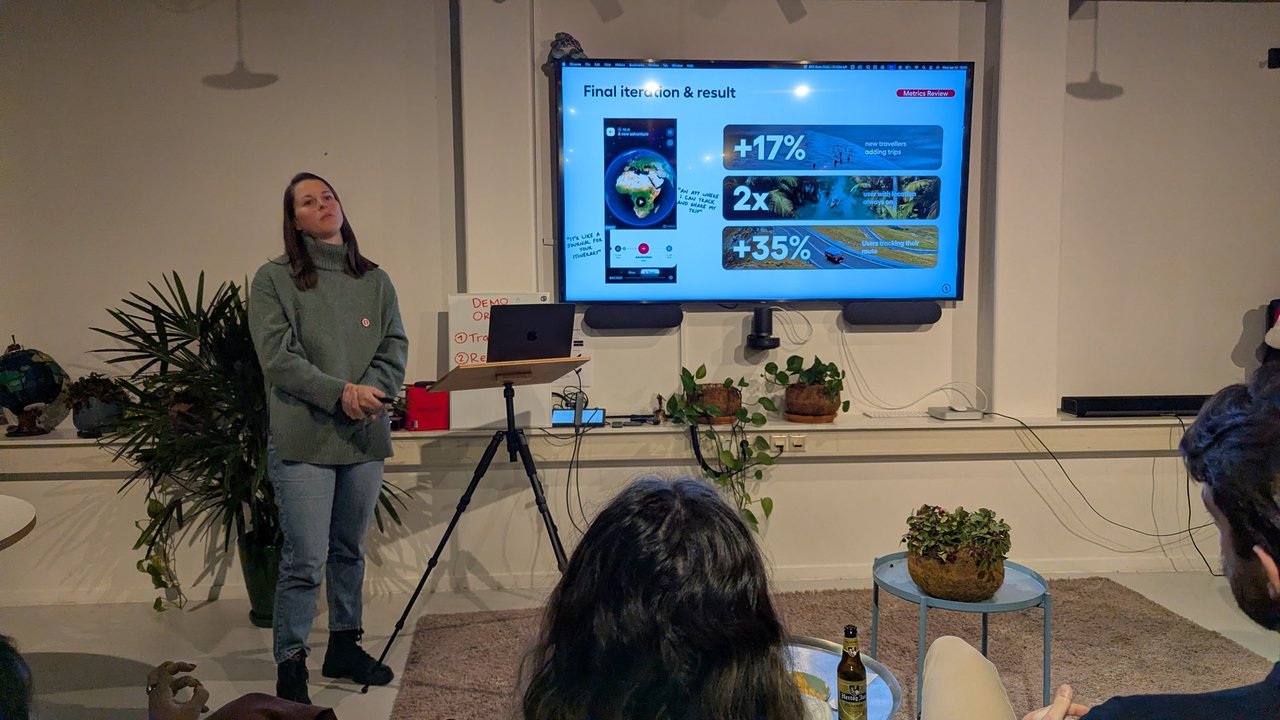
Onboarding results, as reported on the slide.
Later, a slide listed eight product principles: Go Far for the Traveler, Ship Love, Build Trust, Unify the Experience, Optimize for the 80%, Make Measurable Impact, Combine Intuition and Data, and Connect Through Sharing.
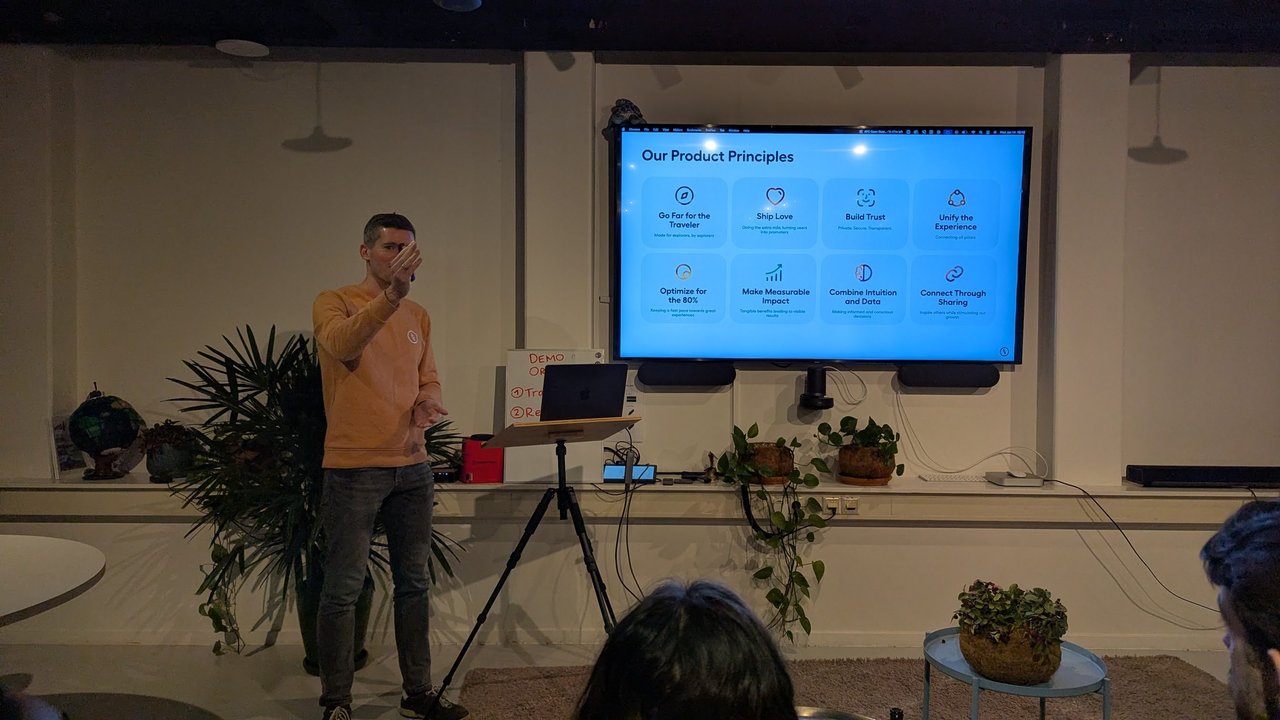
Eight principles, each with a one-line gloss.
My take: “Optimize for the 80%” plus “Make Measurable Impact” works for platform teams too: pave the road for the common case, and pick the metric before you start.
Beyond the Batch: Y Combinator founders at Miro (21 January)
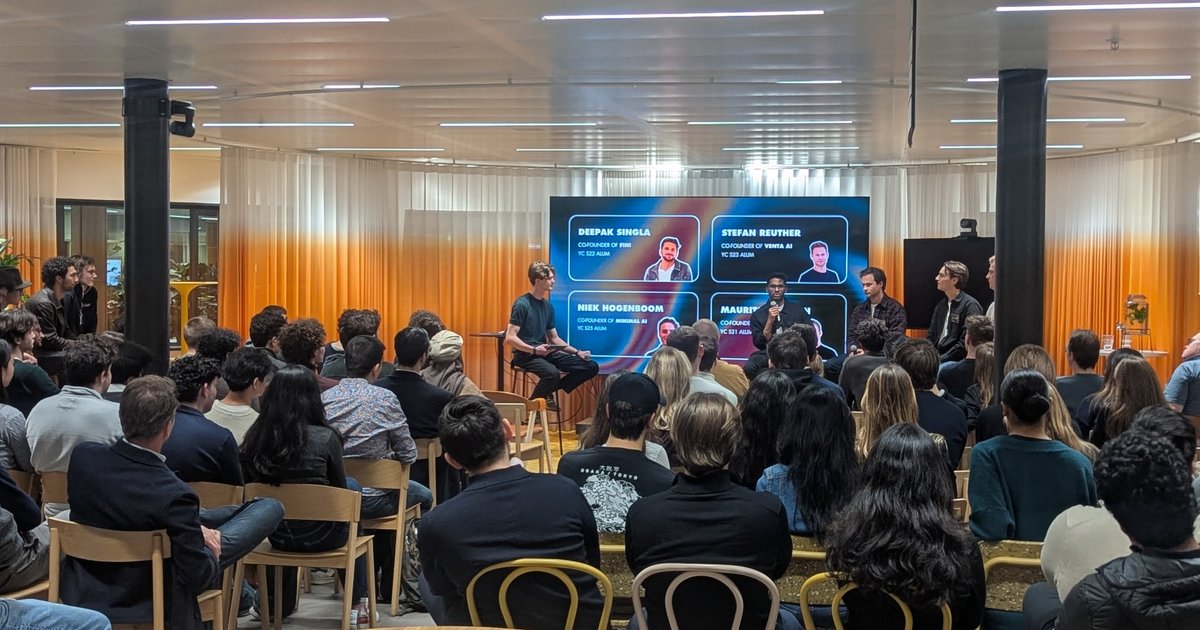
On Wednesday 21 January the Miro office in Amsterdam hosted “Beyond the Batch: Stories Straight from Y Combinator”. The slides carried the logos of Miro and ASIF Ventures, Amsterdam’s student-run venture fund. The format was a moderated panel followed by a Q&A session, in front of a packed room.
The panel slide showed four YC alumni. Three names were fully readable:
- Deepak Singla, co-founder of Fini, YC S22 alum
- Stefan Reuther, co-founder of Venta AI, YC S23 alum
- Niek Hogenboom, co-founder of Minimal AI, YC S25 alum
The fourth card, for a YC S21 alum, was hidden behind a panellist in my photos, so I can’t give that name.
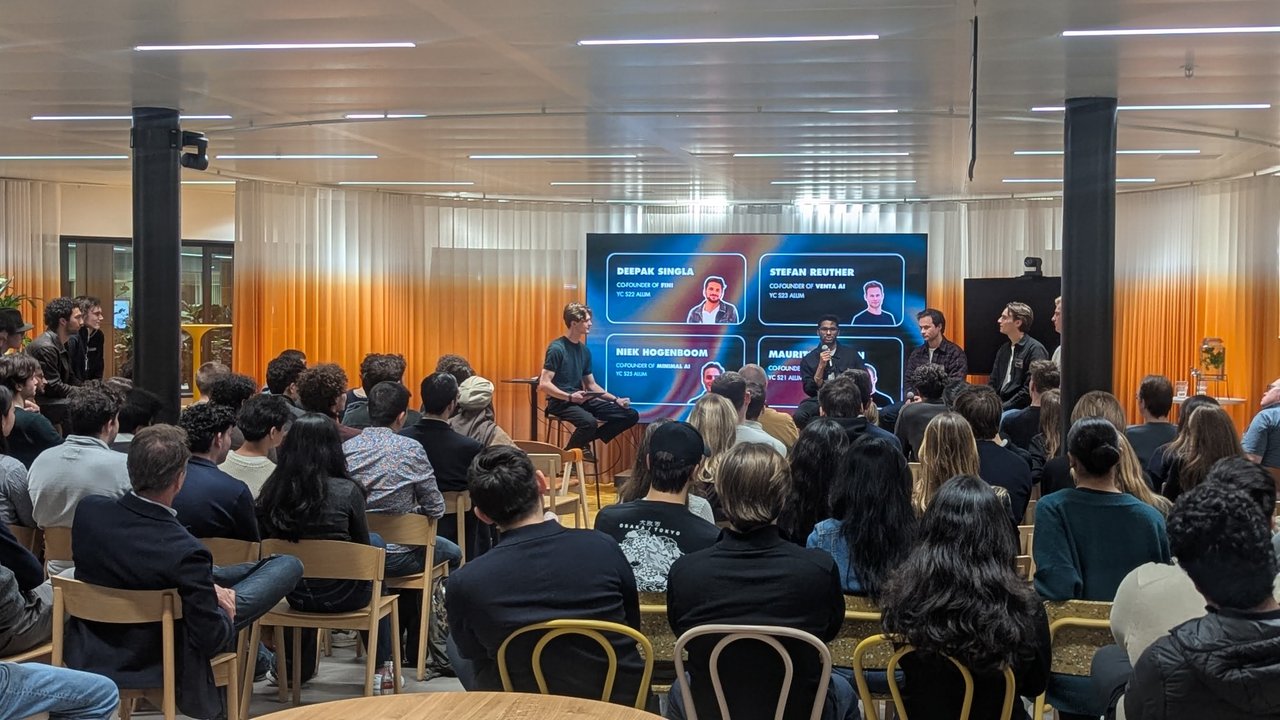
The panel, with the YC batches of each founder on the slide.
At the end, a member of the organising team announced XLerate, which she described as an eight-week, student-led accelerator hosted by ASIF Ventures, with mentorship, workshops and founders’ dinners. The closing slide said “XLerate Venture Studio: Dream. Build. Launch.” with a QR code to register interest.
My take: the room was full on a Wednesday evening, which says a lot about the appetite for first-hand founder stories in Amsterdam. Panels like this work best when the founders are only a few batches apart, as here, from S21 to S25.
BitBash 2026: Jurassic Edition, Veenendaal (23 January)
A year after the Ghostbusters edition I wrote up for 2025, I went back to BitBash for the Jurassic Edition. The banner said “www.bitbash.nl – 23/24 Jan 2026” with Info Support’s “Solid Innovator” logo, and the venue had a polygon T-rex to match.
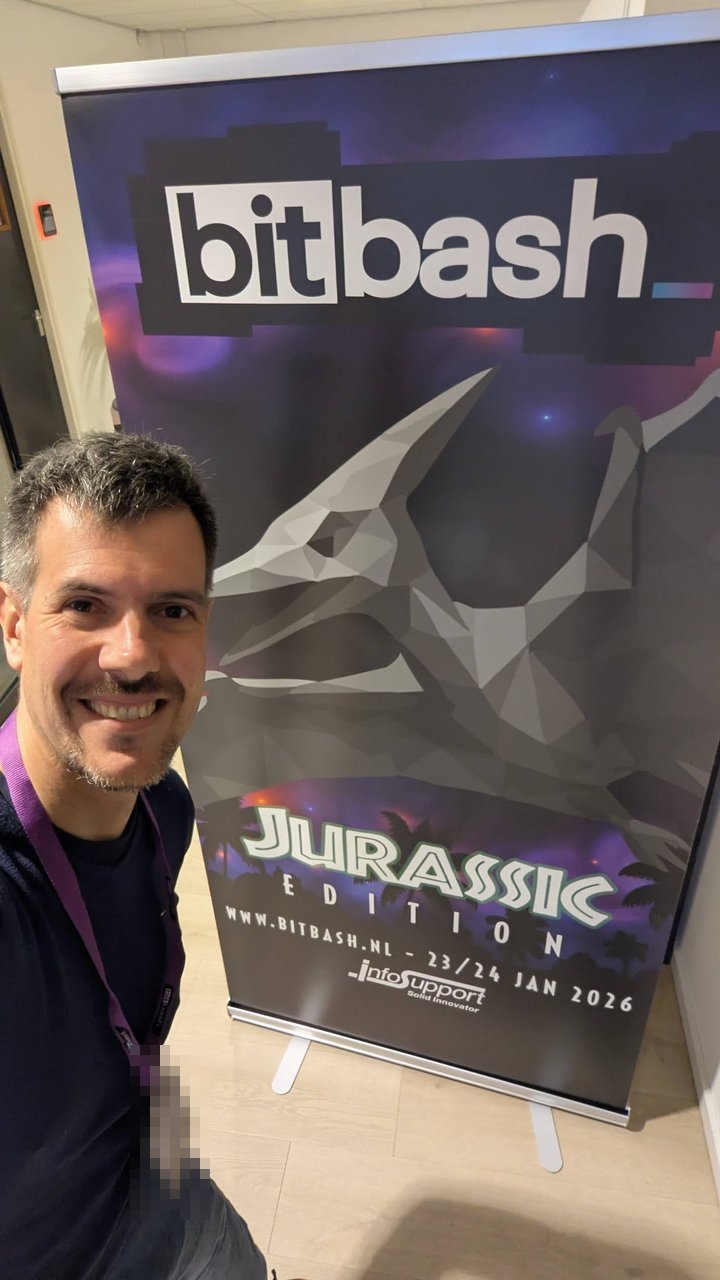
Jurassic Edition, two days in January.
On Friday 23 January the programme was workshops. A screen at the venue listed the sessions in four rooms from 13:00:
- Room 1: “Build a cloud native engineering platform in a day (continued)”, full-day workshop, intermediate
- Room 2: “Build a coding agent in a day with Semantic Kernel and C# (continued)”, full-day workshop, intermediate
- Room 3: “Welcome to Alassic Park: Run Your Own LLMs Before They Run You”, half-day workshop, advanced
- Room 4: “Hands-On GraphQL: Building Smarter APIs”, half-day workshop, intermediate
In the workshop room I sat in during the morning, the trainer had an Argo CD application tree on the big screen, showing an app as Healthy and Synced, while attendees worked along on their laptops.
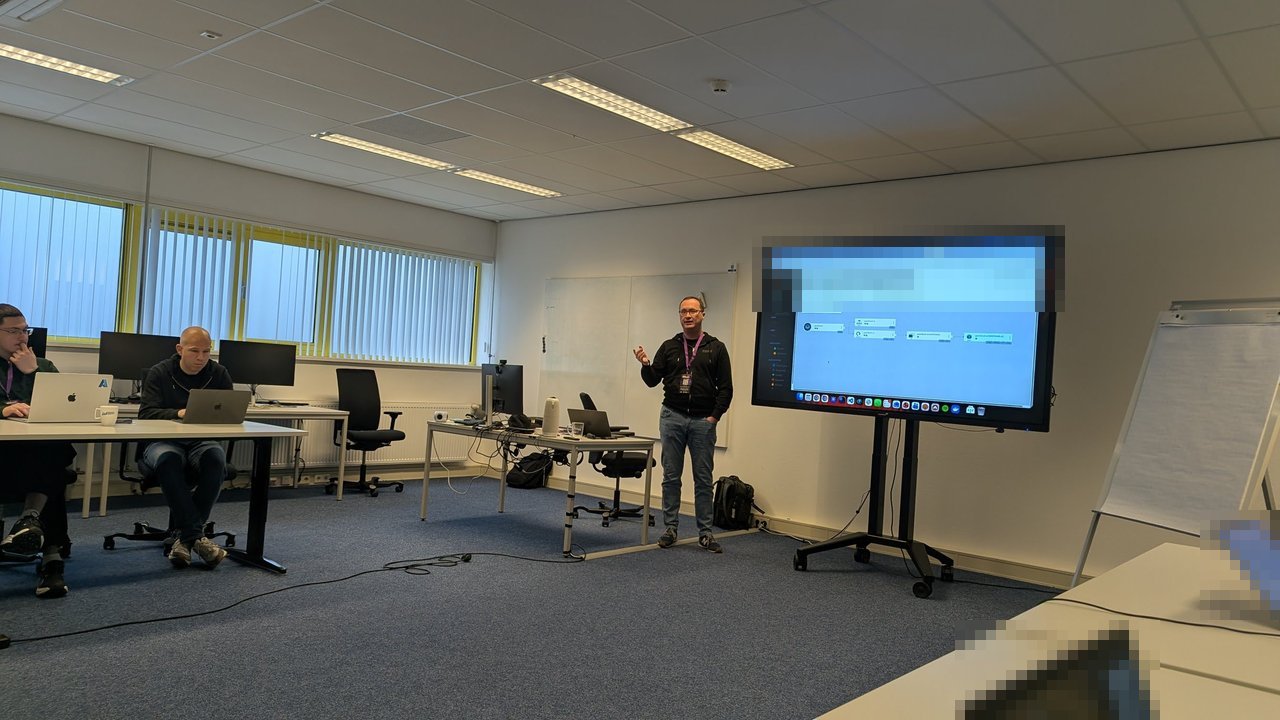
Hands-on workshop format, with GitOps on the screen.
My take: a full day to build an engineering platform is the right length. GitOps with Argo CD is quick to demo, but the useful learning comes from wiring it into the rest of the platform, and a talk slot never gets that far.
Startup pitch night (27 January)
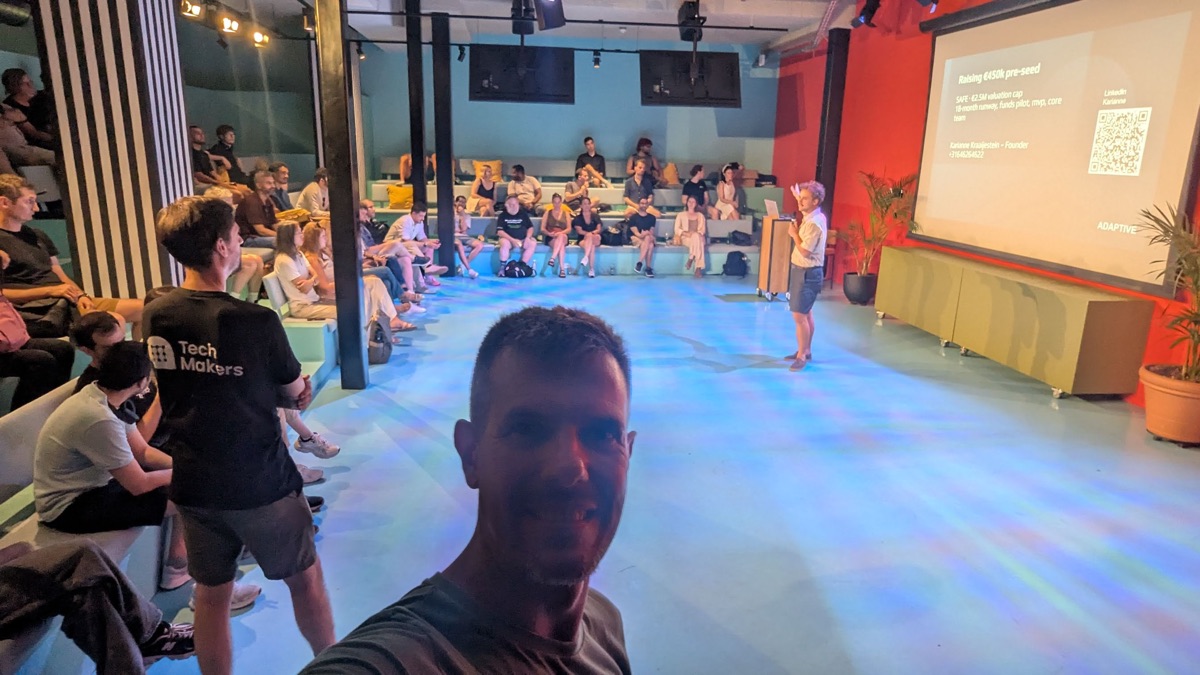
On Tuesday 27 January I joined a startup pitch night at Capital C in Amsterdam (the venue’s name was on the flip chart). I didn’t capture the organiser’s name, so I’ll leave it out. Two pitches stood out in my photos:
- An AI fish-counting pitch, “From Guesswork to Precision”. According to the slide, fish counts in cage aquaculture are manual and off by up to 25%, and feed is 50% of costs. The proposed solution was AI fish counting from underwater video with under 5% error, no handling and no stress, working with existing cameras or in real time. The ask was €1M seed.
- winwin.travel, whose slide said “We mixed ChatGPT, Tinder, and Excel to personalize hotel booking”: ask in AI chat, put likes, compare in a table. The closing slide listed 2.5M hotels, 20.000+ users and “Looking for €500.000”.
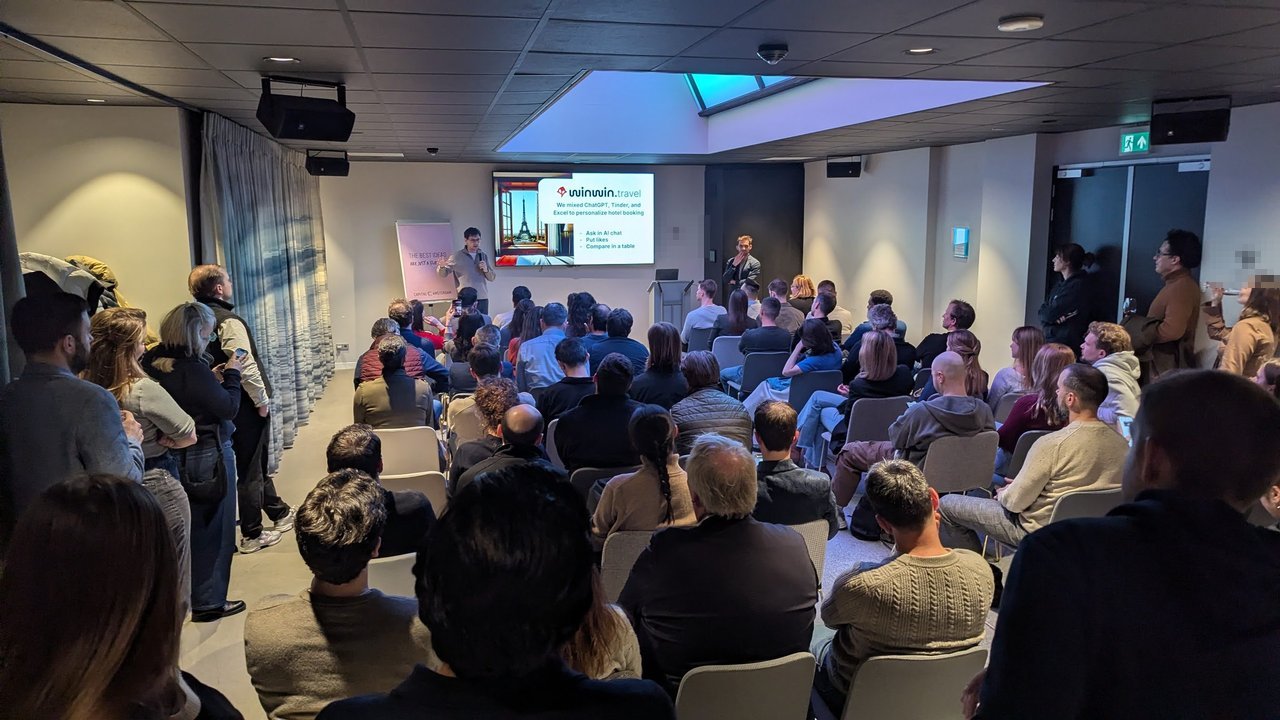
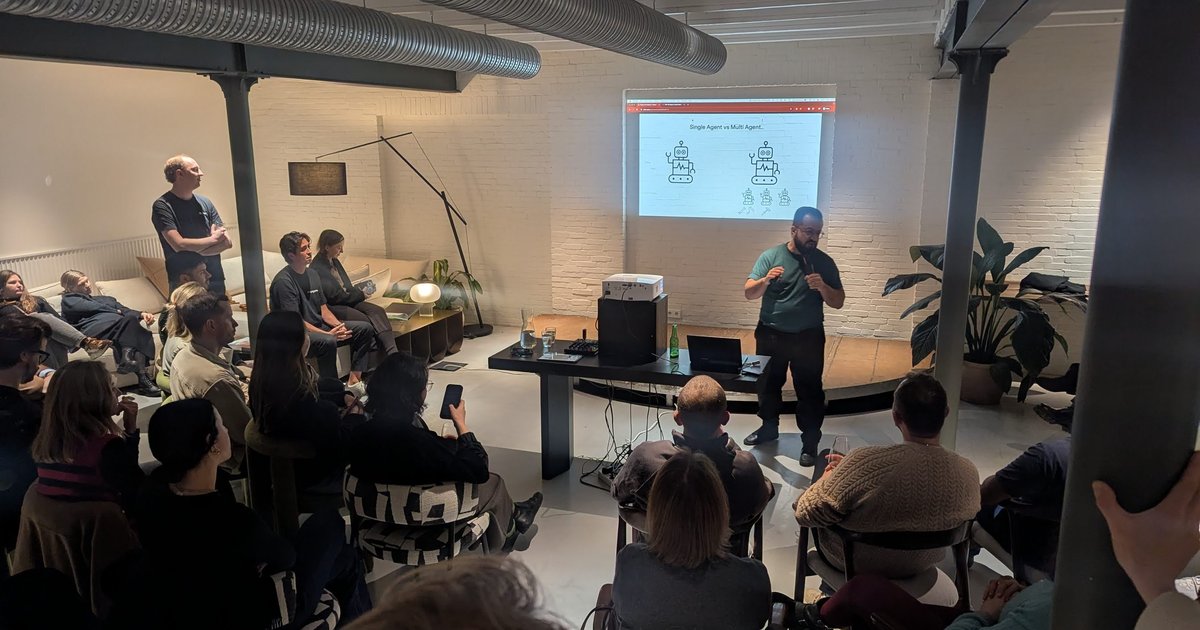
Standing room only for the hotel-booking pitch.