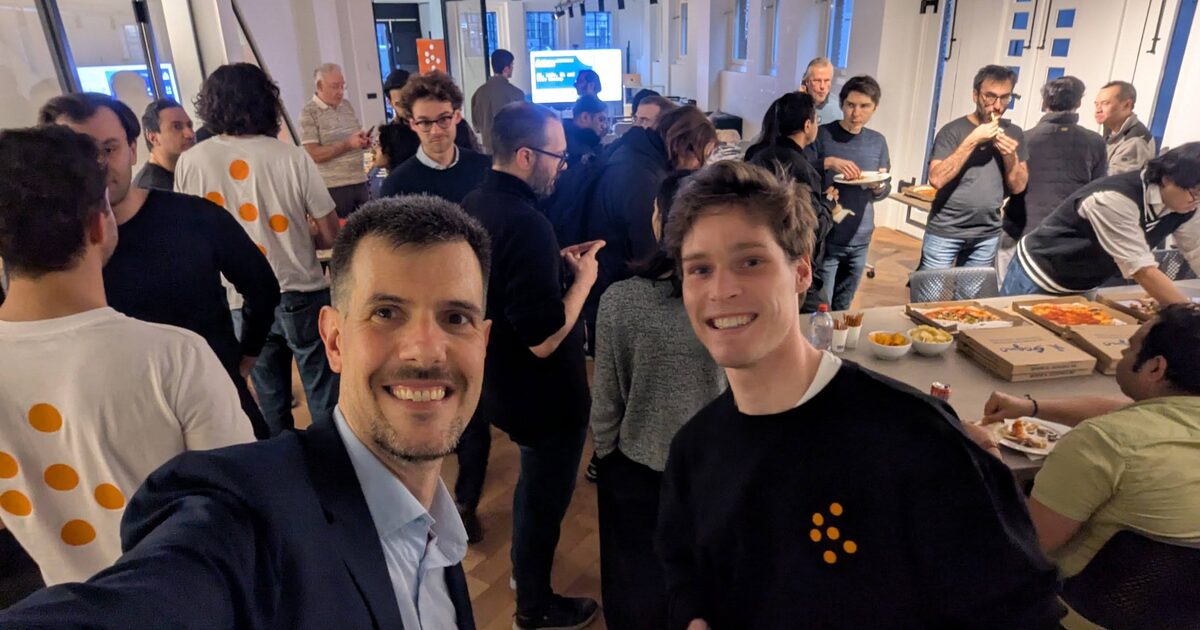

Great to moderate the AICamp AI Meetup in Amsterdam, hosted at ML6’s office on Geldersekade. Over 110 RSVPs for an evening of deep-dive tech talks on AI agents, in collaboration with Google Cloud and ML6.
The Talks
Agent2Agent (A2A Protocol) — Holt Skinner, Google
The first talk provided a deep dive into Google’s Agent2Agent (A2A) protocol — the architectural standard for building interoperable autonomous systems where AI agents securely discover, negotiate, and collaborate on complex tasks.
A2A addresses a fundamental challenge: as organizations deploy more AI agents, these agents need to communicate with each other across organizational boundaries. The protocol defines how agents:
- Discover each other’s capabilities
- Negotiate task delegation and handoffs
- Collaborate on multi-step workflows
- Maintain security throughout the interaction
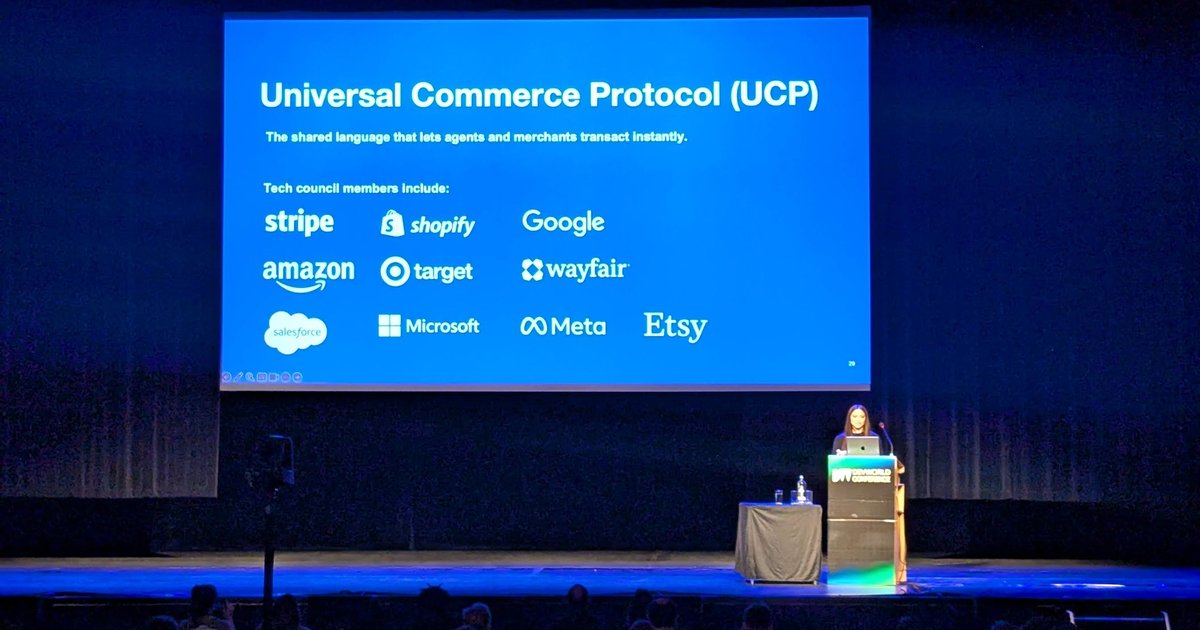
Before the code, Holt placed A2A among the newer agentic protocols, on an “Other Agentic Protocols” slide (pictured further down). As he described them, the Universal Commerce Protocol (UCP) is an open standard for the whole AI shopping journey, from product discovery to checkout and order tracking. AP2, the Agent Payments Protocol, fits in as one piece of it. A2UI is a declarative JSON protocol that lets agents render interactive, visual interfaces. The official pages confirm how the pieces connect: UCP lists AP2, A2A and MCP support as built in, AP2 is available as an extension for A2A and UCP, and A2UI has agents send declarative component descriptions that the client renders with its own native widgets.
This is directly relevant to platform engineering — as AI agents become part of infrastructure operations, standardized communication protocols prevent the “integration spaghetti” that plagues enterprise systems.
Deep Search AI Agents and the Olof Palme Case — Thomas Vrancken, ML6
The second talk was remarkable: ML6 built an Agentic Deep Research solution using exclusive police archives to investigate one of history’s largest unresolved cases — the assassination of Swedish Prime Minister Olof Palme in 1986.
According to the meetup description, investigative journalists now use this AI system to navigate decades of police records. The technical architecture included:
- Custom AI agentic workflows for document analysis
- Deep Research patterns for cross-referencing evidence
- Google Cloud infrastructure for processing massive archives
- Guardrails to distinguish correlation from causation
The talk covered the implemented agentic workflows, custom Deep Research, and the Google Cloud architecture of the solution. The question of whether AI found a guilty party kept the audience on the edge of their seats.
The Evening in Photos
The Google Cloud talk built on the DeepLearning.AI short course “Intro to A2A Protocol”, which was on screen as the session started.
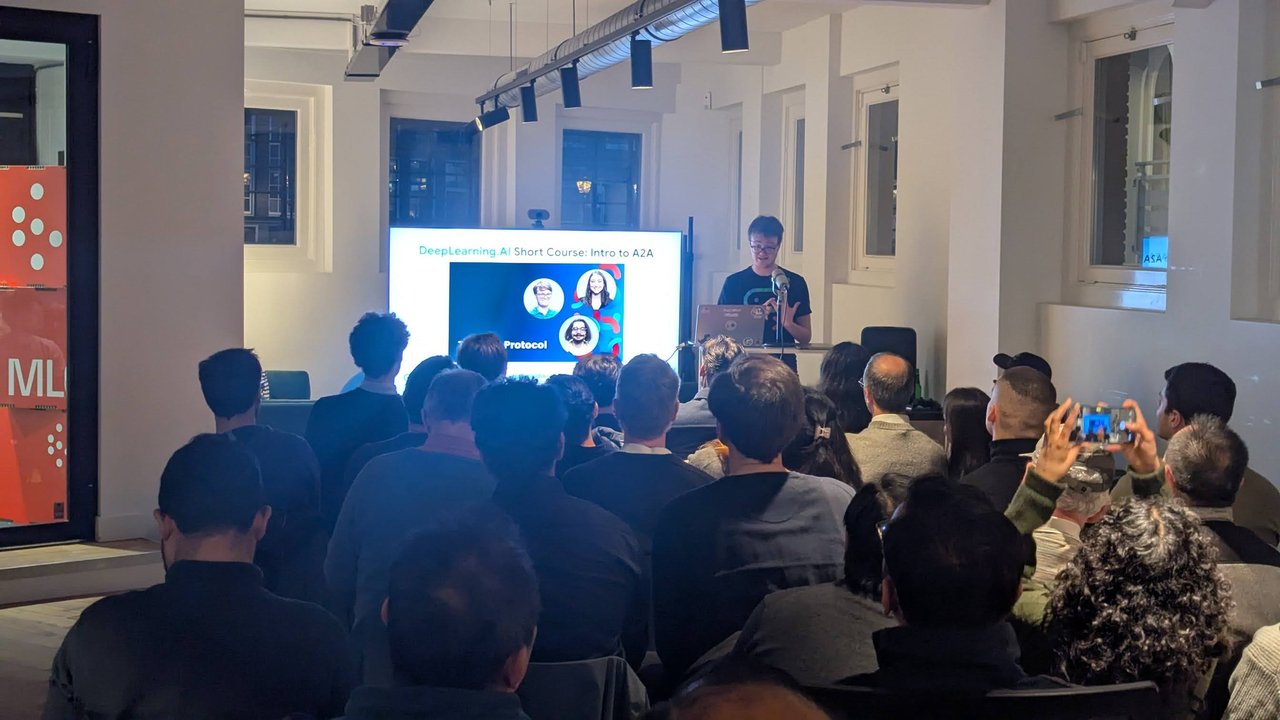
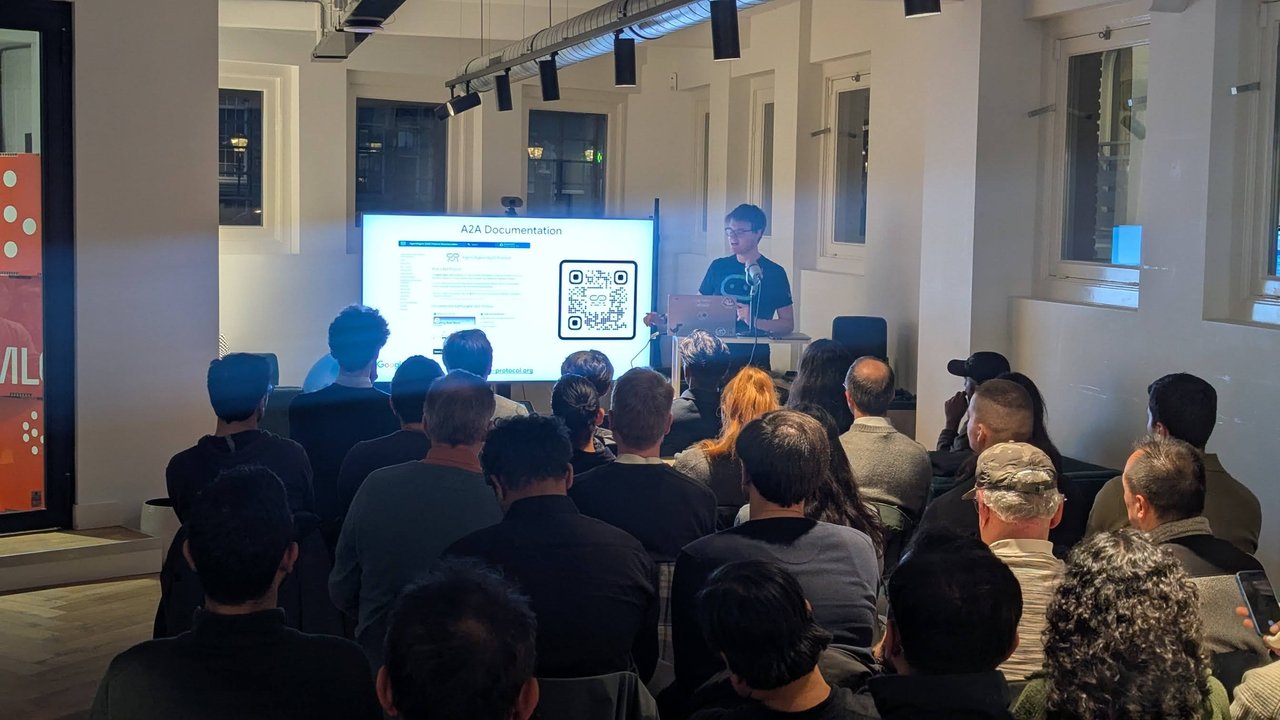
A full room at ML6 for the A2A talk, opening with the DeepLearning.AI short course.
The slide that clarified the most for me was “A2A ❤ MCP: Complementary, Not Competing”. On the left, the Model Context Protocol connects agents to tools, APIs and resources. On the right, Agent2Agent handles dynamic communication between different agents as peers.
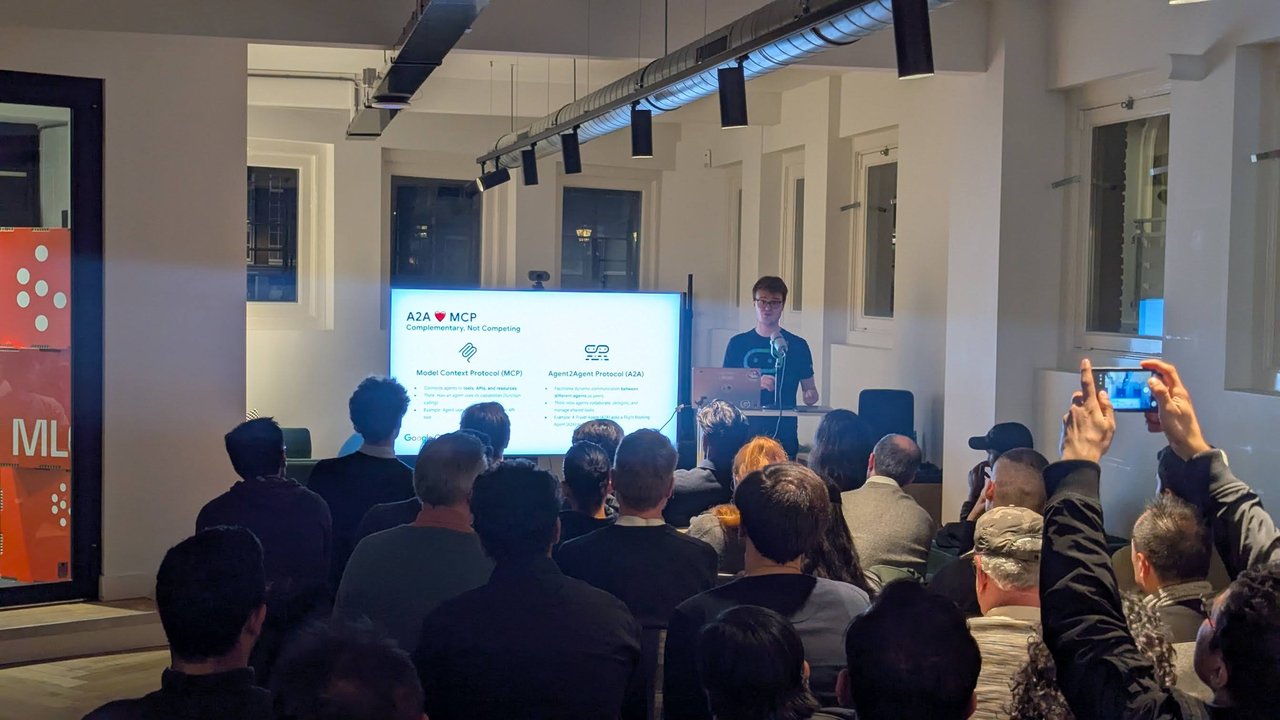
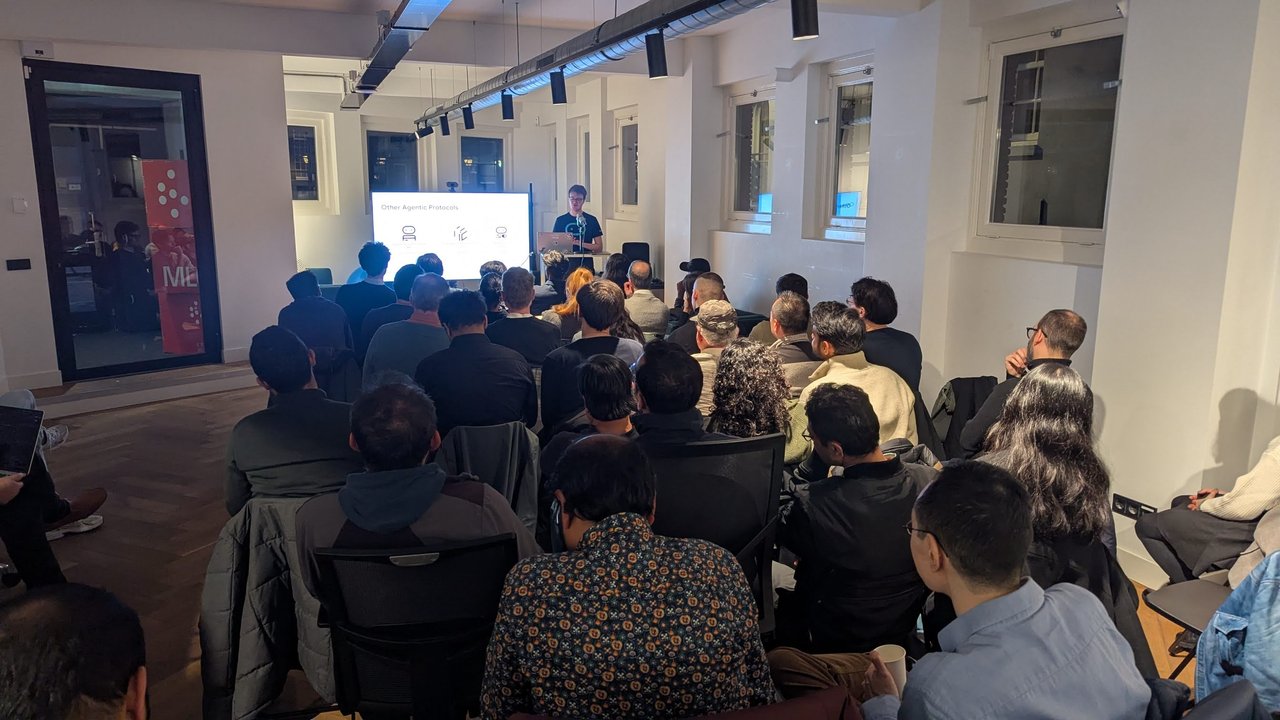
MCP for tools, A2A for agent-to-agent, and a look at the other agentic protocols.
The talk ended with a hands-on “Walkthrough / Get code” slide and a QR code to the A2A walkthrough, and plenty of phones went up to scan it.
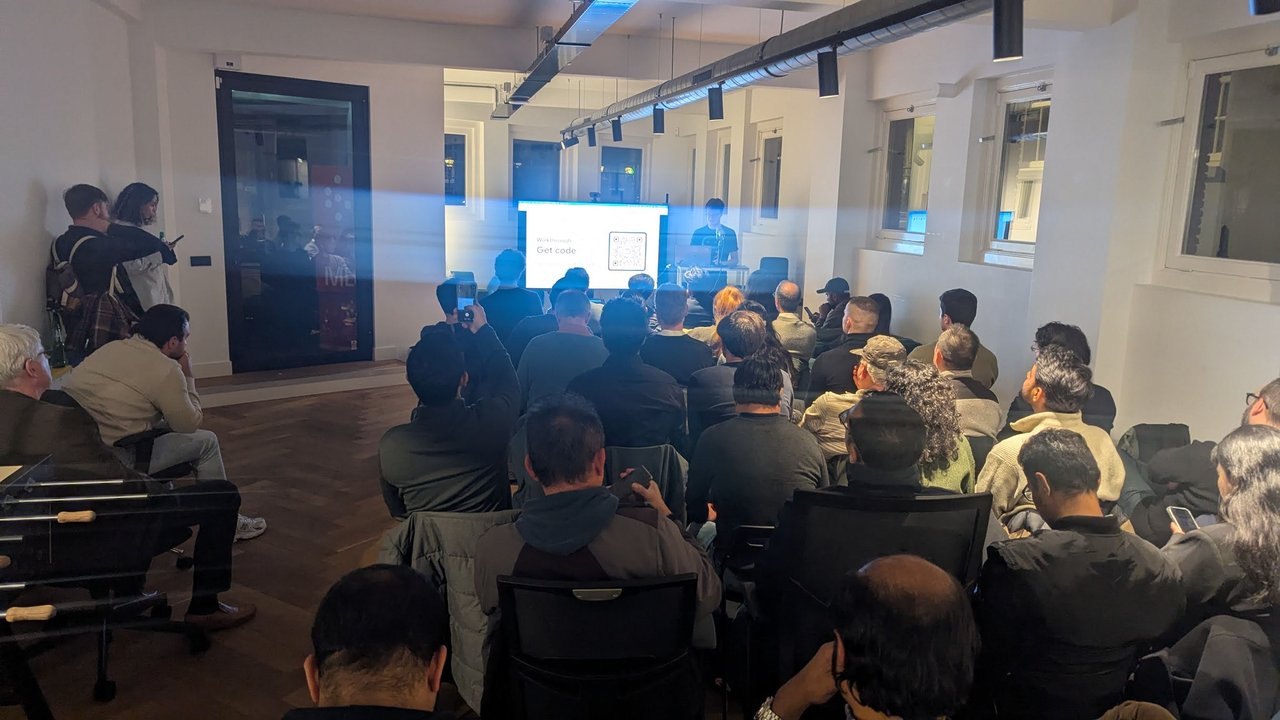
Phones up for the A2A walkthrough code.
The ML6 talk started with an introduction to the company (an AI-native company presented as one of Europe’s market leaders, with figures such as 120+ experts, 300+ projects delivered and ISO 27001 certification) before moving to the deep research system. The architecture slide, “Elevating to a multi-agent system”, summarised the design in two bullets: multiple agents with different tasks, and agents that pass information to each other.
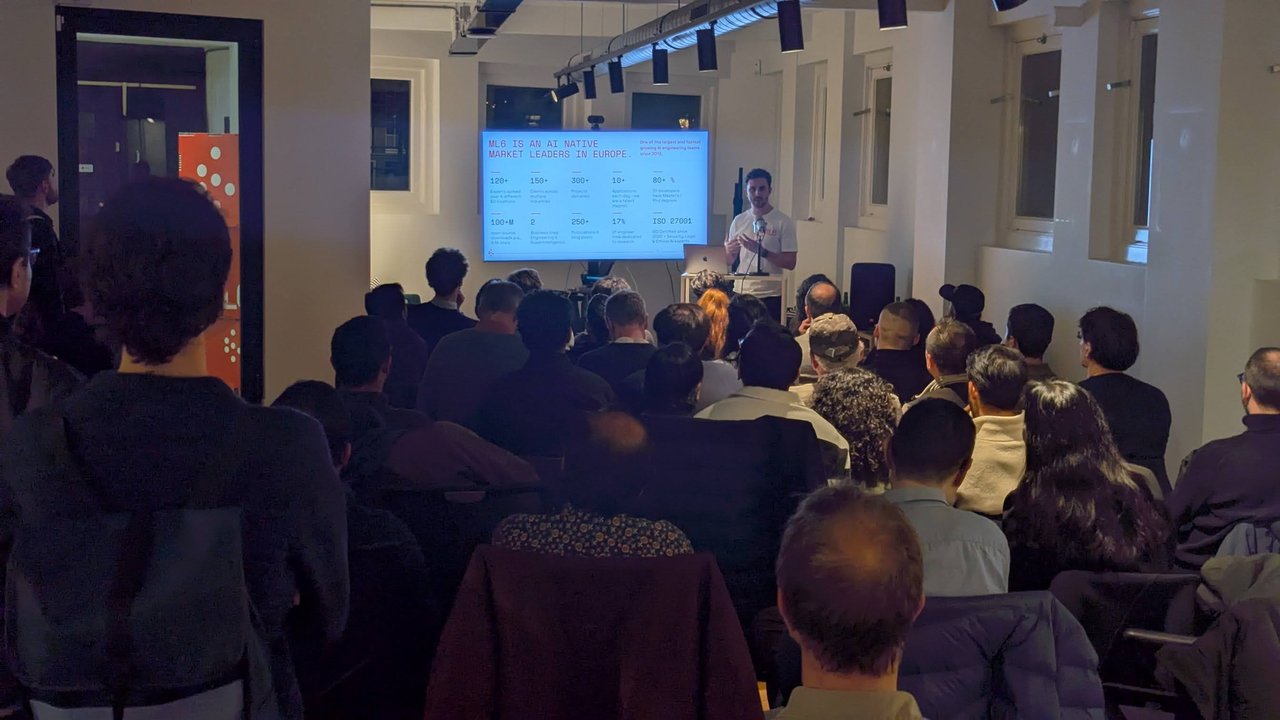
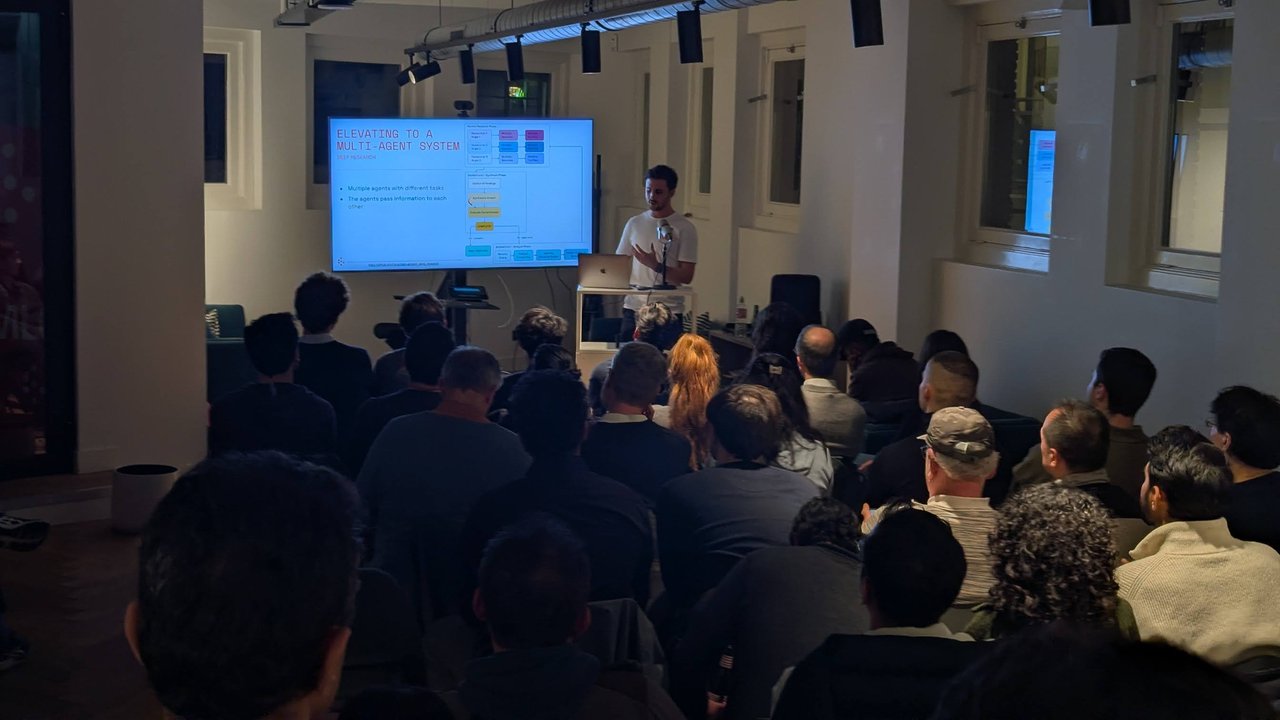
ML6’s introduction, then the multi-agent deep research architecture.
Why Agent Interoperability Matters
The A2A protocol represents a shift in how we think about AI infrastructure. Today, most AI deployments are isolated — a chatbot here, a code assistant there. A2A envisions a world where specialized agents collaborate:
- A security agent discovers a vulnerability and delegates patching to an infrastructure agent
- A monitoring agent detects anomalies and tasks a debugging agent with root cause analysis
- A compliance agent audits changes made by a deployment agent
This is the agentic AI future in practice — not a single superintelligent agent, but an ecosystem of specialized agents working together through standardized protocols.
Amsterdam’s AI Developer Community
With 110+ attendees packed into ML6’s Amsterdam office, the energy in the room was strong. The AICamp community has grown to 5,000+ members in Amsterdam and 500K+ developers worldwide.
Events like this, combined with the AI House Amsterdam sessions and the upcoming KubeCon Europe 2026, make Amsterdam one of the strongest AI developer hubs in Europe — exactly the kind of density the Prosus report argues Europe needs.
For more on AI agents and platform engineering, connect with me on LinkedIn or follow @TheLucaBerton.