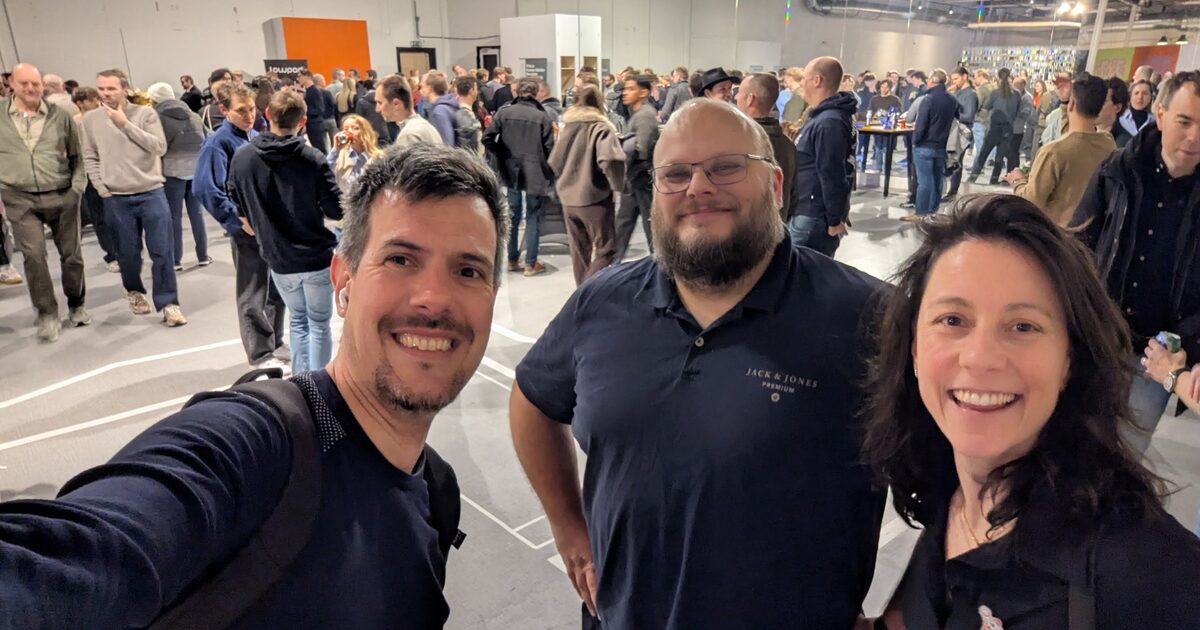
Great to be part of the AI in Robotics Meetup in Amsterdam — the biggest-ever event from the AI on the Amstel community. Over 685 attendees packed into the CRCL Park Theater at AMS Institute for an evening at the intersection of AI, robotics, and real-world deployment.
The Panel
What made this event especially valuable was the mix of perspectives. The panel brought together:
- Sebas Visser — Co-Founder and CTO of Monumental, one of the top Dutch robotics startups (raised $25M in 2024)
- Daniel Gebler — CTO of Picnic, focused on robotics in warehouse operations
- Laura Ferranti — Professor at TU Delft Cognitive Robotics Department and leader of the Reliable Robot Control Lab
The discussion went beyond the usual hype cycle and focused on the practical questions that matter: where AI is already creating value in robotics, what is still technically hard, and what it will take to move from promising demos to scalable systems.
Key Takeaways
The Sim-to-Real Gap
One of the most interesting discussions centered on simulations and the “sim-to-real” gap. The panel shared different perspectives:
- Monumental’s view: AI is great at guiding robots about what, when, and how to do it. Simulators create confidence in models, but the danger is believing simulation more than warehouse reality.
- TU Delft’s view: Physics gives the backbone; AI helps fill the gaps and make training robust. The danger is that AI will exploit whatever gaps remain.
- Picnic’s view: They use software simulations for end-to-end testing. Generative AI can help by explaining failures — instead of dumps of debug data, AI can generate high-level narratives and root causes.
Infrastructure for Robotics
From a platform engineering perspective, robotics creates unique infrastructure challenges:
- Edge inference — models need to run on-device with strict latency requirements
- Simulation compute — training in virtual environments requires GPU clusters at scale
- Data pipelines — sensor data from physical robots needs to flow back for model improvement
- Observability — monitoring physical systems is fundamentally different from monitoring software
Dutch Robotics Startups
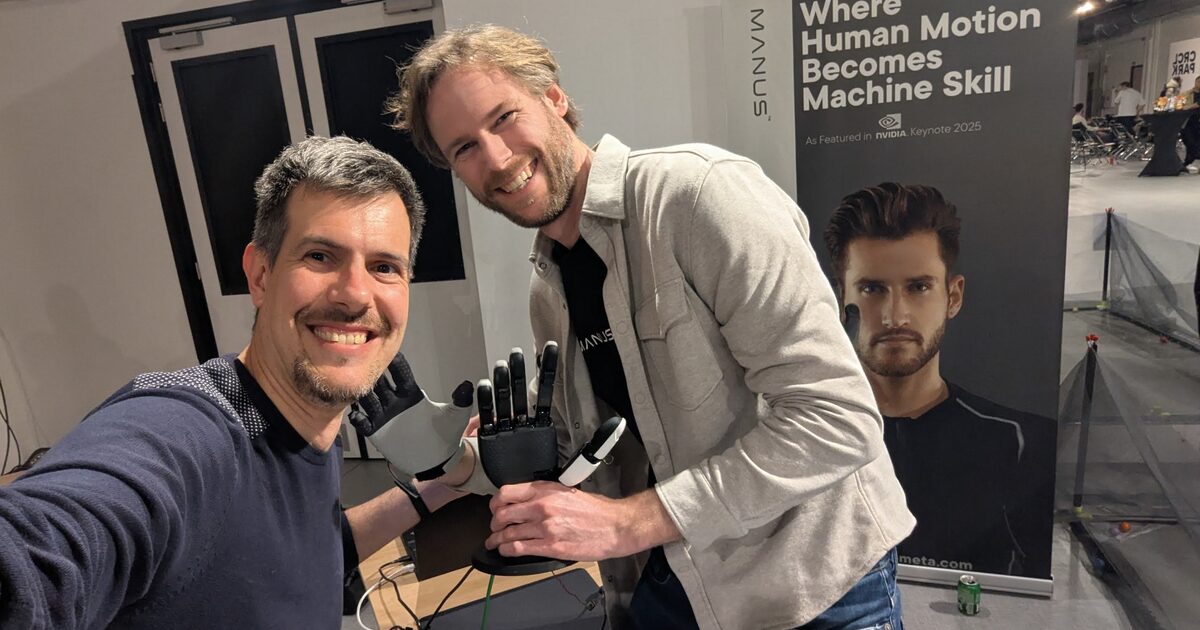
Also great to see Dutch robotics startups showcasing their work live on the exhibition floor. Autonomous mobile robots, articulated arms manipulating objects, and LED-lit autonomous vehicles — seeing these systems operate in person made the opportunity feel much more tangible than any slide deck could.
Amsterdam’s Position in Embodied AI
The Netherlands is building a strong position in embodied AI. With TU Delft’s research excellence, startups like Monumental scaling production robotics, Picnic automating warehouse logistics, and companies like Manus translating human motion into machine skill, the ecosystem has depth.
As the Prosus State of AI report highlighted, world models and physical AI represent a frontier where no one has established dominance yet. Europe — and the Netherlands specifically — is well-positioned if it concentrates investment in its strongest hubs.
Thanks to AI on the Amstel, AMS Institute, and Grant Easterbrook for organizing such a strong event.
The Evening in Photos
Early in the evening the room was still filling up, with the AI on the Amstel logo on the big screen behind the empty panel chairs.
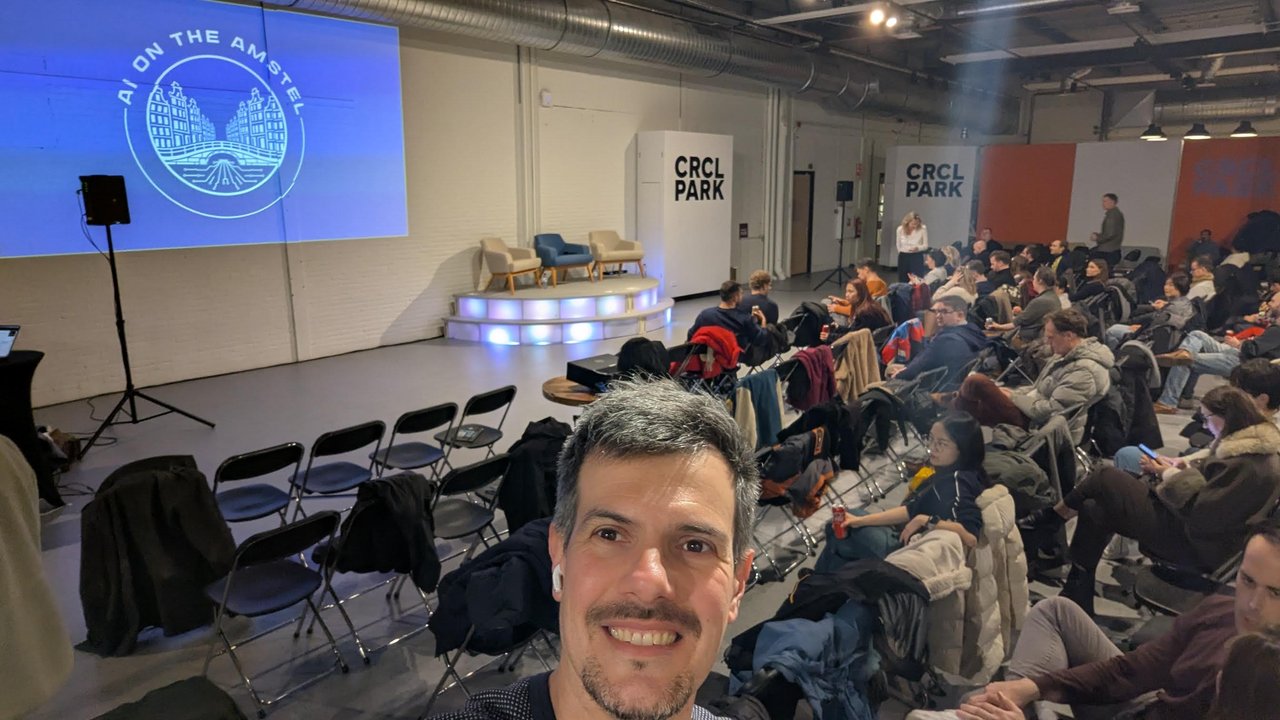
Early in the evening at CRCL Park, with the stage set for the panel.
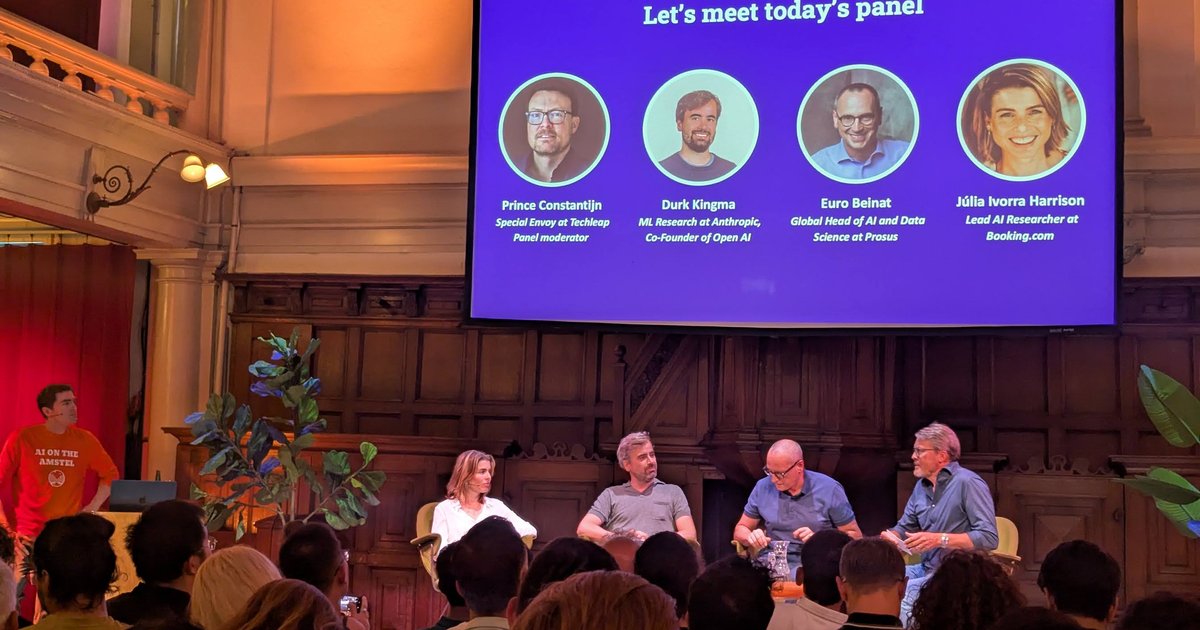
The “Let’s meet today’s panel” slide introduced Laura Ferranti (professor in the TU Delft Cognitive Robotics Department), Sebas Visser (co-founder and CTO of Monumental) and Daniel Gebler, with the three of them seated on stage.
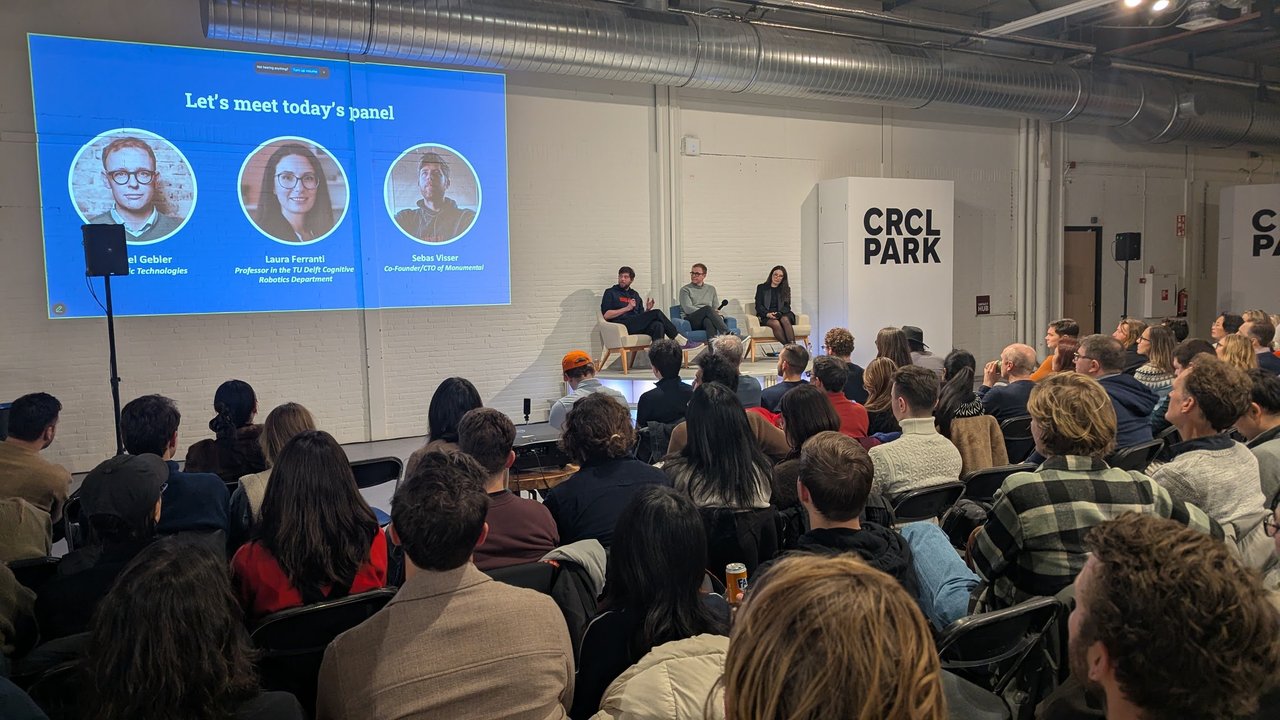
The panel introduction, with the three panellists seated next to the CRCL Park sign.
Each question went up on screen with a short written answer from every panellist, which made it easy to compare their views side by side.
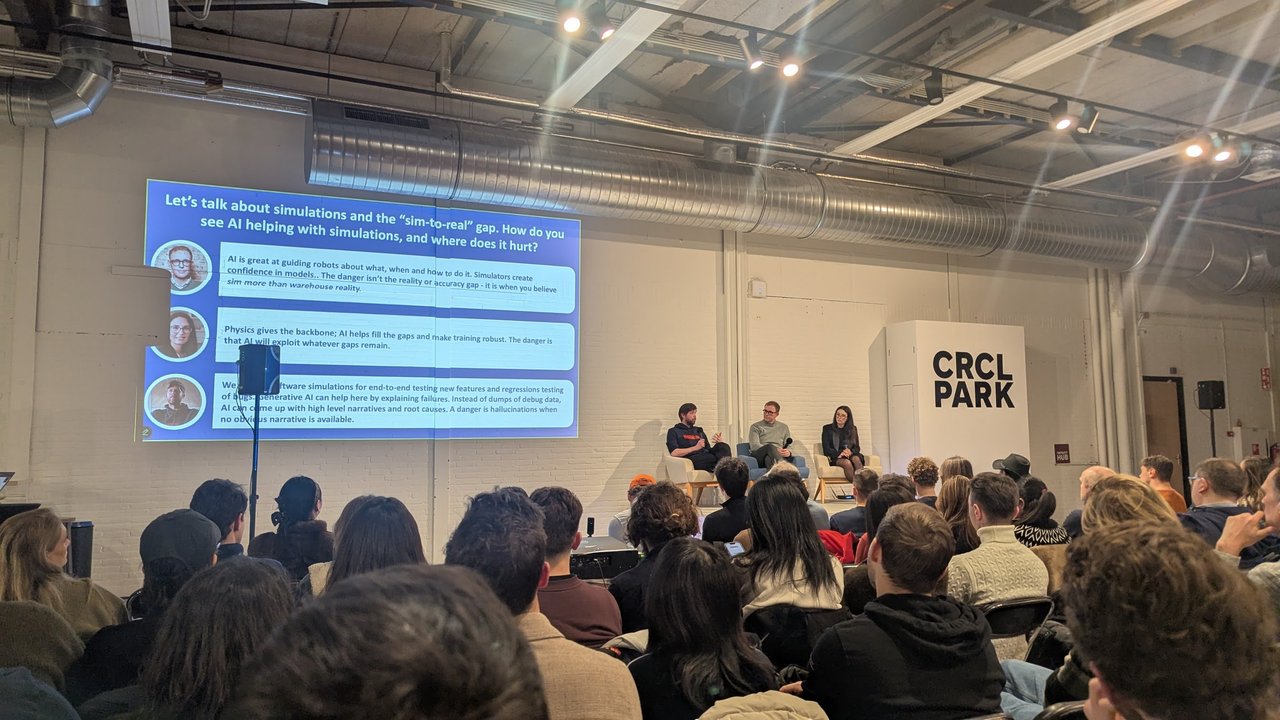
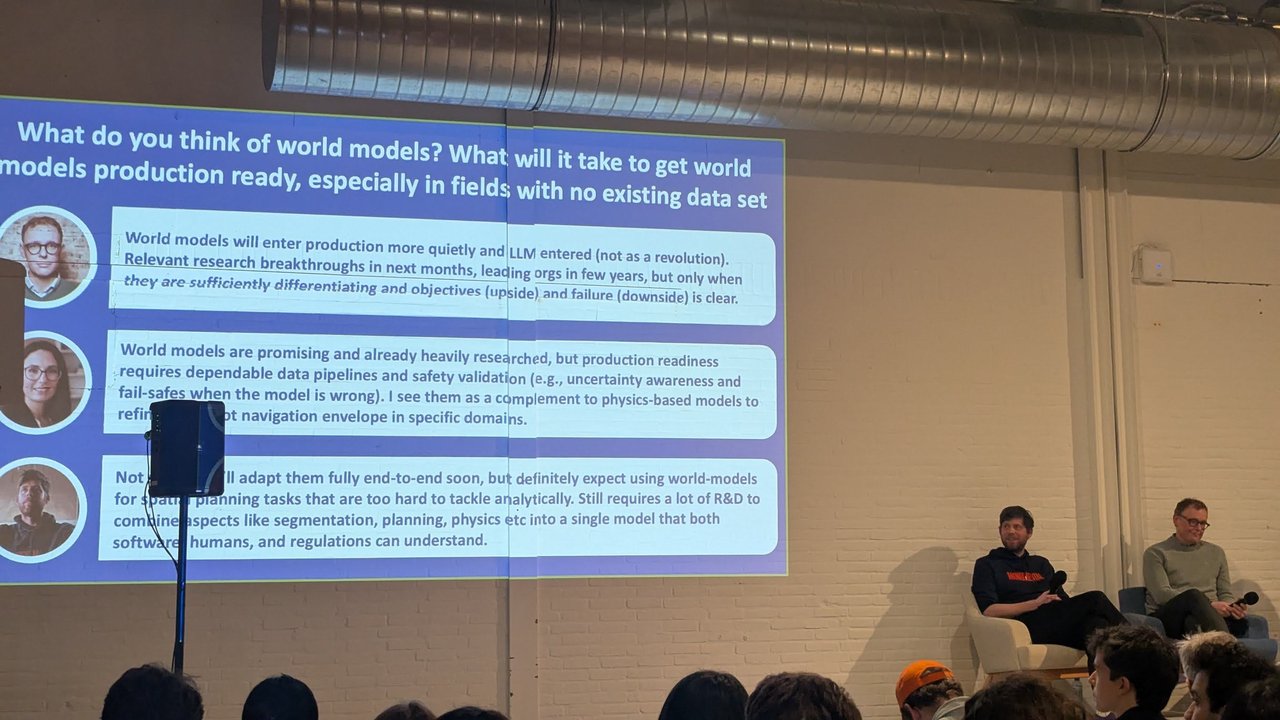
Left: the sim-to-real question. Right: “What do you think of world models?”, with answers that ranged from world models entering production “more quietly” than LLMs, “not as a revolution”, to dependable data pipelines, safety validation and fail-safes for when the model is wrong.
The written answers kept coming back to the same themes: clear objectives and failure modes, safety validation, and a single model that “software, humans, and regulations can understand”. Another slide on sensor data and modelling the environment put it bluntly: “More data doesn’t fix wrong abstractions.” My take: that’s the same discipline we apply to any production platform, and it matters even more when the system has wheels or arms.
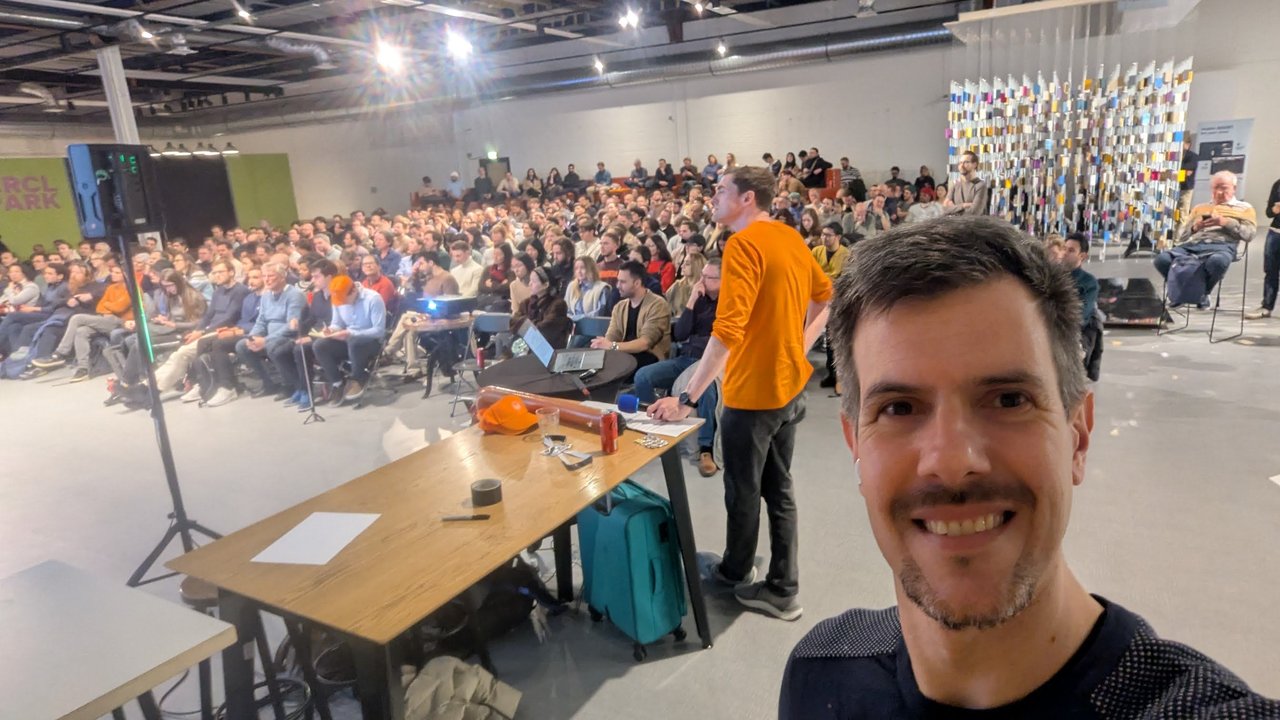
The view from the front halfway through the panel: every row full.
At the end of the panel, the closing slides thanked the partners and demo companies. Prosus presented itself as a global technology company headquartered in Amsterdam: 100+ companies backed and $30bn+ invested since 2008, investments in 12 GenAI startups totalling US$100m, and a global team of 750+ AI workforce specialists. The “Thank you to our demos” slide listed Roboat, Prosus and Manus among the companies showing their work on the floor.
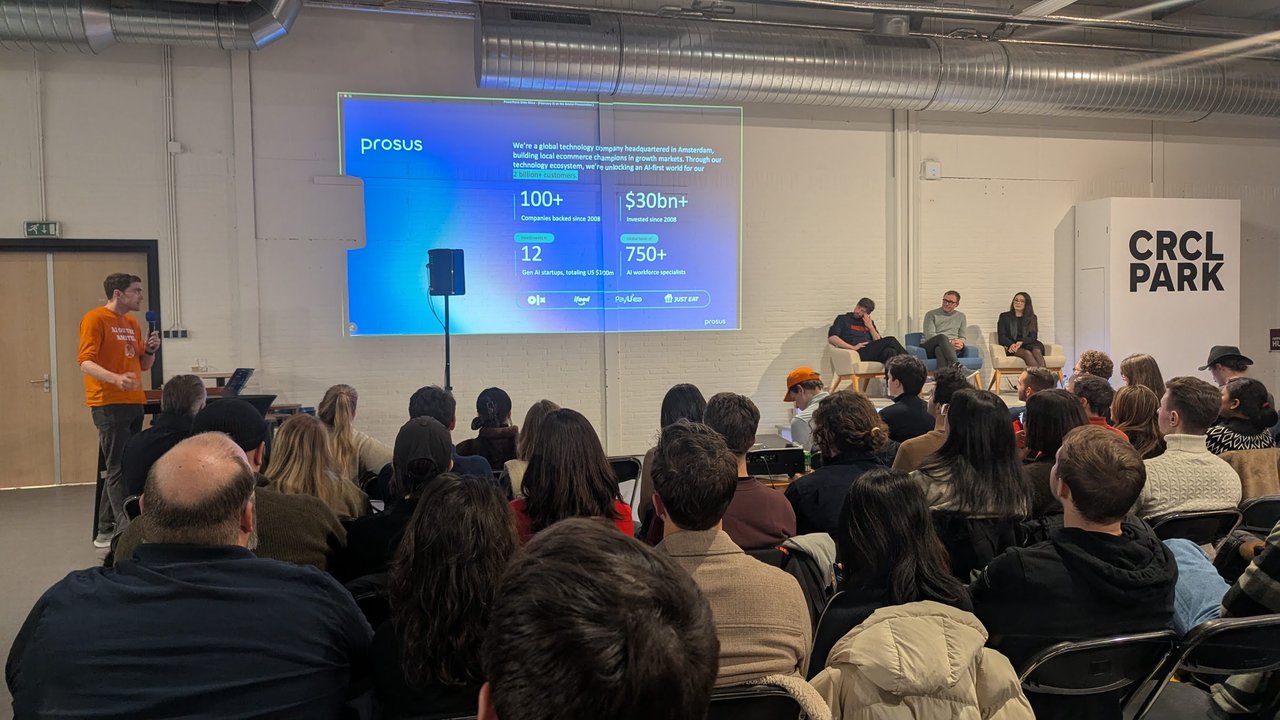
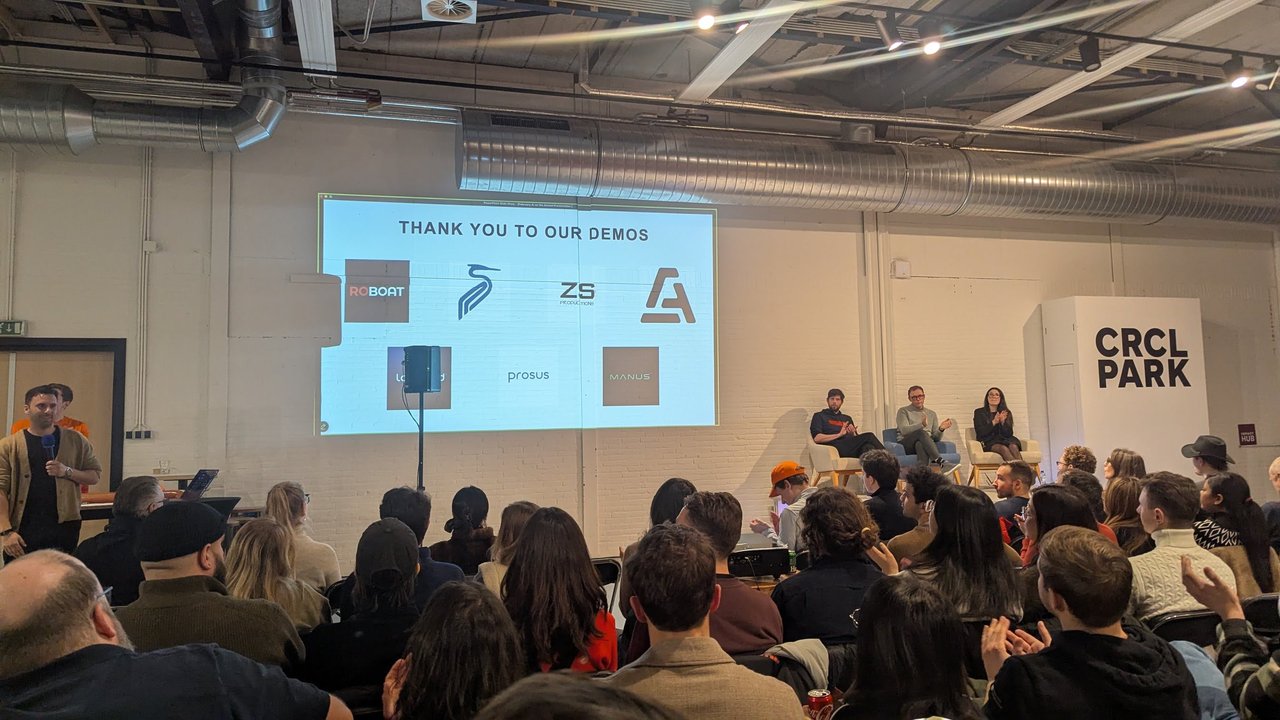
Left: the Prosus partner slide. Right: thanks to the demo companies, with the panel applauding.
The organiser ended with plans for the year. One slide said “My goal for 2026: 300+ people every month!” and that he was looking for sponsors. Another announced plans for a San Francisco-style hackathon in 2026. Upcoming meetup topics included a “Frontier Lab face off” and using AI for real-world research and product improvement. For a later AI on the Amstel panel on frontier models, see AI on the Amstel: DeepMind, NVIDIA & Mistral Panel.
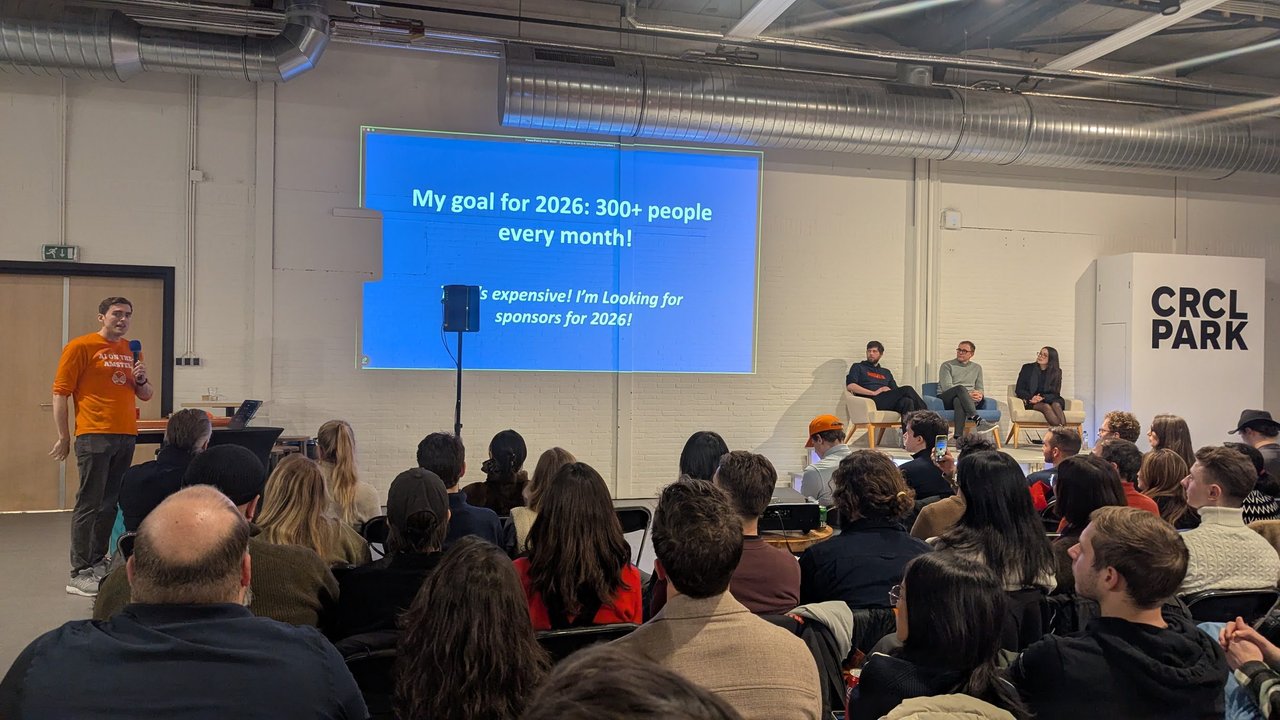
The organiser’s 2026 goal: 300+ people at every monthly meetup.
For more on AI infrastructure and robotics, connect with me on LinkedIn or follow @TheLucaBerton.