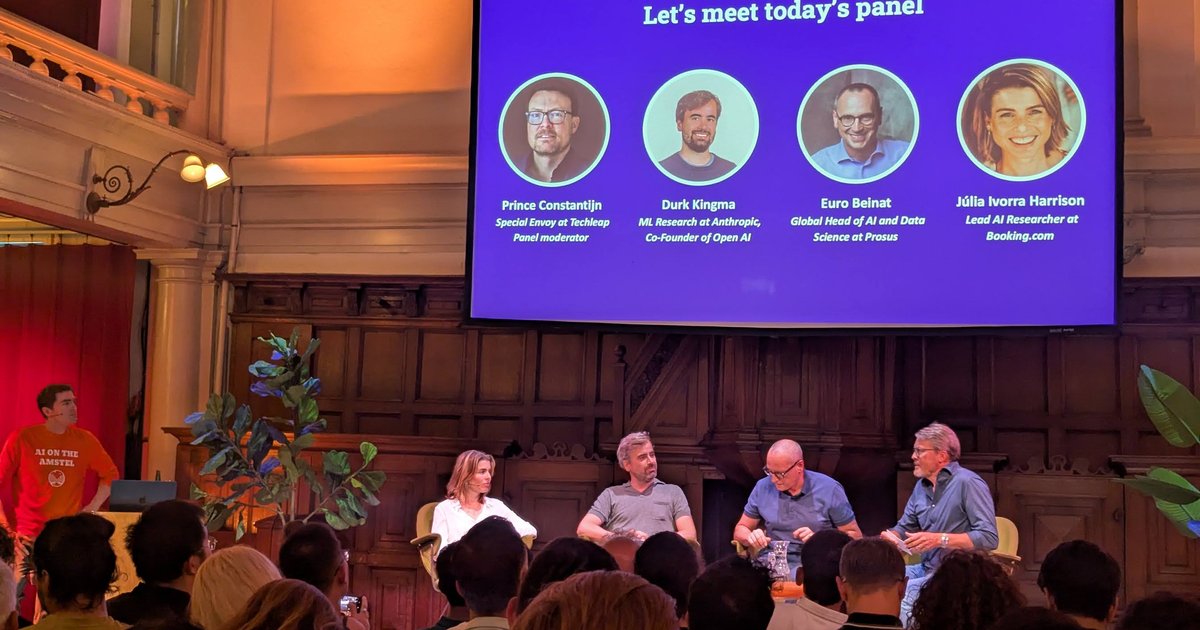
On 23 July 2025 I went to AI on the Amstel, which describes itself on its screens as “Amsterdam’s biggest monthly AI event”. This edition was hosted by Prosus. I wrote up the June 2026 edition earlier; this is the July 2025 one, and everything below comes from the slides I photographed.
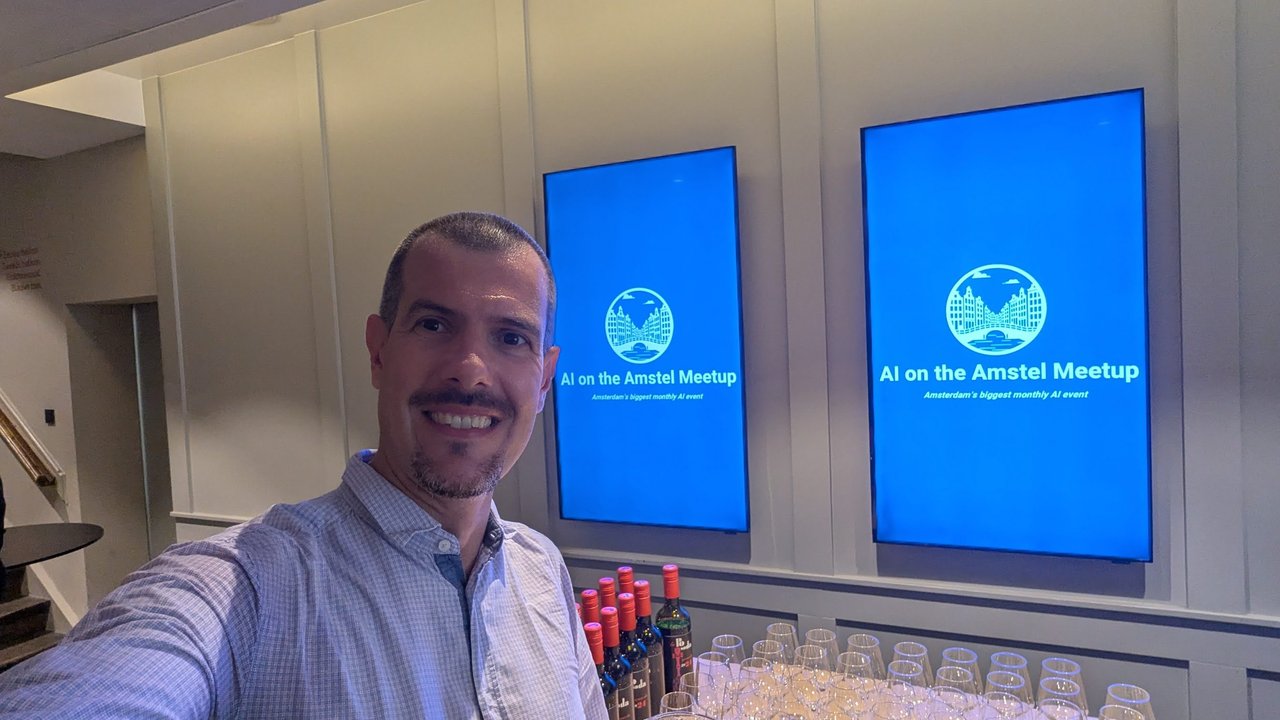
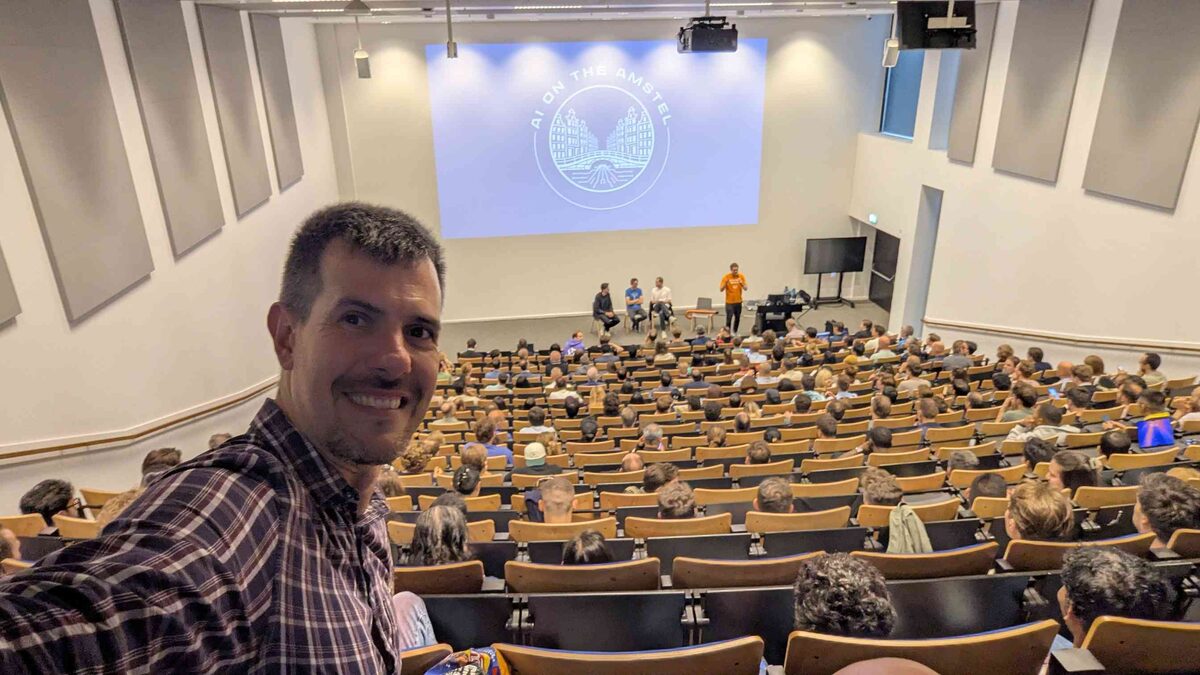
Two screens at the entrance showed the meetup logo and the tagline “Amsterdam’s biggest monthly AI event”.
Prosus as host
Before the panel, a Prosus slide introduced the company as a global technology company headquartered in Amsterdam. The numbers on it were: 100+ companies backed since 2008, $30bn+ invested since 2008, 12 Gen AI startups totalling US $100m, and 750+ AI workforce specialists. Separate “Prosus is hiring!” slides invited people interested in cutting-edge AI to check the current vacancies and meet the recruiters. The closing slide thanked the audience and said “see you in September”.
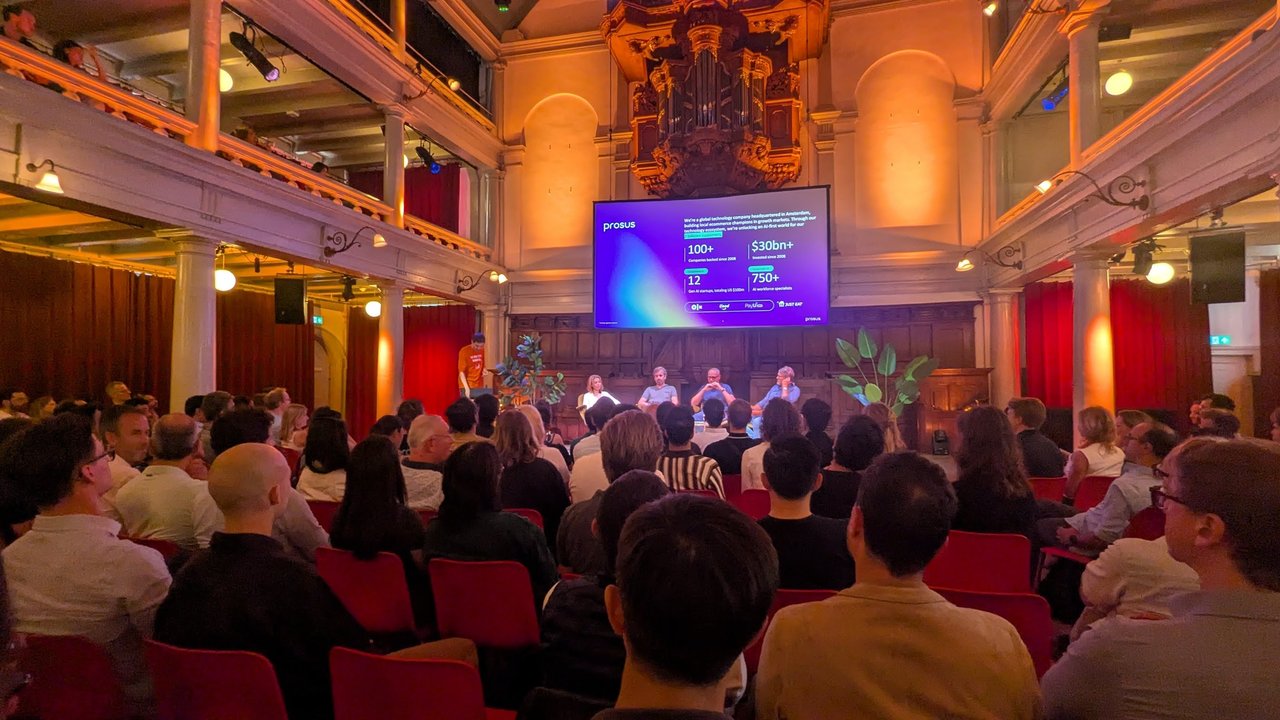
A full hall: the Prosus introduction slide above the stage.
The panel
The slide “Let’s meet today’s panel” listed, with the titles exactly as written:
- Prince Constantijn: Special Envoy at Techleap, panel moderator.
- Durk Kingma: ML Research at Anthropic, Co-Founder of Open AI.
- Euro Beinat: Global Head of AI and Data Science at Prosus.
- Júlia Ivorra Harrison: Lead AI Researcher at Booking.com.
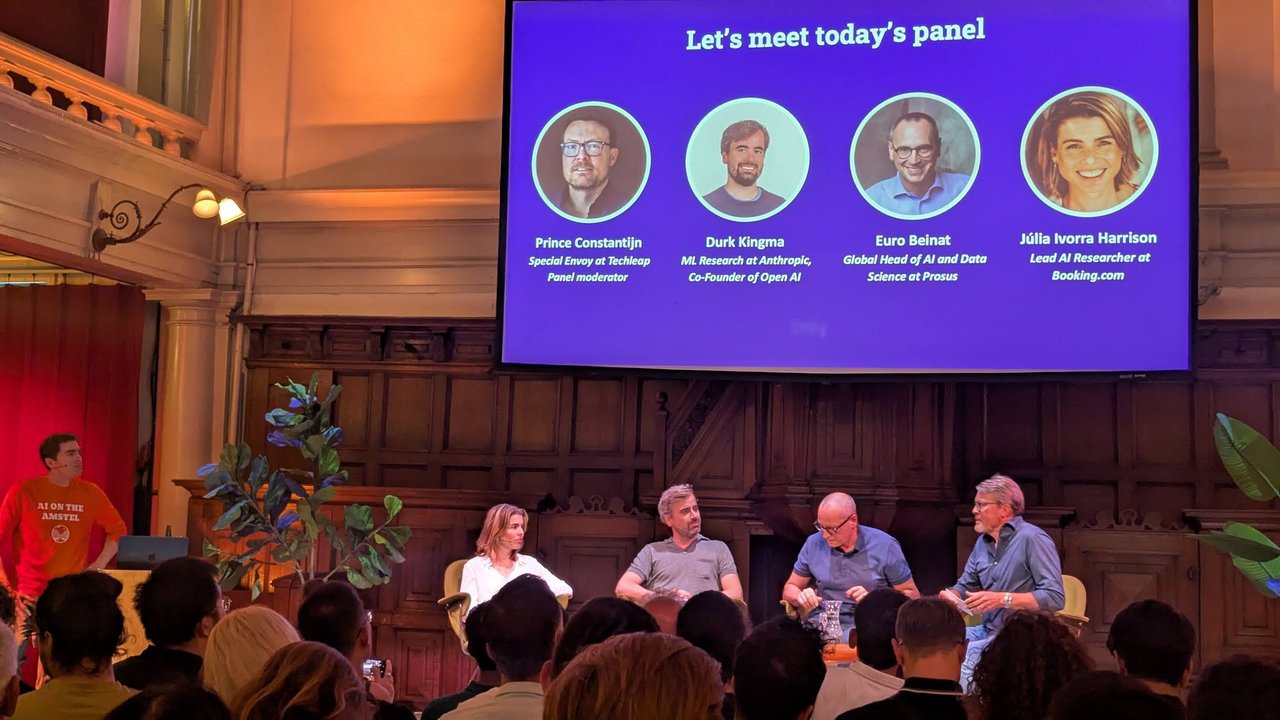
“Let’s meet today’s panel”, as shown on the slide.
Why did DeepSeek surprise everyone?
The first question on screen was “Let’s start with the most recent big breakthrough - DeepSeek. Why do you think DeepSeek surprised everyone?” Three answers were shown, each next to a panellist’s avatar. In short, they said:
- It was only mildly surprising for people who had read the team’s papers the year before. They do good research and have a big compute cluster; the slide cites SemiAnalysis estimating total server capex at about $1.6 billion.
- It was a reminder that AI innovation is global, not just American. What matters is taking such advances, whoever builds them, and using them for hyper-personalised and culturally aware experiences.
- The community was not surprised by the achievement itself, and the approach was ingenious given team size and cost. The real stir was the possibility that China may be ahead in AI rather than behind.
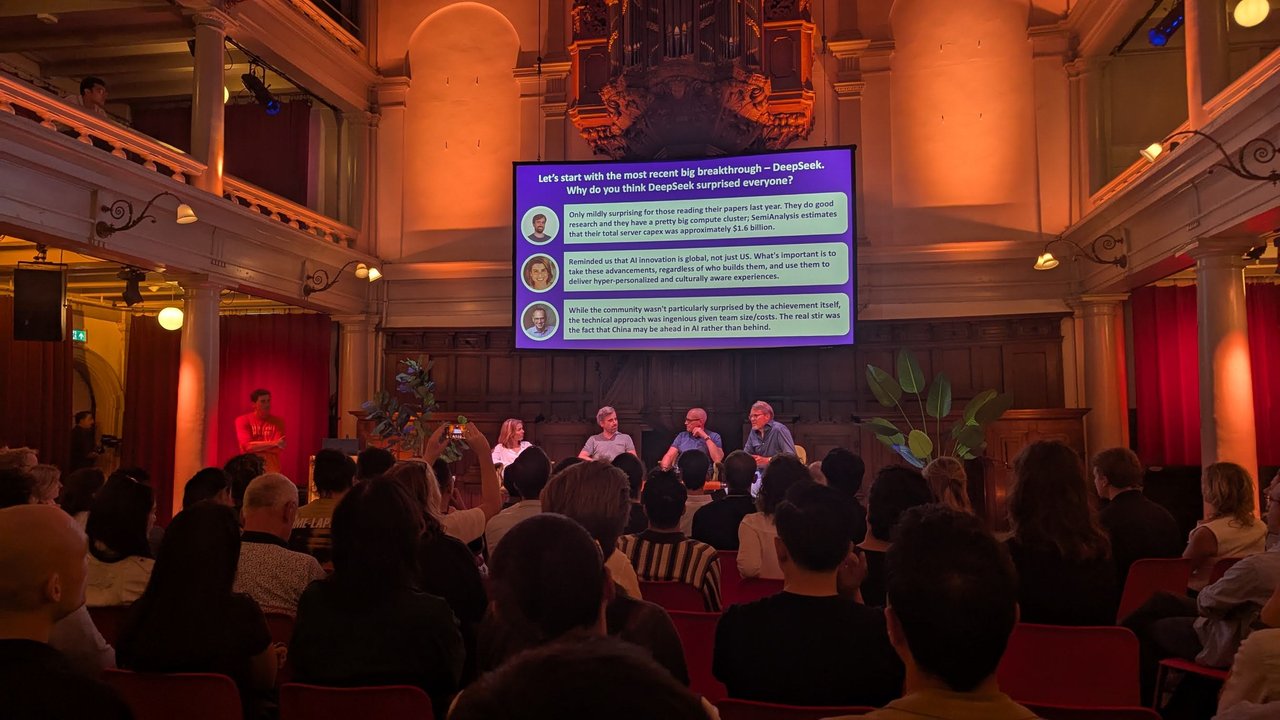
The DeepSeek question and the three answers on screen.
Imagine it is 23 July 2028
Later the question was “Imagine it’s July 23rd, 2028. What would AI look like in 2028? Any contrarian ideas?” The slide’s answers were:
- Although imperfect, AI will work autonomously for days. AI companies will probably have the largest market caps and will use AI to speed up research. Compute for training and inference will go up another 10x.
- What will change is how AI is integrated into our lives: less visible, more practical, solving real-world messy problems. The challenges will stay the same: a trust gap, uneven adoption across industries, and AI fatigue.
- Europe has become a superpower in AI, simplified regulation and allowed significant consolidation of AI labs across the continent for scale, and is a magnet for talent globally.
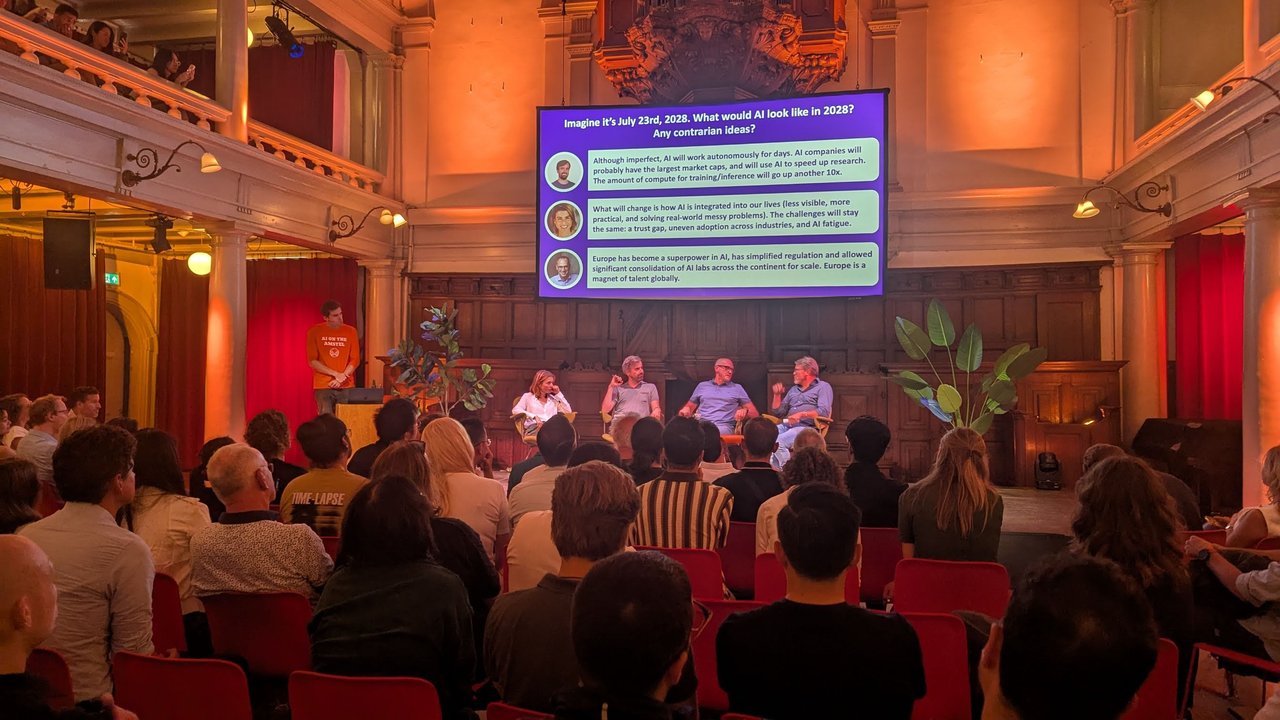
The 2028 question, with a contrarian prediction about Europe at the bottom.
My take: the “AI fatigue” and “trust gap” answers are the ones I recognise from client work. Models keep improving, but most of the effort goes into evaluation, governance and getting people to rely on the result. That is also why agent work in production is mostly platform work.