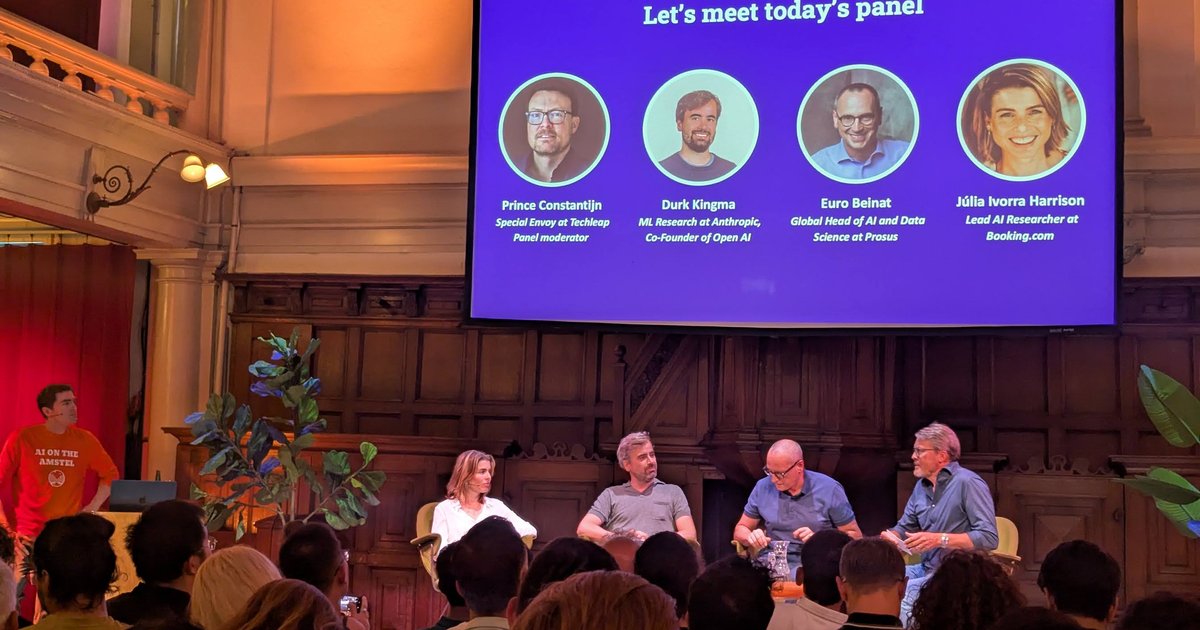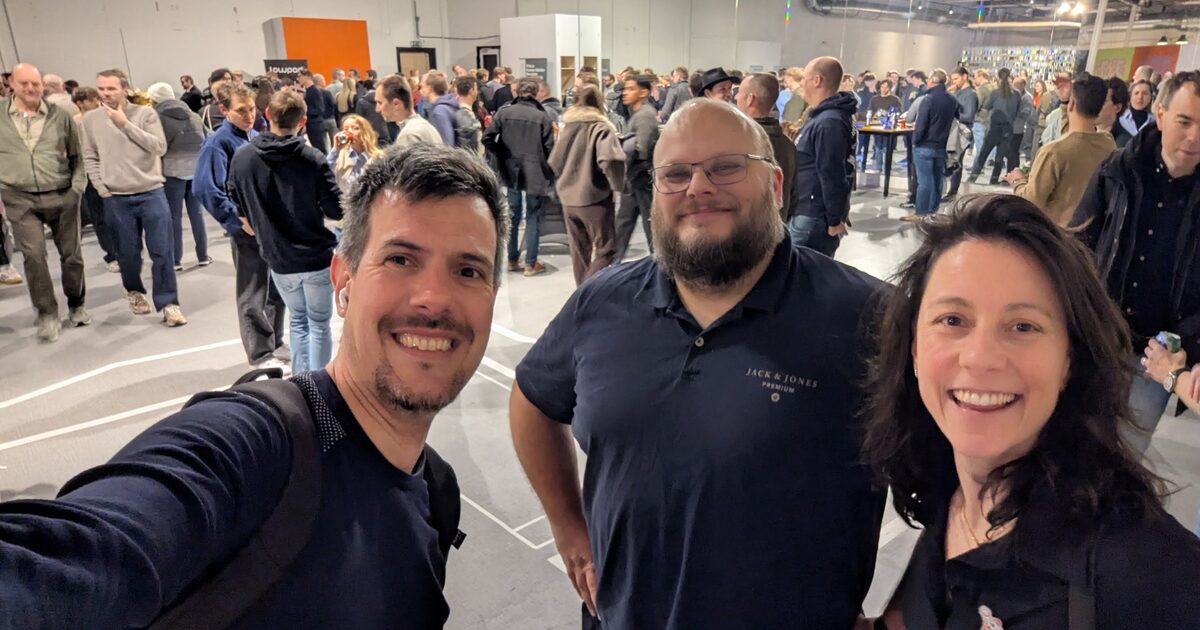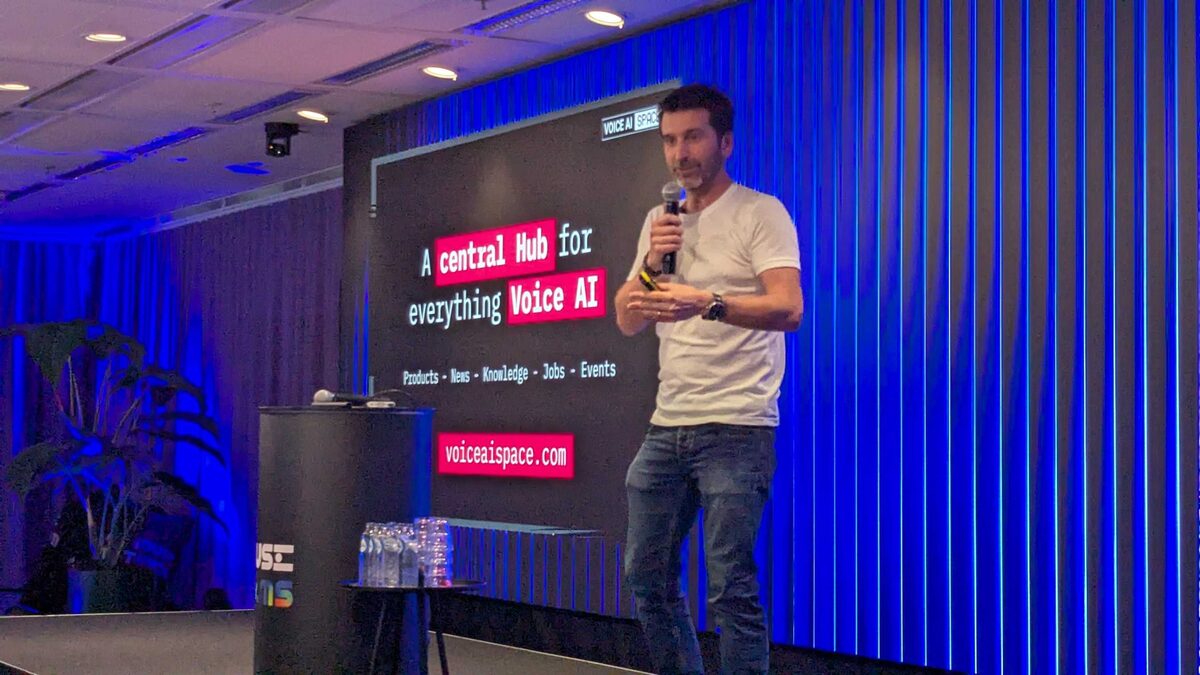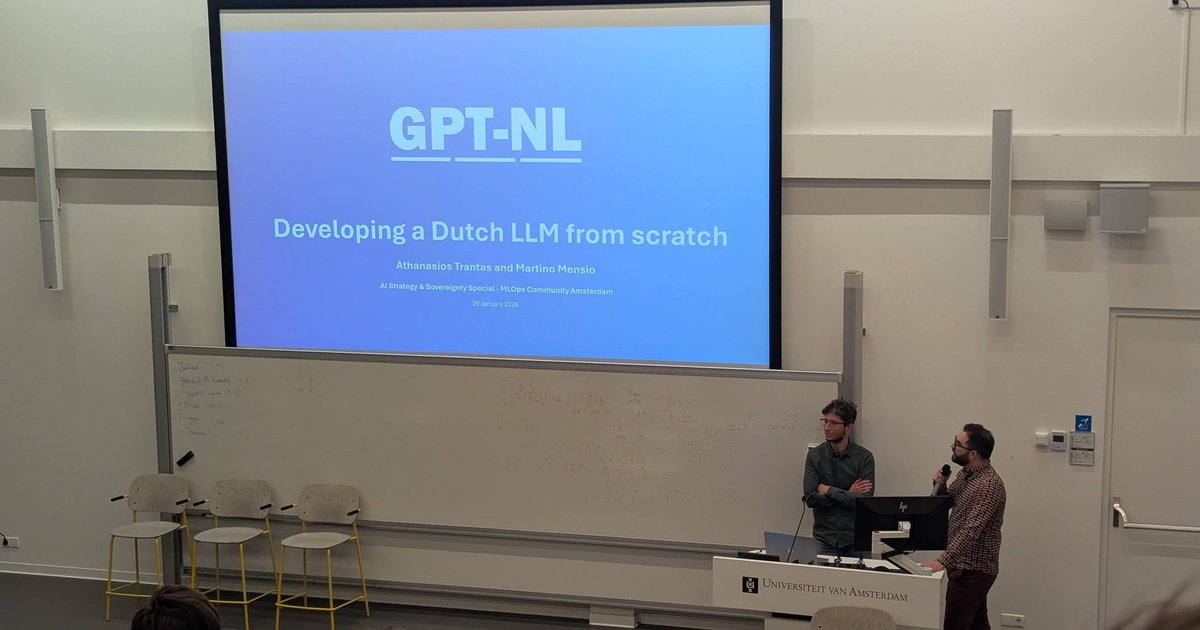
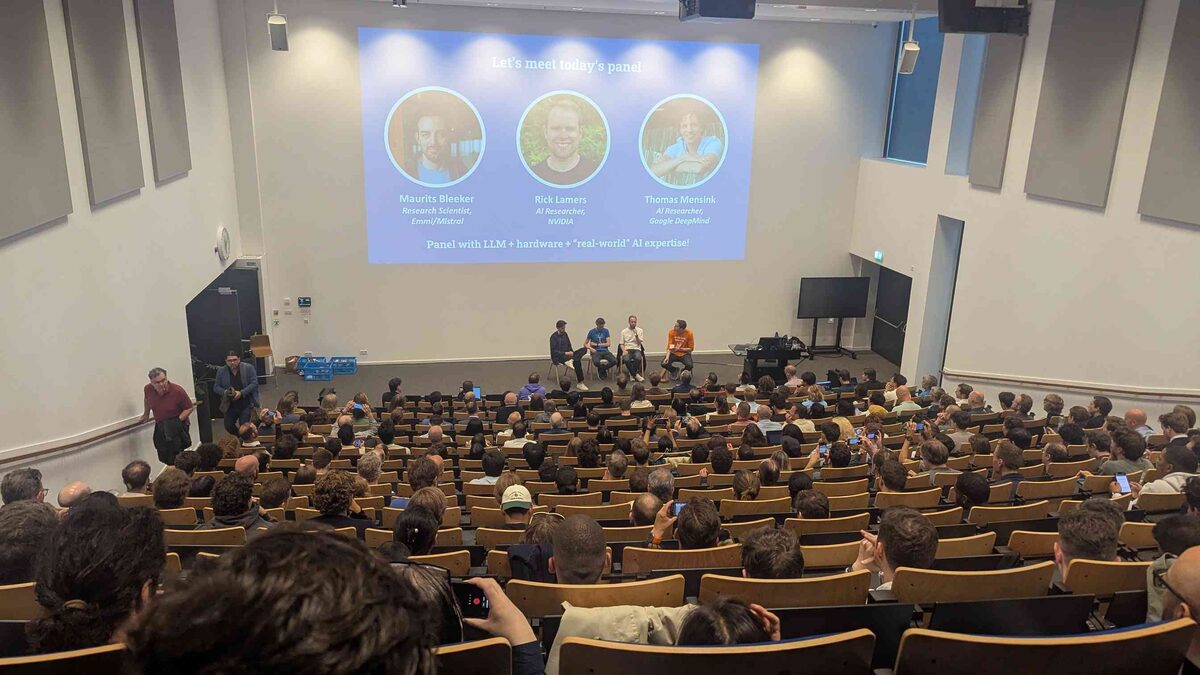
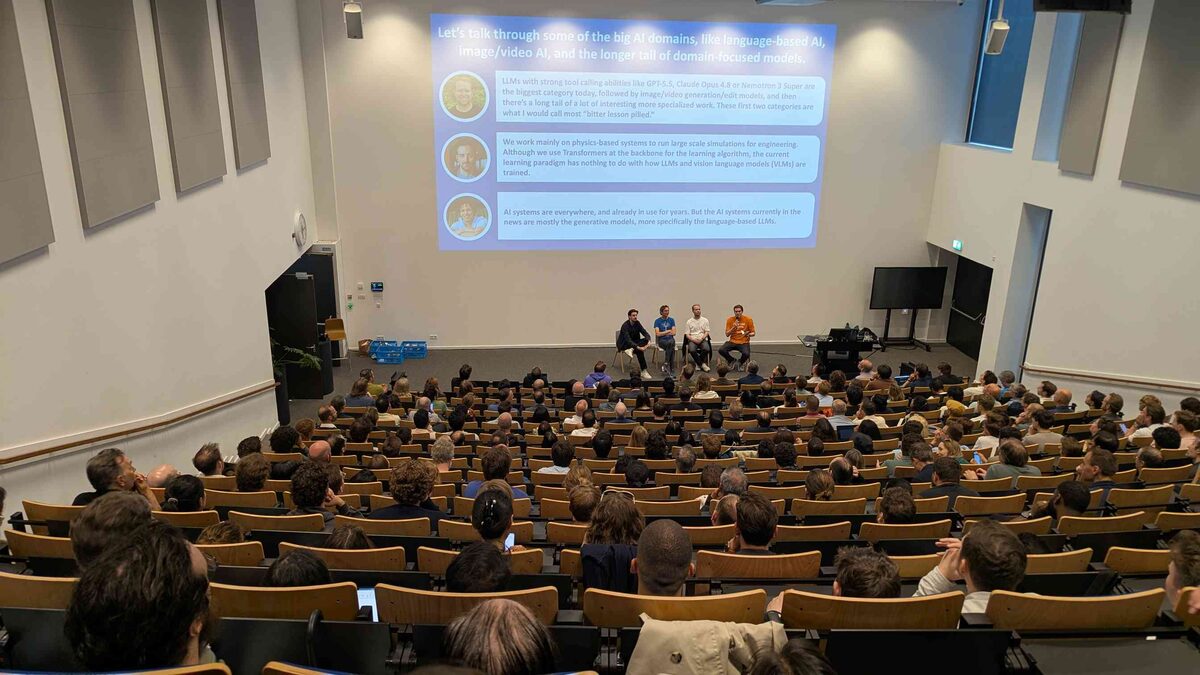
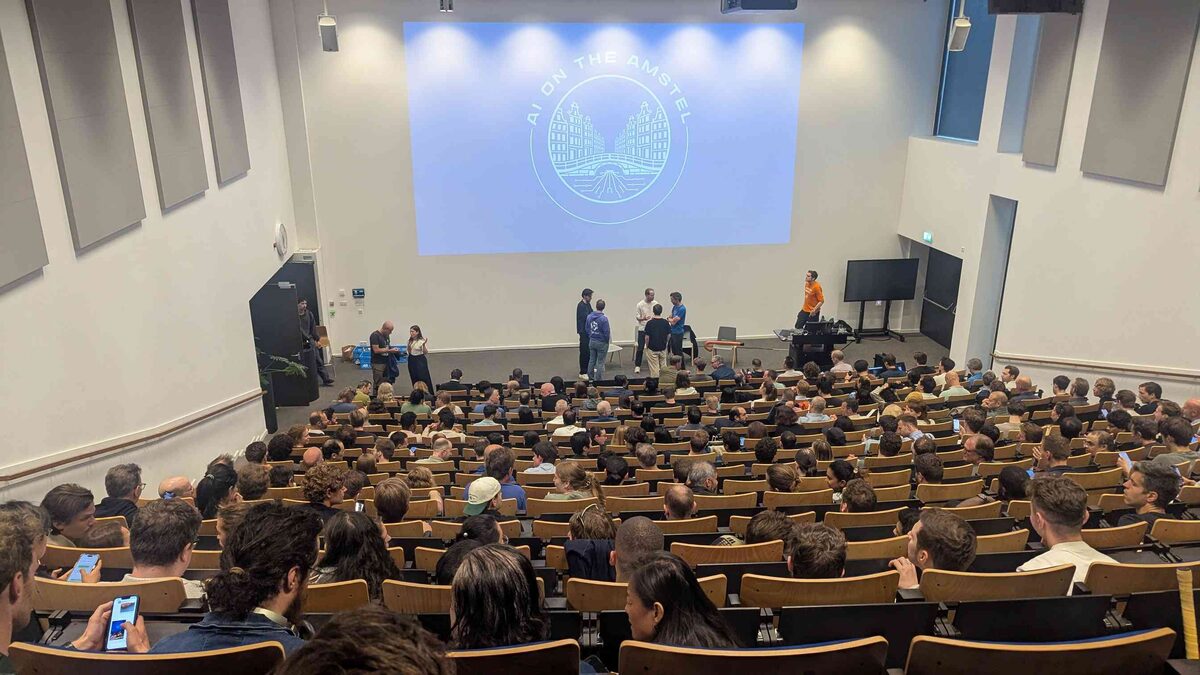
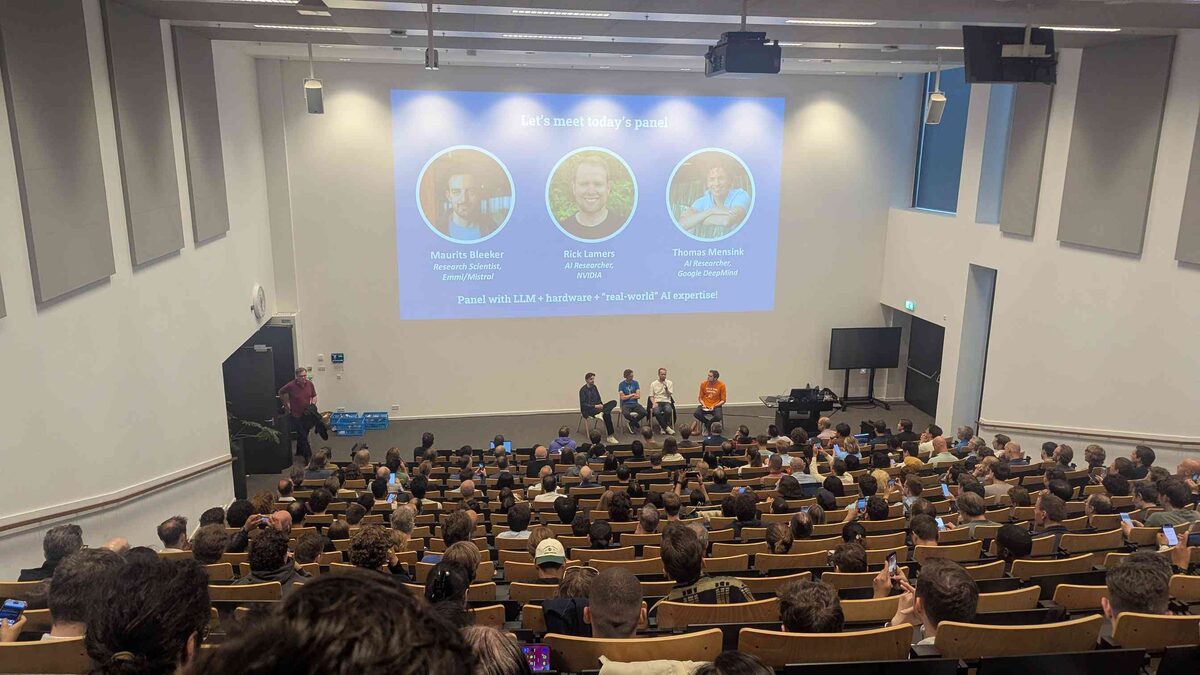
The biggest lecture hall at VU Amsterdam — every seat taken, people standing in the aisles. That is what happens when you put researchers from Google DeepMind, NVIDIA, and Mistral on a panel and ask them how frontier AI models are actually built.
Tonight’s AI on the Amstel meetup delivered exactly what the community asked for: a hype-free, technical discussion about what is really happening at the cutting edge.
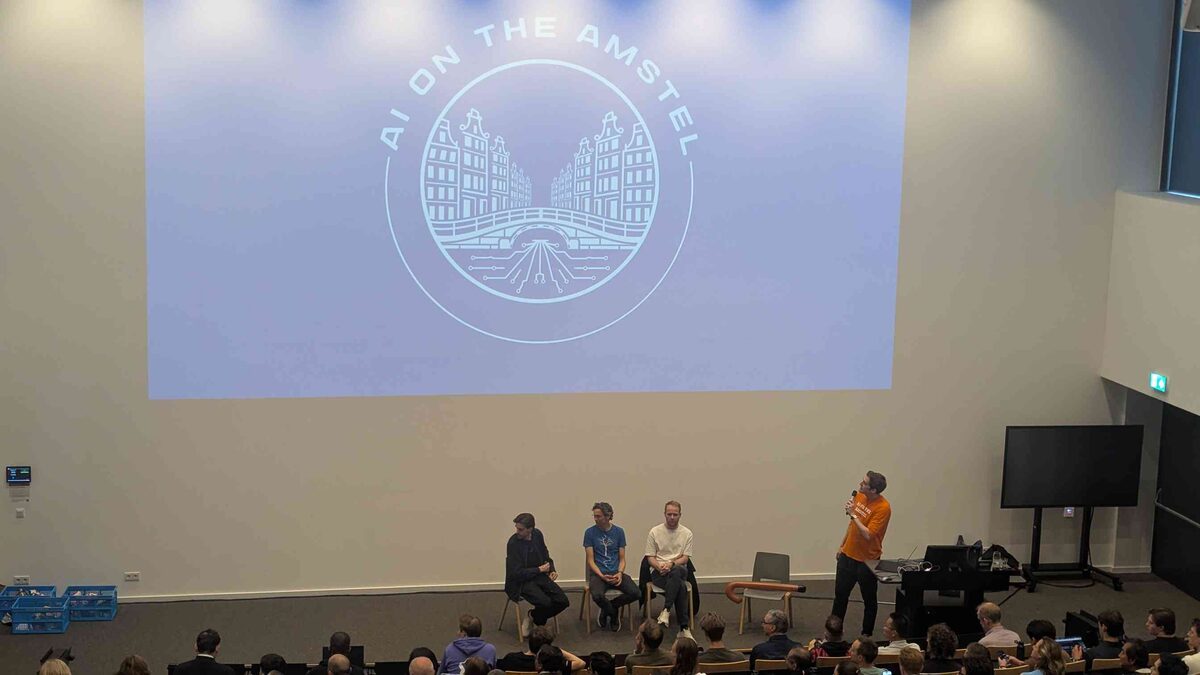
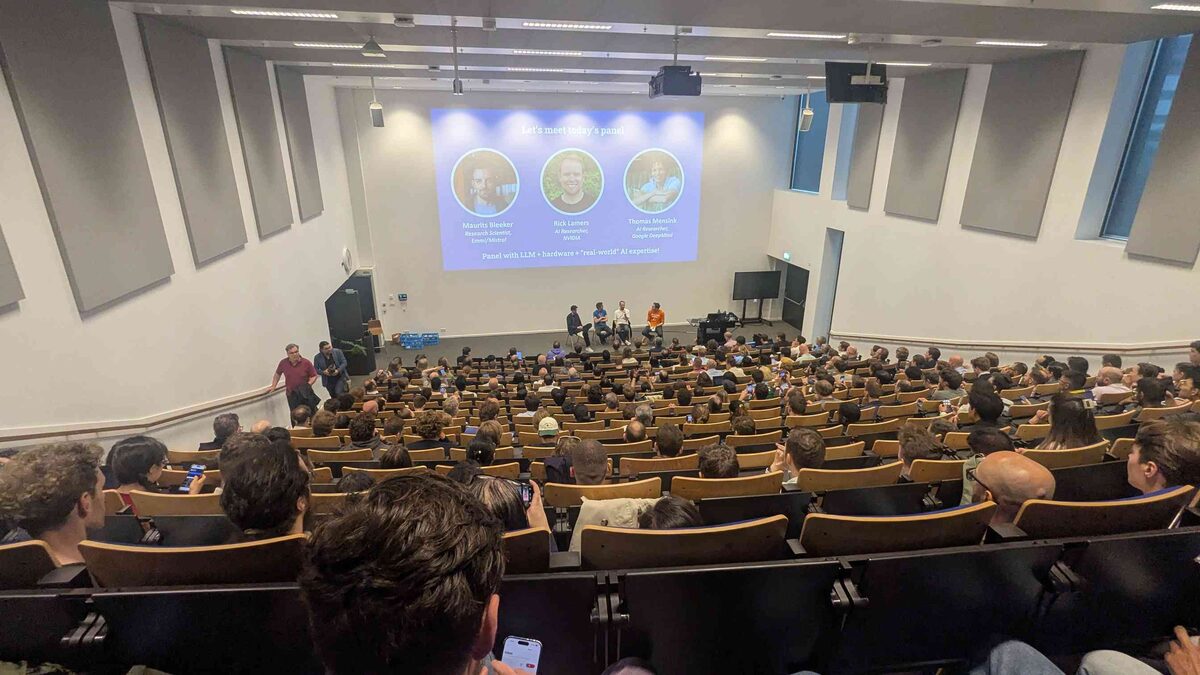
The Panel
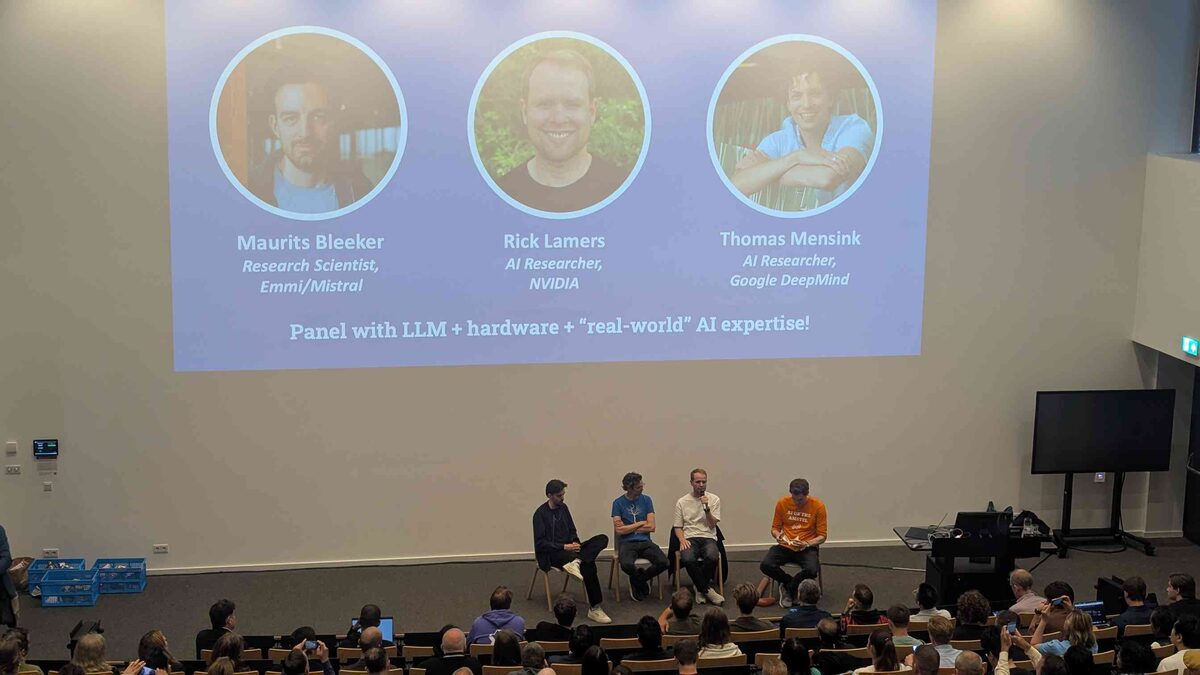
Three researchers representing different elements of the frontier:
Thomas Mensink — AI Researcher at Google DeepMind. The team behind Gemini, one of the top AI models in the world with over 750 million monthly active users.
Rick Lamers — AI Researcher at NVIDIA. A unique perspective — working on model and LLM research at the company that builds the chips that train these models.
Maurits Bleeker — Research Scientist at Emmi/Mistral. Mistral acquired Emmi in May 2026 as part of their move beyond chat-based AI. Emmi specializes in “Physics AI” — using AI to simulate and predict what happens in the real world.
The tagline on the slide says it all: “Panel with LLM + hardware + ‘real-world’ AI expertise!”
Key Themes
The discussion covered two big questions the community had been requesting:
The Big AI Domains: Language, Image/Video, and Domain-Focused Models
The panelists mapped out the current landscape with refreshing clarity:
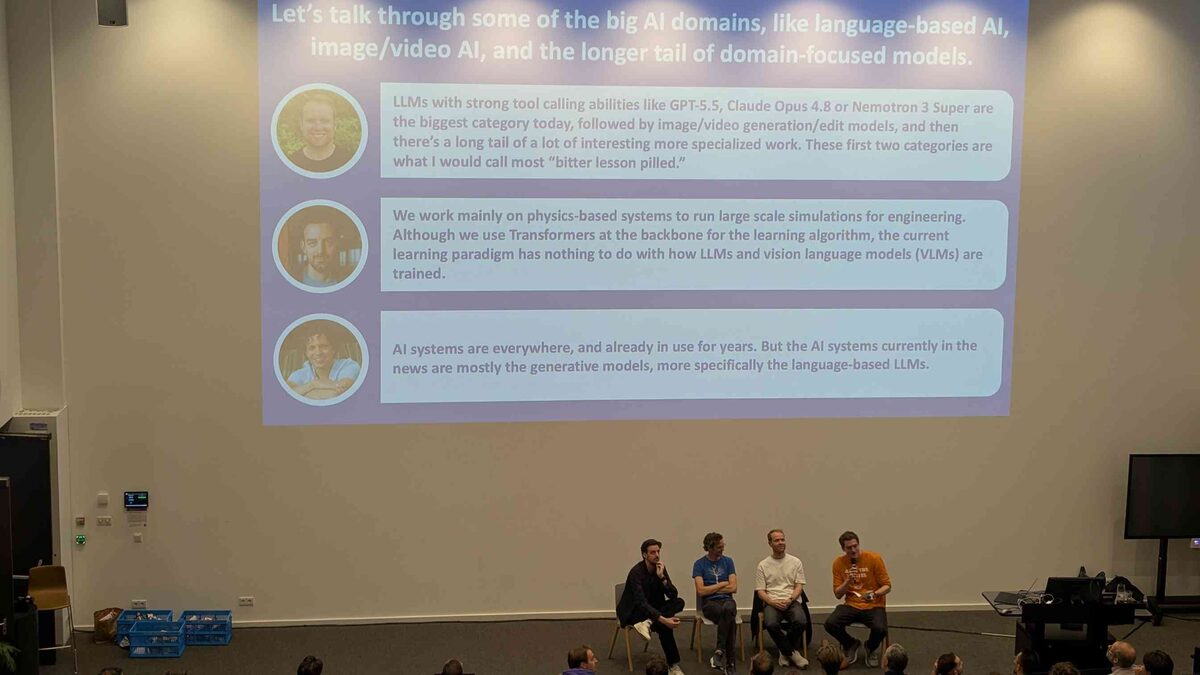
Rick Lamers (NVIDIA): “LLMs with strong tool calling abilities like GPT-5.5, Claude Opus 4.8 or Nemotron 3 Super are the biggest category today, followed by image/video generation/edit models, and then there’s a long tail of a lot of interesting more specialized work. These first two categories are what I would call most ‘bitter lesson pilled.’”
Maurits Bleeker (Emmi/Mistral): “We work mainly on physics-based systems to run large scale simulations for engineering. Although we use Transformers at the backbone for the learning algorithm, the current learning paradigm has nothing to do with how LLMs and vision language models (VLMs) are trained.”
Thomas Mensink (DeepMind): “AI systems are everywhere, and already in use for years. But the AI systems currently in the news are mostly the generative models, more specifically the language-based LLMs.”
How Are Frontier Models Actually Built?
The panelists dove into the engineering reality behind models like Gemini and Mistral’s latest releases — the infrastructure decisions, training pipelines, data curation challenges, and the gap between what papers describe and what production actually looks like.
Where Is the Cutting Edge Heading?
A hype-free look at the next 1-2 years. What the researchers see in their day-to-day work that hints at where models are evolving — beyond the marketing announcements and benchmark races.
Most Promising Methods to Improve Frontier Models
The panelists shared what they are actively exploring:
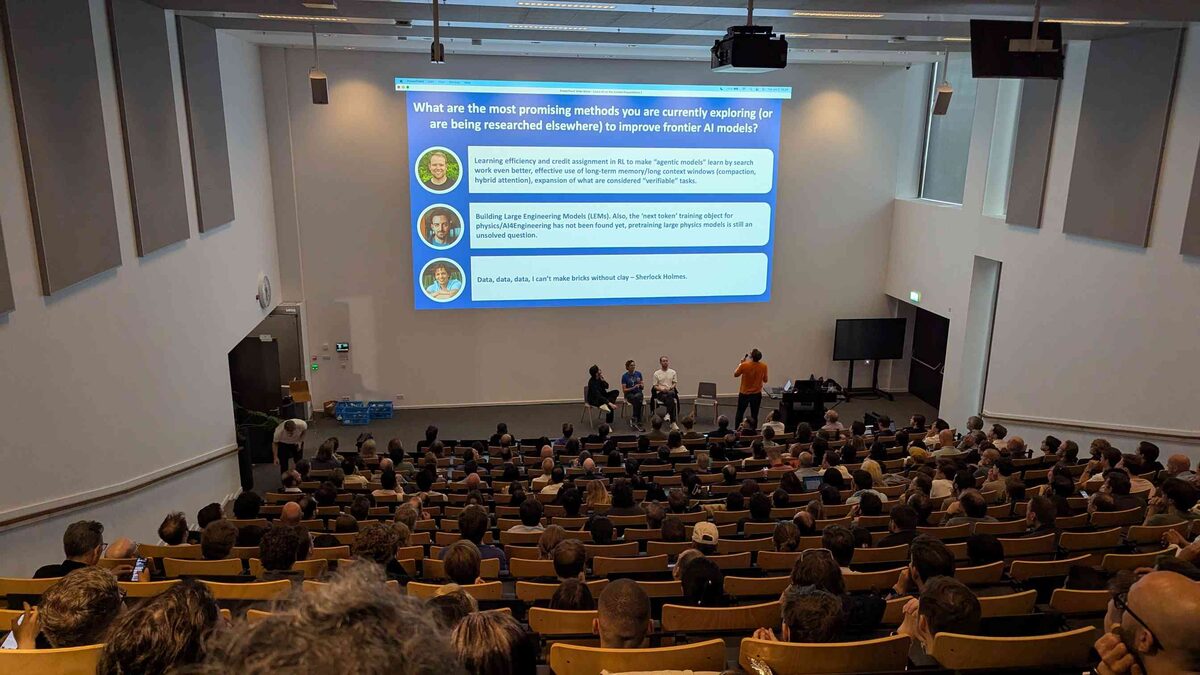
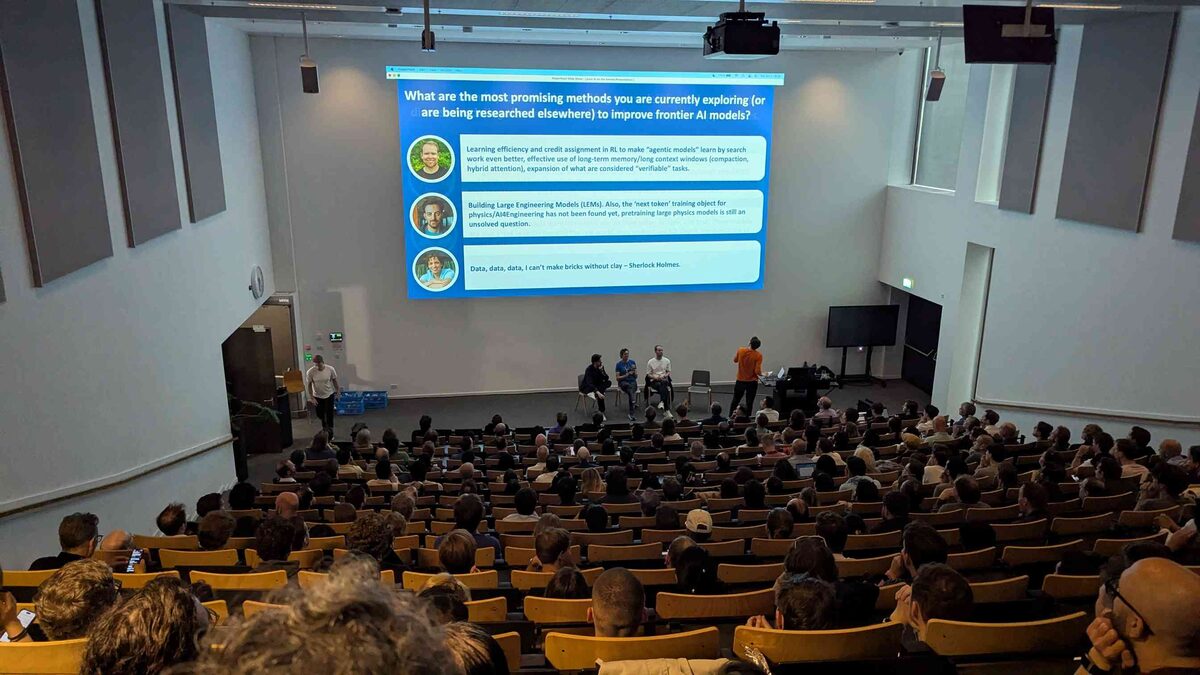
Rick Lamers (NVIDIA): “Learning efficiency and credit assignment in RL to make ‘agentic models’ learn by search work even better, effective use of long-term memory/long context windows (compaction, hybrid attention), expansion of what are considered ‘verifiable’ tasks.”
Maurits Bleeker (Emmi/Mistral): “Building Large Engineering Models (LEMs). Also, the ‘next token’ training object for physics/AI4Engineering has not been found yet; pretraining large physics models is still an unsolved question.”
Thomas Mensink (DeepMind): “Data, data, data, I can’t make bricks without clay — Sherlock Holmes.”
Reducing Hallucinations
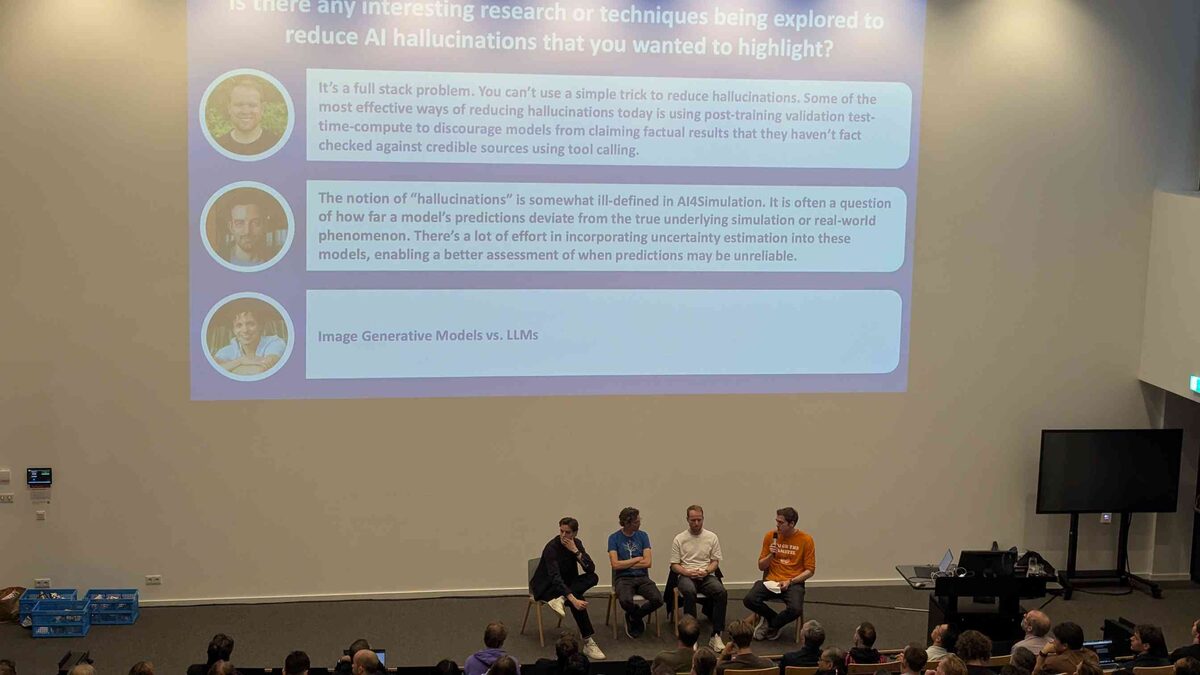
Rick (NVIDIA): “It’s a full stack problem. You can’t use a simple trick to reduce hallucinations. Some of the most effective ways of reducing hallucinations today is using post-training validation test-time-compute to discourage models from claiming factual results that they haven’t fact checked against credible sources using tool calling.”
Maurits (Emmi/Mistral): “The notion of ‘hallucinations’ is somewhat ill-defined in AI4Simulation. It is often a question of how far a model’s predictions deviate from the true underlying simulation or real-world phenomenon. There’s a lot of effort in incorporating uncertainty estimation into these models, enabling a better assessment of when predictions may be unreliable.”
Thomas (DeepMind): “Image Generative Models vs. LLMs” — a personal opinion: with image models, we want hallucination (imagination). The challenge is knowing when to hallucinate and when to be factual. It is a multi-objective game.
The Multimodal Challenge
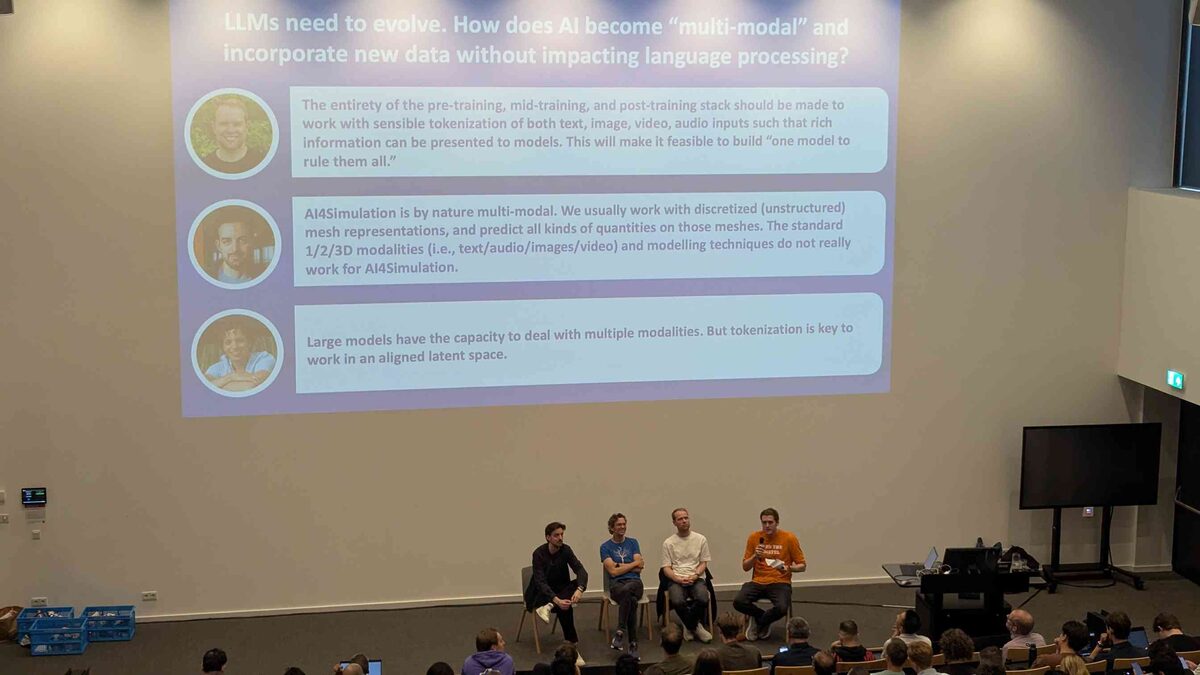
Rick (NVIDIA): “The entirety of the pre-training, mid-training, and post-training stack should be made to work with sensible tokenization of both text, image, video, audio inputs such that rich information can be presented to models. This will make it feasible to build ‘one model to rule them all.’”
Maurits (Emmi/Mistral): “AI4Simulation is by nature multi-modal. We usually work with discretized (unstructured) mesh representations, and predict all kinds of quantities on those meshes. The standard 1/2/3D modalities (i.e., text/audio/images/video) and modelling techniques do not really work for AI4Simulation.”
Thomas (DeepMind): “Large models have the capacity to deal with multiple modalities. But tokenization is key to work in an aligned latent space.”
Hardware Roadmap Shaping AI Research
Rick (NVIDIA): “Hardware feature development like new low-precision forms (NVFP4) can act as multipliers on the continuous improvements (total FLOPs, memory bandwidth). Training and inference stacks need to maximally lean into these new hardware features to lock in the gains. Coding agents can help with some of the engineering burden (like DeepSeek-V4 launch).”
Maurits (Emmi/Mistral): “There are teams working on accelerating numerical solvers on GPUs. However, that is a different art. We are ‘limited’ to what we can run on GPUs, and we mainly rely on Transformer-based architectures. Any major breakthroughs will likely be incorporated into our models. We steal a lot of optimization tricks from language modelling/computer vision.”
Key data point: H100 pricing went from $2/hour a year ago to $4/hour now — compute demand outpacing supply.
Predictions for the Next 1-2 Years
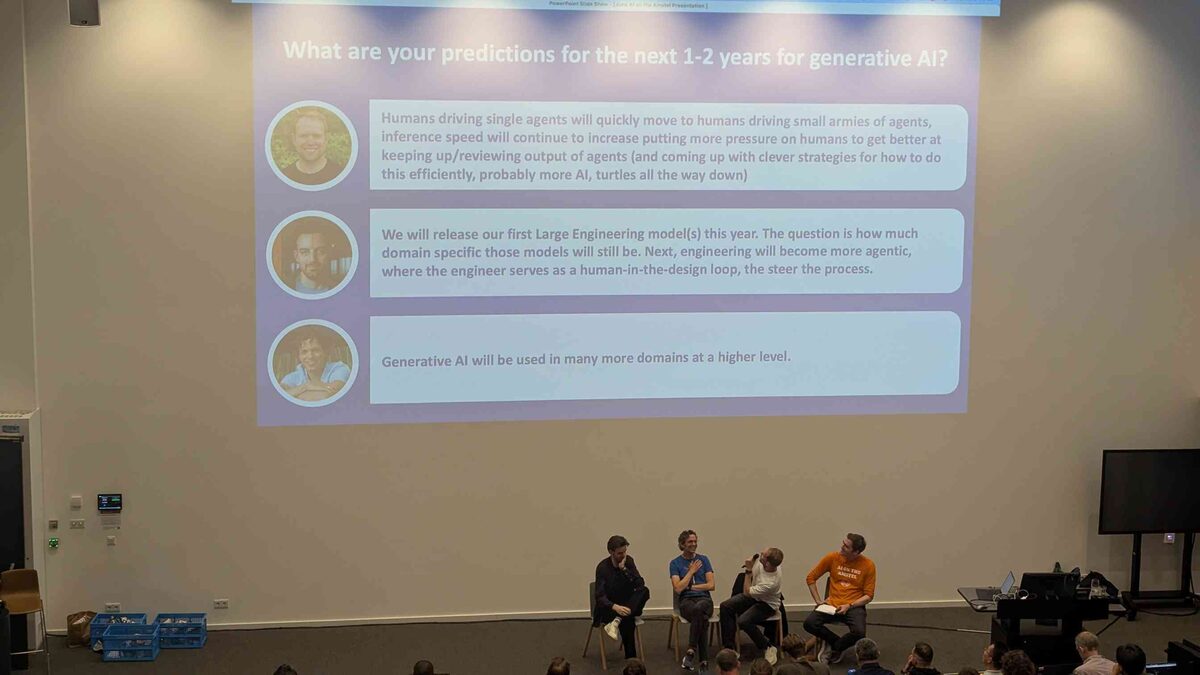
Rick (NVIDIA): “Humans driving single agents will quickly move to humans driving small armies of agents, inference speed will continue to increase putting more pressure on humans to get better at keeping up/reviewing output of agents (and coming up with clever strategies for how to do this efficiently, probably more AI, turtles all the way down)”
Maurits (Emmi/Mistral): “We will release our first Large Engineering Model(s) this year. The question is how much domain specific those models will still be. Next, engineering will become more agentic, where the engineer serves as a human-in-the-design-loop, the steer the process.”
Thomas (DeepMind): “Generative AI will be used in many more domains at a higher level.”
The Venue and Community
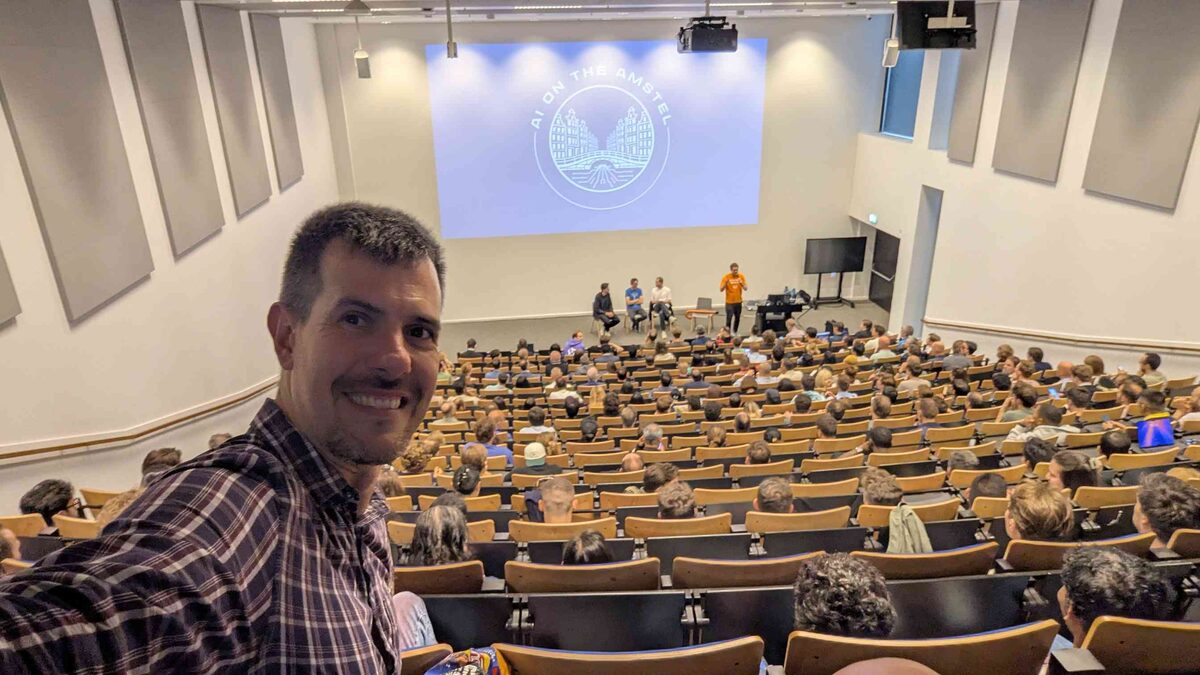
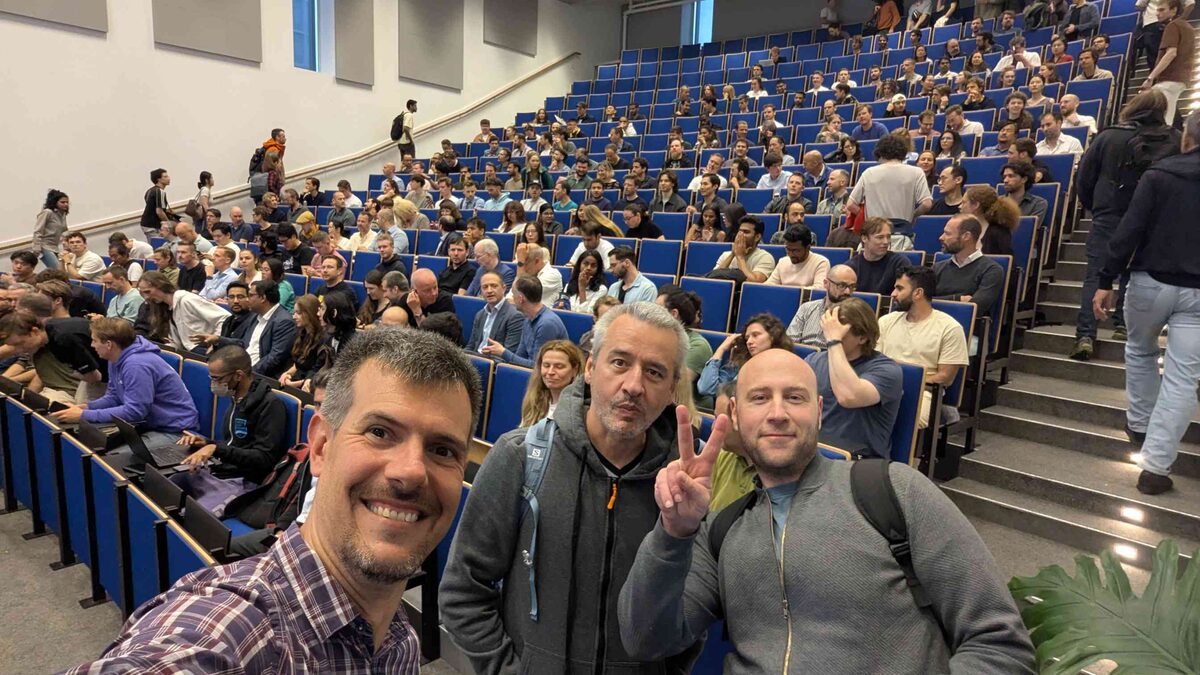
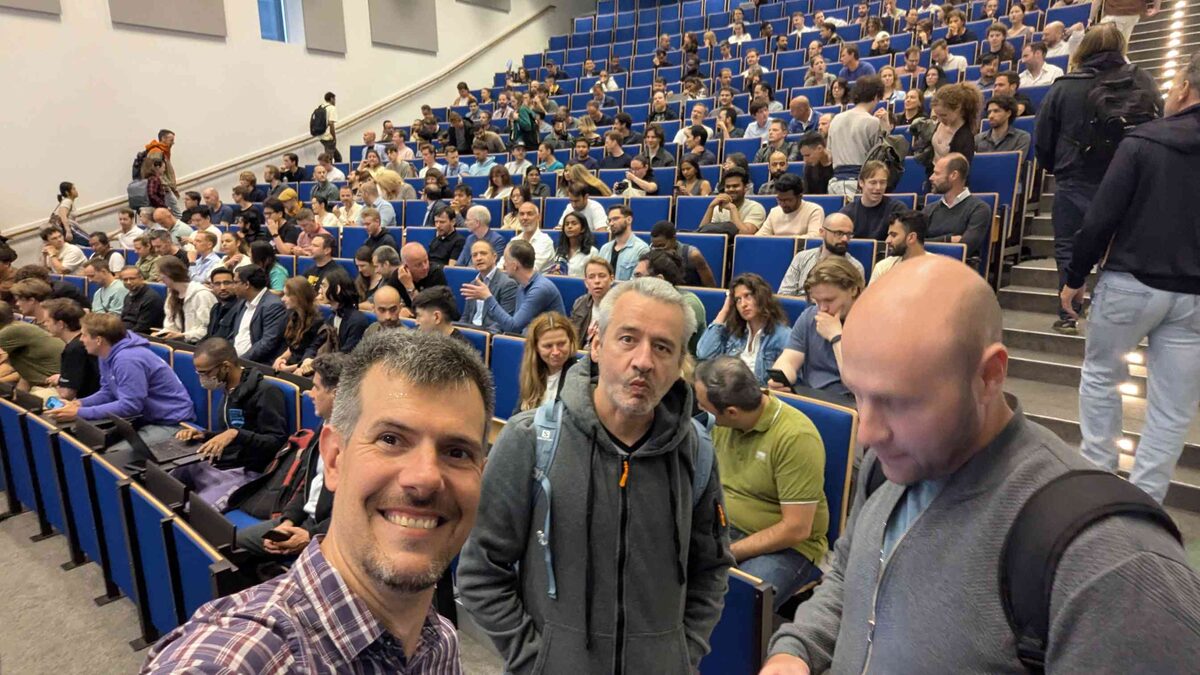
AI on the Amstel is Amsterdam’s premier technical AI meetup — over 5,000 members, 4.7/5 rating, and 200-400+ attendees monthly depending on venue capacity. Tonight clearly pushed the upper boundary.
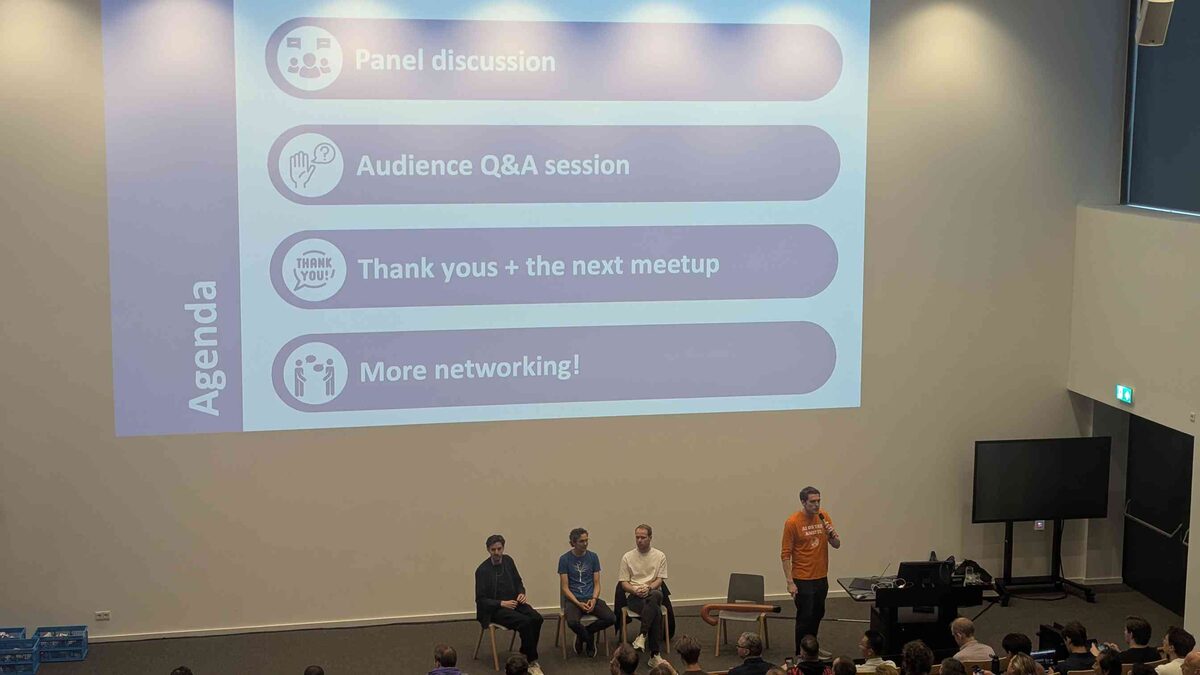
The event ran at the NU building (De Boelelaan 1111, VU Campus):
- 17:00–18:00 — Networking in the atrium
- 18:00–19:30 — Panel in Theaterzaal 1 (the VU’s biggest lecture hall)
- 19:30+ — More networking
Partners and Sponsors
- Demonstrator Lab VU — Early stage startup incubator at VU, open to all students and researchers
- VU StartHub — Startup pavilion in the heart of VU campus
- AISO — Leading student-led AI society in the Netherlands, 500+ members in Amsterdam
- Alibaba/Qwen — New meetup sponsor; Qwen is the leading AI model in China
The Origin Story
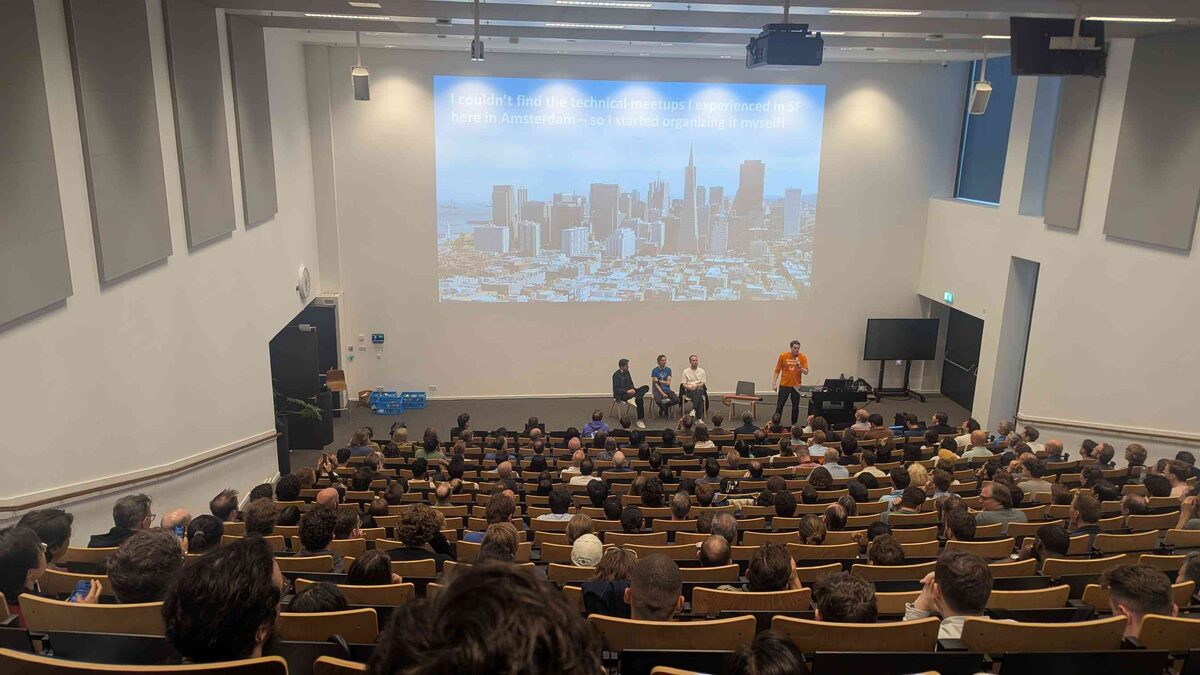
The organizer (in the orange shirt) shared how AI on the Amstel started: “I couldn’t find the technical meetups I experienced in SF here in Amsterdam — so I started organizing it myself.”
That San Francisco-level quality shows. This is not a corporate event with sponsored talks — it is researchers having honest conversations about their work.
My Takeaway
What I appreciate about AI on the Amstel is the signal-to-noise ratio. No vendor pitches, no product demos — just researchers talking honestly about how this technology works and where it is going. The fact that they can fill the VU’s largest hall on a Tuesday evening shows how hungry the Amsterdam tech community is for substance over hype.
The panel format worked especially well here. Having DeepMind, NVIDIA, and Mistral/Emmi perspectives side by side — the model builder, the hardware maker, and the physics-AI startup — gave a multi-dimensional view you do not get from single-speaker events.
Join the Community
- Meetup group: AI on the Amstel (5,000+ members)
- Website: aiontheamstel.nl
- Frequency: Monthly
If you are in Amsterdam and care about AI beyond the buzzwords, this is the meetup to attend.