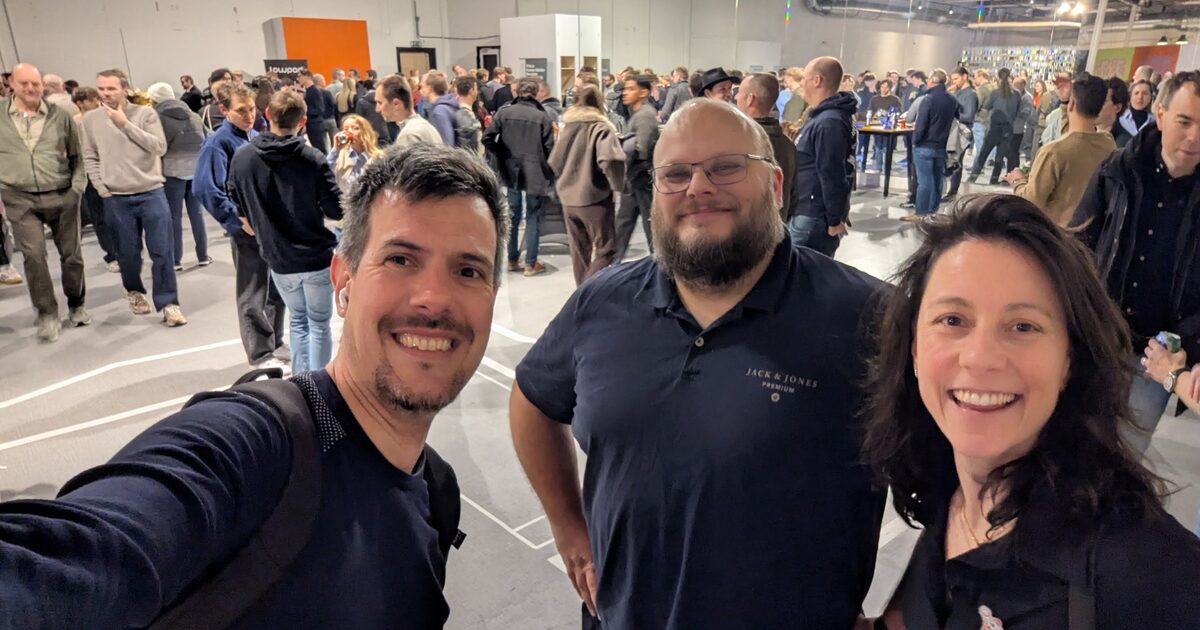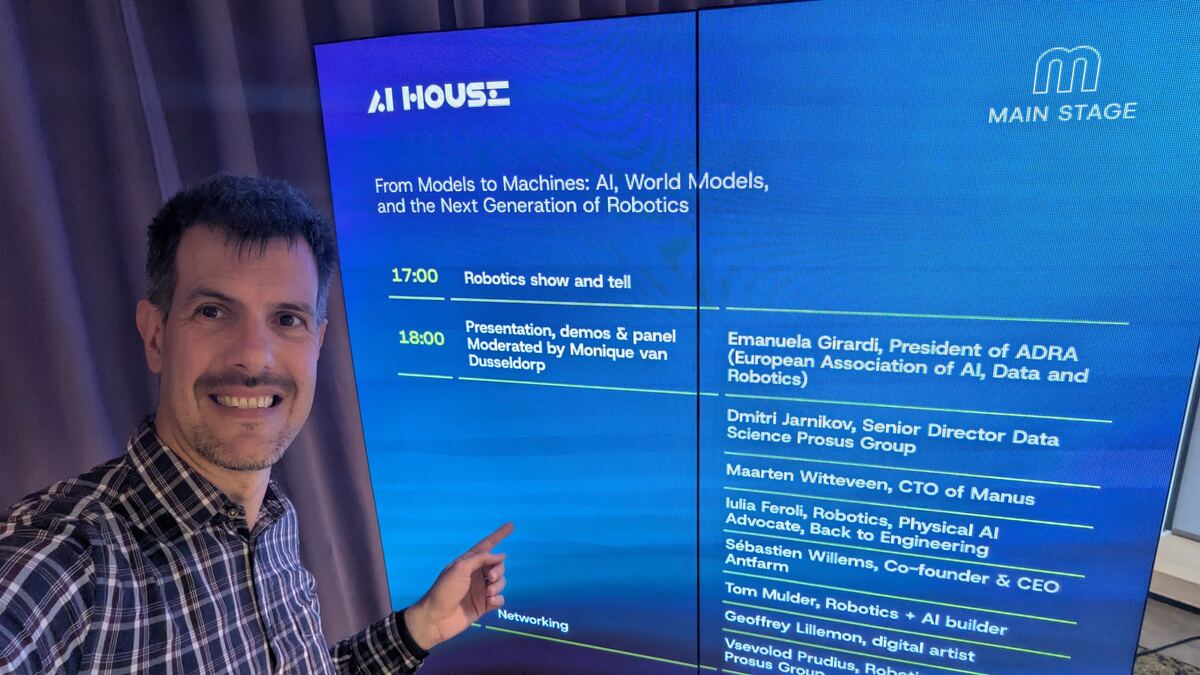
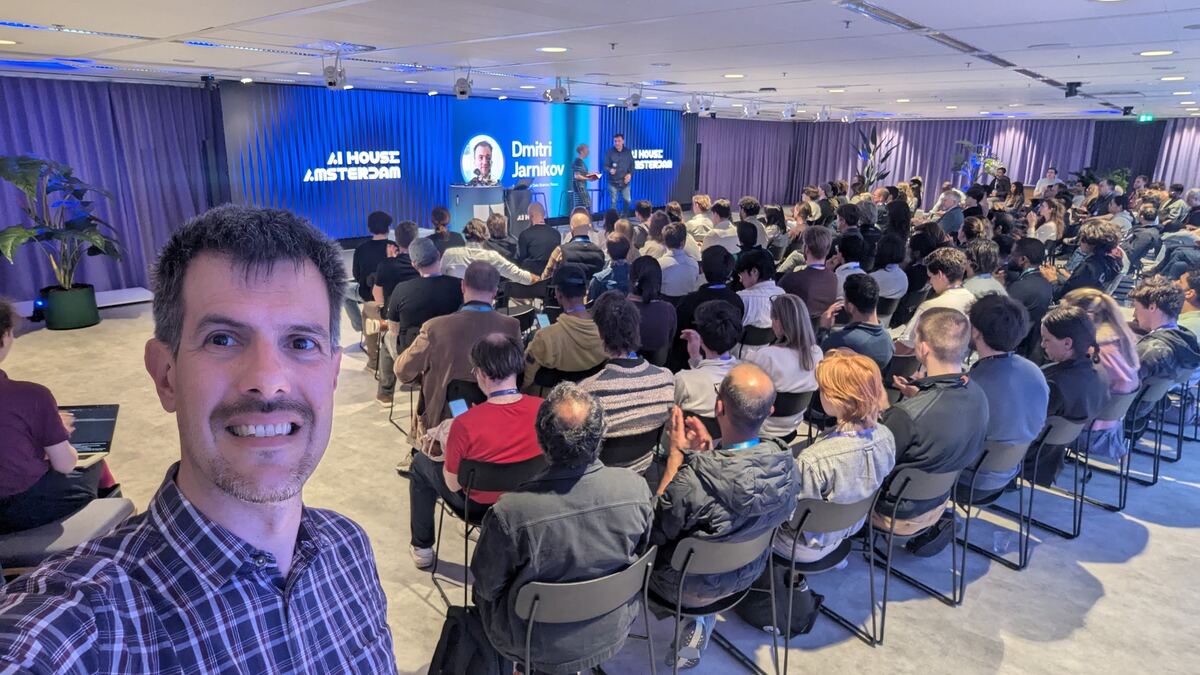
I attended “From Models to Machines: AI, World Models, and the Next Generation of Robotics” at AI House Amsterdam on April 9, 2026 — a packed flagship event with 331 attendees exploring how advances in AI and world models are enabling robots to understand, predict, and act in complex real-world environments.
The event ran from 5:00 PM to 9:00 PM at Gustav Mahlerplein 5, featuring a robotics show-and-tell, presentations, live demos, and a panel discussion, followed by networking drinks.
The Agenda
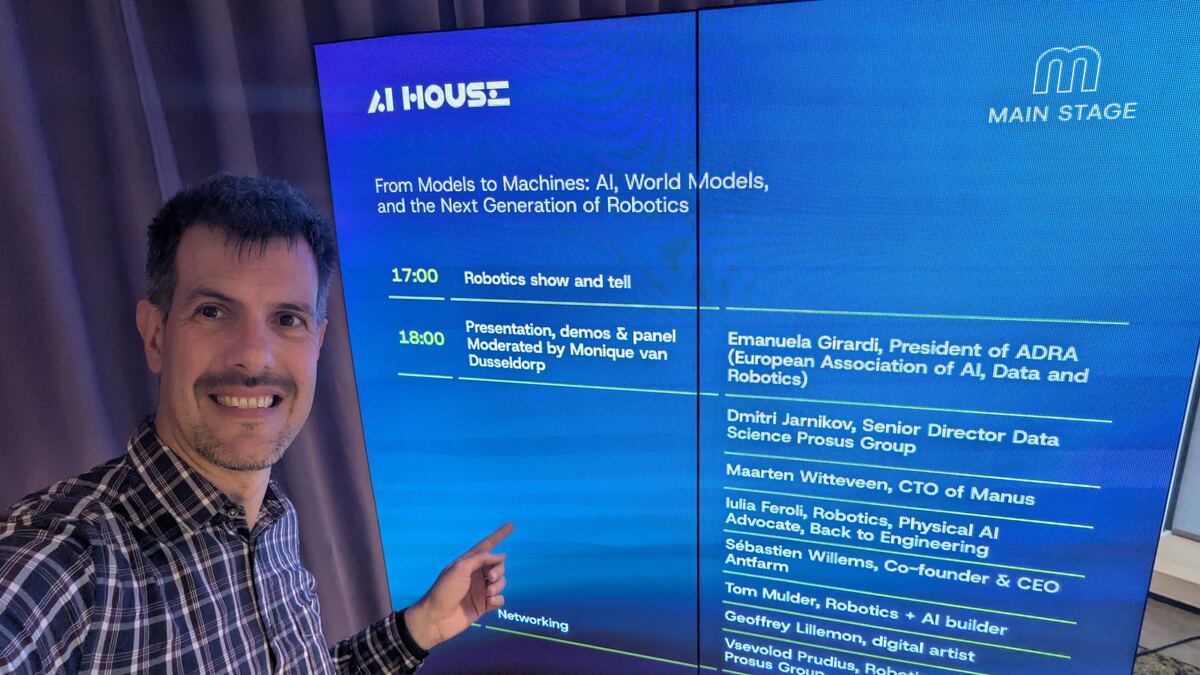
- 17:00-18:00 — Robotics show-and-tell
- 18:00-19:45 — Presentations, demos, and panel
- 20:00-21:00 — Networking drinks
The Speakers
An impressive lineup curated by Monique van Dusseldorp:
Dmitri Jarnikov — Senior Director Data Science at Prosus Group and Professor at Eindhoven University of Technology. Working at the intersection of applied AI and academic research, bridging industry scale with scientific depth. His work reflects the shift from AI models to systems that operate reliably in complex, real-world settings.
Emanuela Girardi — President of ADRA (European Association of AI, Data and Robotics). She works directly with the European Commission to implement Horizon Europe’s 2.6 billion euro investment plan for 2021-2027, guiding the European innovation ecosystem in AI, data, and robotics with a focus on Physical AI.
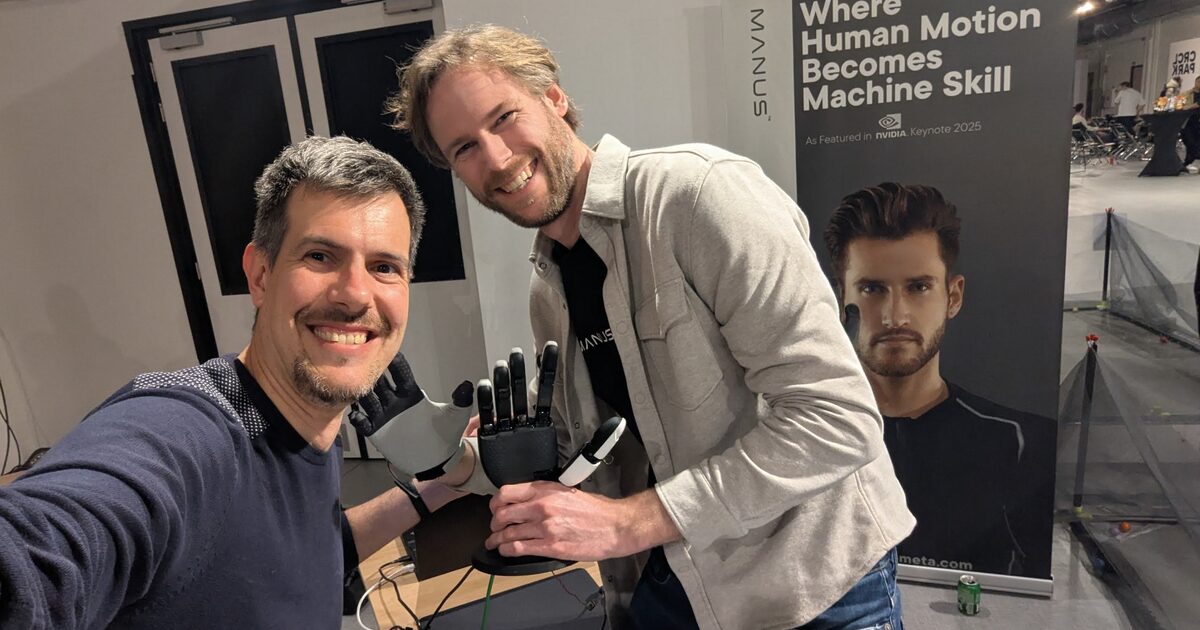
Maarten Witteveen — CTO of Manus, building the interface between human hands and robotic ones. His team develops data gloves that capture human dexterity with extreme precision, providing the training data robots need to learn real-world manipulation.
Iggy Harmsen — Co-founder of Medal, the largest game recording platform globally (2.5 billion clips annually). Has spun out General Intuition, which raised a $134M seed round to teach agents spatial reasoning using video game clips.
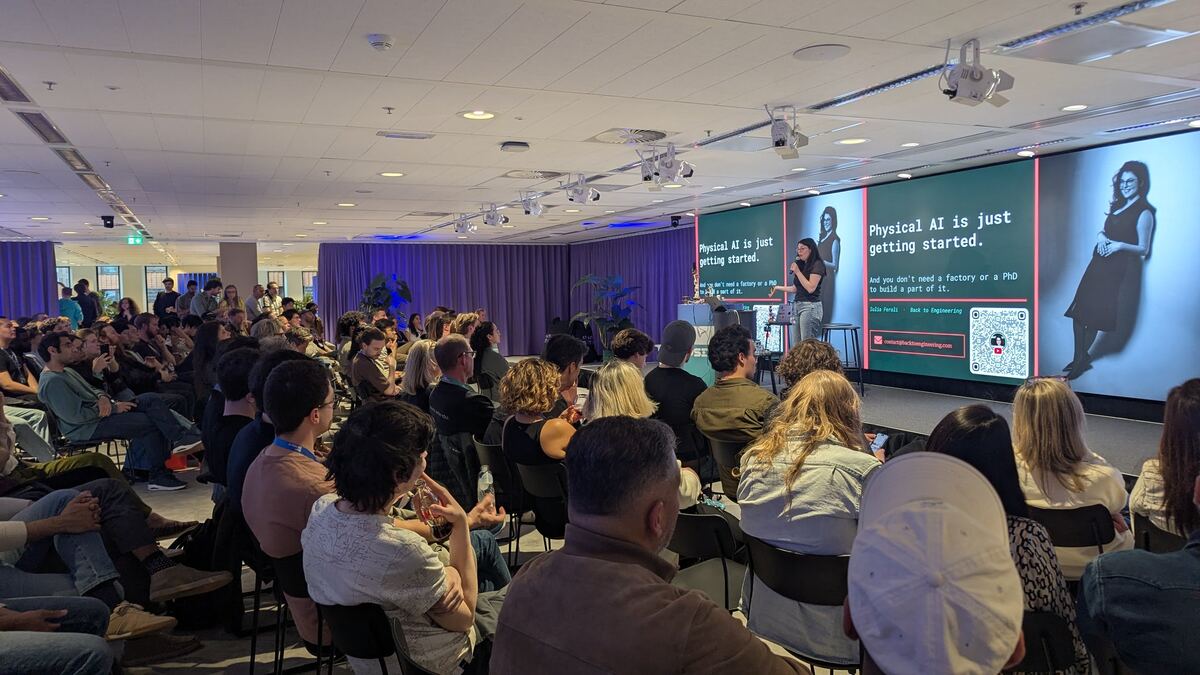
Iulia Feroli — Founder of Back to Engineering, a robotics and Physical AI advocate. Her message on stage: “Physical AI is just getting started. And you don’t need a factory or a PhD to build a part of it.”
Sebastien Willems — Co-founder and CEO of Antfarm, building autonomous robots that sort out waste, making material recovery 10x more efficient.
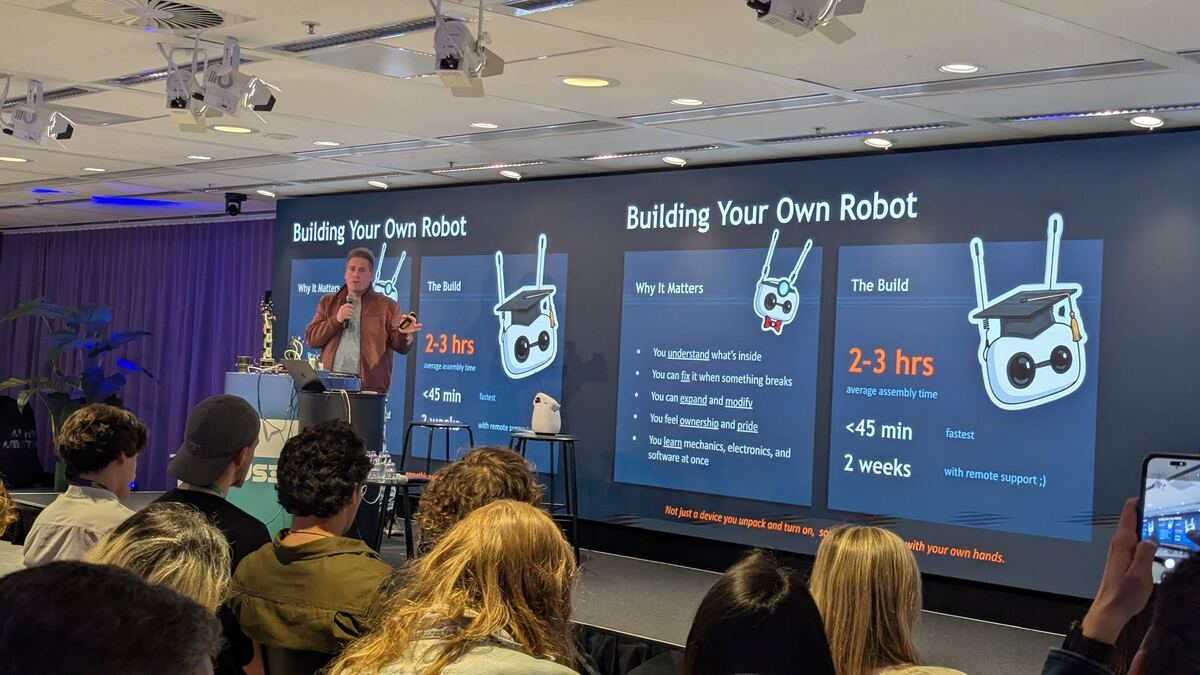
Tom Mulder — Robotics and AI builder. He builds developer-friendly systems that connect AI models to real robots, focusing on turning complex AI concepts into robust architectures and tools. His “Building Your Own Robot” demo showed a 2-3 hour average assembly time, with the fastest build under 45 minutes.
Geoffrey Lillemon — Contemporary digital artist working at the intersection of art, code, VFX, and performance for over 25 years. His demo showed how real-time procedural systems can move off-screen, using robotics to translate digital behaviors into physical, embodied actions.
Vsevolod Prudius — Robotics Engineer at Prosus Group, demonstrating live robot control on stage.
ADRA and Europe’s Physical AI Strategy
Emanuela Girardi’s presentation as ADRA president highlighted Europe’s strategic position in robotics. She showcased the landscape of European robots — from humanoid platforms to specialized industrial systems — built by companies across the continent including PAL Robotics, Enchanted Tools, Istituto Italiano di Tecnologia, and DLR.
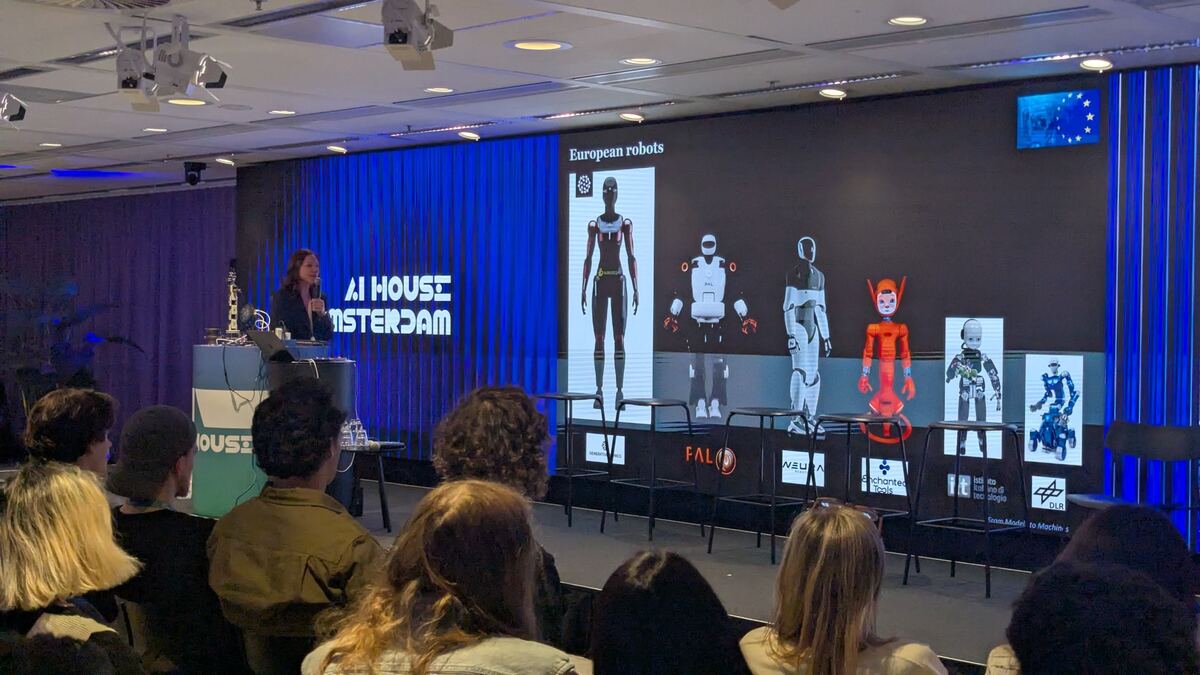
ADRA coordinates the public-private partnership driving the EU’s 2.6 billion euro AI, data, and robotics research funding through Horizon Europe (2021-2027). Europe has deep strengths in industrial robotics, automotive automation, and precision manufacturing. The question is whether it can translate those into the next generation of general-purpose robots and embodied AI agents.
From Language to Physical Intelligence
The central theme: “AI just learned to think. Now it has to learn to move.”
The gap between digital AI and physical AI is enormous. Language models operate in a clean, structured world of tokens. Robots operate in a messy, continuous world of physics where:
- Perception is noisy — cameras, LIDAR, and force sensors give imperfect data
- Actions are irreversible — you cannot undo dropping a glass
- Safety is non-negotiable — a robot arm moving at speed near humans must be predictable
- Generalization is harder — every kitchen is different, every object has different weight and friction
World models — learned representations of how the physical world works — are the bridge. Instead of programming every possible scenario, you teach a model the physics and let it plan actions in simulation before executing them in the real world.
Standout Moments
General Intuition’s $134M seed — Iggy Harmsen’s spin-out from Medal uses billions of video game clips to teach agents spatial reasoning. Gaming data is an underrated training source for physical AI: it provides diverse environments, physics interactions, and spatial navigation at massive scale.
Manus data gloves — Maarten Witteveen showed how precise hand tracking generates the training data robots need to learn dexterous manipulation. The interface between human demonstrations and robot learning is one of the biggest bottlenecks in the field.
Antfarm’s waste-sorting robots — Sebastien Willems presented autonomous robots that make material recovery 10x more efficient, a direct application of AI perception to a real industrial problem.
Tom Mulder’s build-your-own-robot — His demo emphasized accessibility: you understand what is inside, you can fix it when something breaks, you can expand and modify. Average assembly time 2-3 hours, fastest under 45 minutes.
Iulia Feroli’s call to action — “Physical AI is just getting started. And you don’t need a factory or a PhD to build a part of it.” A powerful message for the community.
Sensing a Heartbeat with Wi-Fi and a 60 GHz Radar
During the presentations, a short exchange on stage turned to sensing. A presenter described how a small sensor can measure the heartbeat of people in a room up to six metres away. According to the presenter, the same trick works with an ordinary Wi-Fi access point: people in a room constantly interfere with the Wi-Fi signal, so by monitoring that interference you can pick out where a heartbeat shows up in it. The sensor shown on stage was more accurate: a 60 GHz millimetre-wave radar, which the presenter compared to what a car uses to detect the vehicle in front, at a cost of only about 20 euros.
My take: this is the physical AI story from the sensor side. Cheap radar and Wi-Fi sensing turn every room into a data source without a camera, which makes on-device processing and clear privacy rules a design requirement, not an afterthought.
Why This Matters for Infrastructure
Physical AI workloads have fundamentally different infrastructure requirements than language models:
- Real-time inference — a robot needs predictions in milliseconds, not seconds
- Edge deployment — you cannot send sensor data to the cloud and wait for a response
- Simulation at scale — training in simulation (digital twins) requires massive GPU clusters
- Multi-modal models — combining vision, language, force sensing, and proprioception
For enterprises planning AI infrastructure, the robotics wave will drive demand for edge AI deployment, low-latency inference frameworks like NVIDIA Dynamo, and specialized hardware like the NVIDIA GB300 NVL72.
About AI House Amsterdam
AI House Amsterdam at Gustav Mahlerplein 5 (powered by Prosus) launched in October 2025 as a hub to learn and upskill with world-class technical events. The venue offers free AI training and workshops, collaborations between engineers and academia, elite hackathons, investor-founder events, residency programs, and a moonshot project studio.
Network partners include Tech Makers (founders, builders, and innovators) and Amsterdam AI (connecting knowledge institutions, companies, and public organizations).
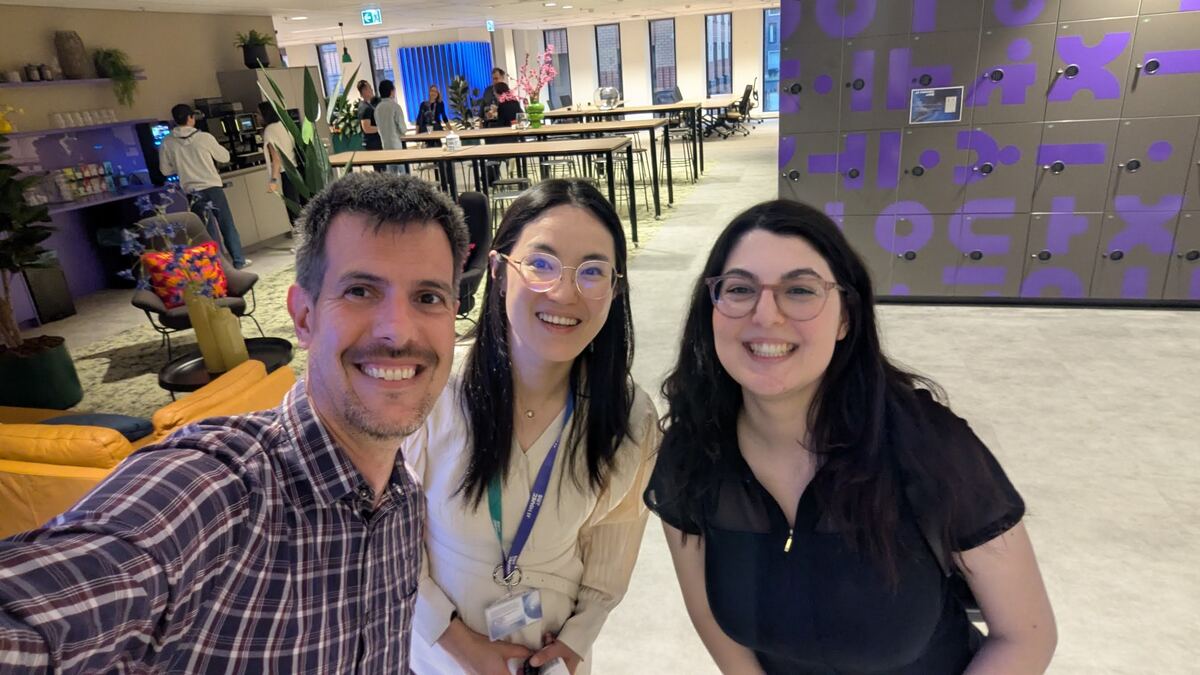
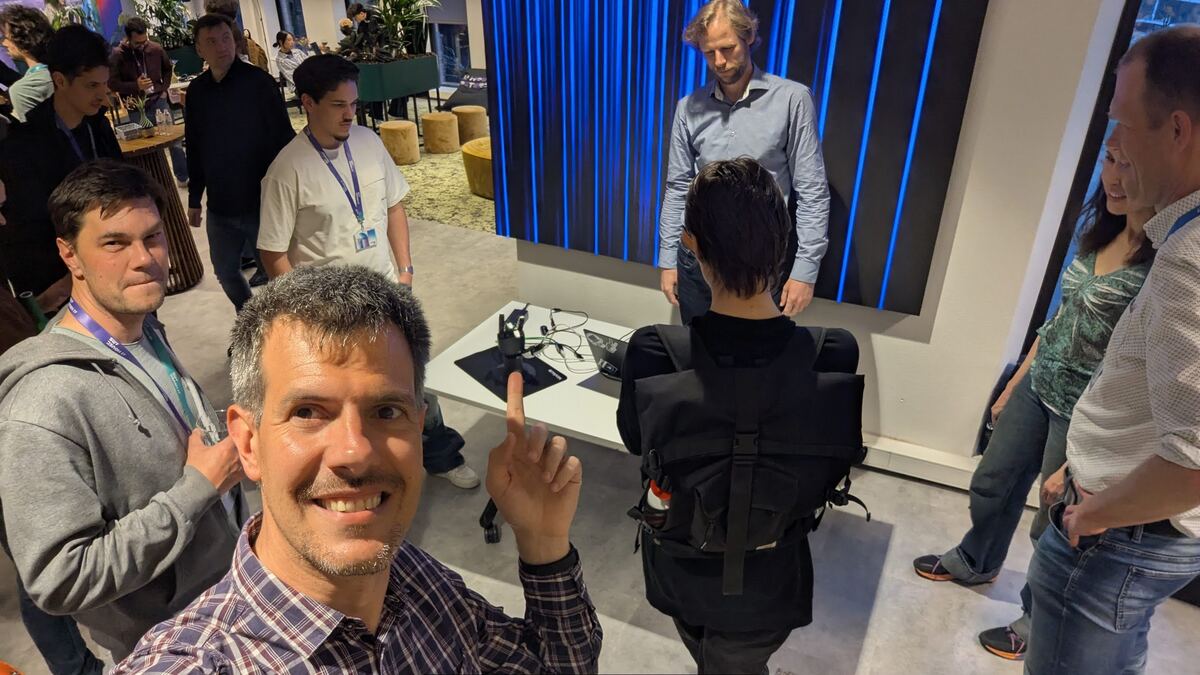
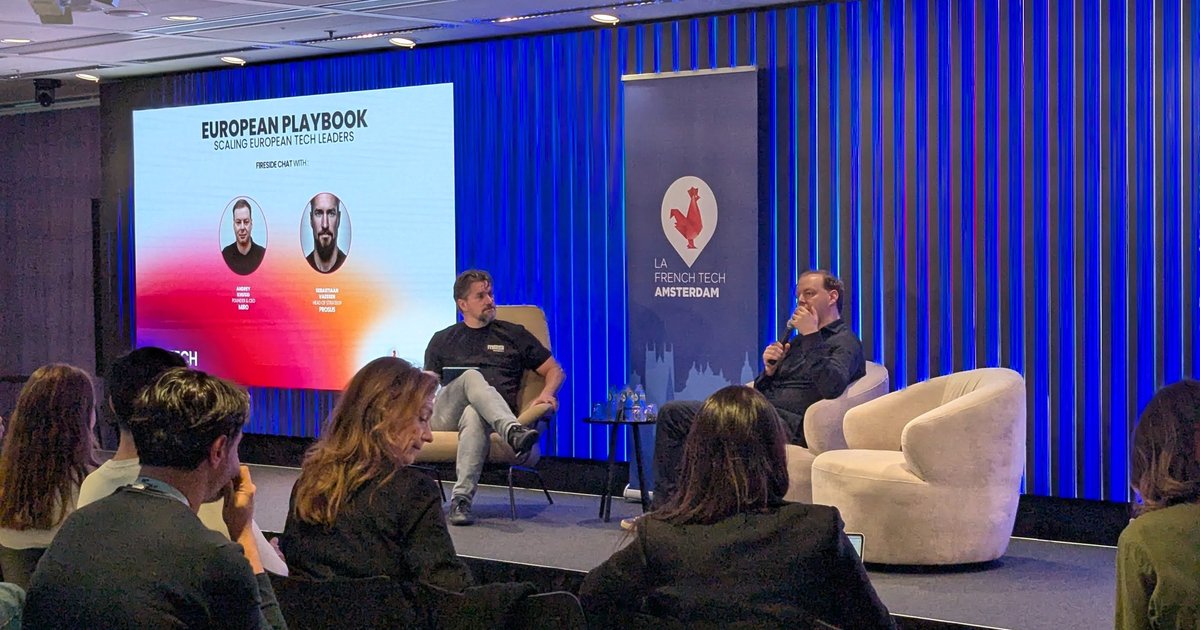
Between this robotics flagship and the European Playbook: Scaling Tech Leaders event I also attended, AI House Amsterdam consistently delivers high-quality programming for the European tech community.
Related Posts
- European Playbook: Scaling Tech Leaders at AI House Amsterdam
- NVIDIA Dynamo Inference Framework
- KubeCon Europe 2026 Side Events Guide
- The State of AI in Europe
About the Author
I am Luca Berton, AI and Cloud Advisor. I help enterprises architect AI infrastructure for both digital and physical AI workloads. Book a consultation.