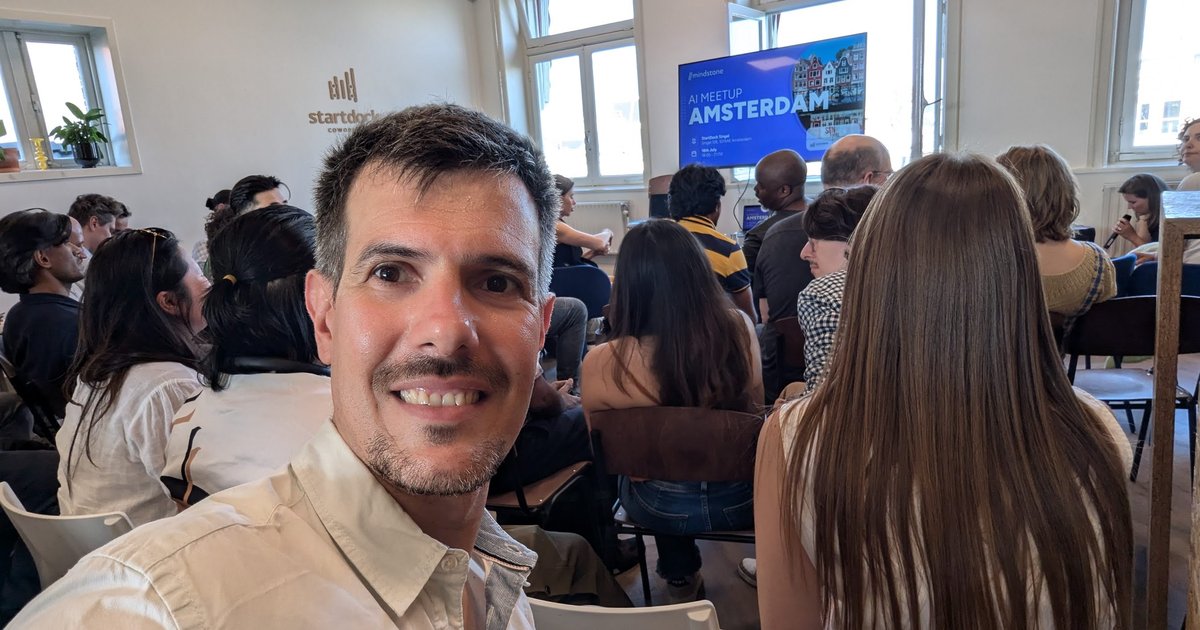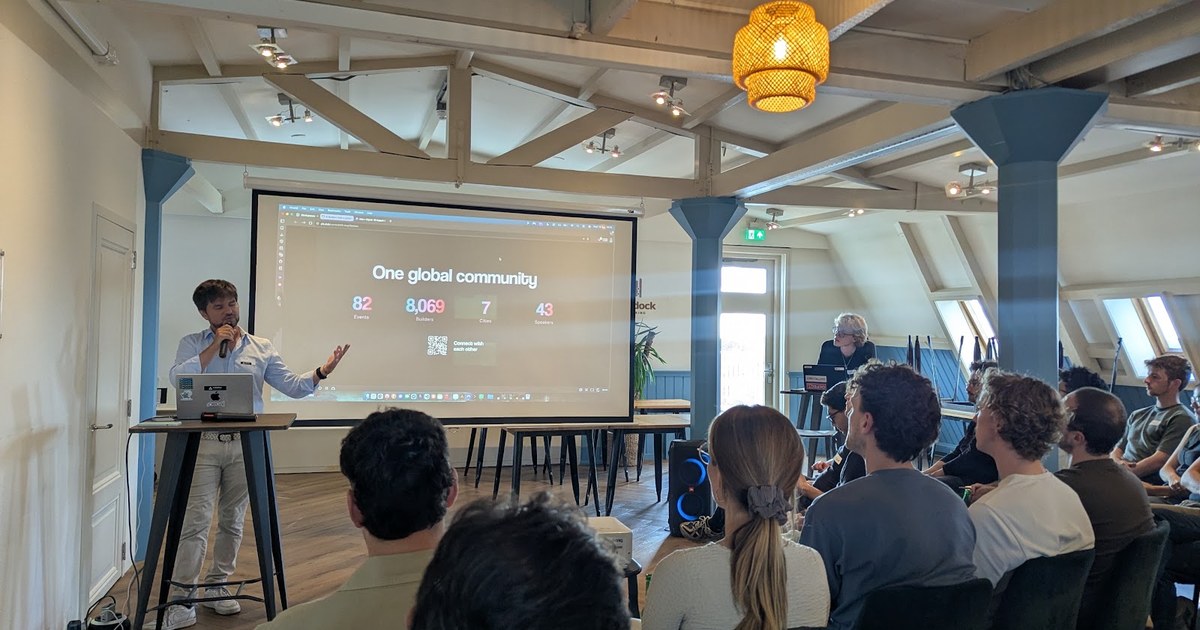
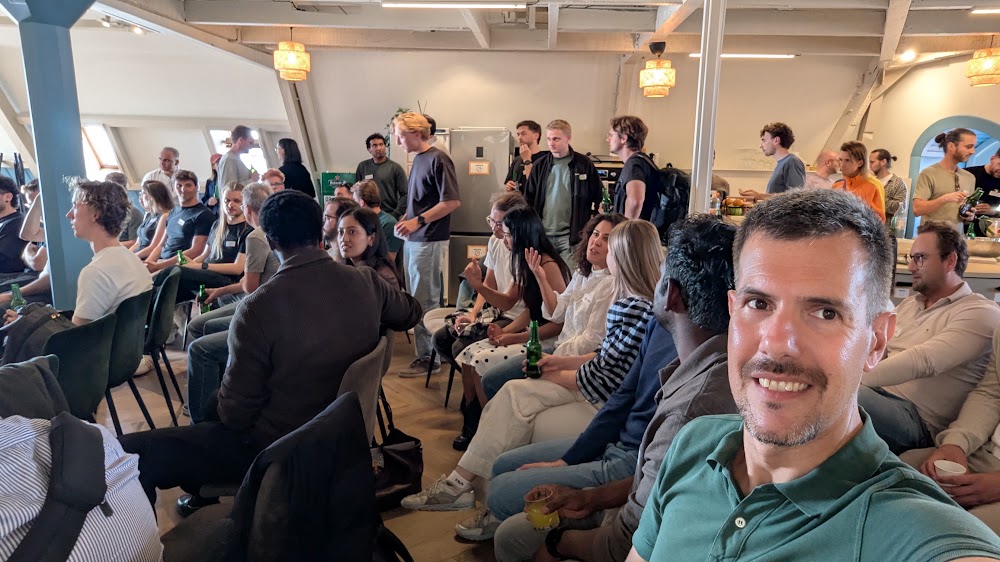
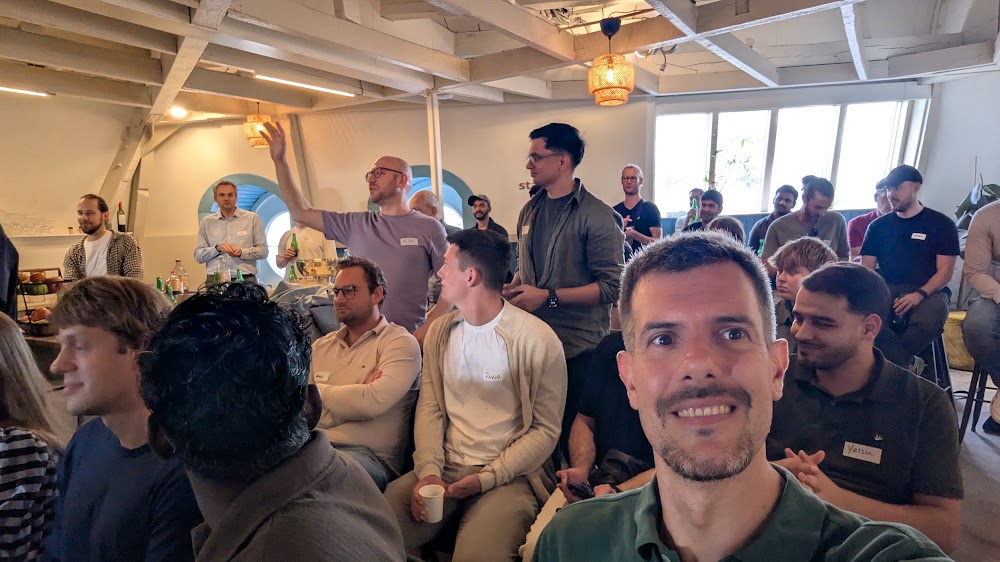
Last night I joined AI Builders Amsterdam at StartDock Coworking, Prins Hendrikkade — a technical meetup for people who are actually building with generative AI, not just talking about it. Around 40 engineers, founders, designers and data people showed up, and the format was exactly the kind I like: walk-in, pizza, a few sharp talks, then drinks and proper networking.
The venue and the vibe
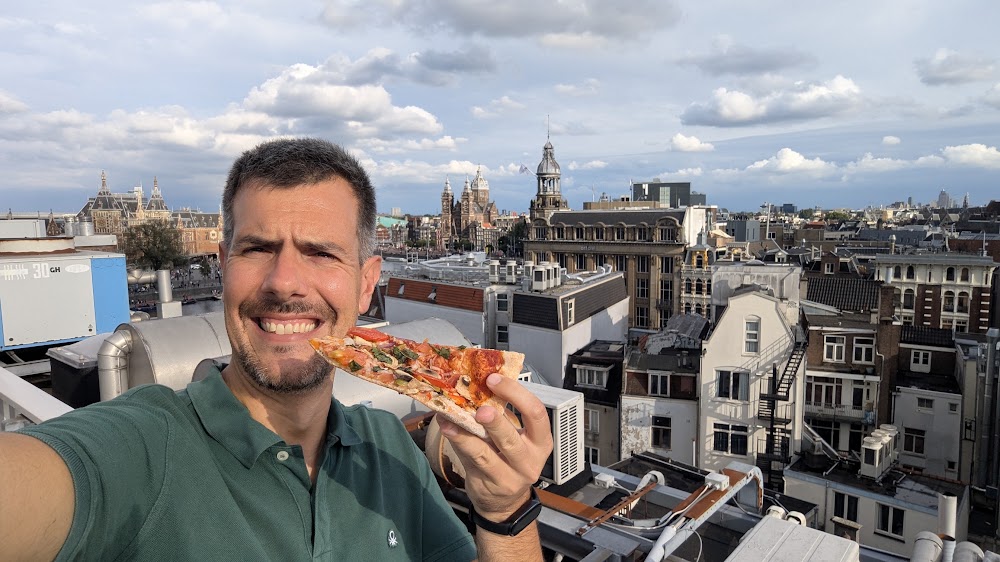
StartDock sits right by the water with a rooftop view over the Amsterdam skyline — Central Station on one side, the Basilica of Saint Nicholas on the other. The main room is a bright, loft-style space with exposed wooden beams, skylights and blue structural columns. Pizza and cold drinks landed early, so people were already in conversation before the first slide.
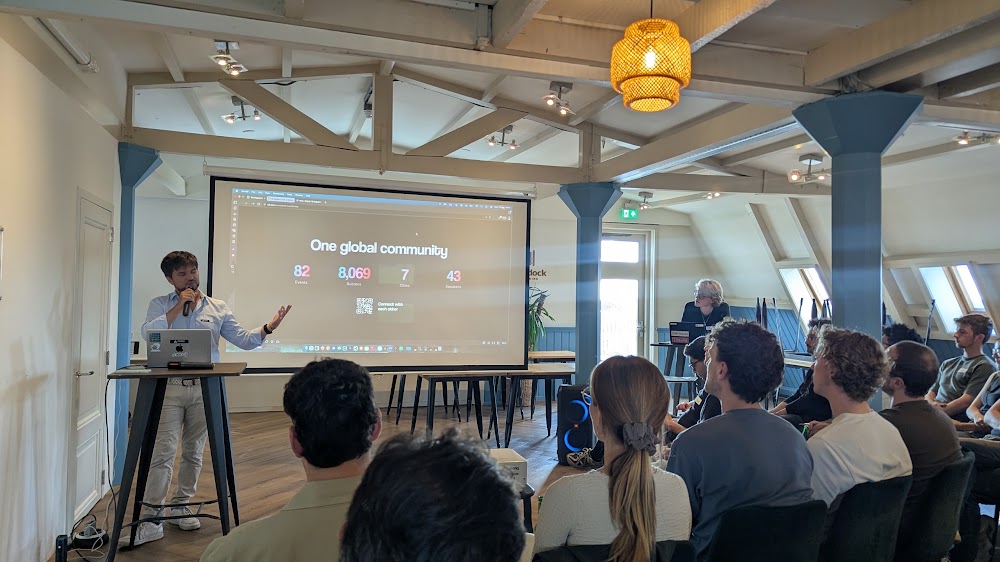
The community itself opened the evening with a slide titled “One global community” and four numbers that framed the room: 82 cities, 8,069 members, 7 countries, 43 organizers. That sets the tone — AI Builders is a self-organizing, worldwide group of builders, and Amsterdam is one of its active chapters.
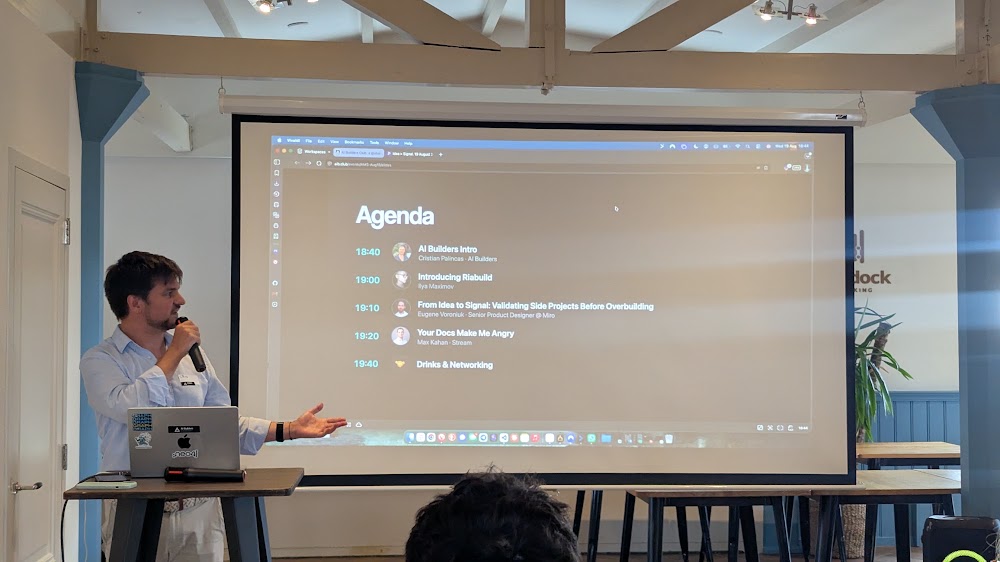
The host walked through the evening’s running order before the talks began.
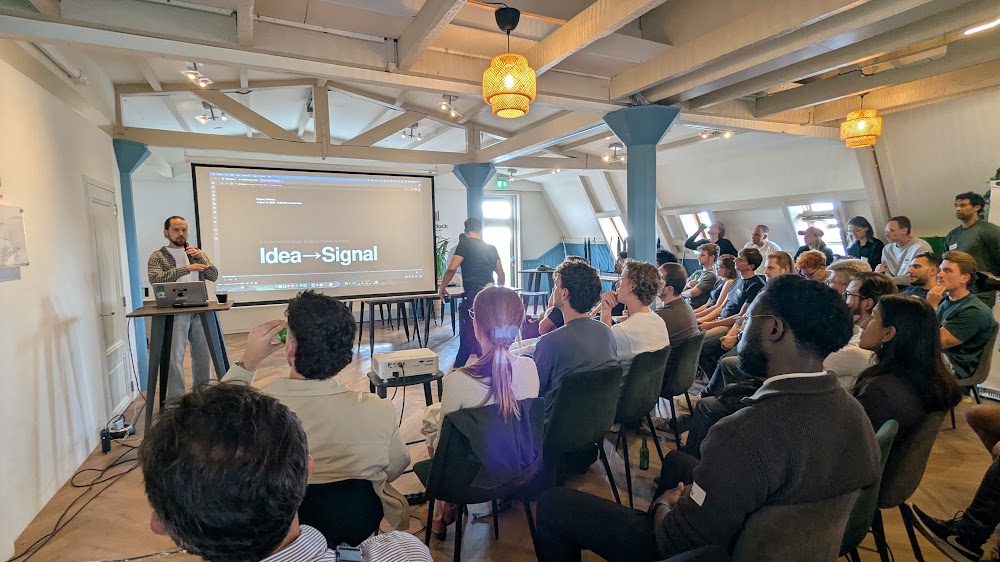
From Idea to Signal: validating before overbuilding
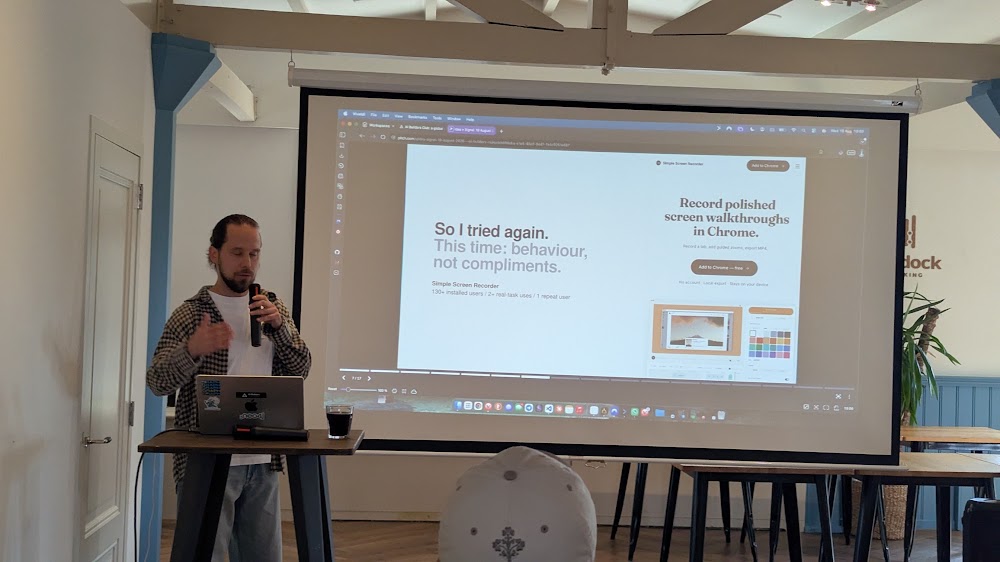
Eugene Voroniuk (Senior Product Designer, Miro) kicked off the talks with “From Idea to Signal: Validating Side Projects Before Overbuilding.” The core message is one every solo builder needs to hear: most side projects die in the building phase, not the idea phase. Eugene walked through how to find a real signal — usage, intent, a problem someone is already paying attention to — before committing weeks to a feature nobody asked for. It is the disciplined version of “ship less, learn faster.”
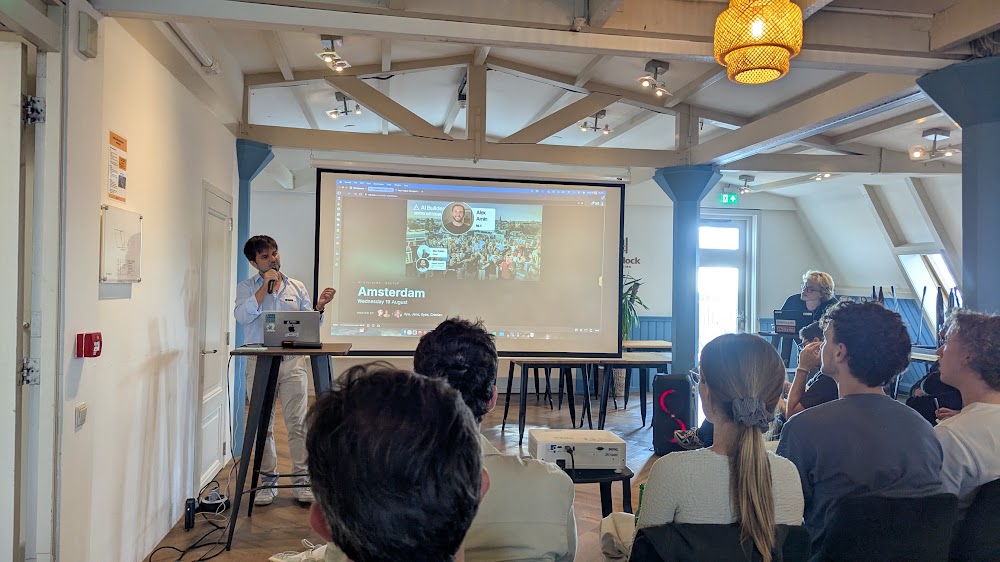
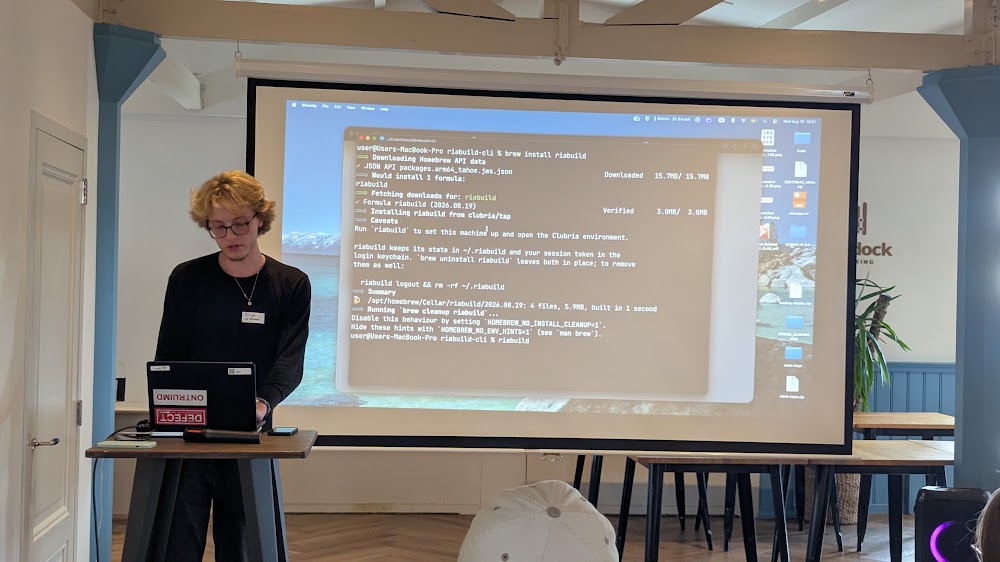
Before the docs talk, Ilya Maximov ran a live demo of Riabuild — installing and driving the tool straight from the terminal so the room could follow along.
Your Docs Make Me Angry: writing for agents, not just humans
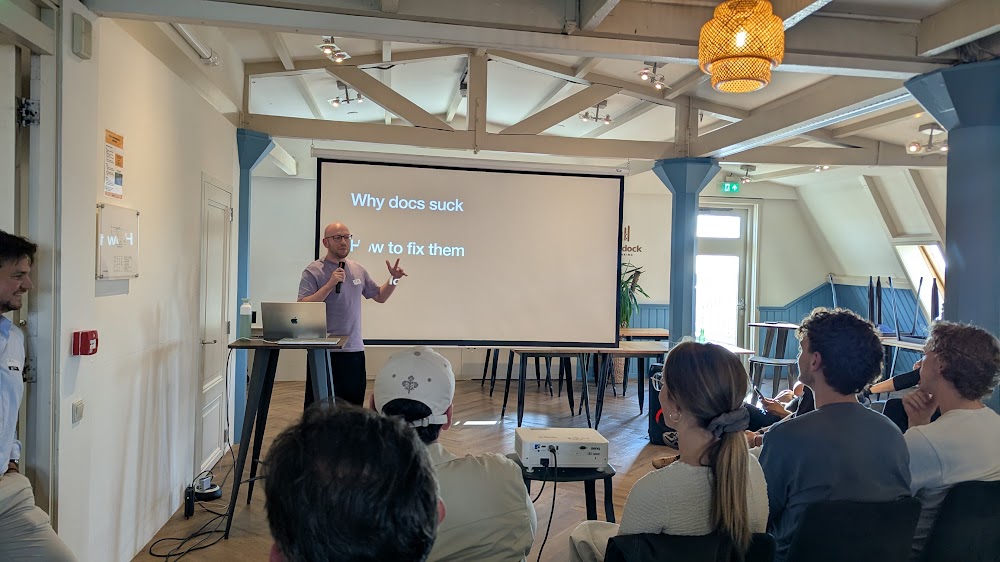
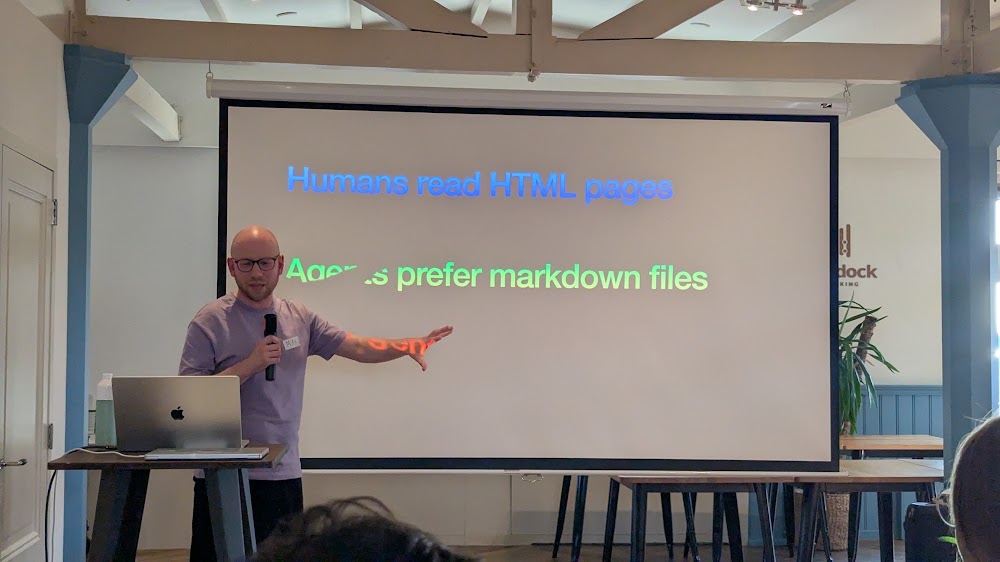
Max Kahan (Stream) delivered “Your Docs Make Me Angry,” and the data he showed is the part I keep thinking about. His slide tracked the monthly share of requests made through machine-facing routes for documentation traffic, sourced from Mintlify’s state-of-docs analysis:
.mdrequests: 54.4% and climbingtext: 34.5%text/markdown: 8.3%other: 2.8%
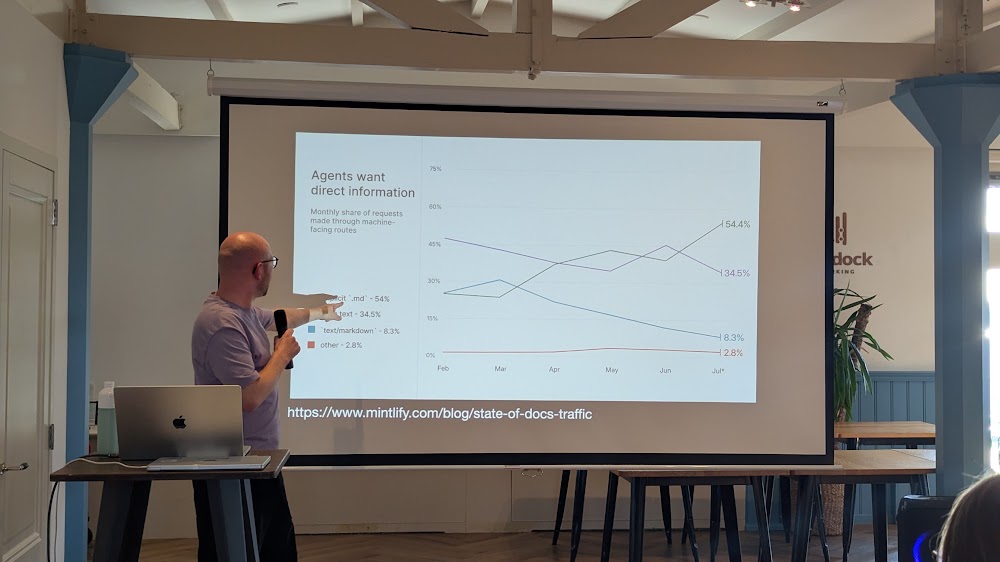
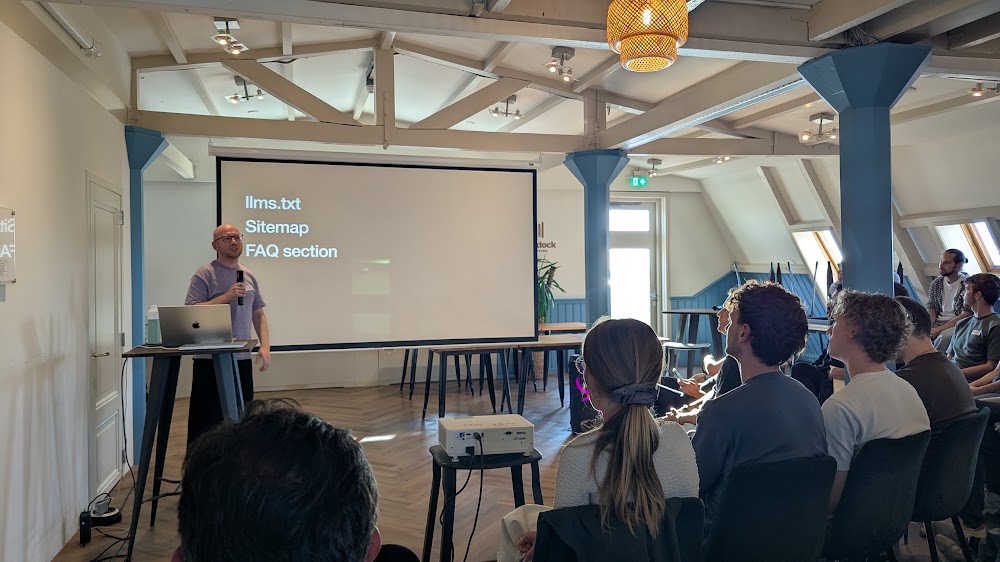
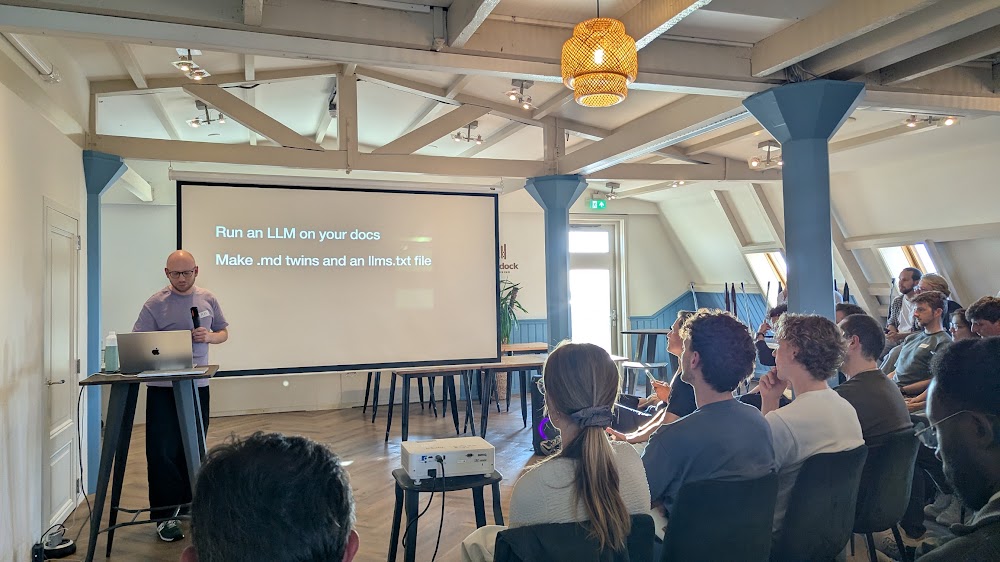
In other words, the majority of documentation traffic is now machines — agents pulling Markdown directly — not humans clicking through a rendered site. If your docs are only optimized for a pretty web page, you are ignoring the larger reader. Structured, machine-friendly Markdown is no longer a nice-to-have; it is the primary interface for agentic retrieval. For anyone shipping RAG or agent workflows, that is a direct call to action.
A live demo: an AI agent that plans events
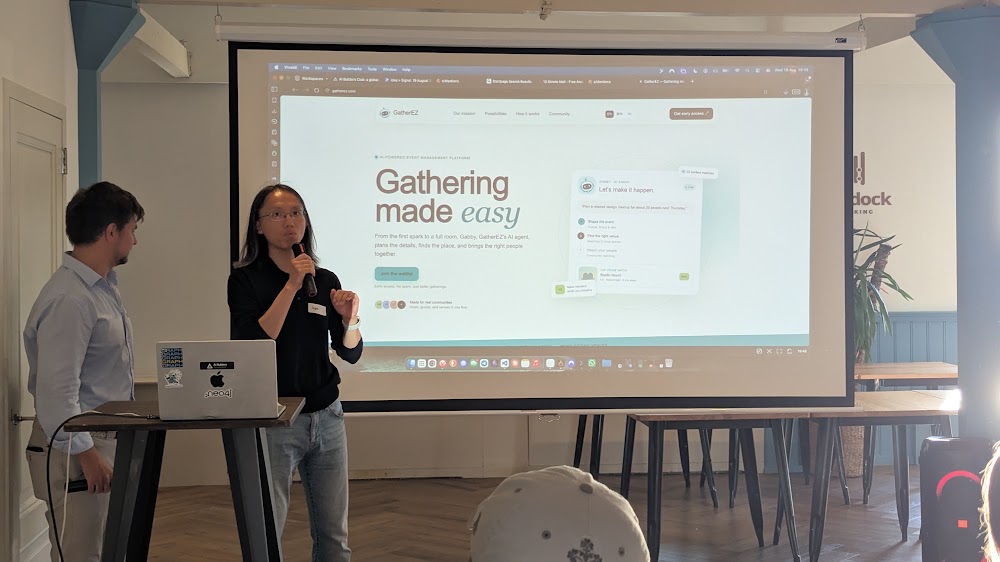
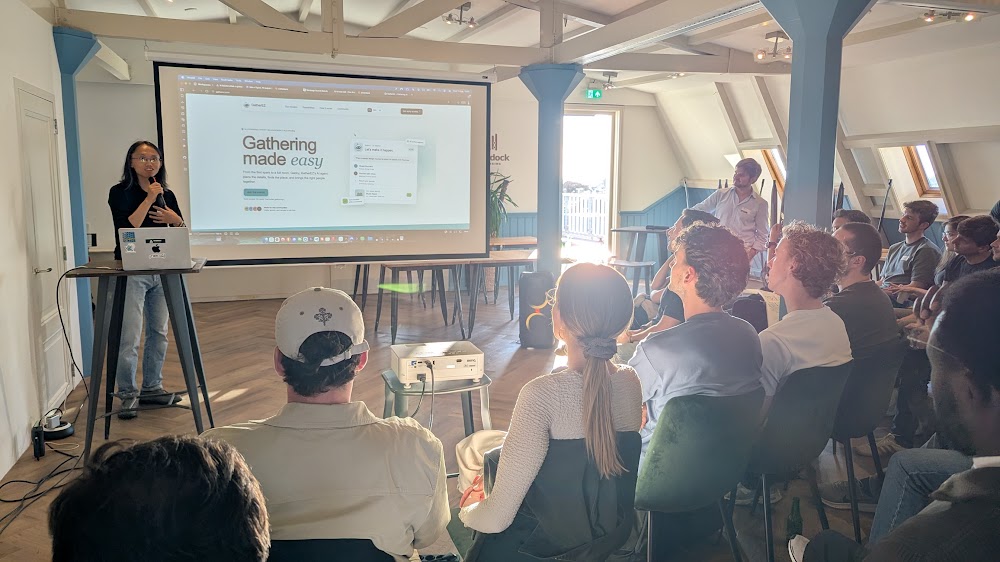
One of the evening’s demos showcased GatherEZ — “Gathering made easy” — an AI agent that takes an event from the first spark to a full room: it plans the details, finds the place, and brings the right people together. Seeing a working agent that owns a multi-step task end to end (venue, attendees, logistics) is a good reminder of where the builder energy in this community is headed: not chatbots, but agents that complete jobs.
What I took away
Three things stuck with me from the night:
- Validate the signal, not the idea. Eugene’s point applies as much to internal AI tools as to side projects — measure intent before you build.
- Write docs for agents. With
.mdnow the dominant documentation reader, machine-friendly structure is the real SEO. - The builder community is the product. 82 cities, thousands of members, and a room in Amsterdam full of people shipping — that is the durable advantage of showing up in person.
The evening closed, as these things should, with drinks and the kind of unstructured conversation you only get in person.
If you build with generative AI and you are in or near Amsterdam, AI Builders is worth finding on Luma and joining the next one. Pizza and good talks included.