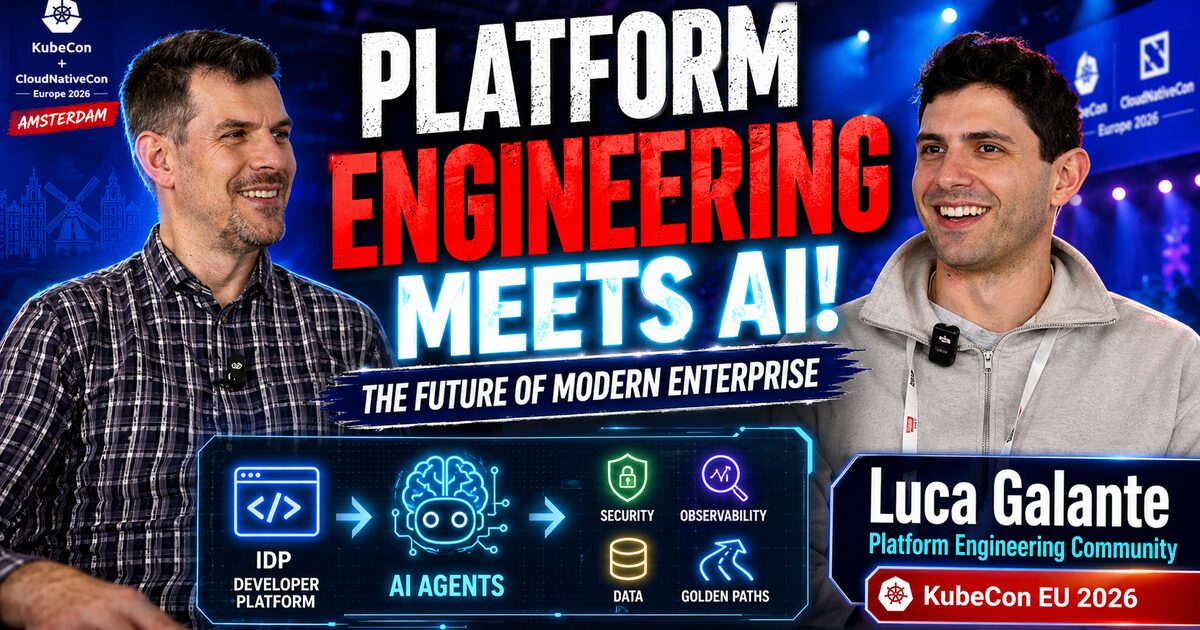
A strong platform engineering meetup in Amsterdam during KubeCon Europe week, focused on a topic that is becoming more important by the quarter: how to evolve platforms for AI, Kubernetes, and a true product mindset.
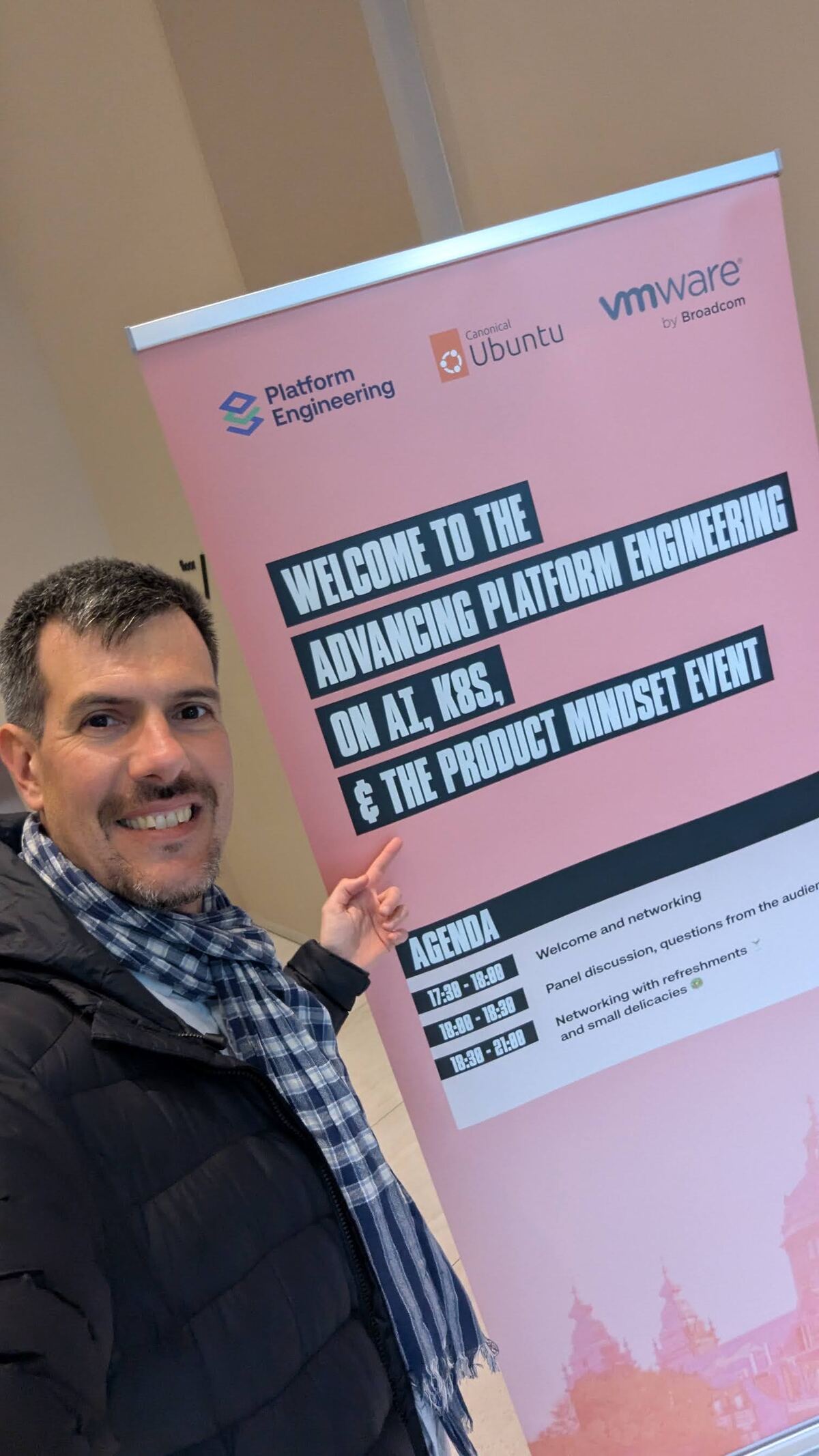
The Event
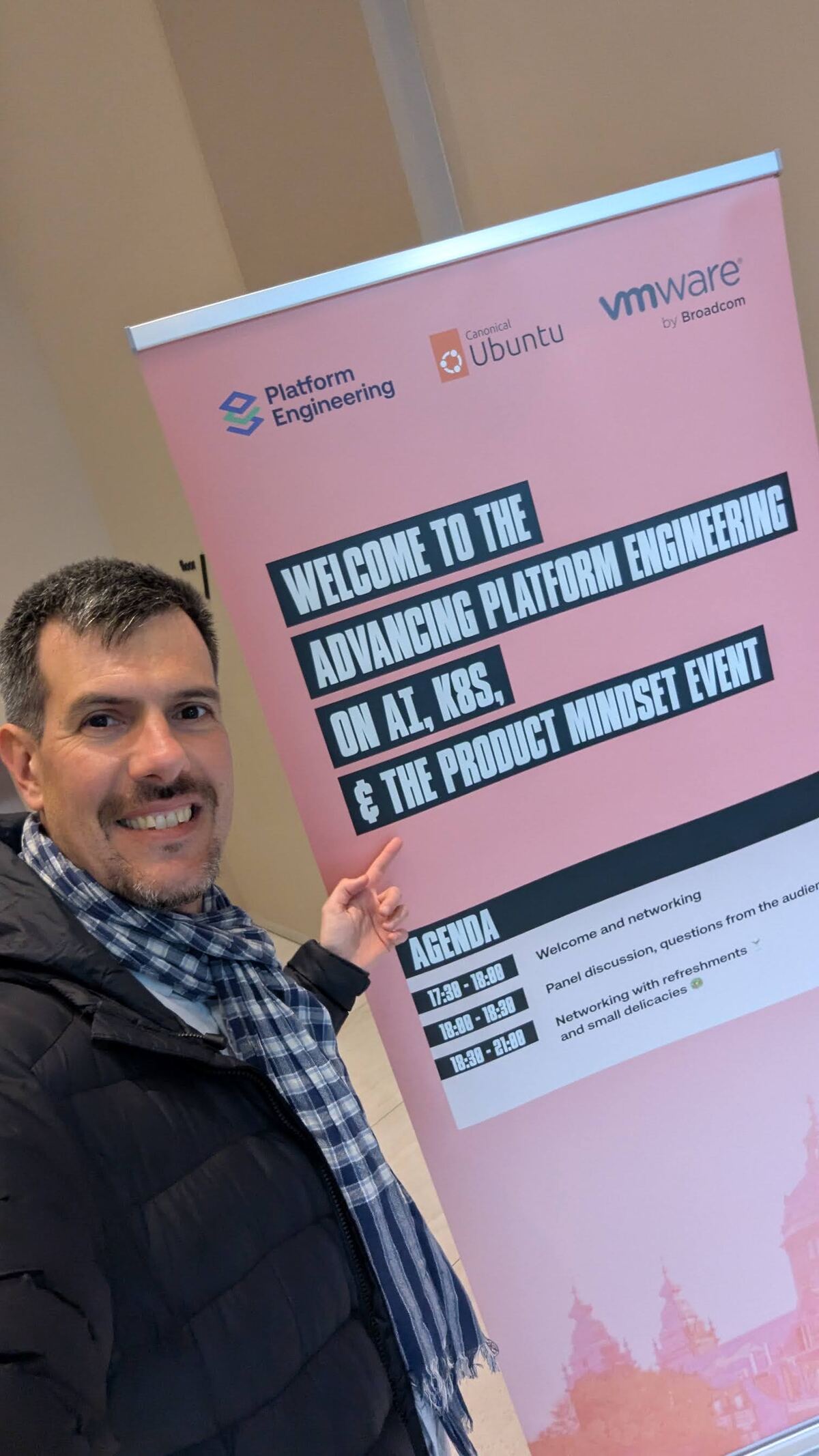
The “Advancing Platform Engineering on AI, K8s, and the Product Mindset” event brought together perspectives from the broader ecosystem, including Platform Engineering, Canonical, and VMware by Broadcom, with moderation from Luca Galante.
The agenda was focused and efficient:
- 17:30-18:30 — Welcome and networking
- 18:30-19:30 — Panel discussion with questions from the audience
- 19:30-21:00 — Networking with refreshments
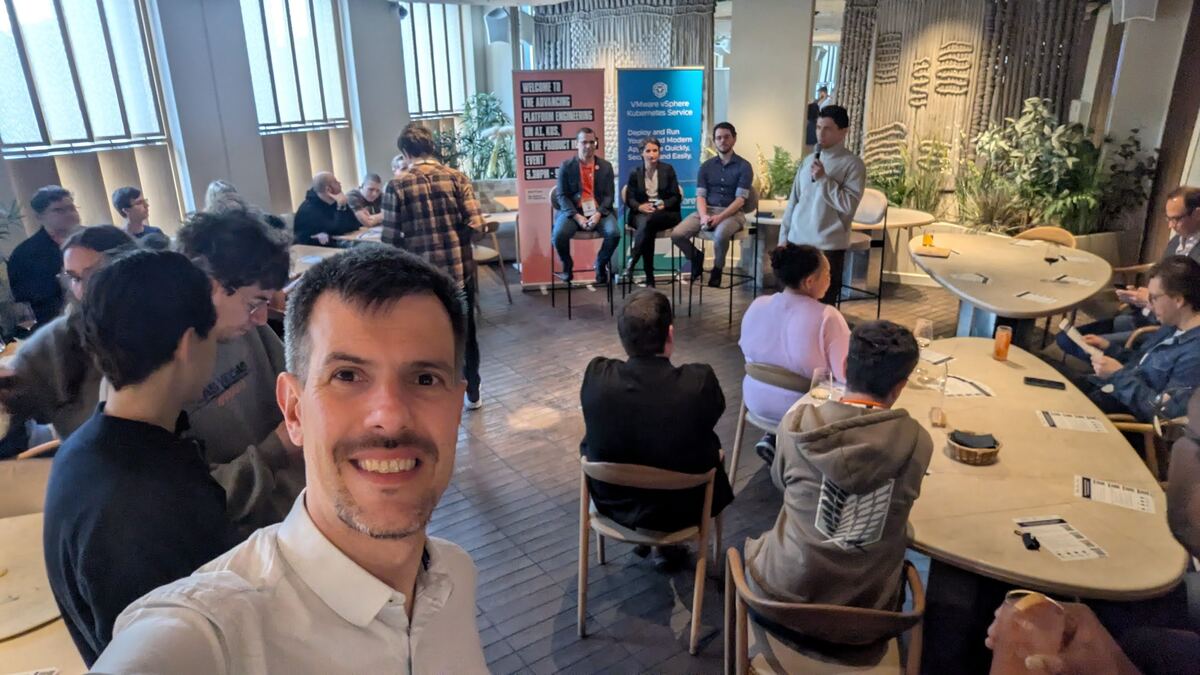
The moderator opened the panel with a good question: where have you actually changed your mind in the last few months or years? One of the first answers was about pace. What had changed that panellist’s mind was the speed of change itself: they wouldn’t have expected the problems platform engineers need to solve to accelerate the way they have. My take: a platform roadmap written a year ago probably had no line for AI workloads. Reviewing it every quarter rather than every year is the simplest way to keep up.
The Shift: Platforms as Products
What I appreciated in this discussion was the shift away from platform engineering as pure infrastructure work. The conversation was much closer to the real challenge: building platforms that developers actually adopt, that scale securely, and that balance guardrails with autonomy.
A few themes stood out:
AI-Ready Infrastructure
AI is pushing platform teams to rethink architecture, governance, and operating models. It is no longer enough to provision Kubernetes clusters — teams need to think about GPU scheduling, model serving infrastructure, and inference pipeline observability. The platform has to abstract this complexity while still giving ML engineers the flexibility they need.
Kubernetes as Foundation, Not Destination
Kubernetes remains foundational, but the differentiator is increasingly the platform experience built on top of it. Raw Kubernetes is too complex for most development teams. The winning platforms are those that provide sensible defaults, guardrails, and self-service capabilities that make Kubernetes invisible to the application developer.
Platform as a Product is No Longer Optional
“Platform as a product” is the clearest path to reducing toil while improving developer velocity. This means:
- User research — talking to your internal developers like they are customers
- Product metrics — measuring adoption, satisfaction, and time-to-productivity
- Iteration cycles — shipping platform improvements frequently, not annually
- Documentation and onboarding — treating these as first-class features, not afterthoughts
My Takeaway
The future of platform engineering will belong to teams that combine technical depth with product thinking. The best internal platforms will not just be robust — they will be usable, trusted, and intentionally designed around developer needs.
This connects directly to what I see in enterprise AI consulting. Organizations that treat their AI platform as an infrastructure project struggle with adoption. Those that treat it as a product — with clear user journeys, documentation, and feedback loops — see dramatically better results.

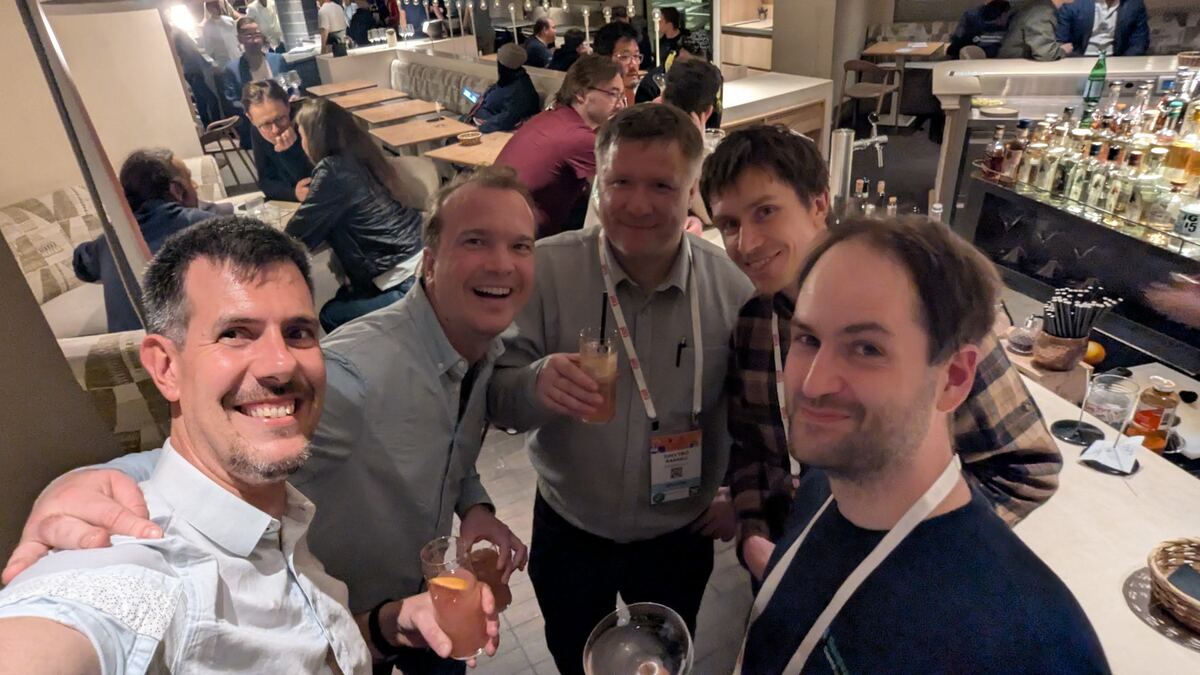
Thanks to the organizers and everyone in the room for a practical conversation with the right mix of engineering depth and operating realism.
Related Posts
- Canonical Ubuntu at KubeCon EU 2026: Single-Command AI Inference
- KubeCon Europe 2026: Multi-Tenant GPUs on Bare Metal
- AI on Kubernetes: The First 90 Days
- KubeCon Europe 2026 Side Events Guide
- KubeCon Europe 2026 Community Connections
- The Architecture Decisions That Are Hardest to Reverse
About the Author
I am Luca Berton, AI and Cloud Advisor. I help enterprises build developer-friendly AI platforms with a product mindset. Book a consultation.