This A2A Python SDK tutorial builds a working Agent2Agent (A2A) server and client with the official a2a-sdk package, without a framework on top: an AgentExecutor, an Agent Card, a Starlette app, a client that streams task updates, a multi-turn follow-up, cancellation, and an MCP tool behind the agent. Everything below ran on my machine, and the outputs are copied from the terminal.
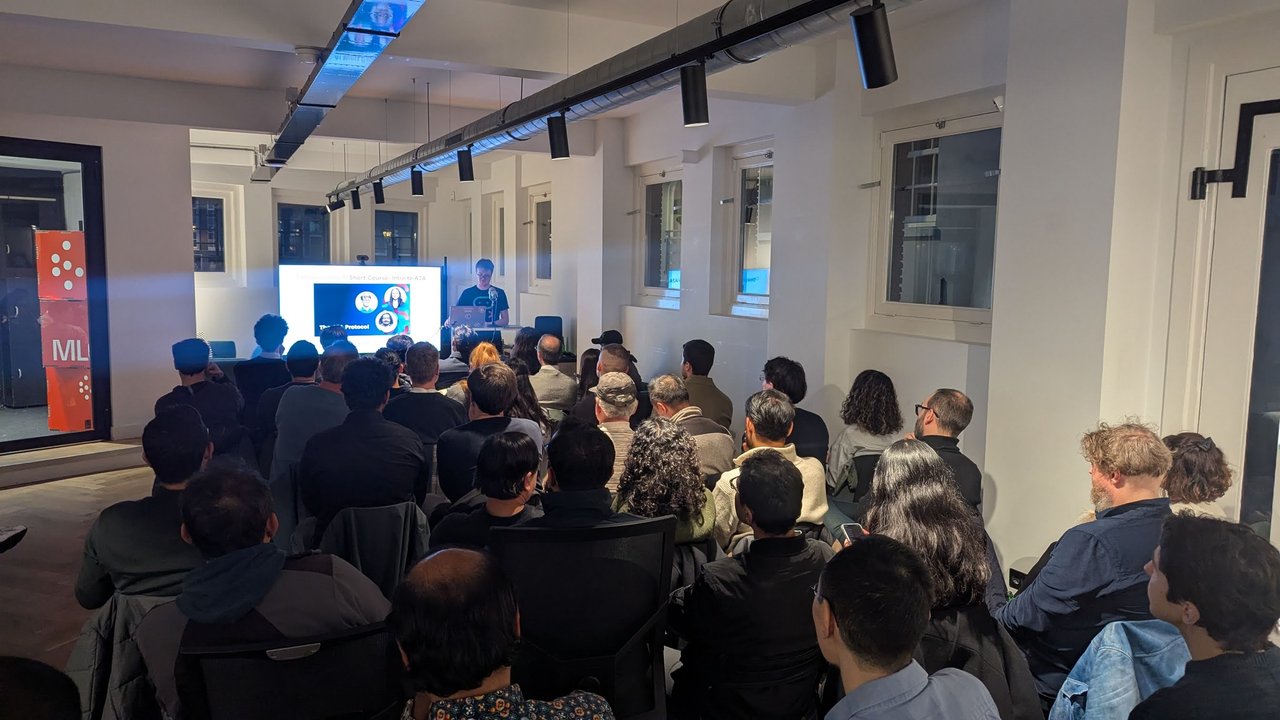
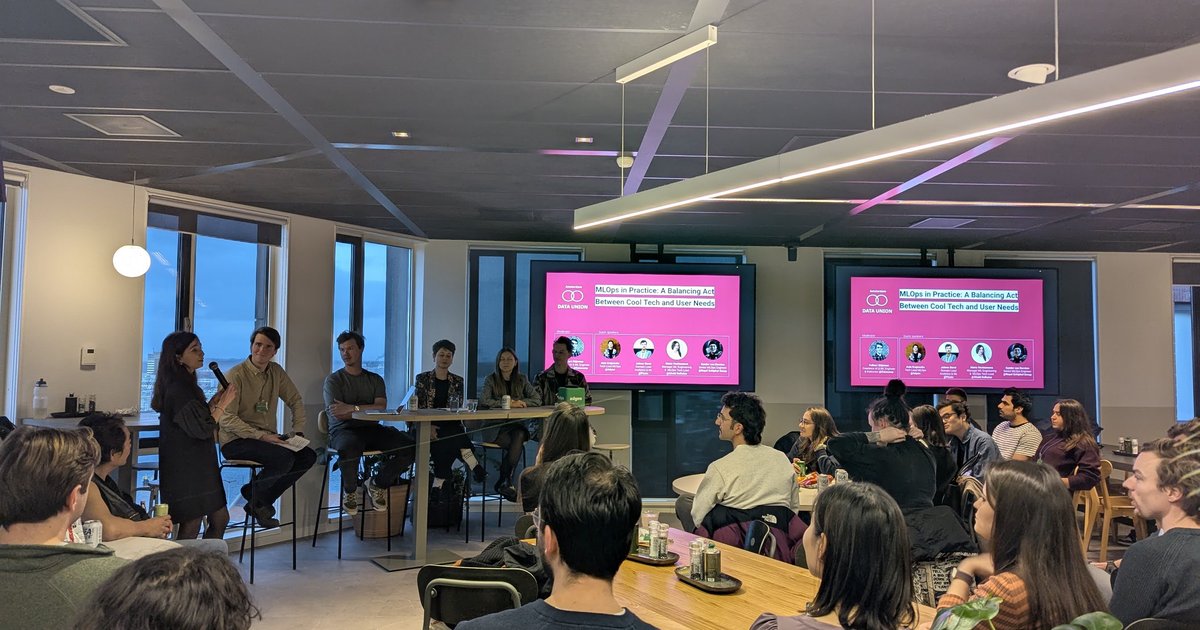
The room at ML6 as the A2A talk at the AICamp meetup started.
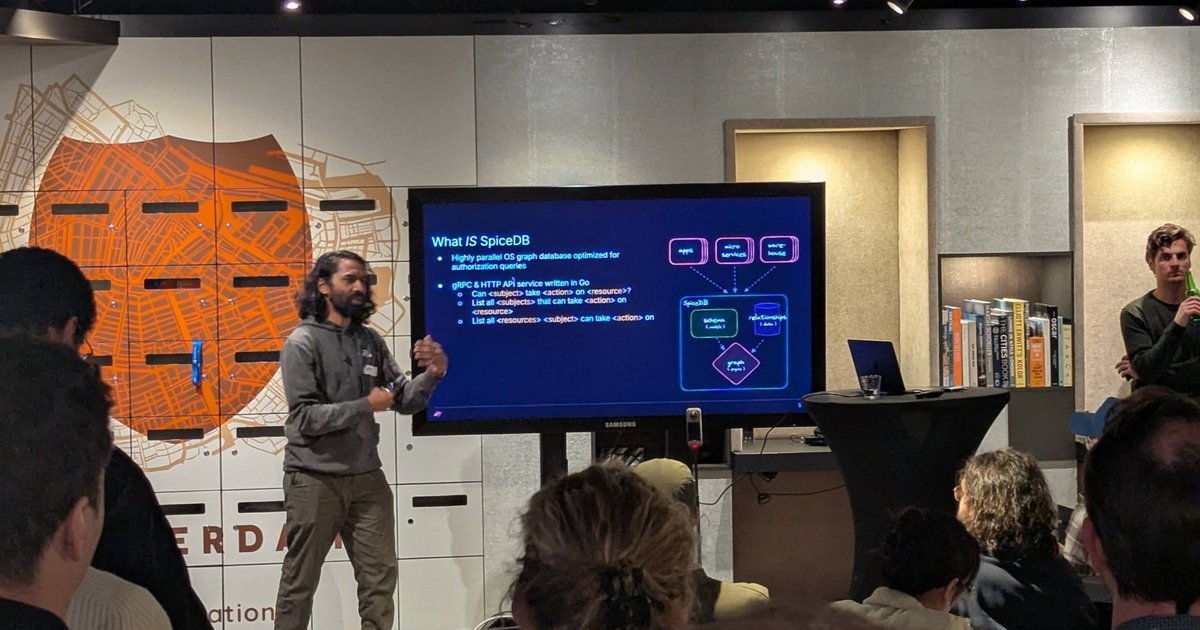
The hook is the AICamp meetup I moderated at ML6 in Amsterdam. In the A2A talk, Holt Skinner from Google wrapped an insurance-policy agent as an A2A server with the Python SDK, live. He called the AgentExecutor subclass the “secret sauce” of the SDK: you implement execute and cancel, read the user’s input from the request context, call your agent, and put the reply on an event queue for the client. I wanted to rebuild that flow on the current SDK and go a step further into tasks and streaming. The code here is mine, not his.
Versions tested (3 October 2026, macOS, Python 3.12.13, uv 0.12.19): a2a-sdk 1.2.1 (A2A specification 1.0), starlette 1.7.0, sse-starlette 3.5.0, uvicorn 0.54.0, httpx 0.28.1, protobuf 7.36.2 and mcp 2.3.0. No model calls: the agent is a rule-based lookup, so every result is reproducible.
What this tutorial covers that the others don’t
My Google ADK SRE agent post exposes an ADK agent with to_a2a(), which generates the card and needs no executor of your own; Holt showed the same shortcut for one of the agents in his demo. This post is the layer under it: the plain a2a-sdk, which you need when your agent isn’t an ADK agent (a LangGraph graph, a rules engine, an existing service) or when you want control over task states. For the protocol’s governance news, see A2A joining the Agentic AI Foundation.
Install the A2A Python SDK
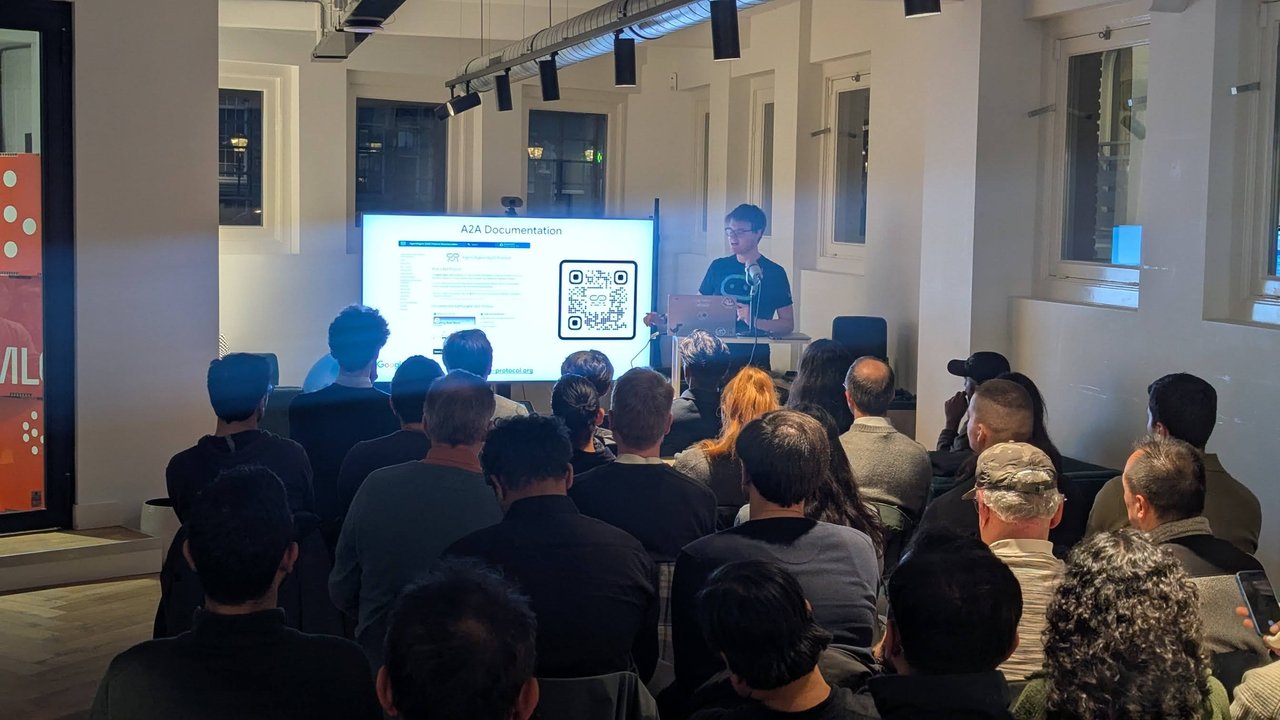
The A2A Documentation slide from the talk, pointing to a2a-protocol.org.
The core package doesn’t include a web server. The http-server extra pulls in Starlette and sse-starlette (for streaming). Add uvicorn to run it:
mkdir a2a-policy && cd a2a-policy
uv venv --python 3.12
uv pip install "a2a-sdk[http-server]==1.2.1" uvicorn
Other extras: fastapi, grpc, telemetry, and postgresql / mysql / sqlite for a persistent task store. Python 3.10 or newer is required.
The agent: a deterministic stand-in
The talk’s agent answered coverage questions from a policy document with an LLM. Mine answers from a table, which is enough to exercise the protocol. The numbers are invented:
# policy_agent.py
COVERAGE = {
    "physiotherapy": {"in": 10, "out": 40},
    "mental health": {"in": 0, "out": 20},
    "dental": {"in": 20, "out": 50},
}


class PolicyAgent:
    def find_service(self, question: str) -> str | None:
        q = question.lower()
        return next((s for s in COVERAGE if s in q), None)

    def find_network(self, question: str) -> str | None:
        q = question.lower()
        if "out-of-network" in q or "out of network" in q:
            return "out"
        if "in-network" in q or "in network" in q:
            return "in"
        return None

    def answer(self, service: str, network: str) -> str:
        share = COVERAGE[service][network]
        label = "in-network" if network == "in" else "out-of-network"
        return f"{service.capitalize()} with an {label} provider: you pay {share}% of the cost."
The AgentExecutor: one question, one Message
The simplest executor does what the live demo did: read the input, answer, enqueue one Message.
# executors.py (first version)
from a2a.helpers import new_text_message
from a2a.server.agent_execution import AgentExecutor, RequestContext
from a2a.server.events import EventQueue

from policy_agent import PolicyAgent


class MessageExecutor(AgentExecutor):
    def __init__(self) -> None:
        self.agent = PolicyAgent()

    async def execute(self, context: RequestContext, event_queue: EventQueue) -> None:
        question = context.get_user_input()
        service = self.agent.find_service(question) or "physiotherapy"
        network = self.agent.find_network(question) or "in"
        await event_queue.enqueue_event(new_text_message(self.agent.answer(service, network)))

    async def cancel(self, context: RequestContext, event_queue: EventQueue) -> None:
raise NotImplementedError("nothing to cancel in message mode")context.get_user_input()joins the text parts of the incoming message.new_text_message()is one of the v1.0 helpers ina2a.helpers. Its role defaults toROLE_AGENT.cancelis abstract, so you must define it even if you don’t support cancellation, as the speaker pointed out when he skipped it in the demo.
In message mode the server returns that single Message and no task exists. That’s fine for quick, stateless answers.
The Agent Card
The Agent Card is the JSON document other agents fetch to learn what yours does and where to reach it. In SDK 1.x the types are protobuf classes:
# server.py (card part)
import os

from a2a.types import AgentCapabilities, AgentCard, AgentInterface, AgentSkill

HOST = os.getenv("HOST", "127.0.0.1")
PORT = int(os.getenv("PORT", "9999"))

skill = AgentSkill(
    id="coverage_lookup",
    name="Coverage lookup",
    description="Answers what share of the cost you pay for physiotherapy, "
    "mental health or dental care, in-network or out-of-network.",
    tags=["insurance", "coverage"],
    examples=["How much do I pay for physiotherapy out-of-network?"],
)

agent_card = AgentCard(
    name="Insurance Policy Coverage Agent",
    description="Answers questions about what a (fictional) health policy covers.",
    version="1.0.0",
    supported_interfaces=[
        AgentInterface(protocol_binding="JSONRPC", protocol_version="1.0", url=f"http://{HOST}:{PORT}/")
    ],
    capabilities=AgentCapabilities(streaming=True, push_notifications=False),
    default_input_modes=["text/plain"],
    default_output_modes=["text/plain"],
    skills=[skill],
)supported_interfacesreplaced the old top-levelurl. EachAgentInterfaceis one endpoint:protocol_bindingisJSONRPC,HTTP+JSONorGRPC. The URL must be the address clients can actually reach.capabilities.streaming=Truetells clients they can useSendStreamingMessage.AgentSkillis a capability you advertise. In the talk, Holt pointed out that an A2A agent skill isn’t the same thing as Anthropic’s Agent Skills: A2A was first, he thought, but both use the same term and now everyone is confused. An A2A skill is just an entry in the card.
He also stressed that the description matters when an LLM orchestrator decides which agent to call: it needs enough detail to route correctly. Write card descriptions for a model to read, not for marketing.
Serve it with Starlette and uvicorn
SDK 1.0 removed the A2AStarletteApplication wrapper. You build routes and mount them on Starlette or FastAPI yourself:
# server.py (continued)
import uvicorn
from starlette.applications import Starlette

from a2a.server.request_handlers import DefaultRequestHandler
from a2a.server.routes import create_agent_card_routes, create_jsonrpc_routes
from a2a.server.tasks import InMemoryTaskStore

from executors import MessageExecutor

request_handler = DefaultRequestHandler(
    agent_executor=MessageExecutor(),
    task_store=InMemoryTaskStore(),
    agent_card=agent_card,
)

app = Starlette(routes=[
    *create_agent_card_routes(agent_card),
    *create_jsonrpc_routes(request_handler, rpc_url="/"),
])

if __name__ == "__main__":
    uvicorn.run(app, host=HOST, port=PORT)
DefaultRequestHandler now takes agent_card as a required argument. create_agent_card_routes serves the card at /.well-known/agent-card.json by default. Run it and fetch the card (output trimmed):
uv run python server.py
curl -s http://127.0.0.1:9999/.well-known/agent-card.json
{
"name": "Insurance Policy Coverage Agent",
"supportedInterfaces": [
{ "url": "http://127.0.0.1:9999/", "protocolBinding": "JSONRPC", "protocolVersion": "1.0" }
],
"version": "1.0.0",
"capabilities": { "streaming": true, "pushNotifications": false },
"skills": [{ "id": "coverage_lookup", "name": "Coverage lookup", "tags": ["insurance", "coverage"] }]
}Note the camelCase on the wire: the SDK serialises protobuf with ProtoJSON.
Call it with the A2A Python client
The client resolves the card, picks a transport from supported_interfaces, and sends messages. In v1.0 every response is a StreamResponse holding exactly one of message, task, status_update or artifact_update:
# client.py
import asyncio
import sys
import uuid

import httpx

from a2a.client import A2ACardResolver, ClientConfig, create_client
from a2a.helpers import get_artifact_text, get_message_text
from a2a.types import Message, Part, Role, SendMessageRequest, TaskState

BASE_URL = "http://127.0.0.1:9999"


def user_message(text, task_id=None, context_id=None) -> Message:
    return Message(role=Role.ROLE_USER, message_id=str(uuid.uuid4()),
                   parts=[Part(text=text)], task_id=task_id, context_id=context_id)


async def send(client, message):
    task_id = context_id = state = None
    async for event in client.send_message(SendMessageRequest(message=message)):
        if event.HasField("message"):
            print("  message:", get_message_text(event.message))
        elif event.HasField("task"):
            task_id, context_id = event.task.id, event.task.context_id
            state = TaskState.Name(event.task.status.state)
            print("  task:", task_id[:8], state)
            for artifact in event.task.artifacts:  # filled in when not streaming
                print(f"  artifact[{artifact.name}]:", get_artifact_text(artifact))
            if event.task.status.HasField("message"):
                print("  status message:", get_message_text(event.task.status.message))
        elif event.HasField("status_update"):
            status = event.status_update.status
            state = TaskState.Name(status.state)
            note = get_message_text(status.message) if status.HasField("message") else ""
            print("  status:", state, note)
        elif event.HasField("artifact_update"):
            artifact = event.artifact_update.artifact
            print(f"  artifact[{artifact.name}]:", get_artifact_text(artifact))
    return task_id, context_id, state


async def main(streaming: bool) -> None:
    async with httpx.AsyncClient() as http:
        card = await A2ACardResolver(http, BASE_URL).get_agent_card()
    print("agent:", card.name, "| streaming:", card.capabilities.streaming)

    client = await create_client(card, client_config=ClientConfig(streaming=streaming))
    try:
        print("Q1: one-shot question")
        await send(client, user_message("How much do I pay for dental care out-of-network?"))

        print("Q2: missing detail, then a follow-up on the same task")
        task_id, context_id, state = await send(client, user_message("What about physiotherapy?"))
        if state == "TASK_STATE_INPUT_REQUIRED":
            await send(client, user_message("In-network.", task_id, context_id))
    finally:
        await client.close()


if __name__ == "__main__":
    asyncio.run(main(streaming="--no-stream" not in sys.argv))
Against the message-mode server, each question gets one message back:
agent: Insurance Policy Coverage Agent | streaming: True
Q1: one-shot question
  message: Dental with an out-of-network provider: you pay 50% of the cost.
Q2: missing detail, then a follow-up on the same task
  message: Physiotherapy with an in-network provider: you pay 10% of the cost.
The second answer is a guess: my message executor falls back to “in-network” because a single message can’t ask a question back. Tasks fix that.
Tasks and streaming
A task gives the work an ID, a state machine and artifacts. The A2A 1.0 states are TASK_STATE_SUBMITTED, WORKING, INPUT_REQUIRED, AUTH_REQUIRED, and the terminal COMPLETED, FAILED, CANCELED and REJECTED (all with the TASK_STATE_ prefix). TaskUpdater emits the transitions for you:
# executors.py (task version)
import asyncio

from a2a.server.agent_execution import AgentExecutor, RequestContext
from a2a.server.events import EventQueue
from a2a.server.tasks import TaskUpdater
from a2a.types import Part, Role, Task, TaskState, TaskStatus

from policy_agent import COVERAGE, PolicyAgent


class TaskExecutor(AgentExecutor):
    def __init__(self) -> None:
        self.agent = PolicyAgent()

    async def execute(self, context: RequestContext, event_queue: EventQueue) -> None:
        updater = TaskUpdater(event_queue, context.task_id, context.context_id)

        if context.current_task is None:
            # New task: the Task object must be the first event.
            await event_queue.enqueue_event(Task(
                id=context.task_id,
                context_id=context.context_id,
                status=TaskStatus(state=TaskState.TASK_STATE_SUBMITTED),
                history=[context.message],
            ))

        # On a follow-up, earlier user turns live in the task history.
        history = context.current_task.history if context.current_task else []
        texts = [p.text for m in history if m.role == Role.ROLE_USER for p in m.parts if p.text]
        texts.append(context.get_user_input())
        question = " ".join(texts)

        await updater.start_work(updater.new_agent_message([Part(text="Looking up your policy...")]))
        await asyncio.sleep(0.5)  # pretend to do real work

        service = self.agent.find_service(question)
        if service is None:
            await updater.reject(updater.new_agent_message(
                [Part(text=f"I only know about: {', '.join(COVERAGE)}.")]))
            return

        network = self.agent.find_network(question)
        if network is None:
            await updater.requires_input(updater.new_agent_message(
                [Part(text="Is the provider in-network or out-of-network?")]))
            return

        await updater.add_artifact([Part(text=await self.lookup(service, network))], name="coverage")
        await updater.complete()

    async def lookup(self, service: str, network: str) -> str:
        return self.agent.answer(service, network)

    async def cancel(self, context: RequestContext, event_queue: EventQueue) -> None:
        await TaskUpdater(event_queue, context.task_id, context.context_id).cancel()
Swap MessageExecutor() for TaskExecutor() in server.py and run the same client. With streaming (the default, sent as SendStreamingMessage over server-sent events):
Q1: one-shot question
  task: a5a54403 TASK_STATE_SUBMITTED
  status: TASK_STATE_WORKING Looking up your policy...
  artifact[coverage]: Dental with an out-of-network provider: you pay 50% of the cost.
  status: TASK_STATE_COMPLETED
Q2: missing detail, then a follow-up on the same task
  task: d4315635 TASK_STATE_SUBMITTED
  status: TASK_STATE_WORKING Looking up your policy...
  status: TASK_STATE_INPUT_REQUIRED Is the provider in-network or out-of-network?
  status: TASK_STATE_WORKING Looking up your policy...
  artifact[coverage]: Physiotherapy with an in-network provider: you pay 10% of the cost.
  status: TASK_STATE_COMPLETED
The client streams only when both ClientConfig.streaming and the card’s capabilities.streaming are true. With python client.py --no-stream it uses SendMessage and gets only the final Task of each call, with the artifacts attached:
Q1: one-shot question
  task: ba8d5a27 TASK_STATE_COMPLETED
  artifact[coverage]: Dental with an out-of-network provider: you pay 50% of the cost.
Q2: missing detail, then a follow-up on the same task
  task: 21c1b1be TASK_STATE_INPUT_REQUIRED
  status message: Is the provider in-network or out-of-network?
  task: 21c1b1be TASK_STATE_COMPLETED
  artifact[coverage]: Physiotherapy with an in-network provider: you pay 10% of the cost.
The follow-up works because the client sends the same task_id and context_id. The server calls execute again with context.current_task set.
Get and cancel a task
from a2a.types import CancelTaskRequest, GetTaskRequest

task = await client.get_task(GetTaskRequest(id=task_id))
task = await client.cancel_task(CancelTaskRequest(id=task_id))
On a task waiting for input, I got get_task: TASK_STATE_INPUT_REQUIRED, then cancel_task: TASK_STATE_CANCELED. Cancelling it a second time raised TaskNotCancelableError: Task cannot be canceled, because a terminal task can’t change state. create_client() also accepts a plain URL string instead of a card.
What goes over the wire
The SDK hides JSON-RPC, but curl shows it. A2A 1.0 method names are PascalCase (SendMessage, SendStreamingMessage, GetTask, CancelTask, ListTasks, SubscribeToTask), and the version travels in the A2A-Version header:
curl -s http://127.0.0.1:9999/ \
  -H 'Content-Type: application/json' -H 'A2A-Version: 1.0' \
  -d '{"jsonrpc":"2.0","id":1,"method":"SendMessage","params":{"message":{"role":"ROLE_USER","messageId":"m-2","parts":[{"text":"Dental in-network?"}]}}}'
The result is the completed task, trimmed:
{"result": {"task": {
  "id": "45e22b0b-...", "contextId": "0093e9ad-...",
  "status": {"state": "TASK_STATE_COMPLETED"},
  "artifacts": [{"name": "coverage", "parts": [{"text": "Dental with an in-network provider: you pay 20% of the cost."}]}]
}}, "id": 1, "jsonrpc": "2.0"}
With "method":"SendStreamingMessage" the same request returns four data: events: task (submitted), statusUpdate (working), artifactUpdate and statusUpdate (completed). Two errors worth recognising:
- No
A2A-Versionheader: the spec says an empty value means 0.3, so this server answered-32009, “A2A version ‘0.3’ is not supported by this handler. Expected version ‘1.0’.” - Old method name
message/send:-32601 Method not found.
If you still have 0.3 clients, add a protocol_version="0.3" interface to the card and pass enable_v0_3_compat=True to create_jsonrpc_routes. I didn’t test compat mode.
A2A and MCP: MCP inside, A2A outside
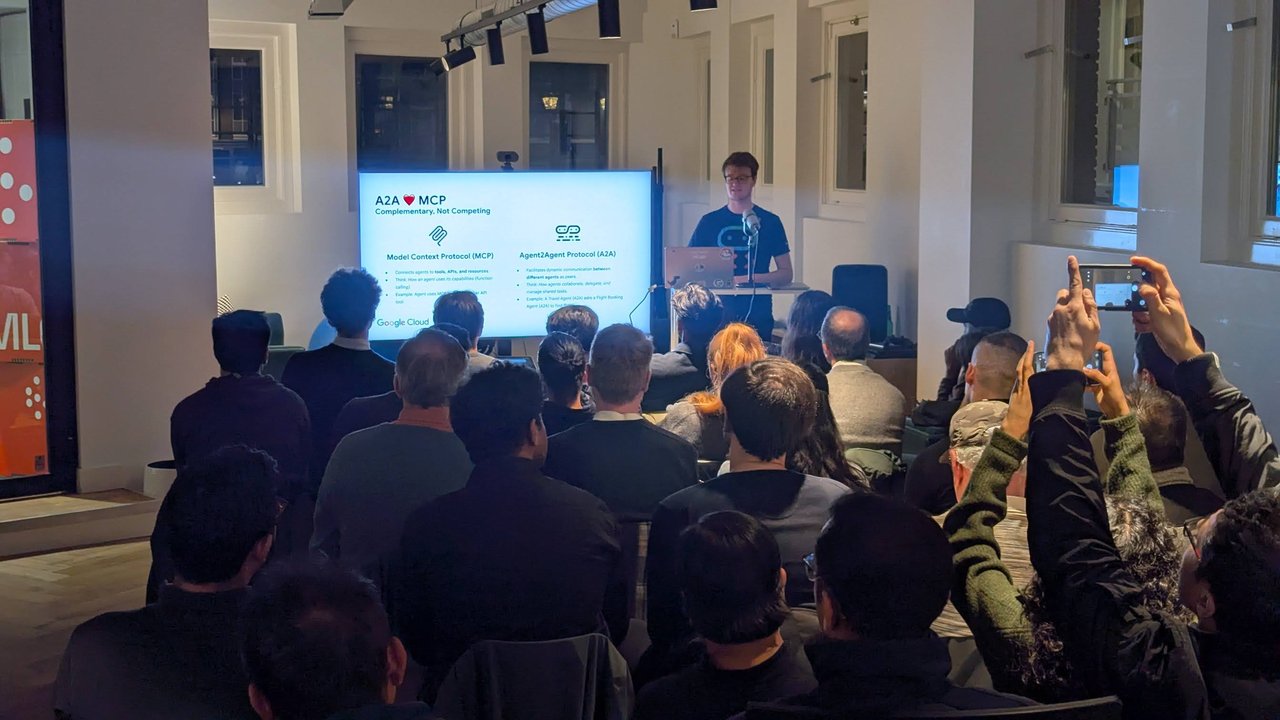
The “A2A ❤ MCP: Complementary, Not Competing” slide: MCP connects an agent to tools, APIs and resources; A2A lets agents communicate as peers.
The A2A docs put it this way: an agentic application uses A2A to talk to other agents, and inside, each agent uses MCP for its own tools. In code, that’s a tool call inside execute. Here the coverage table moves behind an MCP server:
# coverage_mcp.py
from mcp.server import MCPServer

from policy_agent import COVERAGE

mcp = MCPServer("coverage")


@mcp.tool()
def get_coverage(service: str, network: str) -> int:
    """Percentage of the cost the member pays. network is 'in' or 'out'."""
    return COVERAGE[service][network]


if __name__ == "__main__":
    mcp.run()  # stdio
The executor only overrides lookup. The A2A side (task states, card, client) doesn’t change:
import sys

from mcp import Client, StdioServerParameters


class McpTaskExecutor(TaskExecutor):
    async def lookup(self, service: str, network: str) -> str:
        server = StdioServerParameters(command=sys.executable, args=["coverage_mcp.py"])
        async with Client(server) as mcp:
            result = await mcp.call_tool("get_coverage", {"service": service, "network": network})
        share = result.structured_content["result"]
        label = "in-network" if network == "in" else "out-of-network"
        return f"{service.capitalize()} with an {label} provider: you pay {share}% (via MCP)."
Install it with uv pip install mcp. The client output is the same apart from the end of the sentence: Dental with an out-of-network provider: you pay 50% (via MCP). In production I’d keep one MCP session open instead of starting a stdio process per task.
My take: if a capability is a stateless function with typed inputs, expose it over MCP. Use A2A when the other side needs to keep state, ask a follow-up question or run for minutes. That’s what the input-required follow-up above shows.
Swapping in an LLM (untested)
To get closer to the demo, replace the rule-based lookup with a model call. I didn’t run this: no API key, no paid calls. The calls follow the google-genai 2.28 README:
from google import genai

client = genai.Client()  # reads GEMINI_API_KEY


async def ask_policy(policy_text: str, question: str) -> str:
    response = await client.aio.models.generate_content(
        model="gemini-flash-latest",
        contents=f"Answer only from this policy:\n{policy_text}\n\nQuestion: {question}",
    )
    return response.text
Expect variation. Towards the end of the talk, Holt said large language models aren’t consistent and need trial and error, and that the same demo hadn’t fully worked at an event in London a few days earlier. Keep the A2A layer deterministic and test it like the code above. Then the model is the only thing that varies.
Coming from a 0.3 tutorial
Many walkthroughs written before v1.0 no longer run. The renames I hit, all listed in the SDK’s v0.3 to v1.0 migration guide:
| v0.3 | v1.0 |
|---|---|
A2AStarletteApplication(...).build() | create_agent_card_routes() + create_jsonrpc_routes() on Starlette |
ClientFactory().create_client(url) | await create_client(url_or_card) |
AgentCard(url=...) | supported_interfaces=[AgentInterface(...)] |
Part(TextPart(text=...)) | Part(text=...) |
TaskState.completed, Role.user | TaskState.TASK_STATE_COMPLETED, Role.ROLE_USER |
| Pydantic models | protobuf messages (HasField(), MessageToDict()) |
JSON-RPC message/send | SendMessage |
Pitfalls
- Mixing messages and task events is now an error. Each
executecall must emit either exactly oneMessage, or aTaskfirst and then updates. I tried aMessagefollowed bycomplete(): the client got-32006“Received TaskStatusUpdateEvent in message mode”. - Agent messages are in the task history. On a follow-up,
current_task.historycontains the agent’s own turns. My first version read all of them, so the agent’s “in-network or out-of-network?” question was parsed as the user’s answer. Filter onRole.ROLE_USER. - The card URL must be reachable. Behind a proxy or in a container,
127.0.0.1inAgentInterface.urlsends clients to the wrong place. - Protobuf objects aren’t dicts. No arbitrary attributes. Check optional fields with
HasField()before reading them, as the client does forstatus.message. - The in-memory task store is lost on restart. Use the SQL extras for anything that has to survive a deploy.
- This server has no authentication. The card can declare
security_schemes, and because you own the Starlette app, you can add your own authentication middleware in front of the A2A routes.
The talk ended with a “Walkthrough / Get code” slide, and phones went up to scan it.
The talk’s own code is behind the walkthrough link from its last slide. The official a2a-samples repository and the A2A specification cover gRPC, REST, push notifications and signed cards, which I left out here.